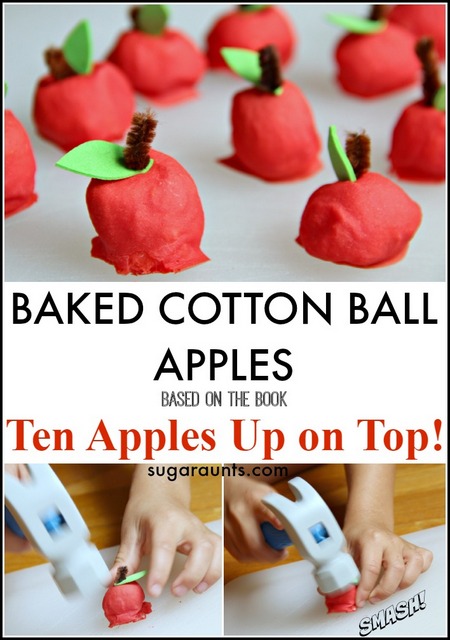
This Ten Apples Up on Top activity was a huge hit with my kids, because they love the book, so making baked cotton ball apples was a fun way to play through the book. And as a pediatric OT, I loved the fine motor and heavy work input that was an added benefit. You can add this to apple activities that you are doing in occupational therapy sessions or at home. These baked cotton ball apples would be a great addition to our apple pie sensory bin, and they would be fun for hands-on play with our Fine Motor Therapy Kit for visual motor, handwriting, and fine motor play.
Here’s what we did…
Ten Apples Up on Top Activity
Did you ever do an activity with the kids that was such a hit, that the kids ask to re-do the activity over and over and over again? This one is it for us. There is rarely a day that goes by that I don’t hear about our smashing apples activity. Especially if we happen to see a hammer. Oh, this baked cotton ball activity was a fun one for us!
We’ve never made baked cotton balls before, but have had the idea bubbling for a while. When we heard that the Preschool Book Club‘s book for this week would be Ten Apples Up on Top, we knew it would have to be an apple themed baked cotton ball activity. We even made these waaaay before all of the other book activities in the second series of books.
Like back in June. If you’ve never made baked cotton balls before, this is a MUST-DO activity!
This post contains affiliate links.
How to make Baked Cotton Balls
Are you familiar with baked cotton balls? This sensory tool is a DIY sensory material that kids love, and for so many great reasons. Actually, mixing up and making the baked cotton balls is as much of a therapy task as playing with them!
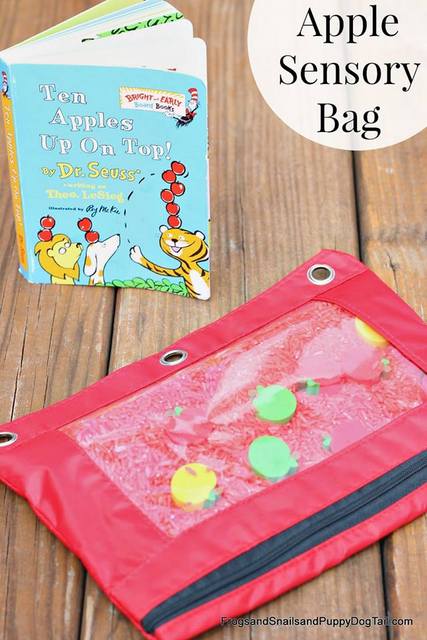
First read Ten Apples Up On Top! by Dr. Seuss. This is such a fun book for counting and playing along with the story.
How to make baked cotton balls:
Begin by mixing together one cup of flour and one cup of water. This is a great activity for the kids. Scooping, stirring, direction following, sneak tasting (my kids aren’t the only ones who go crazy for flour, right!??).
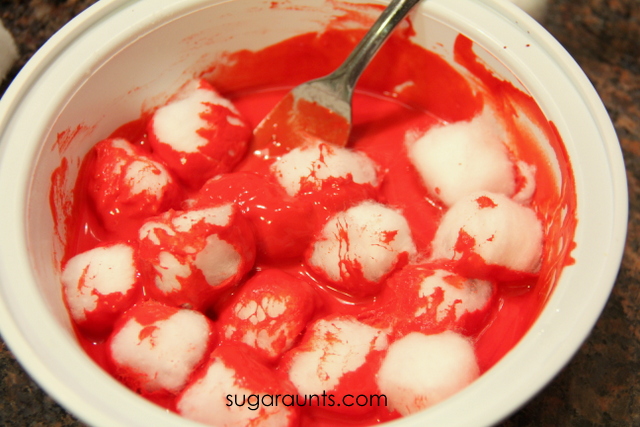
Pour in a bunch of red food coloring. We typically go with Wilton gel colors for all of our dying activities, but I knew I wanted a really deep red color. It seems like red coloring requires SO much dye to get a good shade of red. I ended up using a bottle from the dollar store and used about half of the bottle of food dye. This was maybe 20 drops? Add enough to get a nice red color.
Mix in the food coloring.
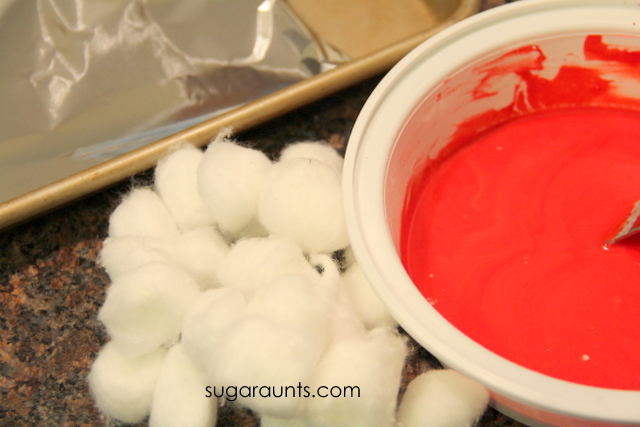
4. Now is the cotton ball part. Grab up your stash of cotton balls.
5. Mix them around to coat all of the cotton balls.
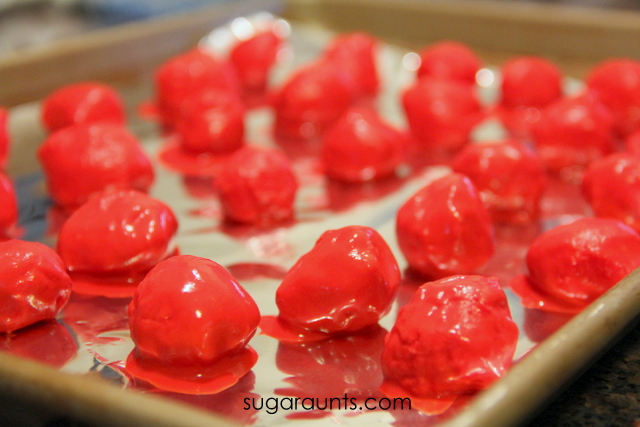
6. Place a layer of aluminum foil on a baking tray and place the cotton balls on the tray for baking. I used two forks to pick up the coated cotton balls and was able to let excess flour coating drip off before placing the cotton balls onto the foil.
You’ll want to let as much excess drip off before putting them on the sheet to avoid the sharp edges and flat bottom once the cotton balls bake.
7. Pop the baking sheet into the oven for around 60 minutes at 300 degrees F.
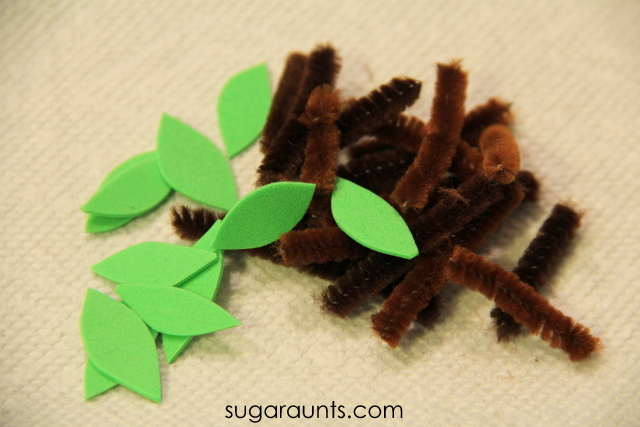
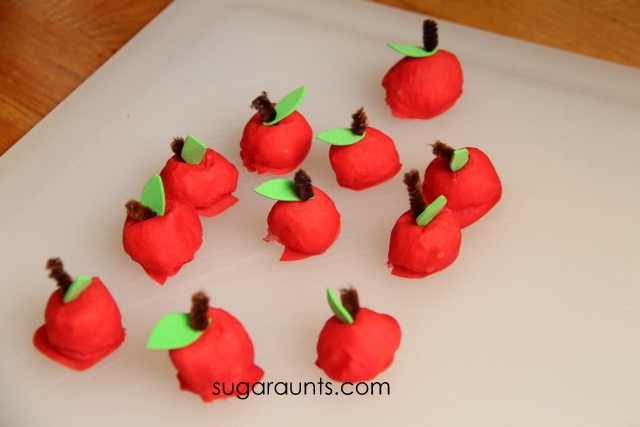
While the cotton balls are baking, snip up the leaves and stems for the apples. We used brown pipe cleaners and green crafting foam.
When the apples are done, pull them out of the oven and let them cool for a bit. They will be nice and hard. You’ll need to snip the bottom edges of the apples to remove any sharp edges that dripped to the base before baking.
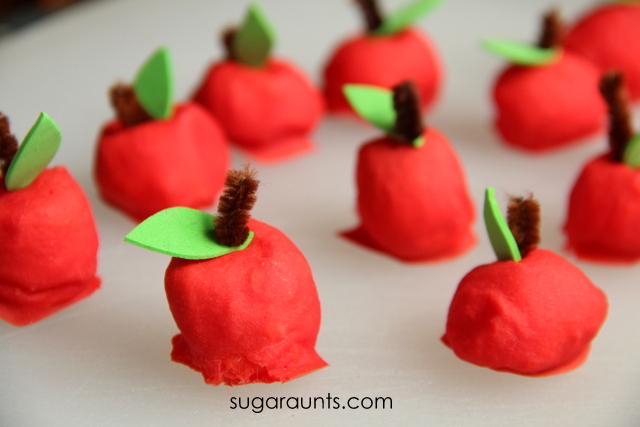
To attach the leaves and stems, lay the leaves on the apple top and poke the pipe cleaner through the foam sheet and into the cotton ball. The kids were able to help with this part, but assisting with stem attachment did not allow this mama to take any pictures 😉
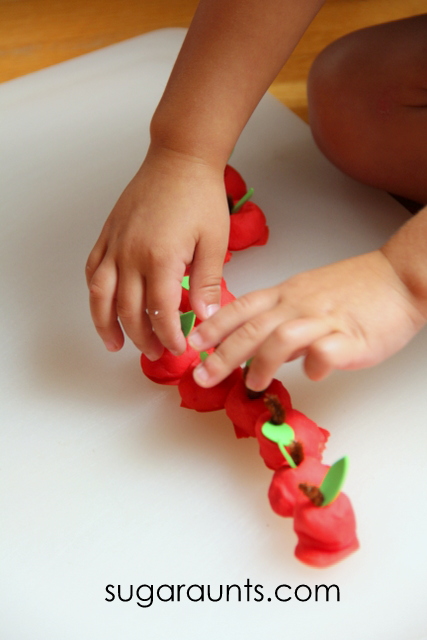
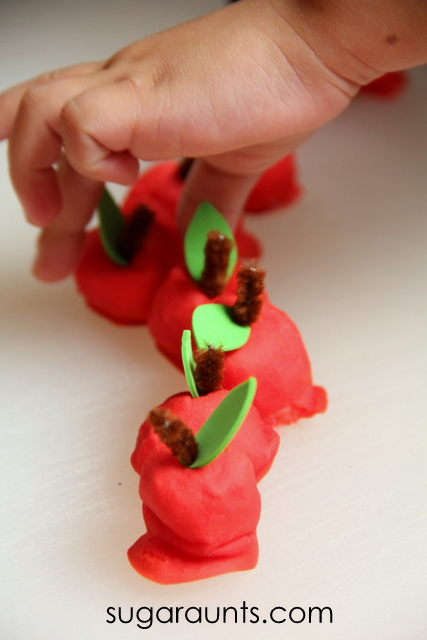
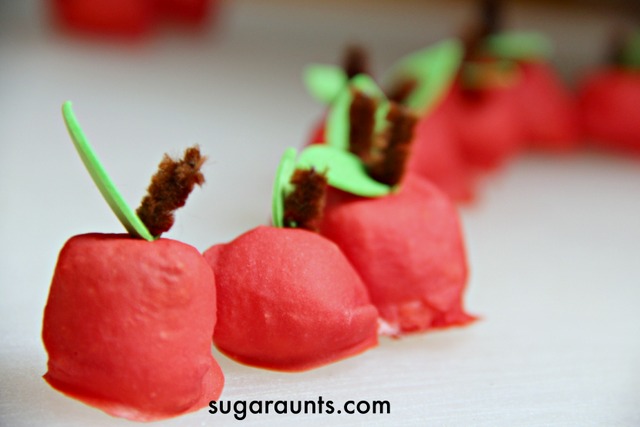
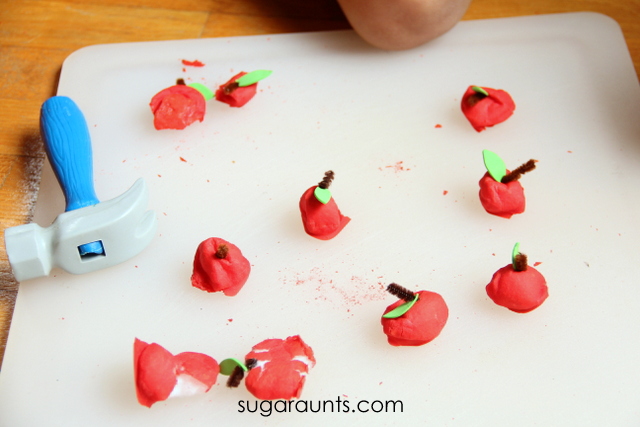
Our crop of apples were ready for playing with!
We followed along with the book as we read to stack up apples one by one. What a great way to learn and play with math facts, counting, number order, and simple adding. Little Guy LOVED this activity.
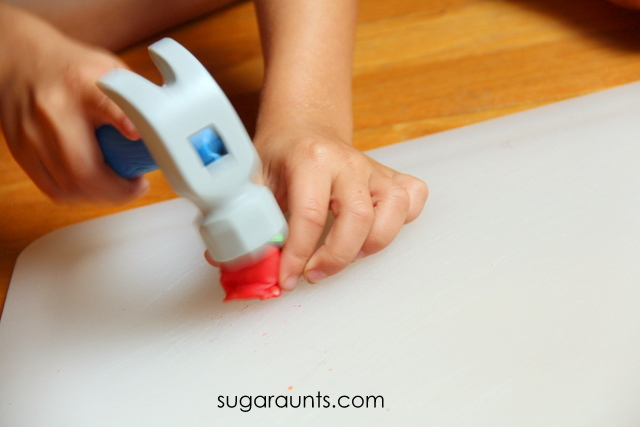
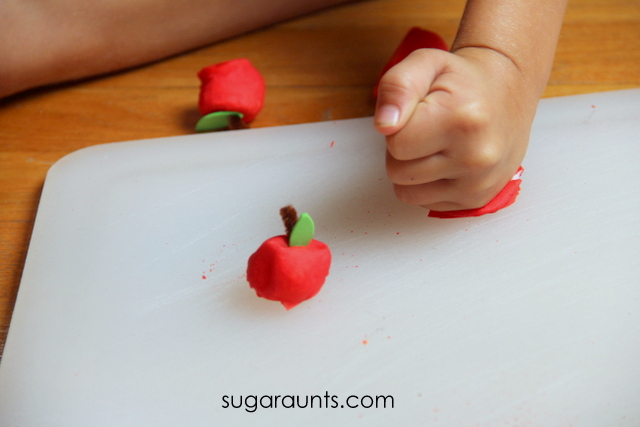
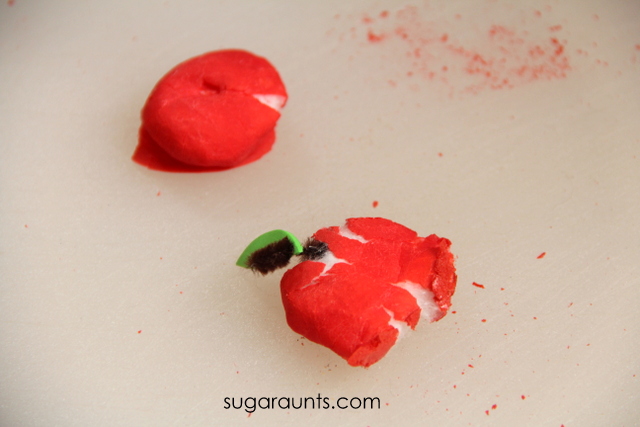
We got to hammering the cotton balls and this was the really fun part! The baked cotton balls have a hard outer edge that allow for a satisfying crunch when smashed, and a squishy, cottony center. What a fun way to explore and play.
We used a plastic hammer, but any hammer would do.
In fact, fists work just as well for smashing.
We had a smashing afternoon.
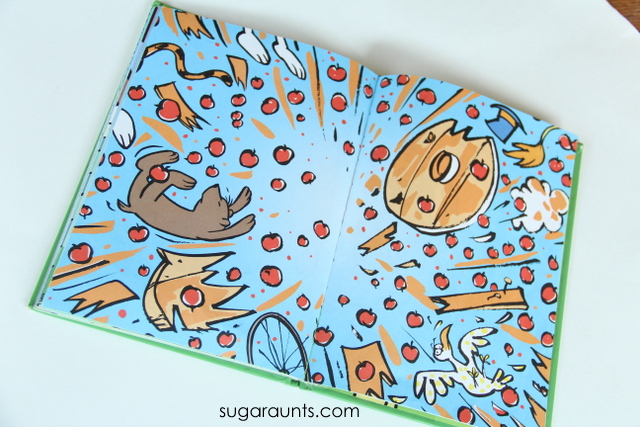
The remains of our cotton ball smashing reminded us of this page in the book. Be sure to let us know if you make baked cotton balls! We would love to hear about your experience with this sensory and fine motor activity!
Stop by the other Preschool Book Club bloggers to see their takes on Ten Apples Up On Top!
Colleen Beck, OTR/L has been an occupational therapist since 2000, working in school-based, hand therapy, outpatient peds, EI, and SNF. Colleen created The OT Toolbox to inspire therapists, teachers, and parents with easy and fun tools to help children thrive. Read her story about going from an OT making $3/hour (after paying for kids’ childcare) to a full-time OT resource creator for millions of readers. Want to collaborate? Send an email to contact@theottoolbox.com.
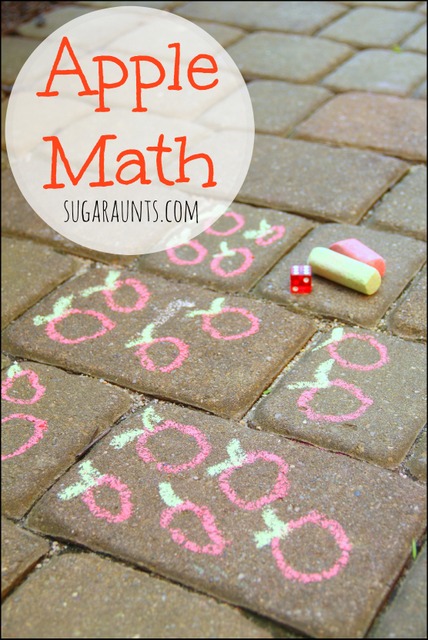
We love using math concepts that are learned in school into playful activities at home. Learning through play is a great way to strengthen concepts learned in the classroom. We used apples to count, add, and learn one day, all in the great outdoors!
Apple math activity for Kindergartners and Preschoolers
This post contains affiliate links. If a purchase is made through these links, we receive a small percentage in payment at no cost to you.
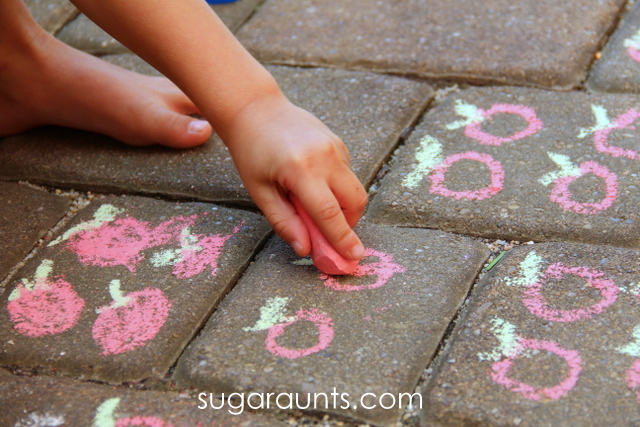
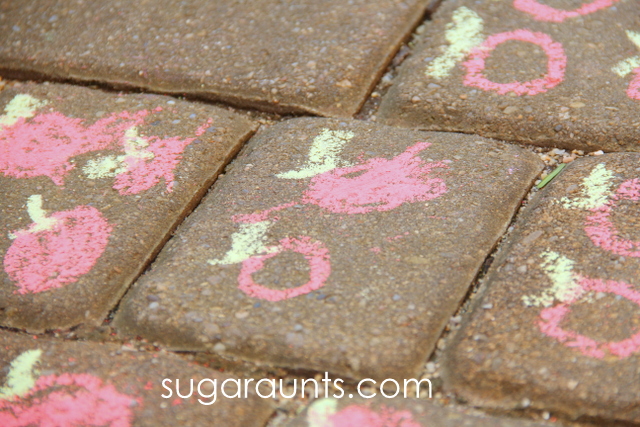
We used Sidewalk Chalk and a dice for this activity. I took the kids outside to the sidewalk one afternoon and drew a bunch of apple shapes. We were ready to play.
Note–you could also draw any shape for this activity: pumpkins, smiley faces, geometric shapes, simple houses…any thing would work.
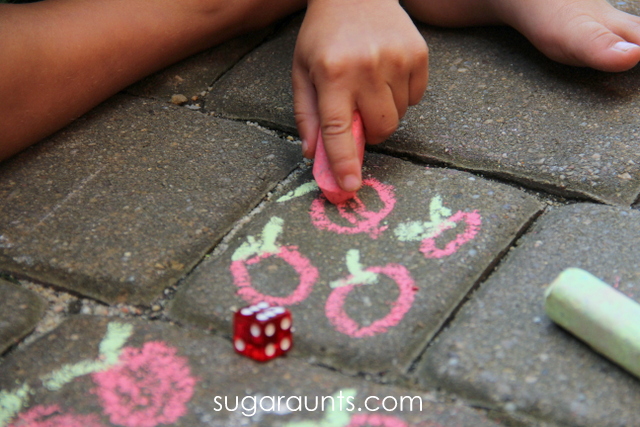
To play the game, I had the kids roll the dice. They had to count the dots on the dice, or simply look at the dots to determine how many dots there were. Big Sister did a lot of dice activities last year in Kindergarten so she was able to glance at the dice and know how many dots there were. Little Guy counted the dots. This is a great early math skill for preschool aged kids.
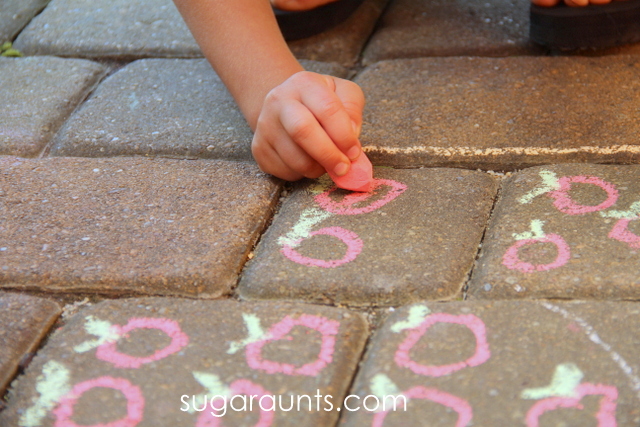
Once they counted the dots on the dice, I had them color in the same number of apples to correspond to the number of dots.
We used the squares of our sidewalk to wok on Kindergarten math concepts that Big Sister learned towards the end of her school year. Some of the squares had two apples drawn on them, and others had four or more.
This was a great opportunity to review addition.
She added the apples to make the total match the number of dots on the dice.
Little Guy counted along with Big Sister to count the total number of apples filled in.
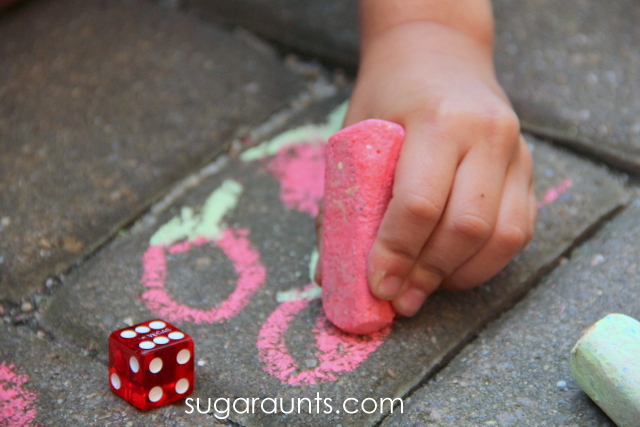
Coloring in the apples with the chalk requires use of the small muscles of the hand. The sidewalk surface is resistive and the area they colored in was small. This required precision to stay in the lines. Not to mention, coloring in all of those apples really strengthened the hands!
This was such a fun way to review old math areas for the new first grader and introduce new math concepts to the preschooler. Like this math activity? Try a few of these ideas:
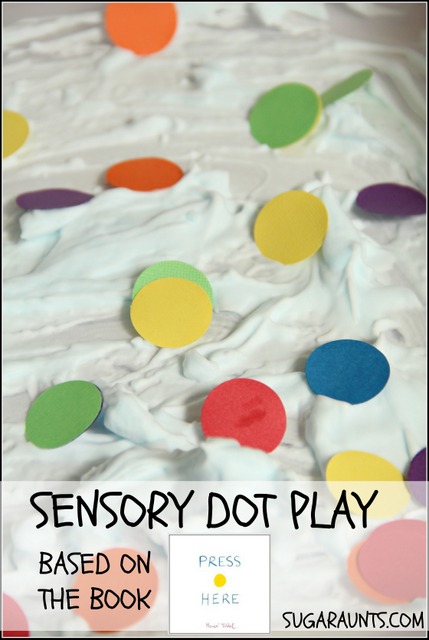
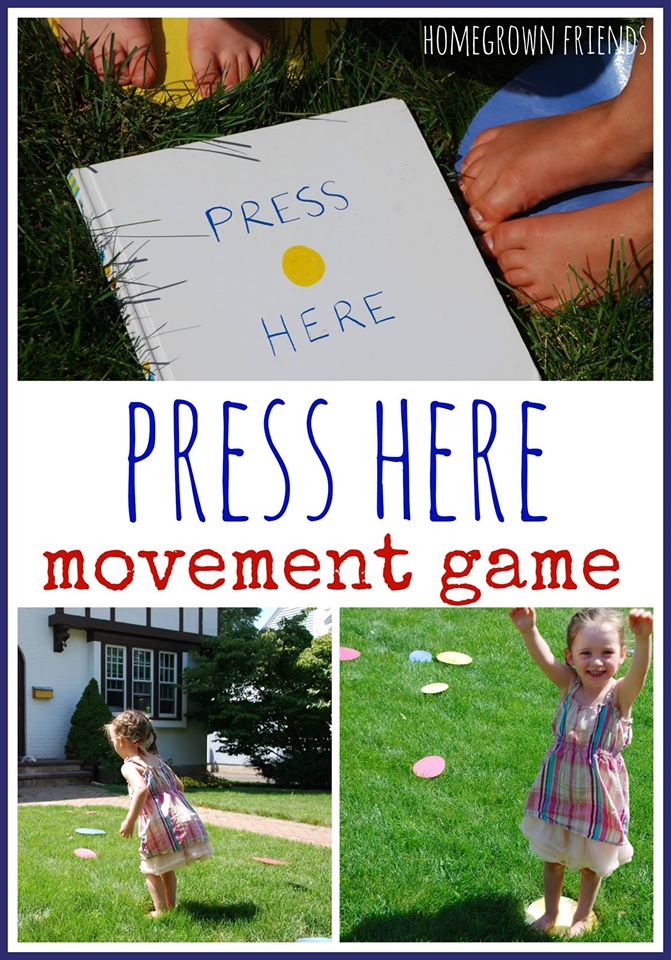
If you love sensory activities to pair with children’s books, you will LOVE this Press Here book activity! The book, “Press Here” is a memorable one that kids adore, but when you add a fun sensory play activity that goes with the book’s themes, you’ve got a winner. It has been so much fun coming up with play and learning ideas for Harold, Elmer, Pete, and more. This week, we’re reading and playing with the book, “Press Here” by Herve Tullet.
Press Here Book Activity
This post contains affiliate links.
Press Here is a new book to us. And what a fun book it is! The bright and bold pictures, the movement and direction following, and the fun instructions made this book a huge hit in our house.
Little Guy (age 5) is STILL talking about this book. He loved following the directions to shake, pull, push, and move the dots and even the whole book. We decided to put the movement into our play activity with a sensory based interpretation of this fun book.
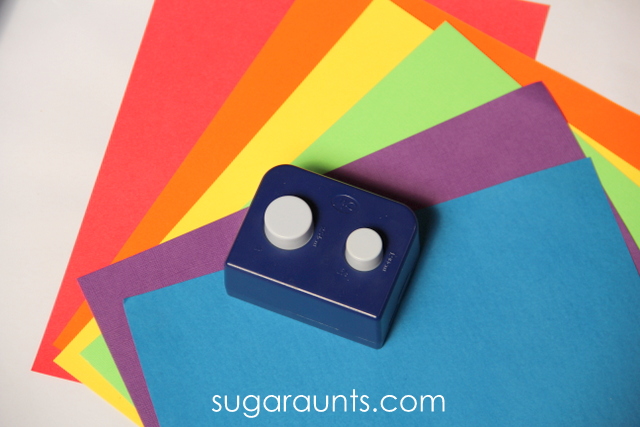
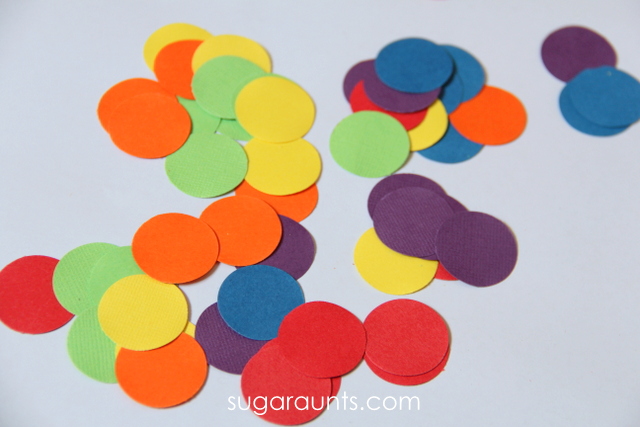
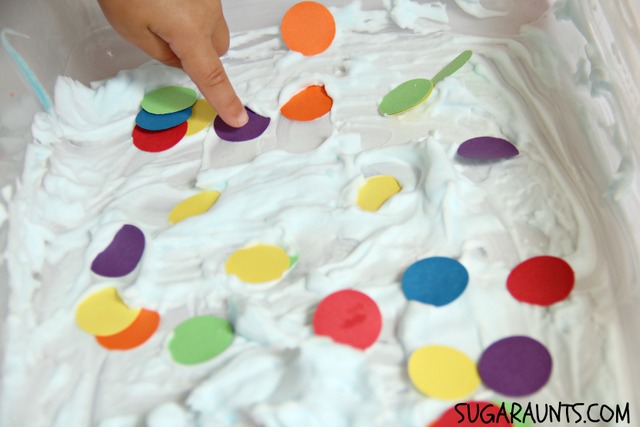
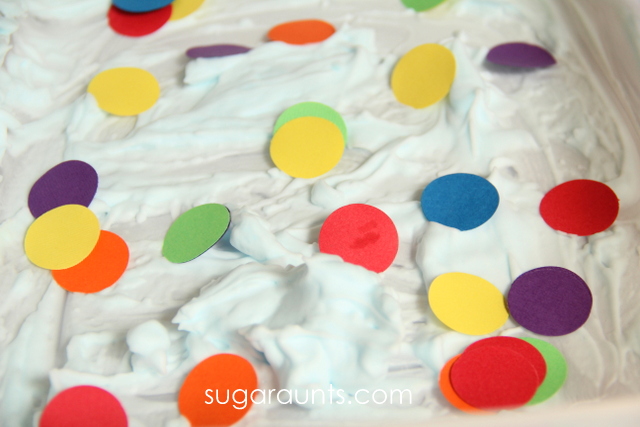
I started with rainbow cardstock and a circle hole punch. I punched a bunch of holes from all of the colors. Little Guy (age 5) LOVED helping me with the hold punching. Fun stuff!
How pretty are these colorful dots??
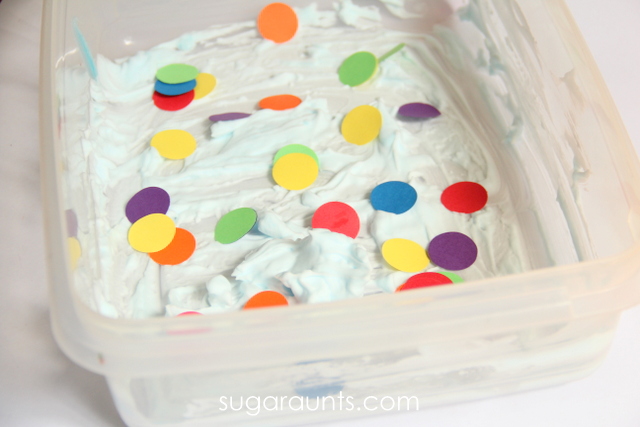
Add shaving cream to a container, and sprinkle in the colored dots. Sensory play is ready for little fingers!
We pushed, pulled, and poked the dots just like in the book. Be sure to talk about the colors while playing. This is a great sensory bin to work on color identification. Sensory play and learning go hand in hand, and this is a great way to learn and play.
Press Here Activities
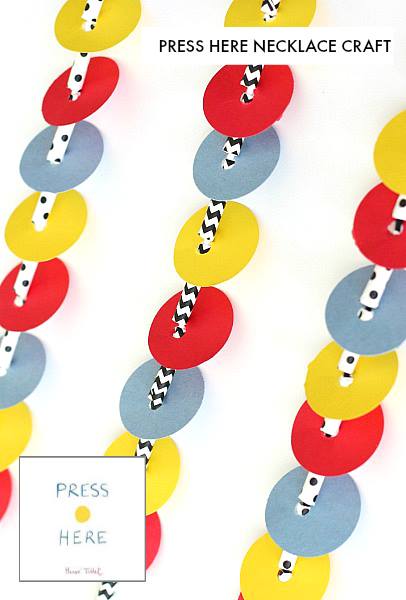
For more Press here activities, check out the ideas listed below. Each Press Here book activity uses the concepts in the book, the fun colors of the dots, and lots of pressing!
Check out the other Preschool Book Club bloggers for more Press Here ideas. And be sure to watch for our next book club activity. You won’t want to miss it!
Colleen Beck, OTR/L has been an occupational therapist since 2000, working in school-based, hand therapy, outpatient peds, EI, and SNF. Colleen created The OT Toolbox to inspire therapists, teachers, and parents with easy and fun tools to help children thrive. Read her story about going from an OT making $3/hour (after paying for kids’ childcare) to a full-time OT resource creator for millions of readers. Want to collaborate? Send an email to contact@theottoolbox.com.
A while back, we were on a bit of a Circus Theme in our pretend play. We had a bunch of fun with our circus party ideas and read a bunch of circus books. We did this sensory bin around that time, but are just now getting the chance to blog about it. This was such an easy sensory activity to throw together that we will definitely be playing this again.
This post contains affiliate links. Read our full disclosure here.
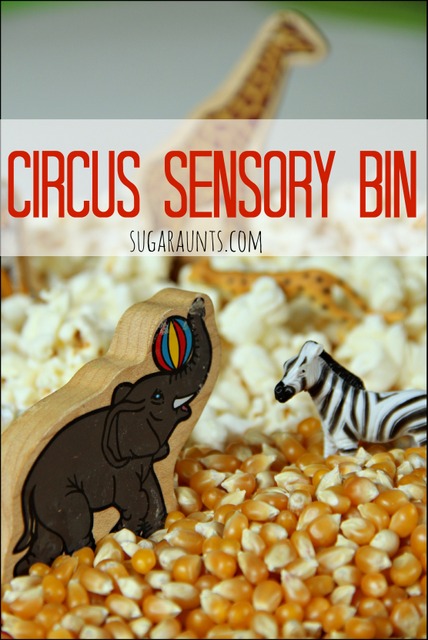
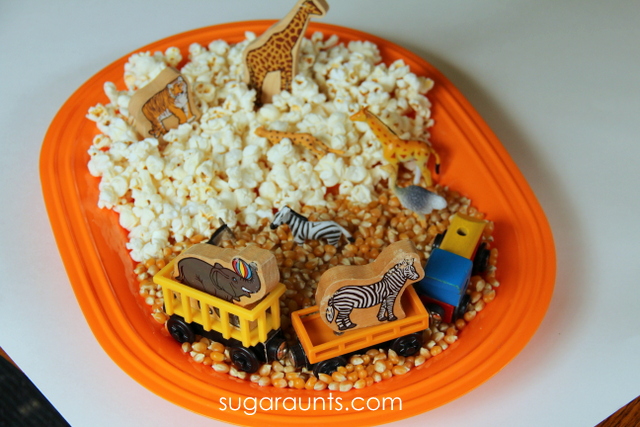
To create an easy Circus Sensory Bin, you will need:
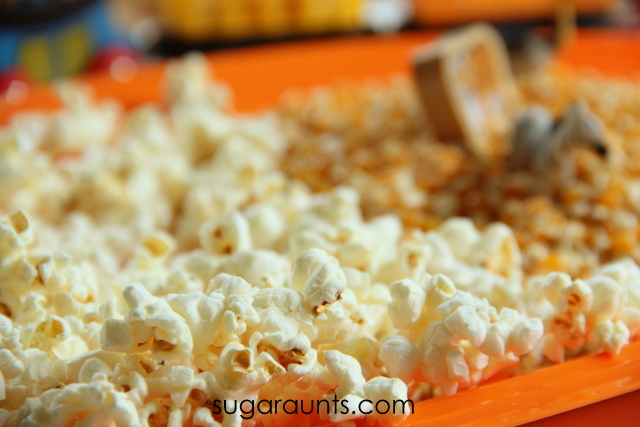
I started by popping some corn. And only ate a few handfuls. Pop extra. Snacks are good.
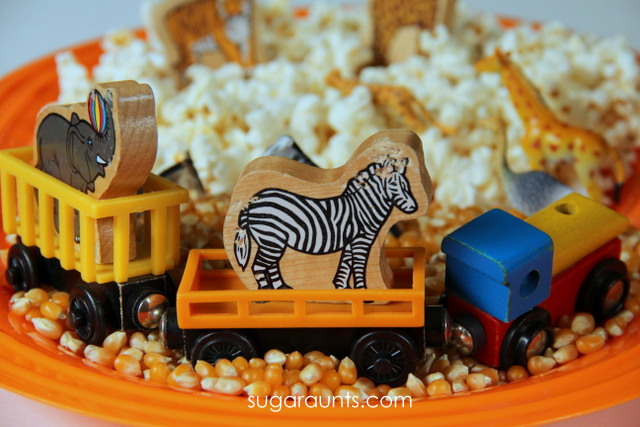
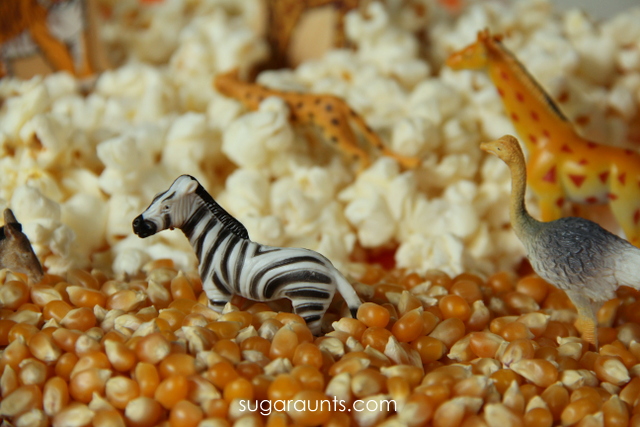
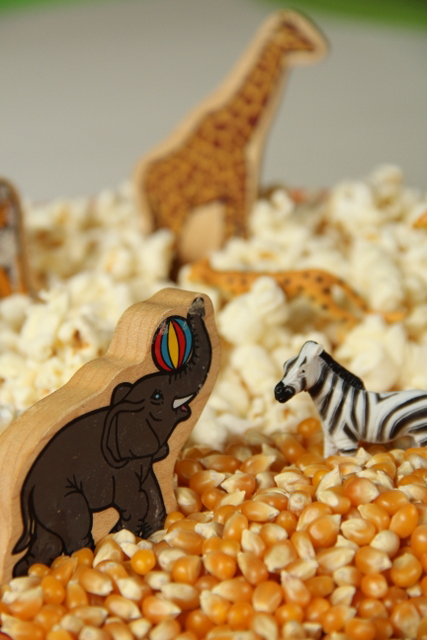
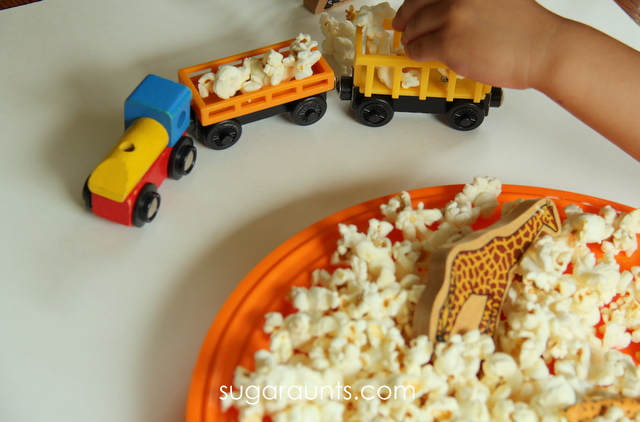
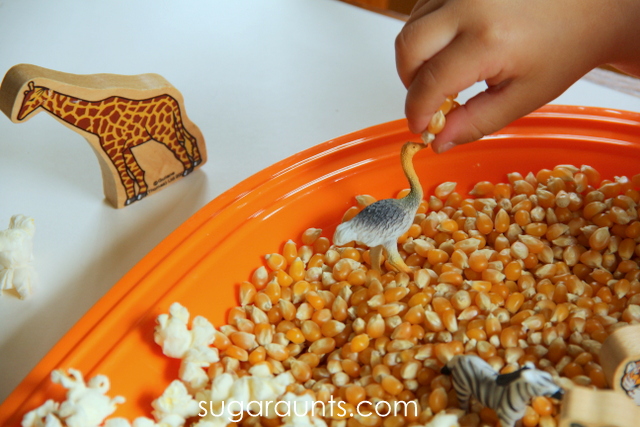
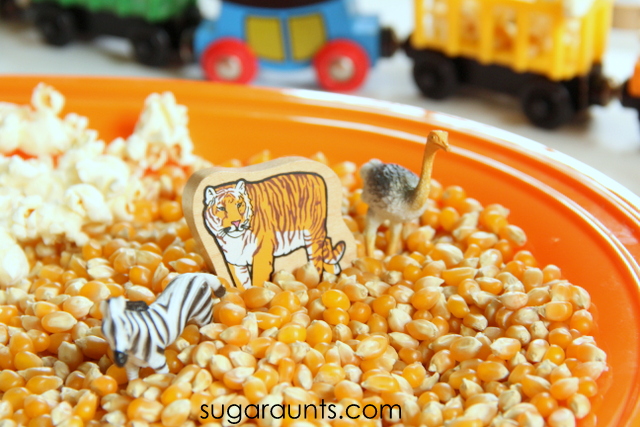
I put some popped and un popped corn onto a plastic tray. Then, simply added our train set and animals. The scene was set for imagination and pretend fun!
The animals in the different textures was such a fun way to explore animal names, animal sounds, and all in an easy sensory bin.
Baby Girl (age 2) loved this pretend play so much! Not only did we have a blast playing and learning, she got a snack too! Bonus!
Of course, the animals needed feeding, too.
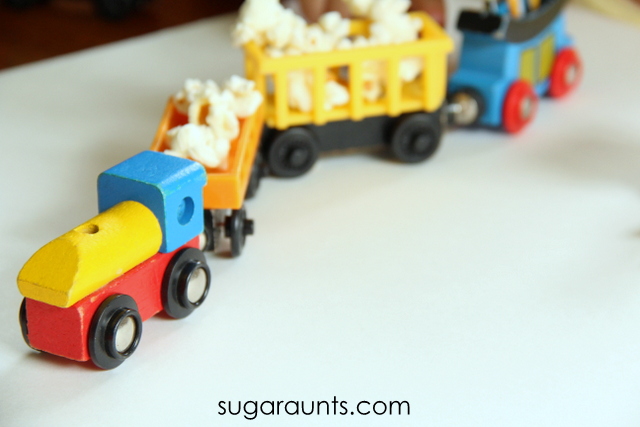
We loaded up the train with popcorn and made deliveries. Such a fun way to play away an afternoon.
This might be the perfect accompaniment to our circus tent craft. Sensory play, craft, and snack…sounds like the perfect afternoon with the kids to me!
Note: Like all of our activities on sugaraunts.com, we encourage playing alongside your kids and in a supervised manner. Some crafts and activities may present a dangerous situation for children who like to put things into their mouths. Please monitor your child with this and any activity you see on our website. Popcorn will present as a choking hazard for small children. Please use your best judgment if you decide to do this activity with your kids.
Is there a song or nursery rhyme that is a huge hit in your house? You know the one that is said over and over (and over) again? Right now we are on a This Little Piggy Went to the Market kick. Baby Girl (age 2 and a half) loooooooves This Little Piggy. She will ask me to do the finger play rhyme on both feet and then both hands again and again. I’ve even heard her saying it to herself…with lots of adorable mistakes. It’s beyond cute. I love when she asks me, “Mom, what does this piggy do?” and points to a toe. What a cutie!
When we made this piggy craft, Baby Girl very excited. I told her we were making a This Little Piggy craft and she was so happy!
This Little Piggy Went to the Market craft for Toddlers
This post contains affiliate links. Your purchases through these links help support our blog.
This craft for toddlers is very easy and a great opportunity for some learning, too. You can talk to your Toddler about circles and sizes (big and little). Toddlers are learning concepts such as size awareness and you can show them the big and little circles as you build the pigs.
I started with 5 big circles cut from pink construction paper and 15 small circles. We counted out the big circles together.
I helped Baby Girl fold ten of the small circles in half. These will be the pigs ears.
Big Sister helped out a little with counting out our piggy ears.
Baby Girl is all about using the glue stick. This Little Piggy Went to the Market + glue stick
= Baby Girl’s best day ever! She went crazy gluing on the big circles, ears, and snouts.
After all of the pieces were glued in place, I drew on little faces. We had fun saying the finger play while using our five little piggys to join in on the fun. Baby Girl played with these little piggys all day!
This pipe cleaner busy bag is a creative way to use pipe cleaners while helping preschoolers to develop fine motor skills and visual motor skills. Add this pipe cleaner busy activity to your list of preschooler activities!
Pipe Cleaner Busy Bag
I have been trying to think of activities to keep my 3-year-old son busy lately. He is a busy little guy a
nd always wants to be involved in what we are doing in our homeschool. I typically have little busy-bag activities for him to do and needed to add in some new ones.
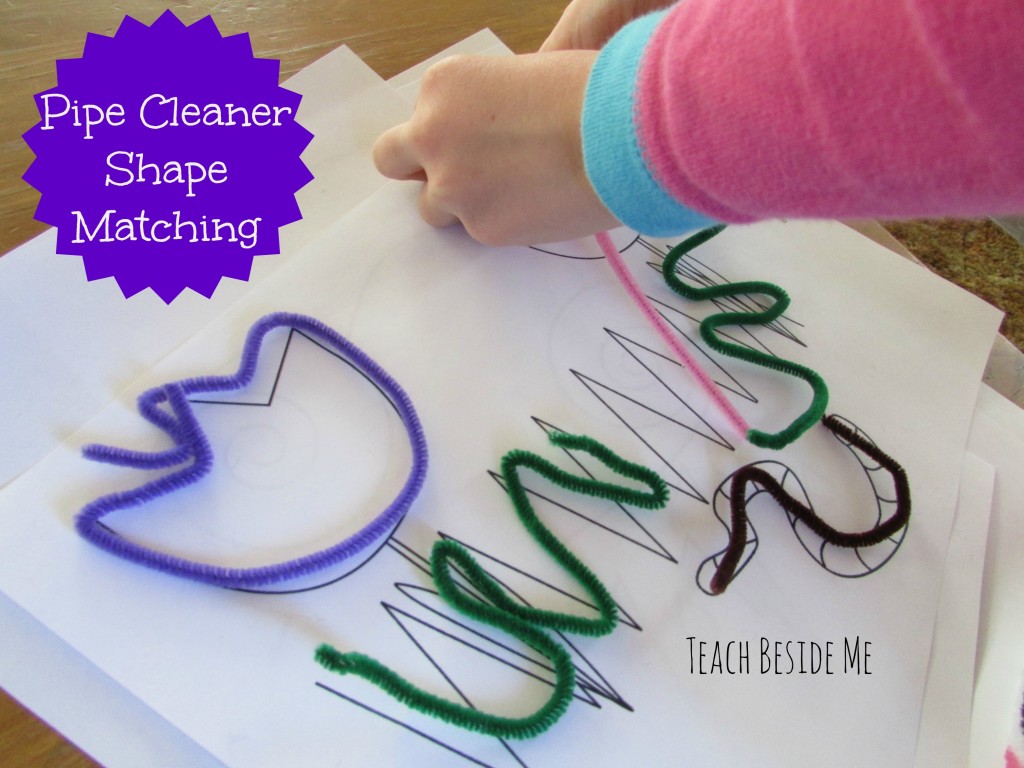
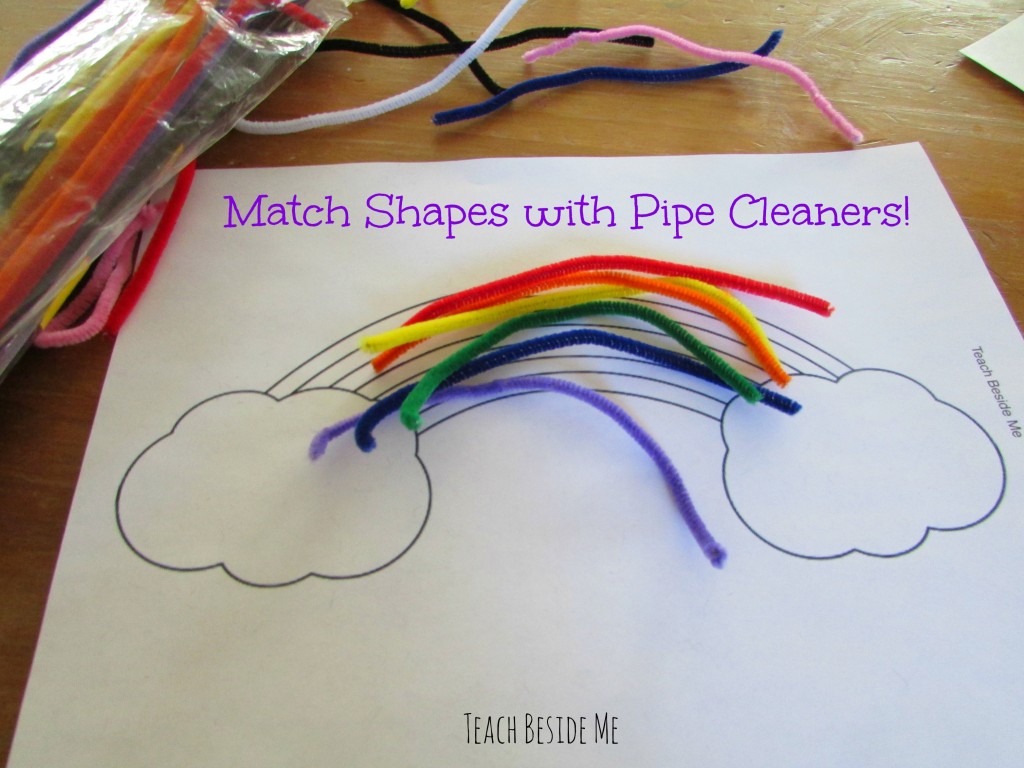
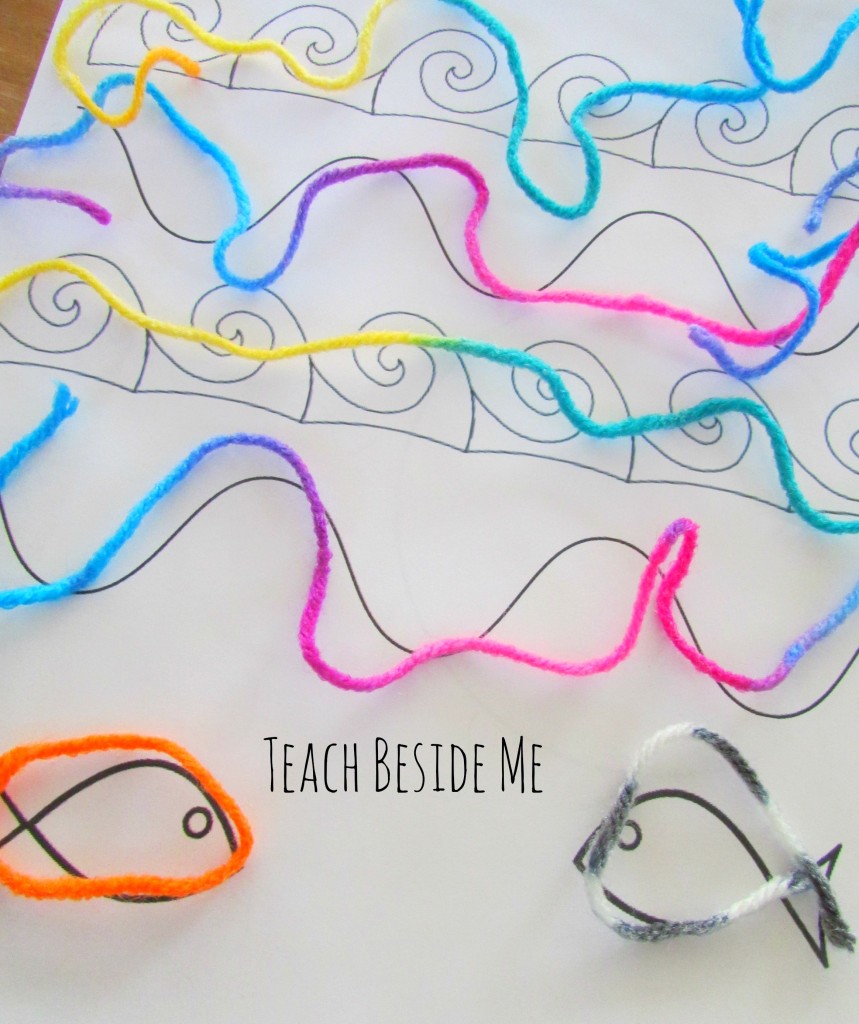
We have lots of pipe cleaners so I decided to make a pipe cleaner shape matching activity. I created some simple pictures for him to use to create shapes with pipe cleaners or yarn. You could really do this with any shapes, but I thought it would be fun to make it a more creative picture with nature scenes.
I made several different printable pages that can be used in a busy bag or just for anytime.
We tried doing the activities with yarn as well and it is a little easier to shape them for younger kids.
Working on fine motor skills, visual perception, visual motor skills, sensory tolerance, handwriting, or scissor skills? Our Fine Motor Kits cover all of these areas and more.
Check out the seasonal Fine Motor Kits that kids love:
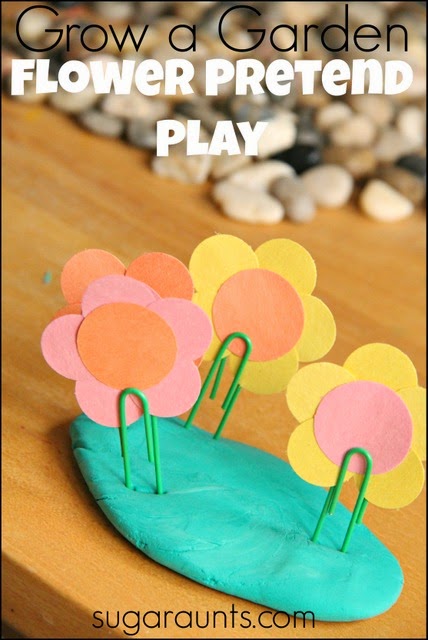
We love making these play dough flowers with paper clips, paper flowers, and rocks. It’s such a fun fine motor activity that kids absolutely love, and so do I as an occupational therapist who loves easy and simple fine motor activities that build skills through play.
Play Dough Flowers with paper clips and rocks
We are loving all things Spring these days. One rainy morning, Baby Girl and I played with this play dough fine motor activity while Little Guy was away at preschool. She loves play dough and was very excited to Grow a Garden with a few extras thrown in there to make a fun flower garden.
Play dough is such a great way to work on fine motor skills and this garden activity hits the mark when it comes to strengthening those little muscles in the hands. Not only that, it’s totally fun and happy!
This post contains affiliate links.
I started by making a bunch of flowers. I used my circle paper punches and glued circles together to make flowers.
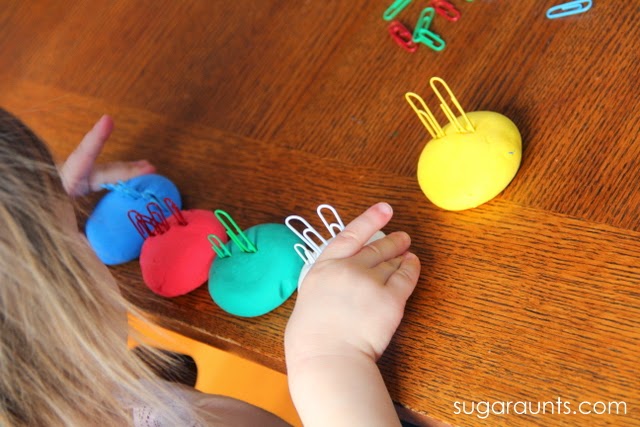
Baby Girl and I stuck them onto green paper clips. It was a great way to get started on the fine motor work in this activity. She was really focused on putting the paperclips onto the flowers.
Next, I pulled out the green play dough and we started planting flowers!
Rocks were needed for our flower garden, of course!
PaperClip Play Dough Activity
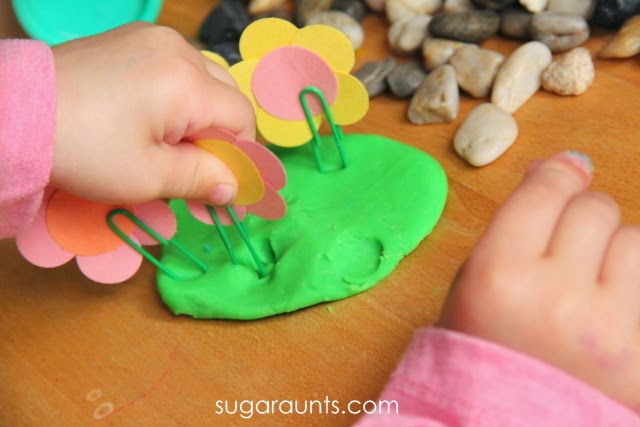
We tried clay and play dough for this activity. The clay was more resistive to press the paper clips into, and a better strengthening tool…but it seemed to stick more to the paper clips. Play dough worked better for us, and was just as good a fine motor strengthening work out.
Pressing the paper clips into the play dough is a great way to encourage a tripod grasp while strengthening the intrinsic muscles of the hands. The small muscles within the hand are so important for arch support and control in many fine motor tasks (coloring, zippering, buttoning…)
Colleen Beck, OTR/L has been an occupational therapist since 2000, working in school-based, hand therapy, outpatient peds, EI, and SNF. Colleen created The OT Toolbox to inspire therapists, teachers, and parents with easy and fun tools to help children thrive. Read her story about going from an OT making $3/hour (after paying for kids’ childcare) to a full-time OT resource creator for millions of readers. Want to collaborate? Send an email to contact@theottoolbox.com.
Play dough is such a fun way to play and learn. We are big fans of the fine motor fun to be had with play dough. In fact, we’ve done other fine motor color matching activities with play dough before. Color matching with play dough is a fun way for preschoolers and toddlers to learn colors and so much more.
This play dough activity was great for the Toddler age range. Learning colors, matching, sorting, and fine motor work were all involved. Baby Girl was a big fan!
{This post contains affiliate links. In other words, this blog will receive monetary compensation when any purchases are made through the links in this post. Our opinions and ideas are in no way affected. You can read our full disclosure policy here. As always, we thank you for your support and community here at Sugar Aunts}
Color identification activity for Toddlers
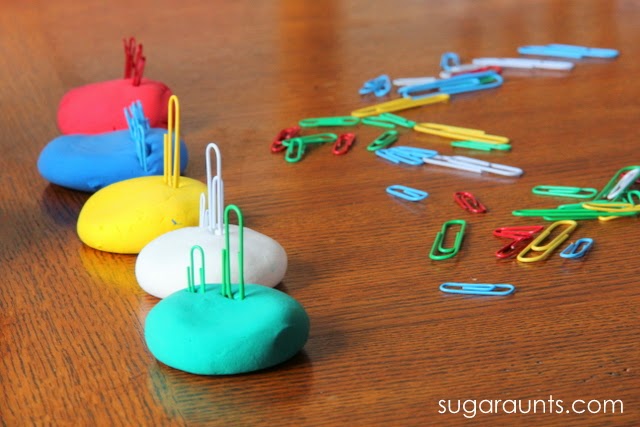
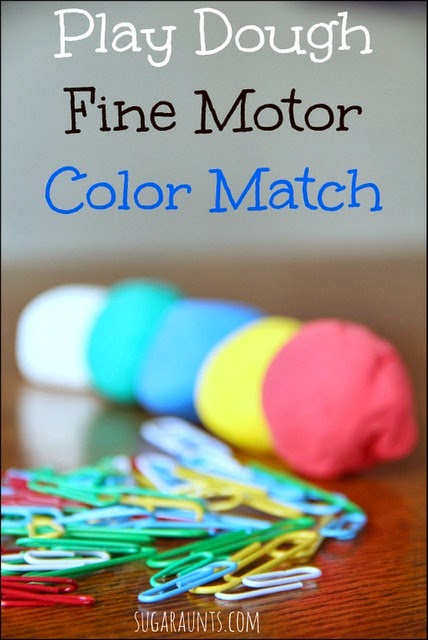
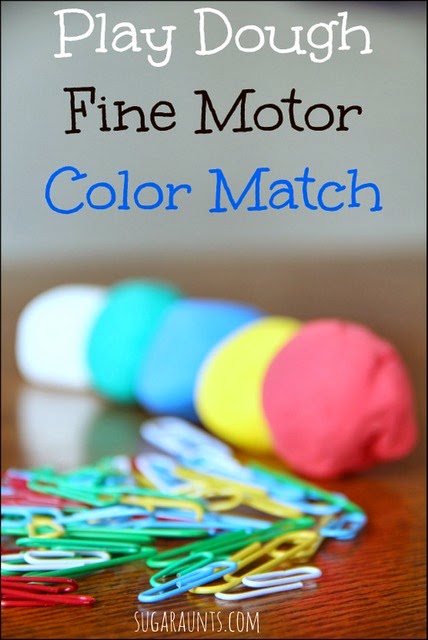
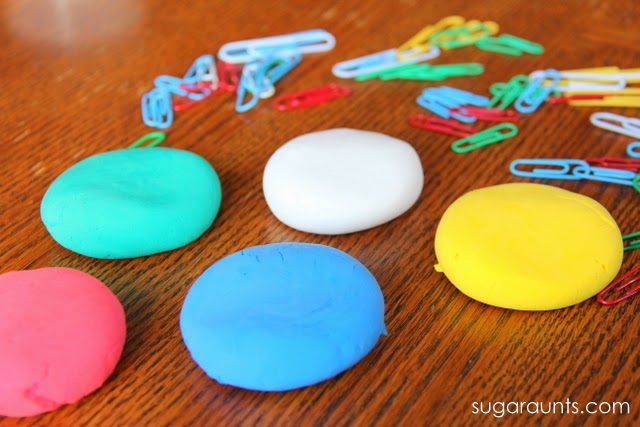
We started with a bunch of colors of play dough. We used modeling dough, but you could also make your own play dough for learning and play. We worked on naming all of the colors of the play dough.
Color matching activity for Toddlers
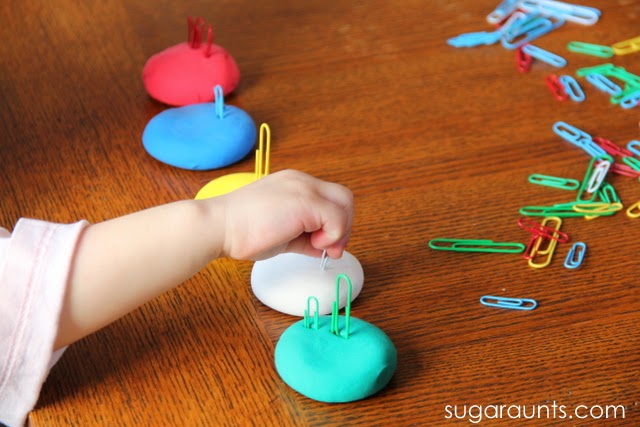
I pulled out a bunch of colored paper clips
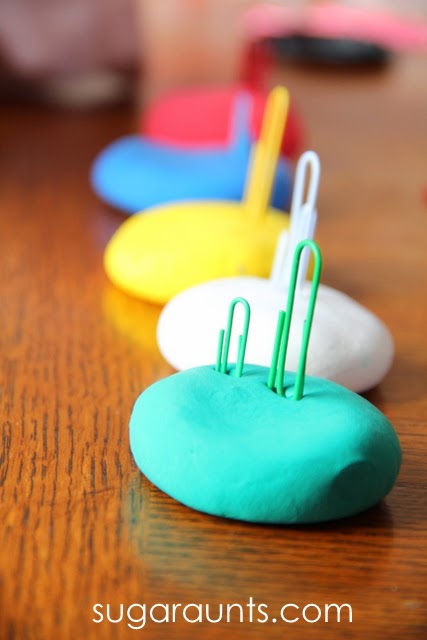
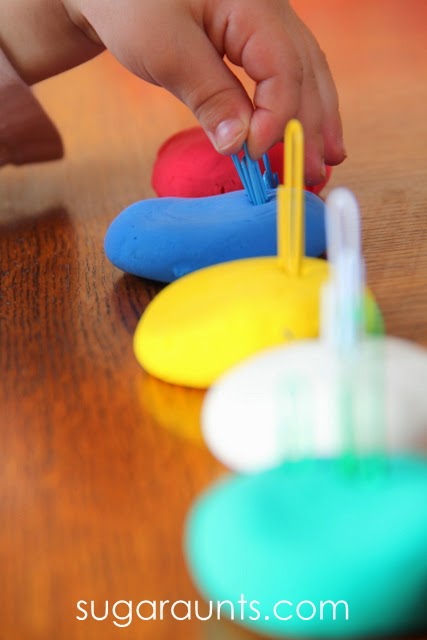
and showed Baby Girl how to press them into the matching color. She did pretty well with the matching of colors. The identification is a little harder for her. She’ll name some of the colors but stumble on others. (Baby Girl is 2.5 years old). She’s getting there, though! I love that she loves activities like this. She was really into it.
I love the colors of this dough!
Fine Motor Activity for Toddlers, Preschoolers, and School-aged Children
Pressing those paper clips into the dough requires a tripod grasp. The resistance of the dough is a great way to strengthen the hand, especially the arches of the hand. This is so important for manipulating objects in self-care tasks like buttoning. This is a great pre-handwriting activity, too. Definitely, it’s a good warm-up activity for kids who are at the writing stage. Pressing those paper clips into the dough would get the hand “awake” and ready for a coloring or handwriting task for older kids. I would recommend this activity for the school aged range, too.
Picking up the paper clips from a flat surface like the table is a great way to work on finger dexterity with children. You’ll need a tip to tip grasp to pick up the paper clip and manipulate it within your hand. What a work out for those little hand muscles! In-hand manipulation is essential for tasks like managing coins, rotating a pencil in handwriting tasks, putting small objects like pegs into peg boards, and so much more. Scatter those paper clips around the table…this is a great way to play and work on fin motor skills!
If you’re doing this activity with a younger child, be sure to keep a close eye on them. As always, use your judgment in what works best for your child or group of children in a school setting. The paper clips could be a choking hazard of course so if you are working with kids who may put them in their mouth, either work on one clip at a time or put this activity away for a few months. Better yet, pin it to your Pinterest boards for safe remembering 😉
How many other ways can you think of to make this activity a learning opportunity? Try sorting the paper clips by color or size. Pattern the colors of dough or paper clips. Count the paper clips as your child presses them into the dough. Ask him or her to press a certain number of clips into each dough ball. Sequence the number of paper clips that you’ve pressed into the dough. There is SO much learning happening here!
Looking for more play dough activities? We’ve been having a blast pinning to our play dough, clay, goop, and more board:
We have many tripod grasp activities here on the website, and this one is a fun way to build skills with items you have in your home: loop cereal and tooth picks. Also be sure to check out our resource on an easy way to work on tripod grasp. Check out the idea below!
Tripod Grasp Activity
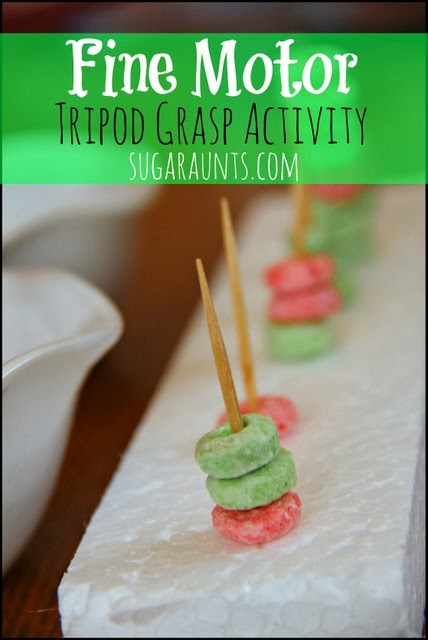
For this tripod grasp activity, you’ll need just a couple of items:
Loop cereal (We used fruit loops. Try these other fruit loop crafts, too!)
Toothpicks
Styrofoam or a cardboard box.
This was an activity we did way back in December (seems like it was much longer than a month ago!) but we’re just now getting around to blogging about. So, let’s just ignore the red and green colors…Ha!
This Fine Motor play activity was a big hit with the Toddlers.
My little Niece and Nephew, in particular, were infatuated with this activity! They played for the longest time…stacking cereal rings, taking them off, re-stacking…eating a few…and moving them around again!
Note: As with any activity that you see on on this site, please use your judgment when it comes to your child’s safety and participation. All children are different, but all activities should be closely supervised for your child’s safety.
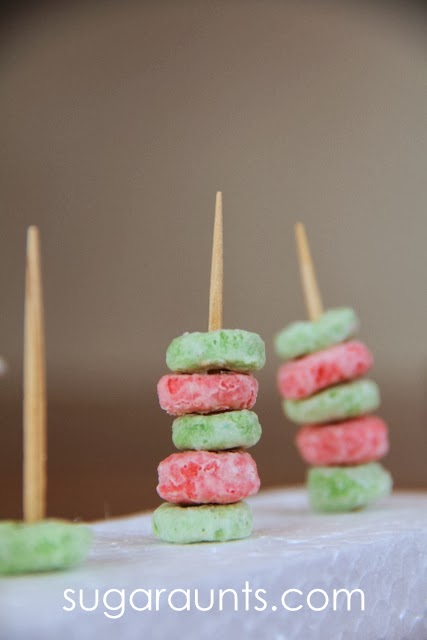
We started with a strip of Styrofoam and a handful of toothpicks. I stuck the toothpicks into the Styrofoam in a line and put out two bowls of cereal rings. The red cereals were in one bowl and the green cereals were in another bowl.
This was a great opportunity for the two year-olds to work on a little color identification. Little Nephew is really good at his colors. Baby Girl needs a little more help. Or a lot of help! (Unless it’s “purple”. She KNOWS purple! 🙂 )
Picking up the cereal rings and stacking them onto the toothpicks was a great way to work on tripod grasp. They had to manipulate the cereal rings and stack them one at a time. We did a few patterns with the help of Little Guy (age 4).
Next time you’re in a house full of grumps/enjoying a PJ day/looking for an easy fine motor activity for the kids…Pull out the cereal and some tooth picks and get ready to have some fun!

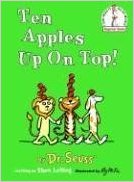
 by Dr. Seuss. This is such a fun book for counting and playing along with the story.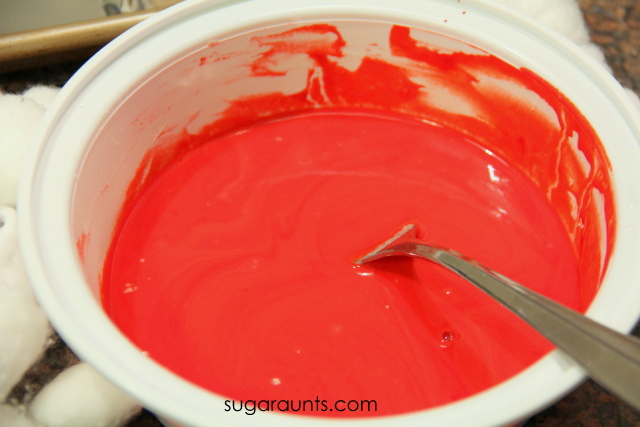
for all of our dying activities, but I knew I wanted a really deep red color. It seems like red coloring requires SO much dye to get a good shade of red. I ended up using a bottle from the dollar store and used about half of the bottle of food dye. This was maybe 20 drops? Add enough to get a nice red color.



 and a
and a for this activity. I took the kids outside to the sidewalk one afternoon and drew a bunch of apple shapes. We were ready to play.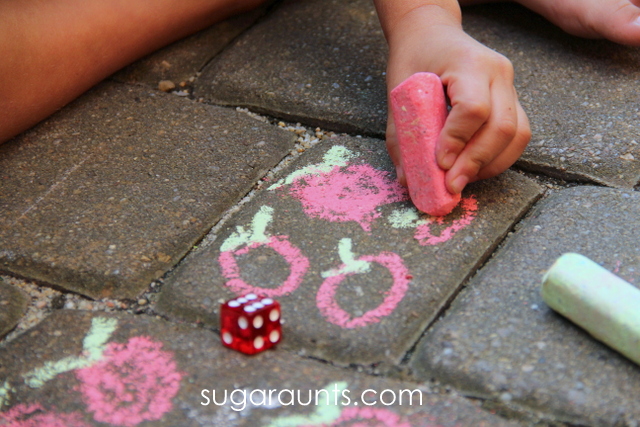
.jpg)

 and a
and a 





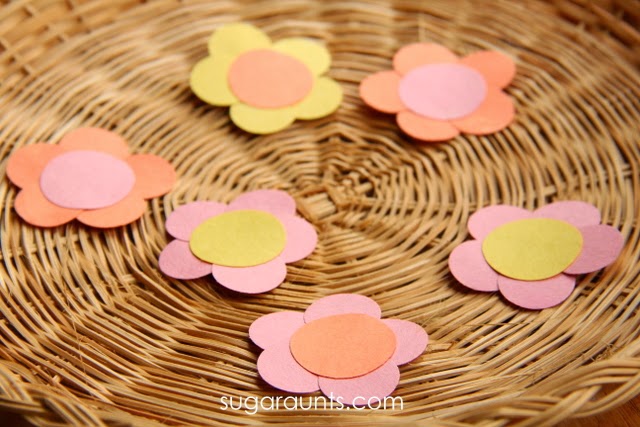
 and glued circles together to make flowers.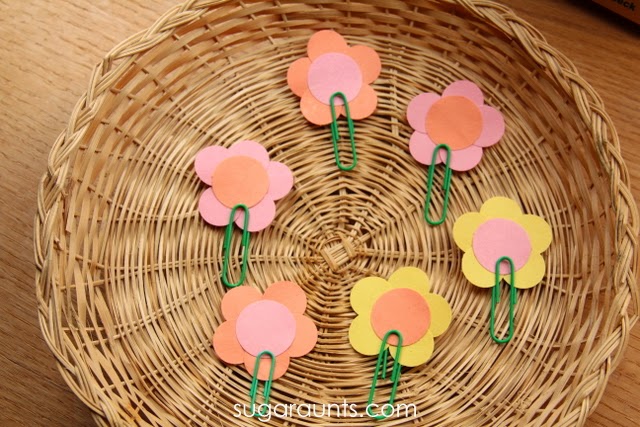
 . It was a great way to get started on the fine motor work in this activity. She was really focused on putting the paperclips onto the flowers.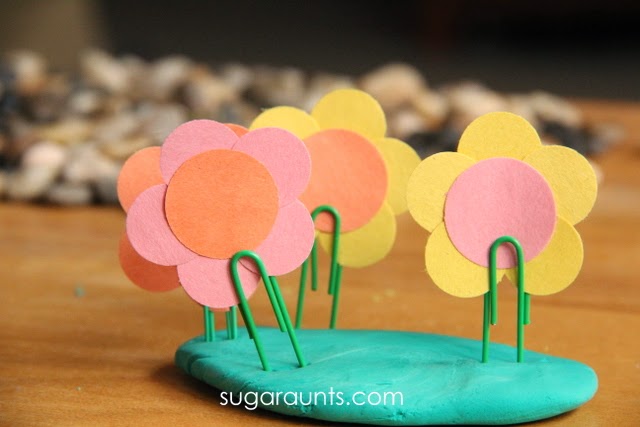
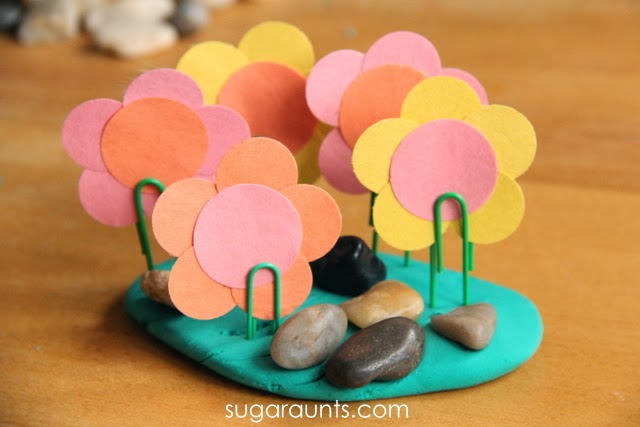


 , but you could also