The Many Benefits of Coloring with Crayons

Fine motor skills with coloring

There are many benefits of coloring with crayons in occupational therapy interventions. Coloring with crayons is a fine motor skill that builds other skills. Did you know that the act of coloring with a crayon can help children develop fine motor strength, dexterity, grasp, and endurance in their hands? Be sure to check out this resource on the best crayons, based on development and fine motor skills.

And, coloring skills develop by more coloring. Here’s the thing: occupational therapists use crayons to help children develop fine motor skills, but they also work on the development of coloring skills as a functional task that is part of play, and typical child development. Let’s talk about all of the coloring skills that occupational therapy addresses with a simple box of crayons.
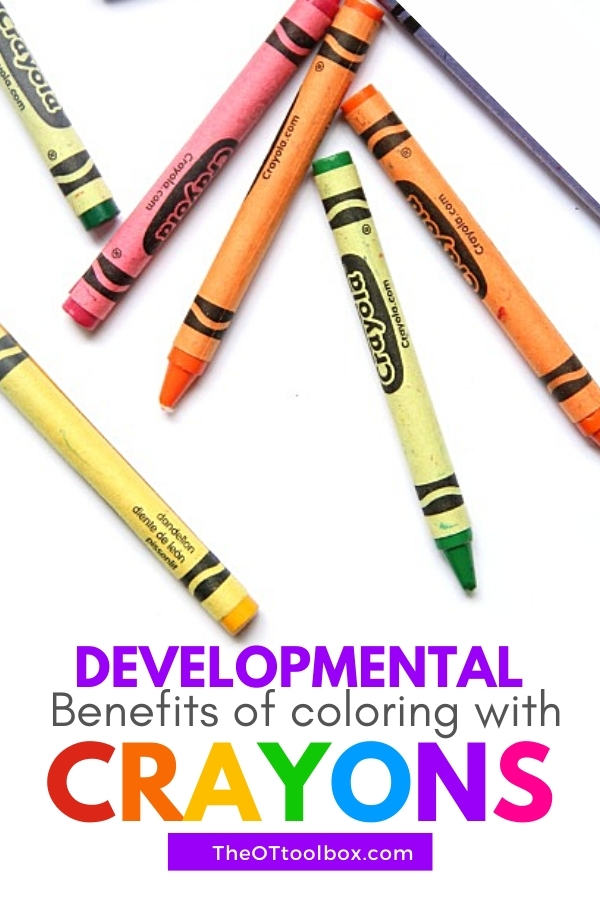
Benefits of coloring in child development

You know that smell, right? It’s kind of waxy and flaky (if that’s a smell…) and so distinctive! If you open a box of crayons that have the little marks of each crayon inside the cardboard box, it has an even stronger smell.  Crayons smell like childhood! This post on coloring skills is part of my 31 Days of Occupational Therapy series, where each day is a creative activity using OT treatment materials that are free or almost free.  

Fine Motor Skills with Crayons

Crayons are something that most homes have in a pencil box, in an old tin, or in a drawer somewhere.  Did you know those childhood memory sticks (aka Crayons) can be used in SO many skill areas?  

Consider fine and gross motor strength, tool use, sensory processing, pencil grasp, line awareness, hand-eye coordination, dexterity, endurance, self-confidence, creativity, task completion, and learning objectives like color identification, and color matching.  Crayons develop the very skills needed for pencil grasp and carryover of that pencil grasp. Whew!  No wonder crayons get worn down to nubs with all of those areas that they are working on!  

One tool I love is our color by letter worksheet to support fine motor skills while coloring in a small space.
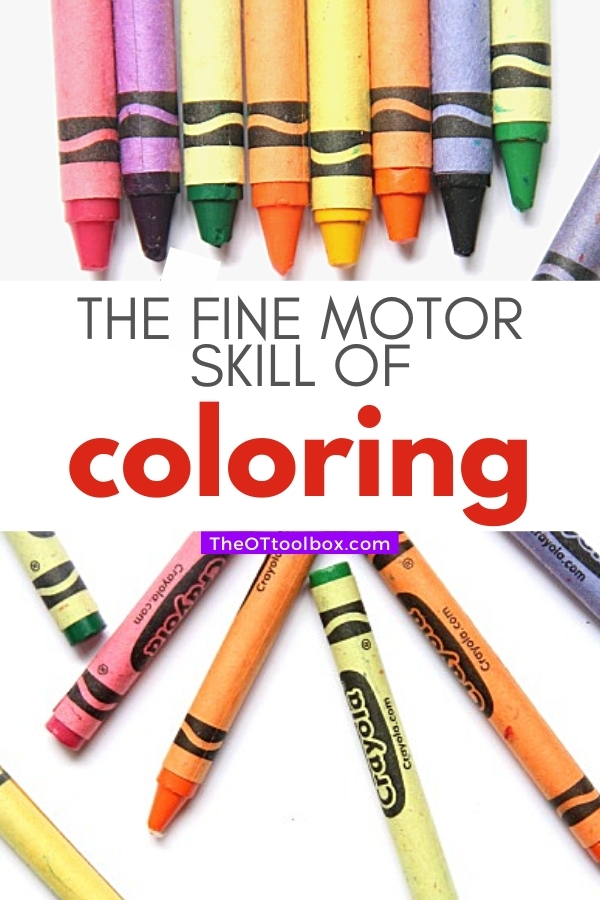


Coloring is a fine motor skill and it helps kids develop other areas.

Benefits of Coloring for Children

There are so many developmental benefits to coloring! It’s more than creating a colorful preschool work of art.

Related Read: Read about how we worked on carryover of pencil grasp and strengthened fine motor skills and so many other areas with our 3 Crayon Challenge activity.
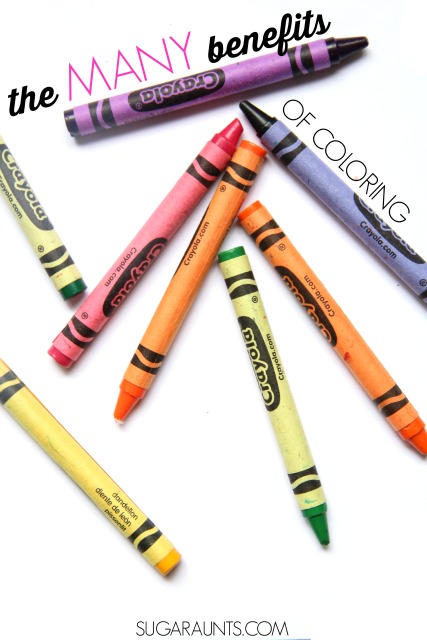
There are so many benefits to coloring for kids: hand strength, visual motor skills, visual perception, tool use, creativity, endurance, creativity, self-confidence, task completion, and learning objectives!  Tips from an Occupational Therapist for working on coloring and handwriting in school and at home.

Coloring with crayons Improves Tool Use


Coloring with crayons improves a child’s ability to manipulate tools such as pencils, scissors, utensils, grooming and hygiene tools, and other functional tools with ease. By developing coloring skills, kids have a natural opportunity to explore a writing utensil in a way that is fun and creative.  

They can use different colors by placing crayons back into the box with a coordinated manner.  To further develop tool use with children, offer a crayon pencil sharpener, a small bin or zippered pouch that needs opening or closing, and a variety of crayon sizes and shapes. All of these can extend fine motor skills with more practice in tool use as well as dexterity.

Coloring with Crayons improves Bilateral Coordination

Bilateral Coordination is a fine motor skill needed for so many tasks. Using both hands together in a coordinated manner is a skill needed for handwriting, scissor use, and many functional tasks.  When coloring, a child needs to hold the paper as they color.  Using the assisting, non-dominant hand as a stabilizer allows a child to build strength and dexterity in their dominant hand.  This skill will carry over to writing tasks, and makes coloring a great activity for kids who are switching hands in activities.

Coloring with Crayons Improves Endurance


Building on the fine motor skill areas, coloring can deepen a child’s endurance in completing writing tasks.  

Many times, kids will complain of hand fatigue while coloring.  They can build muscle endurance by coloring with the small muscles of their hands and allow for greater endurance when writing, too. To help a child develop hand strength, use coloring!

You can help kids improve hand strength with this simple coloring exercise: Instruct a child how to color in small circles to work on the strength and endurance of the intrinsic muscles.  Ask them to fill in the complete circle. To extend the activity, create more circles. This exercise can be extended further by working on a vertical surface such as an easel or by taping the page to a wall. This develops proximal stability at the shoulder girdle as well as core strength, allowing for postural stability in written work.

If a child needs to work on this area, you can show the student how to color on a slanted surface like a slanted table surface or elevated surface. Here is an easy way to create a DIY slant board.

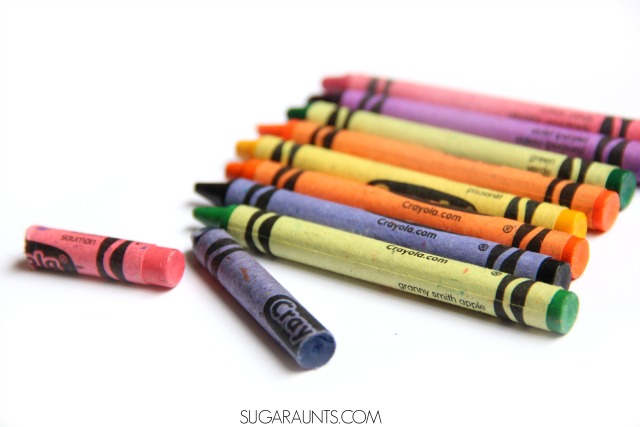
Broken Crayons help with hand strength! 
Fine motor skills with coloring

Coloring develops Tripod Grasp


Coloring is a fine motor strengthening tool that many Occupational Therapists recommend and use in treatment sessions.  Coloring is a resistive task that provides the small muscles in the hand to work the waxy crayon onto coloring sheets.  When a child holds a crayon, they are working on the strength of the intrinsic muscles of the hand.  

Using broken crayons requires more work and is a greater strengthening task for kids who need to work on their tripod grasp. For more strengthening, encourage your child to color more resistive surfaces such as construction paper, cardboard, or even sand paper. 


Coloring offers sensory input


Coloring with a crayon can be an opportunity to add heavy work through the hands. This sensory feedback is proprioceptive input that “wakes up” the muscles of the hands and can be calming input.

Unlike a marker, children can color lightly or very dark by exerting more pressure.  The proprioceptive system comes into play when a child attempts to vary the amount of pressure they are exerting through the crayon.

Coloring with markers just doesn’t provide that resistive feedback that coloring with a waxy crayon does. Markers are smooth and don’t give kids the sensory input that help with learning letters.  For a fun twist on letter formation activities, grab a box of crayons!  

To help kids write with heavier or lighter pencil pressure when writing, encourage children to shade and combine colors by being aware of how lightly or darkly they are coloring.  There is also that crayon scent that children are aware of, either consciously or unconsciously.  If you recall the scent of crayons from your childhood, then you know what I’m talking about here!

Coloring Skills Develop Spatial Awareness


Coloring skill development progresses as children gain experience in coloring. By developing coloring skills, kids can improve visual perceptual skills. Spatial awareness is an aspect of perceptual skills.

Visual perception is so important to many functional skills in handwriting: awareness of the body’s position as it moves through space, line awareness, using margins on a page, and writing within a given space.  Coloring is a great tool in working on these areas as children color within lines and given spaces.  

But sometimes, kids have trouble staying in the lines or coloring in areas without leaving large spaces uncolored.  Verbal prompts, highlighted lines, bold lines, thick coloring lines, and physical prompts like raised lines can improve spatial awareness in coloring.
There are so many benefits to coloring for kids: hand strength, visual motor skills, visual perception, tool use, creativity, endurance, creativity, self-confidence, task completion, and learning objectives!  Tips from an Occupational Therapist for working on coloring and handwriting in school and at home.

Coloring Skills and Eye Hand Coordination

One reason that coloring in occupational therapy sessions is so well-used as an intervention strategy is the development of eye-hand coordination skills. There are benefits of coloring with crayons when it comes to coordinating vision and motor skills. When writing or coloring, children must coordinate their physical movements with information received from their visual system.  

Controlled movements are essential for handwriting, letter formation, and neatness in handwriting.  Coloring helps with practicing coordination of the visual input with physical movements of the hands in very small spaces or large areas.

Providing smaller areas of coloring require more controlled movements and dexterity.  For difficulties in this area, consider adding boundaries to coloring areas, with darkened and thicker lines or raised boundaries like using Wikki Stix around the coloring area.

Coloring Benefits Creativity and Self-Confidence


Another of the benefits of coloring with crayons involves self-confidence. Coloring inspires creativity in kids.  A blank piece of paper and a box of crayons can inspire stories and pictures.  Being creative allows a child to build their self-confidence in other areas, especially handwriting and pencil tasks. If you’ve ever received a coloring masterpiece from a child, then you know the pure delight they have when giving a creation they have made.  That boost of self-confidence will entice them to complete other paper/pencil tasks.

Coloring helps with Color Identification and Color Matching


Crayons are color!  Kids can be encouraged to practice color identification with the bright and vivid colors in a crayon box.  Use a color by number activity to work on color matching skills.

These visual discrimination skills, visual scanning, visual attention, and visual memory needed to identify and match colors are part of the visual perceptual skills we talked about above. All of these are needed skills for reading, writing, math, and other higher level cognitive skills.
Coloring with crayons in occupational therapy helps kids develop fine motor skills

Coloring in occupational therapy teletherapy

All you need to develop the skills listed above is a simple box of crayons. This makes coloring a powerful tool in occupational therapy teletherapy, because many homes have crayons available.

Working on fine motor skills in teletherapy can be difficult because so many of an occupational therapist’s favorite fine motor tools might not be available. This is where using crayons to work on a variety of skills can be so powerful.

Try some of these teletherapy activities using crayons:

So, now you know the many benefits of coloring with crayons.  How can you use crayons in developmental and functional tasks?  Let’s explore crayons for various ages and stages.
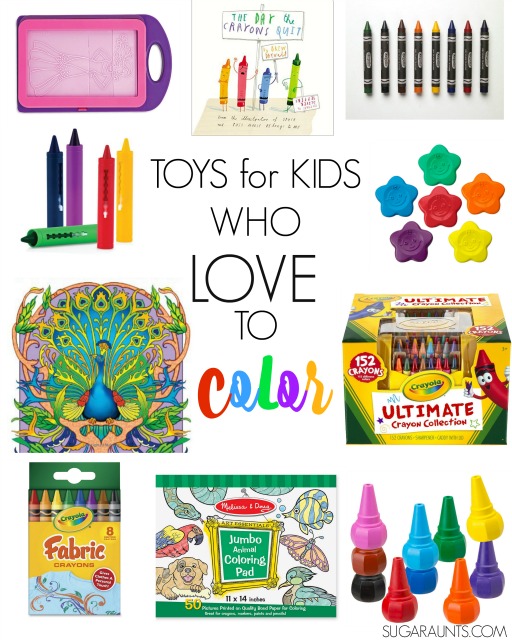
Toys and tools for kids who love to color and ways to incorporate coloring into kids daily lives to work on so many functional skills like fine motor, grasp, visual perceptual.

Toys for Coloring Skills

You’ll want to start by reading this article on the best crayons for toddlers. There, we cover crayons for building coloring skills from the youngest age, and highlight therapist-recommended crayons based on development.

First, start with our free President’s Day coloring pages (great for any US holiday!) and use the coloring therapy toys below.

Here are some creative learning and play ideas that kids will love.  Some of these are more pricey than just a box of crayons, but your crayon fan will enjoy using these toys and games and won’t even realize they are working on so many skills!

(We’re including affiliate links.)   One of our favorite books is The Day the Crayons Quit by Drew Dewalt. This is a book for crayon fans! We grab this book from the library anytime we see it, and it’s got a great message, too. Kids will be inspired to color after reading this book about crayons. 

 It’s no secret that crayons are a fine motor powerhouse when it comes to developing that tripod grasp! You can use larger crayons for smaller kids or children who need to work on other grasps, like a lateral key grasp, or children who need to work on thumb adduction in functional tasks like scissoring. These ALEX Jr. Tots First Crayons are just the thing to try! 

 Work on more fine motor skills, like finger isolation when using Finger Crayons.

Kids can get creative and explore sensory play while using crayons in the bathtub. 


 These Bath Time Crayons are on my list to try!

Do you remember rubbing crayons over fashion design kits as a kid? There is a reason to do this play activity with kids! 


This Fashion Design Activity Kit provides proprioceptive input and strength to little hands in a fun and creative way. 


 With 152 colors, this Crayola Ultimate Crayon Case will give your kiddo a color for every creative whim. This looks so inviting! 


 There is a coloring book out there for everyone! Even adults can get in on the coloring fun with creative coloring like this Art Nouveau Animal Designs Coloring Book . Color alongside your child for calming and relaxing art time. 


 I love the large size and big pictures of the Melissa & Doug Jumbo Coloring Pads. They are perfect for the youngest colorers. 


For more creative fun, try Dry Erase Crayons right on a dry erase surface. This is a great way to practice spelling words on a resistive surface. 


Little artists will love to create their own t-shirt designs using Fabric Crayons
. This is a fun way to work on fine motor strength and bilateral coordination. Holding down that cotton t-shirt is a bilateral coordination workout!
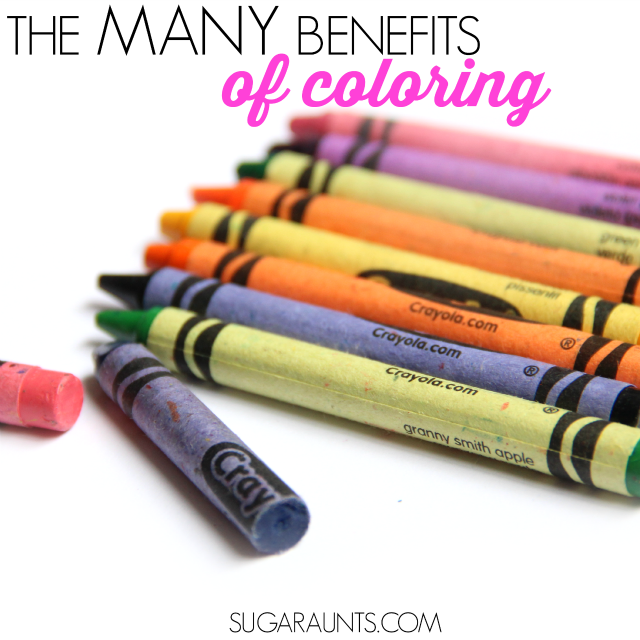
There are so many benefits to coloring for kids: hand strength, visual motor skills, visual perception, tool use, creativity, endurance, creativity, self-confidence, task completion, and learning objectives!  Tips from an Occupational Therapist for working on coloring and handwriting in school and at home.

Colors Handwriting Kit

Working on handwriting skills in occupational therapy sessions?

Need to help your child with handwriting legibility, letter formation, spacing, and sizing in written work?

Working on handwriting in the classroom and need a fun colors of the rainbow theme for motivating handwriting tasks?

The Colors Handwriting Kit has you covered!

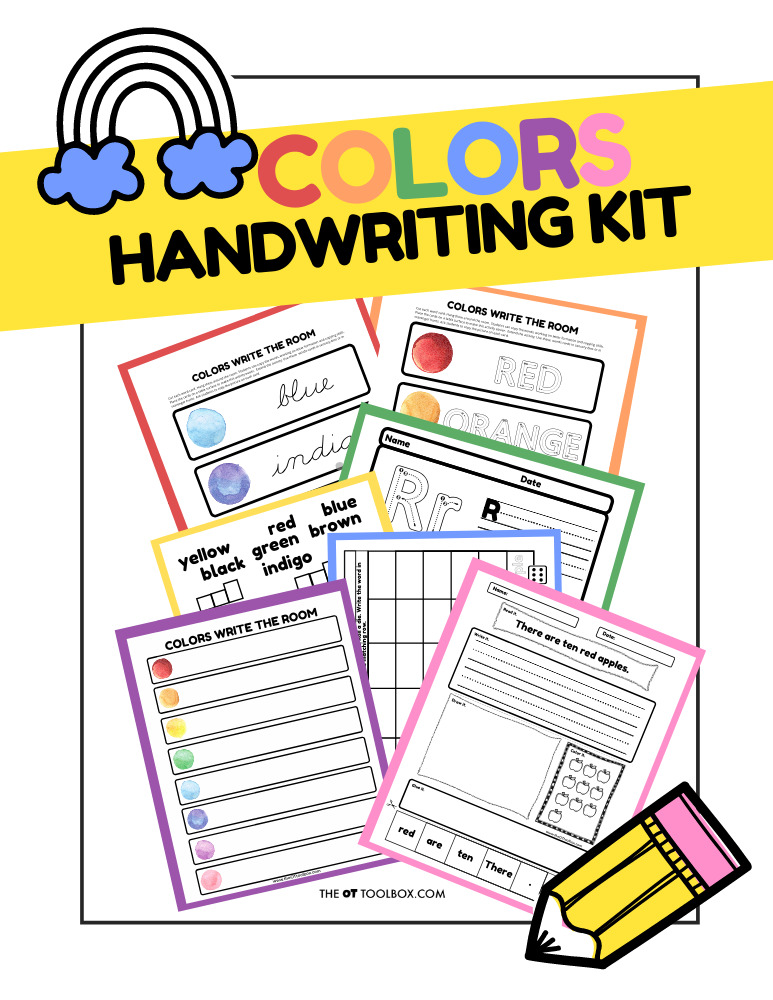
In the 60 page printable kit, you’ll find handwriting worksheets, fine motor activity pages for A-Z, colors “write the room” cards for uppercase letters, lowercase letters, and cursive letters. This kit has evertyhing you need for helpiing kindergarten-2nd grade students with handwriting skills.

Click here to access the Colors Handwriting Kit.
Colors Handwriting Kit
Colors Handwriting Kit for working on handwriting with a colors theme.

More Crayon activities

Metallic Crayon Dough

Shades of red crayon play dough 

Harold and the Purple Crayon play dough 

Rainbow Crayon Play Dough

Colleen Beck, OTR/L has been an occupational therapist since 2000, working in school-based, hand therapy, outpatient peds, EI, and SNF. Colleen created The OT Toolbox to inspire therapists, teachers, and parents with easy and fun tools to help children thrive. Read her story about going from an OT making $3/hour (after paying for kids’ childcare) to a full-time OT resource creator for millions of readers. Want to collaborate? Send an email to contact@theottoolbox.com.
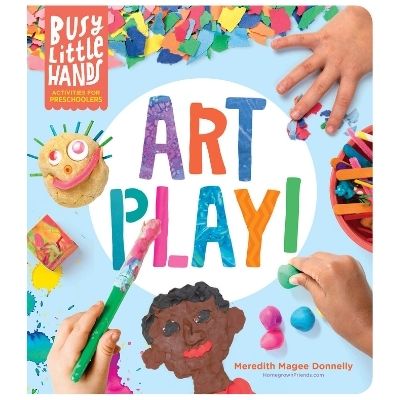
Art Play

Art Play book

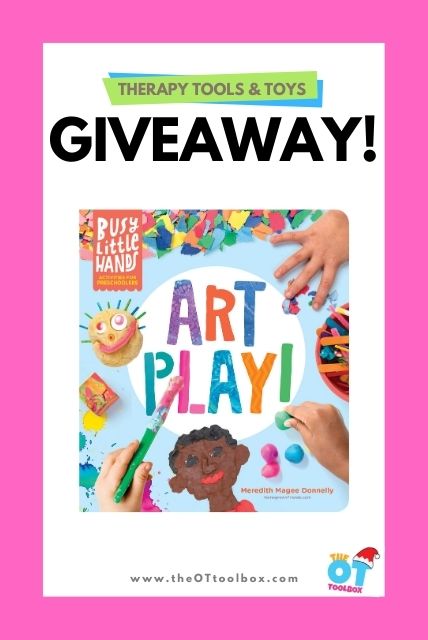
Today, I have an amazing resource to share with you. Art Play is a new book that has been recently launched, and is a creative art activity book that is also a sensory and fine motor goldmine. Children can use art activities to create while developing skills and making an art project they can be proud of! Art Play is a process art creation book that focuses on developmentally appropriate art projects for kids, using sensory experiences and allows children to explore art materials at a level that is comfortable for them…without expectations for the “perfect” end product.

Also be sure to check out our creative art ideas for more art play!

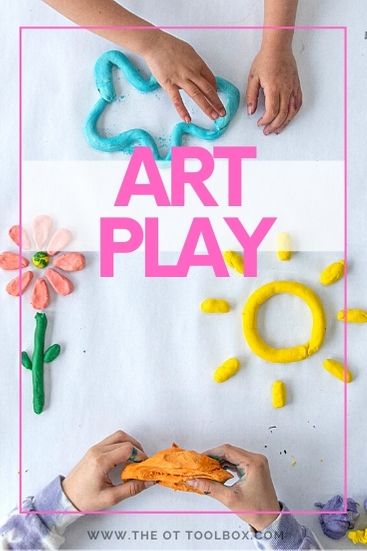
Art play combines play and art so children can develop skills through creating art in play.

Art Play

This post contains Amazon affiliate links.

Years ago, I created a children’s activity book with my friend Meredith, an educator and author of the website, Homegrown Friends. Meredith’s new book, Art Play, is my new favorite children’s art and activity book.

In the book, you will find easy to set-up art projects that focus on the child.

So often, we see crafts and art activities that are product focused. And, while the end-product focused craft has it’s time and place, especially when working on data collection or achieving specific goals in scissor skills or other areas, there is a place for process art in therapy as well.

And, this book has got you covered in child-friendly art projects that pull in a very important area: play!

We know that play is the job of the child. Play is a child’s primary occupation after all! And, it’s through play that these art projects allow a child to participate in creative, making activities. These are activities that allow a child to develop age-appropriate skills…through play!

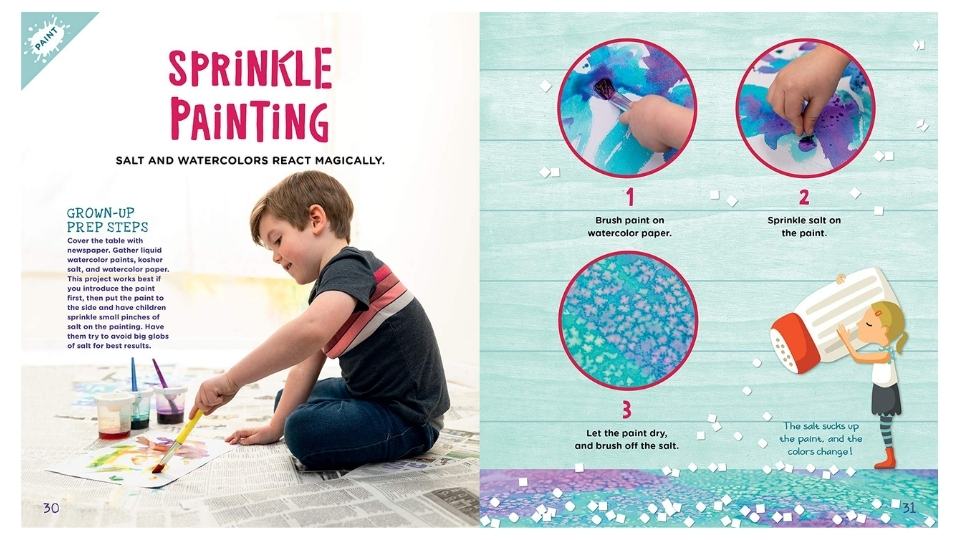
This book is beautifully and thoughtfully written and includes step-by-step instructions that are easy to follow. The pages of the book are wipeable and durable, meaning the book can be right there in the play activities and the pages are kid-friendly with thick paper that kids can manipulate.

Art Play book review

Just some of the skills that can be developed through the art projects in this book:

  • Pinch and grip strength
  • Eye-hand coordination
  • Motor planning
  • Visual motor skills
  • Direction following
  • Dexterity
  • Visual scanning
  • Visual memory, figure-ground, visual attention, and other visual perceptual skills
  • Tool use
  • Precision
  • Gross motor skills
  • Tactile experiences
Art play includes sensory painting that builds fine motor skills.

The art projects in the book focus on play, so there are so many play experiences for children to incorporate into art. Just some of the art play activities include:

  • Dramatic play
  • Pretend play
  • Building with blocks
  • Playing with cars/vehicles
  • Drawing
  • Painting
  • Inventing
  • Creating while upside down
  • Constructing
  • Dancing
  • Picking and collecting nature

When you combine art with play, you get a lot of movement-based activities that help children develop whole-body skills!

Process Art Activities

Would you like a copy of Art Play so you can add these hands-on activities to your therapy practice or home?

Check out the blog comments below which are loaded with reader’s favorite ways to create art with kids.

Colleen Beck, OTR/L has been an occupational therapist since 2000, working in school-based, hand therapy, outpatient peds, EI, and SNF. Colleen created The OT Toolbox to inspire therapists, teachers, and parents with easy and fun tools to help children thrive. Read her story about going from an OT making $3/hour (after paying for kids’ childcare) to a full-time OT resource creator for millions of readers. Want to collaborate? Send an email to contact@theottoolbox.com.
Therapy Box

therapy boxes for occupational therapy activities

This year, as we prepare for back-to-school, many therapists are asking how to create therapy kits. Many parents are wondering how to set their child up for success in hybrid schooling. Many with kiddos that will attend full or part-time online school are trying to figure out how prepare for the upcoming school year.

As a pediatric occupational therapist, I have always come up with small occupational therapy boxes or “kits” to use in practice. I love to create a themed box or bin of OT activities and use that to work on a certain set of skills.

THEMED THERAPY BOXES

In this upcoming school year, we will be using themed kits in our home to help my youngest learn and develop skills (handwriting, precision in cutting with scissors, reading, manipulatives and math). This was one way that I was able to hold her attention for schooling at home this past Spring, and we will continue with that strategy this school year.

Some ideas that help to hold a child’s attention and get them excited for therapy or learning include these therapy boxes based on a theme:

Back-to-School Therapy Kit

Toddler Color Bin

More themed occupational therapy kits

Mini-Stars Sensory Bin

Deep Blue Sea Book Sensory Bin

Each of these themed therapy bins takes a common theme and offers ways to build skills- fine motor skills, sensory exploration, and more- through play!

Having a boxed set of therapy materials allows children to explore tools that help them grow stronger as they explore and play. Kids love to “unbox” the materials and use them while they discover the therapy box materials.

It’s a great way to get kids excited about therapy this Fall when school and learning routines are out of the ordinary.

THERAPY BIN GIVEAWAY

The boxes are available as a single box purchase or in a monthly subscription model so that each month, you have a new therapy box arrive at your door. What a great way to get the kids excited about building developmental skills!

When you receive your box, you will be provided with activities for fine motor development, gross motor development, sensory play and family fun to enhance opportunities for growth & development.

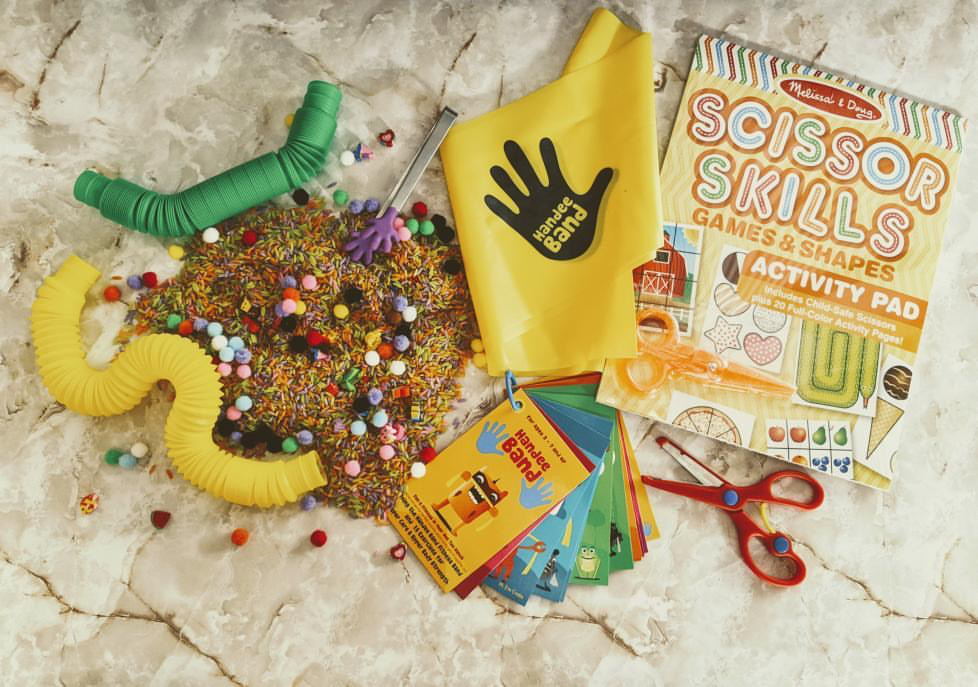
Check out the items in this giveaway box…add these tools to your OT sessions or at home activities:

Occupational therapy giveaway items

OT for Me, is dedicated bringing families quality, hand-picked products and activities that have been tested and approved by the occupational therapy creators.

The therapy box aims to enhance kids’ individual skills and is cognizant that not all children develop at the same rate, so descriptions of the skills each product targets include strategies to make each activity harder or easier for that “just-right challenge”.

Each month, the therapy boxes are packed with new and exciting activities, meant to motivate children to “work” on developmental skills, all while having fun. Each box will always have an activity or product targeting the following 4 domains: Fine motor, Gross Motor, Sensory, & Academic/Family Fun- as well as other fun items! 

Colleen Beck, OTR/L has been an occupational therapist since 2000, working in school-based, hand therapy, outpatient peds, EI, and SNF. Colleen created The OT Toolbox to inspire therapists, teachers, and parents with easy and fun tools to help children thrive. Read her story about going from an OT making $3/hour (after paying for kids’ childcare) to a full-time OT resource creator for millions of readers. Want to collaborate? Send an email to contact@theottoolbox.com.
Easter Egg Game- Color Scavenger Hunt

Easter egg game that kids will love while working on color matching, color identification, visual perception.

If you are looking for a fun Easter egg game that the kids will love, then you are in luck. Add this activity to your Easter activities and use up a few of those plastic eggs. This color scavenger hunt uses plastic Easter eggs, and it’s a very fun way to play and learn!

Use those plastic eggs to encourage gross motor skills, visual perception, and color learning in a way that kids won’t forget. While the kiddos are playing this Easter game, they are building cognitive skills AND underlying skill areas like visual scanning and other visual perceptual skills.

Easter egg game that kids will love while working on color matching, color identification, visual perception.

Easter Egg game

We set this Easter activity up years and years ago. (2013 to be exact!) However, it’s one of those activities that stands the test of time. If you’ve got plastic Easter eggs on hand, use them to build skills like the ones we worked on here!

This Easter egg activity helps kids learn colors and learning with a color scavenger hunt gross motor activity

COLOR SCAVENGER HUNT

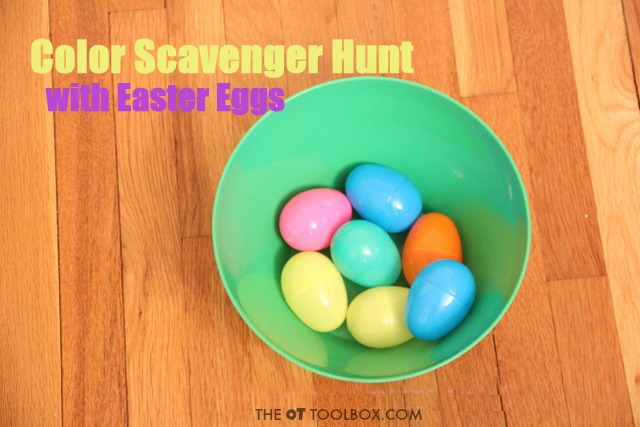
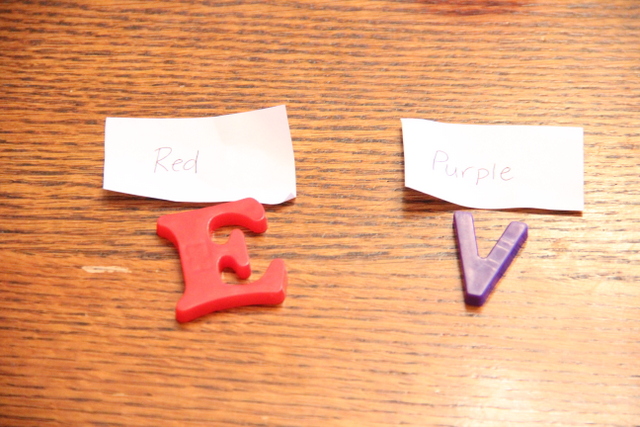
This color scavenger hunt is so easy to set up…and so much fun. Kids can work on identifying color names, and color matching. I wrote different colors on slips of paper and put them into plastic eggs.  The kids got to pick an egg from the bowl and “sound out” the color on the slip of paper.  Ok, my 5 year old sounded out the color with help.  The other two said the first letter of the word and guessed the color.  They were pretty excited to “read” the color on their slip of paper!  

Another idea to expand this activity is to write words and do an Easter egg version of our word scavenger hunt.

Kids will love this Easter egg game using plastic Easter eggs in a color scavenger hunt activity.
Use this color scavenger hunt with easter eggs to work on color matching and color identification with kids.

An Easter Game Kids will Love

Now for the egg game…So then, they had to run off and find something that was the color of the written word on their slip of paper…and it had to FIT inside the egg.    I sat and waited for them to run back and show me what they found while they tried to fit it in their egg.   (completely genius way for this mom to finish a cup of coffee!)  

Kids can look for objects that match plastic Easter eggs in a color scavenger hunt that allows them them move and play with learning, too.

They had a little trouble with some things, but this was a fun and different way to work on visual perceptual skills.  Will that little doll fit in the egg?  We weren’t sure by looking at it, but with a little fiddling, she did!   Fitting the eggs together with the little objects inside was a great fine motor exercise.

Kids can look for matching colors in this plastic Easter egg game that helps them with color matching and visual scanning.

Color Identification for Kids  

They found something for each color!  

Putting items into the eggs and then matching colors was a great way to work on color identification skills.

Matching colors requires visual motor skills to match colors and use that recognition in identifying the name of the color. It’s a skill that requires visual memory as well as working memory. This skill then carries over to so many other areas like letter recognition, and so much more.

Learning colors is a building block for learning in kids!

Kids can play this color scavenger hunt game with plastic Easter eggs for a fun Easter game that can be played indoors or outdoors.
Kids can learn color names and work on learning skills like visual scanning, fine motor skills, and gross motor skills with this Easter game.

This Easter themed play activity could be modified in so many ways for learning words, colors…have fun with it 🙂

Want more ways to play and learn this time of year?

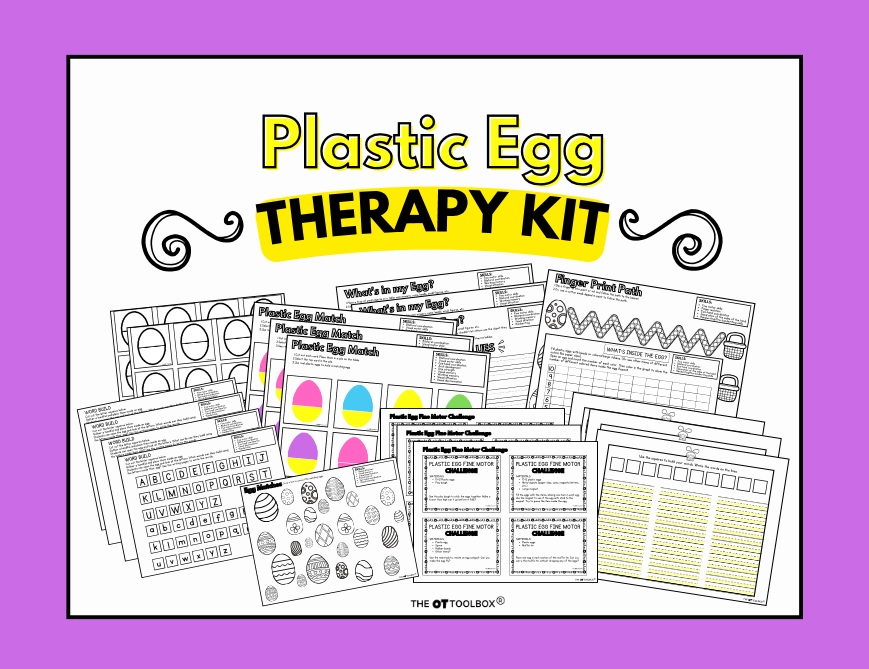
One resource we love is our $5 therapy kit…the Plastic Egg Therapy Kit! It has 27 printable pages of activities with an Easter egg theme. In the kit, you’ll find fine motor activities, handwriting prompts, letter formation pages, pencil control sheets, plastic egg activities, matching cards, graphing activities, STEM fine motor task cards, and more. There are several pages of differentiated lines to meet a variety of needs. This therapy kit has everything done for you.

Get your copy of the Easter Egg Therapy Kit here.

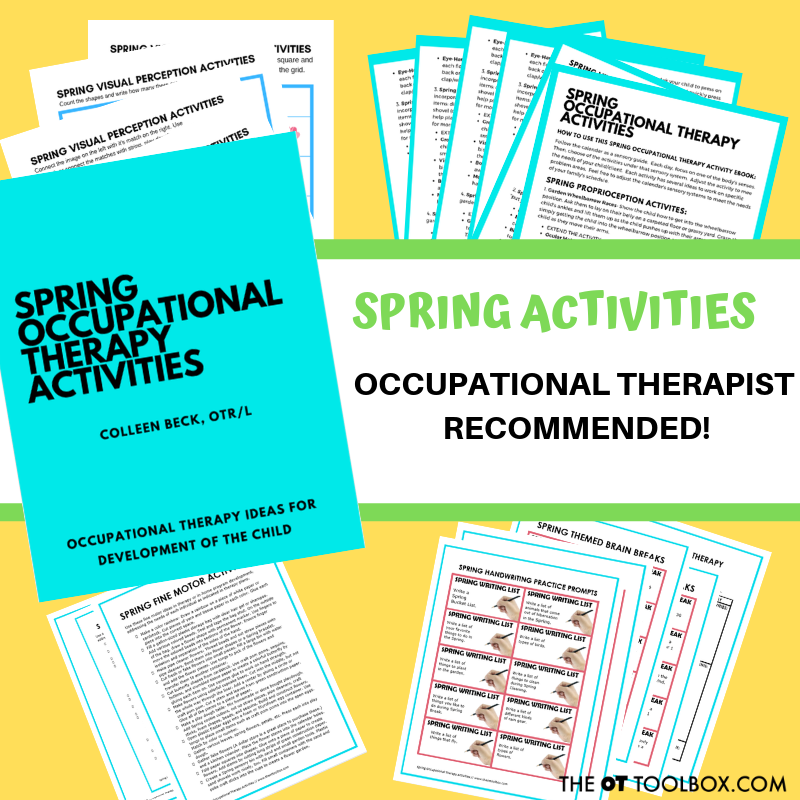
This time of year, one of our more popular products here on The OT Toolbox is our Spring Occupational Therapy packet. The best news is that, this packet has had a major upgrade from it’s previous collection of spring sensory activities.

Another great tool for supporting skills is the Spring OT packet…

In the Spring OT packet, you’ll now find:

  • Spring Proprioceptive Activities
  • Spring Vestibular Activities
  • Spring Visual Processing Activities
  • Spring Tactile Processing Activities
  • Spring Olfactory Activities
  • Spring Auditory Processing Activities
  • Spring Oral Motor Activities
  • Spring Fine Motor Activities
  • Spring Gross Motor Activities
  • Spring Handwriting Practice Prompts
  • Spring Themed Brain Breaks
  • Occupational Therapy Homework Page
  • Client-Centered Worksheet
  • 5 pages of Visual Perceptual Skill Activities

All of the Spring activities include ideas to promote the various areas of sensory processing with a Spring-theme. There are ways to upgrade and downgrade the activities and each activities includes strategies to incorporate eye-hand coordination, bilateral coordination, body scheme, oculomotor control, visual perception, fine and gross motor skills, and more.

THE BEST THING ABOUT THE SPRING ACTIVITY PACKET:

One of my favorite parts of the Spring Occupational Therapy Packet is the therapist tool section:

  • Occupational Therapy Homework Page
  • Client-Centered Worksheet

These two sheets are perfect for the therapist looking to incorporate carryover of skills. Use the homework page to provide specific OT recommended activities to be completed at home. This is great for those sills that parents strive to see success in but need more practice time for achieving certain skill levels.
This activity packet is 26 pages long and has everything you need to work on the skills kids are struggling with…with a Spring theme!

Here’s the link again to grab that packet.

Use this Spring Occupational Therapy Activities Packet to work on occupational therapy goals and functional skills with a spring theme.

Colleen Beck, OTR/L has been an occupational therapist since 2000, working in school-based, hand therapy, outpatient peds, EI, and SNF. Colleen created The OT Toolbox to inspire therapists, teachers, and parents with easy and fun tools to help children thrive. Read her story about going from an OT making $3/hour (after paying for kids’ childcare) to a full-time OT resource creator for millions of readers. Want to collaborate? Send an email to contact@theottoolbox.com.
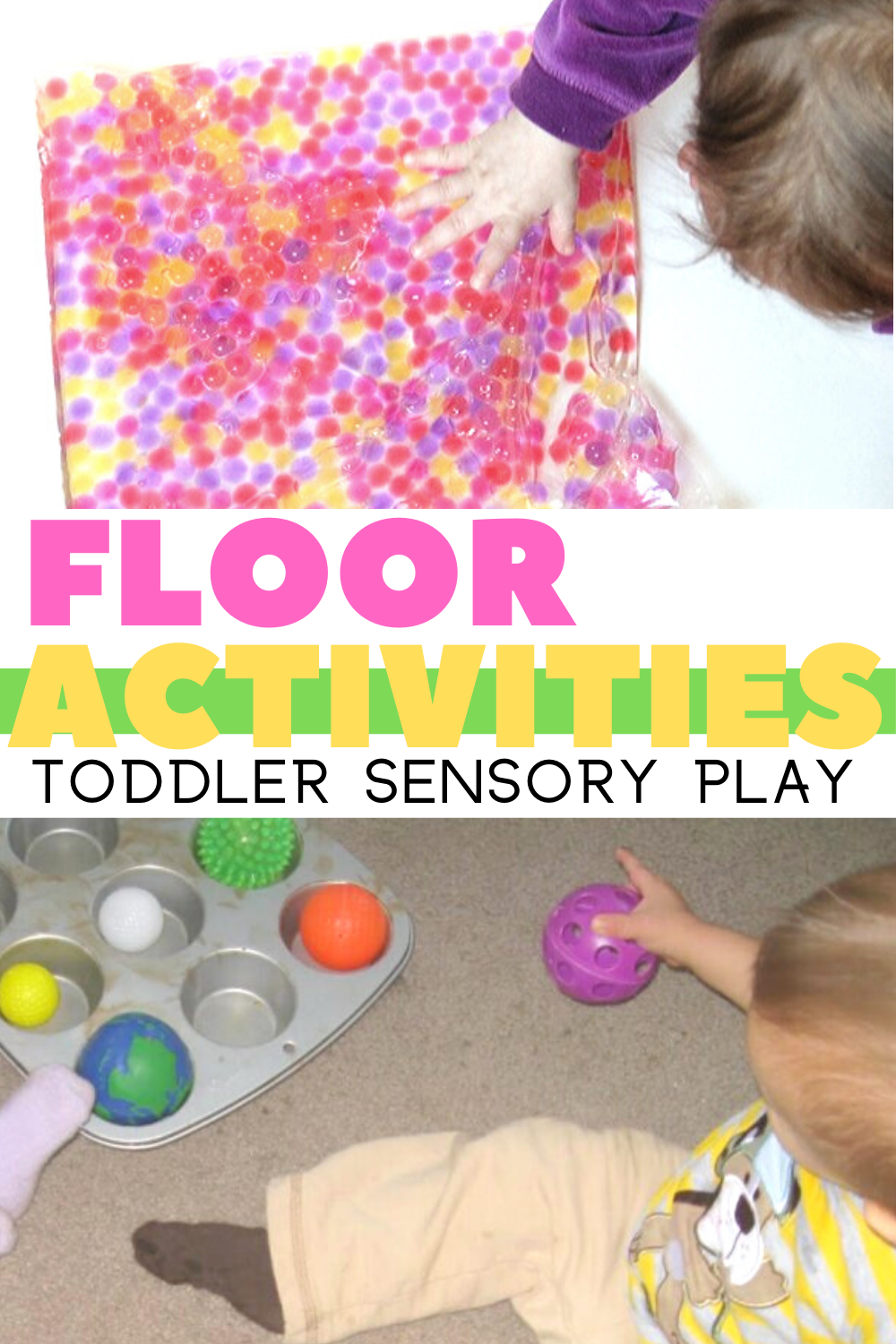
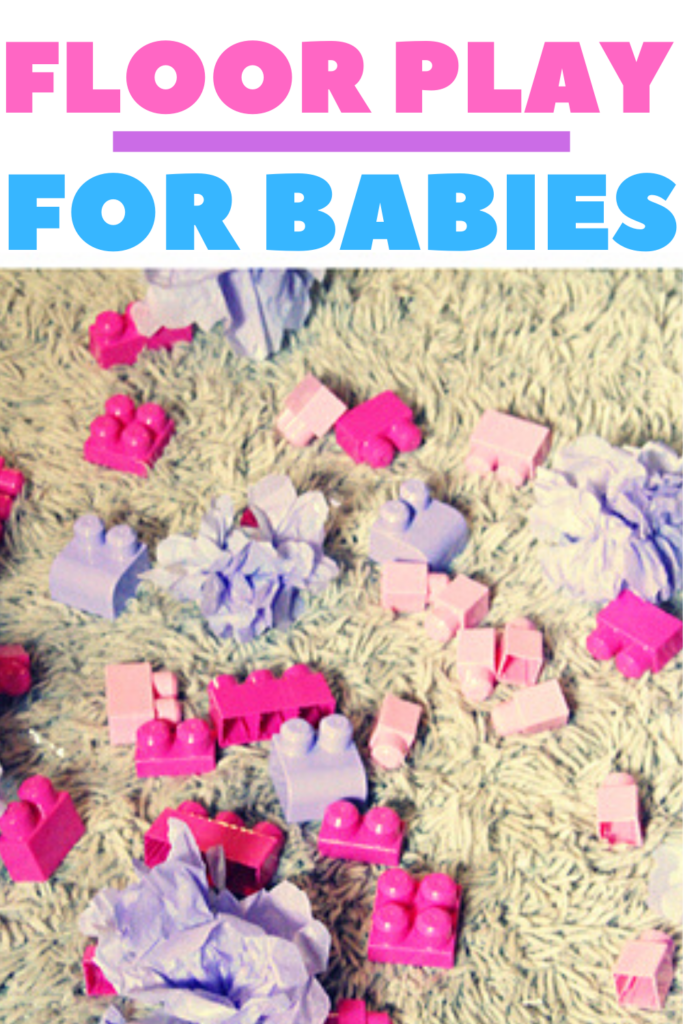
Floor Play for Babies

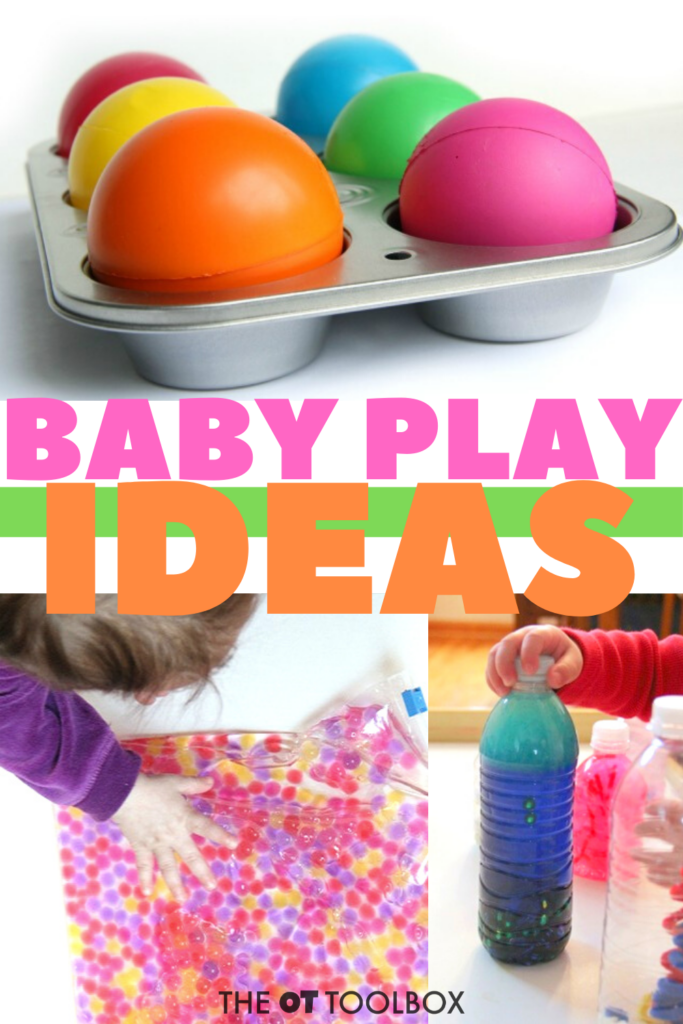
Baby floor play is one of those essential play activities that maybe kids are missing out on more than ever. Here we are talking about why babies need to get down on the floor to baby play, and how to set up floor play activities for babies and toddlers. Baby development depends on movement and play. These ideas will guide you in creating play activities that maximize child development through those early years.

Another great resource to check out is a new blog post on DIR Floortime.

What is Floor Play

Floor play and movement play is one of those things that not only help babies develop essential skills, it is a powerful way to help them excel with higher level tasks. There is so much more than just placing a baby down on the floor to play. Let me explain…

When little ones are on the floor in tummy time or in play activities, they are developing essential core strength and visual perceptual skills that will help them down the road in areas like reading, endurance in play, and even handwriting. Here is more information on how floor play and tummy time helps with the development of spatial awareness and other visual perception skills.

Time spent on the floor helps with kinesthetic intelligence as well. With tummy time play comes skills like body awareness and reasoning, eye-hand coordination, motor skills, and spatial ability for function.

Play For Babies

Baby floor play is such a powerful way to help with child development! Use these floor play activities for babies to support skills like crawling.

For babies, tummy time helps to build strength in the core, arms, neck, and shoulder girdle needed for sitting up, changing of positions, and coordination. Here are baby play ideas that can be incorporated into floor time activities. Movement like participating in play, changing positions, reaching, crawling, moving objects, and functional tasks require endurance and stability. Tummy time is an important task for infant babies as well as older babies for different reasons. In each stage, floor play encourages use of the body and eyes in coordinated motor plans.

More Floor Activities for Babies and toddlers

Floor play for babies can look like toys placed in front of the infant. Using noise toys, rattles, and eye-catching toys encourages reach, visual tracking, neck and head movement, and development of visual processing and auditory processing.

Floor play for infants can look like a scattering of toys placed in a circle around the child. This positioning encourages turning, rolling, and creeping or crawling, especially when the little one is pushing up onf their elbows and hands.

For very small babies, floor play can look like getting very close to the child to encourage them to pick up their head and make eye contact.

Baby play ideas can be easy but pack a powerful punch when it comes to child development and helping with skills like crawling and learning.

Older babies that are sitting up can benefit from a scattering of toys placed around them on the floor. Place pillows behind and around the baby and encourage them to pick up toys like large blocks as they bring the toy to their mouth to explore. Picking up and bringing items to the midline promotes endurance of core strength, stability in the core, and coordination as they reach and turn.

Playing on the floor can include baby mats or baby-safe mirrors. Check out this baby sensory play idea using mirrors for an easy way to encourage movement and endurance in floor play using everyday items such as cups, balls, and baby toys.

Babies that are beginning to crawl love play tunnels…and for good reason. Baby play tunnels are exciting and fun! But not only that, they develop skills like visual motor skills, cause and effect, visual scanning, visual convergence, and so much more. Here are more play tunnel activities for babies.

Try this indoor play idea that boosts development of skills such as fine motor skills, visual motor skills, and visual perceptual skills using toddler-friendly blocks!

Floor play for babies builds skills and helps them develop and learn to crawl while building endurance and strength for motor movement tasks.
Use large blocks or other baby toys in floor play for babies. Super easy!

Occupational therapists know the value of movement and playing on the floor has on babies. We know that babies need tummy time and a chance to move on the floor without use of the Bumbo seat, swing, and other baby positioners. We KNOW that play is the child’s primary occupation and that through play, they develop motor skills, cognition, language, and so much more.

That’s why I’m SO excited to share a valuable new resource for new and expecting moms.

Remarkable Infants is a HUGE resource for new parents. This online course, taught by 5 child development experts, is a 5 hour crash course on development of the whole child from birth through 12 months of age. It is literally everything that we WISH new parents knew about tummy time, positioners, developmental milestones, baby play, communication, sleep, and nutrition.

Upper Extremity Activities for Toddlers

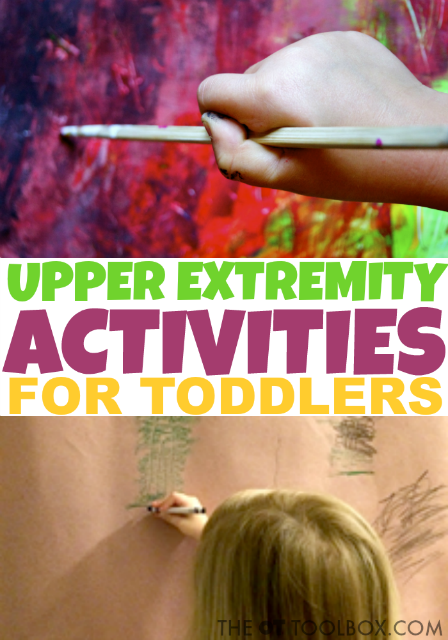
Upper extremity hand strength isn’t just about strong hands! Kids need upper extremity strength for tasks such as handwriting, coloring, managing clothing fasteners, and more! The thing is, upper extremity strengthening begins at a very young age. In fact, activities for toddlers can be loaded with the strengthening and dexterity activities that strengthen the upper extremities for improved endurance and coordination down the road. All of these components work together fluidly for strong upper extremities. Check out the upper extremity activities for toddlers to find out how and where to begin with upper extremity strength!  


Upper extremity activities for toddlers

 
Working on upper extremity strength is a key factor in being
able to have the endurance for handwriting. Working on the shoulder muscle strength and flexibility will help to improve the coordination needed for drawing and handwriting. 
 
We covered some of the best crayons for toddlers with focus on the strength and motor skills that develops during the toddler years. Check out that blog post for information based on strength development during ages 1-3 years.


These upper extremity activities for toddlers will help improve the strength and stability needed for endurance and coordination in handwriting and other tasks.


Importance of upper extremity activities for strength

 
Why is this important? If a child does not have adequate
shoulder strength and core body strength it will be difficult for them to have controlled hand movements.
You may notice that when handwriting or coloring that they position their
shoulder abducted and wrist will be flexed instead of in extension.  Build muscle strength proximal to distal
because if you don’t have strength in your shoulders, back, traps etc. then
your distal function (example handwriting) will not be as controlled.
 
 Below are two easy activities
that can be done at school, in a clinic or at home with a child to address
upper extremity strength. Also try these activities to promote wrist extension.
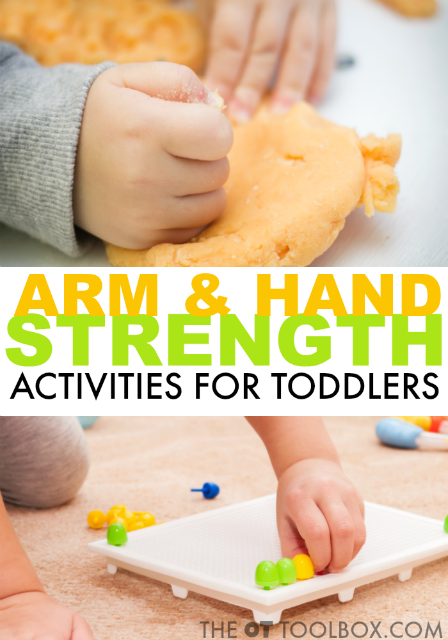
Use these arm and hand strength activities for toddlers to improve upper body strength for better coordination and endurance in handwriting and other fine motor activities for toddlers.

Upper extremity strength activities for toddlers

These are upper extremity activities for toddlers and kids who would benefit from strength and endurance in the upper body.

Gravity Resistive Sticker Activity

 
Have the child lay on the ground under a table. I will
usually place a pillow or blanket to make it more comfortable. Tape a large
piece of paper under the table and have the child, while laying on their back,
place stickers on the paper.
 
I have drawn circles for the child to place stickers in or
had a background theme. For example, a nature background and use stickers such as birds, trees, etc. The other activity I have done is had the child place stickers randomly all over the paper and then then have to use a marker to circle the shapes. Works great if you are working on a child’s pre-writing skills.
They could also put a square, triangle or make an X on the shapes.
 

Crayon Rubbing on a Vertical Surface

I remember when I was younger I really enjoyed taking coins,
placing paper over them and then using a crayon to rub the print onto the
paper. I also did this with leaves in the fall. How exciting to see the print
come out on the paper!
 
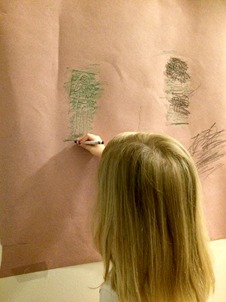
One fun way to keep a child engaged with this great upper extremity activity for toddlers, is to tape crayon rubbing plates on the wall, place a large sheet of paper over them and then give the child crayons to rub the paper until they see the print.


Use wall crayon rubbings to help kids strengthen the upper extremities in this upper extremity activity for toddlers.
 
Having a child color on a vertical surface is a great
activity in itself for shoulder stability and flexibility and it puts the wrist
in extension which helps encourage a better pencil/crayon grasp.
I have used crayon rubbing plates with animal pictures on
them and  girls love to color the fashion
plates. To keep the child engaged I won’t let the child see what plates I am
using. That way they continue to color on the vertical surface to see what pictures
they get.
 
This activity also
works on teaching children how to apply more pressure when writing/coloring, as
you need to press hard to have the print come through and softer if the print
is blurred because of how hard the child pushed on the crayon.


Looking for more upper extremity activities for toddlers?

This crayon rubbing activity uses sight words to work on strength and pressure in handwriting.

 
Want some other fun ideas to work on a vertical surface? Check out learning ideas on windows and glass doors!


Stickers are an awesome fine motor tool. Here are 10 ways to use stickers to help with fine motor skills.
 
Read more about the many benefits of coloring with crayons.
 
Read more about working on a resistive surface to build strength and stability.
 
Another great under the table activity is beading! Use resistance and gravity to strengthen and boost skills by beading under a table.
 
 
About Christina:
Christina Komaniecki is a school based Occupational Therapist. I graduated from Governors State University with a master’s in occupational therapy.   I have been working in the pediatric setting for almost 6 years and have worked in early intervention, outpatient pediatrics, inpatient pediatrics, day rehab, private clinic and schools. My passion is working with children and I love to see them learn new things and grow. I love my two little girls, family, yoga and going on long walks.


Visual Perception Apple Activity

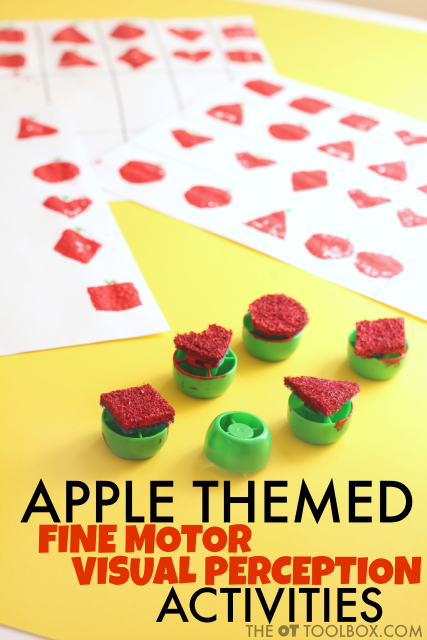
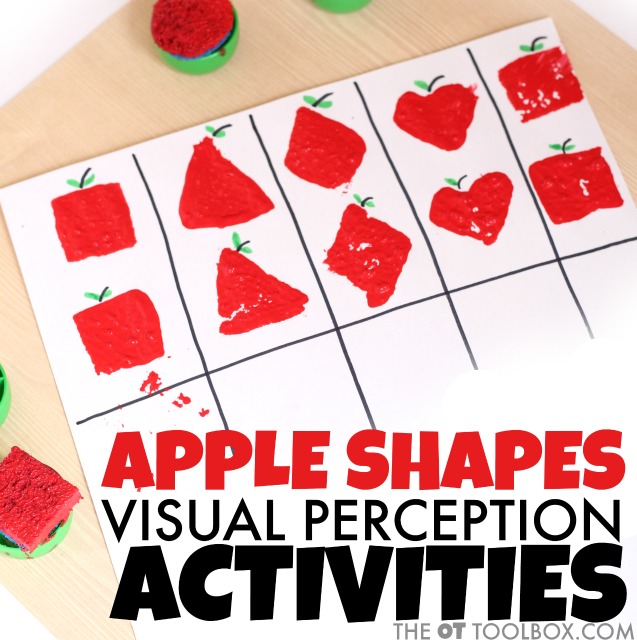
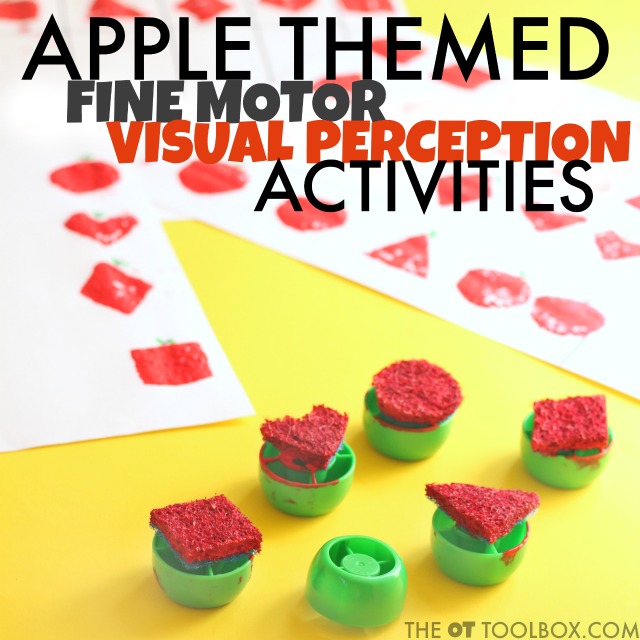
During the fall months, apple activities are a fun way to sneak in skills like visual perception development or fine motor strengthening.  This visual perception apple activity promotes both of those areas in a fun and creative way.  We used recycled pouch bottle caps to make DIY stamps that fit in with an apple theme.  If you are looking for more visual perception activities, there are a bunch on the site.  Check out the additional ideas at the bottom of this post.

The apple theme is perfect for the fall season and would fit in nicely with this apple theme gross motor activity.

Visual perceptual skills are needed for so many skills! Handwriting, reading, writing, math, spelling, shoe tying, cutting with scissors…everything! You’ll find easy and fun ways to work on visual perceptual skills through play here. 

Kids will love this visual perception apple activity using DIY apple stamps.

Visual Perception Apple Activity

This post contains affiliate links.
You’ll need just a couple of materials for this idea:
Scissors
Applesauce pouches (Eat the applesauce and then wash and dry the lid!)
Hot glue gun (I love this mini version for making quick projects like this one.)
Paper
Red paint

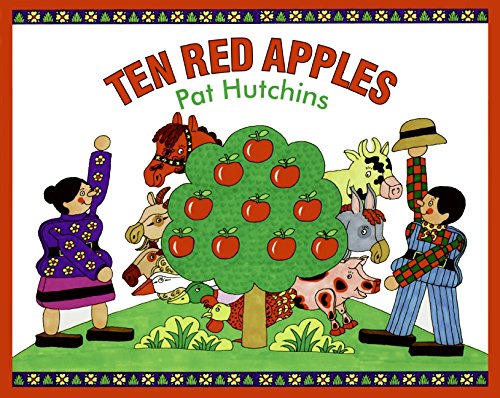
This activity goes along with the popular children’s book, Ten Red Apples. Grab the book and do this developmental activity with the kiddos.  You’ll love all of the book activities that combine children’s books with activities to promote development of functional skills and underlying skill areas here on The OT Toolbox.

Use DIY apple stamps to work on visual perception with an apple theme.
To make the apple stamps:
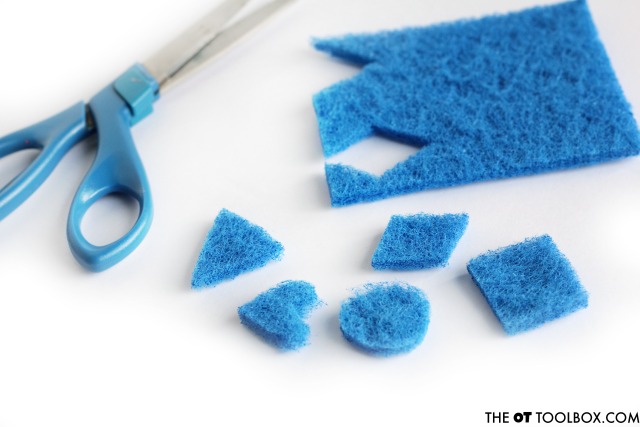
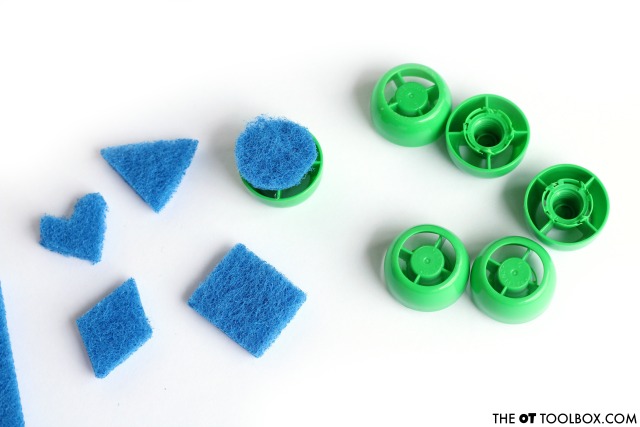
Cut the scrub pads into different shapes.  We made a square, circle, diamond, and heart.
Make your own foam stamps to work on visual perception and fine motor skills.
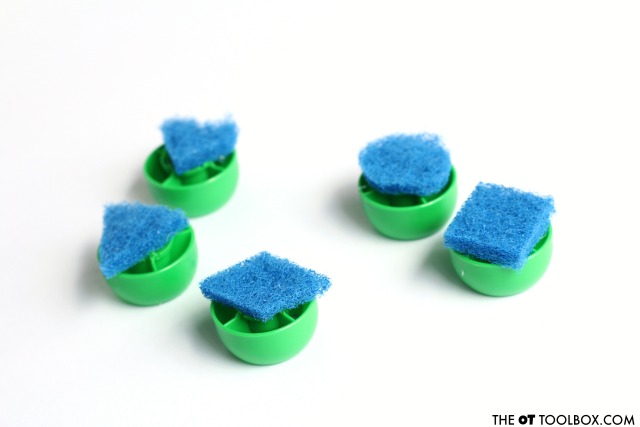
Use the hot glue gun to attach the shapes to the pouch lids. This is a job for an adult.

Kids can work on visual perception and fine motor skills using DIY stamps with an apple theme.
Once the foam shapes are attached and the glue is dry, you can start to work on those fine motor and visual perceptual skills.

Use these DIY stamps to work on visual perception and fine motor skills with kids.
This is a fun visual perception activity for kids to work on skills using DIY stamps.
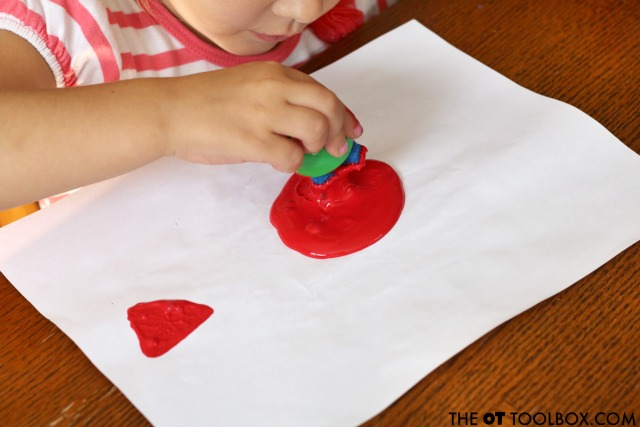
Pour a small amount of red paint onto scrap paper.  Kids can use the stamps to make different shapes by pressing the foam side into the paint and then pressing paint onto paper. There are several fine motor skills being addressed with these stamps:

Apple Theme Fine Motor Activity

Show your child how to hold the stamp using their thumb, pointer finger, and middle finger.  This positioning on the pouch cap encourages a tripod grasp and separation of the two sides of the hand.
Ask the child to use the stamper with their dominant hand.  By holding the stamp with to paint, they are also developing and strengthening the arches of the hand.
Additionally, the size of the stamp encourages an open thumb web space which is perfect for a functional pencil grasp during handwriting tasks.
These stamps are quite the fine motor power tool!
Apple stamps for helping kids work on visual perception and fine motor skills.

Apple Stamps and Visual Perception Activity

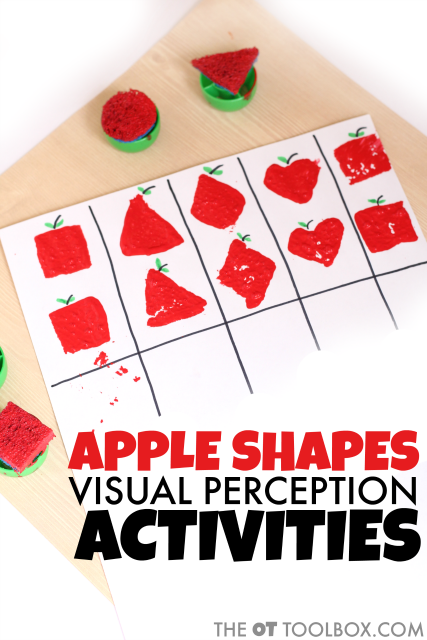
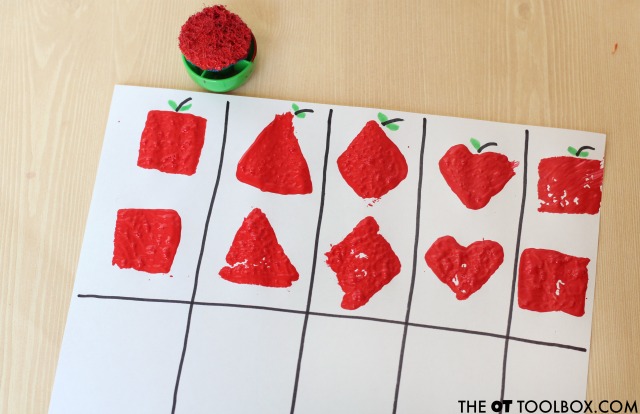
Next, kids can turn those shapes into apples by copying the different parts that make an apple.  We used black and green markers to add a stem and leaves to each apple shape.
To encourage development of visual perceptual skills, show kids how to copy the stem and leaves. They can then copy those parts onto their apples.  Try adding one or two leaves or making the stems go into different directions or with different lengths to encourage visual memory, visual discrimination, and visual motor skills.
Use these apple stamps to help kids improve visual perception and fine motor skills needed for handwriting, reading, and more.

Visual Perception Apple Activities

There are so many ways you can use these apple stamps to address visual perceptual skills!
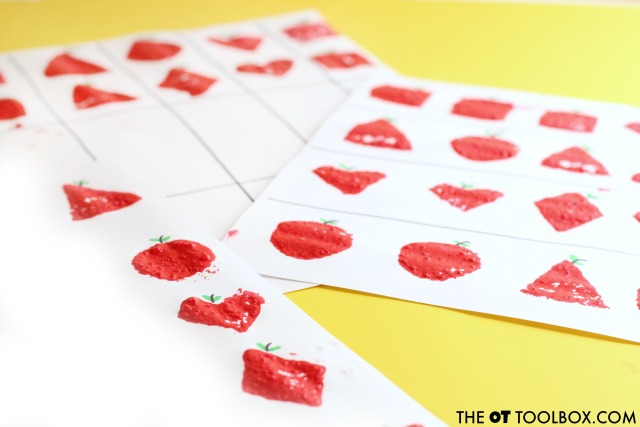
Make copying sheets where kids copy the apple shapes in the correct sequence to address visual memory.
Make visual discrimination sheets where kids can identify the difference in shapes.
Work on visual spatial relations by stamping apples in different positions on a page.  Kids can then tell where they see a specific shape in relation to another shape.
Address visual discrimination by making an “I Spy” type of sheet.
Work on form constancy by covering up part of an apple shape and asking kids to make the apple shape that matches that shape.

Apple theme visual perception activity for kids
How would you use these apple stamps to address visual perception?

Kids love these visual perception apple activities that also work on fine motor skills
These apple stamps is a fun apple activity to use in coordination with a book.  If you have been a reader of The OT Toolbox for long, you know that we love to combine favorite children’s books with developmental activities.  For this apple activity, we joined the bloggers in the Virtual Book Club for Kids group in creating an apple themed activity that fits with the book, 10 Red Apples by Pat Hutchins.
We loved reading this book as we counted the apples on each page.  The book, Ten Red Apples is a fun way to address visual perceptual skills like visual discrimination, visual memory, and form constancy as each page contains the animals that eat an apple from the apple tree.  To address visual perceptual skills with this book, ask your child to scan the group of animals and pick out individual characters or animals on each page.  It’s a visual perceptual challenge that carries over to skills like reading and writing.

For more creative ways to address visual perceptual needs, try some of these ideas by clicking on the images below.

Looking for more ways to add apple themes into learning and play? Try these creative ideas from the Virtual Book Club for Kids team:

Apple Tree Alphabet Letter Match  Still Playing School
Apple Piece Names  Preschool Powol Packets
Sea of Knowledge    Apple Addition within 5 Dough Strips
Fingerprint Apple Counting Activity   Messy Little Monster
Apple Math: Counting & Fractions   Teach Beside Me
Red apple number bonds to 10   Rainy Day Mum
Apple Tree Playdough  Clare’s Little Tots
Apple picking sticky wall  Views from a Step stool
Baked Apples  Witty Hoots
Apple Stack Game and Snack  Toddler Approved
Jumping Apple Seeds  JDaniel4’s Mom
Apple Theme STEM Activity for Preschoolers  The Educators’ Spin On It
Glitter Apple Stamping  My Bored Toddler
Apple Tree Tracing Page
Apple Farm Song with Movement  My Storytime Corner
Ten Red Apples: Number Words Activities  Growing Book by Book
Apple Tree Gross Motor Game  Inspiration Laboratories
Apple Sewing  CrArty Kids

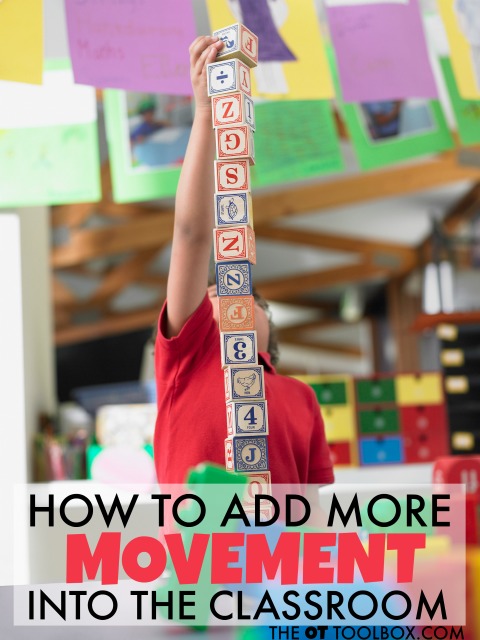
Ideas to Incorporate Movement into the Classroom

Children today are experiencing less and less physical activity and more and more sedentary lifestyles that limit participation in many motor experiences. Children are spending more time in front of screens and less time climbing trees, rolling down hills, and in general less time outdoors.  Physical activity is a vital part of health but for the student, movement in the classroom can have a big impact on learning.  Gross motor games and activities can help. 


There is much evidence of the link between movement and learning.  For some students, movement breaks in the classroom are an essential part of regulation of sensory needs.  Most students need a quick energizer to beat lethargy in a long school day at some point and brain breaks are a great answer to meet that need.   


Below, you’ll find easy ways to incorporate movement into the classroom.  


These are easy strategies that can be added at little cost.  As much as most teachers and school based professionals would love extensive equipment or alternative seating and cushions in their classroom, these ideas are not always feasible.  For these and other reasons, I’ve put together this list of ideas to add movement into the classroom environment.

These are great ideas for how to incorporate movement into the classroom for movement and learning, perfect ideas for teachers to help kids with attention or sensory needs, and any student who needs more movement in the classroom and throughout the school day.


Easy Ideas to Add Movement into the Classroom


You may have seen this video depicting movement in the classroom floating around on Facebook. Check it out. Does this sound familiar?


Add movement into learning- Incorporate gross motor movement into math when repeating math facts by incorporating whole-body games such as Simon Says (Students can perform specific motions when math facts are true, and perform other motor tasks when math facts are false.)


Daily Stretches


Afternoon Yoga Stretches


Dance Party Breaks


Brain break videos- Here are the best brain break videos on YouTube.


Themed Brain Breaks- Some ideas are these Bear Brain Breaks or these Farm Brain Breaks


Role Play Activities for history, science, geometry, etc.


Large item manipulatives- Use creative items such as large cardboard boxes, printer paper boxes filled with newspapers, old phone books, etc.


Add in walks during the day.


Incorporate action rhymes into the morning routine or circle time. 


Try these sensory motor activities for the classroom.


As students to move around the room to learn about specific items.  Fall back on those places by asking the students to recall the part of the room they were in when they learned about that particular topic.


Move books or other items from the desk to a different part of the room so that students need to get up and walk to the back of the room to get their math workbook.


Try inexpensive seating tools such as this DIY sensory seating idea


Utilize extra recess as a reward.


Create a fidget toolbox in the classroom for movement needs while sitting at desks. 


Try a ball toss game with partners when working on learning facts or spelling. 


Ask students to perform jumping jacks, clapping, running in place, or hopping when spelling words as a group.


Add movement requirements within a multi-step project- Students can complete a worksheet, then get up and place it in a bin across the room, then walk to another center to gather materials needed for their next assignment, then return to their desk.


Ask students to assist in handing out materials and papers.


Place a math problem at each student’s desk.  Each child can copy the problem to another sheet of paper and complete the problem.  Then, they can move to the next desk and complete that problem.  Ask them to move to each desk until they have solved all of the problems.


Students can place their chairs on their desks at the end of each day and remove them at the beginning of each day.


When walking from classroom to classroom, students can all walk on their toes.  Other ideas: walk toe to heel (for short trips down the hall), penguin waddle, walk with extra large steps, or other creative movement ideas.


Students can carry bins of materials needed for each day from their cubby to their desk.


Borrow a swivel seat from the computer lab or office.  Use the seat as an alternative seat for different students throughout the day.


Try Indoor Ice Skating before a learning task- In the classroom, use a sheet of paper under each foot as students “skate” in the classroom for 5 minutes. 


Raise the desks and allow students to stand for reading/writing/worksheets/learning activities.


Use easels in the classroom.


Encourage wall writing by taking paper to the walls and asking students to write at the wall.


Allow prone writing and reading (lay on stomach on the floor).


Use a therapy ball as a seat or as a movement area in the classroom.


What are your favorite ways to add movement to the classroom?

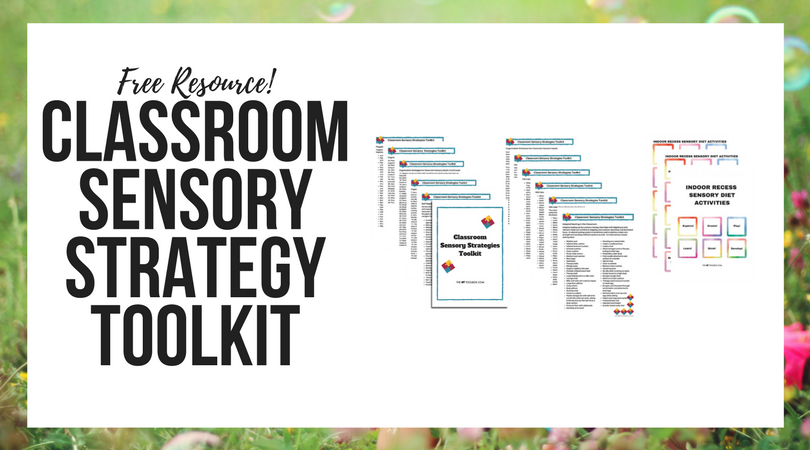
You may also be interested in the free printable packet, The Classroom Sensory Strategy Toolkit.

The Classroom Sensory Strategy Toolkit is a printable packet of resources and handouts that can be used by teachers, parents, and therapists. Whether you are looking for a handout to explain sensory strategies, or a tool for advocating for your child, the Classroom Sensory Strategy Toolkit has got you covered.


And it’s free for you to print off and use again and again.


In the Classroom Sensory Strategy Toolkit, you’ll find:


  • Fidgeting Tools for the Classroom
  • Adapted Seating Strategies for the Classroom
  • Self-Regulation in the Classroom
  • 105 Calm-down Strategies for the Classroom
  • Chewing Tools for Classroom Needs
  • 45 Organizing Tools for Classroom Needs
  • Indoor Recess Sensory Diet Cards
 
Sensory Strategies for the Classroom
 

Free Classroom Sensory Strategies Toolkit

    We respect your privacy. Unsubscribe at anytime.

    Colleen Beck, OTR/L has been an occupational therapist since 2000, working in school-based, hand therapy, outpatient peds, EI, and SNF. Colleen created The OT Toolbox to inspire therapists, teachers, and parents with easy and fun tools to help children thrive. Read her story about going from an OT making $3/hour (after paying for kids’ childcare) to a full-time OT resource creator for millions of readers. Want to collaborate? Send an email to contact@theottoolbox.com.
    The Floor is Lava Games

    As kids, we used to hop from couch to couch and make a flying leap across the living room to the corner chair.  We would hop from one surface to another with one thing on our minds…
    The living room floor had turned into boiling hot lava!
    When my kids started hopping around from pillow to pillow and landing with a roll onto the couch with claims of the floor turning to lava, I had to smile. 
    The Floor is Lava is Back!


    What is so cool about the floor being lava (besides the nostalgic sentiments from parents?)  A great game of The Floor is Lava has some major motor movements and sensory play components!
    From jumping, leaping, hopping, rolling, and crashing, The Floor is Lava is a fun and creative way to encourage movement and sensory motor play, both indoors and out!
    Play these The Floor is Lava Games with your kids to build development of skills like motor control, sensory input, motor planning, gross motor skills, core strength, and balance.

    The Floor is Lava Games

    Here are some fun ways to use The Floor is Lava Games to promote sensory input and motor movements:
    • Place pillows and couch cushions on the floor.  Kids can hop from pillow to pillow on one foot or two.  Move the pillows further and further apart to promote movement coordination and motor planning.  Don’t touch the carpet, it’s lava!
    • Place paper plates in a line on the floor.  Use them as a balance beam to address vestibular sensory input.  Hop from plate to plate without touching the ground, it’s burning up!
    • Play a stop and go game that promotes auditory processing skills like auditory figure-ground discrimination.  Call out, “The floor is lava!” and everyone has to hop off the ground onto something besides the hot, hot ground!
    • Use boxes like milk crates, stools, or dining room chairs to add height components to The Floor is Lava game.
    • Add a learning component by asking kids questions when they land on a safe space.  Think about incorporating spelling words, math facts, or memorization facts.
    • Play The Floor is Lava at the playground to add vestibular sensory components to the game. Don’t touch the ground, it’s hot!  Read more about the sensory benefits of the playground.
    • Make a Safe Island when playing a lava game.  Use a hula hoop and all kids can hop in the hoop to stay safe from that burning hot lava.  Don’t hop out of the other side of the hoop to stay safe and to work on motor control.

    Develop Skills While Playing The Floor is Lava

    When playing these lava games, kids are developing and building so many skills!
    • Gross motor coordination
    • Core strength
    • Eye-body coordination
    • Visual motor skills
    • Motor planning
    • Balance
    • Attention
    • Vestibular sensory tolerance 
    • Proprioceptive sensory tolerance
    • Impulse control
    Do your kids play The Floor is Lava?  Did you play as a child?  Introduce your kids to some of these versions of the lava game and boost movement and development skills at the same time!
    Play these The Floor is Lava Games with your kids to build development of skills like motor control, sensory input, motor planning, gross motor skills, core strength, and balance.