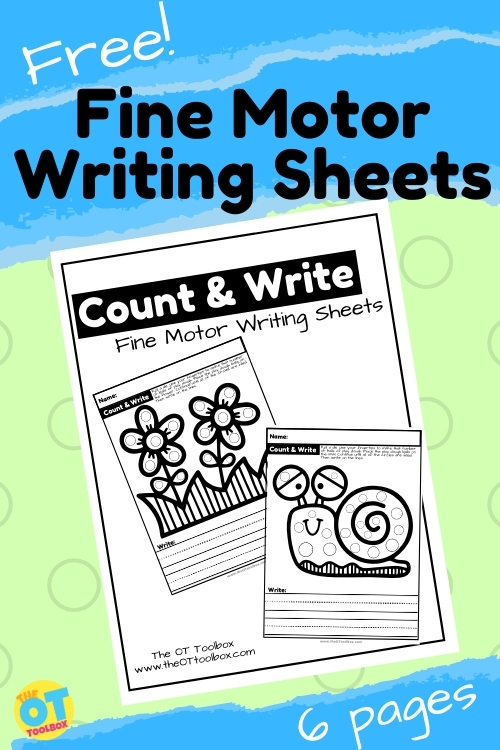
How would you like some free Spring worksheets? Today, I have a fun freebie that I’m excited to get into the hands of little ones…our popular fine motor skills handwriting worksheets! These fine motor precision worksheets are actually Spring themed worksheets, BUT they can definitely be used year-round to work on handwriting and fine motor precision. You can get your hands on these printable Spring exercises and help little ones develop stronger hands!
This is a great letter formation worksheet option: focus on one letter per sheet or use a page to write one letter based on the items in the picture.
Spring Worksheets
These free Spring worksheets for fine motor and handwriting skills are one of our popular printables for precision and dexterity (and handwriting). Here’s why: These Spring worksheets are a powerhouse in building fine motor skills. Kids can use play dough to build the fine motor strength they need to hold and write with a pencil, color, and complete fine motor activities all with more dexterity, precision, and endurance!
We have so many themed fine motor worksheets like this one in our OT Toolbox Member’s Club. You can log in, click the ones you need and print them right away, without entering your email address for each printable.
These printable worksheets are great for using in school based occupational therapy sessions, because you can cover a variety of OT goal areas:
Fine motor skills
Eye-hand coordination
Handwriting
Letter formation
Letter spacing
Letter size
Coloring
Spring Worksheets for Fine Motor Skills
Here’s how these Spring printable pages work: Kids can first roll a die (Great for in-hand manipulation, arch development, and separation of the sides of the hand!)
Then, they can use play dough to create that same number of balls of play dough. Be sure to ask kids to use just the fingertips for this part of the activiyt. Using the fingertips to roll balls of play dough is a powerful strengthening activity.
Using the finger tips and thumb of one hand at a time to roll a play dough ball is an intrinsic muscle workout that builds the muscles of the thenar eminence, hypothenar eminence, the interossei, and the lumbricals. All of these muscle groups make up the intrinsic hand muscles which are those located within the hands.
After working out the hands and getting them warmed-up for writing, the page asks kids to then write on the lines. I’ve left the writing portion open-ended so that kids can write words, letters, numbers, or sentences, based on their level, skills, and age.
The Spring themed worksheets come with a flower style and a fun snail activity page. But, each printable sheet is available in three different writing lines styles:
Double ruled lines
Single ruled lines
Double ruled lines with a highlighted bottom space
Print off these worksheets, slide them into a page protector sheet and start building those fine motor skills!
Free Spring Worksheet Set
Want to add this set of worksheets to your therapy toolbox? Enter your email address into the form below to access. NOTE- Due to changes in security levels, users have reported trouble accessing free resources when using a school district or organization email address. Consider using a personal email address.
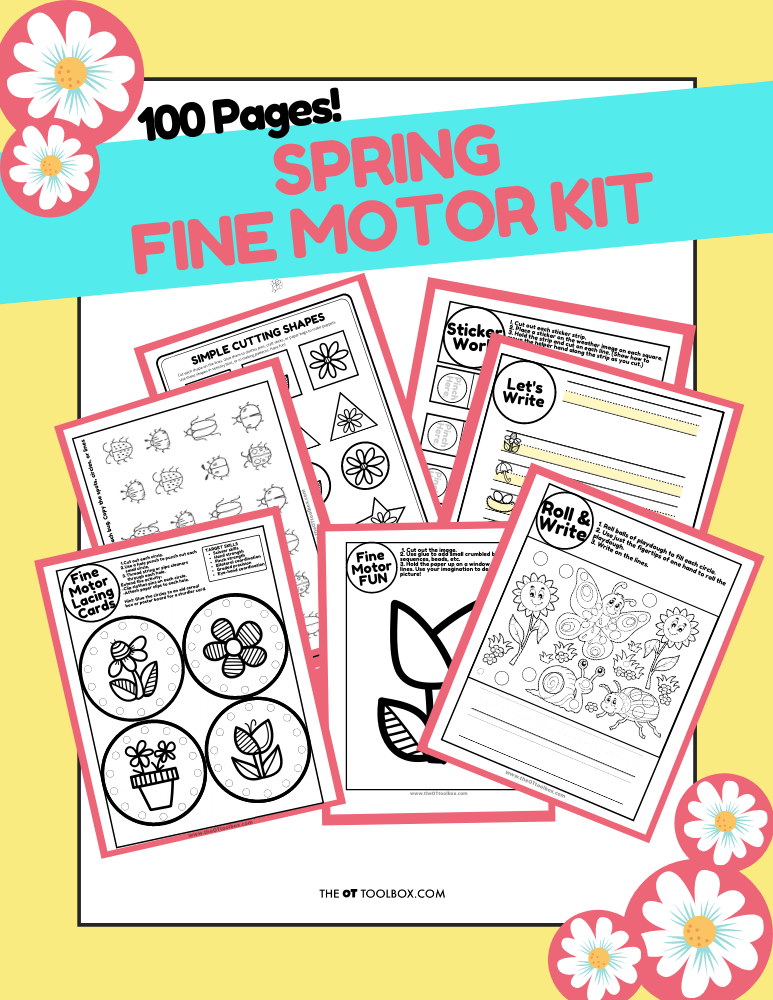
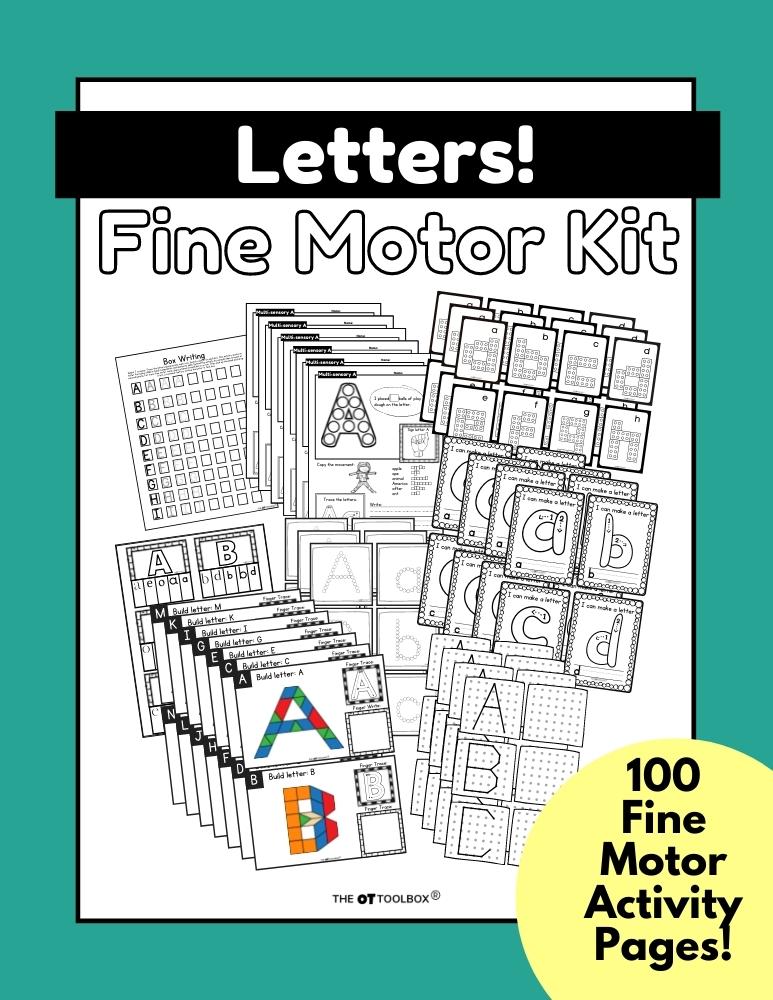
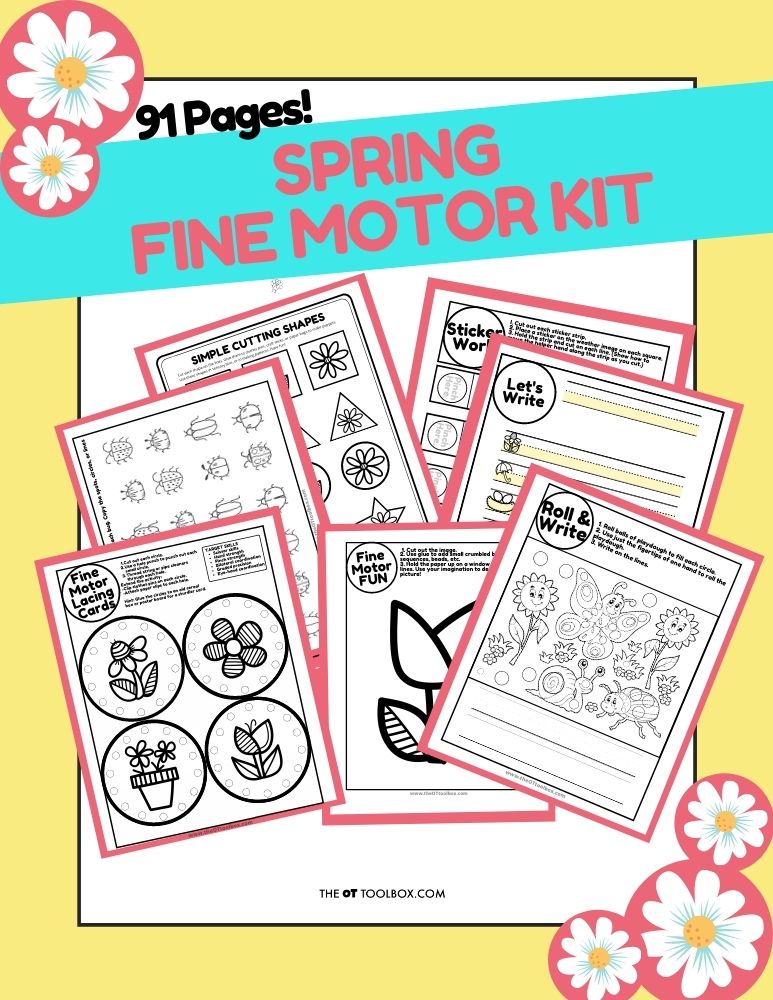
For more play dough activities and fine motor worksheets, grab the Spring Fine Motor Kit:
Spring Fine Motor Kit
Score Fine Motor Tools and resources and help kids build the skills they need to thrive!
Developing hand strength, dexterity, dexterity, precision skills, and eye-hand coordination skills that kids need for holding and writing with a pencil, coloring, and manipulating small objects in every day task doesn’t need to be difficult. The Spring Fine Motor Kit includes 100 pages of fine motor activities, worksheets, crafts, and more:
Want to add this resource to your therapy toolbox so you can help kids thrive? Enter your email into the form below to access this printable tool.
This resource is just one of the many tools available in The OT Toolbox Member’s Club. Each month, members get instant access to downloadable activities, handouts, worksheets, and printable tools to support development. Members can log into their dashboard and access all of our free downloads in one place. Plus, you’ll find exclusive materials and premium level materials.
Level 1 members gain instant access to all of the downloads available on the site, without enter your email each time PLUS exclusive new resources each month.
Level 2 members get access to all of our downloads, exclusive new resources each month, PLUS additional, premium content each month: therapy kits, screening tools, games, therapy packets, and much more. AND, level 2 members get ad-free content across the entire OT Toolbox website.
Colleen Beck, OTR/L has been an occupational therapist since 2000, working in school-based, hand therapy, outpatient peds, EI, and SNF. Colleen created The OT Toolbox to inspire therapists, teachers, and parents with easy and fun tools to help children thrive. Read her story about going from an OT making $3/hour (after paying for kids’ childcare) to a full-time OT resource creator for millions of readers. Want to collaborate? Send an email to contact@theottoolbox.com.
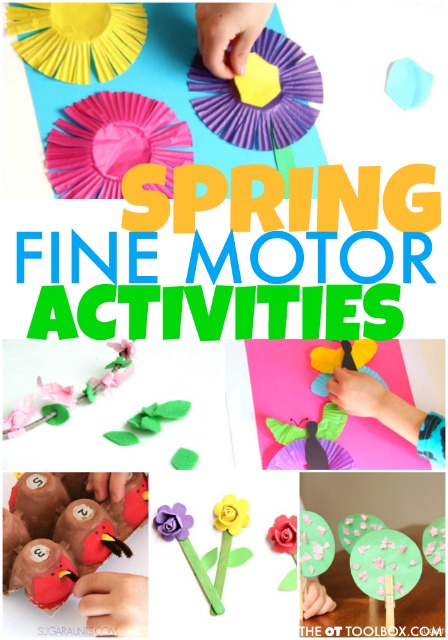
Looking for Spring Fine Motor Activities to do with the kids this time of year? This is the space to find creative activities and ideas to promote fine motor skills like hand strength, dexterity, open thumb web space, arch development, and the precision grasp needed for functional tasks like pencil grasp, endurance in handwriting, scissor use, clothing fastener use, the ability to open containers, type with finger isolation, and every other fine motor task you can imagine!
The best thing about the Spring activities listed here are the use of everyday items, making therapy planning a breeze. Use some of these ideas in your Spring occupational therapy plans in the clinic or when coming up with a home program for your pediatric clients. It’s also a great way to sneak in fine motor work this time of year in a fun way!
Spring Fine Motor Activities
Other seasonal occupational therapy activities can be integrated with these sensory ideas. Include aspects of these Spring OT ideas to create a well-rounded lesson plan this time of year:
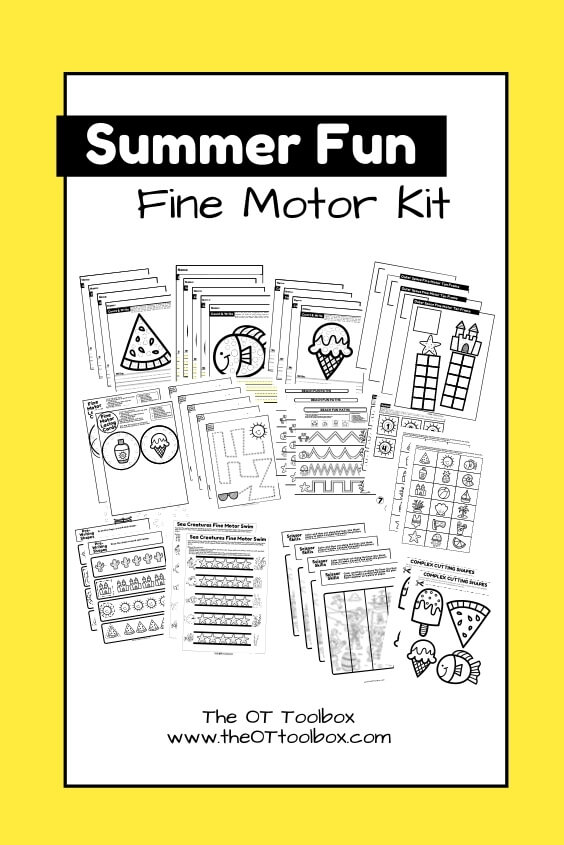
For a more exhaustive set of strategies, activities, and ideas, be sure to grab the Spring Fine Motor Kit (PLUS bonus kit which covers everything you need for Spring Break) that is on sale now for just $10. You’ll be loaded up on all kinds of tools that will last all season long.
Fine motor skills can be address through seasonal, Spring activities. Skills such as
One thing that makes a big difference in fine motor dexterity is addressing separation of the sides of the hand. This post explains more about motoric separation of the hand and here is another fun activity that really strengthens those muscles.
Quick Powerful Strategies to Build Fine Motor Skills
Use a cootie catcher– When kids use a cootie catcher, they work on so many fine motor skills: scissor skills to cut the paper, finger isolation, hand strength, and bilateral coordination to fold the cootie catcher, eye-hand coordination, bilateral coordination, and separation of the sides of the hands, and arch development to use and manipulate the cootie catcher. This is a powerful fine motor tool! You can print off our Spring cootie catcher here (free download).
Sort and manipulate small objects- Holding a small item like crumbled paper, a bead, or mini-eraser helps refine motoric separation of the sides of the hand. Motoric Separation of the Two Sides of the Hand refers to using a precision side of the hand and a stabilizing side of the hand. This ability is needed for pencil grasp, managing buttons, shoe tying, threading a needle, buttoning, and so much more.
Separation of the two sides of two sides of the hand is important for tasks like holding a pencil while stabilizing the hand along the table, cutting with scissors, and managing coins, among other activities.
Refinement of fine motor skills in the hand (the radial side) happens when the power half (the ulnar side) is stabilized. A functional fine motor grasp and manipulation of objects is more accurate when the ring and pinky fingers are flexed (bent) into the palm.
This positioning stabilizes the MCP arch and allows for control of the pointer and middle fingers. Separation of the two sides of the hand allow for more precise use of the thumb. Hand separation starts when a baby bears weight through their arm and ulnar side of the hand while carrying a toy in the radial side.
This simple activity developmentally lengthens the muscles of the ulnar side.
Try these quick Spring ideas to work fine motor skills:
Pick petals from leaves
Sort Spring mini-erasers into egg cartons
Crumble tissue paper to make tissue paper art
Tear small strips of paper and glue them to paper to build letters, spelling “SPRING”
Hand Dominance-Hand dominance in children is important for refining the skills needed to perform functional tasks. While Toddlers begin to show a hand preference, a true hand dominance doesn’t typically develop until 2 to 3 1/2 years. A toddler can show a hand preference, however hand usage is many times, experimented with during different activities throughout the Toddler and Preschool years. There is typically variability in hand preference as toddlers and young preschoolers poke, pick up, throw, color, and play.
These OT activities using tongs are great for developing and strengthening the arches of the hands for improved intrinsic strength.
In fact, the intrinsic muscles are the muscles in the hand that define the arches of the hands, bend the knuckles, and oppose with the thumbs. Activities like this intrinsic muscle strengthening activity can easily be replicated at home or in the therapy room.
Among these muscles are a group called the lumbricals. The lumbrical muscles have a job to bend (flex) the MCP joints and extend (straighten) the PIP and DIP joints. When the lumbricals are in action, the hand might look like it is holding a plate with the big knuckles bent and the fingers extended. Read more about strengthening the intrinsics here.
These are just a few examples of fine motor skills that are essential for functional development and effective manipulation of tools.
Use tongs to help build fine motor skills with these Spring ideas:
Use tongs to color sort objects into baskets or bins
Use tweezers in a Spring sensory bin
Pick up items in a Spring obstacle course
Place colorful craft pom poms along a fine motor path on paper
These ideas are part of our Spring Week here on The OT Toolbox. Be sure to stop back each day this week to find more Spring occupational therapy activities and ideas to use all season long
Today is all about Spring Fine Motor Activities. Check the out below!
Spring Occupational Therapy Activities
Try some of these ideas to promote fine motor skills this Spring:
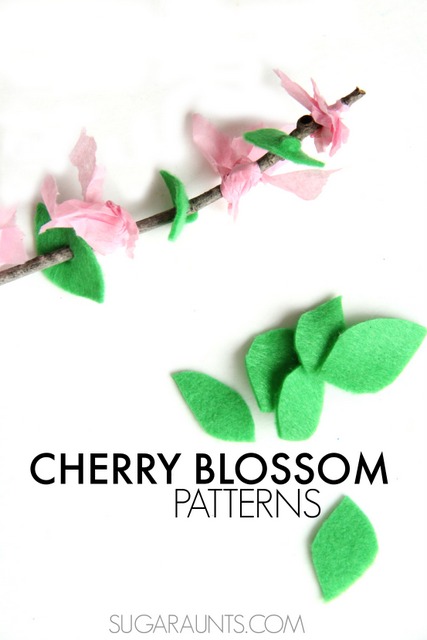
Use this cherry blossom activity to promote hand strength, precision, opening of the thumb web space, thumb stability, arch development and intrinsic muscle strength. Kids can make the cherry blossom activity, but also work on visual motor skills and patterns. Read more about this spring activity and how it promotes hand strength in so many ways.
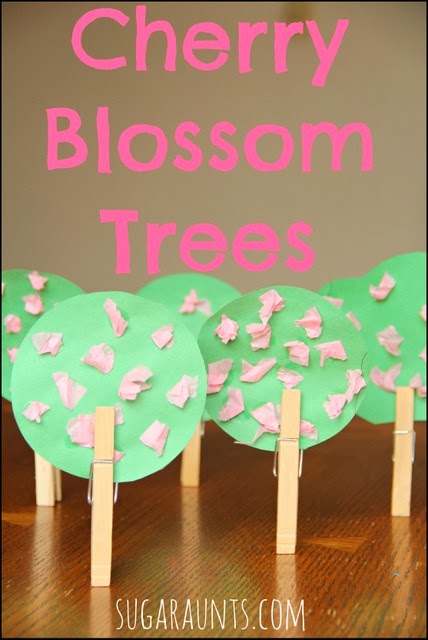
Love cherry blossoms and want to go with a cherry blossom theme while boosting those fine motor skills? Try this Cherry Blossom Tree Craft and strengthen pinch, grip, arch development, separation of the sides of the hand, thumb stability, bilateral coordination, and other skills.
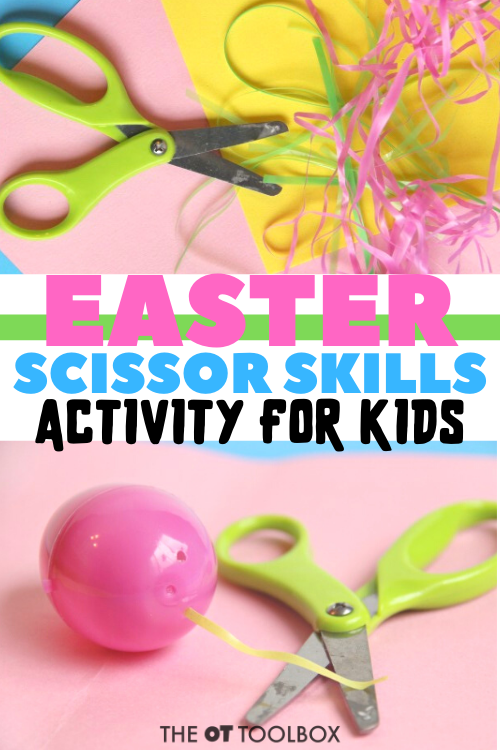
Perfect for the Spring season, this Easter activity builds the underlying skills needed for accuracy and precision with scissor skills.
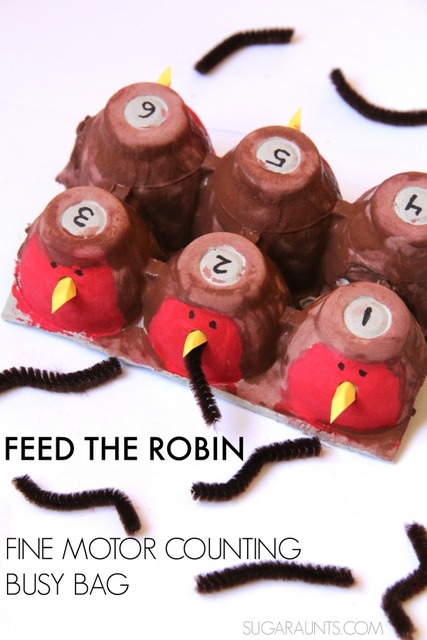
Work on pincer grasp, hand strength, dexterity, and mobility with this robin craft. Kids will love feeding worms to the robins that they make from egg cartons. Best of all, it uses recycled materials and can be used over and over again!
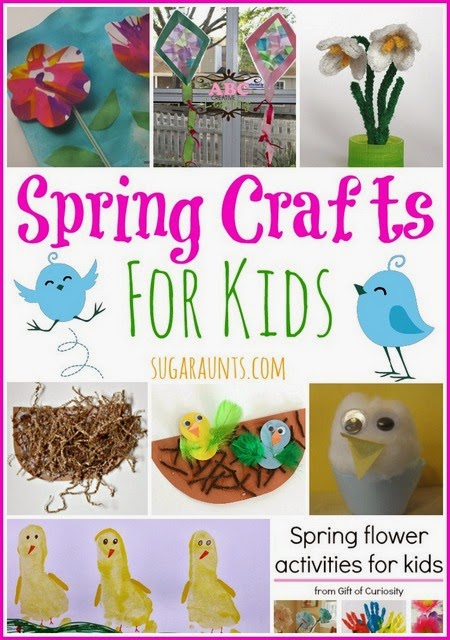
Looking for tons of Spring craft ideas to last the whole season long? You’ll find loads of ideas from around the web!
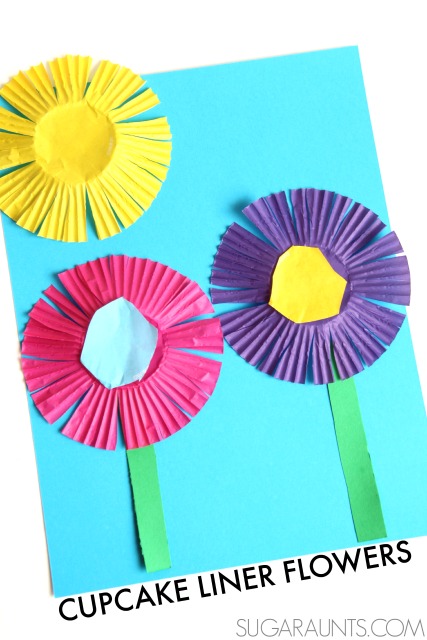
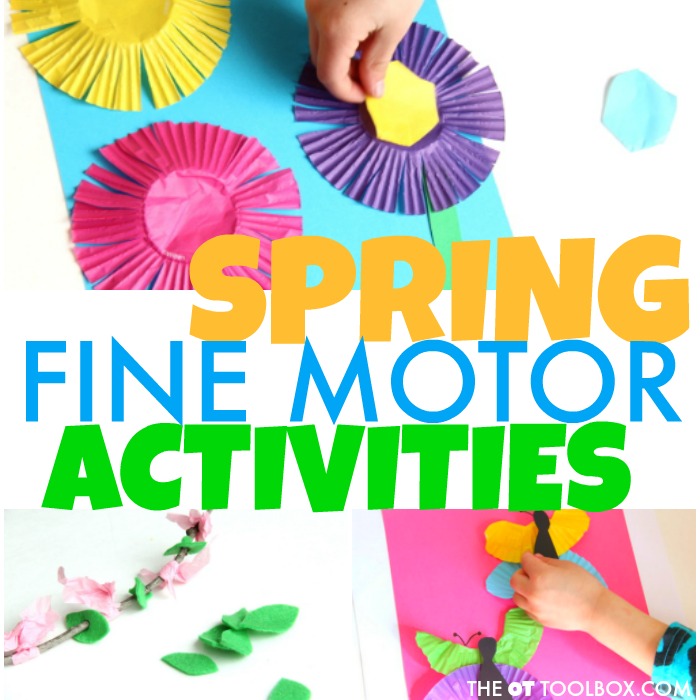
This cupcake liner flower craft is a great (easy) craft idea to promote scissor skills. I love that it helps kids to work on precision when cutting with scissors and graded snips to stop at a specific point when cutting. This is a hard skill to master! Kids will love to see the flowers they create when cutting up to a point and then stopping the scissors to create the flower!
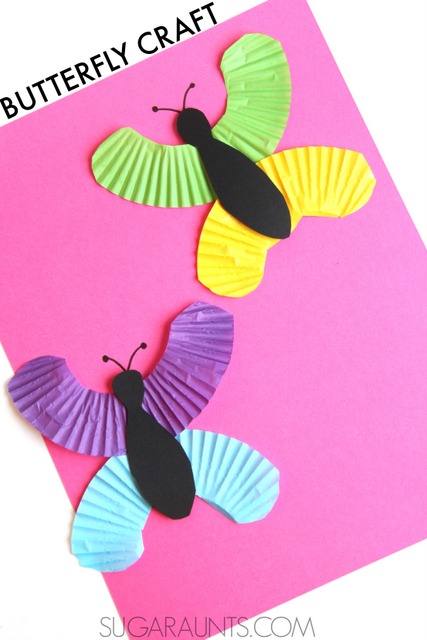
Another Spring fine motor activity that promotes scissor use is this butterfly craft. Kids can learn to cut curved lines and improve precision by cutting with a thinner material using cupcake liners to help with precision and accuracy. What a fun spring craft for kids!
Take a different spin on Spring activities and celebrate Earth Day by making crafts and activities using recycled materials. There’s something for everyone here…all while promoting fine motor skills!
One easy way to work on hand strength is to create a Spring Play Dough Press Activity. Simply pull out the play dough and some Spring items like cookie cutters, flowers, feathers, small animal toys, and other Spring-themed items. Create a sensory table experience and press those items right into the play dough. Kids can hide items and find them again or match up the impressions to the toys. It’s a great way to strengthen the intrinsic muscles, promote endurance in the hands, and to do it with a Spring theme!
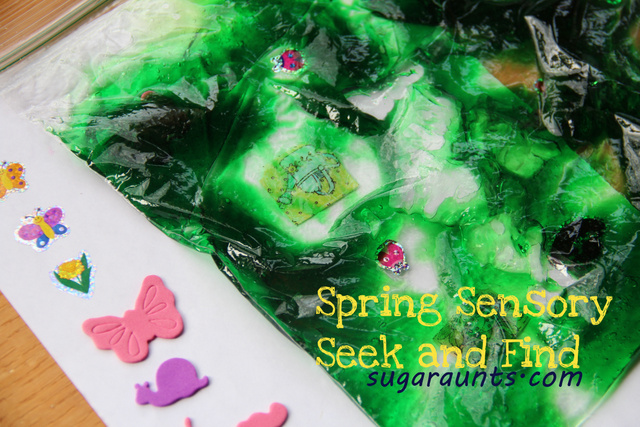
This Spring Sensory Seek and Find Activity is an old one on the website, but it’s still a great way to promote fine motor skills like separation of the sides of the hand and finger isolation! It’s a good way to work on finger isolation and separation of the sides of the hand. Not to mention, moving the materials in the sensory bag around promotes hand strength, along with visual motor skills and visual perception. All you need is a plastic bag, clear hair gel, some food coloring, and Spring stickers!
Need some quick ideas to celebrate Easter? These bunny activities should spark some ideas!
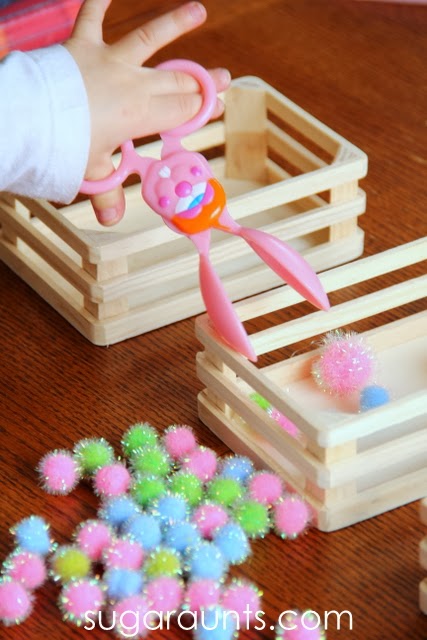
One of our favorite ways to work on fine motor skills this time of year is with our good, old bunny tongs. This Spring fine motor activity promotes the skills needed for scissor use, as well as hand strength, eye-hand coordination, and more. You should be able to find the bunny tongs at the dollar store this time of year!
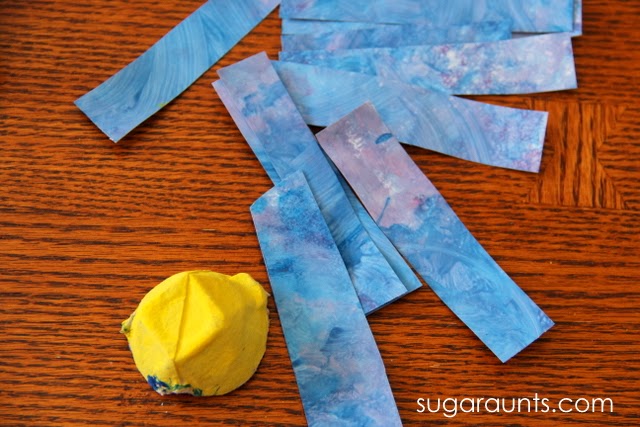
Work on scissor skills with this Recycled Artwork Spring Flower craft. It’s a great way to use up that artwork that you don’t know what to do with, too!
Spring Fine Motor Kit
Score Fine Motor Tools and resources and help kids build the skills they need to thrive!
Developing hand strength, dexterity, dexterity, precision skills, and eye-hand coordination skills that kids need for holding and writing with a pencil, coloring, and manipulating small objects in every day task doesn’t need to be difficult. The Spring Fine Motor Kit includes 100 pages of fine motor activities, worksheets, crafts, and more:
Colleen Beck, OTR/L has been an occupational therapist since 2000, working in school-based, hand therapy, outpatient peds, EI, and SNF. Colleen created The OT Toolbox to inspire therapists, teachers, and parents with easy and fun tools to help children thrive. Read her story about going from an OT making $3/hour (after paying for kids’ childcare) to a full-time OT resource creator for millions of readers. Want to collaborate? Send an email to contact@theottoolbox.com.
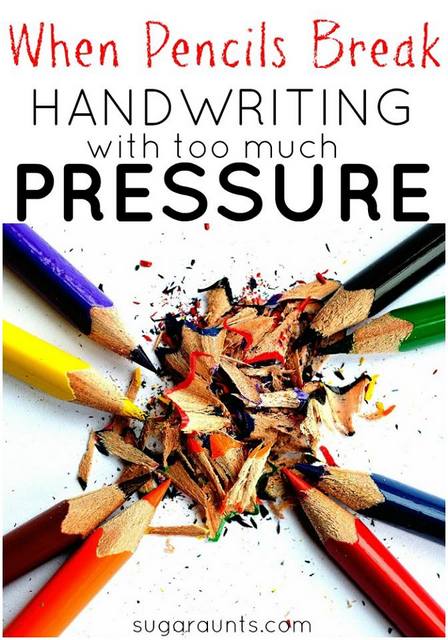
If you’ve worked with kids teaching handwriting or fixing handwriting issues, they you probably have come across a common handwriting problem area…Pencil pressure when writing. Handwriting pressure can play a huge role in legibility, whether pressing too hard when writing or writing too lightly.
Pencil Pressure in Handwriting
Some kids press too hard on the pencil. They may press so hard on the pencil that the pencil tears the paper when they write. When they try to erase, there are smudges that never really go away.
Other students use too little force when writing. Or, you might see pencil pressure that is so light that you can’t discern letters from one another.
Either way, pencil pressure plays a big part in handwriting legibility.
Here are tips for pressing too hard when writing…and tips for helping kids write darker. Scroll down for everything you need to know about writing with that “just write” pencil pressure…Typo intended 🙂
Pencil Pressure with Writing
Learning to write is a complex task. Choosing a hand to hold the pencil with, pencil grasp, managing the paper with the assisting hand, sitting up straight.
And then there is the physical task of marking letters: letter formation, line awareness, letter size… this is multi-level functioning for a child!
Yet another aspect to consider is the pressure one exerts on the paper when writing. Press too lightly and the words are barely able to be seen. Press too hard, and the letters are very dark, the pencil point breaks, lines are smudged, and when mistakes are erased, they don’t really erase all the way, the paper tears, and frustration ensues!
Sometimes, when it comes to pencil pressure, simply helping kids become aware that they are writing too lightly or writing with too much pressure can make a big difference. Here is one simple activity to work on pencil pressure. All you need is a sheet of foam crafting paper.
Pencil pressure is dependent on proprioception, one of the sensory systems. With October being Sensory Processing Awareness month, this is the perfect time to talk sensory and handwriting!
As an occupational therapist in the school setting, I’ve come across many school-aged children showing difficulty with pencil pressure. There are reasons for these dark pencil marks and some tips and tools for helping with this handwriting difficulty.
This post contains affiliate links.
Proprioception and Handwriting
The proprioceptive system receives input from the muscles and joints about body position, weight, pressure, stretch, movement and changes in position in space. Our bodies are able to grade and coordinate movements based on the way muscles move, stretch, and contract.
Proprioception allows us to apply more or less pressure and force in a task. Instinctively, we know that lifting a feather requires very little pressure and effort, while moving a large backpack requires more work.
We are able to coordinate our movements effectively to manage our day’s activities with the proprioceptive system. The brain also must coordinate input about gravity, movement, and balance involving the vestibular system.
When we write, the pencil is held with the index finger, middle finger, and thumb, and supported by the ring and pinkie finger as the hand moves across a page.
A functioning proprioceptive system allows us to move the small muscles of the hand to move the pencil in fluid movements and with “just right” pressure.
We are able to mark lines on the paper, erase mistakes, move the paper with our supporting arm, turn pages in a notebook fluidly, and keep the paper in one piece.
Heavy Pencil Pressure
When students press too hard on the pencil, handwriting suffers. Sometimes, children hold their pencil very tightly. Other times, they are seeking sensory feedback. You’ll see some common signs of heavy pencil pressure:
They press so hard on the paper, that lines are very dark when writing.
The pencil point breaks.
When erasing, the pencil marks don’t completely erase, and the paper is torn.
The non-dominant, assisting hand moves the paper so roughly that the paper crumbles.
When turning pages in a notebook, the pages tear or crumble.
Movements are not fluid or efficient.
Handwriting takes so much effort, that the child becomes fatigued, frustrated, and sore.
It may take so much effort to write a single word, that handwriting is slow and difficult.
All of these signs of heavy pencil pressure are red flags for pencil pressure issues. They are not functional handwriting.
Below, we’ll cover ways to reduce pencil pressure?
Writing Pressure: Too Light
The other side of the coin is pencil pressure that is too light.
Writing with too little pencil pressure is another form of non-functional handwriting. Some signs of too little pencil pressure include:
Kids may write so lightly that you can’t read the overall writing sample.
You can’t discern between certain letters.
The writing pressure is just so light that the child’s hand or sleeve smudges the pencil lines and the writing sample is totally not functional or legible.
The student starts out writing at a legible pencil pressure, but with hand fatigue, the writing gets lighter and lighter.
All of these signs of too light pencil pressure and too much force when writing can be addressed with some simple tips. Working on proprioceptive input and hand strengthening can help with too light pencil pressure. Try some of the writing tips listed below.
Pencil pressure and Messy handwriting
Messy handwriting can be contributed to many factors. Decreased hand strength, Visual motor difficulty, motor planning issues, visual memory difficulties, or impaired proprioception.
Difficulty with grading the movements required in drawing or making letters in a coordinated way may present as messy, smudged, illegible handwriting.
Writing Tips for Pencil Pressure
Bringing the writer aware of what’s occurring is one way to support pencil pressure issues. Proprioceptive activities allow the muscles to “wake up” with heavy pressure.
Moving against resistance by pushing or pulling gives the muscles and joints an opportunity to modulate pressure.
Resistive activities before and during a handwriting task can be beneficial for children who press hard on the pencil.
Pencil Pressure Activities:
Some of these pencil pressure activities are writing strategies to help kids become more aware of the amount of pressure they are using when writing.
Others are tools for helping the hands with sensory needs. Still others are tools for strengthening the hands. Try some or a mixture of the following ideas to addressing handwriting needs.
Stress balls or fidget toys can help to strengthen pinch and grip strength.
Use carbon paper or transfer paper to help kids become more aware of the amount of pressure they are exerting through the pencil when writing. Here is some easy ways to use a Dollar Store find to use carbon paper to work on handwriting. (affiliate link)
resistive bands (affiliate link)- Use these as an arm warm-up to “wake up” the muscles of the whole upper body. They are great for positioning warm ups too.
theraputty (affiliate link) with graded amount of resistance (speak to a license occupational therapist about the amount of resistance needed for your child. An individual evaluation and recommendations will be needed for your child’s specific strengths/needs). Use these theraputty exercises for ideas to get started.
hole puncher (affiliate link) exercises before a writing task
Gross grasp activities- These activities can be a big help in adjusting the grasp on the pencil, helping the hands with sensory input and strengthening the hands to help with endurance when writing.
Write with a mechanical pencil (affiliate link)- The lead will break if too much pressure is applied. Children can learn to monitor the amount of pressure used and it will provide feedback on modulation of pressure. A pencil with .7mm lead is better to start with for heavy writers. Read more about using a mechanical pencil for kids who write too dark or too light.
Some children will benefit from using a liquid gel pen for fluid handwriting marks. The gel ink will provide feedback when gobs of ink are dispensed when writing too hard.
Still others will benefit from a gel pen, marker, or using a dry erase marker on a dry erase board. This can be beneficial as a tool for teaching about pencil pressure or as an accommodation for those writing too lightly.
Pencil Weights (affiliate link) or Weighted Pencils (affiliate link)- Weighted pencils can be helpful in providing sensory feedback through the hands.
Practice writing on a dry erase board with dry erase markers to work on consistent pencil pressure- Pressing too hard will make the marker lines wider and press down on the tip of the marker. Can the learner keep a consistent line with their writing or drawing?
Use a grease pencil- These pencils are commonly used to marking wood or used in construction. The lead of the pencil is very soft and can be a great alternative for those that press too hard on pencils.
Cheap eyeliner pencil- One cheap alternative to a grease pencil is using an inexpensive eye liner pencil from the dollar store. Get the kind that you sharpen with a turn sharpener (almost like a hand held pencil sharpener). Kids can use that pencil to draw lines and match the amount of pressure they are using. This is a good activity for those that press too hard when writing, too.
Practice Ghost Writing: Encourage the child to write very lightly on paper and then erase the words without leaving any marks. The adult can try to read the words after they’ve been erased. If the words are not able to be read, the writer wins the game.
Hand exercises are a great way to “wake up” the hands before a handwriting task. Encourage the child to squeeze their hand into a fist as tight as he can. Then relax and stretch the hand and fingers. Repeat the exercise several times. Practice holding the pencil with the same type of tight and relaxed exercises Practice writing on tissue paper. A very light hand is needed to prevent tears. Discuss the amount of pressure needed for writing on the tissue paper.
This will provide the child with awareness and words for the way they are holding the pencil.
Wrap a bit of play dough or putty around the pencil as a grip. Encourage the child to hold the pencil with a grasp that does not press deeply into the dough. Encourage using a “just right” pressure.
Provide terms for they way they write. Encourage “just right” writing and not “too hard” or “too soft” marks.
Use a lead pencil to color in a small picture, using light gray, medium gray, and dark gray. Talk about how using different amounts of pressure changes the shade of gray.
Instead of writing on a notebook, pull a single sheet from the pages and place on a hard table or desk surface. The firm surface will limit the amount of pressure. You can also slip a clipboard between pages of a notebook to provide that hard surface, if sheets must remain in a notebook.
Need more tips and tools for addressing handwriting needs? Be sure to check out all of our handwriting activities here on The OT Toolbox.
More Handwriting Tips
For a comprehensive resource on handwriting, check out The Handwriting Book. This e-book was written by pediatric occupational therapists and physical therapists who focus on function and take a developmental look at handwriting.
In The Handwriting Book, you’ll find practical suggestions to meet all needs that arise with messy or sloppy handwriting. The developmental-based approach to teaching handwriting focuses on strategies to support common issues with written work.
Colleen Beck, OTR/L has been an occupational therapist since 2000, working in school-based, hand therapy, outpatient peds, EI, and SNF. Colleen created The OT Toolbox to inspire therapists, teachers, and parents with easy and fun tools to help children thrive. Read her story about going from an OT making $3/hour (after paying for kids’ childcare) to a full-time OT resource creator for millions of readers. Want to collaborate? Send an email to contact@theottoolbox.com.
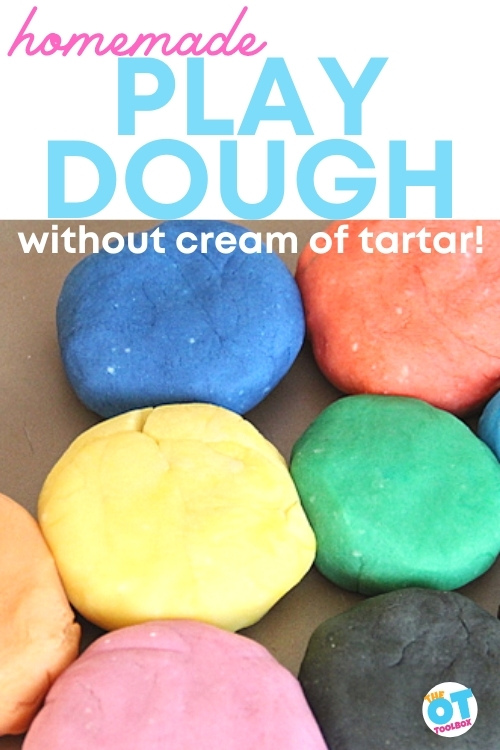
This play dough recipe without Cream of Tartar is one of our favorite playdough recipes because it omits cream of tartar, so the dough ingredients are commonly found in the home.
If you’ve been following this site over the years, you’ve seen many of our play dough recipes, one of them being this play dough recipe without cream of tartar. This easy play dough recipe is one that kids can help to make, and to use in occupational therapy interventions. Read more on how play dough benefits child development, and making the play dough is half of the fun!
Homemade Play Dough without cream of tartar
Homemade play dough is a childhood staple. When kids are part of the playdough making process, they are active in the kitchen and can incorporate many executive functioning tasks as well as other skill-building.
But most homemade play dough recipes include cream of tartar as an ingredient. However, purchasing this ingredient is just expensive, and there really aren’t many common uses for cream of tartar except in the playdough recipes.
So, we decided to do some experimentation and come up with a play dough recipe that omits cream of tartar.
Our recipe uses a common ingredent that is inexpensive, but also can be used in other kitchen recipes. So, when you purchase this ingredient, you can use it for other recipes as well, making the purchase a good buying decision.
So? What is our substitute for cream of tartar in homemade playdough?
Lemon juice!
Lemon juice makes a great substitute for cream of tartar in homemade play dough recipes because it’s an easy to find ingredient in most stores and you can use it in so many other recipes. Plus, the lemon juice adds pliability to the play dough just like cream of tartar does.
why is play dough good for child development
Over the years, we’ve used many ingredients to make play dough as a sensory tool. These are all wonderful ways to incorporate various sensory input through sensory play.
One of our most popular playdough recipes is our crayon play dough recipe. But other homemade dough recipes you’ll love include:
All of these various doughs offer sensory experiences through play, using different scents and textures. We’ve strived to create sensory tools through easily accessible and inexpensive materials, mainly using ingredients that are on hand in the kitchen.
When sensory and fine motor play is easily accessible, kids develop skills!
Making homemade play dough is a great occupational therapy activity for the clinic, school-based session, or a home recommendation to carryover skills in a family time activity.
These are great ways to use playdough can be used as a warm up activity or to incorporate palm strengthening exercises into therapy through play.
Another aspect of homemade playdough and fine motor skills includes the mixing and kneading aspects. Pouring, scooping, stirring, and kneading are all very functional tasks that
Whether you are developing fine motor skills, addressing cognitive skills like direction following, or incorporating sensory play into occupational therapy interventions, a simple homemade play dough is the way to go. Play dough has many benefits and there are many ways to use a simple dough recipe into therapy.
Playing with playdough improves fine motor skills such as:
Pinch strength
Eye-hand coordination
Intrinsic muscle strengthening
Separation of the sides of the hand
Pincer grasp
Opposition
Tripod grasp
Wrist extension
Bilateral coordination
All of this occurs through play!
Try these fine motor activities using play dough:
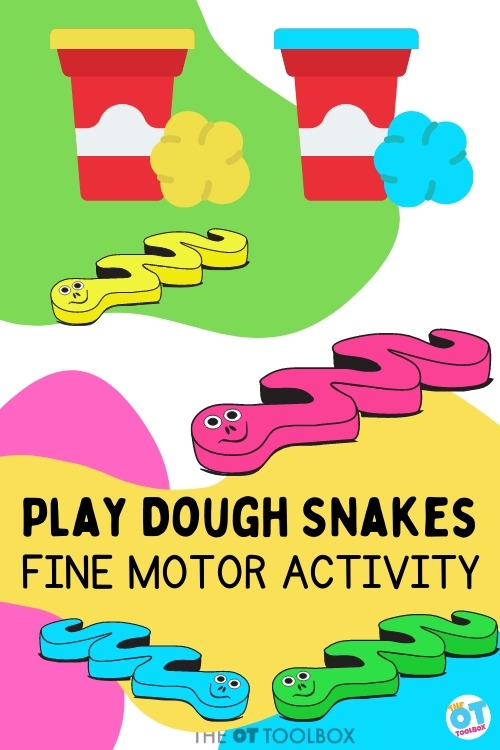
This homemade play dough recipe is great for easy play dough activities like our play dough snakes.
Kids can work on safety skills while working in the kitchen to prepare this recipe. There is the heat of the play dough after cooking, and stove safety to consider.
Some users would benefit from using a stove to make the playdough and others may benefit by using an electric skillet in place of the stove.
So, let’s get to the recipe making with our play dough recipe (without cream of tartar)!
Playdough without cream of tartar
To make this playdough without cream of tartar, first gather your ingredients, cooking items, and get started. This is a great play dough recipe to make with kids!
You’ll need just a few ingredients in this playdough recipe withoug Cream of Tartar:
3 cups flour
1 and 1/2 cup salt
3 and 1/4 cup water
3 Tbsp oil
3 Tbsp lemon juice
food coloring
How to make playdough without cream of tartar:
Mix the flour and salt in a bowl, using a fork to stir. Add the water, oil, and lemon juice and stir until the dough pulls together. Move the wet playdough lump to a sauce pan and cook over low heat for 3-4 minutes until the dough forms.
2. Plop the dough onto a clean surface and knead for a few minutes.
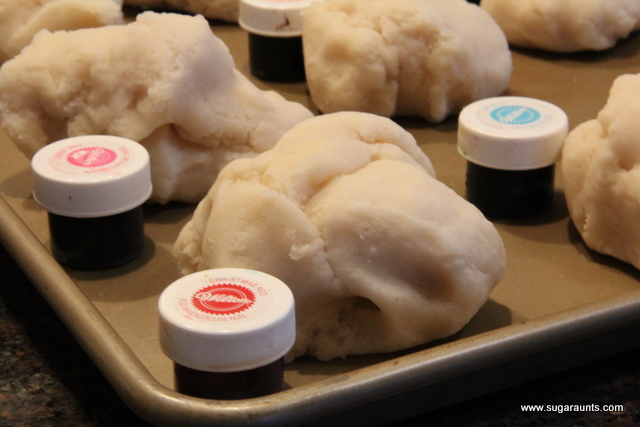
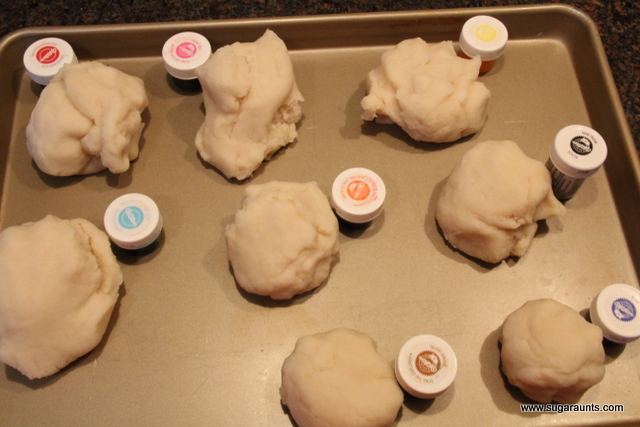
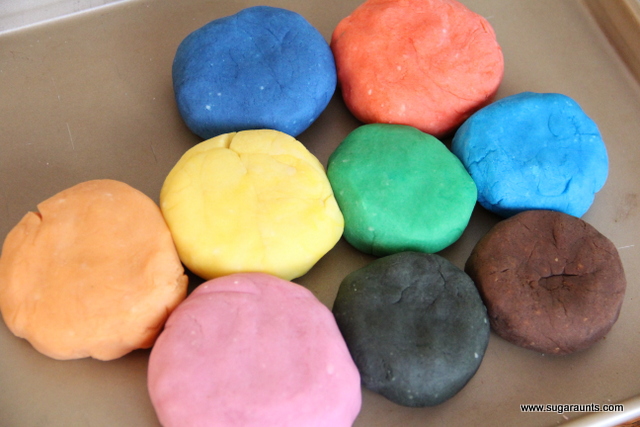
3. Separate the play dough into portions and add food coloring. Knead the dough to mix the food coloring. If you are making just one color of play dough, you can add the food coloring to the dough before cooking.
Many times, we want a variety of play dough colors, though, so mixing the food coloring in after the dough has been cooked is one way to get several colors of play dough.
4. Remember that the dough will be very hot to the touch after cooking. Use a dishtowel to mix the baggie so the color is absorbed throughout the dough.
5. Keep the homemade play dough in covered containers/sealed plastic bags. Dough does not need to be refrigerated.
Playdough with cream of tartar
If you do have a jar of cream of tartar, use this play dough recipe:
3 cups flour
1 and 1/2 cup salt
3 and 1/4 cup water
3 Tbsp oil
2 Tbsp cream of tartar
food coloring
The same cooking process listed above can be used to make this dough recipe, using cream of tartar instead of lemon juice.
How to get Vivid Colors in Homemade PlayDough
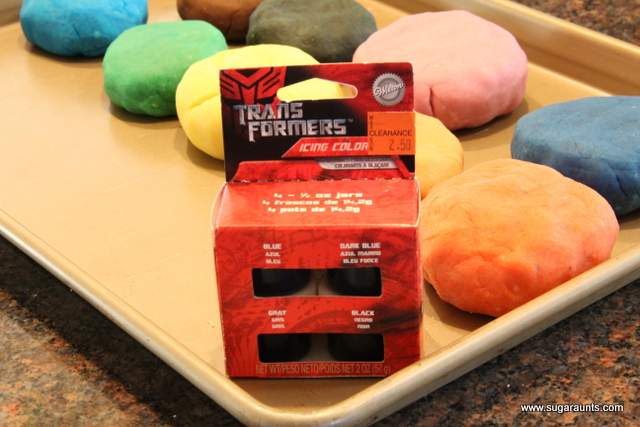
Want the secret to really bold and vivid colors? Use (Amazon affiliate link) Wilton’s gel food coloring. I have a bunch of these that I use for my cookies, and Big Sister had fun picking out the colors she wanted to mix up.
A lot of times, you can find these color sets on clearance (plus add coupons) for a Great discount!
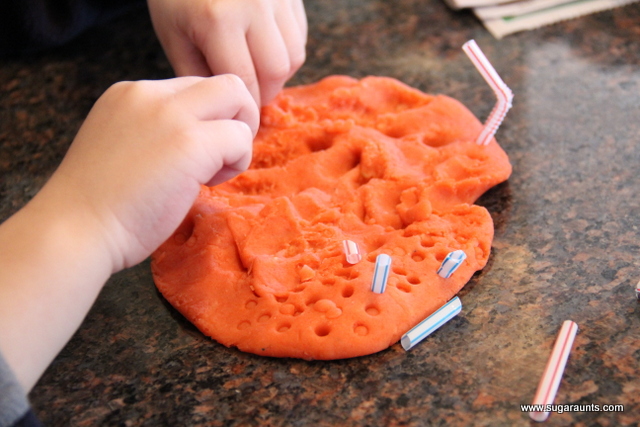
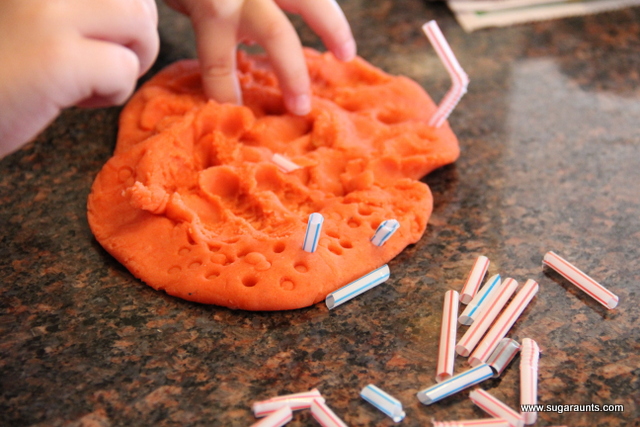
Little Guy had SO MUCH FUN playing with little straw pieces in the red play dough. What a great
Fine Motor Activity for a three year old
This easy safe play dough recipe is great for toddlers and preschoolers, but also younger if closely watching young children.
We used the play dough recipe above, and some cut straw pieces to create a toddler-friendly play dough activity that builds fine motor skills.
Cut the straws into pieces. You can get preschoolers involved with this part of the activity for a scissor skills task.
Then, show your toddler how to poke the straws into the play dough.
He played with this one for a long time…hiding the straw bits in the dough, poking circles, bending the bendable part of the straw… So much fun!
Playdough Play Mats
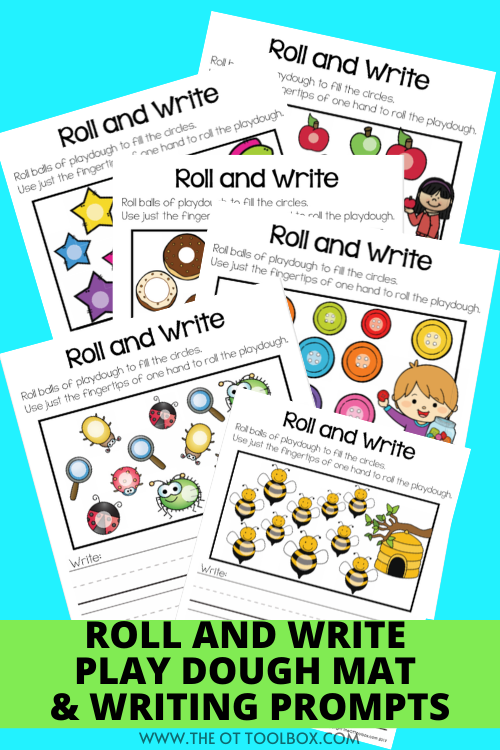
Use this easy playdough recipe (without cream of tartar) with our playdough mats to add play dough as a handwriting warm-up and then incorporate handwriting skills!
Colleen Beck, OTR/L has been an occupational therapist since 2000, working in school-based, hand therapy, outpatient peds, EI, and SNF. Colleen created The OT Toolbox to inspire therapists, teachers, and parents with easy and fun tools to help children thrive. Read her story about going from an OT making $3/hour (after paying for kids’ childcare) to a full-time OT resource creator for millions of readers. Want to collaborate? Send an email to contact@theottoolbox.com.
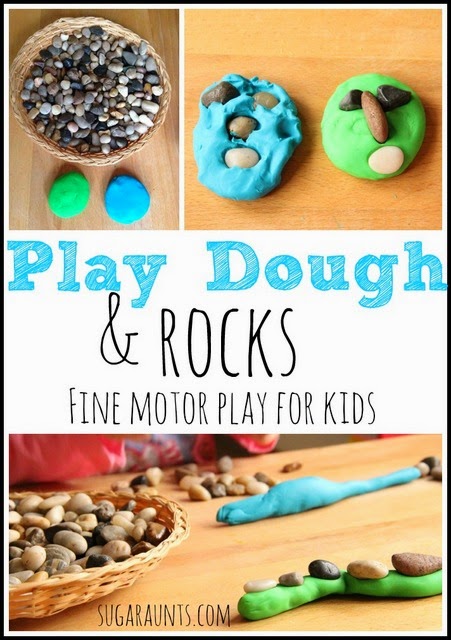
If you’ve ever played with Play Doh then you may have made a play dough snake. But did you ever stop and think about the various fine motor skills being developed with that simple play dough creature? Here we have a super simple and fun activity using play dough and rocks: Making play dough snakes! When you make a play dough snake so many skills are developed.
Play Dough Snakes
We are big fans of play dough. Adding in fun little extras (like making play dough snakes!) is a great way to keep it interesting, and get those fingers moving with fine motor work. We shared a picture of this activity on Instagram and it was such a hit, that we had to share our play in a blog post! We used regular play dough this time, but a batch of homemade play dough recipe would be perfect for this activity, too.
The thing is that Play Doh snakes can be made with any type of play dough, homemade dough, slime, or even kinetic sand.
Simple therapy tools like play dough can support big goal achievement. Similar to these games with paper clips, using play dough to build hand strength and fine motor skills is easy and fun.
{This post contains affiliate links.
Play Dough Snakes and Fine Motor Skills
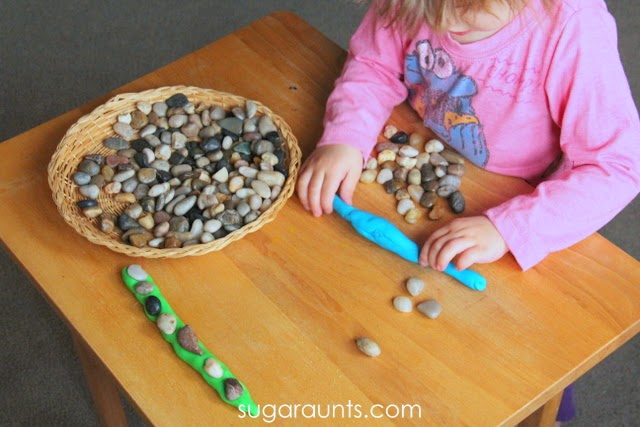
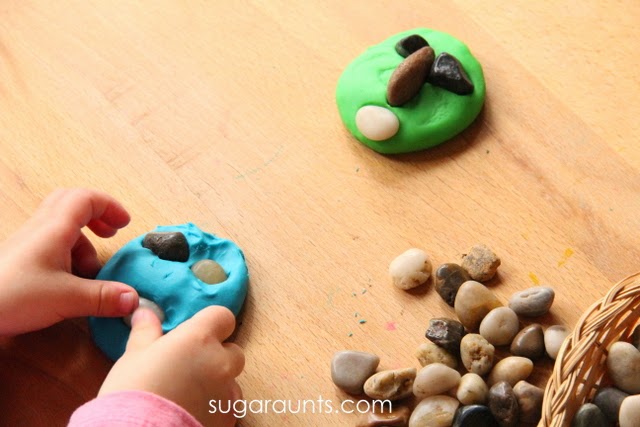
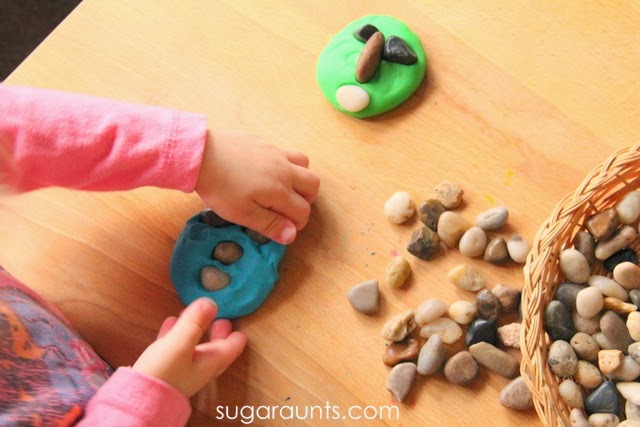
Baby Girl loved this!! I pulled out a few colors of play dough and a basket of River Rocks. She got started sorting, picking out her favorites, and pushing them into the play dough.
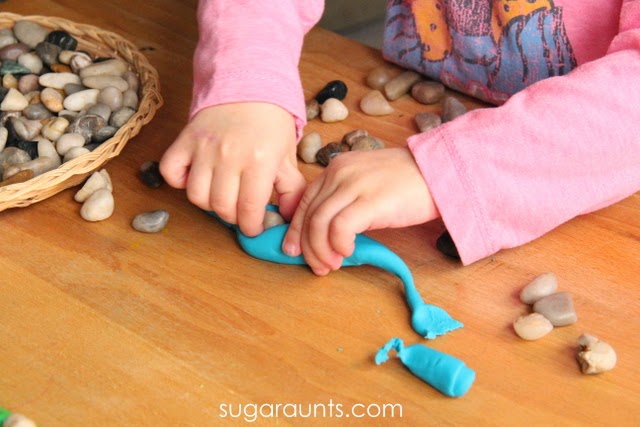
I showed her how to roll a play dough snake to really work on those fine motor skills.
By rolling a snake from playdough, so many fine motor skills are developed:
Pinching those play dough snakes and pressing the stones into the play dough really works the intrinsic muscles of the hand, and upper body strength. It’s a fun way to practice tripod grasp, too.
How to Make a Play Dough Snake
To roll a play dough snake, all you need is a lump of play dough. Then, follow these directions to support fine motor skill development:
Use both hands to roll play dough on the table surface. Both hands should work symmetrically together (bilateral coordination)
As the play dough is rolled, it gets longer.
Use varying amounts of pressure through the palms of the hands to make sure the play dough snake is even. (Graded pressure)
As the playdough snake gets longer and thinner, use the finger tips to roll with more precision. (Precision skills)
Rolling a snake from play dough is a great way to strengthen the muscles of the hands, lengthen the muscles inside the hand (intrinsics), and work on grasp, and finger isolation.
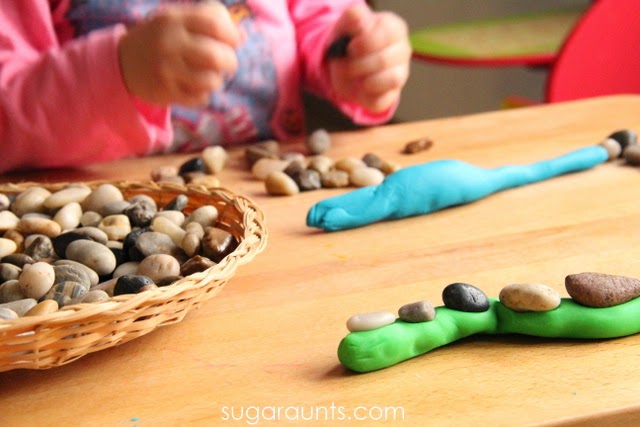
I made a play dough snake and pressed rocks along the length. Baby Girl watched and started making her own.
More skills with Play Dough Snakes
After you’ve made a few snakes from play dough, you can continue the skill-building.
Freeze the play dough to make a stronger resistance.Freezing play dough for heavy work play is a great opportunity to challenge fine motor skills and add more resistive feedback through the hands.
Cut the Play Dough Snake- After you have a nice long ribbon of playdough created, use scissors to create marks along the length. Cut the play dough snake along those textured marks to work on scissor skills and visual motor skills. The play dough offers great feedback through the hands.
Add rocks to the play dough snake- Pushing the rocks into the play dough is a great fine motor proprioception activity. This resistive activity really “wakes up” the small muscles in the hands. What a great way to warm up the hands before a handwriting activity for older kids. Proprioception activities like this one are a good way to calm and organize your child. This activity would be a great addition to a Sensory Diet or a Sensory Lifestyle.
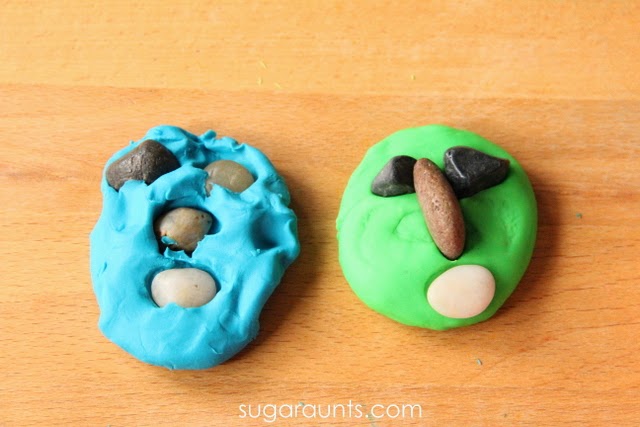
We made our snakes into faces, too. I made a play dough face and Baby Girl was able to copy one to make her own. We talked about all of the parts of the face. Such a fun way to play and learn!
After she made her play dough face, she made them talk to each other…”hi, how are you…” and conversation back and forth. Language development is fun with play dough!
These cuties were best buds by the time we were done!
Let us know if you do this activity at your home or school.
Working on fine motor skills, visual perception, visual motor skills, sensory tolerance, handwriting, or scissor skills? Our Fine Motor Kits cover all of these areas and more.
Check out the seasonal Fine Motor Kits that kids love:
Colleen Beck, OTR/L has been an occupational therapist since 2000, working in school-based, hand therapy, outpatient peds, EI, and SNF. Colleen created The OT Toolbox to inspire therapists, teachers, and parents with easy and fun tools to help children thrive. Read her story about going from an OT making $3/hour (after paying for kids’ childcare) to a full-time OT resource creator for millions of readers. Want to collaborate? Send an email to contact@theottoolbox.com.
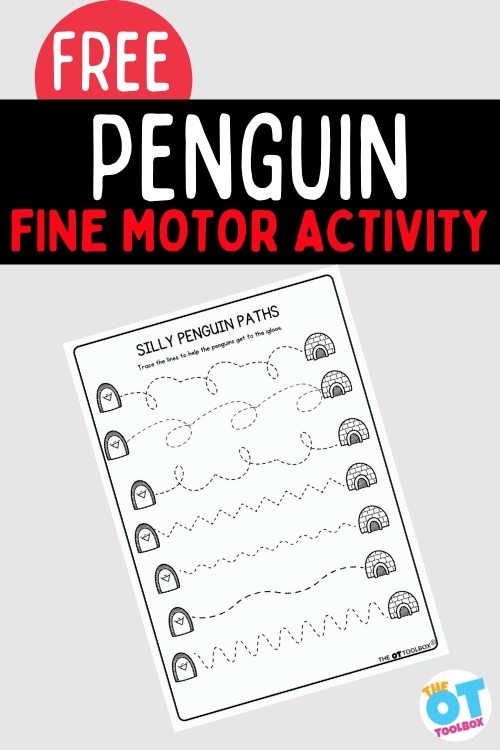
This time of year is perfect for a penguin theme and the fine motor penguin worksheet below is a perfect addition to a penguin lesson plan. This penguin worksheet works on a variety of fine motor skills and can be adjusted to meet educational needs as well, making it a functional worksheet for kids. Use it along with a Tacky The Penguin book and theme, and fun facts about penguins (great for writing prompts while working on handwriting!)
When planning a penguin theme, be sure to add activities from our new Penguin Therapy Kit. It’s got fine motor, gross motor, self-regulation, sensory materials, scissor skill activities, handwriting tasks, and more.
Let’s get on with this free penguin worksheet!
Penguin Worksheet for Fine Motor Skills
As occupational therapists, we love all things function, so functional handwriting beats out on rote copying any day. We can help kids with handwriting skills using a motivating topic like penguins, or we can use discussion of facts that go with an educational theme when working on handwriting skills. The fine motor worksheet here is a perfect addition to that functional and educational topic because it can be used as a hand-warm-up while staying on a theme that is being discussed in the classroom. For OTs pushing into the classroom, this will be a fine motor warm-up that the whole class might want to join in on!
First start with the fine motor work out using the penguin worksheet and then move onto penguin writing prompts.
When thinking about penguins, the movie, March of the Penguins comes to mind.
March of the Penguins Writing Prompts- Use the movie, March of the Penguins as a writing prompt idea to work on handwriting skills after you do a fine motor warm up with our free penguin fine motor worksheet.
I imagine everyone has a different take away from the film March of the Penguins. For me, it was seeing how cold it was in Antarctica in the winter, and watching that poor Dad penguin who has to sit on that egg all winter, while the Mom goes out and gets a few snacks. There was that one scene where the penguin BECOMES the snack, but let’s gloss over that part.
Other people watching the film might take away the fact that the Dad was really stepping up to do his part in the family. These types of Emperor penguins mate for life, and start this ritual every march.
Depending on your audience, this movie leads to opportunities for some deep discussion. Use those discussions as writing prompts.
Penguin facts
Facts about Antarctica
Facts about Emperor penguins
Tacky the Penguin Writing Prompts- If your learners are preschoolers or young children, reading Tacky the Penguin, by Helen Lester might be more their speed.
Write out the story in a comic strip type of writing prompt
List out penguin names from Tacky the Penguin
List out features of Tacky that describe: loud, distracting, funny, is himself
Incorporate interoception concepts from the Tacky the Penguin that kids can relate to.
Penguin Facts Writing Prompts- Use other penguin facts as writing prompts no matter the age of the learner.
Facts about penguin species
Penguin features
Penguin eggs
Penguin habitats
Create an entire treatment plan around this penguin winter theme. Whatever direction you decide to take your penguin writing theme, the OT Toolbox has you covered with penguin worksheets and printables.
Before rushing out to watch March of the Penguins (I may be scarred for life), perhaps take in a viewing of Happy Feat for a lighter film. Also consider purchasing this winter fine motor set as an add on to your treatment theme:
In the Penguin Therapy Kit, you’ll find penguin writing pages to use with these handwriting tasks. There are also penguin-themed sensory bin materials, letter formation cards with a penguin theme.
Penguin Worksheet
Along with the writing prompt ideas, use the free penguin printable below to address fine motor skill work. It’s appropriate for many ages and skill needs. From tracing, to cutting the penguin paths, to working on in-hand manipulation, pencil control, and more.
Beyond a cute tracing activity, this penguin worksheet targets many different skills:
Tracing for dexterity works on staying on the lines, fine motor control, building hand muscles, scanning and a whole host of other important skills as defined below.
Visual motor skills –Combining what is seen visually and what is written motorically. This takes coordination to be able to translate information from visual input to motor output. Coloring, drawing, counting, cutting, and tracing are some visual motor skills.
Kinesthetic awareness – This means learning by doing.
Hand strength and dexterity – staying on the lines builds hand muscles and develops muscle control.
Visual Perception – Developing figure ground to see where the lines start and end, being able to follow the path with the eye and hand, seeing the dotted lines creating a path rather than just dots.
Strength – Core strength needed for sitting, shoulder/elbow/wrist stability, finger strength, and head control all play their role in writing.
Bilateral Coordination – Be sure your learner uses their helper hand for stabilizing the paper while using their dominant hand for writing.
Social/Executive Function – Following directions, task completion, orienting to details, neatness, multi-tasking, attending to task, and impulse control can be addressed using this Penguin worksheet.
There are many different variables that can be modified while using this activity:
Paper:
lightweight paper is much more difficult to stabilize than heavy weight construction or cardstock paper.
Colored paper may be easier or more difficult for children to work with because of color contrasts.
The page can be laminated first, using wipe off markers to trace the penguin paths. This is a great way to make this page reusable.
Writing utensils:
There are endless possibilities for written expression. Markers, crayons, colored pencils, paints, watercolor, chalk, or dry erase pens all provide different input, and require different levels of fine motor skill to manipulate.
Small one inch crayons are excellent for developing those tiny hand muscles.
Chalk, with its grainy texture, provides sensory feedback and can be a positive (or negative) experience
Markers glide easily, requiring less precision and grip strength
Change writing utensils to appeal to different students and improve their level of motivation.
Other ways to change this task:
Have learners write on a slant board to build wrist control and shoulder stability
Try having learners lying prone on the floor with the page in front to build shoulder stability
Lying supine with the page taped above the child, under the table builds shoulder and wrist stability
Project this page onto a smart board for students to come to the board and write in big letters.
Enlarge or shrink this page to make it easier/harder
Place mini erasers or beads along the path
Different levels of prompting may be needed to grade the activity to make it easier or harder
Make this part of a larger lesson plan including gross motor, sensory, social, executive function, or other fine motor skills
Press a fingertip into paint and dot along the lines to work on finger isolation and separation of the sides of the hand
Use the penguin worksheet for sensory play
Use sugar cubes to move along the worksheet path and to make igloos
Make fake snow to get hands into for more fine motor play. Slide the worksheet into a page protector. Use the fake snow to mold a snowy path along the penguin’s path.
Shredded paper in a pool would make a great snow activity. Spread it along the penguin path, adding glue to create a textured, snowy path.
Trace the lines with squeeze glue and add craft materials.
Use glue and feathers to make a feathery walk to the penguin.
Use the penguin path in a preschool penguin theme in a sensory bin using penguin figures, dry beans, scoops, and tongs.
Free Fine Motor Penguin Worksheet
Want to get your hands on this free printable so the kids you serve can develop stronger hands? Enter your email address into the form below for access through your email inbox. This resource is also available in our Member’s Club…you’ve asked for it: A one-stop space to access all of our free downloads in one place. Members can log into their dashboard and download every freebie we have on the website in one place. You’ll also find exclusive Member’s Only materials. Level 2 members get immediate access to the Penguin Therapy Kit mentioned in this post.
Victoria Wood, OTR/L is a contributor to The OT Toolbox and has been providing Occupational Therapy treatment in pediatrics for more than 25 years. She has practiced in hospital settings (inpatient, outpatient, NICU, PICU), school systems, and outpatient clinics in several states. She has treated hundreds of children with various sensory processing dysfunction in the areas of behavior, gross/fine motor skills, social skills and self-care. Ms. Wood has also been a featured speaker at seminars, webinars, and school staff development training. She is the author of Seeing your Home and Community with Sensory Eyes.
Victoria Wood, OTR/L
*The term, “learner” is used throughout this post for readability, however this information is relevant for students, patients, clients, children of all ages, etc. The term “they” is used instead of he/she to be inclusive.
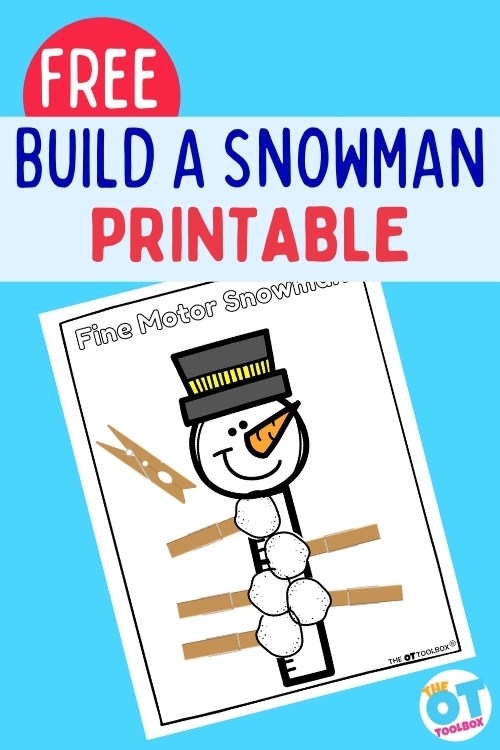
Today we have a fun fine motor paper snowman craft. It’s a “build a snowman printable” that you can print out and use to work on so many therapy skills. There is just something about making a snowman during the winter months, right? Today’s free fine motor snowman activity that kids will LOVE. So, do you want to build a snowman?
Build a Snowman Printable
Heck yes! Wait, not if I have to go outside. With this great fine motor snowman printable activity, you can build a paper snowman from the comfort of your own house, in your pajamas, with a cup of cocoa if you like…and work on fine motor skills, scissor skills, sequencing, bilateral coordination, and more!
It’s no secret I love crafts. You could pretend for half a second to like the cold and wet winter outside your door, or make this adorable snowman inside where it is warm. Build this into a lesson plan about winter by talking about what winter is like in different parts of the world, For learners who have never experienced snow, provide pictures or videos for reference. Talk about what they think snow feels like.
Snow comes in many different varieties. While it is all cold (except the plastic snow variety), some snow is wet and soggy, while other is dry and fluffy. There is also icy snow that creates this lovely sheen across it, and is very fun to smash and crash through! Each type of snow has its uses and benefits. Wet snow is better for building and packing. Dry and fluffy is better to keep you from getting soaked. Icy snow is just pretty to admire. For those with tactile defensiveness that impact touching wet, mushy snow this can be a good discussion.
Use this snowman printable as a jumping off point to the rest of your treatment sessions.
As always I love the versatility of this printable paper snowman craft. With one snowman printable, you can address skills like fine motor, visual motor, turn taking, finger strengthening, and following instructions all wrapped up into one cute snowman.
It would be a great interactive snowman activity for kindergarten, preschool, and all ages, depending on how you adjust the activity.
How to Use this Build a Snowman Printable
What you will need for this task:
Snowman printable
Ruler or laminated strip of cardstock
Clothespins
Glue (drippy glue is best)
Dice
Instructions: Color the snowman or print out the pre-colored sheet. Have students cut out snowballs and glue to the clothespins. Roll the dice and clip the corresponding number of clothespins to your ruler or strip of cardstock.
Explore all of the ways to use adapt and modify this free snowman printable:
Laminate the snowballs to make them more durable
Laminate the snowman head to make it reusable and durable
Change the ruler for a stiff piece of cardstock or cardboard
Print the snowman in color, or black and white so your learners can personalize theirs
Add large pom poms or scrunched up paper on the top of the snowballs for a 3d effect
Add glitter and sparkles to the snowballs for added sparkle and sensory experience
Paint the clothespins or dip in glitter to make them fancier
Drippy wet glue is preferred as it will stick better. The added benefit is the sensory input from white glue, as well as the fine motor strengthening from squeezing the bottle
Pre-cut and glue all of the pieces ahead of time if the emphasis is on playing the game
Split this into two sessions, the first being the craft, the second working on the game
Incorporate gross motor work: Scatter the snowball clips around the room and ask the user to gather the snowballs to build their snowman. Add hops, kicks, jumps, and animal walks to gather the snowballs.
What is your focus? What goals do you want to focus on while using this activity? You can use on or all of them:
Fine motor strengthening, hand development, and grasping pattern
Following directions, attention to detail, turn taking, waiting, social skills, compliance, behavior, and work tolerance
Cutting on the line ( if you choose to add this step), within half inch of lines, in the direction of lines
Pasting using glue stick or drippy glue with accuracy
Bilateral coordination – remembering to use their “helper hand” to hold the paper while cutting. Using one hand for a dominant hand instead of switching back and forth is encouraged once a child is in grade school or demonstrates a significant strength in one or the other.
Strength – core strength, shoulder and wrist stability, head control, balance, and hand strength are all needed for upright sitting posture and fine motor tasks.
If you have not totally burned out on the movie Frozen and all of the theme work that goes with it…like this Frozen sensory dough, this will be a great addition. This build a snowman activity can be creating Olaf from the movie. If you are super creative, you could switch out the head of the snowman for an Olaf printable.
What else can I add to this paper snowman craft?
Have learners write the stages to building a snowman
Higher level learners can write down the directions to the game
More advanced learners can work on social skills by teaching beginners to play
Learners can explore other games they could make using this snowman (perhaps hiding the snowballs around the room and having learners run around collecting them)
Write a report about snowmen, types of snow, the history of snowmen, different snow celebrations or activities
Turn it into a gross motor task, sensory activity, following directions, or combination of all of these
Add glitter! Glitter makes everything wonderful
More snowman activities
Incorporate more snowman themed activities along with this build a snowman printable for a full snowman theme.
Snowman crafts (tons of great snowman crafts and activities listed here)
And you can always head outdoors! Use this how to paint snow activity for more skill-building.
What creative ways have you made snowmen? I believe there was a little spray paint used instead of coal last winter, and I think the dog snatched the carrot before we had time to use it. We have had snowmen families, lady snowmen, and grass covered snowmen when there really wasn’t enough snow to make one.
If there is a dusting of snow in Charleston this winter, you better believe we will be out there rolling whatever snow falls down, creating our snowman. Until then, I will just have to enjoy the sand instead.
Free Build a Snowman Printable
Want to add this paper snowman printable to your therapy toolbox? Enter your email address into the form below. This resource is also available in The OT Toolbox Member’s Club. Members can head to the dashboard and download the resources right there.
Keep those snowballs rolling!
Victoria Wood, OTR/L
Victoria Wood, OTR/L is a contributor to The OT Toolbox and has been providing Occupational Therapy treatment in pediatrics for more than 25 years. She has practiced in hospital settings (inpatient, outpatient, NICU, PICU), school systems, and outpatient clinics in several states. She has treated hundreds of children with various sensory processing dysfunction in the areas of behavior, gross/fine motor skills, social skills and self-care. Ms. Wood has also been a featured speaker at seminars, webinars, and school staff development training. She is the author of Seeing your Home and Community with Sensory Eyes.
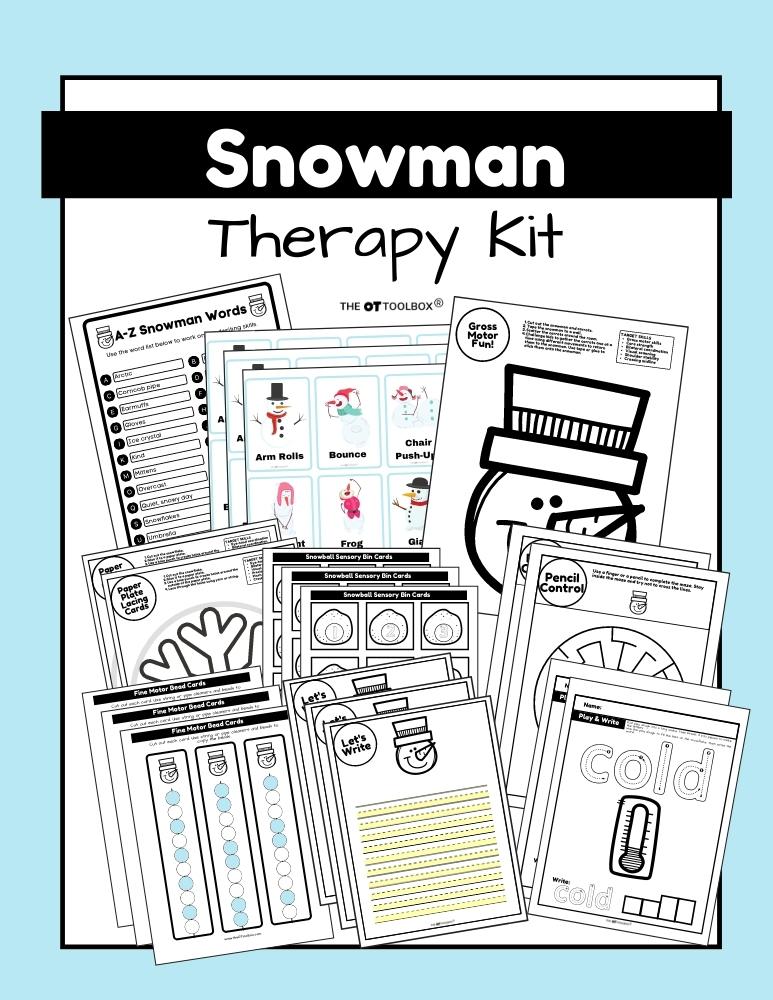
The Snowman Therapy Kit is a winter-themed therapy kit designed to develop motor skills, self-regulation, handwriting, and scissor skills. Over 75 pages of therapy activities to develop fine motor strength, dexterity, core strength, regulation, functional grasp, and endurance.
Questions about the best apps for occupational therapy come up often. It is possible to address developmental skills through app play. Let’s cover various occupational therapy apps for the iPad or tablet.
Children of today have technology very much integrated into all aspects of their daily lives. Technology is an occupation in and of itself. As occupational therapists, we strive to support functioning and full lives in our clients. Using apps in occupational therapy services serves two purposes: a meaningful and motivating tool to support functional skills by addressing underlying skills, AND as an extrinsic factor impacting function: using a device, filling form fields on apps, scheduling appointments, making calls, and other performance areas. Apps are a part of function because technology is so integrated into daily life.
Let’s look at various areas of development where app use can help support kids, teens, and adults:
Apps for Occupational Therapy
Normally at this time of year in therapy, it can be hard to keep the kids attention spans on track. Having a free app that builds skills can be one way to stay on track with addressing specific skills.
Here, you will find free apps for occupational therapy that can be used as a supplemental activity or as a quick activity in between other occupational therapy activities. The OT apps for the ipad or tablet can be used in many different ways:
Use the OT apps as a supplemental activity for home recommendations or classroom down-time.
Use the occupational therapy app as a transition activity that continues to develop skills addressed in therapy sessions.
Others may want to use these apps for therapy breaks or as a reward at the end of the session.
Use the apps for occupational therapy homework so that kids are motivated to participate and incentivize OT home programs, fostering the carryover we don’t sometimes see.
Still others may find the occupational therapy apps perfect for home occupational therapy programs or ways to keep kids busy while parents are working from home.
Whatever your need, these educational games and special education supports can be a powerful tool in distance learning and learning at home.
Free Apps for Occupational Therapy
The free apps below are broken down into targeted skill area. I’m adding apps for handwriting and letter formation, visual motor skills, executive functioning skills, and other areas. Some of these apps are IOS apps and others are Android apps.
The apps that are available for Android on Google Play may be accessed through a Google account on a desktop and then accessed through the Google play app or via a Google account on an Apple device. Here is more information on how to access Google Play apps on an Apple device.
I tried to locate only free apps in this resource. There are many great apps for occupational therapy out there, but I wanted to cover all the bases when it comes to OT interventions with free apps that can meet the needs for free!
The apps listed below are some of the best apps for occupational therapists to use in therapy sessions, and to recommend to parents and teachers, when appropriate. Remember that all kids are different and all have specific needs, so these recommendations may not work for every child or individual.
All About Shapes- This free app is available on IOS and is a shape drawing app. Users can draw and identify shapes.
Vision Tap- This free IOS app is a great one for addressing visual processing and visual efficiency skills. Visual tracking, visual scanning, and oculo-motor skills are challenged with this one!
Broom, Broom- This free IOS app allows children to draw paths for the vehicles in the game to drive on, building eye-hand coordination, motor planning, visual memory, and precision of fine motor skills.
Visual Memory- is a free app available on Google Play. The game is designed to develop visual memory and improve attention. Users can find the image that appears at each level.
Piko’s Blocks- this free IOS app really challenges the visual spatial skills for older kids.
Memory Game- is another free app on Google Play. The game is just like the classic concentration game, helping users to build visual memory skills.
Learning with Wally is an Android app available on Google Play. The visual discrimination app challenges users to discriminate between differences, recognize, and attend to details in visual forms, including pictures, letters, words and sentences.
Sorting and Learning Game 4 Kids- This app is available on Google Play and challenges users to categorize and match themed objects while helping to build visual attention, visual memory, and focus with a concentration on visual perception.
Visual Attention Therapy Life is an app available on Google Play. The free app allows users to address and build visual scanning, visual memory, and visual attention. It also helps rehab professionals to assess for neglect and provide more efficient and effective therapy for attention deficits.
Sensory Baby Toddler Learning- This Google Play app is great for younger kids as they work on cause and effect and develop hand eye coordination skills.
Connecting Dots is Fun- This free IOS app allows users to work on visual perceptual skills such as visual discrimination, form constancy, figure-ground and visual processing skills of tracking and scanning. Users create dot-to-dot activities in the app.
Alphabet Puzzles For Toddlers- This Google Play app helps younger children work on letter identification and letter recognition. The letter learning app is a great app for preschoolers or toddlers. The visual perceptual app allows children to address form constancy, visual discrimination, figure ground, and other visual perceptual skills.
iMazing- In this free IOS app, users can complete maze activities while challenging visual perception and visual motor skills. Skill Game- This free app is available on Android. The game allows users to draw lines to connect numbers while building eye-hand cordination, precision, motor planning, visual memory, and more.
On the Line- This IOS app is great for working on visual motor skills using a stylus.
Squiggles- This free app is a great one to work on pre-writing skills. Users can draw lines and figures and watch as they become animated.
Handwriting Apps
These handwriting apps are occupational therapy tools that support the underlying skills needed for handwriting. Some apps allow kids to “write” letters using a resistance-free surface on the tablet or iPad. This input can be the “just right” level for some kids. Other Handwriting apps listed address other skills. Let’s take a look at how to use these apps in occupational therapy services.
ITrace is a handwriting app that does have a price for the main version, however, there is a free version available with some activities. Users can trace letters, numbers, words, and shapes while working on visual motor skills and letter formation.
Writing Wizard- This app is available on Google Play and allows users to trace letters along a visual guide. There are various fonts available and size can be adjusted for different ages.
Writing Wizard-Cursive- This handwriting app is created by the makers of the regular, print version of Writing Wizard. Users can practice letter formation in cursive.
Start Dot- This app addresses letter formation using visual, auditory, and movement cues. These prompts fade to address accuracy and independence.
Ollie’s Handwriting and Phonics- This free app allows users to trace and copy individual letters and words on the app’s chalkboard wall.
Write ABC – Learn Alphabets Games for Kids- This handwriting app is available on Google Play. The app helps younger children work on letter formation using visual cues for starting points and ending points.
Sand Draw- This free Google Play app provides a sandy beach for kids to practice writing letters, words, or phrases in. Use it to practice spelling words for a fun twist.
Snap Type- While this app has a paid version, the free version also allows users to create digital versions of worksheets. Students can take a picture of their worksheets, or import worksheets from anywhere on their device. They can then use their Android device keyboard to add text to these documents. When complete, students can print, email.
Apps for Fine Motor Skills
These apps for fine motor skill development might not be your go-to fine motor task when it comes to strengthening hands and promoting dexterity. But for the child that struggles with fine motor skills, a tablet or iPad app can be a motivating and meaningful way to address developmental skills.
With an app, it is possible to address functional, fine motor skills:
The fact is that devices are not going away. In fact, our youth are likely to see all aspects of their future lives managed by screen technology. For kids that struggle with dexterity, hand strength, motor planning, and other motor skills, we can help them to be the most functional and independent individuals.
These fine motor apps are just one more strategy in our OT toolbelt.
Dot to dot Game – Connect the dots ABC Kids Games- This free app is great for toddlers, preschoolers, or young children working on precision, dexterity, and fine motor work. the app addresses letter and number formation.
Tiny Roads- This free app allows children to connect objects while working on precision and finger isolation.
Montessori Fine Motor Skills Game School Numbers- This fine motor app helps users work on eye-hand coordination, precision, and finger isolation while working on numbers, letters, and shapes.
executive function apps
When addressing attention, distraction, planning, prioritization, time management, and other executive functioning skills, using apps in occupational therapy is a no-brainer. Kids are exposed to the technology of devices every day and the ability to complete daily tasks using devices is just part of advances in our time.
Use these executive function apps in occupational therapy as a support tool: devices to help with challenges like attention, organization, scheduling, and planning. Or, use these executive functioning apps in OT to work on cognitive skills that enable function; Apps are a great way to practice filling out forms, recalling and typing passwords, addressing online distraction, and other functional tasks that kids and adults are faced with every day. App use is an occupation, or task that occupies our daily lives, in a very real way. There are many typing programs that target these skills.
CogniFit Brain Fitness- This Google Play app uses memory games, puzzles, reasoning games, educational games, and learning games to train memory, attention, concentration, executive functions, reasoning, planning, mental agility, coordination and many other essential mental skills.
Lumosity: Brain Training- This free executive functioning skills app uses games to exercise memory, attention, speed, flexibility and problem-solving.
Memory Games: Brain Training– This executive functioning skills app uses memory and logic games to improve memory, attention and concentration.
Alarmy- This free alarm app allows users to set alarms for attention building, and scheduling.
The Google Tasks app– This free app creates checklists and sub-lists and allows users to add details about the areas that users need need to focus on in order to accomplish tasks. The app helps users to stay on track with due dates and notifications.
The 30/30 app- This free app helps with executive functioning skills such as starting tasks, staying organized, and prioritization in tasks. This app is useful to address procrastination and motivation on bigger tasks or projects.
Forest- This app helps with procrastination, productivity, and motivation.
Study Bunny- This free productivity app helps students pay attention and focus on studying and larger school projects or tasks.
Habitica- This task completion app allows users to track habits, and add gamification to tasks to build motivation and help with productivity.
HabitNow- This free habit tracker app helps users to track habits and build habits to improve productivity and time management. This is a great app for scheduled activities or daily tasks such as chores or morning/evening routines.
Brain N-Back- This working memory app helps to train working memory.
Clockwork Brain Training- This memory training app helps with working memory and concentration through games and puzzles.
Apps for Emotional regulation
There are apps that can be used as self-regulation tools. There are apps to practice social interactions. There are even apps to check-in on emotional regulation and self-regulation needs. These apps for emotional regulation are a great way to support kids and teens emotional regulation and overall wellbeing needs through the use of a hand-held self-regulation tool.
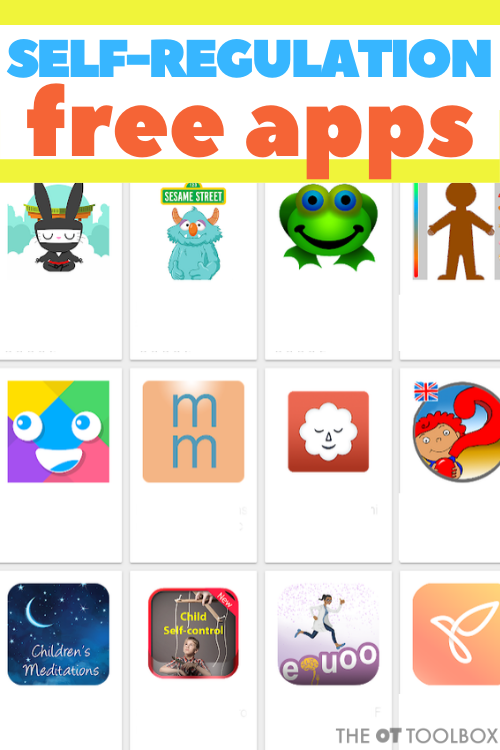
Breathe, Think, Do with Sesame- This self-regulation app uses a fun Sesame Street monster to help little ones calm down and solve everyday challenges. Available in English and Spanish, the coping tools app helps your child learn Sesame’s “Breathe, Think, Do” strategy for problem-solving.
Trigger Stop: Sensory and Emotional Check-In- This free self-regulation app is available on Google Play so they can identify and communicate sensations and emotions or feelings in the body so they can express them in a healthy way.
Social Navigator –This emotional regulation app is a great social skills app designed to assist children with social and behavioral challenges. Kids can develop essential social interaction skills by taking a look at their behavior in social situations, and this app is a nice way to build confidence in that area.
EmoPaint – Paint your emotions! is a free self-regulation app available for IOS in the Apple Store or Google Play. The paint app allows users to represent emotions or bodily sensations through art, by painting them interactively on the screen.
Moodflow: Self-care made easy!- keeps track of your emotions, moods, thoughts and general well-being with a self-rating system, emotional language, and a system that allows for identification of how coping strategies help with emotional regulation.
Deep Breathing apps- there are many mindfulness and deep breathing apps out there. I even have one right on my watch. With calming visuals, mindfulness apps allow the user to calm down and regulate their emotions so they can function in any situation. Bubble: Breathing Companion is one self-regulation app that encourages emotion regulation through breathing exercises.
Colleen Beck, OTR/L has been an occupational therapist since 2000, working in school-based, hand therapy, outpatient peds, EI, and SNF. Colleen created The OT Toolbox to inspire therapists, teachers, and parents with easy and fun tools to help children thrive. Read her story about going from an OT making $3/hour (after paying for kids’ childcare) to a full-time OT resource creator for millions of readers. Want to collaborate? Send an email to contact@theottoolbox.com.
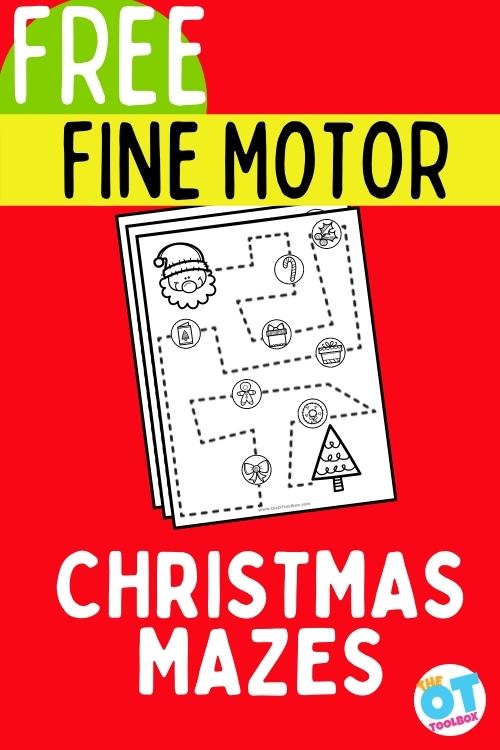
This Christmas maze printable is a fun way to incorporate the holiday season while working on fine motor skills like in-hand manipulation. Add these free printable Christmas mazes for a therapy tool, or home activity that builds skills!
Christmas Maze Printable
Wait, what? “Christmas” and “manipulation” should not be in the same sentence, right? Well…….there is an awful lot of manipulation going on at the holidays in order for Santa to deliver the goods.
However, we are not referring to that type of manipulation. In hand manipulation is an important fine motor skill to develop the intrinsic muscles of the developing hand. That sentence is a mouthful and sounds highly professional. Be sure to slip that one into your conversation somewhere this month to sound super smart!
The term “manipulate” we are referring to when talking about “in hand manipulation” does not mean to control a situation or person, but rather; to treat or operate with or as if with the hands or by mechanical means especially in a skillful manner. Therefore in- hand manipulation refers to working the intrinsic hand muscles skillfully.
Check out this article by Kelly DeYoung of the OT Perspective as she delves further into in-hand manipulation.
Intrinsic hand muscles with a Christmas Maze Worksheet
In simpler terms, there are many very tiny muscles inside the palm of the hand connecting to the fingers. They are called intrinsic muscles because they are within the hand. Great dexterity starts with the ability to move all of the muscles of the hand, rather than relying on more primitive motions using only the wrist or arm.
Now that we are clear that we are referring to skillfully working the small muscles of the hand, let us get on to the fun stuff!
Below, you can grab a set of FREE Christmas maze printables for in-hand manipulation as an excellent way to build these muscles while motivating your student at the same time.
How to use these Christmas Maze Printables
Have your student hold items such as coins, beads, bingo chips, mini marshmallows, in the palm of their hand.
Show them how to use their first finger to trace along the maze path.
At each circle have your student place one of their items onto the spot.
Continue tracing along the path placing objects until they reach the end of the maze.
These Christmas and Candy Cane activities work on in-hand manipulation, finger/hand strength, dexterity, separation of sides of the hand, visual perceptual skills, following directions, and so much more all in one fun PDF printable.
More ways to use these free printable christmas mazes
Ways to modify or change this task:
Laminate the page to make it reusable. Try coloring it first!
Print on different colored paper
Enlarge or shrink page to change the challenge
Have younger students use bingo markers on the dots as a fun game
Trace the line with a marker, then color the circles if handwriting is your objective
Color the picture after or before working on the in-hand manipulation task to add to the challenge
Have students pick up the coins one by one to get into their hand before dropping them one by one. No raking grasp or sliding coins off of the table!
Observe Skills when using the Christmas Mazes
When working on this type of in-hand manipulation, there are several observations to be made.
Can your student pick up the coins one at a time without using a raking grasp or sliding them off of the table?
How many items can your student hold at once without dropping some?
Can your student move the items from the palm of their hand to their finger tips to get them out, or do they drop the coins by opening their fingers?
Can your student continue to hold the coins while isolating one finger to continue the maze?
How many times do you need to repeat the directions so your student can follow them?
How many reminders does your student need while doing this activity?
What is your student’s frustration tolerance when they have to start over?
Is there any cheating or cutting corners going on? There always is.
The best part of themed treatment planning is the ease of it. It is streamlined and can be adapted for multiple levels of students. If your students enjoyed the Christmas in-hand manipulation free printable, they will LOVE this Christmas Fine Motor Kit! If you order soon, you can get it while it is on sale.
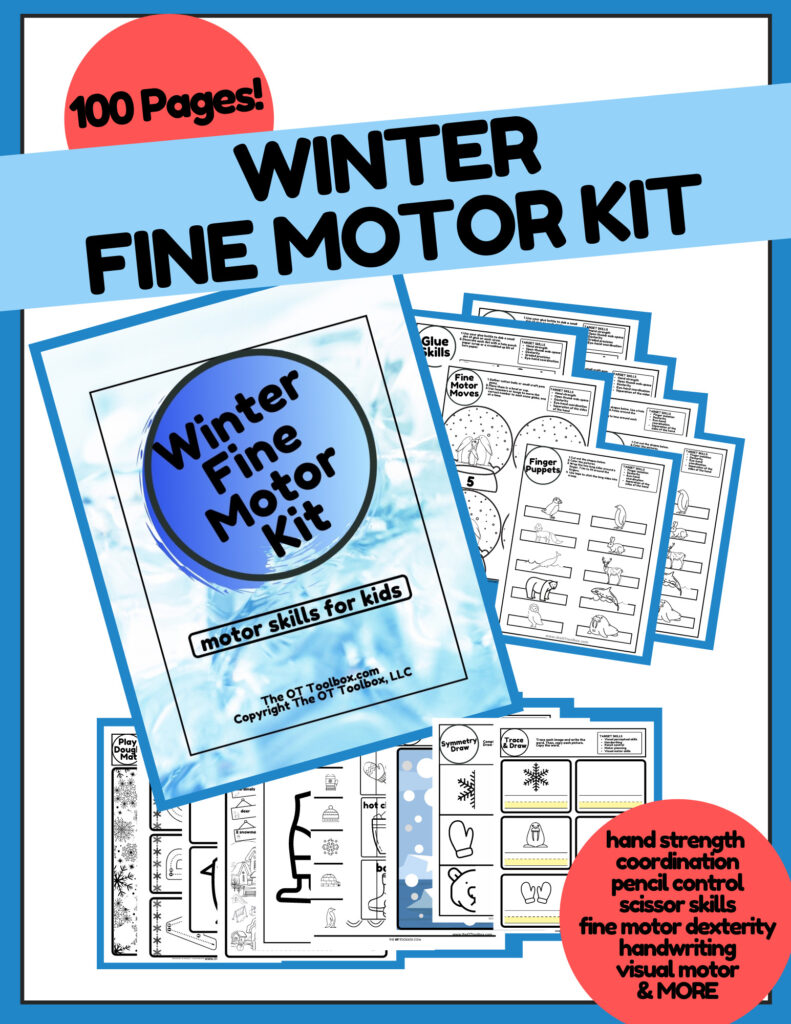
If you prefer a more “winter themed” treatment plan, the OT Toolbox has you covered. They offer a Winter Fine Motor Kit crammed full of printable tasks to use to develop important fine motor skills.
Writing all of these Christmas pages has me excited about trying some of these activities with my students. I especially love this one, as in-hand manipulation tasks are one of my go to treatment plans for building hand muscles. I just might order the Christmas Fine Motor Kit too. With the holiday season as crazy as it is, I just don’t have time to create endless lesson plans and come up with novel ideas, when the OT Toolbox has me covered already.
Free Christmas mazes
Now to the fun stuff! CHRISTMAS! These printables are a great way to incorporate meaningful relevant activities into the holiday season. As always, be mindful of your school’s policy on using specific Christmas activities that feature Santa. Some districts have strict rules about how holidays can be celebrated. Usually “winter theme” is a safe bet. Candy canes, snowmen, snowflakes, hot cocoa, penguins, polar bears, etc are not usually frowned upon.
Enter your email address into the form below and these printable Christmas mazes will be delivered. If you are a member of The OT Toolbox Member’s Club, you’ll find these printable mazes in your member’s dashboard area.
Happy Holidays!
Victoria Wood, OTR/L
Victoria Wood, OTR/L is a contributor to The OT Toolbox and has been providing Occupational Therapy treatment in pediatrics for more than 25 years. She has practiced in hospital settings (inpatient, outpatient, NICU, PICU), school systems, and outpatient clinics in several states. She has treated hundreds of children with various sensory processing dysfunction in the areas of behavior, gross/fine motor skills, social skills and self-care. Ms. Wood has also been a featured speaker at seminars, webinars, and school staff development training. She is the author of Seeing your Home and Community with Sensory Eyes.
*The term, “student” is used throughout this post for readability, however this information is relevant for all types of learners, patents, clients, children of all ages, etc. The term “they” is used instead of he/she to be inclusive.