Have you ever played with moon sand, or moon dough? This moon dough recipe is an old post here on The OT Toolbox, and one that we loved looking back at. Have you made your own moon dough? This stuff is seriously messy and majorly fun! We made our Peppermint Moon Dough recipe a little different than the usual moon dough recipe that is out there. This moon dough recipe is very soft and fun even for moms to play with! It’s a great companion to our peppermint play dough recipe from years ago, and our free printable candy cand puzzles, too.
Moon Dough Recipe
We started with what we had on hand. When it comes to kid-related messy play and making these sensory play activities, we love to use something that otherwise would be thrown away. Likewise, waste in these activities is not something we are big fans of. So, when ever possible, we’ll re-use sensory play materials for other activities and save things like dyed pasta and rice for future sensory activities.
Note: This post contains affiliate links.
This moon dough recipe used something that would otherwise be headed to the trash bin…I had some scented lotion that I had for a while… I really didn’t care for the scent. That and some corns starch were all that were needed to make the base of our moon dough!
Moon Dough Ingredients
There are only four ingredients in this easy moon dough recipe. You could even omit the food coloring and make this a 3 ingredient moon dough recipe!
To make the consistency of moon dough, use a 4:1 ratio of corn starch to lotion. This will make a nice and fluffy, but moldable moon dough.
We added a few drops of peppermint extract and some red food coloring. We used the gel type of food coloring, but only because that is all we had on hand. I’m sure liquid food coloring would work just as well, although with the added liquid of scent and food coloring, a little extra corn starch might be needed.
Also to note when making your moon dough recipe is that different brands of lotion may effect this recipe. As you mix the ingredients together, you many need to use more or less corn starch depending on the consistency.
Half of the moon dough, I kept plain white and the other half got the red food coloring for a very candy cane look. Add a few little bowls and spoons for scooping, and a couple of Candy Cane cookie cutters, and we were ready to play!
We all got busy scooping, fluffing, and mixing. This was such a fun sensory play experience (for mom, too!) The lotion made this dough very soft and with the peppermint scent, you could no longer smell the lotion’s scent.
Baby Girl (age 2) especially loved to scoop the moon dough. She used the spoons and filled one cup after another. And what great fine motor skills this was for her! She liked to mix the red and the white colors together, dump it all out, and start scooping again! Here is information on the developmental benefits of scooping and pouring with toddlers.
We played right on the hard wood floor of our dining room for an easy clean up. Any stray moon dough bits were easy to broom right up.
Little Guy’s favorite part was making the candy cane molds. We packed the moon dough into the cookie cutters and then pulled it up. The moon dough would hold it’s shape of the candy cane. There were a bunch of little moon dough candy canes before we finished!
The scent of peppermint candy canes filled the room! We had so much fun playing with this moon dough!
When we were finished playing, I poured all of the moon dough into a storage bad and saved it to make a new play activity. We’ll be using it again, soon!
Have you made moon dough? How about candy cane scented moon dough?
Looking for more fun candy cane scented sensory play?
More Christmas sensory ideas
You’ll find more Christmas sensory activities here, but be sure to try some of these sensory dough materials this holiday season.
Colleen Beck, OTR/L has been an occupational therapist since 2000, working in school-based, hand therapy, outpatient peds, EI, and SNF. Colleen created The OT Toolbox to inspire therapists, teachers, and parents with easy and fun tools to help children thrive. Read her story about going from an OT making $3/hour (after paying for kids’ childcare) to a full-time OT resource creator for millions of readers. Want to collaborate? Send an email to contact@theottoolbox.com.
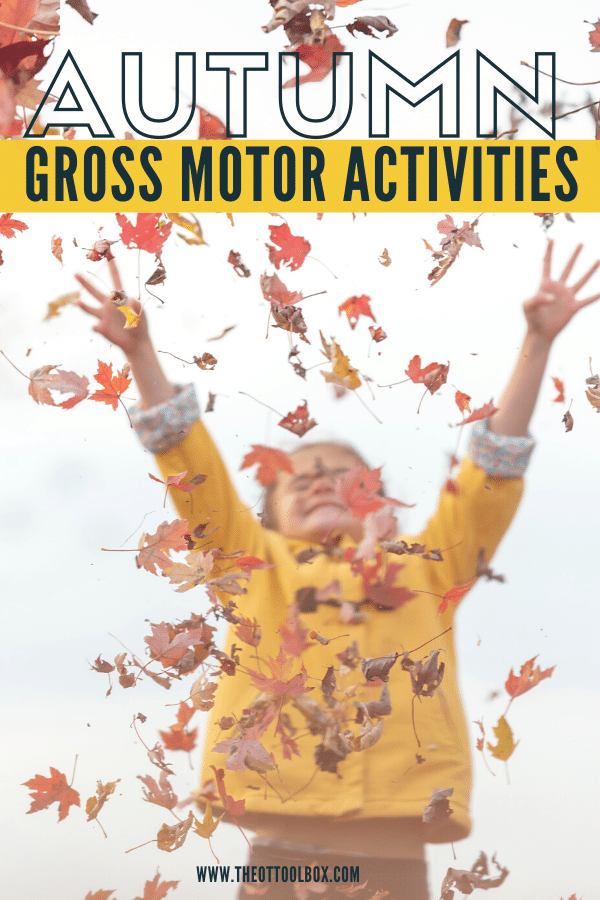
Adding to the fun of autumn are these Fall gross motor activities. There is so much about this time of year that offers opportunities for heavy work activities and gross motor play, all using a Fall theme!
Use these Fall activities for family fun or ways to offer different movement challenges. Many of these ideas use all that Autumn has to offer: cooler weather, piles of leaves, hay bales, pumpkins, and apples. Other gross motor ideas listed here are gross motor ideas that can be done indoors. Either way, they are perfect for gross motor preschool activities, gross motor activities for toddlers, and whole-body activities to help kids build core strength, balance, coordination, and endurance.
Fall Gross Motor Activities
Isn’t Fall the perfect time to get outside, enjoy the season and the crisp air while getting active? There are so many great active and gross motor activities you and your family can do even with little prep or planning. Jump in leaves, go on a nature walk, collect leaves and fall items…just get moving!
Spending time time indoors doesn’t mean there’s no room for gross motor activities. Creep and crawl like a spider with this Motor Planning Spider Web Maze.
Explore apples and red while balancing a tree trunk with Learning Apples/Red.
Colleen Beck, OTR/L has been an occupational therapist since 2000, working in school-based, hand therapy, outpatient peds, EI, and SNF. Colleen created The OT Toolbox to inspire therapists, teachers, and parents with easy and fun tools to help children thrive. Read her story about going from an OT making $3/hour (after paying for kids’ childcare) to a full-time OT resource creator for millions of readers. Want to collaborate? Send an email to contact@theottoolbox.com.
Sensory activities for babies is a tool to help little ones grow and develop life-long essential skills. Baby sensory experiences and sensory play go hand in hand. A baby has so much exposure to sensory stimulation each day. From sounds, to sights, to textures and temperatures, a baby’s sensory system is rapidly developing and filing away information. In our house, when child number four was a baby, she was exposed to A LOT of auditory and visual stimulation from older siblings!
Sensory ACTIVITIES for Infants
Here, you will find sensory activities for infants and babies that can be used to help you connect and play with your little one. These baby sensory play ideas will encourage exploration of colors, textures, and properties.
First, I wanted to share this resource for parents of new babies and also therapists that work with families.
Resource for New Parents
First, I wanted to let you know about an exciting new resource for new parents. Many people think new parents are the only ones that need baby advice. Maybe you found yourself as a new mother who suddenly had a lot of questions on sleep patterns, eating and childhood milestones. But, if there is one thing that therapists wish they could tell new parents, it’s that parents could have a better understanding of how movement plays into development.
Therapists are many times, seeking resources to share with parents to support a family through the first year of baby’s development so they can thrive.
Remarkable Infants is a great opportunity for parents and professionals alike to educate more people on how to support a baby’s first-year development for future learning development.
Yes, this course does provide information on helping a baby sleep and eat, but this course is the other more comprehensive sections. The pieces most other baby trainings don’t provide.
It’s a 5-step, all-inclusive online training for new moms focusing on the development of the whole child from birth through 12 months of age. It includes the following:
Language Development (Talking with your baby)
Healthy Sleep Habits (Understanding baby sleep)
Cognitive Development and Motor Development (Playing with your Baby)
Reading with your Baby (Vocabulary, visual-motor, speech and language)
Infant Nutrition (Feeding your baby)
Even though this course is geared to moms, it’s also great for professionals. It can be a HUGE help to clients, expecting moms you work with and those that have kids with learning challenges. The more we can help educate parents on the necessity of building a baby’s cognition, speech and language and motor movements in their first year, the further ahead that child will be later in life.
The 2 best parts are:
1. Each section is taught by a specific professional (Occupational Therapist, Speech and Language Pathologist, Pediatric Sleep Sleep Specialists and Registered Dietitian) with evidence-based research. So you know you’re getting advice from the pros!
2. If you are a professional, you can get CEU credits/Certificate of Completion for taking this course.
You can also get an additional 10% discount when you use our coupon code “COLLEEN10.” To join the Mommy Academy, click here. Don’t forget to enter the discount code!
Our Mission at the Mommy Academy is to provide new mamas with easily accessible, organized, evidence based information and practical skills. Our resources strive to remove overwhelm and exhaustion and allow new moms to spend less time on Google and more time connecting with their baby and taking care of themselves. Our mission is to make new mamas feel less alone through heartfelt encouragement, a mama community and expert support.
Sensory Play Ideas for Babies
Child development begins in the womb. As that baby develops and grows in utero, they are already stretching and moving, practicing reach and grasp, and stretching against the walls of their mother’s uterus. That push and pull that you felt as an expecting mom was your little one gaining strength and sensory input! That motor development continues after birth, and that’s when the fun begins because as mom or dad, we get to snuggle that little one, engage with them, and watch their every move!
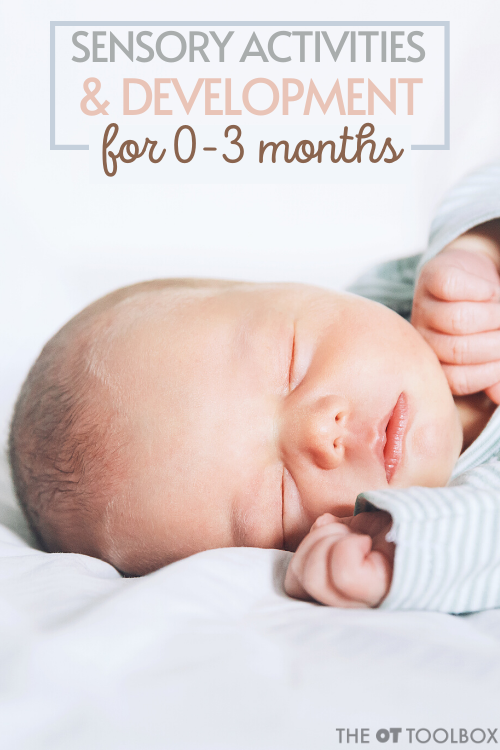
Sensory Activities for newborns
Let’s talk specifics. During the newborn and infant stages (0-3 months), you’ll see so many physical and sensory milestones. These are developments that impact movement, communication, and feeding. Sensory developmental milestones during the first three months include:
Following a person with their eyes
Lifting their head to observe and listen
Pushing up to their arms while lying in tummy time, now baby can REALLY start to take in the world around them
Holding the head up while laying on their belly
Opening their fist into stretched fingers- Little one can grasp and begin to explore textures
Bringing hands to the mouth for sensory input, calming, and soothing
Reaching for toys to explore
Turns toward sounds or voices
Makes eye contact
Moving legs and arms- They are figuring out how their body moves in space and how much effort needs to be exerted to move
From the first weeks when baby doesn’t focus their eyes on anything, they strengthen eye movements and focus to visually track a toy or person by the end of the three months of age. During this stage, it’s important to allow that little one to move, stretch, kick, and strengthen their core, neck, arms, and legs, and eye muscles. Sensory activities for newborns can include:
Songs and Nursery Rhymes- For our littlest newborns, this is a wonderful first play activity. Singing softly or reciting nursery rhymes to infants gets your little one used to the sound of your voice. Make eye contact up close as you recite rhymes and songs. Baby’s vision is capable of focusing on objects at about 8 inches from their face. Using exaggerated mouth movements and wide eyes when you speak to your little one provides a high-contrast point that they can focus on.
Follow the noise- Use a rattle, squeaky toy, or other toy that makes noise as you move the toy in front of your little one’s field of vision. You want your baby to visually track the noise and follow the toy with their eyes. While baby won’t be able to really follow moving objects with their eyes until about three months of age, this activity boosts so many areas and creates the building blocks of auditory processing and visual processing. This activity can be accomplished at various stages, and in various positions. Baby can be swaddled up and laying on their back while following the toy with their eyes. Try it when baby is in tummy time. Soon, you will see reaching for that fun toy. It’s a great way to encourage reach, grasp, and even gross motor skills like lifting the head and neck while in tummy time, and rolling.
Tummy Time Back Rub- Tummy Time can be hard for babies! That little cry is so sad and makes you want to pick your little one up and snuggle them until they feel safe. But, remember the benefits of tummy time and help them to feel safe and comforted on their belly. Get down on the floor with your little one and lightly rub their back while you sing, speak, or hum. Put your face right next to your little one so they feel the warmth of your body. Make eye contact and engage with that sweet nugget!
Chest to chest- We talked before about how tummy time doesn’t need to happen on the floor. Place baby on your chest as you lean back on a couch. Your baby’s face will be close to yours and at a great position to speak softly. Depth perception of the eyes doesn’t develop until about 5 months of age, so until then, your little one is building the eye strength to better see the world. This positioning is helpful to help your little one build upper body strength.
Blanket time- A colorful play blanket is a great space to stretch, kick, and move those arms and legs. Positioning toys around baby encourages them to engage while strengthening their core, neck, arms, legs, and eye muscles. Position toys in a semi-circle around baby and get down on the floor to get in on the play action. This is a great way to build the skills needed for rolling and manipulating objects.
Leg Kick- While baby is on the floor on their back or belly, provide some bicycle action to their legs. You can slowly “bike” their legs to get them moving and then tap the bottoms of their feet. This tactile input “wakes up” the feet and can get them kicking and moving. Place a toy or object that makes noise at their feet and they will see and hear a response to moving their legs.
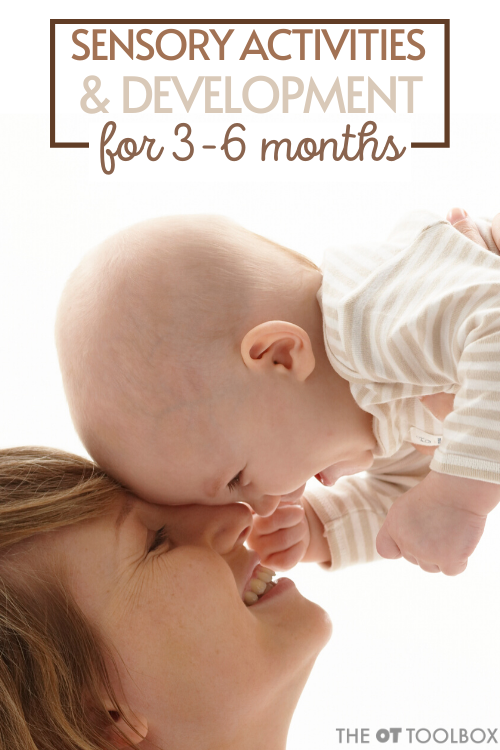
Sensory Activities for 3-6 months
Purposeful movement drives development and development occurs through purposeful movement. This is a fun series of months. You’ll see sensory development that drives motor skills and communication milestones:
Rolls from back to belly and belly to back- baby is starting to really explore proprioception and vestibular input as they move and figure out how their body moves
Holds the head and neck steady in sitting- They can focus vision on moving targets when the neck and head are steady
Investigates textures, size, shapes, and details of objects
During 3-6 months, the baby is starting to gain some control of their body. They will start to use purposeful movement, influenced by toys and faces on the people around them in order to explore. Try these sensory activities for 3-6 month age range:
Foot Rattles- There are socks out there that have built-in noise makers. These little foot rattles encourage baby to move and shake those legs. While lying on their back, they can see how intentional movement works.
Peek-a-Boo- This is an age-old favorite…and there’s a good reason why we love this classic game! When mom or dad hides their face and then suddenly takes their hands away, baby is learning some valuable skills. They learn that objects don’t go away just because they can’t see them. Object permanence, cause and effect, and problem solving begin at this young age, and while it can take a while to master, it’s an essential skill down the road! Try playing peek-a-book with faces, objects and a blanket, and by gently swiping a blanket over baby. (Always use super close supervision with this activity!)
Crinkly Soft Toys- One of my favorite ways to develop those early fine motor skills is with a simple crinkly soft blanket. You know the kind…it’s soft material on the outside, but crinkly fabric sewn into the middle. So, when baby squeezes and grabs the soft toy, they hear a crinkly noise. The best kind are small fabric swatches because they are light enough for baby to manipulate and pick up. The OT in me loves to see that little grip grab and pull the material. You can see those motor skills develop right in front of your eyes! Use the crinkly toy in tummy time to encourage reaching and rolling, or while laying on the floor as baby brings both hands together and gives the toy a taste. They can work both hands together in a coordinated manner with feedback from the mouth. It’s a great toy for building cause and effect, too!
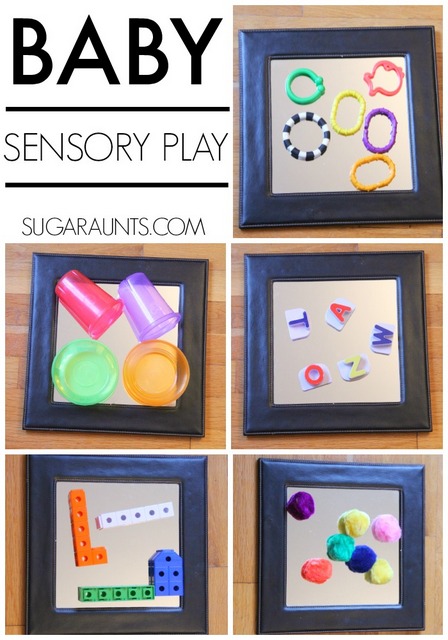
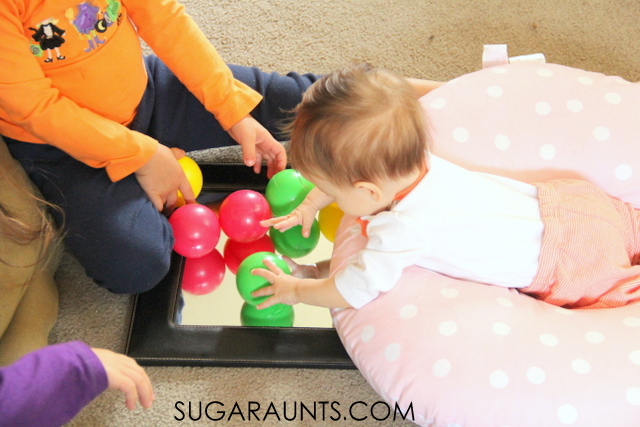
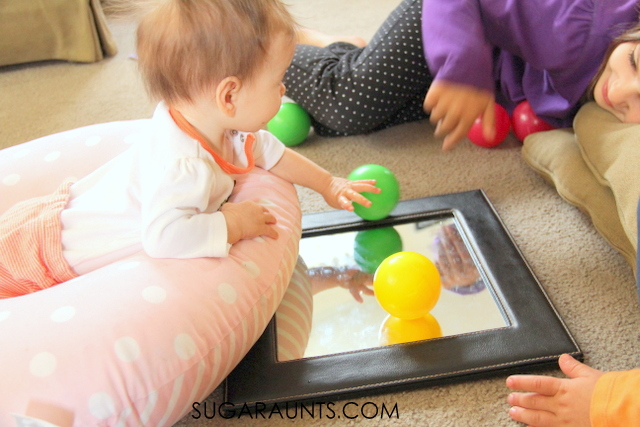
Mirror Play- Find a baby-safe mirror and use it in tummy time. Place a few baby items on the mirror and they can begin to push up onto their arms by putting weight through their shoulders and upper body. Another way to use a baby safe mirror is to place it in front of baby while they are in supported sitting. Baby will begin to babble and “talk” to the baby they see in the mirror.
Hula-Hoop Reach- Your little one is still building those motor skills and someday down the road they will be doing big kid things! For now, use a hula hoop to attach rattles and baby toys in a circle around them as they are in tummy time in the center. The circular positioning of toys encourages reach (and eye-hand coordination), visual scanning, rolling, and pivoting on the upper body as they move and stretch for different toys.
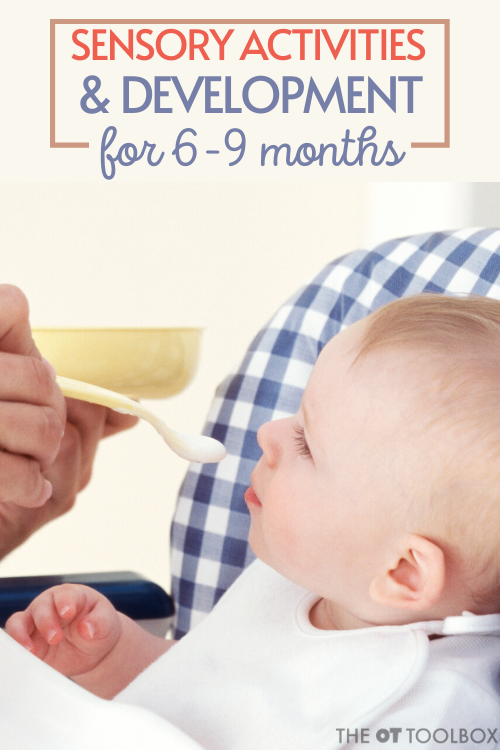
Sensory ACTIVITIES for 6-9 months
The months between 6-9 months are a big one for little ones’ development. Senses prevail and as your baby starts to gain more physical control, they are exploring more sensory input. Little one will begin solid foods for the first time and what a sensory experience that is!
Movement and gains in gross motor skills allow baby will move from tummy time with weight through their arms to pushing up on their arms. They will begin to lift their belly off the floor to all fours. They will move from supported sitting to unsupported sitting with reaching for toys. You’ll see that little bundle move from tummy time to rolling, crawling, and reaching. Let them move, kick, and stretch!
Moves from supported sitting to independent sitting- Exploring the world around them
Bears weight through hands in crawling position
Reaches for toys while lying in the belly
Moves toys from one hand to the other
Uses both hands to manipulate and explore toys
Reacts to sudden sounds
Listen and responds to sounds or voices
Begins to babble
Shows an interest in foods
Tries baby food for the first time and will move to explore more tastes and varieties of soft foods
Imitates others in play
Focuses on near and far objects
This is a fun age! Purposeful movement occurs and you will see baby learning so much. Here are some baby play ideas that boost the sensory development and motor skills babies need to move, manipulate toys, feed themselves, and get from place to place:
Sitting Games- Place pillows around your little one to create a soft crash mat. As baby gains the skills to sit up with balance, they can reach for toys around them. Offer a basket of washcloths, a bowl of nesting toys, hand-sized balls (ones that can’t be placed into the mouth), or other novel items. This is a great opportunity to practice reaching, placing objects into containers, and getting stronger at balance!
Living Room Obstacle Course- Along the same lines as the previous activity, use living room pillows and couch cushions to create obstacles on the floor. This is a great way to encourage movement in a variety of patterns and gain skills in crawling. As baby grows, they will become more confident in their movement and this is great to see! Be sure to stay close by and ensure the space is baby-proofed!
Bubbles- Blowing bubbles with baby is a wonderful way to encourage visual tracking, eye-hand coordination, core strength, sitting balance, neck control, and even fine motor skills! Encourage your little one to watch the bubbles as they float away and visual processing skills develop. Ask them to get the bubble and they can work on controlled reach and grasp. Bubbles are a great activity throughout the toddle years too as baby learns to gain control in standing and walking. Grab a container of bubbles and have fun!
Roll a Ball- A partially blown up beach ball is a wonderful tool for helping your little one gain balance and strength in sitting. The ball when not blown up entirely provides a great opportunity for grasp. Just be sure to keep a close watch on your little ball player. This activity should only be done under very close supervision and always trust your gut. You know that the ball is going straight to the mouth once your little one has a hold of it, so stay close by. Rolling a beach ball toward baby is wonderful for developing visual processing skills, eye-hand coordination, grasp and release, strengthening, and more. Adding more air to the ball makes it harder to grasp and harder to catch as the ball will roll more quickly and smoothly. Older kiddos can use that ball to kick, throw, and even pat-pat-pat!
Box of Toys- Have an Amazon delivery box or a shoebox sitting around? It’s a novel toy for your little one! Fill it with baby-safe objects or toys and get ready to have fun. Pulling items out and dropping them back in teaches baby so much about weight, grasp, eye-hand coordination, and even gravity. They will love to see how things fall and how they hit off other toys. Dumping a box of toys is fun of its own and is another experiment of it’s own. Baby, as they start to move and crawl can push or pull a box and gain the feedback of pushing the object along the floor. Babies that are standing at a coffee table or couch can explore and drop items into the box while they learn to hold on the safety of the couch and use one arm to hold an object. SO much development can happen with a simple cardboard box!
Put in and Take Out- Take that box play even further by using a smaller opening. An empty tissue box is another awesome tool for building skills in fine motor work, eye-hand coordination, and visual processing skills. By placing items in a container, little ones can work on things like visual discrimination and visual memory, all through play and not aware that those basic skills will carryover far into their educational years as they learn to read, write, and complete math. Amazing, right??!
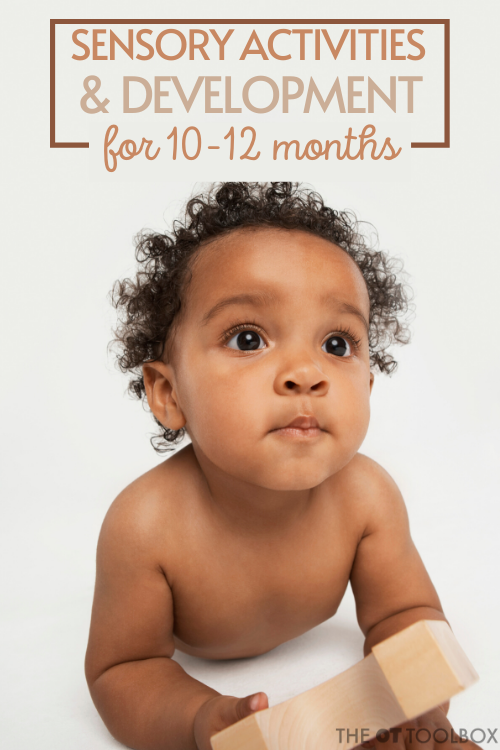
Sensory Activities for 10-12 months
The next phase is a big one! During the tail end of the first year, you see big strides in free movement. You see stronger eye-hand coordination, and intentional movement. You see refined fine motor skills, improved mobility, and a stronger baby. Here are more specifics about this stage:
Pulls up to stand at furniture
Takes first steps holding onto furniture to “cruise”
Moves in various positions from laying to sitting, sitting to pulling up to stand, etc.
Drops toys into containers and grabs them to manipulate
Uses a pincer grasp (holds small items like cereal between the pads of the thumb and pointer finger)
Explores toys with mouth, hands, and visually
Says first words
Feeds self with finger foods
Takes first steps without support
During this stage of development, babies are moving and grooving! They are building on the skills they’ve achieved and refining those motor skills. Babies are using what they’ve got in the way of grasp, reach, and gross movement to really develop their vestibular sense. By moving in different planes to crawl, swing, turn, and roll, there is movement of the fluid in the inner ear which stimulates the vestibular sense. The vestibular sense allows us to know where our body is in space. With the vestibular sense, we are able to sit without falling over, move from one point to another safely, and track objects with our eyes (which is needed in reading and writing). Try these sensory activities for 10-12 months:
Tunnels- Set ups a floor obstacle course like we talked about a few slides ago, but add some more challenging experiences. Use a baby tunnel or a large cardboard box. What a fun space to add baby toys, bins, baskets, and soft blankets for crawling over and playing with!
Kitchen Play- At this stage, baby will be much sturdier in their sitting. Set ups a scattering of kitchen bowls and wooden spoons or scoops. They can bang, stack, and drop to see how items work and move. Recycled items such as egg cartons, cereal boxes, and plastic container are fun to explore too. Be sure to make the space baby safe. This is a great way to engage your little one while cooking and preparing meals.
Sensory Play- This stage is fun because as the fine motor skills develop, you will see more refined use of the hands from a raking grasp” where all of the fingers rake items in order to pick them up in the palm of the hand into a “pincer grasp” where the pointer finger and the thumb are able to pick up a small item. Encourage sensory play by providing cooked spaghetti cut up into small lengths. Scatter the cooked spaghetti on a black placemat or tray. The high visual contrast and interesting sensory experience will engage your little one and build fine motor skills they will need down the road.
Fine Motor Play- Around 10 months, you will see more refined fine motor skills as baby uses their pointer finger and thumb to pick up small items with the pincer grasp we just talked about in our last slide. Suddenly, you will notice every speck of dirt and fuzz ball on the carpet…and so will your little one! Encourage those fine motor skills by providing baby cereal and a container for them to drop pieces into.
Stacking Activities- Use stacking cups, blocks, or small boxes (empty tissue boxes work great!) to stack and knock over! Baby will begin to gain more refined motor skills and the excitement of knocking those towers over again and again will not end!
Rolling Toys- Use balls of various sizes, toy cars, and even recycled paper towel tubes to explore how things move and roll. Take the excitement level up a notch by adding a ramp using a large cardboard piece to make a ramp. Watching items as they roll down and grabbing them to push them down all over again is big fun! It’s a great way to encourage fine and gross motor skills, visual motor skills, eye-hand coordination, and balance.
This post contains affiliate links.
We shared recently our Visual Motor Integration developmental milestones post with general timelines of baby’s hand-eye coordination. It’s important to note that all children develop differently and some of these activities may not be appropriate until they are developmentally able to participate.
Tummy Time and Sensory ACTIVITIES
Really important pieces of advice like placing your baby in tummy time, limiting time spent in baby positioners, encouraging a variety of sensory stimulation, allowing movement, and connecting with your baby through play aren’t just tips. They are really important. They are strategies for success. The next few slides I’m sharing are tools to give your baby a motor and sensory baseline that will impact them down the road with things like visual motor skills, attention, reading and writing, frustration tolerance, emotional regulation, and more. It’s the skills that kids today are really lacking in
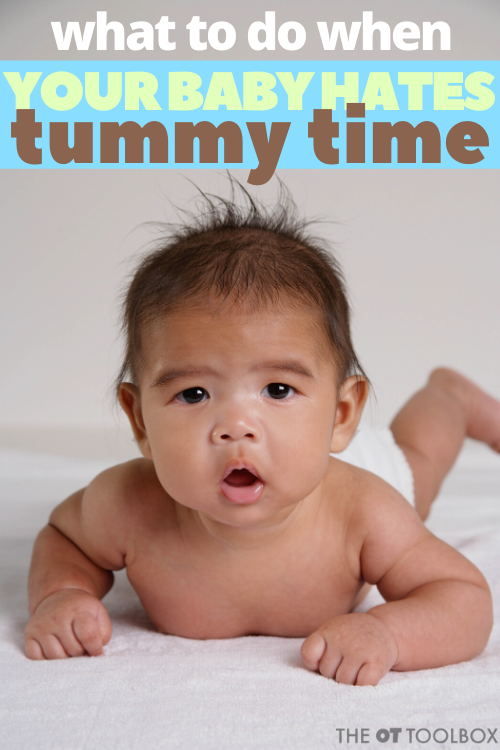
When Baby Hates Tummy Time
We shared this mirror play idea on Instagram. At the time, Baby Girl was five months old an able to do tummy time in a Boppy pillow. Having a better understand of tummy time myths is important for new parents to understand what to do when baby hates tummy time.
The thing is that floor play for babies is essential for developing skills in infants and toddlers. And, that floor time play is important to building visual motor skills, strength, and coordination even throughout the first year (and beyond)!
The baby positioning floor pillow provided extra support and elevated my little one’s upper body to encourage reach during tummy time. As with any piece of baby equipment, this pillow and others should be used under supervision by an adult and for short periods of time. We used a small mirror and a few colorful ball pit balls to encourage reach and exploration. Of course the big sisters had to help! Here are more ball pit activities that young children love.
How to help baby enjoy tummy time
Helping to encourage lots of tummy time in your little one doesn’t need to be stressful. But many times, it may seem like your baby hates tummy time! They scream, they cry, and they place their face right on the floor. Scary, right? Don’t worry, we’ve all been there as new moms.
Tips to help with tummy time:
Get down on the floor with your baby and encourage reaching for enticing toys or towards your face/hands as you are right out of reach.
Try some of the tummy time ideas in the Mommy Academy course.
Add tummy time in throughout the day. Try a few minutes after diaper changes or when baby is in a pleasant mood. All of that tummy time adds up to build the strength needed for pushing over to the side.
Try chest to chest tummy time as the adult holding the baby lies back on couch cushions.
Try a football hold.
While sitting on a couch, try tummy time on your lap while rubbing baby’s back.
Also, is your little one pushing up on their arms when in tummy time? The weight of the head tends to pull them over into a side position/laying on belly from tummy time, so that is another benefit.
Babies get so much exposure to different textures naturally through play. This is just a simple way to encourage functional reach and tummy time play. Some other items that work well with this baby sensory play activity that we love:
Find many more baby play ideas here to drive sensory input through play based on each stage through the first year.
Colleen Beck, OTR/L has been an occupational therapist since 2000, working in school-based, hand therapy, outpatient peds, EI, and SNF. Colleen created The OT Toolbox to inspire therapists, teachers, and parents with easy and fun tools to help children thrive. Read her story about going from an OT making $3/hour (after paying for kids’ childcare) to a full-time OT resource creator for millions of readers. Want to collaborate? Send an email to contact@theottoolbox.com.
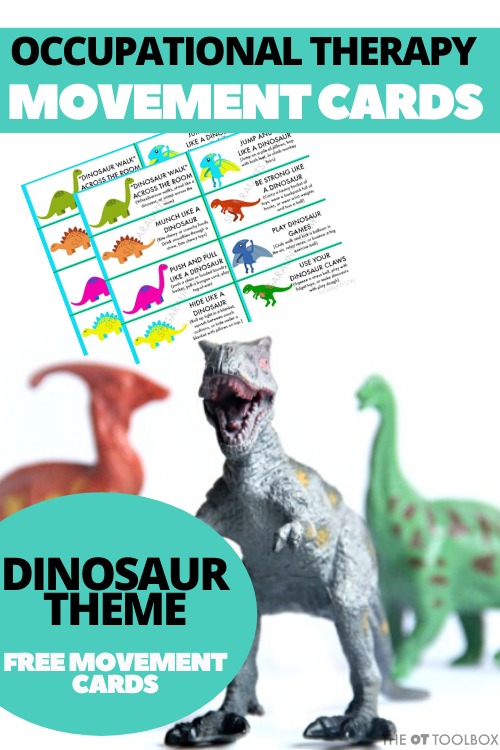
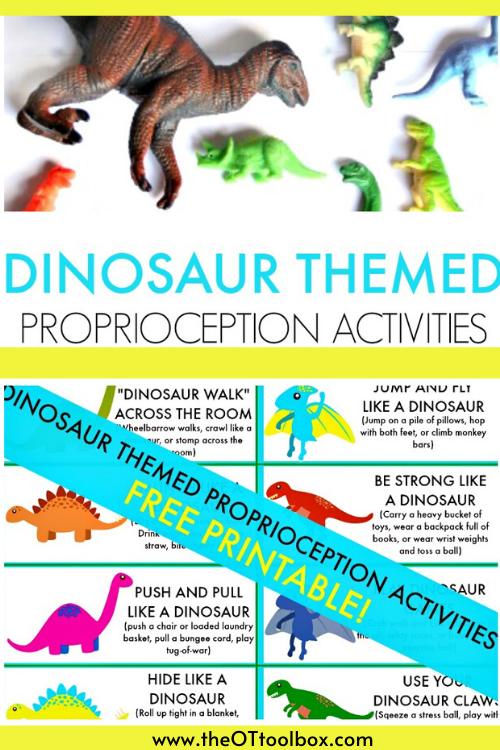
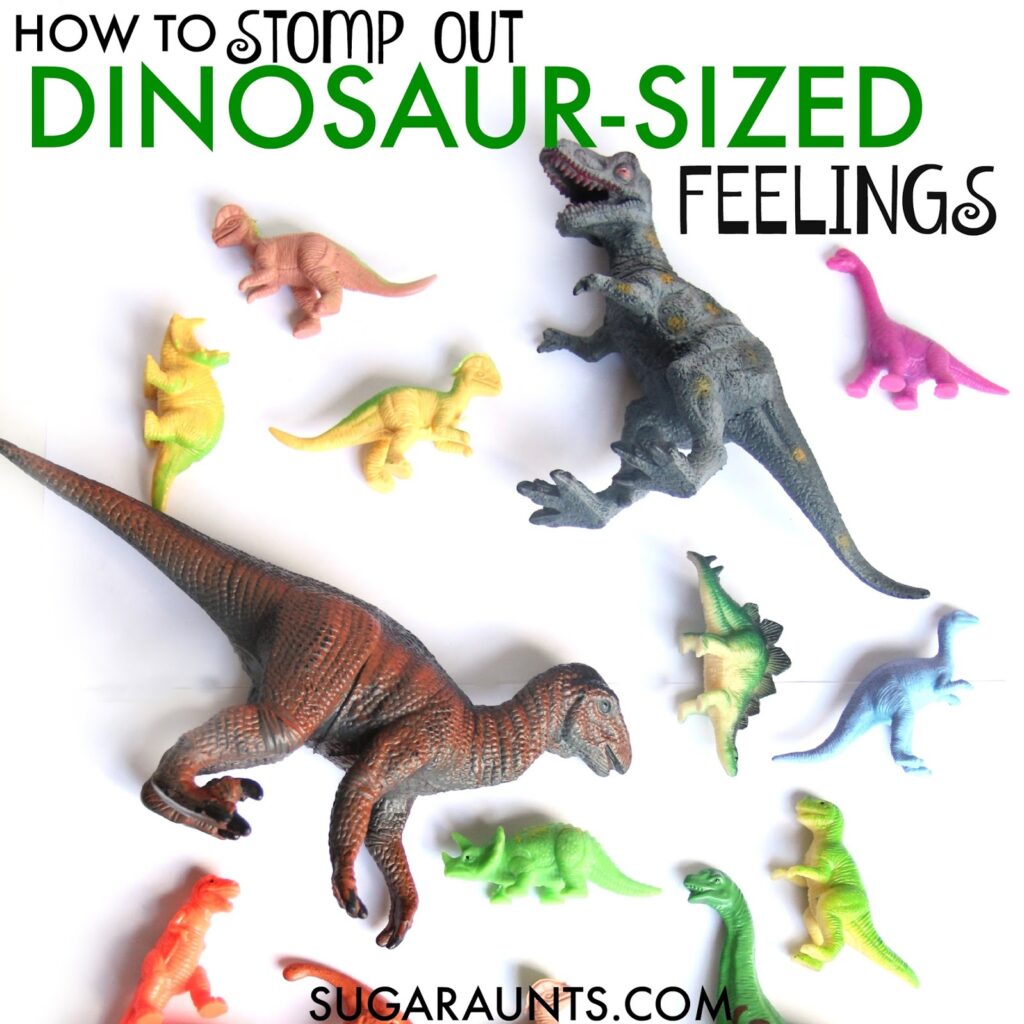
This dinosaur brain break activity is a set of free proprioception activities that provides heavy work with a dinosaur theme, making movement and proprioceptive input a fun way to address dinosaur -sized needs. Whether you are looking for heavy work activities for the kids to add to distance learning or heavy work activities for OT teletherapy programs, these free dinosaur movement cards are a great sensory activity to add to your therapy toolbox. Scroll all the way to the bottom of this post to grab your Dinosaur Movement Activity Cards…and check out the Dinosaur OT activities too!
This post explains more about proprioception sensory activities but to better understand why and how to incorporate movement breaks into learning, check out this post on brain breaks for kids.
This freebie was originally created as part of October’s Sensory Processing Awareness Month, however, for a kiddo that loves anything dinosaurs, it works out great any time of year. Kids with sensory integration needs are those kiddos who are bumping into everything and everyone.
The little ones who fall out of their chairs, press too hard on their pencils, are clumsy, fidget, or seek extra movements. They might flap their hands or slap their feet when they walk.
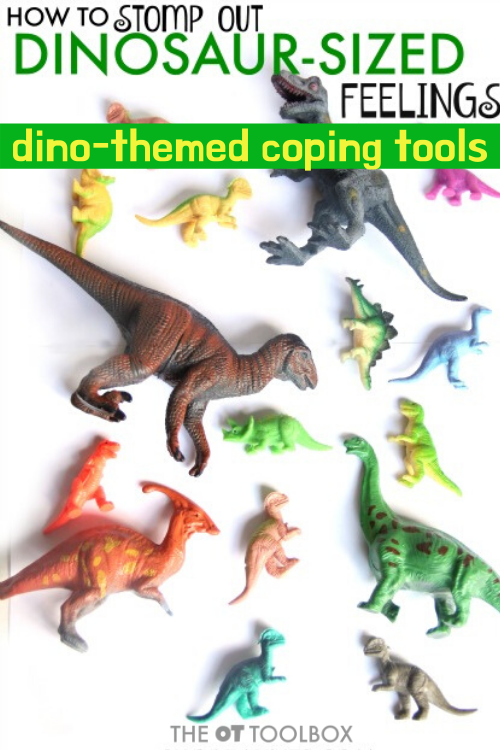
he thing about kids is that everyone is different and everyone will have different needs, interests, and abilities. This Dinosaur Sized Feelings sensory movement activity is perfect for kids seeking sensory input and kids who just need to move!
Now, it’s important for me to note, that when I say Dinosaur-Sized feelings in this post, I’m talking about the child’s feeling of hyposensitivity to their environment.
They are seeking out extra stimulation from people, walls, cushions…anything really and are feeling a big need to improve their central neural system functioning in order to complete tasks and function.
(Read more about the Central Nervous System below!)
What I’m not talking about in this post is the emotional side of feelings. There has been at least one study done that attempts to determine whether emotional feelings can be influenced by proprioceptive input.
I’m not talking about the big emotional feels we all have. In this activity, I’m focusing on the big feelings of sensory needs kids might have, and how to stomp those sensory needs out with proprioception.
It’s all about the ability to regulate those giant, dinosaur-sized sensory related feelings that impact emotional regulation, coping abilities, worries, anxieties. This post on Zones of Regulation activities explains a little more on self-regulation and specific ways to address these needs.
What is Sensory Integration?
Let’s cover some of the background info about what’s going on behind self-regulation. Typically, our Central Nervous System integrates sensory input from the environment in a balanced process that screens out certain information and acts on important information, at an automatic level…one that we are not cognitively aware of.
For kiddos with atypical sensory integration, the central nervous system has difficulty screening out unimportant information from our environment.
For those children, interaction with their surroundings can be stressful as they are either over responsive or under-responsive to normal stimulus. This results in dysfunctional behavior and social difficulties.
For a thorough explanation of sensory integration, sensory processing, and what specific actions look like as a part of our sensory systems, grab this free sensory processing booklet.
You’ll access the free booklet and join a short email course that explains sensory processing in great detail. It’s a free informative course via email that you don’t want to miss.
In that post, I told you how the proprioceptive system receives input from the muscles and joints about body position, weight, pressure, stretch, movement and changes in position in space.
Our bodies are able to grade and coordinate movements based on the way muscles move, stretch, and contract. Proprioception allows us to apply more or less pressure and force in a task.
Instinctively, we know that lifting a feather requires very little pressure and effort, while moving a large backpack requires more work. We are able to coordinate our movements effectively to manage our day’s activities with the proprioceptive system.
The brain also must coordinate input about gravity, movement, and balance involving the vestibular system.
(This post does contain affiliate links.)
Kids who are showing signs of proprioceptive dysfunction might do some of these things:
Appear clumsy
Fidget when asked to sit quietly.
Show an increased activity level or arousal level.
Seek intense proprioceptive input by “crashing and bashing” into anything.
Slap their feet when walking.
Flap hands.
Use too much or too little force on pencils, scissors, objects, and people.
“No fear” when jumping or walking down stairs.
Or, are overly fearful of walking down steps/jumping.
Look at their body parts (hands/feet) when completing simple tasks.
Sit down too hard or miss chairs when sitting.
Fall out of their seat.
Fluctuates between over-reacting and under-reacting in response to stimulation.
Constantly on the move.
Slow to get moving and then fatigue easily.
Dinosaur Themed Heavy Work Activities
This activity is easy. There is not much to it really, other than being a dinosaur themed way to calm and organize those big dinosaur feelings.
The heavy work activities add proprioception that can be a tool to address regulation or sensory needs. Here, I’m sharing with you a few heavy work suggestions that may help hyposensitive kiddos.
I wanted to share activities that might be of interest to the child that loves a dinosaur theme. It’s my hope that these work for you and your family! If you are looking for more dinosaur themed movement activities, check out this past post sharing Dinosaur movement activities, based on the book popular children’s book, Dinosaurumpus.
Please note (as with any activity that you find on this website): This is meant to be a resource and not Occupational Therapy treatment.
Please seek individualized evaluation and treatment strategies for your child. All kids are so different in their sensory needs and abilities and adverse reactions can occur with globalized treatments.
Big dino-sized feelings can happen in a little body!
Simply print out the free printable, cut out the cards, and pretend to play, walk, and eat like a dinosaur!
We did use our Mini Dinosaurs as we practiced all of the Dino Moves in these activities. Use them in a scavenger hunt. Your child needs to find hidden dinosaurs and once they bring them back to you, do a proprioception activity from the handout.
Another idea is to do the heavy wok activities before a fine motor task like handwriting to calm and organize the body.
You can get the free dinosaur proprioception activities printable by joining the thousands of others on our newsletter subscriber list. You will receive occasional newsletter emails.
Once you subscribe you’ll receive an email with a link to the free printable, as well as other freebies that only our subscribers receive.
Dinosaur Activities for OT sessions
Looking for more Dinosaur activities? Try adding these to your occupational therapy interventions. Some of the ideas below are great for adding to teletherapy sessions. Others make great OT home programs.
Dinosaur Activities for Occupational Therapy
Ok, you have a child on your OT caseload (on in your classroom or home) that LOVES all things dinosaur…how do you get them involved in therapy sessions? You can totally guide therapy goals along a theme like dinosaurs.
The OT dinosaur activities listed below are fun ways to work on specific skills in therapy sessions, using hands-on play and activities. You’ll find fine motor dinosaur activities, gross motor dinosaur ideas, dinosaur printables, sensory play with a dino theme, and even dinosaur visual perception activities.
If you have a child in OT who LOVES all things dinosaur, these are great incentive activities that will build attention and focus to the session. Adding a much-loved theme to therapy sessions can empower a child as they play with more intent and attention.
Dinosaur Gross Motor Game– This dinosaur game offers kids a chance to MOVE! Use a child’s love of dinosaurs to create movement breaks and indoor activity with a dinosaur theme.
This is one indoor play idea that my own children loved when they were little, but the bonus is that they gain midline crossing, motor planning, sequencing, bilateral coordination, balance, endurance, proprioception, and vestibular benefits all in the same movement activity.
Dinosaur Playdough Kit can be made with play dough and a few small dinosaur figures. It’s a great way to add proprioception to the hands as heavy work before a handwriting activity.
This busy activity can be pulled out at any time and kids can keep those hands busy while building intrinsic hand strength and endurance needed for tasks like coloring. Read more about warming-up the hands before fine motor tasks here.
Free Dinosaur Visual Perception Sheet– This printable page can be printed off once and used with a page protector sheet for the whole therapy caseload. Or, add it to teletherapy sessions or distance learning as part of a child’s specific plan.
Kids can work on visual perceptual skills such as scanning, form discrimination, figure ground, form constancy, and other visual perception skills. It’s perfect for dinosaur fans of all ages!
Dinosaur Counting Cards with clothes pins to clip onto the matching number of dinosaurs is a great way to build hand strength with a dinosaur theme. Print them off and add them to your therapy toolbox. Here are more ways to use clothes pins in building skills in kids.
Goldilocks and the Three Dinosaurs book and jacks game– have you read the children’s book, Goldilocks and the three dinosaurs? This children’s book is very cute and a fun way to add books to occupational therapy sessions.
Then, add the fine motor and motor planning jacks game to build coordination and dexterity skills by playing jacks. This is such a fun way to add movement and reading to therapy sessions, making motor planning, sustained attention, bilateral coordination, crossing midline, floor play (heavy work!), all integrated into a single dinosaur activity!
Dinosaur Matching with mini-figure dinosaurs is a fun way to work on visual scanning, visual discrimination, visual memory, and other visual perceptual skills. Using a small ball of play dough, press the dinosaur’s feet into the dough. They can then try to match up the feet to the footprints.
All you need are mini dinosaur figures and salt dough, play dough, or similar dough. It’s a fun way to work on skills that come in handy for handwriting, reading, and number identification.
Dinosaur Guessing Game is a fun way to work on discrimination skills and visual attention. For kids that have trouble attending to tasks, this dinosaur themed activity may do just the trick. Use dinosaur figurines and a box or basket to hide the dinosaurs.
You can cover the dinosaurs and ask children to find the dino with specific features such as sharp teeth or a specific color. This visual memory game builds skills needed for letter discrimination and attention to detail.
Free Dinosaur Number Puzzles– Kids can cut the paper puzzles into strips to work on scissor skills and bilateral coordination. The strait lines or these puzzles make it a great beginning scissor activity for children learning to use scissors. Then, they can challenge those visual perceptual skills to build the puzzle by scanning, and attending to details as they discriminate parts of the puzzles.
Dinosaur Emergent Reader– Use a piece of colored paper to create a cone dinosaur craft like the one shown in this post.
Kids can make colored dinosaurs and match them to dinosaur counters or small pieces of paper that match the colors. Don’t want to make the dinosaur crafts? Use colored cups to pretend!
Free Dinosaur Subtilizing Game– This dinosaur subtilizing printable page has a fine motor component by that builds precision and dexterity as kids place counters on a printable play mat. They can roll a dice and work on an the essential math skill of subtilizing.
What is subtilizing? Essentially, this skill means kids can look at a group of objects and know how many there without having to count each object one by one. Subtilizing is important in math, especially higher math skills.
Dinosaur Sensory Bottle– You know we love sensory bottles! Sensory bottles are a great tool to add to your toolbox to address sensory needs or self-regulation. Using a sensory bottle as a coping tool can help kids relax, calm down, or focus.
This dinosaur themed sensory bottle is great for kids who love dinosaur anything! Here is more information on how to make a sensory bottle.
Dinosaur Letter Tracing– Kids can work on fine motor precision and dexterity while also working on letter formation, gross motor skills, bilateral coordination, crossing midline, visual tracking, and so many more skills.
All you need are dinosaur mini-figures, paper, and a marker. Draw a large letter on the paper and then children can place the small dinosaurs along the lines to “build” the letters. Here is more information on teaching letter formation and using manipulatives like these small dinosaur figures in teaching letters.
This is a great activity for those who have the actual tangram puzzle pieces, but don’t have access to a color printer or are able to purchase pre-made dinosaur pattern cards. Work on visual perceptual skills by copying and building the geometric dinosaurs together as a fun activity that little dinosaur fans will love.
Are you looking for thorough information on Sensory Processing and Proprioception (or any of the sensory systems and how they affect functional skills, behavior, and the body’s sensory systems? This book, Sensory Lifestyle Handbook, will explain it all. Activities and Resources are included. Get it today and never struggle to understand or explain Sensory Integration again. Shop HERE.
This post is part of our 31 Days of Occupational Therapy series where you can find free or almost free treatment activities and ideas. Stop by every day! You’ll find more fun ideas each day in October.
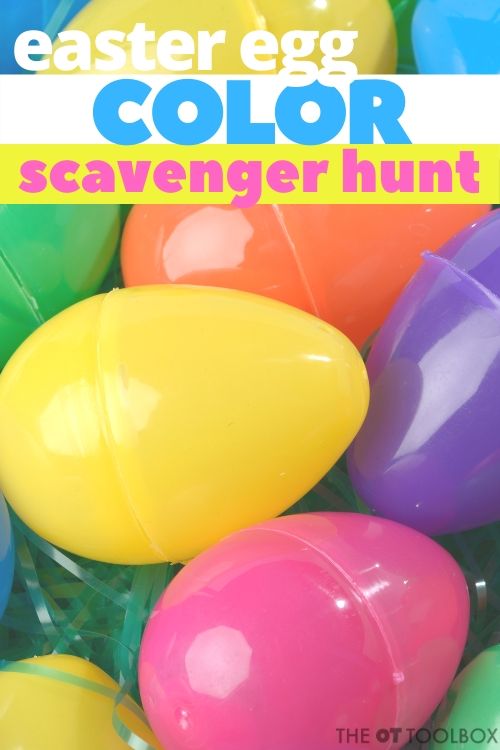
If you are looking for a fun Easter egg game that the kids will love, then you are in luck. Add this activity to your Easter activities and use up a few of those plastic eggs. This color scavenger hunt uses plastic Easter eggs, and it’s a very fun way to play and learn!
Use those plastic eggs to encourage gross motor skills, visual perception, and color learning in a way that kids won’t forget. While the kiddos are playing this Easter game, they are building cognitive skills AND underlying skill areas like visual scanning and other visual perceptual skills.
Easter Egg game
We set this Easter activity up years and years ago. (2013 to be exact!) However, it’s one of those activities that stands the test of time. If you’ve got plastic Easter eggs on hand, use them to build skills like the ones we worked on here!
COLOR SCAVENGER HUNT
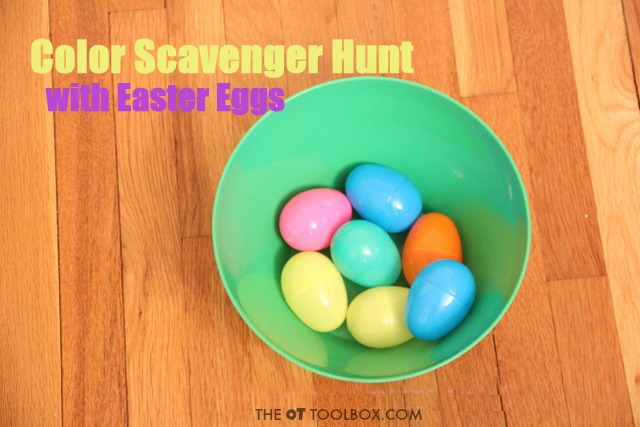
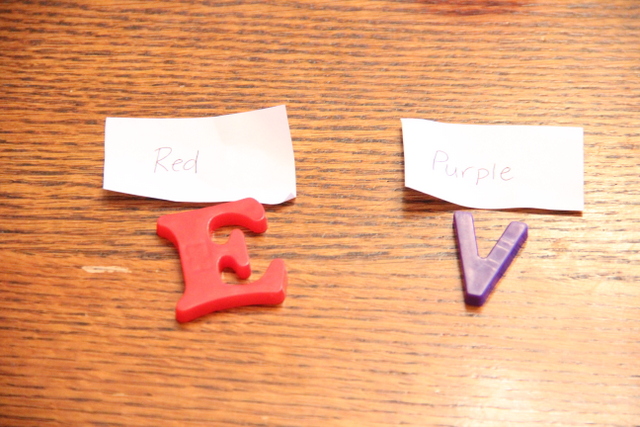
This color scavenger hunt is so easy to set up…and so much fun. Kids can work on identifying color names, and color matching. I wrote different colors on slips of paper and put them into plastic eggs. The kids got to pick an egg from the bowl and “sound out” the color on the slip of paper. Ok, my 5 year old sounded out the color with help. The other two said the first letter of the word and guessed the color. They were pretty excited to “read” the color on their slip of paper!
Another idea to expand this activity is to write words and do an Easter egg version of our word scavenger hunt.
An Easter Game Kids will Love
Now for the egg game…So then, they had to run off and find something that was the color of the written word on their slip of paper…and it had to FIT inside the egg. I sat and waited for them to run back and show me what they found while they tried to fit it in their egg. (completely genius way for this mom to finish a cup of coffee!)
They had a little trouble with some things, but this was a fun and different way to work on visual perceptual skills. Will that little doll fit in the egg? We weren’t sure by looking at it, but with a little fiddling, she did! Fitting the eggs together with the little objects inside was a great fine motor exercise.
Color Identification for Kids
They found something for each color!
Putting items into the eggs and then matching colors was a great way to work on color identification skills.
Matching colors requires visual motor skills to match colors and use that recognition in identifying the name of the color. It’s a skill that requires visual memory as well as working memory. This skill then carries over to so many other areas like letter recognition, and so much more.
This Easter themed play activity could be modified in so many ways for learning words, colors…have fun with it 🙂
Want more ways to play and learn this time of year?
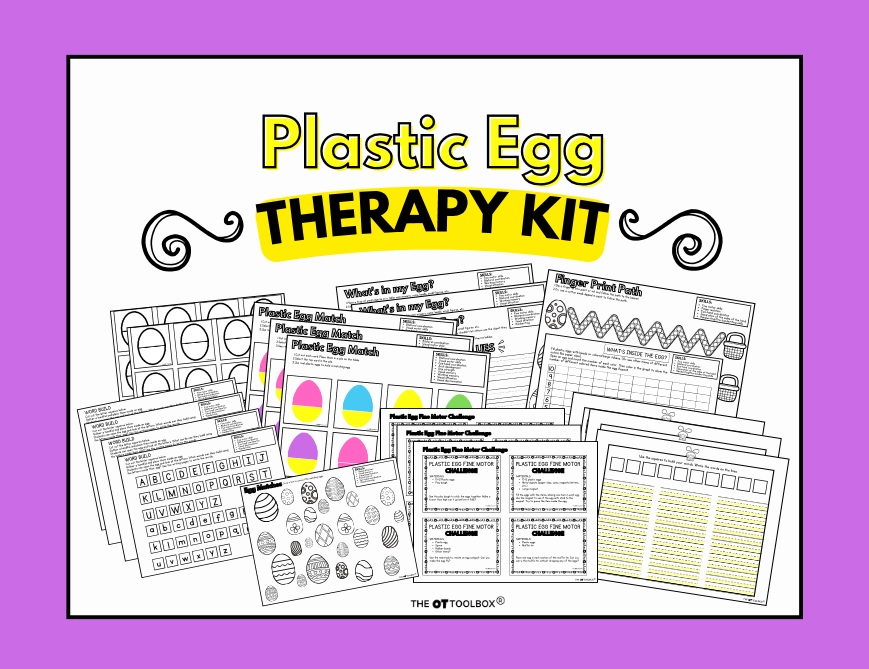
One resource we love is our $5 therapy kit…the Plastic Egg Therapy Kit! It has 27 printable pages of activities with an Easter egg theme. In the kit, you’ll find fine motor activities, handwriting prompts, letter formation pages, pencil control sheets, plastic egg activities, matching cards, graphing activities, STEM fine motor task cards, and more. There are several pages of differentiated lines to meet a variety of needs. This therapy kit has everything done for you.
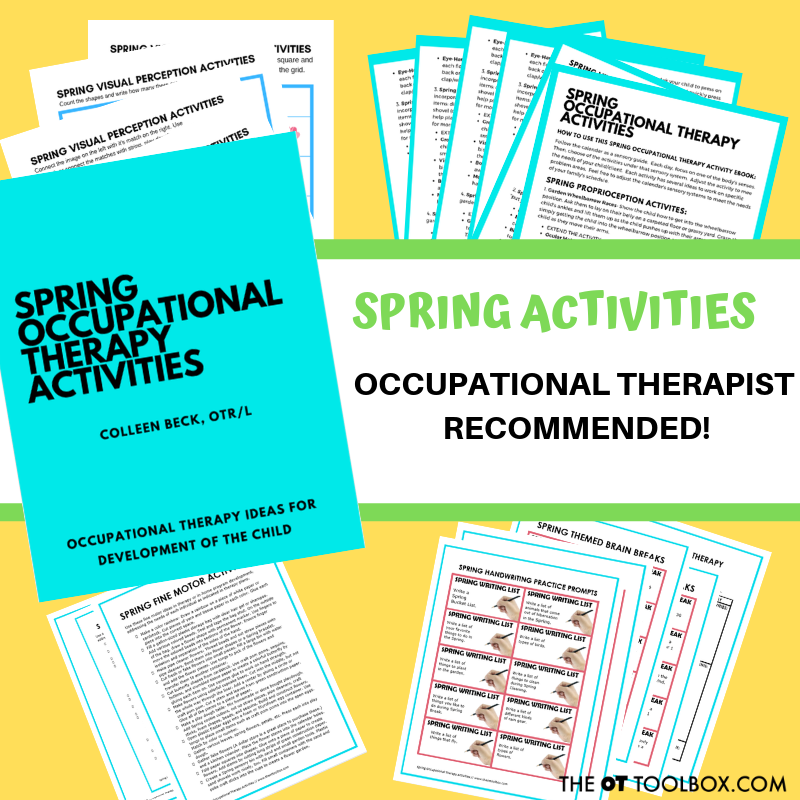
This time of year, one of our more popular products here on The OT Toolbox is our Spring Occupational Therapy packet. The best news is that, this packet has had a major upgrade from it’s previous collection of spring sensory activities.
Another great tool for supporting skills is the Spring OT packet…
In the Spring OT packet, you’ll now find:
Spring Proprioceptive Activities
Spring Vestibular Activities
Spring Visual Processing Activities
Spring Tactile Processing Activities
Spring Olfactory Activities
Spring Auditory Processing Activities
Spring Oral Motor Activities
Spring Fine Motor Activities
Spring Gross Motor Activities
Spring Handwriting Practice Prompts
Spring Themed Brain Breaks
Occupational Therapy Homework Page
Client-Centered Worksheet
5 pages of Visual Perceptual Skill Activities
All of the Spring activities include ideas to promote the various areas of sensory processing with a Spring-theme. There are ways to upgrade and downgrade the activities and each activities includes strategies to incorporate eye-hand coordination, bilateral coordination, body scheme, oculomotor control, visual perception, fine and gross motor skills, and more.
THE BEST THING ABOUT THE SPRING ACTIVITY PACKET:
One of my favorite parts of the Spring Occupational Therapy Packet is the therapist tool section:
Occupational Therapy Homework Page
Client-Centered Worksheet
These two sheets are perfect for the therapist looking to incorporate carryover of skills. Use the homework page to provide specific OT recommended activities to be completed at home. This is great for those sills that parents strive to see success in but need more practice time for achieving certain skill levels. This activity packet is 26 pages long and has everything you need to work on the skills kids are struggling with…with a Spring theme!
Colleen Beck, OTR/L has been an occupational therapist since 2000, working in school-based, hand therapy, outpatient peds, EI, and SNF. Colleen created The OT Toolbox to inspire therapists, teachers, and parents with easy and fun tools to help children thrive. Read her story about going from an OT making $3/hour (after paying for kids’ childcare) to a full-time OT resource creator for millions of readers. Want to collaborate? Send an email to contact@theottoolbox.com.
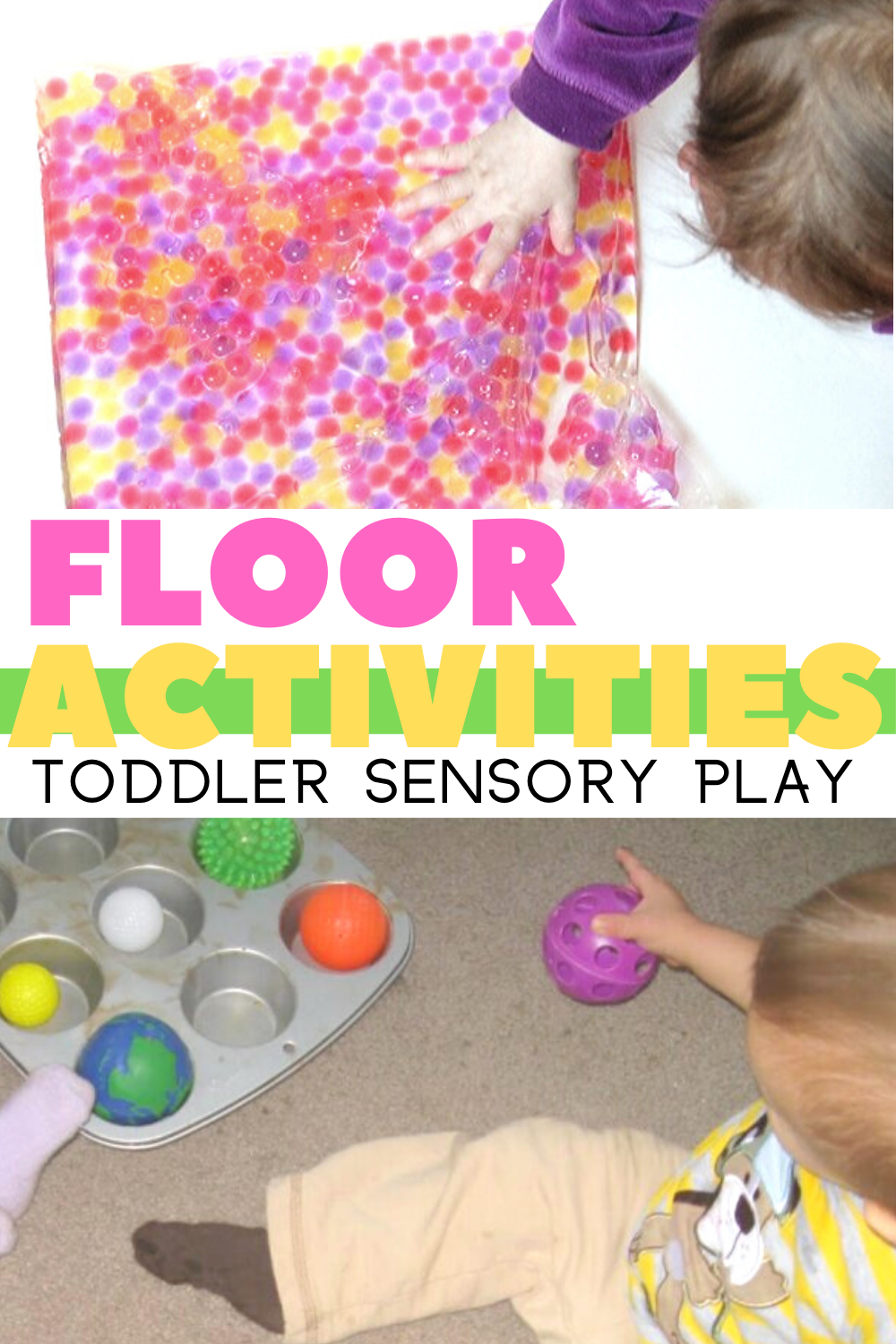
Baby floor play is one of those essential play activities that maybe kids are missing out on more than ever. Here we are talking about why babies need to get down on the floor to baby play, and how to set up floor play activities for babies and toddlers. Baby development depends on movement and play. These ideas will guide you in creating play activities that maximize child development through those early years.
Another great resource to check out is a new blog post on DIR Floortime.
What is Floor Play
Floor play and movement play is one of those things that not only help babies develop essential skills, it is a powerful way to help them excel with higher level tasks. There is so much more than just placing a baby down on the floor to play. Let me explain…
When little ones are on the floor in tummy time or in play activities, they are developing essential core strength and visual perceptual skills that will help them down the road in areas like reading, endurance in play, and even handwriting. Here is more information on how floor play and tummy time helps with the development of spatial awareness and other visual perception skills.
Time spent on the floor helps with kinesthetic intelligence as well. With tummy time play comes skills like body awareness and reasoning, eye-hand coordination, motor skills, and spatial ability for function.
Play For Babies
For babies, tummy time helps to build strength in the core, arms, neck, and shoulder girdle needed for sitting up, changing of positions, and coordination. Here are baby play ideas that can be incorporated into floor time activities. Movement like participating in play, changing positions, reaching, crawling, moving objects, and functional tasks require endurance and stability. Tummy time is an important task for infant babies as well as older babies for different reasons. In each stage, floor play encourages use of the body and eyes in coordinated motor plans.
More Floor Activities for Babiesand toddlers
Floor play for babies can look like toys placed in front of the infant. Using noise toys, rattles, and eye-catching toys encourages reach, visual tracking, neck and head movement, and development of visual processing and auditory processing.
Floor play for infants can look like a scattering of toys placed in a circle around the child. This positioning encourages turning, rolling, and creeping or crawling, especially when the little one is pushing up onf their elbows and hands.
For very small babies, floor play can look like getting very close to the child to encourage them to pick up their head and make eye contact.
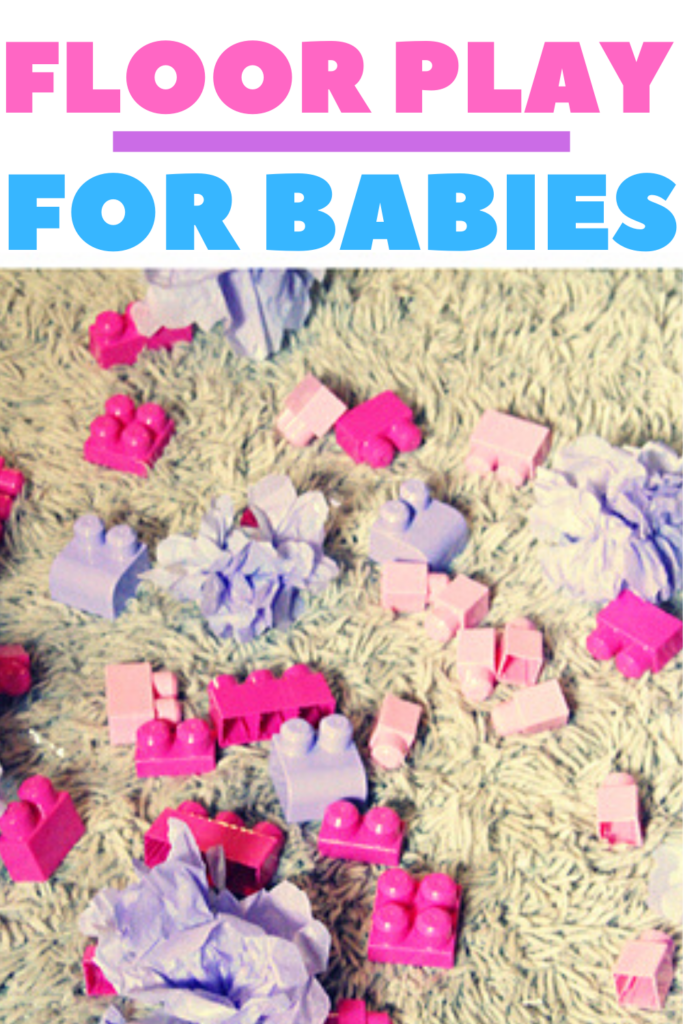
Older babies that are sitting up can benefit from a scattering of toys placed around them on the floor. Place pillows behind and around the baby and encourage them to pick up toys like large blocks as they bring the toy to their mouth to explore. Picking up and bringing items to the midline promotes endurance of core strength, stability in the core, and coordination as they reach and turn.
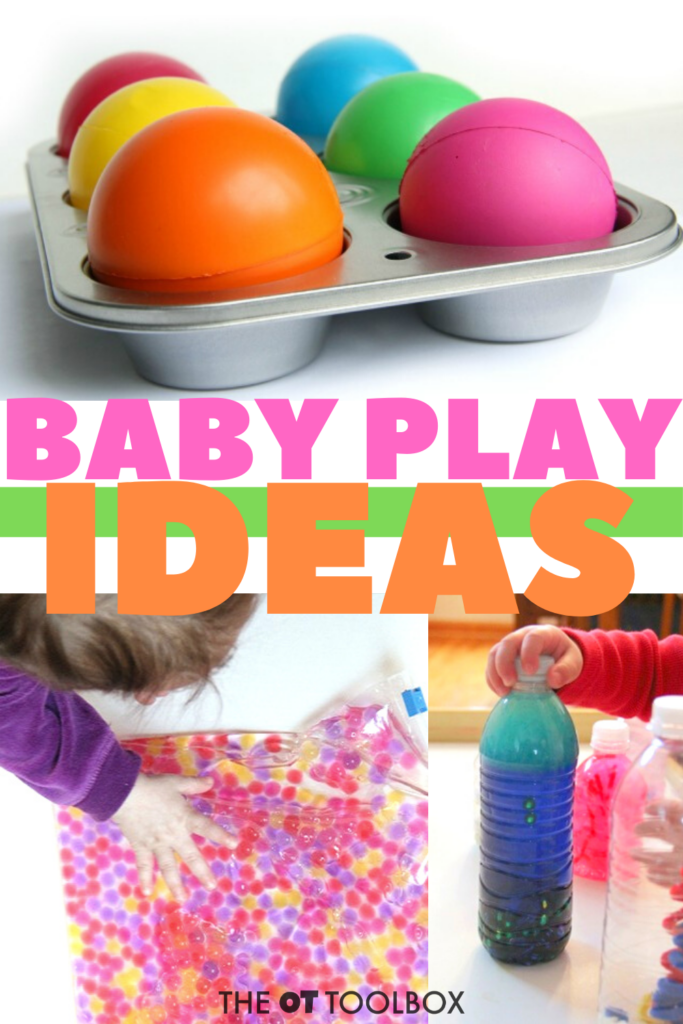
Playing on the floor can include baby mats or baby-safe mirrors. Check out this baby sensory play idea using mirrors for an easy way to encourage movement and endurance in floor play using everyday items such as cups, balls, and baby toys.
Babies that are beginning to crawl love play tunnels…and for good reason. Baby play tunnels are exciting and fun! But not only that, they develop skills like visual motor skills, cause and effect, visual scanning, visual convergence, and so much more. Here are more play tunnel activities for babies.
Try this indoor play idea that boosts development of skills such as fine motor skills, visual motor skills, and visual perceptual skills using toddler-friendly blocks!
Use large blocks or other baby toys in floor play for babies. Super easy!
Occupational therapists know the value of movement and playing on the floor has on babies. We know that babies need tummy time and a chance to move on the floor without use of the Bumbo seat, swing, and other baby positioners. We KNOW that play is the child’s primary occupation and that through play, they develop motor skills, cognition, language, and so much more.
That’s why I’m SO excited to share a valuable new resource for new and expecting moms.
Remarkable Infants is a HUGE resource for new parents. This online course, taught by 5 child development experts, is a 5 hour crash course on development of the whole child from birth through 12 months of age. It is literally everything that we WISH new parents knew about tummy time, positioners, developmental milestones, baby play, communication, sleep, and nutrition.
Looking for ways to keep the kids moving and active? Maybe you need some indoor play ideas. Perhaps you are looking for movement activities for children when getting out of the house just isn’t possible. Kids just aren’t moving like they used to. Need a few ways to add movement activities into each and every day? Adding extra movement breaks or brain breaks into the classroom or just daily play can be a helpful tool for improving the underlying skills kids need for strengthening or just getting the sensory input they crave and need to develop. Sometimes, it’s as simple as coming up with creative movement ideas. Other times, kids play the same favorite gross motor games over and over again. These monthly sensory movement activities provide the sensory input and gross motor movement that kids need!
Monthly Movement Activities
Add a few of the occupational therapy activities in this post into your therapy line-up. Having a few monthly themed activities for therapy can make the routines less boring and a great way to throw a wrench at the burnout machine.
Use the lists below to inspire therapy plans for the month or weeks ahead. Simply add the theme into your occupational therapy activities for the week. Then, use specific graded activities to meet the needs of each child on your caseload. This strategy can help in planning OT activities in the clinic or school-based interventions. (And, having a theme set up for the week totally helps with carting items from place to place in that trunk of yours, too!)
Monthly Movement Activities for Kids
Kids love a fresh occupational therapy activity, too. Adding a fresh and fun new game or activity can make a rainy indoor day more fun or can bring a little something different to a sunny afternoon outdoors. The best thing about these movement and play ideas is that they provide all of the right kind of sensory movement input that kids need to pay better attention, calm down, or self-regulate. Use these activity ideas as movement activities for preschoolers in planning lessons that meet movement needs.
The movement activities listed below are play ideas that promote proprioceptive input, vestibular input, gross motor skills, body awareness, fine motor skills, visual motor integration, bilateral coordination, crossing midline, core strengthening, motor planning, and so much more. Best of all, they are FUN!
Movement activities for Preschoolers
In the preschool setting, there is often an emphasis on writing letters. However, there is a much more important area that needs addressing…movement! Adding movement activities for preschoolers in learning builds the underlying skills that are many times, lacking in preschool-aged kids, and beyond. By adding movement activities to the preschool classroom, kids can learn letters, colors, numbers, and more through movement, and really gain that kinesthetic learning component.
Given that so many kids are spending more time on screens and have less opportunities to play outside, I wanted to provide a big old list of movement pay ideas that can be incorporated into every day of the year! These ideas cover each month and have themes but can be expanded on so that every day of every month is covered.
occupational therapy games and activity list
Therapists will love to use these movement activities as home programs or as part of therapy interventions. Adding themed activities is a fun way to work on specific skills or goals using occupational therapy games with this activity list.
Teachers could sneak some of these movement ideas into the school day as brain breaks, indoor recess activities, or movement breaks to improve attention. The list below separates each month into themed sets of activities that can be used in handwriting, gross motor games, fine motor activities, sensory movement activities, movement breaks, and more.
Parents will love adding these activities into everyday of the year to get the kid active and moving both indoors and outdoors!
This year of movement activity list is part of our A Year of Sensory Play packet. It’s a printable packet of TONS of themed activities that will last the whole year long. Each activity is designed to promote movement and sensory processing through sensory challenges and play activities. There are 67 pages in the Year of Sensory Play Packet and the activities cover every season. The packet also includes 12 months of sensory planning sheets, and the monthly movement activities listed below. There are also monthly sensory bin filler ideas so that every month of the year is covered when it comes to gross motor and fine motor sensory play.
The Year of Sensory Play packet is a resource for planning out and actually USING the sensory ideas that provide sensory input kids need to develop the skills they require for attention, focus, regulation, handwriting, learning, managing clothing fasteners, and overall functioning as a thriving kiddo!
Now onto the sensory play ideas!
Monthly Sensory Movement Activities
The ideas listed below are movement-based activities. Each sensory activity doubles as a gross motor or fine motor movement activity that builds on sensory based activities. These are fun ways to get the kids learning through play and are activities for toddlers to gain skills like balance, eye-hand coordination, fine motor development, and core strength.
When intending to improve various skills in preschool-aged kids, use these sensory movement activities for preschoolers, as well.
Try incorporating these ideas into each month for a year of movement and fun!
January Movement Activity Ideas
Jumping Jacks Indoor Yoga “Snowman Says” Indoor Tag Build a couch fort Hide and Seek Burpees Push-Ups Brain Break YouTube Videos Build with blocks Indoor parade Packing peanuts Blanket tug-of-war Bean bag toss Hop on paper snowflakes
February Movement Activity Ideas
Heart hopscotch Obstacle course Masking tape maze Paper plate ice skating Slide on cardboard on carpet Indoor snowball fight (paper) Draw on windows-dry erase marker Scrub floors with soapy water Build with cardboard boxes Gross motor Uno Bedsheet parachute play Crawl through tunnels Movement scavenger hunt Marching games Wash walls
March Movement Activity Ideas
Indoor trampoline “Leprechaun Says” Therapy ball Sit and spin Charades Tumbling Dance party Balloon ball toss Shamrock balance beam Hoola hoop Dribble a basketball Plastic Easter egg race on spoons Animal walks Roll down hills Easter egg hunt
April Movement Activity Ideas
Playground tour Jump in puddles Bear walks Dig in dirt Plant flowers Sidewalk chalk race Trace shadows with chalk Bounce ball on wall Flutter like a butterfly Grow like a flower Pick flowers Fill a recycle bin Wheelbarrow walks Crawl like a bug Draw big flowers with both hands
May Movement Activity Ideas
Leaf balance beam Hula hoop race Beach ball toss Ride bikes Mother May I Use a bike pump Outdoor yoga Swim relay Bouncing ball tic tac toe Lawn games Jungle gym Hike Outdoor picnic Bounce a ball on a line Collect sticks
June Movement Activity Ideas
Swimming Craw walks Log balance beam “King of the Mountain” Kick a ball course Throw paper airplanes Hammer golf tees into ground Climb trees Play catch TV Tag Limbo Ride scooters Collect nature Walk a dog Toy scavenger hunt
July Movement Activity Ideas
Fly like a bee Jump waves Creep like a caterpillar Catch fireflies Jump rope balance beam Leap frog Waterguns Freeze tag Shadow puppets Put up a tent Water balloon race Pull a wagon Pillow fight Cartwheels Blow bubbles
August Movement Activities Ideas
Slither like a snake Hop like a frog August Sensory Bin Catch bugs Gallop like a horse Sort seeds Small toys frozen in ice Finger paints Hang clothes on a clothes line Hunt for sounds Walk with a ball between legs Hit a kickball with tennis racket Run through sprinkler Pick fruit or berries Water table play
September Movement Activity Ideas
Write on sandpaper Pool noodle balance beam Balance board Hop on leaves Scurry like a squirrel Fall hike Bob for apples Roll like a pumpkin Fall leaf hunt Collect acorns Family walk Bike parade Wash the car Donkey kicks Waddle like a duck
October Movement Activity Ideas
Spin like a spider Carve a pumpkin Stretch spider web netting Punch holes in leaves Cut leaves Football toss Farmer in the Dell Jump in pillows Paper football “Scarecrow Says” Autumn art projects with leaves Wash apples Chair push-ups Make applesauce
November Movement Activity Ideas
Jump in leaves Rake leaves Catch falling leaves Waddle like a turkey “Turkey Pokey” Thread beads on feathers Flashlight Tag Thanksgiving Charades Crumble and stomp on leaves Trace leaves Turkey hunt Roll a pumpkin Run in place Cut feathers Blow a feather with a straw
December Movement Activity Ideas
Christmas themed yoga Wrap presents “Santa Says” Prance like a reindeer Shovel relay race Decorate a tree Roll and knead dough Pull a sled Crunchy walk on ice or snow Holiday themed charades Holiday march Jingle Bell Catch Relay with gift bow on a spoon Stocking guessing game Push boxes
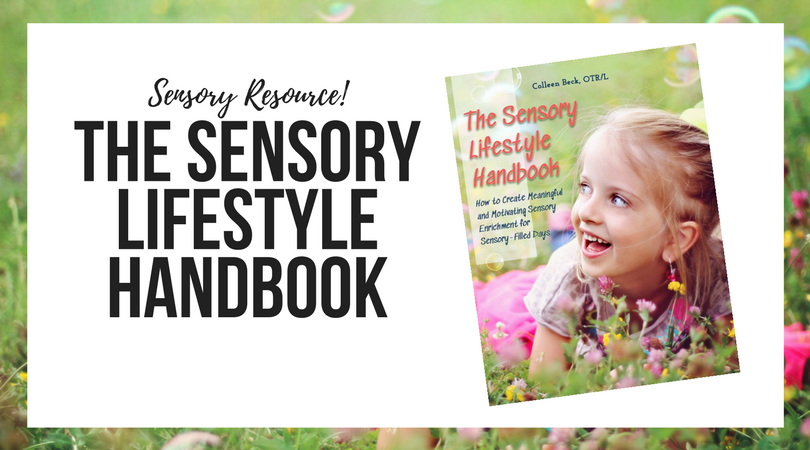
Looking for more ideas to add movement throughout the day? Check out The Sensory Lifestyle handbook to add sensory input throughout daily activities to create a lifestyle of sensory success!
I’ve worked to create a book on creating an authentic and meaningful sensory lifestyle that addresses sensory needs. The book is now released as a digital e-book or softcover print book, available on Amazon.
The Sensory Lifestyle Handbook walks you through sensory diet creation, set-up, and carry through. Not only that, but the book helps you take a sensory diet and weave it into a sensory lifestyle that supports the needs of a child with sensory processing challenges and the whole family.
Adding movement breaks to the classroom can be a tool for helping kids focus and learn. Read below about some research related to classroom breaks and behavior, learning, and focus in the classroom. These are brain breaks that can be used as classroom breaks to take a short break from learning…OR used as a strategy to incorporate movement into learning activities!
I was thinking about the cold weather we’ve been having recently. My kids have been cooped up in school and when they get home from school, it’s been FREEZING. Sure, we can bundle up and run around the yard for a bit (and I try to get all the kiddos to do this)…but it is downright cold out there. We can’t last too long when the wind chill is -4 degrees F!
Not only that, but many schools aren’t having outdoor recess when it’s this cold. Some are getting their kids bundled up and outside, but for the most part, it’s been indoor recess for many kids.
So when the school day is an indoor affair all day long, kids can become antsy!
Research on Classroom Breaks
Research tells us that activity breaks in the classroom can improve classroom behavior andcan increase students’ overall physical activity.
We know as therapists, that behaviors are just the tip of the iceberg. They are the sign that something bigger is causing the behavior we see. It might be anxiety, worries, sensory needs, communication issues, emotional concerns, social situations, or a myriad other underlying areas that lead to the behavior we see.
So, to know that science tells us that a brain break can help get out of that rut of behaviors is huge! It’s a strategy to help reduce the behavior and move toward focused learning and attention. In fact, there’s been some findings indicating physical activity during the school day improves attention-to-task in elementary school students.
The evidence suggests that increasing physical activity may improve academic performance, in the forms of recess, physical education class, and physical activity in the classroom. But if indoor recess is the only option this time of year, and gym class occurs every one day out of 6 in a classroom rotation schedule, or even one day/week, where does this leave us? Movement and learning and classroom breaks seem to be the option left!
In my research of the available evidence-based practice scenarios out there, I found some interesting points related to learning and specifically executive functioning skills and overall cognitive functions related to learning.
It seems that executive functioning skills play more into learning that just having a neat and tidy desk space or remembering homework.
In fact, executive function plays very much into the use of those mental skills in learning and classroom tasks. These skills can play a big role in attention levels and impulse control of kids in the classroom. They play a part in learning in many ways. Here are just a few examples: -Arriving to class on time -Staying on task in an assignment -Staying focused when completing minor tasks such as retrieving a pencil. Here’s a scenarios you may have seen before: A student drops their pencil. They bend to retrieve that pencil and then get distracted and lose focus on the assignment they are working on. Sound familiar? -Visual attention in order to scan a math worksheet and going through the assignment part by part without skipping sections or getting distracted or overwhelmed
Activity and Learning
Evidence suggests that mathematics and reading are the classroom subjects topics that are most influenced by physical activity. These academic areas depend on “efficient and effective executive function, which has been linked to physical activity and physical fitness”.
Executive function and brain health are the basis of academic performance. The cognitive functions of attention and memory are essential for learning. These executive function skills are enhanced by physical activity and higher aerobic fitness.
Physical activity and behaviors
It seems that when physical activity is used as a break in the classroom, whether as a brain break or , during gym class, recess time, or during active learning, attention, on-task behavior, and academic performance improves as well.
How to add more physical activity to the school day
Some ideas for adding physical activity into the classroom in order to improve behaviors include:
1. Offering physical activity breaks within the curriculum or learning activity
2. Allow students to stand at the student’s discretion. This strategy should be used with a training period and even a contract signed by the student that says they will not move away from their desk and that they will perform the work that’s asked of them while standing at their desk.
3. YouTube Videos- Here are our recommendations for YouTube brain breaks that can be added into classroom breaks. Some of these would be great for an indoor recess dance party, too.
5. Add a beach ball or bean bag to group activities. Toss while naming the answer to questions.
6. Jumping Jack Spelling Words- This is a whole-class exercise drill that gets the brain and the heart moving!
7. Make indoor recess an active time. Here are indoor recess ideas to get the kids moving.
References: Grieco LA, Jowers EM, Bartholomew JB. Physically active academic lessons and time on task: The moderating effect of body mass index. Medicine and Science in Sports and Exercise. 2009;41(10):1921–1926.
Mahar MT, Murphy SK, Rowe DA, Golden J, Shields AT, Raedeke TD. Effects of a classroom-based program on physical activity and on-task behavior. Medicine and Science in Sports and Exercise. 2006;38(12):2086.
Donnelly JE, Lambourne K. Classroom-based physical activity, cognition, and academic achievement. Preventive Medicine. 2011;52(Suppl 1):S36–S42.
These following direction activities are directionality activities that can help kids learn directions or spatial concepts such as left, right, up, down, and compass directions (north, south, east, and west) with a motor component. This hands-on learning activity really gets the kiddos moving and learning!
Teaching kids to follow the directions they need to physically move right, left, up, down requires development of spatial concepts such as spatial reasoning. This can be a real challenge for some kids!
Following directions and understanding of spatial concepts is a foundation for understanding and utilizing compass directions or the cardinal directions of north, south, east, and west, and the use of maps.
Left Right Confusion Direction Challenges
It can be a real challenge for some kids who struggle with the spatial understanding of following directions, or understanding their left from right in a subconscious manner.
Have you come across the child who is told to raise their right and and they take a five second count to stop, think, and then raise their hand? They might hesitate when raising one hand or the other and still be uncertain whether or not they have held up the correct hand. Then, when the teacher, parent, or anyone else really, says the inevitable, “Your other right hand…”, the child feels a sense of discouragement and self-consciousness that doesn’t drive in the underlying need to really know the right from left!
That’s where a directionality activity or following direction activity can come into play. Adding a physical component to learning directions and the difference between right, left, up, and down and what that looks like in relation to the child’s body can be such a helpful force in driving home this concept.
Why work on directions with kids?
Working on the ability for kids to follow directions and spatial concepts is so important for kids. The direction/spatial relationship/preposition words that tell you where something is related to something else (beside, in front of, behind, over, under, around, through, last, etc.) are very important when teaching math and handwriting concepts. Directionality and the ability for kids to follow physical directions is important for discovering where their bodies are in relationship to objects. This translates to following directions when getting from place to place by following a map or the cardinal directions.
When kids picture a scene in their mind’s eye and use that image to draw a map on paper, they are using higher thinking skills and spatial reasoning.
Directionality Activities
Amazon affiliate links are included below.
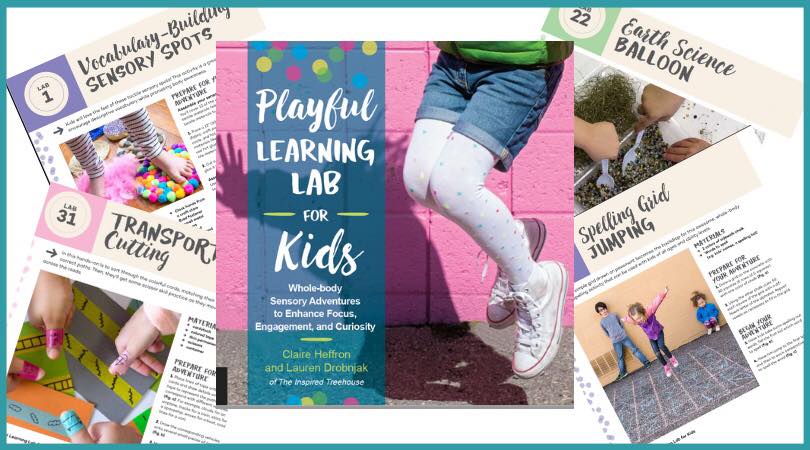
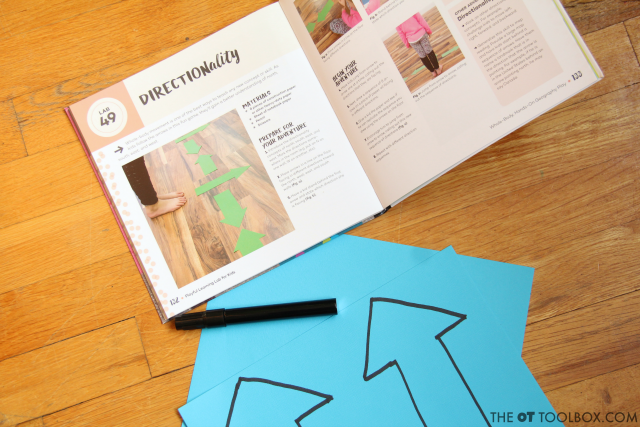
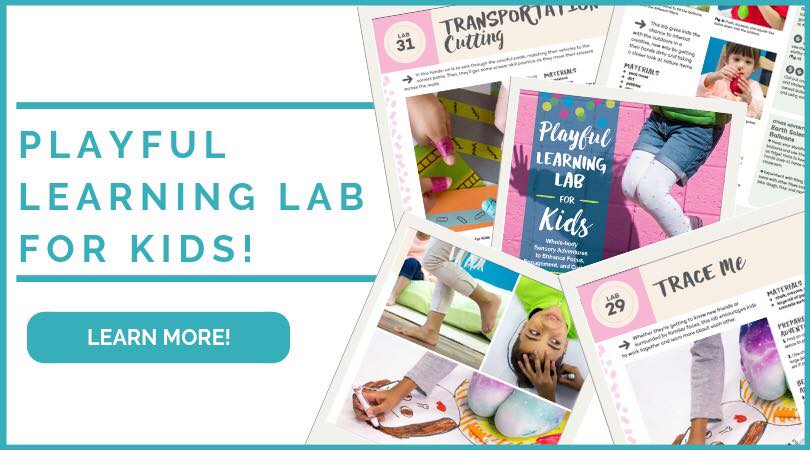
The fun idea below comes from a new kids’ activity book that we’re devouring. It’s the new Playful Learning Lab for Kids, by the occupational therapist and physical therapist team at The Inspired Treehouse. It’s a book full of whole-body and sensory activities that enhance focus, engagement, and learning through movement and interaction.
We used just a few materials to create this following directions activity:
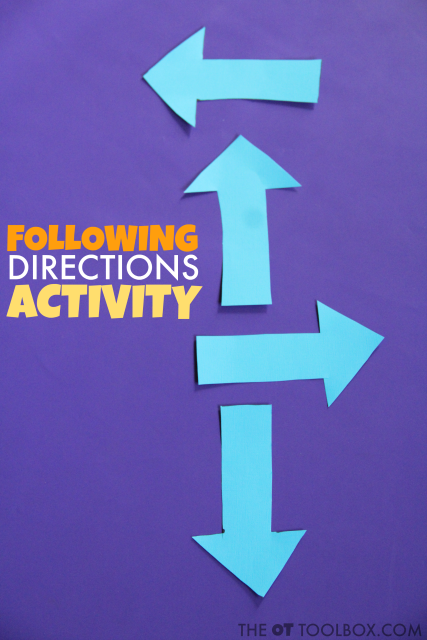
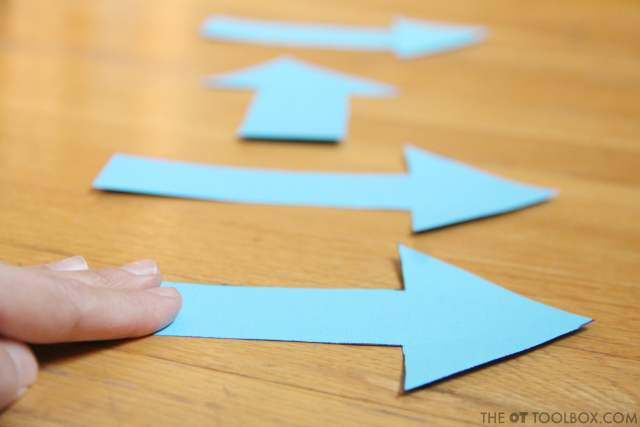
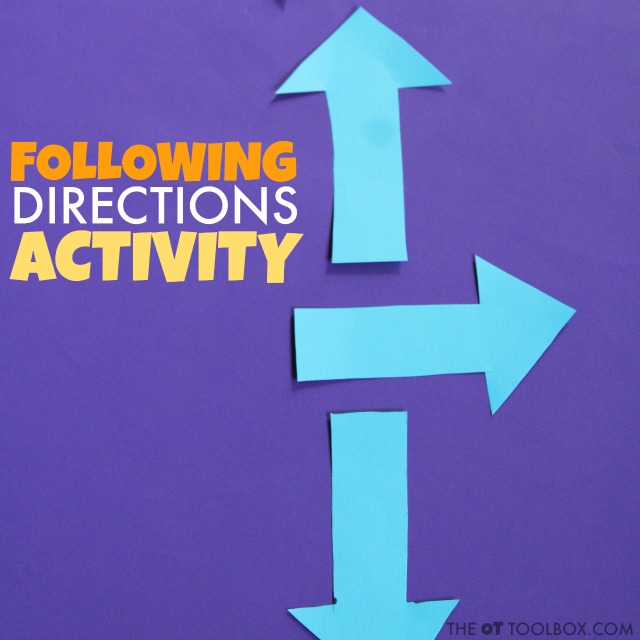
This is a simple activity (perfect for the classroom or homeschool when teaching directions!). First, draw and cut out large arrows from the cardstock.
Next, place them along the floor in a path and start playing!
There are so many ways to use these arrows to work on following directions and directionality:
1. Place the arrows on the floor for a fun brain break or sensory walk that uses directions as the kids work on following directions to stand in the direction the arrows are pointing.
2. Name a cardinal direction or spatial direction and ask the child to point to the corresponding arrow.
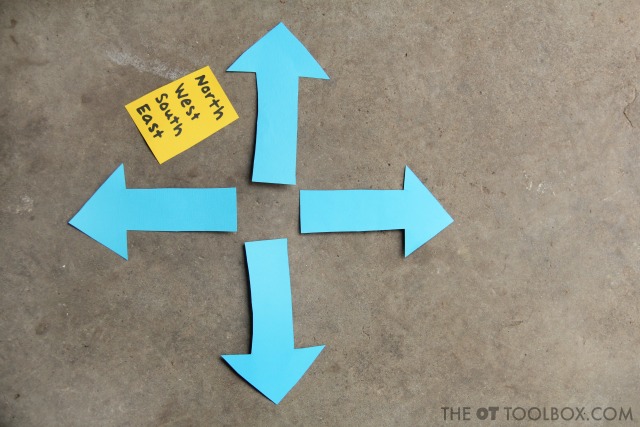
3. Place the arrows in a compass rose on the floor and ask kids to “step into a map” on the floor as they move north, south, east, and west.
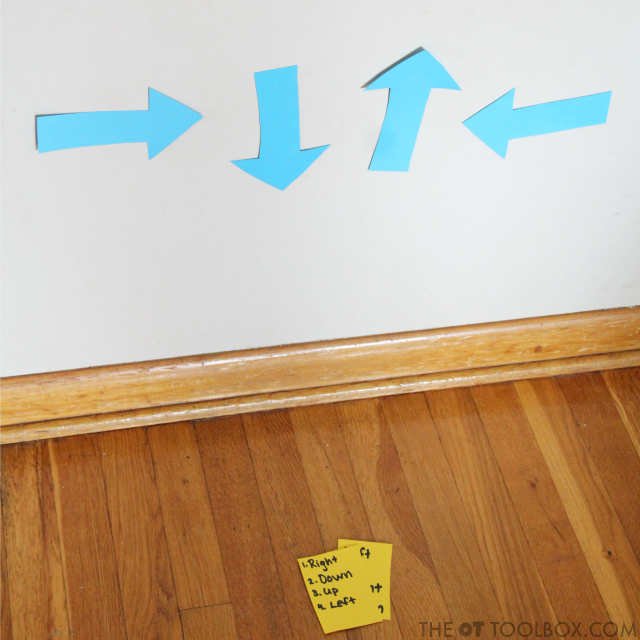
4. Stick the arrows to a wall using tape. Ask the students to write out a list of words that describe the directions the arrows are pointing (left, right, up, and down).
5. Hold up a sequence of arrows pointing in different directions. As the child to remember the pattern or order as they complete a series of side steps, front steps, or backward steps to follow the directions they see.
6. Work on left/right directionality by holding up an arrow pointing in either the left or right directions. Kids should call out “Left!” or “Right!” when they see the direction the arrow is pointing.
All of these following direction activities are ones that can be completed as on an individual basis or with a whole group. It’s a great mini brain break for the classroom and can be incorporated into the classroom curriculum by working on cardinal directions.
Want to grab more movement-based learning ideas that you can start on today? You will love the bright pictures, sensory-based activities, and whole-body activities in Playful Learning Lab for Kids!
It’s available now and is the perfect way to add movement to learning to improve attention, focus, brain function, remembering and learning!
This book will shift your entire mindset so you can begin to replace sedentary, one-dimensional lessons and worksheets with whole-body, multi-sensory activities that can instantly create a classroom or house full of active, engaged learners.







.jpg)