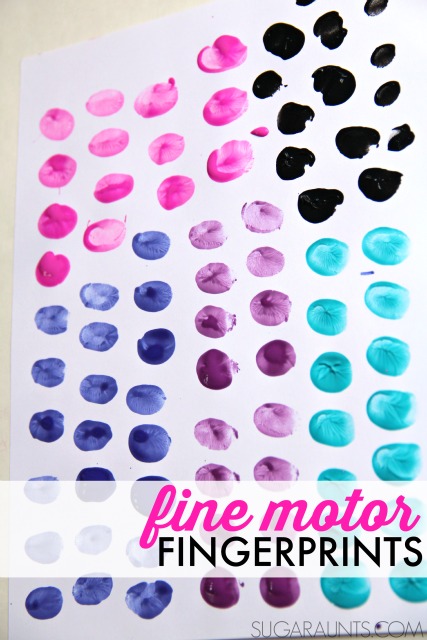
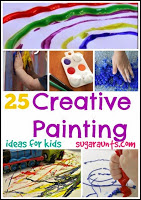
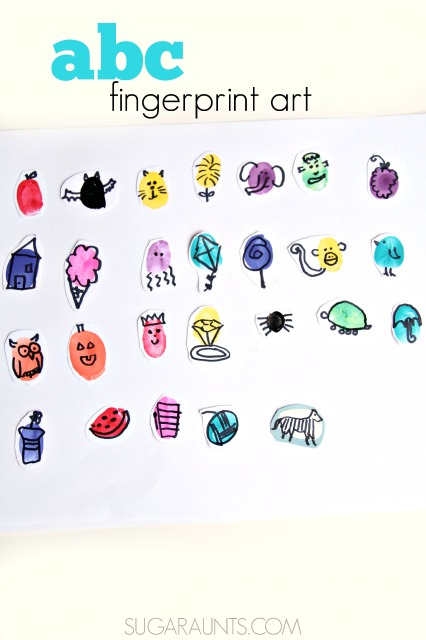
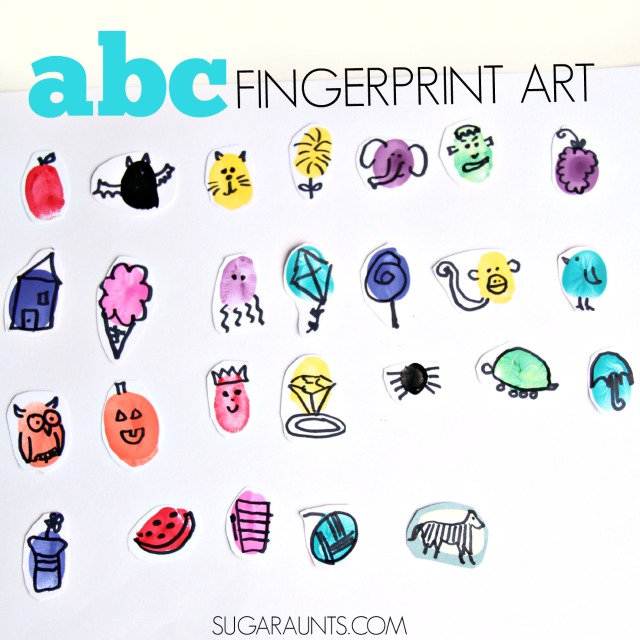
Fingerprint art is a fine motor powerhouse. These cute little Letter of the Week Alphabet finger print crafts don’t really show how many fine motor skills are bring addressed!
Four kids in eight years make a lot of fingerprints. Fingerprints on the fridge, fingerprints on the sink, and fingerprints on the windows. Then, there are the bins of artwork that I’ve got saved in the attic. We all have a couple of those bins of memories that a mama has got to save. The fingerprint and handprint Mother’s Day gifts, preschool crafts, and memorabilia.
As an Occupational Therapist who spent years working with kids, I can now practice the finger isolation needed in fine motor skills with my own kids, while creating fun artwork!

This post contains affiliate links.
It is not only fin to make fingerprint artwork, but educational too. Use fingerprints in fine motor patterns, addition, multiplication, and so many more ways…all while working on finger isolation.
What is Finger Isolation?
Finger isolation is using one finger to perform a task. Pointing with the index finger, wiggling all of the fingers individually, and counting out the fingers on your hand are finger isolation. This finger isolation is needed for many functional activities, like dexterity in managing pencils, paintbrushes, and other tools, typing on a keyboard, tying shoes, and many other skills.
Fine Motor Fingerprints
Many Occupational Therapists suggest fingerprint activities to their students for the fine motor benefits that the simple task allows. To create a fingerprint, a child needs to isolate one finger and bend (flex) the rest of the fingers into a fist. This is refinement from the fisted hand and “raking” motion that babies and young toddlers demonstrate. To create a fingerprint, the ulnar (pinkie side of the hand) are stabilized with the pinkie and ring fingers bent into the palm, or are positioned with the pinkie finger extended and abducted (spread apart).
This positioning allows the knuckle joints (metacarpals) to stabilize and allow the pointer and middle fingers to be used with more control. The separation of the radial and ulnar sides of the hand allows for more skilled fine motor manipulation.
So, how can you use fingerprints in activities?
Use fingerprints like you would a dobber.
Fingerprint math patterns.
Fingerprint pointillism art.
Draw circles and ask your child to add their fingerprints to each circle.
Fingerprint onto sight words, spelling words, or vocabulary words.
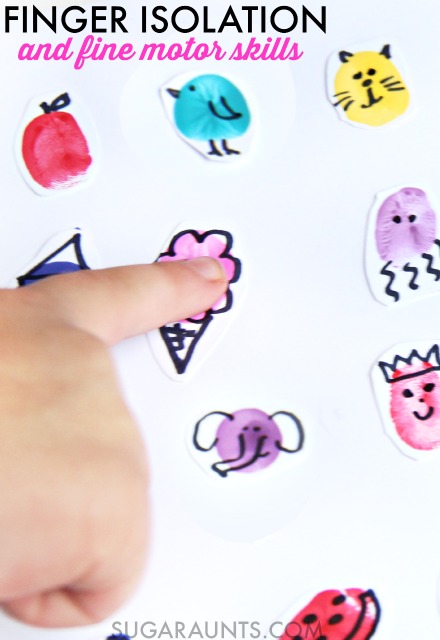
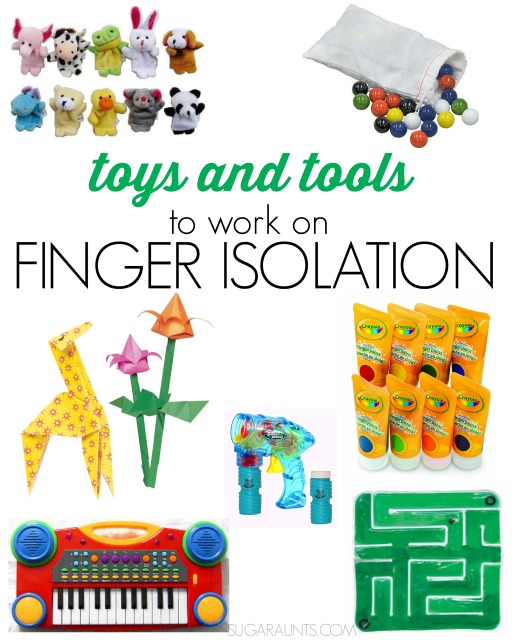
Finger Isolation Activities to Improve Fine Motor Dexterity:
Try these fine motor activities to work on finger isolation:
Fingerprints! Make a whole alphabet of fingerprint artwork, using the guide below. These are perfect for letter of the week letter learning or for just creating a A-Z art with fingerprints. Each fingerprint represents a letter of the alphabet. Simply show your child how to print in different colored paints. When the paint dries, use a black permanent marker to add details.
More Finger Isolation Activities
Squeeze a spray bottle using just one or two fingers.
Spin coins on their edges.
Roll small balls of play dough between the thumb and index finger. Repeat between the thumb-middle finger and thumb-ring finger.
Try sign language.
Play finger games like “Where is Thumbkin” and “Itsy Bitsy Spider”.
Finger pattern games. Ask your child to rest their fingers on the edge of a table. They can copy your hands as you lift individual fingers, separate, bend, and tap your fingers in patterns. Ask them to copy using both hands at the same time, then work to copying patterns with just one hand at a time.
Finger Puppets allow kids to imagine and pretend while working on finger dexterity and movement of individual fingers in isolation of others. This is a great precursor to typing. Play with these puppets as a hand warm-up before working on keyboarding tasks.
Finger Painting This is a sensory and messy texture and wonderful for sensory feedback while working on finger isolation.
Fold Origami
Squeeze a Bubble gun
and pop the bubbles between fingers.
Play mazes with the fingers. This Sensory Gel Maze
is perfect for finger isolation.
Pick up stick games
Screw/Unscrew bottles, lids, nuts, and bolts
Use the activities in this post to work on the skills needed for so many fine motor tasks. Hopefully, you don’t end up with too many more fingerprints on the windows with all of this finger isolation practice!
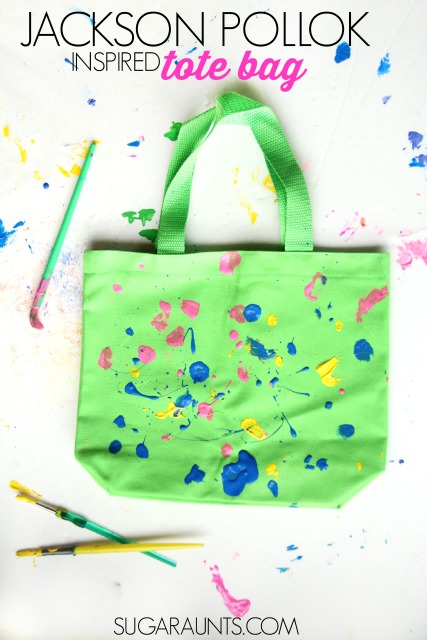
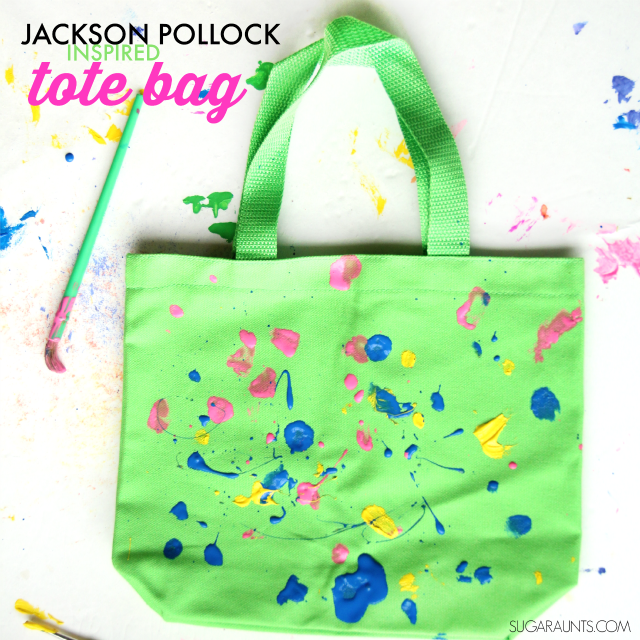
Today, I’ve got such a fun and gorgeously simple art project to share. This Jackson Pollock inspired tote bag art was just the creative outlet my second grader and I needed one rainy afternoon. Splatter paint is a creative painting tool that kids love.
As a Mama of four goofy/amazing/active/wild kids, Pollock’s balance of control and chance speaks to me. I think Moms have the balance of control and chance pretty well managed…sometimes we have a little more control in situations and other times it’s more of a game of chance. The balance changes by the moment. And it’s all part of the job of being mom!
Flinging little drops of paint around sure was an act of balancing how hard we flung the paint and just accepting the chance of blue paint dripping onto bare ankles.
Which happened.
And lead to lots of giggles.
This post contains affiliate links.
Jackson Pollock Inspired Tote Bag Art
You’ll need just a few materials to make this art project:
Tote Bag Poster Paints (THESE are my favorite brand! for their gorgeously bright colors.) A bit of water
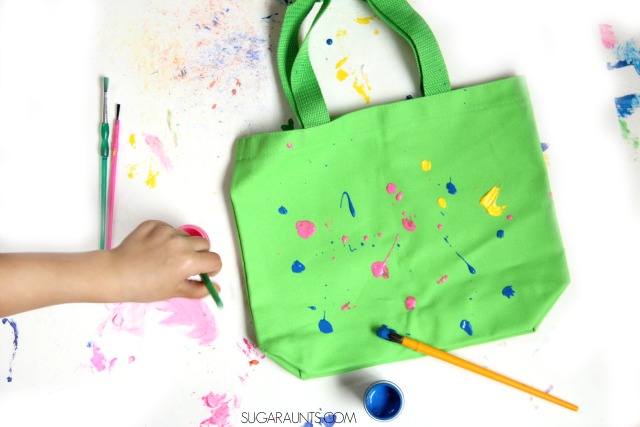
Stick, paint stirrers, chopsticks, or paint brushes Drop cloth, old table cloth, or a large Storage Bin
We found this Jackson Pollock book
at our library and learned some interesting facts about the artist. One thing that stood out to us was the fact that Jackson Pollack’s paint brush never touched his canvas. When we painted out tote bag, we loved re-creating that fact!
Spread out a drop cloth, old table cloth, plastic throwaway table cloth, or even an under the bed storage bin. Anything that is going to protect your floors will work. The mess with this project depends solely on how the art moves you and the kids. And it might just end up being big old movements that paint the walls.
Jackson Pollock often times painted with items other than paint brushes. We did use paint brushes for our tote bag but only because we got too excited about painting and forgot to dip the stick end of the brush into the paints. Be sure to not touch the brush to the tote bag though! Instead, swirl, tap, swing, and shake the paint onto your painting surface.
Let the paint dry and use your tote to carry essentials. I’ll share how we’re using our tote in another post. Coming soon!
We’ve been on a bit of a fine motor and grasp roll around here! The last couple of days, you might have seen tips and ideas to work on precision in grasp and types of fine motor grasps.
Today, I’ve got a fun activity for you that really works on fine motor skills. And the bonus is that it is a super big hit with the kids.
Every time.
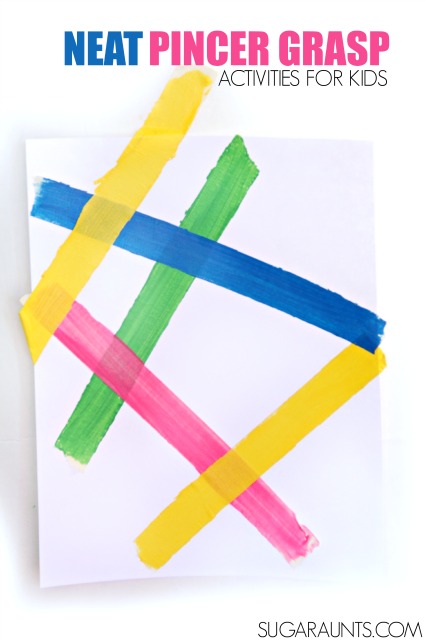
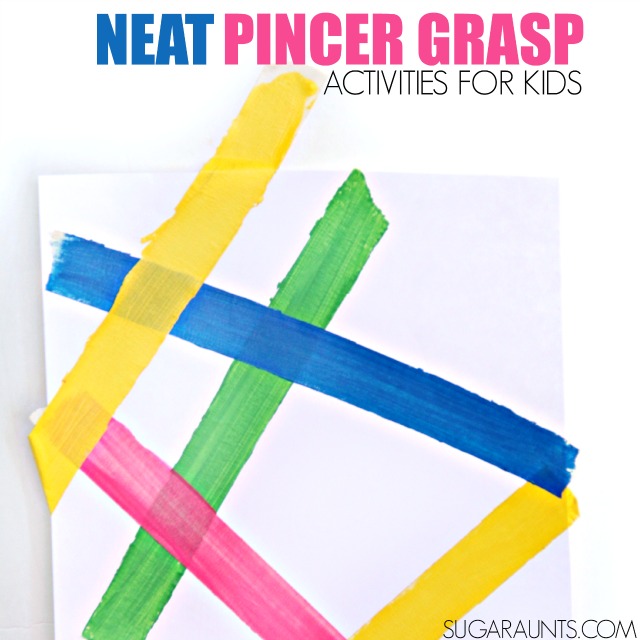
Can you tell from the picture below what we used to work onneat pincer grasp? Any guesses?
You can scroll down to the comments and take a guess of what you think we might have used to work on neat pincer grasp…or you can just keep reading. Both are cool.
Back to our neat pincer grasp activity. This was an absolute blast.
Neat Pincer Grasp Activity for Fine Motor Function
This post contains affiliate links.
First, let’s talk about Neat Pincer Grasp. What is it? And what makes a grasp “neat”? While I am a believer that all things fine motor is pretty darn neat, the thing about a neat pincer grasp is actually the fact that it’s used for ultra-small grasping. I explained a bit about what neat pincer grasp is over here.
Neat Pincer Grasp is a precision grasp using the very tips of the thumb and the pointer finger to pick up and hold very small items. Sometimes, the fingernails are used in the grasp of items. Neat pincer grasp is used to pick up and hold a pin, a needle in sewing activities, or super small beads like Perler Beads. This can be a tricky grasp for kids with difficulties in fine motor skills or core weakness.
So? Did you guess what those stripes are up above? It’s tape! We used tape in a fine motor activity a while back and it was such a hit that I had to pull out the activity again. In fact, the last time we used tape in fine motor play, my third kiddo was about the age of my fourth baby is now. And my littlest one loved this activity as much as her big sister did two years ago.
Simply stick masking tape to a table or plastic surface. We used the lid of a storage bin at first. And then did the activity again using a dry erase board. You want a surface that is easy to pull the tape off without pulling off bits of paper, for example.
Pulling the tape from the surface requires a tip to tip neat pincer grasp and is a great fine motor workout, with the sticky back of the tape. It’s such a fun strengthening and sensory experience for kids who might not typically play with tape.
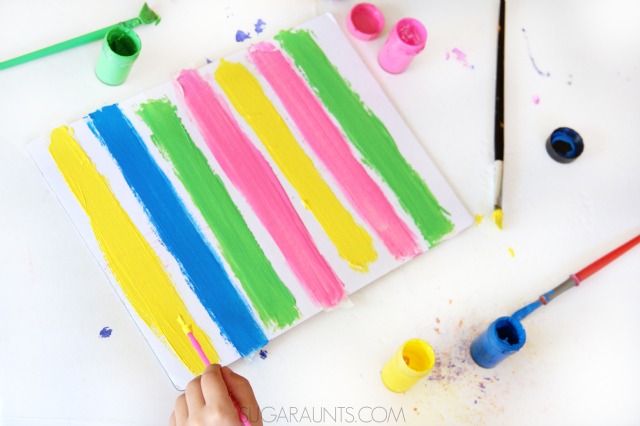
We decided to add a little color to our tape play and painted long pieces of masking tape with brightly colored paint. This poster paint
is my favorite for it’s bright color that doesn’t thin as it dries.
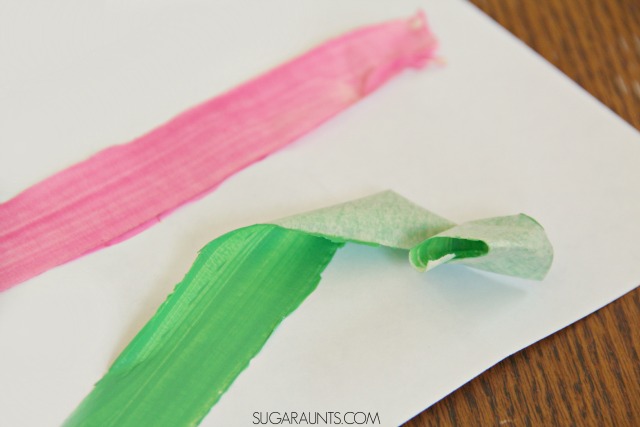
Get the kids in on the painting fun for tool use with the paint brushes. Let the paint dry. Have your kids peel the long strips of tape from the dry erase board. Peeling those long strands of tape is another workout for little fingers. Not only do they have to use a neat pincer grasp to pick at and peel up the edge of the tape, they need to peel up long strands with coordination and control to keep the tape from sticking on itself. This can be a tricky activity for adults, depending on how long the tape strands are. If you’ve ever painted walls and peeled off the painter’s tape, then you know the stickiness of masking tape.
Tape sticking to itself isn’t a problem, though. Show your kids how to stick it to paper and create artwork with the painted tape. Tear the tape into small pieces for an intrinsic muscle strengthening exercise.
Today, we’re covering a great fine motor resource: handwriting warm up exercises. These fine motor warm up exercises get the blood flowing and prime the hands for mobility and dexterity. When many children write with a pencil, they complain about their hands being tired. The same is true when coloring a coloring page. What’s going on with this hand fatigue? Let’s explore handwriting warm ups!
You’ll also want to check out our related resources that offer more insight and activities:
Let’s focus on the fine motor warm ups for handwriting needs…
Handwriting Warm Ups
What exactly are we talking about when we say handwriting warm ups?
As an Occupational Therapist, I’ve had many years of warm-up exercises at the beginning of treatment sessions. Whether I was working with a child on fine motor skills or an adult with a shoulder injury, each and every session had a warm-up of some type.
These are activities that will be fun for your kiddo and not seem so much like exercises, which in fact, WILL be exercises! These activities are fun and creative ways to “wake up” the muscles, let the child’s body know they are ready for handwriting tasks, and get little muscles of the hands ready for small motor movements and dexterity needed in handwriting.
The Proprioception system sometimes needs a warm up before getting busy on a task like handwriting that requires precision and small motor movements and appropriate pressure on the pencil. Are you ready for some fine motor warm-ups? Get ready to have some fun, because these aren’t your typical sweat-inducing exercises!
One way to warm up little hands before handwriting is with finger workouts. One that we love is in the video below. You can also find this video on YouTube.
Today, I’m sharing a little bit about handwritingwarm-up exercises.
This post contains affiliate links for products that we used. It is part of our 31 Days of Occupational Therapy series where I am sharing tips and tools using treatment materials that you can find in your home. The items we are using today in this activity are ones that we already had. I’ve got some alternative ideas, but also have the links to materials in case you are interested.
Based on this information, we know that kids sometimes need an opportunity to modulate the pressure needed to hold the pencil and write letters in a given space.
Other times, children need to warm up their muscles much like a runner stretches their legs against a wall before heading out for a jog.
While it’s not likely that your kiddo is going to strain an intrinsic muscle while copying a sentence, they might complain of hand fatigue. Writing can be a difficult thing for many children and waking up those muscles of the hands is smart to do in a fun and relaxed way.
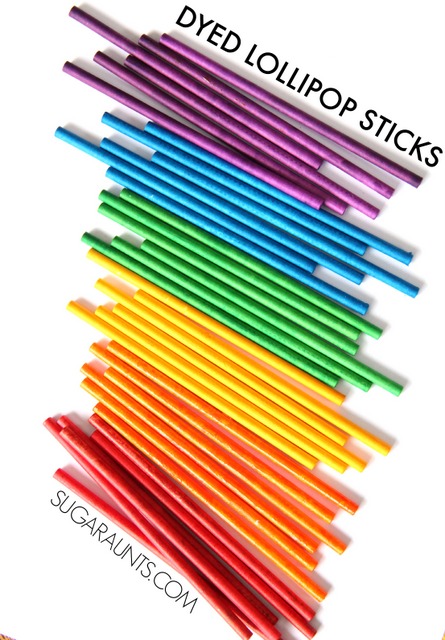
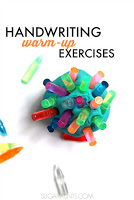
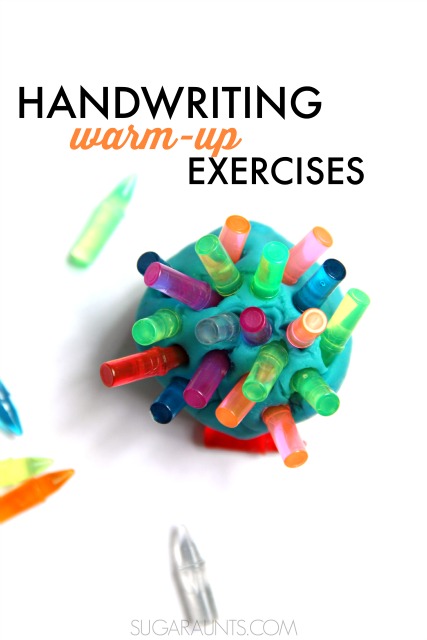
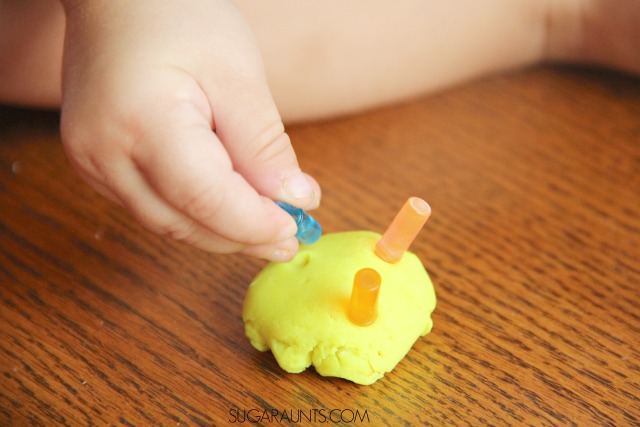
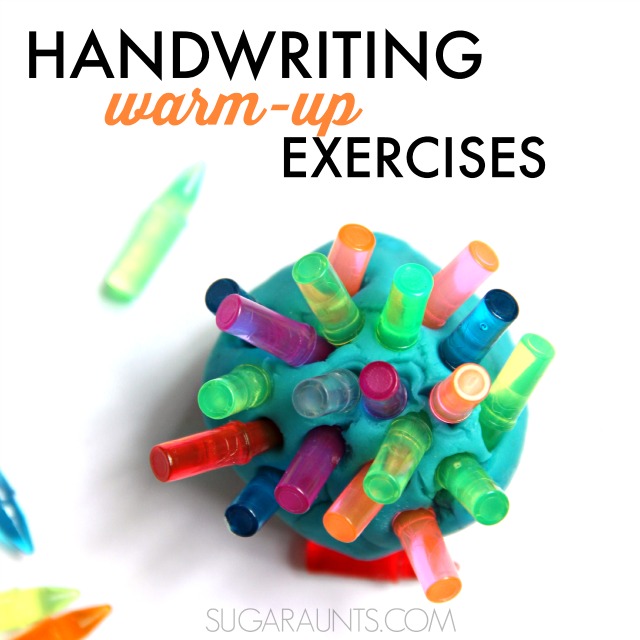
For this handwriting warm-up exercise, we used Lit Brite Pegs (Amazon affiliate link) and a ball of play dough. While these pegs are something we had at home, you might not have them available. Other items you could use in this exercise are toothpicks, cut cotton swabs, cut lollipop sticks, or any small peg.
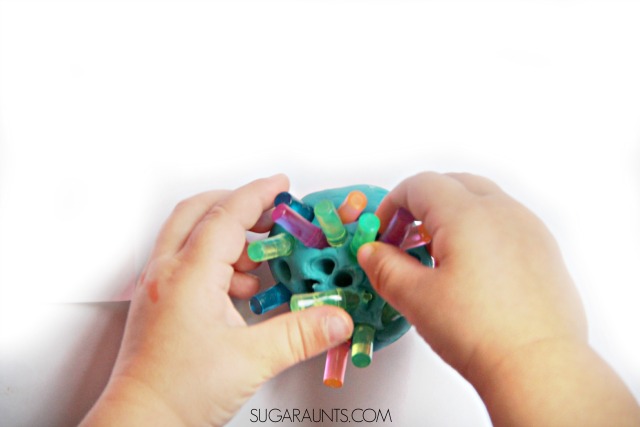
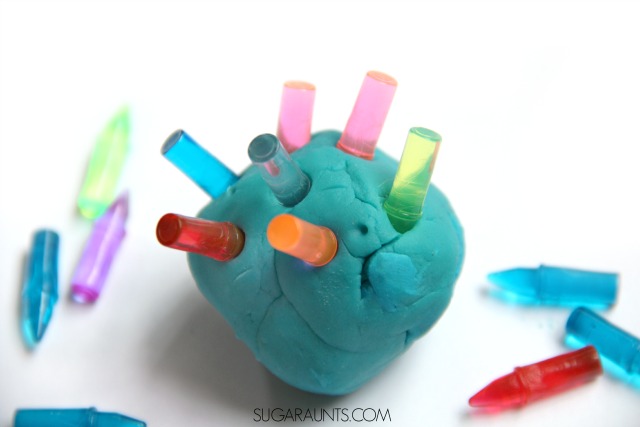
Start by asking your child to grab a handful of pegs from the table surface. They will need to work on in-hand manipulation to move the pegs from their hand into the fingertips. They can then place as many pegs into the play dough as possible.
You will want the pegs to be small like our Lit Bright pegs for maximal intrinsic muscle work. The resistance of the play dough provides feedback for the proprioception system and makes this a great warm-up activity.
Once the child has pushed all of the pegs into the play dough, ask them to stretch their fingers out by spreading them as far apart as they can.
Playdough is a great fine motor warm up to dexterity tasks.
More handwriting warm-up exercises
Finger push-ups- Show your child how to spread their fingers far apart. They can press their fingertips onto the table surface and push down. Then, ask them to raise their hands and arms height above their head to stretch the whole upper body.
Roll play dough into small balls. Roll the play dough into snakes. Press a pencil into the snake and cut on the lines with scissors so you end up with small pieces of play dough.
Squeeze stress balls- You can also squeeze a rubber ball for a free or almost free option.
Hand squeezes: squeeze hands into a fist and then stretch out the fingers and wrists.
Play with Finger Puppets. Make your own! Use our free printable to make farm themed puppets. Simply tape them into a loop shape and slide onto the fingers.
Wall push-ups: Place both hands on a wall and push away from the wall. This is a standing activity and engages the whole arm in a pre-handwriting exercise.
Stick very small small stickers going down the length of a pencil. Ask your child to start at the eraser end and work their fingers down the pencil so they pinch each of the stickers.
Jacks is a great warm-up activity for little hands.
Working on fine motor skills, visual perception, visual motor skills, sensory tolerance, handwriting, or scissor skills? Our Fine Motor Kits cover all of these areas and more.
Check out the seasonal Fine Motor Kits that kids love:
Colleen Beck, OTR/L has been an occupational therapist since 2000, working in school-based, hand therapy, outpatient peds, EI, and SNF. Colleen created The OT Toolbox to inspire therapists, teachers, and parents with easy and fun tools to help children thrive. Read her story about going from an OT making $3/hour (after paying for kids’ childcare) to a full-time OT resource creator for millions of readers. Want to collaborate? Send an email to contact@theottoolbox.com.
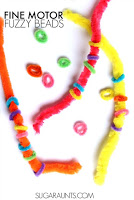
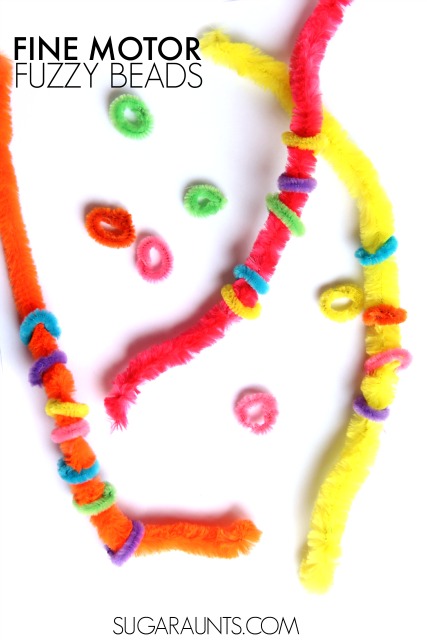
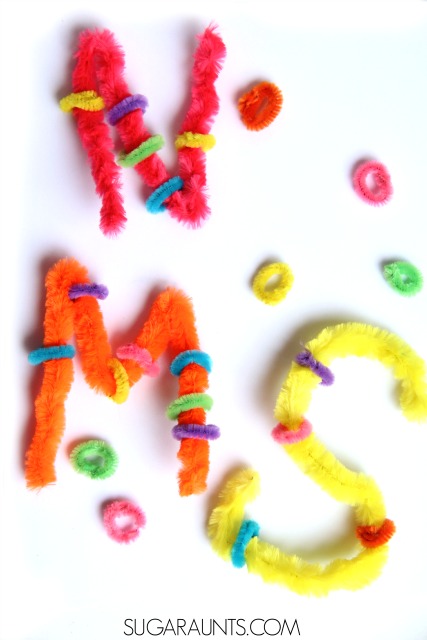
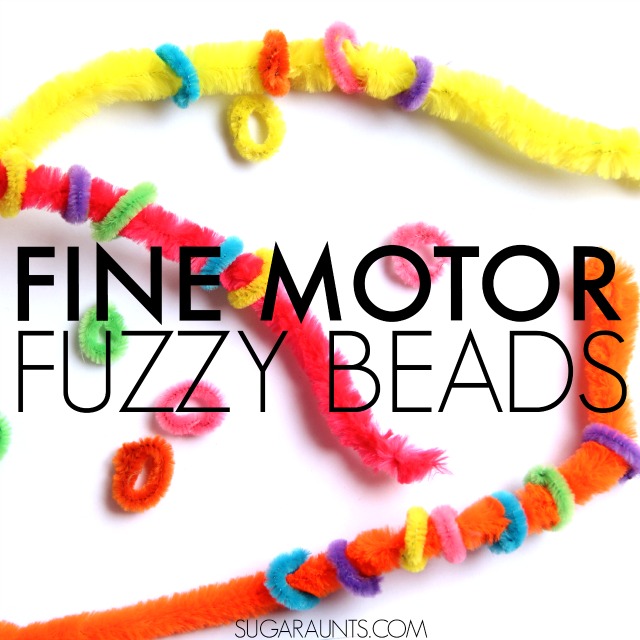
Today, I’ve got an easy letter recognition and fine motor activity for you to try with your preschool and kindergarten aged kids. Sometimes a fun letter activity adds play to learning and the kids don’t even realize they are learning. Then, when you throw in a fine motor component that might be difficult for them typically, it’s a bonus! We have been sharing a bunch of fine motor tips and tools lately. It’s part of our 31 Days of Occupational Therapy series and this fine motor activity is a perfect fit. Whether you are looking for ideas for strengthening, in-hand manipulation, or fidgeting, this fuzzy bead activity will help those areas and more. So, get ready to see how we came up with this Letter Recognition and Fuzzy Bead fine motor activity and get ready to make your own. They will be a hit in your house or Occupational Therapy clinic!
This is one creative way to promote an open thumb web space needed for fine motor skills.
This post contains affiliate links.
Fine Motor Fuzzy Beads Activity (DIY beads!)
This activity is so easy to throw together. Grab a few colorful Pipe Cleaners and start cutting them into small pieces. Cutting pipe cleaners is a fun way to get the kids snipping different materials besides paper. My kiddos thought cutting the pipe cleaners was a fun activity and loved watching the little pieces fly as they snipped. It takes a bit of muscle oomph to cut through the pipe cleaner so it’s a great fine motor strengthening exercise. You’ll want the pipe cleaners to be about an inch long. Some can be bigger, too.
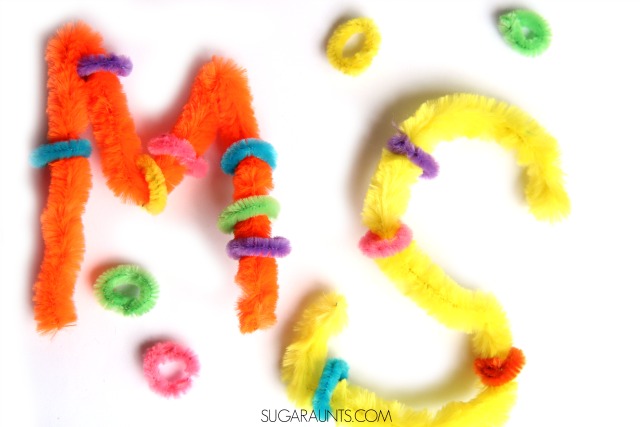
Bend the pipe cleaners into circles and pinch them so they stay in a ring shape. This is a fantastic fine motor activity for kids. Bending the little pieces of pipe cleaners really works on arch development of the hands and an open web space. An open web space is essential for so many fine motor activities and dexterity. Read on to fine out more about open web spaces and arch development below.
The only other material you’ll need for this fine motor activity are Jumbo Fuzzy pipe cleaners. we received ours from our friends at www.craftprojectideas.com, but you can find a similar product here. Bend the fuzzy pipe cleaners into letter shapes to work on letter recognition and letter identification with your preschoolers. Kindergarten aged kids can practice letter formation with the large pipe cleaners. Keep s few strait, too, for making bracelets and jewelry.
Now for the fine motor fun part: Using those little pipe cleaner beads that the kids created, show them how to bead them onto the fuzzy pipe cleaners for a threading task. Beading is an excellent fine motor activity for children, as it opens up the thumb web space and works on skills like bilateral hand coordination, in-hand manipulation, visual scanning (as the child looks for the color they like!), and hand-eye coordination to thread the bead onto the fuzzy stick.
What is an Open thumb Web Space and WHY do you need to care about it?
So, one of the important areas that Occupational Therapists work on when addressing a poor grasp on pencils, tools, and in functional tasks is an Open Thumb Web Space. You know that space between your thumb and pointer finger? That area that makes an “O” when you make the “OK” sign? That is an important little place for dexterity! To grasp small items with your thumb and index finger, you need to oppose the tip of your thumb to the tip of your pointer finger. Not only do the tips of the fingers need to touch, but the thumb must rotate at the joint closest to your hand. This opposition is needed to manipulate and grasp small items like shoe laces, buttons, and zippers.
When kids write or color with that web space area squashed shut, it’s a sign of problems. Then might be compensating for thumb instability, underdeveloped hand arches, and/or poor strength. Each of these problem areas will lead to difficulties with handwriting, dexterity, manipulation of small items like beads, and pencil grasp. Writing with a closed web space is inefficient and will cause poor and slow handwriting, especially as kids grow and are expected to write at faster speeds. A closed web space while attempting to manage fasteners such as buttons and zippers will lead to fumbling and difficulty. So, what do you do if you’ve got a kiddo who is squashing that web space shut during functional tasks? I’ve got a few ideas on how to work on open thumb web spaces.
(NOTE: This post and all others on this site are meant to be a resource, and not treatment. If your child displays any difficulty that we discuss here, please refer to an Occupational Therapist for individualized evaluation and treatment.)
Beading (like our idea we shared above!) Other beading ideas include threading plastic beads on a string, placing cereal O’s onto toothpicks, and stringing straws onto yarn.
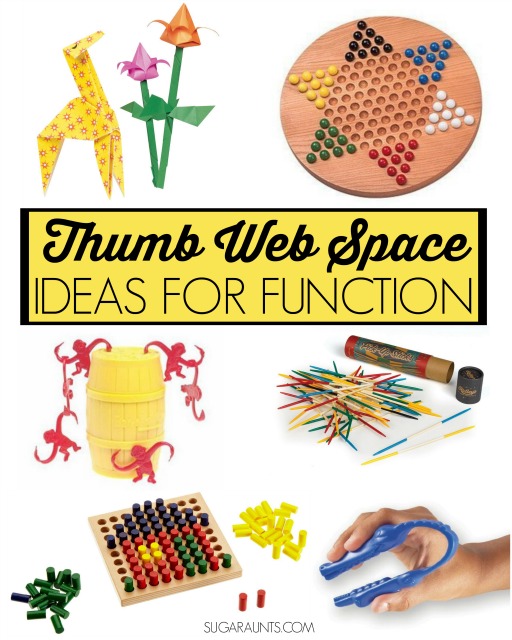
Barrel of Monkeys
game. Encourage your child to pick up the monkeys with an open web space.
A game like Chinese Checkers
encourages an open web space when the child grasps the small pegs with a pincer grasp between their thumb and the pad of their index finger.
Tweezers
activities are great for an open web space.
If handwriting and poor pencil grasp is an issue, try a pencil grip.
Pop beads.
Roll play dough into small balls using the pads of the thumb and index finger. This is a great activity for developing arches of the hands and opening the thumb web space.
Pop bubble wrap.
Screw and Unscrew nuts and bolts.
Fold and crease oragami. This Origami Set & Booklooks like fun. Crease the paper between the thumb and pointer finger.
Pinching clothes pins.
Lacing cards are great for opening the thumb web space. Prompt your child to keep their thumb web space open while managing the thread. We’ve got lots of ideas here.
Lacing Cards can always be found in an Occupational Therapist’s treatment bag. Every pediatric OT clinic, preschool therapist, and school-based OT has a bag of lacing cards. It’s just that lacing cards are a powerhouse of therapeutic benefits for kids of all ages.
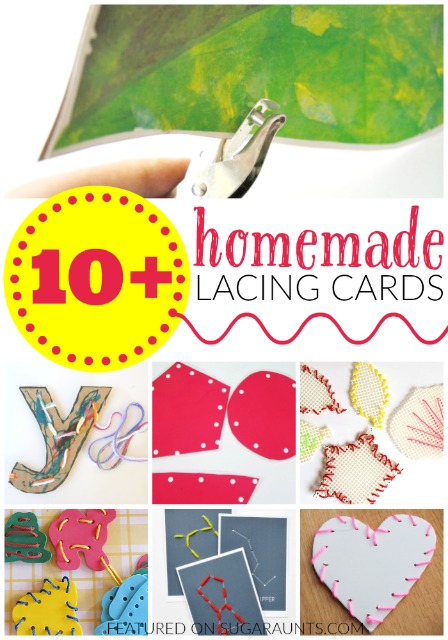
Why use lacing cards with kids of all ages? Read on, I’ve got a great list for you. Today, I’m sharing ideas to make your own homemade lacing cards as well as some of may favorite lacing cards and activities out there on the market.
This post is part of my 31 days of Occupational Therapy series where I’m sharing a month-long OT fest with materials that are mostly free or inexpensive.
Hopefully you can find a few ideas for some areas you are working on in your Occupational Therapy clinic, or your child is building at home, in school, or in homeschool.
Why should kids use lacing cards for development of skills and learning?
One of my favorite tools that I used with my OT kiddos were lacing cards. You can really modify them to suit the learning objectives and developmental needs of every child. Now, I have a shoebox of lacing cards that I use with my own children in play (and as I sneak in my OT skills with them!). We work on fine motor skill, visual perceptual skills, bilateral coordination, language, literacy, math, tool use, life skills, and more.
How lacing cards are beneficial to kids:
Development of pincer grasp: Manipulating the string or needle with a pad-to-pad grasp is a fine motor skill children need for many functional tasks. Picking up small items like coins, beads, seeds, etc require a pincer grasp.
Bilateral Coordination: Children need bilateral hand coordination where they use their dominant hand as a tool user and the non-dominant hand as the assisting hand in skills like handwriting, cutting with scissors, zippering a coat, buttoning a shirt, and drawing. You can see all of our bilateral hand coordination activities here.
Motor Planning: A motor plan is functional execution of a task which is viewed with the eyes and carried out with the hands in order to complete tasks, such as mazes, walking around obstacles, cutting along a line, and writing within a space on a form. Visual motor skills can be difficult for children with visual processing difficulties. Identifying and organizing information is in a motor plan works on problem solving skills.
Hand-Eye Coordination: Hand-eye coordination is using the information received through the vision system to coordinate the hands with control, in order to complete a task, such as handwriting or catching a ball. Find more hand eye coordination ideas here.
Visual Scanning: Children need visual scanning in order to scan a page, read, write, and find a certain colored sock in a drawer full of socks (for example. There are a ton of other ways that visual scanning skills are imperative for functioning in school and home settings.) Find more visual scanning ideas here.
Literacy: Lacing cards can be modified to meet educational needs of children. Write letters along side the holes and children can practice letter identification, letter recognition, letter sounds, upper and lower case letter matching, alphabetical order, and more.
Math: Write numbers along the lacing holes and children can work on number identification, number recognition, number order, addition, subtraction, multiplication, skip counting, even/odds, and more. Lacing cards can be created in geometric shapes for shape identification.
Tool Use: Managing a thread with or without a needle is great practice for tool use in a functional skill.
Life Skills: Children can be introduced to sewing patterns with thread and a needle.
Now. There are a gazillion lacing cards out there on the market. There are brightly colored animals, shapes, letters, numbers… and that is great. (In fact, I’m going to share some of my favorites at the bottom of this post!)
Kids tend to gravitate towards themes that they love. So a dino fan will maybe try to lace and create with a stegosaurus lacing card. I do love the sturdiness of fabricated lacing cards. They are awesome for little OT hands when you’ve got a crew that uses them day after day.
I’m also going to share some ideas on how to make your own lacing cards. When you make your own, you can customize the fine motor tool to your child’s interests. Get your kiddo in on the creating part, so that they can craft and use their creation.
There are a ton of materials you can use to make lacing cards. Here are some of my favorites:
Foam sheets (The Chaos and the Clutter) are very versatile for lacing cards. They can be made into any shape using cookie cutters or free hand drawing.
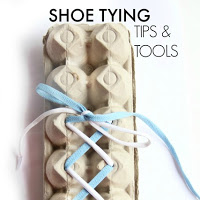
Make a lacing card using recycled materials. We used a take out container. These can be created into any shape you like, too.
Plastic Mats (Kids Activities Blog) like place mats or sink mats make a nice sturdy lacing card surface.
A Cardboard Cereal Box makes a great sturdy lacing surface. You can customize it however you like. I love the way Parenting Chaos used a book jacket.
Cardboard (No Time For Flashcards) created letter shapes.
Seasons, patterns, and colors can be explored by lacing with wallpaper scraps (Happy Hooligans).
Cut out shapes from Plastic Canvas, like we did, and practice different types of stitches, as well as math.
There are, it seems, a limitless supply of free printable lacing cards in any shape or theme out there. These Dinosaur shapes (Living Life and Learning) would be a hit in our house.
Use Transparent Office Supplies (Where Imagination Grows) like binder dividers and create a light table lacing activity.
You can even create a lacing card from Family Photographs (Where Imagination Grows) for a fun lacing activity.
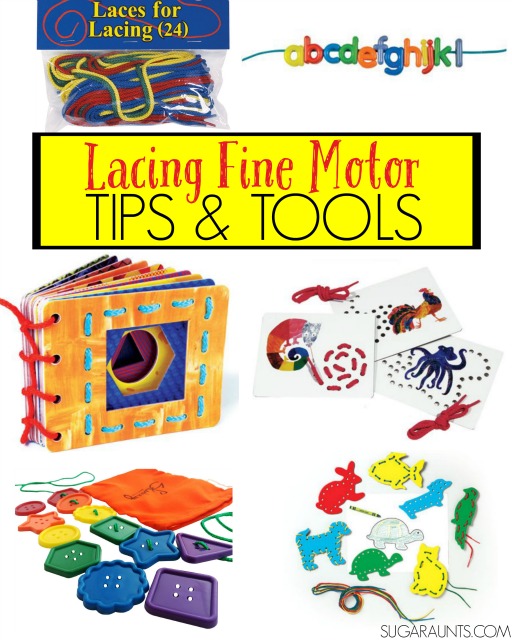
So homemade lacing cards are super cool, and we know WHY kids should be using lacing cards in home, school, and therapy. And we’ve got some fun ideas on HOW to make our own. But what if you just can not get up the oomph to make your own? Here are some of my absolute favorites that are out there.
These are the lacing tools that will work on those fine motor skills, open up the thumb web space, coordinate hand and eye movements, and work two hands together in effortless coordination. Well, maybe it’s not as easy as picking up a card and thread, but lacing cards should have an Occupational Therapy superhero cape on them…
Give this list to grandparents who are asking for gift ideas, put these on your wish list, or just watch for the next sale. Or, if you’re like me, just drool over the awesomeness of the products out there. ((Then go make your own version!))
Kids can create a book or hanging wall art with this MoMA Modern Shapes Lacing Cards. What a creative way to work on fine motor skills!
Want to work on lacing cards with the kiddos, but can’t justify the cost? Just grab some colorful Long Extra Laces and make your own using the tips above.
These Letter Beads
are another great way to work on skills that lacing cards do, but while working on literacy too. For added fun, make your own paper plate lacing card and add letter beads within the card to practice letter identification and sounds.
Lacing cards like these Lacing & Tracing Pets
are great for so many skills, but they can be boring for kids after they do them once. Ask kids to lace them together into a garland (tie the strings!), thread in beads, create different patterns, or add literacy/math components. These are cool because you can also use them a stencil and trace them.
I love these Lacing Buttons for their open ended-ness! Kids can learn shapes, patterns, colors, and sequencing by lacing hem together.
Hopefully, you’ve found some creative ideas here! You might like a few other posts in my 31 Days of OT series:
The latest obsession in our house is learning cursive handwriting. My oldest daughter asked to learn how to write in cursive and I was so very excited to show her. Teaching kids how to write in cursive with creative techniques and unique modifications was one of my favorite things to teach as a school based Occupational Therapist.
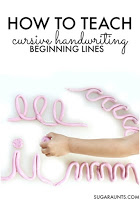
We’ve shared a few of the very beginnings of cursive lines, loops, and re-tracing marks that are a the foundation to to writing in cursive, and an important area to work on with older kids who might need a little more practice with pencil control and letter formation on in cursive handwriting.
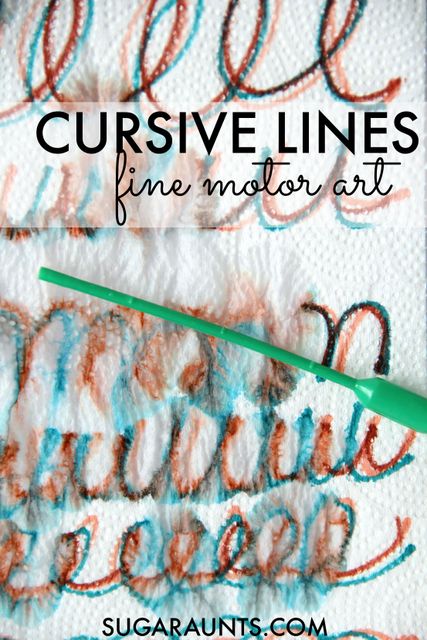
You can see all of our cursive writing ideas by searching “cursive” or clicking here. This cursive lines fine motor art is a powerhouse of fine motor work and cursive handwriting practice. We connected cursive lines, loops, and re-tracing to form the beginning letters (Read more about which cursive letters to start with.) and worked on connecting lines as well…all with a fine motor twist that resulted in gorgeous artwork!
We worked on our cursive handwriting, however this activity would be done with any printed letter formation and number formation, too.
This post contains affiliate links, however we used items that we had around the house as part of our month-long Learning with Free Materials series where we are sharing learning ideas for homeschoolers and school-extension activities using items that are free or mostly free (i.e. CHEAP or you already have in the home), and is part of the 31 Days of Homeschooling Tips as we blog along with other bloggers with learning at home tips and tools.
Cursive Handwriting Activity:
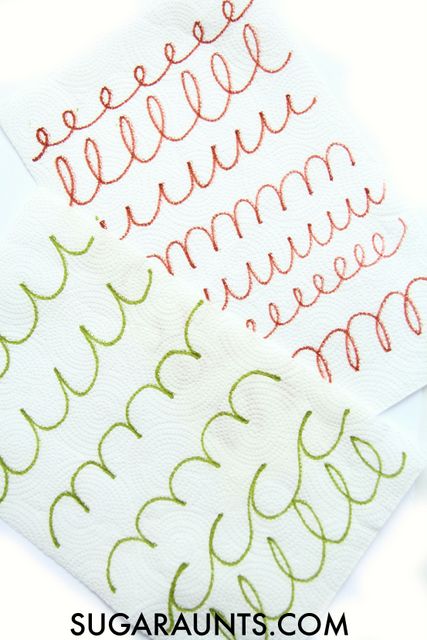
This activity is really so simple and makes such pretty art with a fine motor twist. Start by using fine tip washable markers to write cursive letters, swirls, loops, and lines on a few sheets of paper towels. Practice cursive connecting lines by making a long line of cursive letter “e”s or “l”s connected together.
Make a long line of “m”s connected to work on the re-trace needed for the bumps of the letters. You’ll want to practice the re-trace of the letter “c” because that part of the letter is used in so many other cursive letters (a, d, g, and q). Practice connecting them together for the up-swoop and smooth lines needed with writing cursive words.
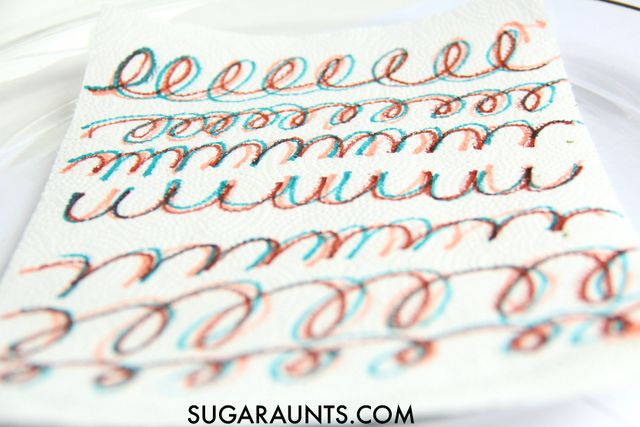
Next, re-trace the loops, swirls, and lines with other colored washable markers for more practice. It’s starting to look colorful and arty already!
Fine motor handwriting with an eye-dropper:
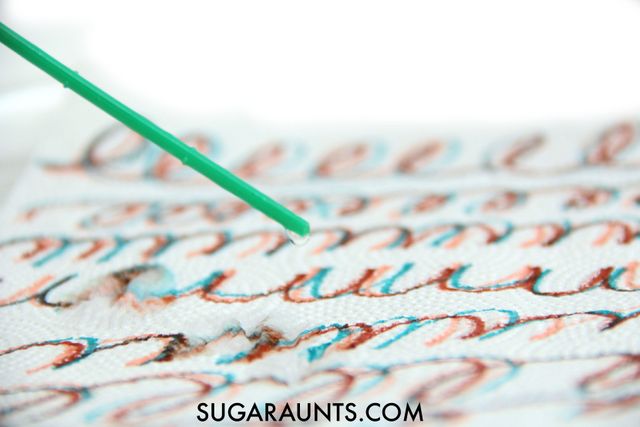
Pull out a dish of water and your favorite dropper to slowly add droplets of water. Pinching the bulb of the dropper is a great fine motor workout for little hands. Squeezing an eye dropper to grab water and then release droplets requires an open web-space and strengthens the hand muscles.
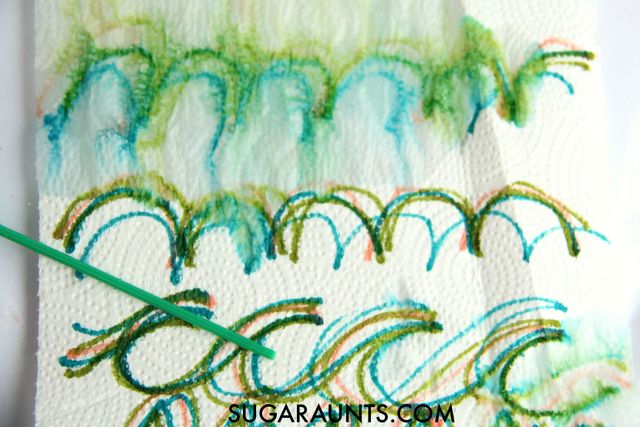
Dropping water slowly and by the droplet requires a precision and dexterity that works on motor control and further strengthens the intrinsic muscles of the hand.
Try to use the water dropper as a writing utensil to follow along the lines of the cursive letters. This will further strengthen fine motor skills as well as line awareness which is so important in handwriting. Cursive letters will be practiced again and again with repetition by tracing with the dropper and further work on cursive letter formation.
My kids loved that they could add water slowly and make some parts very mixed and other parts more bold by adding less water. Once you’ve added water to your cursive letter lines, let the paper towels dry. The best method we’ve found for drying this art works is by hanging the wet paper towels over a cookie drying rack which can be placed over a cookie sheet to catch any drips.
More cursive handwriting activities you will Love:
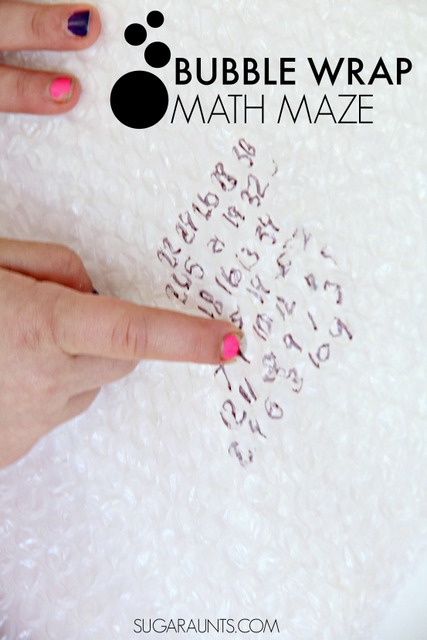
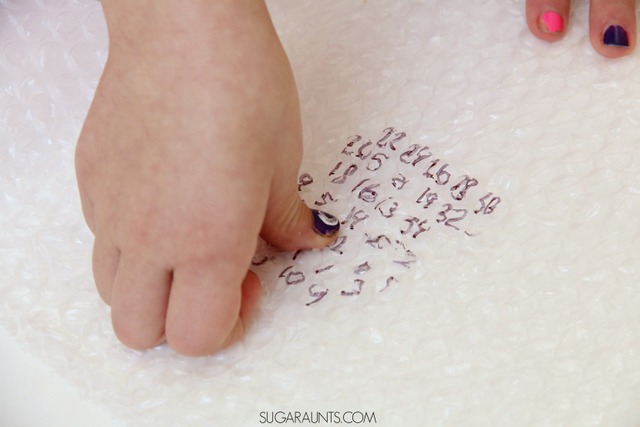
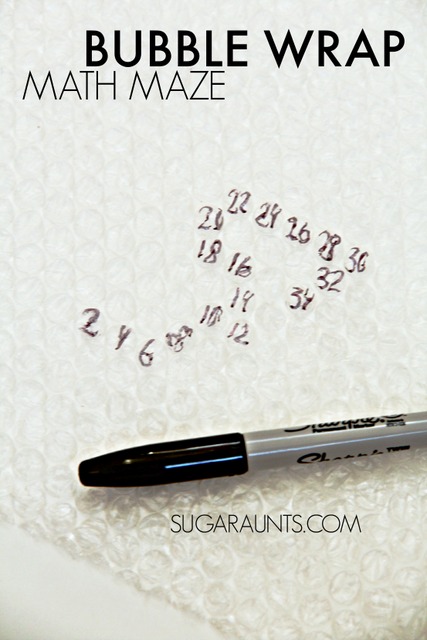
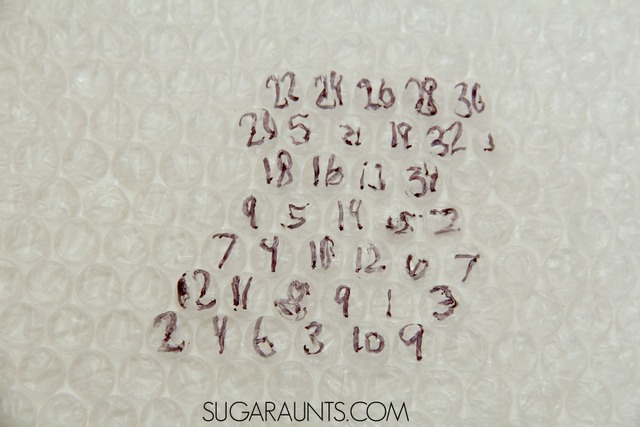
Popping Bubble wrap is a fabulous fine motor work out for kids. Popping the little air bubbles in recycled plastic wrap works the muscles within the hand (the intrinsic muscles) and opens the thumb web space, which is important in an efficient pencil grasp. We used bubble wrap in a visual perceptual activity and a math activity recently as we practiced “counting on” by twos. This first grade math activity is a great way to build a foundation in addition and subtraction. Besides being a creative way to practice math skills, our bubble wrap math maze was big time fun!
We’ve done a similar bubble wrap visual scanning activity before, only with letters and colors and using the bigger style of bubble wrap. Today’s post uses the smaller bubble bubble wrap and is more age-appropriate for my daughter who is just finishing up first grade. We used a permanent marker to write even numbers on the bubbles, starting with number “2”. I wrote the numbers in a weaving maze so that it would take a bit of visual scanning to locate the appropriate number as my daughter counted on from 2.
The word on the therapy street is that Bubble Wrap is not going to be made in the near coming future, in order to provide a more environmentally conscious shipping product. The occupational therapists I know will be stocking up now for it’s fine motor workout awesomeness! That’s all for the inside scoop on bubble wrap for now.
Then, fill in the surrounding bubbles with numbers. Be sure to write numbers that don’t “add on” to the numbers in the maze. For example, near the number 4, don’t write a number 6. You can make the maze more difficult in subsequent mazes. Create “dead ends” on the maze of numbers.
To further extend this activity, create a maze with even numbers or “count on” by 3s, 4s, 5s, or 10s.
You can also count down from the end of the number maze to work on subtraction.
What is Counting On and Counting Back in First Grade Math?
Counting on and Counting back math facts are essentially adding and subtracting. When a child is trying to figure out an addition problem, counting on is a method of finding the answer. Counting back from a number is a method of finding a subtraction answer.
Visual Scanning Activity
Scanning for the correct number among a group of numbers like in this activity, is visual scanning. Visual scanning is an important part of reading, writing, and so many functional skills. You can read more about visual scanning here.
Need more visual scanning activities? Try these:
Seek and find games such as “I Spy”. Or create your own real toy “I Spy” game. Roll a ping pong ball across a table from person to person. Watch it with your eyes, while keeping your head still! Trace pictures on a light box. Flash light games. Sensory seek and find.
This post is part of our month-long series: Learning with Free Materials series, where we share ideas to learn at home using free (or almost free) materials. It’s part of the 31 Days of Homeschooling Tips as we blog along with other bloggers with learning at home tips and tools.
Cursive handwriting can be an incentive for kids to sit down and write. Many times, kids see older children or adults writing in cursive handwriting, or see a card that comes in the mail with cursive writing. They want to be able to read the writing and learn to write in cursive themselves.
My daughter asked to learn how to write in cursive, so I was happy to get started with her. I loved assisting my occupational therapy students in fine motor tasks like cursive handwriting and was so excited to share tips and hints with my daughter as she learned cursive letter formation.
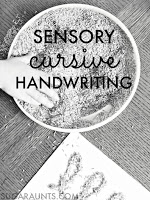
We’ve been doing a lot of practice and fun pre-cursive activities to learn the basics. Today’s sensory cursive activity is another way to introduce cursive letter lines and beginning pencil strokes.
How to teach cursive handwriting from the beginning: Where to start with teaching cursive
This post contains affiliate links.
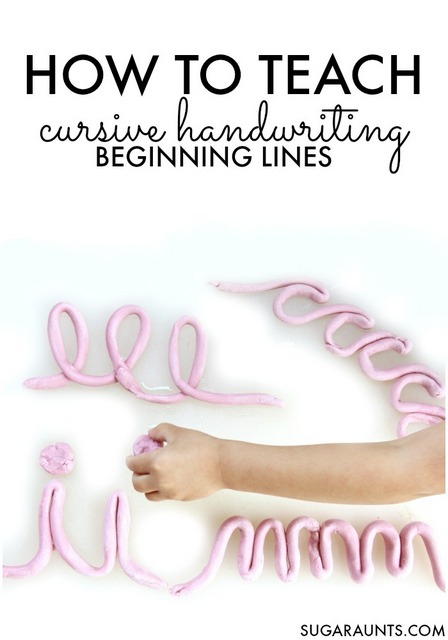
When you start to teach a child how to write in cursive, do not teach letters alphabetically. When a child learns printed letters, they do not learn how to write in alphabetical order. Instead, you’ll teach letters based on formation. Lower case cursive letters share similar pencil strokes and make teaching certain groupings together. We talked about the c letter series a little bit with our fizzy dough cursive sensory activity. Letters c, a, d, g, and q start with the cursive letter c and are typically the first letters taught.
Today we practiced the l series of letters. The lower case cursive letters l, e, b, f, h, and k begin with the letter l’s loop. I had my daughters use
a bottle of glue
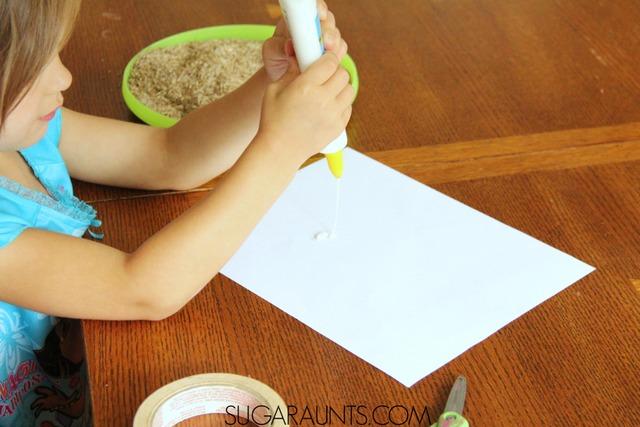
(we go through a LOT of glue in our house!) to draw the loops of l across a page. At this point, do not worry about size. We are focusing on the formation of the “l”‘s loops and connecting the “l”‘s together. You’ll want to encourage your child to form skinny and tall “l”s and not wide loops formed haphazardly. Using the glue bottle really provides a proprioceptive feedback to your child as they squeezed the bottle and form the letter’s loops. You can read more about proprioception in handwriting here.
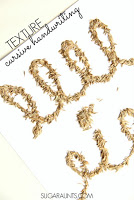
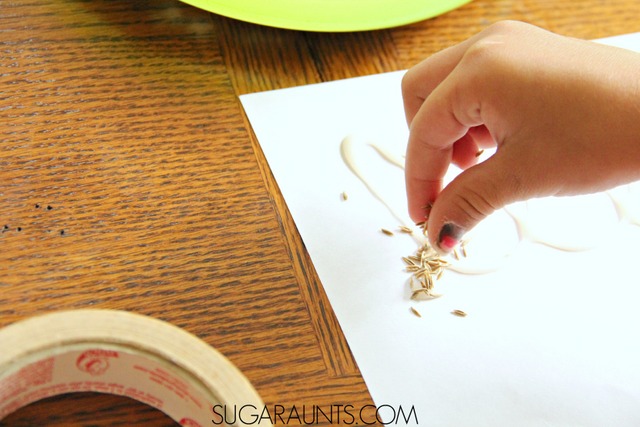
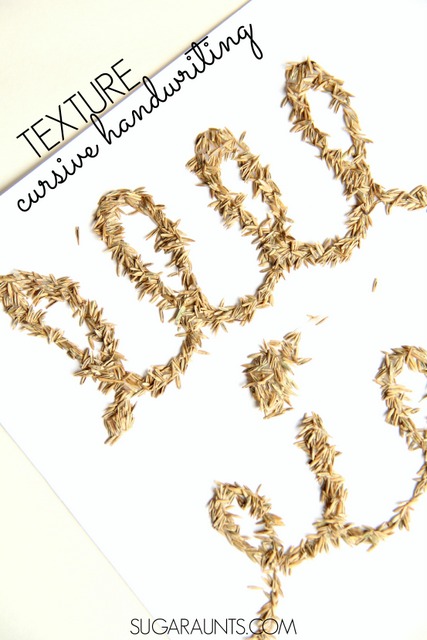
Next, we used a tray of grass seed for a sensory and textured way to write our cursive letter loops. Using grass seed over the glue is a great sensory addition to handwriting practice for it’s texture. Little hands love to examine and explore the soft, yet pokey seed. It’s small enough that the seeds stick well to the glue and the letters are still very legible. A larger seed such as dyed pumpkin seeds (although equally as FUN!) makes the glue letters more difficult to distinguish, especially if a child writes the letters on the smaller side.
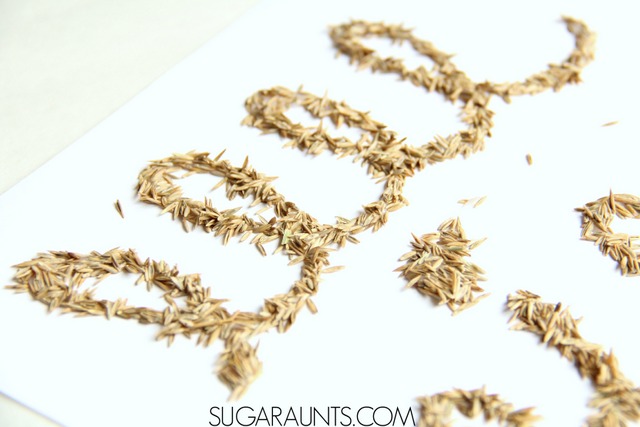
The small size of grass seedrequires a wonderful pad to pad grasp (the pads of the thumb and index finger touching together, pincer (or pad-to-pad) grasp, and neat pincer grasp where the tips of the thumb and index finger are manipulating very small items, and rotation of the grass seed between the pads of the thumb and index finger. Rotation of items is important as a child rolls items, such as a pencil between the pads of the thumb and index finger. Rotation of the grass seed happens as they pick up the seeds and manipulate them onto the glue letters.
Form all of the basic beginning lines of cursive. Practice the loops of “l”s, the curves of “c”s, and the re-tracing of “i”s. Practice writing the glue and grass lines in connected letters and individual letters.
Love it? Pin it!
More cursive handwriting activities you will Love: