Colleen Beck, OTR/L is a pediatric occupational therapist and the owner and author of The OT Toolbox website. She manages all of The OT Toolbox social media accounts and runs the popular newsletter.
Read about Colleen's experience and career as an occupational therapist, including how The OT Toolbox began on our About The OT Toolbox page: https://www.theottoolbox.com/about-us/
Colleen created The OT Toolbox in 2011 and since then has written thousands of blog posts designed to support therapy providers, educators, parents, counselors, admin, and caregivers in promoting the healthy development of kids.
Check out Colleen's blog posts below:
This blog post on clothing sensitivities in sensory processing is an older blog post that we’ve had on the site for a long time. We’ve updated this with some considerations that we as the occupational therapist might have when supporting the individual with sensory needs.
Sensory Issues with Clothing
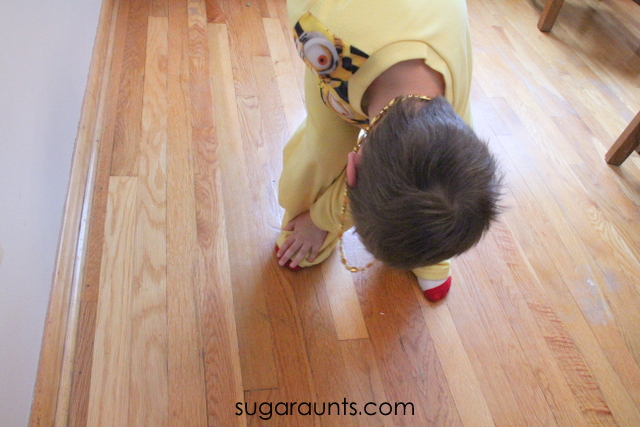
You might know a child who HATES that tag in the back of their shirt. Maybe the seam of socks need to be lined up “just right”. Maybe you know a student who only wears shorts no matter the weather. All of these clothing preferences might be a red flag related to a clothing sensitivity and sensory processing issues.
We might all have a sensory issue with clothing at one time or another…
Do you hate certain fabrics? Or do turtleneck sweaters itch and scratch? Maybe the tightness of yoga pants around your waist is aggravating. All of us, at one time or another, have probably experienced some preference or sensory issue with clothing, whether it’s the tightness, the fabric, or something else. All of those tactile defensiveness tendencies and proprioceptive sensations are technically “sensory”.
Clothing sensitivity can mean we need to take a closer look at sensory issues with clothes and they specifics about the clothing: textures, fabrics, tag location, etc.
Sensory friendly clothing can make all the difference in the world to the kiddo that struggles with these intricacies that you or I may not even notice! Even taking a moment to consider how clothing fasteners impact the sensory system can have a huge impact.
A clothing sensitivity related to specific clothing preferences is a common red flag related to sensory processing disorder.
Clothing Sensitivity Disorder
We all prefer certain textures of clothing, however, when clothing sensitivities or the touch discrimination (sensory touch) prevents one from wearing clothing or an extremely strict preference in clothing, there may be more to look at. Tactile defensiveness can impact daily self-care and functional performance in wearing weather-appropriate clothing. Take a look at the clothing sensitivity list below.
Because sensory processing challenges present differently in each child, there will be no list of clothing preferences that is the same for every child. There will also be no completely exhaustive list of red flags related to sensory processing issues or one that can indicate specific sensory issues.
However, it is possible to notice sensory needs related to clothing preferences and clothing sensitivity. The red flags listed below don’t necessarily mean that a child has a sensory processing disorder, only that a more intense look at the child might be needed. If a child seems to have a number of clothing sensitivities, a full evaluation by an occupational therapist may be needed.
Below are some examples of clothing sensitivities. These sensory issues with clothes may impact children, adults, or anyone in between.
An individual who prefers to wear only one type of texture is not something to be concerned with. Similarly, the student who wears shorts all winter long can get by with learning in the classroom without interference. The main consideration is when clothing sensory issues interfere with daily tasks and safety, including personal hygiene considerations.
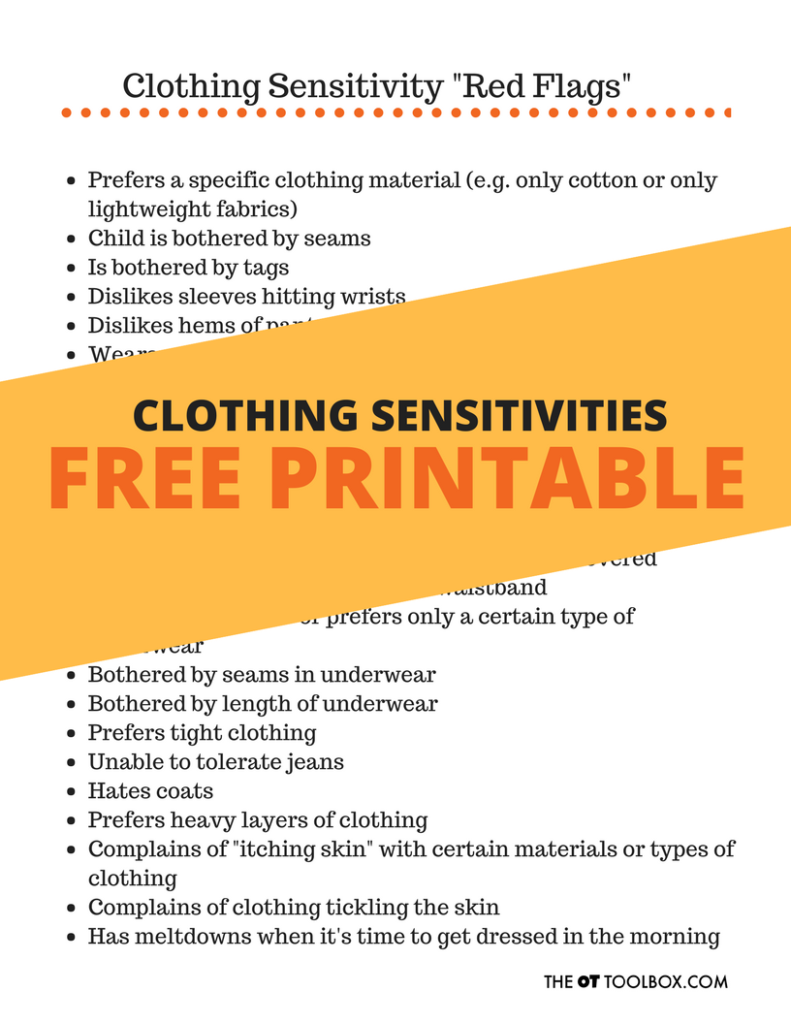
Consider these sensory clothing red flags:
Prefers a specific clothing material (e.g. only cotton or only lightweight fabrics)
Child is bothered by seams
Is bothered by tags
Dislikes sleeves hitting wrists
Dislikes hems of pants hitting ankles
Wears only shorts even in very cold weather
Wears only pants even in very hot weather
Prefers clothing without buttons/snaps/zippers/ties
Sensitive to collars hitting neck
Unable to tolerate shoes
Prefers only certain socks or shoes
Dislikes when socks slide down in shoes
Prefers feet to be totally uncovered or totally covered
Unable to tolerate a belt or tight waistband
Dislikes underwear or prefers only a certain type of underwear
Bothered by seams in underwear
Bothered by length of underwear
Prefers tight clothing
Unable to tolerate jeans
Hates coats
Prefers heavy layers of clothing
Complains of “itching skin” with certain materials or types of clothing
Complains of clothing tickling the skin
Has meltdowns when it’s time to get dressed in the morning
Need more information on all things sensory? Grab this free sensory processing disorder information booklet. Its’ perfect for those new to sensory processing or for passing on to parents, grandparents, teachers, and caregivers of children with sensory struggles.
What clothing sensitivities have you seen? This list could go on and on. As we all know…kids like to keep us on our toes!
For the individual with clothing sensitivities, using preferred textures and cut of clothing is a means to support the individual’s preferences. Check out our resource on sensory clothing for specific ideas.
One other thing to consider is the impact a tool like a weighted vest or compression garment can have on meeting sensory needs. It’s something to consider.
Clothing Sensory Issues
Depending on preferences, there can be various textures that one tries to avoid. Certain textures can feel uncomfortable, itchy, scratchy, or even painful. These are the most common sensory textures:
Rough or scratchy textures, such as coarse fabrics or rough surfaces
Fuzzy or hairy textures on sweaters
Textures that hold in body heat: flannel materials, thermal materials, or polyester
Textures that are tight or constricting
Shirts with tight necks or turtlenecks
Clothing with course seams
Clothing with scratchy or long tags
Sensory Issues with Clothes List
Want a printable list of our sensory issues with clothes (listed above)? The printer-friendly list is ready to go! Enter your email address into the form below and the resource will be delivered to your inbox. This sensory issues with clothing printable is also found inside our Member’s Club. Head to the free printables toolbox and then select sensory.
Do we all have sensory problems with clothing?
After reading this article and gathering information, I realize that my clothing struggles check all the boxes listed as red flags. See if you can relate to my list of do’s and don’ts:
I don’t like jeans. I have owned hundreds of pairs trying to find the right pair (which means that jeans day at work is not a celebration, but a chore). Sometimes I put on a pair of jeans in the changing room, and they feel ok. Until I get them home, or worse, arrive at my office wearing the new pair.
I can wear something ten times and find it ok. The 11th time, it feels awful. I have no idea why. Once it feels awful, there is no going back and trying again. Into the give away box it goes.
There have been days that I am so uncomfortable that I run out at lunch to buy something better to wear.
When I was on my teaching circuit I left several dresses in hotels with “free” signs on them. After class I ducked into the local Marshalls or TJMaxx to restock.
When I find something I like, I tend to buy several of them. This works well until I decide I can not wear them anymore. Then I have nine pairs of shorts in different colors to dispose of.
Pants have to be just the right length, no ankle pants for me. Same with shirts. Those ¾ length sleeves? Definite no.
No wool, puffy jackets, microfiber, tight sleeves, v-neck shirts, lace that touches the skin, tight neck shirts (turtlenecks??)… This is just the start of the list.
Accessories? Headbands, hair ties, necklaces, bracelets, watches, hats, scarves, and other accessories can become bothersome as the day wears on, if it is not aggravating when you first put it on.
How have I survived? Luckily I have a voice and a choice. I am old enough to pick what I want and get rid of it when it “does not feel right.” Fortunately I have the money to do this. I do not tend to buy expensive things in case they don’t work out. I try to bring extra clothing options when I travel, and keep an extra set of clothes in the car. The voice I have helps me describe how I feel, or why I need to change clothes in the middle of the day. Luckily my spouse has become accustomed to my quirks and understands when I say something does not “feel right”.
Sensory Issues and Clothing Tags
When you think about clothing red flags, do you focus only on tags? That is the common misconception. Clothing sensitivity is so much more than pesky tags. To make it worse, there is a ton of trial and error that goes on before the right combination of clothes is found.
Sensory Clothing Recommendations
Recently I have made some great additions to my sensory clothing line up: (Amazon affiliate links below)
Bombas makes great socks. Make sure you size up so the toes are not too tight
New Balance sneakers have a wide toe box. Again size up so there is room to move
Woxers make soft boxer shorts for women. No tags, seams, pinching, or exposure. The only issue is trying to wear these with jeans as they tend to bunch up.
Land’s End makes the most comfortable pajamas (again size up)
Triblend cotton is the right amount of stretch
Soft leggings go well under dresses to minimize potentially scratchy fabric touching
“Sensory”, like everything else, is on a spectrum. Having sensory sensitivities or quirks is only a problem when there is something you have to wear or do, that you can not.
Students who have to wear certain uniforms, and adults that have difficulty wearing specific work clothes, can struggle if they have clothing sensitivity. Many students in private schools (and their parents) face a daily struggle to wear the designated outfit. I have been fortunate enough to have a flexible dress code during my career.
How to help my child with sensory clothing sensitivities?
Our job as therapists is to support the child or client with clothing sensitivities. We can support those needs when it’s a request. Maybe the individual wants to start to wear a certain type of material.
Maybe there are behavioral issues at play.
Clothing sensitivity becomes an issue when someone can not wear anything, takes their clothes off in public, refuses to put anything on, or has undue stress when selecting or wearing clothing. Pickiness like mine is aggravating at times (and expensive), but it is not debilitating.
Maybe a student needs to wear a uniform to school.
As sensory sensitivities come to light, certain companies are making strides to design clothing that feels right. These range from affordable brands at Target to high end designers. Of course this does not mean that everything from these brands is going to feel right.
There will be some trial and error to find the right size and fit. French Toast and other clothing designers have adapted school uniforms. A search for sensory friendly clothing can help you get started.
Maybe it’s weather related. I think as therapists, we’ve all seen the kids that wear shorts to school all winter long, even when you live in a colder or northern climate.
Here are some ways to support individuals with sensory clothing sensitivites:
Change the texture- Wearing soft, familiar clothing underneath less comfortable fabrics can minimize direct contact with the skin.
Layer clothes- For example, a cotton undershirt can be worn beneath a sweater or other uncomfortable fabric.
Sensory and itchy tags- As a mom, I’ve removed hundreds of “itchy” tags from my own kids’ shirts and sweatshirts. All it takes is a pair of scissors. Cut off the tags right above the seam. You can also use a seam ripper to totally remove the tag, if some kids still can’t stand the feel of the remaining tag. I’ve noticed that in recent years, many shirts have a dotted line on the tag to help you cut it out from the shirt.
Alter seams- Another common issue with clothing sensitivities is the feel of seams. You can iron the seam down and that can help. Or, I’ve seen this work before; use fabric glue and glue the edges of the seam down. You can also cut excess fabric from the edges of the seams. One last thing to try is sewing a thin strip of satin or soft fabric along the seam.
Fabric softener- Another trick that can work is to use fabric softener. This helps with tougher materials like jeans. You can also run the clothing through multiple wash cycles can soften clothing fibers, making them less abrasive against the skin. Clothes that are washed multiple times tend to feel softer, which can reduce discomfort.
Trouble with elastic bands- If you’ve worn a pair of tight pants before, then you know this issue. it can help to snip a few threads and adjust or remove tight bands around wrists, ankles, or waistbands that might feel restrictive.
As you struggle with your child to get them dressed in the mornings, consider all the variables about clothing. It is so much more than tags and seams. Start a dialogue using sensory language to help your child describe their likes and dislikes. Try to understand what is going on and make changes where you can. Anxiety and being out of sync will make the symptoms worse. Be sure to address self regulation as a whole.
Colleen Beck, OTR/L has been an occupational therapist since 2000, working in school-based, hand therapy, outpatient peds, EI, and SNF. Colleen created The OT Toolbox to inspire therapists, teachers, and parents with easy and fun tools to help children thrive. Read her story about going from an OT making $3/hour (after paying for kids’ childcare) to a full-time OT resource creator for millions of readers. Want to collaborate? Send an email to contact@theottoolbox.com.
I wanted to put together a resource that lists our heavy work opportunities in classroom jobs. So often, we as school-based occupational therapy providers, are the go-to resource in the school to support teachers with heavy work needs of the students. We have a large article on heavy work that explains more about this proprioceptive input, and we have several articles on sensory needs in the classroom environment. But one thing that I’m seeing come up more and more is the request from teachers and school administrators for heavy work opportunities in the classroom.
You’ll also want to check out our resource on calm down strategies for school because we cover a lot of good information there, too.
Ways to Use Classroom Heavy Work
I thought I would break this down by area because you can use these heavy work classroom ideas in different ways.
Let’s start with a list of heavy work options for individual students because we can pull from this list to find ways to incorporate learning or to add a classroom-wide heavy work strategy if that is needed.
List of Heavy Work Ideas for the Classroom
Carrying library books
Using moldable wall putty to hang artwork
Using a moldable eraser
Putting chairs on desks
Taking down chairs from desks
Folding large construction paper into sections for math graphs or charts
Pressing down firmly on stamps to create patterns for art or math-related activities
Carrying the lunch, milk, or snack crate
Pushing the breakfast cart
Rearranging desks/chairs
Wiping down tables
Erasing marker boards
Punching paper with a 3-hole punch
Putting paper into binders
Sharpening pencils
Helping in the cafeteria
Cutting cardboard for project displays or model making
Carrying books or a stack of worksheets to other students as part of a classroom reading circle
Rolling out large pieces of paper for group projects or murals
Tearing paper or cardboard for collages and art projects
Using hole punchers to prepare materials for binders or classroom displays
Rolling or kneading dough for classroom science experiments or cooking lessons
Holding the door open
Hanging up backpacks and coats
Making deliveries in the school
Stapling packets
Pushing or pulling a library cart
Carrying a tote bag with materials for music or art class
Carrying and moving gym equipment like mats or totes of balls
Many of the activities that we do in OT sessions can easily be transferred into the classroom in a way that’s not intrusive to learning and is either incorporated into classroom tasks or it’s even used as a whole classroom activity. Would you add anything to this list?
Use Heavy Work Activities in Classroom Transitions
Now, let’s take that list of heavy work ideas and break id down into types of activities. First, we’ll talk about transition activities.
Anyone that works in the school settings knows what I mean when I say that sometimes the whole classroom needs a transition activity.
Basically, this means that the group is “wound up” and needs to calm down as a collective group in order to get back to a learning task or the next lesson.
This might happen after the class comes back from lunch or gym. Or, it might be that the chaos of walking down a hallway and back to the classroom just gets everyone in a certain state. All of the sensory input from that hallway was overstimulating with the sights, sounds, and movement.
This might look like a transition activity or a brain break that the whole classroom does together. For example, I like to give teachers the option to use a calming brain break as a transition activity when the students come back into the classroom after lunch or recess.
Sometimes, they might be really wound up and excited and moving their chairs to another spot under their desk can really help to add heavy work that calms them and centers them a little bit.
Here are five activities that can be done as transition activities. These are heavy work tasks that you might want to use as a whole class brain break and it’s part of the transition.
Moving Chairs- My favorite idea for the whole class to do together is rearranging their desk or the chairs. You can do this as a group because you want to set up centers or small groups for the next lesson. Or, you can just have them move their chairs so that their desk is ready to go for the next learning task.
Passing out materials- Another idea for a whole class brain break is movement activities. You can have one small group of students work together to pass out papers or supplies for the next lesson. This lets them get up and move around a little bit. The repetitive motion of walking around the classroom moving around desk and handing out materials and that can add proprioceptive input. Give each small group of students different jobs. One row can pass out books. Another row can pass out papers. Another row can hand out other materials. And so on.
Classroom Callback Chant or Clap- Another way to get the whole class involved is using a classroom callback, in the form of a chant or a clap. This can look like having the students come back to the classroom and then they start the next lesson or the next part of the day with a classroom clap with their hands. Or maybe the teacher calls out certain phrase and the class has a response routine. For example, the teacher claps out of rhythm and then the students respond back by clapping it in response or they had movement like standing up and sitting back down in a rhythm. This really builds a sense of community for the whole classroom, but the real benefit is that it provides gross motor movement.
Circle Time Movements- Another trick up my OT sleeve is to use circle time and transitions as heavy work input. This is something that the students can do and they don’t really even realize that they are doing as a self regulation strategy. If you have your class come to one location in the room like a carpet, you can incorporate a routine where they need to get down on the floor and then back up again, and you can even add specific motions, like pushing off the floor with their arms for extra proprioceptive input. Or you can have them sit cross legged, and then transition into a knee position, and then back to a standing position. That really allows them to do a variety of motions and engage the body in movement while adding heavy work.
Desk Push-Ups or Chair Push-Ups- For this one, you might have them come into the classroom select one of those options and then do it for 30 seconds. This really helps the whole classroom to re-set after lunch or recess when they’re wound up. It can be just part of the classroom routine.
Brain breaks- We can also use a brain break in the form of an exercise routine where you have arm circles and deep breathing exercises, or shoulder shrugs. When the whole class does it together, it’s part of routine and it’s a nice activity to transition between task or when the kids just seem to need a little break. We have a lot of brain break ideas in The OT Toolbox Membership.
Yoga- Some teachers that I know also like to use yoga or stretching activities as a simple break. You can do yoga poses that are smaller motions so that you don’t have to run into desks or move furniture around. Or, if you want to involve tasks like tree pose or child pose and you need more room, then you can have the students put their chairs on their desktop. That actually adds more heavy work so it’s another way to make space in the room, but also you’re adding that extra heavy work input. Here are some partner yoga exercises that you can do with small groups.
Sensory Stations- My personal favorite is using movement pathways or sensory stations. We have so many sensory pathway options with different themes here on the website and we love to see these used in the classroom or in the hallways. We also have teachers that use them in sensory calm down corners or a sensory cubby area. You can hang it right on the wall and then the sensory station printable have different activities. You can set it up in a line so that the student has to go down the line one by one and do the whole routine, or you can have them select just one option out of the packet. We have:
A nice way to add heavy work in the classroom is by using classroom jobs. This can really add movement and proprioceptive input while doing the jobs that need done in the classroom. This takes the benefit of chores and incorporates it into the classroom.
Examples of heavy work classroom jobs include:
holding the door open
hanging up backpacks carrying library books
carrying the lunch or milk
crate to the cafeteria and then to the recess area and then back to the classroom stapling packets of papers
tearing paper to add it to a recycling bin
pushing totes with materials to art class or gym class
helping in the cafeteria
delivering items to the other areas in the class in the school
taking attendance with the hole punch
removing staples from bulletin board
passing out papers or supplies
cleaning dry erase boards or windows
clean desks with spray bottles and rag
stacking and organizing books
opening curtains or blinds in the morning
wash art supplies
sharpen pencils with a handheld pencil sharpener
there’s just so many ideas!
Heavy work learning activities
It’s also important to offer ideas to teachers that they can do while learning is happening. These heavy work learning activities or ideas that you can implement while the students are doing lessons. I really like this because it encourages integration of heavy work movement into the functional task of the school day.
This is what it’s all about- teaching kids how to use these strategies when they need them and during the actual tasks.
Some ideas for heavy work strategies while learning include:
Using materials- You can have students carry materials for the next lesson. They might go to a cupboard and grab a bin or grab stacks of books and use those in the next lesson. This helps with proprioceptive input and it also helps with self regulation and focus and it gives students a physical outlet too. You could have every student do this or you can have one student or a small group of students that are in charge of getting these materials for the next activity or lesson.
Writing on the vertical plane- Another idea for learning is using the vertical plane as a writing activity. I really like this idea. You can hang a paper on the wall with tape or with wall putty and the student can write right on the paper hanging on the wall with their paper on the vertical plane. Another idea is to use a slanted surface like a slant board writing area. Or you can use a bulletin board or dry erase board.
If you’re using a bulletin board, students can staple the paper into the bulletin board and then when they’re done using a staple remover to take the paper off. That adds an extra heavy work input strategy.
If you’re using a dry erase board, you can have students use magnets to hang their paper.
If you are using just a wall, you might want to use paper putty because students can manipulate that and get heavy work through their fingers. Or you can use tape and have students peel off pieces of tape and that adds heavy work input through the fingers and hands.
When you have students writing on the vertical plane you are supporting core strength and stability, core control, shoulder strength/stability and wrist stability. All of this adds heavy work through the joints and muscles and is a benefit. It helps with handwriting because it helps with pencil grasp and motor control in the writing tasks.
Heavy Work in the Classroom Coloring Page
So I hope this list of heavy work activities for the classroom has been helpful. We do have strategies inside of the OT toolbox membership. We have a principal coloring page which has options for all some of these ideas for heavy work and I like to use this hand out in a calm down corner or in therapy lessons where we’re talking about heavy work strategies.
It has a bunch of different options where students can color in the different activities and you can have them actually pick activities as part of a calm down strategy, or you can have them organize the activity ideas by lesson using them in learning activity lessons or as whole body brain break sessions or strategies that are part of the routine in the classroom. You can get that inside the membership club, along with other heavy work activities and cards. If you’re not a member, find out more information by clicking this link, or if you are a member login and then head to self regulation strategies and you’ll find it there.
Colleen Beck, OTR/L has been an occupational therapist since 2000, working in school-based, hand therapy, outpatient peds, EI, and SNF. Colleen created The OT Toolbox to inspire therapists, teachers, and parents with easy and fun tools to help children thrive. Read her story about going from an OT making $3/hour (after paying for kids’ childcare) to a full-time OT resource creator for millions of readers. Want to collaborate? Send an email to contact@theottoolbox.com.
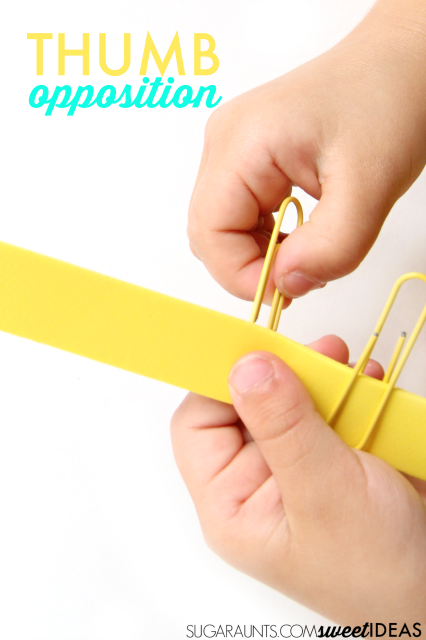
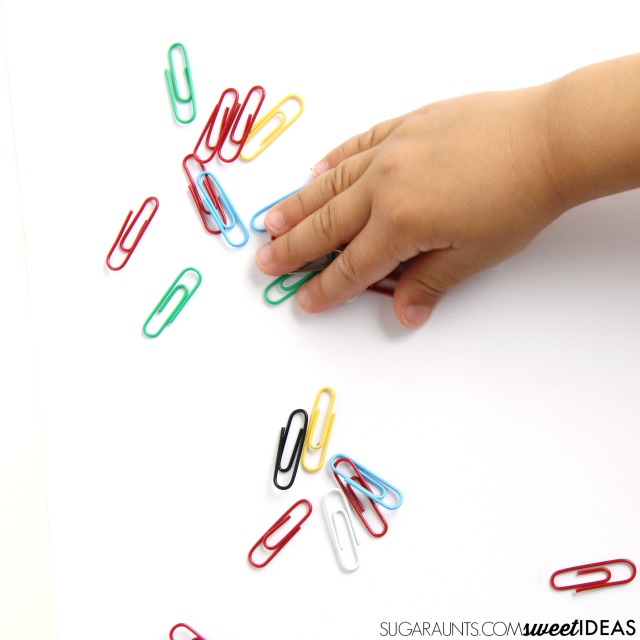
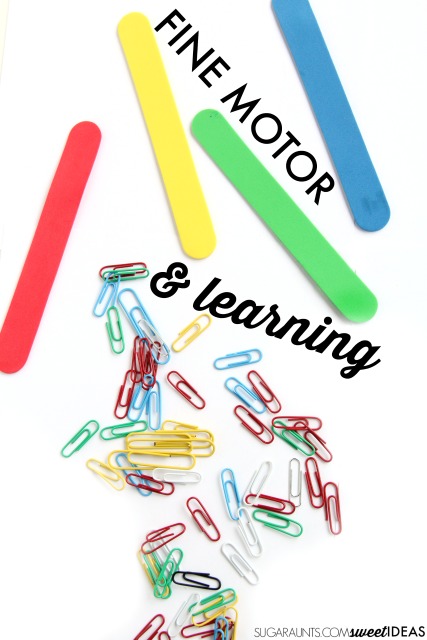
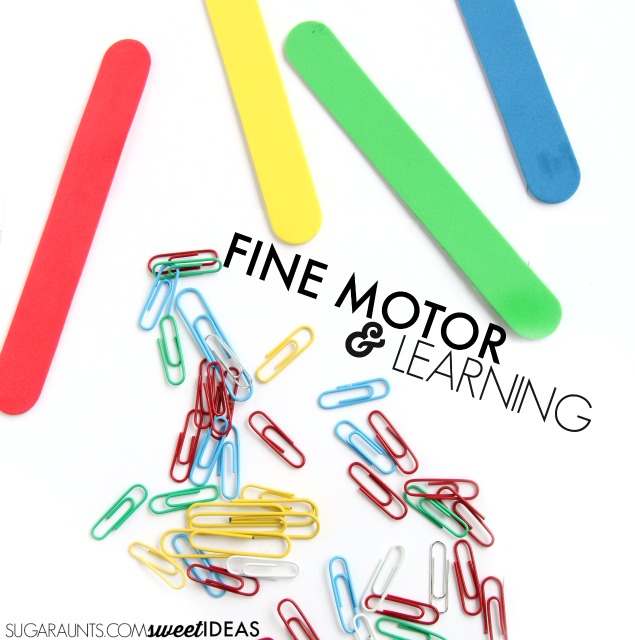
This Fine Motor Paper Clip Math idea is a fine motor math activity that makes for a great busy bag or calm down time activity. We actually have several paper clip activities here on The OT Toolbox because you can target so many fine motor skills with this simple item. It’s perfect for indoor playtime and hands-on learning. Not only that, but it is a great way to work on fine motor skills like finger and thumb opposition. Plus, manipulating paper clips helps with a neat pincer grasp, which is needed for the dexterity of manipulating small objects.
Fine Motor Paper Clip Math
I also love to use paperclips in math activities because you are targeting the fine motor skills needed for a functional pencil grasp and other tasks like stringing beads, zip/unzip, button/unbutton, and various in-hand manipulation skills.
An open thumb web space is a skill is needed for manipulating items like a pencil or crayon, shoe laces, zippers, buttons, and small objects with an open web space.
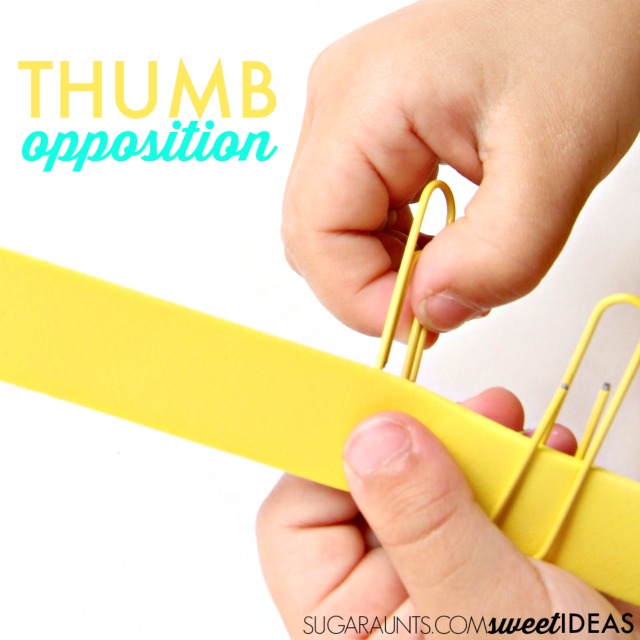
Often times, we see kids who have their thumb squashed up against their fingers and the side of their palm when they are writing or manipulating items. This opposition fine motor activity is a fun way to work on opening up the web space for improved dexterity.
I love how the two sets linked above (both affiliate links) are all colors of the rainbow. Even better for color matching and color recognition for preschoolers!
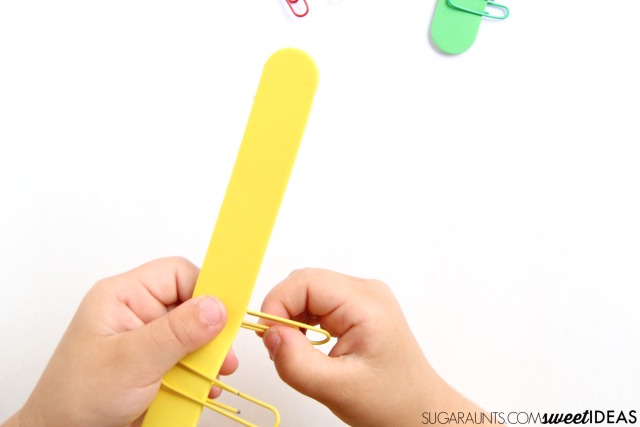
So, this activity is completely simple to do; Spread out the paper clips and ask your child to match them up to the craft sticks.
We worked on a few learning activities with this:
Add the number of paper clips.
Add the total number of paper clips on two craft sticks.
Subtract the difference of the number of paper clips on two craft sticks.
Using the Foam Craft Sticks makes this activity a real workout for the fingers. You could use wooden craft sticks that provide more support and are easier to manage.
But, to really challenge the fine motor skills, the foam craft sticks are the thing to use! They are a little wiggly and require stability of the thenar muscles (muscles of the thumb) to hold the thumb in place as the fingers and the tip of the thumb place the paper clip on the craft stick.
When opposing, the thumb’s thenar muscles work to oppose the pointer finger during functional tasks. This is needed for advancing and positioning a pencil when writing, managing a button with ease, and pulling a zipper. With a closed thumb web space and lateral pinch of the thumb versus true opposition, a child will fumble.
When doing this opposition activity with your child, be sure to verbally prompt them to attend to the bend thumb IP joint.
This is such an easy way to learn and play indoors. Looking for more indoor play ideas?
Working on fine motor skills, visual perception, visual motor skills, sensory tolerance, handwriting, or scissor skills? Our Fine Motor Kits cover all of these areas and more.
Check out the seasonal Fine Motor Kits that kids love:
Colleen Beck, OTR/L has been an occupational therapist since 2000, working in school-based, hand therapy, outpatient peds, EI, and SNF. Colleen created The OT Toolbox to inspire therapists, teachers, and parents with easy and fun tools to help children thrive. Read her story about going from an OT making $3/hour (after paying for kids’ childcare) to a full-time OT resource creator for millions of readers. Want to collaborate? Send an email to contact@theottoolbox.com.
I have a really cute and fun sensory bin idea to use during the Fall months or for Halloween occupational therapy sessions. This pumpkin sensory bin is one that is not just cute, it’s a great tool for supporting fine motor and visual motor skills, too. I love that the items are things you can find in most homes, but if not, you can definitely substitute some of the items in the sensory bin for other materials you do have on hand. We also have other pumpkin sensory activities to check out here on the site, too.
Let’s talk about all of the reasons why we are using this Fall sensory bin this year…
How fun does this Fall sensory bin look? Do you want to dig in and play, too? Add a few other pumpkin activities to this sensory play, like our pumpkin deep breathing exercise is just one idea!
Also be sure to check out our Apple Sensory bin. It’s an easy way to use many of the same materials.
Pumpkin Sensory Bin
If you work with kids, then you might be aware of the power of a sensory bin. They are so much fun to explore and play with, and a pumpkin sensory bin is even better.
Also, be sure to check out the many pumpkin activities are to be found here on The OT Toolbox! Use these fall ideas all season long from Halloween through Thanksgiving!
Another one of our favorite fall sensory bins is a pumpkin egg carton sensory bin. You could add those egg carton pumpkins to the sensory bin we have below. It would be a good way to add more fine motor development with a pumpkin theme.
What is a Pumpkin Sensory Bin?
A pumpkin pie sensory bin is a fun Fall sensory activity for kids. You can basically use the sensory bin as a pretend play activity where kids can explore and pretend to make a pumpkin pie.
Our pumpkin pie sensory bin has a pretend pumpkin pie and the scents of pumpkin.
It’s a fun way to play this Fall season!
Benefits of Using a Pumpkin Pie Sensory Bin in OT Sessions
This is one sensory bin that is fun for the Fall months because you can incorporate different scents, objects, and containers. Plus, when you use the pie crust (felt pieces), you can add a visual perception and visual motor skills aspect. This is a fun Fall sensory bin idea that can actually last from September through November, which is another benefit!
I love using sensory bins in occupational therapy sessions because you can target specific skills. You can use one sensory bin with several kids on your therapy caseload, and the materials are often inexpensive so you can use a simple sensory bin base like the one we used in this pumpkin pie sensory bin, oats!
It’s easy to select a few scoops and containers, and then add sensory bin details to explore with a whole caseload. Then, just replace the base after a few students. In occupational therapy sessions, we love to focus on the function, so really working on washing and drying the hands before therapy sessions and then at the end of therapy sessions is great. You can add that task to the therapy interventions, and it helps to use the sensory bin with a small group of kids.
We use sensory bins for many reasons-
fine motor tool use like tongs and tweezers, to work on hand strength and eye hand coordination to pick up small objects. You can use scoops and spoons to work on life skills of using and holding utensils.
Then there is the tactile sensory component. We used a dry sensory base here, and that can be alerting or calming to some students.
This means as they play, they can use the sensory bin as a sensory tool to support sensory needs. Read about fine motor skills in play.
One other way that a sensory bin supports fine motor skills is by inviting kids to scoop and pour the sensory materials. I like using oats like in this pumpkin pie sensory bin because you can see the material as you scoop it into a container. Oats are a good medium to use because it’s easier to scoop and pour than a material like corn meal or flour. I like to use this activity when working on the eye hand coordination skills needed to pour water from a pitcher into a cup, or pouring cereal from a box into a bowl. There are so many functional skills that you can work on with a simple sensory bin like this pumpkin pie bin!
I also love the calming and mindfulness piece of sensory bins. When you play in a sensory bin with interesting features, you’ll see kids that really focus on finding items. I love to see the kids that are so focused on exploring the sensory bin, that you can see their whole body calm down as they play. It’s a great self regulation tool that you can use with your students.
For kids that are sensitive to tactile input, especially the dry texture of the oats, this can be a way to get more comfortable with the texture. Some kids will grab handfuls of the oats and others wont’ even touch them with a spoon. You can help kids to touch or explore a little bit at a time. It’s a great tactile discrimination exercise for these kids.
So, if you are looking for an Autumn sensory play idea, this pumpkin pie sensory activity is a great one to try!
Pumpkin Pie Sensory Bin Materials
You can see in the picture, the items that we used in this sensory bin. The items that we used are things we already had (the scoops/tongs/and low tray) along with some items found at the dollar store (beige felt and manipulatives).
The pumpkin pie sensory bin ingredients in our sensory bin include: Amazon affiliate links included.
Tray I love these trays on Amazon (affiliate link) because you can use them for many different sensory bins and writing trays.
Mini Rolling Pins (affiliate link)- These would also be great for working on fine motor skills with play dough.
You could also add other components, to vary the sensory bin and change it up a little bit. For kids that struggle with doing an activity one and then don’t want to use the activyt any other way, we can add or change just a part of it, like adding scents in the way of pumpkin pie spice, a fake pie tin or silicone cupcake liner (affiliate link), and other items.
How to Set up the Pumpkin Pie Sensory Bin
This is such an easy sensory bin to set up. Prepare your tray. Pour in oats. Add the manipulatives. Add tongs or scoops.
If you are using felt like we did, you will want to cut a small circle to fit the size of your pie tin or silicone cupcake liner (affiliate link). Then Cut another square that can cover the pie tin. Cut the square into strips. These felt pieces can be used to overlap one another to weave a topping for the pumpkin pie. This is a great visual perception activity!
This step-by-step sensory bin set up is pretty easy! And the benefits of the sensory bin are big!
Tips to Support Fine Motor Needs with the Pumpkin Pie Sensory Bin
Because one of the main goals with our sensory bin is probably improving fine motor skills and coordination, you can vary the materials and presentation of your sensory bin to target specific needs.
This is a good thing to keep in mind as an occupational therapist using the pumpkin pie sensory bin in therapy sessions.
Variations to the Pumpkin Pie Sensory Bin
You can use different textures or scents to make this different too. You can adapt the activity for different ages, like using this with toddlers, preschoolers, or school aged kids.
Tweezers/tongs- These can be graded up or down depending on the needs and abilities of the child. You can use larger tongs or smaller tongs. You can use small tweezers or large tweezers.
Scoops- You can use different sized scoops to pick up and pour or manipulate the materials.
Manipulatives- Use larger or smaller manipulates to pick up and hold or sort.
Add letters like the pumpkin letters or the pumpkin number cards we have inside The OT Toolbox membership. This way you can have kids draw the letter or the number in the oats. You could also hide the sensory bin cards in the oats and when the child finds a card, they can write the letter or number onto paper.
Safety Tips for a Pumpkin Pie Sensory Bin
Whenever you use a sensory bin as a therapy tool in occupational therapy sessions, it’s really important to be aware of the safety considerations. You’ll always want to remember what the child’s skills and abilities are, including safety awareness and sensory needs or challenges.
Some kids might put everything into their mouth. Other kids might through everything in the sensory bin onto the floor. These are things to consider. And, maybe the sensory bin activity isn’t used with those students. It depends on what their goals are and why you would want to use this activity as a play activity to develop their goal areas.
Of course, one of the biggest considerations is to always supervise the play. This is ture or any sensory interventions, but when you are using scoops, spoons, and scented items like the pumpkin pie spice or the cinnamon sticks, this can be especially true.
You can definitely try to come up with some child-safe sensory bin ideas that meet the needs of younger kids or those that might not be able to use this pumpkin pie sensory bin completely. Maybe you use larger manipulatives or omit the spoons. It really depends on the child.
Pumpkin Pie Sensory Bin FAQ
What age is this sensory bin appropriate for? One of the common sensory play questions that come up involve age level that the sensory bin is appropriate for. We tried to include ideas above about how to make this pumpkin pie sensory bin for toddlers and preschoolers. You can definitely change the materials to meet the needs and ages.
Want to make this sensory bin? Have fun! Be sure to grab our pumpkin therapy kit because you can use the materials in the kit to use a pumpkin theme in therapy. You’ll also want to check out all of the printable materials we have in The OT Toolbox Membership because we have a lot of pumpkin themed materials that can be used in a sensory bin!
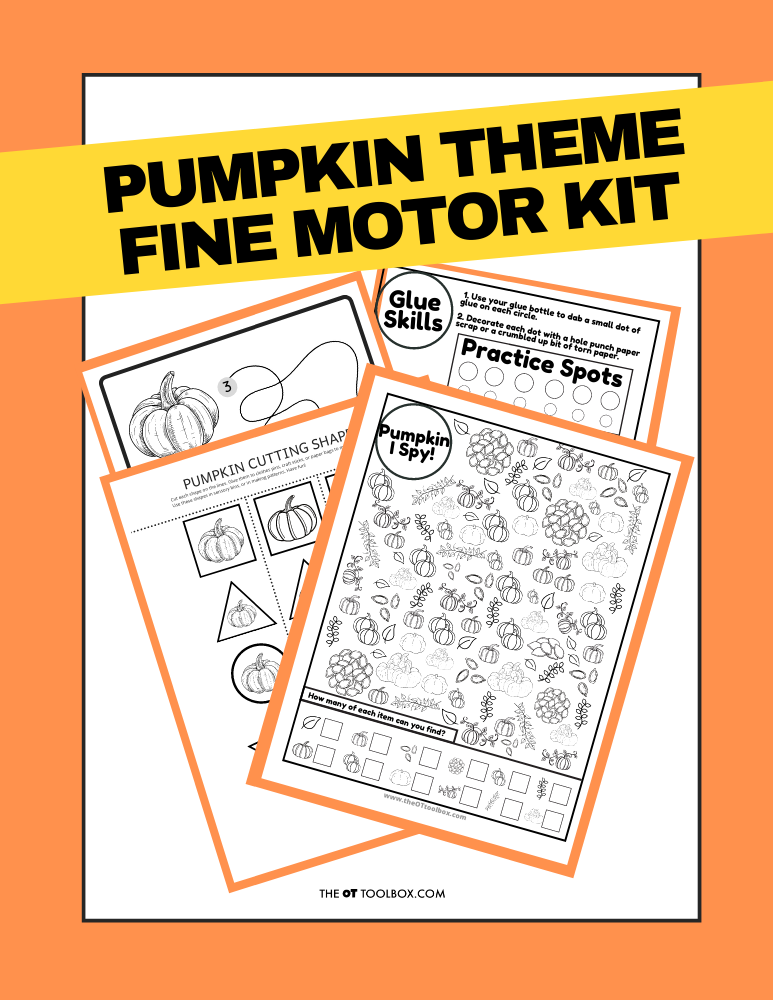
Grab the Pumpkin Fine Motor Kit for more coloring, cutting, and eye-hand coordination activities with a Pumpkin theme! It includes:
7 digital products that can be used any time of year- has a “pumpkins” theme
5 pumpkin scissor skills cutting strips
Pumpkin scissor skills shapes- use in sensory bins, math, sorting, pattern activities
2 pumpkin visual perception mazes with writing activity
Pumpkin “I Spy” sheet – color in the outline shapes to build pencil control and fine motor strength
Pumpkin Lacing cards – print, color, and hole punch to build bilateral coordination skills
2 Pumpkin theme handwriting pages – single and double rule bold lined paper for handwriting practice
Work on underlying fine motor and visual motor integration skills so you can help students excel in handwriting, learning, and motor skill development.
Colleen Beck, OTR/L has been an occupational therapist since 2000, working in school-based, hand therapy, outpatient peds, EI, and SNF. Colleen created The OT Toolbox to inspire therapists, teachers, and parents with easy and fun tools to help children thrive. Read her story about going from an OT making $3/hour (after paying for kids’ childcare) to a full-time OT resource creator for millions of readers. Want to collaborate? Send an email to contact@theottoolbox.com.
One of my favorite ways to work on several skill areas at once is with a sensory bin. Today, I’ve got a really fun and creative sensory bin idea to use during the Fall months, perfect for your occupational therapy sessions. This apple pie sensory bin is not only a cute seasonal apple activity that is great for therapy, but it’s a fantastic tool for working on fine motor and sensory motor skills. The best part is that most of the materials can be found easily, and if not, you can substitute items with things you already have.
All you need is oats, red and green craft pom poms, and a few other materials to make this apple pie sensory bin.
Apple Pie Sensory Bin
How awesome does this apple pie sensory bin look? I bet you’re ready to dive in and play with it yourself!
Let’s explore why this sensory bin is such a great addition to therapy this Fall! Also be sure to check out our Fall occupational therapy activities for more ideas.
We like using silicone cupcake liners to pick up and sort sensory bin materials because it encourages a tripod grasp and intrinsic muscle strength in the hands when putting items into the small container size.
What is an Apple Pie Sensory Bin?
An apple pie sensory bin is a fun, Fall-themed sensory activity for kids. It’s a perfect pretend play opportunity where children can engage their senses while pretending to make an apple pie.
Our apple pie sensory bin incorporates the scents of cinnamon, and the visual appeal of red and green “apples” (pom poms), creating a fun and engaging activity for this time of year! I love this for sensory input with kids!
Benefits of Using an Apple Pie Sensory Bin in OT Sessions
This sensory bin is a fantastic way to bring Fall fun into therapy sessions. You can incorporate various textures, scents, and tools to support sensory processing and fine motor skill development. The apple pie theme can carry you through the Fall season from September through November!
I love using sensory bins because they allow for specific skill targeting. You can easily use this sensory bin with different kids on your caseload, and the materials are inexpensive.
Using oats as a base is a great option because they are affordable, easy to replace, and can be used across multiple sessions. You can add handwashing as an activity before and after therapy, integrating functional life skills into the activity. This sensory bin can even be used with small groups to encourage social interaction.
Sort the craft pom poms into the cupcake liner.
Why this Apple Pie Sensory Bin Works
Sensory bins are great for addressing a variety of skills. You can basically make the sensory bin work for the needs you need to target for the kids on your caseload.
You can also hide objects in the oats to work on visual closure and visual figure ground skills. Kids love the hide and seek aspect of uncovering hidden objects in sensory bins. I love to use letter cards, too. We have apple letter and number cards in The OT Toolbox that are a great tool for this!
Plus, there’s the sensory component. Oats offer a dry tactile experience, which can be either alerting or calming, depending on the child. Playing with this bin can support sensory needs impacting tactile defensiveness while also helping children become more comfortable with textures.
For kids who are sensitive to tactile input, this can be a helpful way to gradually introduce them to new textures. Some children may dive right into the oats, while others will need encouragement to touch them. This can be a wonderful opportunity to work on tactile discrimination and sensory tolerance.
Use tongs to pick up the cinnamon sticks and craft pom poms. Then, use the craft pom poms and felt strips to make a mini apple pie.
Fine Motor Skill Support- How to Use the Apple Pie Sensory Bin
One of the main goals of this apple pie sensory bin is to improve fine motor skills. The activity encourages scooping, pouring, and manipulating small objects like the pom poms and felt strips.
Oats are a great sensory material for practicing pouring, which is a functional life skill needed for tasks like pouring milk or cereal. The act of scooping oats and using tweezers to pick up pom poms is great for eye-hand coordination, too.
You can use the materials and challenge your kids to pick up a certain number of craft pom poms in a given time. Add a timer or roll a dice and ask them to use the tweezers to pick up that number of craft pom poms and place them into the silicone cupcake liner (affiliate link). There’s a lot of ways you can play with this one sensory bin.
When kids are focused on finding and manipulating items in the bin, they tend to calm down and focus. The sensory input helps regulate their bodies while keeping them engaged in play.
This apple pie sensory bin uses just a few materials.
Apple Pie Sensory Bin Materials
Here are the materials we used for our apple pie sensory bin:
Colored silicone cupcake liners (Amazon affiliate link) for sorting. Using the silicone cupcake liners are nice because they are more sturdy and you can reuse them over and over again.
Cinnamon sticks (for scent)
Tweezers or tongs
Felt pieces cut into strips (for pretend pie crust)
Low tray or container
Feel free to adapt or substitute materials to fit what you have on hand or to meet the specific needs of your clients.
I like using a low tray to hold the sensory bin materials because it allows kids to play while keeping the materials inside the bin.
How to Set Up the Apple Pie Sensory Bin
1. Prepare your tray or bin by pouring in the oats. (Kids can help to set this up and work on pouring and scooping skills, too!)
2. Add the red and green pom poms, cinnamon sticks, and felt strips.
3. Provide tools like tweezers or tongs for picking up the pom poms, and silicone cupcake liners (affiliate link) for sorting.
4. Let the children explore the materials, build their “apple pie,” and engage in pretend play.
The setup is simple, but the benefits are extensive!
This is such an easy sensory bin to make, and kids love it during the Fall months.
Tips for Supporting Fine Motor Skills
To target specific fine motor needs, you can adapt the sensory bin by adjusting the tools and materials. For example:
Use different sizes of tweezers or tongs based on the child’s skill level.
Provide smaller or larger pom poms for different levels of difficulty.
Use a variety of scoops to adjust the challenge of picking up and pouring oats.
We like to use an apple pie sensory bin and use it over and over again throughout the Fall.
Variations for the Apple Pie Sensory Bin
You can easily modify this activity for various ages and abilities. For example, larger tweezers or scoops might be appropriate for younger children, while smaller tools could challenge older kids. You can even add letters or numbers hidden in the bin to encourage literacy skills.
Safety Tips when using an Apple Pie Sensory Bin in OT
Always consider the child’s safety and abilities when using a sensory bin. Some kids may try to put small items, like pom poms, in their mouths, or throw materials. For those children, you may need to modify the bin, such as using larger manipulatives or skipping small tools altogether. Supervision is key during sensory play, especially with small or scented items like cinnamon sticks.
Choking Hazard- This, and all sensory bins should be designed with the age of the children in mind. Many items typically used in sensory bins can pose a choking risk for babies and toddlers, and other ages of children who may put things in their mouth due to cognition or sensory need. For children under three and those individuals with cognition or sensory needs, be sure to use larger, safe items that don’t have small parts and are safe if mouthed or chewed on.
Allergies- Some children with allergies may also react to creams or products scented with nut oils. Additionally, children can have allergies to environmental materials like cinnamon, oats, or other common sensory materials like grass or leaves. To avoid any reactions, ensure that none of these allergens are included in your sensory bins. If using this apple sensory bin with your students, double and triple check allergies beforehand.
Apple Pie Sensory Bin FAQ
What age is this sensory bin appropriate for?
This sensory bin can be adapted for a wide range of ages, from toddlers to school-aged children, by modifying the materials and tools used.
How do you minimize the mess with this apple sensory bin? You can minimize the mess by placing the sensory bin on a large plastic bag, shower curtain liner, or mat on a floor that’s easy to clean. Another option is to take the sensory bin outside. Shower curtain liners are an affordable option and can be found at the dollar store.
If you want to give this apple pie sensory bin a try, go ahead and have fun with it! You can use it as part of your Fall therapy toolkit to engage kids in sensory play and support their fine motor skills.
This sensory bin goes really well with our Apple Therapy Kit. You can use the items in the kit in the sensory bin. We also have many other apple themed activates inside The OT Toolbox Membership Club.
Colleen Beck, OTR/L has been an occupational therapist since 2000, working in school-based, hand therapy, outpatient peds, EI, and SNF. Colleen created The OT Toolbox to inspire therapists, teachers, and parents with easy and fun tools to help children thrive. Read her story about going from an OT making $3/hour (after paying for kids’ childcare) to a full-time OT resource creator for millions of readers. Want to collaborate? Send an email to contact@theottoolbox.com.
This post is all about retained primitive reflexes, what retained reflexes look like, and how they impact child development. You’ll find specific strategies to integrate retained primitive reflexes as well. In a recent blog post, we discussed what are primitive infant reflexes, and why they are so important to infant development. Now, it is time to discuss what can happen if these reflexes hang around for too long.
Remember that every case is unique, and if your child matches these characteristics, that does not necessarily mean that they have retained that reflex. If you are concerned about your child’s abilities and how they may relate to retained reflexes, we recommend talking to your pediatrician.
For more information on primitive reflexes and their impact on child development, be sure to check out some of these books on primitive reflexes.
retained Primitive Reflexes
The term “retained primitive reflexes” might be a phrase you’ve heard before. But what does that mean and what do retained reflexes look like in children? Well, there is a lot to cover.
Basically, as infants develop into toddlers, their primitive reflexes should do what health care professionals call “integration”. The response that comes with the primitive reflex should integrate into a more mature or voluntary movement. When primitive reflexes are retained, those instinctive actions, movements will remain past the typical age range…they continue to exist. They are retained.
If primitive reflexes are still present long after they should have integrated, the child will display certain characteristics specific to the retained reflex, many of which limit their development and academic skills.
Just to add some background information, when we say that primitive reflexes are integrated, that means that the movements (or reflexes) are absorbed and contributing to characteristics, actions and neurological responses. To put it in other words, a reflex moves along a neurologic arc and when integration of those reflexes occurs, a process where specific stimulus results in a predictable response (or lack of that predictable response) so that movements are more efficient. This occurs so the neurologic system is connected and communicating efficiently. It’s all part of the nervous system.
PALMAR REFLEX
The palmar reflex is important for the development of purposeful grasping, something that an infant is learning throughout their first year of life. The palmar reflex can be seen when you place your finger in the palm of an infant’s hand and their reflexive response is to hold on to your finger. What an adorable reflex, right?
This is not something we want to see in an older infant or child, though. While the response is necessary for a newborn to learn how to use their hands, it limits an older infant or child to only using their hands and fingers for a strong grip.
retained palmar reflex
Children with a retained palmer reflex may:
Get fatigued very easily with handwriting or fine motor tasks, like stringing beads.
Have a sensitive or “ticklish” palm
Open and close their mouths while using their hands for tasks like writing or cutting with scissors.
Have difficulty in speech articulation
The mouth and the hands are connected via neural pathways in infancy, and that connection is still strong in those who have the palmar reflex. This is why the movements of the mouth and speech may be involved in the retained palmar reflex.
How to integrate the Palmar Reflex:
Tasks that encourage separate use the fingers
Squeeze a ball with one finger and thumb, alternating fingers to squeeze
Stringing Beads
Playing with small Legos or similar toys
MORO REFLEX
The Moro reflex is also called the startle reflex – it can be seen in a frightened infant up to about 4 to 6 months old. The reflex causes a baby to stretch out their arms and legs, and quickly bring them back in, in jerky movements. This is in response to the feeling of falling, a loud sound, or a drastic change in temperature.
Retained Moro Reflex
Children with retained Moro reflexes are often very sensitive to stimuli – sounds, tags on clothing, lights, etc. They tend to lack emotional and self-regulation skills and have a difficult time paying attention in class. Without an integrated Moro reflex, their fight or flight response can be activated very easily causing them to have deficits in many areas of life.
How to integrate the Moro Reflex:
Starfish Exercise
While seated, open up into a big “X” shape with straight arms and legs.
Cross right ankle over left & Cross right arm over left
Open up to big “X”
Cross left ankle over right & Cross left arm over right
Repeat
This is also how you can test for its presence! If a child has a very difficult time completing these actions, without another known cause, they may have a retained Moro reflex.
TONIC LABYRINTHINE REFLEX
The tonic labyrinthine reflex (TLR) is used for head and postural control. We know that baby has poor control of their head and neck when they are born, and this reflex is part of what helps them gain control over this part of their body.
Retained Tonic LABYRINTHINE reflex
This reflex typically integrates around 4 months old, but if it persists, the following may occur:
Difficulties judging space, speed, depth, and distance.
Toe walking
Discoordination in simultaneous movements, such as walking or swimming.
Avoiding lying on their stomach.
Children with retained TLRs tend to be perceived as clumsy and often have a difficult time sitting upright and still in their chairs. This can decrease their ability to pay attention in the classroom setting. When posture exercises in kids don’t work, sometimes it’s easy for teachers or parents to wonder what is going on, when a look at retained reflexes may be in order. In some cases, integrating the TLR reflex can support posture.
How to integrate TONIC LABYRINTHINE REFLEX
Incorporate activities on their stomachs as much as possible, or for as long as they can manage each day.
Try reading, watching TV, or playing with a toy while on their tummies
Daily practice will strengthen their muscles and correct this response.
ASYMMETRICAL TONIC NECK REFLEX
This reflex is important to the initiation of crawling, as the arms and legs move as a baby turns their head while on their belly. While infants are on their bellies, and while crawling, they are exposed to a ton of visual stimulation by looking at their arms moving, looking and grabbing toys, etc. Tummy time is so important for this reason and more!
The ATNR should disappear around the time an infant is gearing up for crawling, around 6 months old.
Retained ASYMMETRICAL TONIC NECK REFLEX
If asymmetrical tonic neck reflex doesn’t integrate, the following may occur:
Poor Coordination during movements like skipping or riding a bike
Trouble crossing midline
Example: Moving right arm to left side of the body to buckle a seat belt.
A quick test for a retained ANTR starts with having the child stand with both arms directly out in front of them. Ask the child to slowly turn their head all the way to the left. Their left arm will remain straight and their right arm will bend if the reflex is still present.
How to integrate the ATNR
Lizard Crawling Exercise
Start on the stomach
Look to your left, and bend your left elbow and left knee
Look to your right, and bend your right elbow and right knee
There are many more primitive reflexes, as well as postural reflexes, that are important to child development and student success. We have not covered everything here, but we hope to have given you a nice place to start building your understanding of what may happen when primitive reflexes are maintained over time.
Want to learn more about primitive reflexes, what to do when reflexes are retained, and how to know there might be an issue? Check out the primitive reflexes course below. (affiliate link)
In this primitive reflexes course, created by two occupational therapists, you’ll find modules and functional intervention activities for:
Moro reflex
The Tonic Labyrinthine (TLR) & Landau Reflex
The Rooting Reflex
The Asymmetrical Tonic Neck Reflex (ATNR)
The Spinal Galant Reflex
The Palmar Grasp Reflex
The Symmetric Tonic Neck Reflex (STNR)
Support for kids who push back
Printable handouts, screening tools, and checklists
Information on postural reflexes, yoga, sensory diets, and more
Case studies
Research
AOTA continuing education: 1.05 AOTA CEUs
If your child has retained primitive reflexes, learning to integrate them could lead to improved development in many areas:
Social Skills
Learning
Motor Skills
Executive
Functioning
Coordination
Reading & Writing
Primitive Reflexes and Occupational Therapy
This article was originally published in 2021. While reflexes have not changed since then, there is new research and resources available on primitive reflexes. This is important to keep up to date with as an occupational therapist working with children. Inevitably, we will see a child who has retained reflexes impacting daily functional skills.
When it comes to primitive reflexes and occupational therapy, there is a lot of connection because of the motor and sensory components that impact function.
This article talks about the link between retained primitive reflexes and autism spectrum disorder. The authors go on to say that this connection is due to a brain imbalance and connectivity. They offer a specific set of exercises, with EEG testing done at the beginning and end of treatment to show progress.
The research is limited on the efficacy of integrating reflexes thus far, however there is plenty of evidence on reflexes. Reflexes are important for survival in infancy and early childhood. They need to be integrated so we can produce smooth movements, which later might impact motor planning and body awareness. Without this integration we often see uncoordinated movements, an increased startle reflex, difficulty with frontal lobe maturation.
Because the research about the “integration of reflexes” is not there, the AOTA is suggesting using exercises and activities to improve coordination and performance in activities of daily living (ADLs) and instrumental activities of daily living (IADLs), rather than calling it the integration of reflexes.
A Therapist’s Perspective on Reflex Integration in OT
Whenever I have parents or other professionals questioning the validity of certain treatment ideas such as sensory integration, therapeutic listening, vibration, astronaut training, and more, I try the “what can it hurt” approach.
“What can it hurt”, is a worthwhile approach to life and taking risks. I am much more willing to take risks if the reward is greater than the potential drawbacks. This holds true for a lot of what we teach as OTs. This includes primitive reflex “integration” therapy. Whether you believe in integration/retained reflexes or not, think about the treatment methods provided.
Treatment methods for reflex retention include strengthening, coordination, and stretching exercises. Whether the cause of incoordination is reflex retention or something else, practicing strengthening and coordination exercises can help either way. While finding the “why” during treatment is helpful, it is not always available. There are times we may never know the cause of a disorder. In this case we treat the symptoms we see.
According to Samantha Heidenreich, OTD, MOT of occupational therapy .com, There are theories as to the cause of primitive reflex retention including:
the birth method, like Cesarean section versus vaginal delivery
Trauma during pregnancy, birth, or shortly after
exposure to toxins
Anesthetics during pregnancy/birth
medications
Additionally, other possible causes for retained primitive reflexes are decreased tummy time in infancy, a lack of crawling, early walking, head injuries, or chronic ear infections. In the OT world, we are always looking at decreased tummy time and that lack of crawling during our intakes and assessments.
Based on what we do know, the back to sleep program and container baby syndrome, are having an effect on development that needs to be counteracted. When we take a step forward for safety, innovation, and technology, there are often consequences if not used in moderation or with caution. (Being a “tech-wise” family means having an awareness of this from the start. Its something that we as OTs can educate our families on, even when working with children of a very young age.)
Education and early intervention are the keys to success. Whether you are talking about retained primitive reflexes, or another difficulty seen in children, we can do more by letting people know how to care for young children, and intervening early.
How can you add to your OT Toolbox to better educate yourself about reflexes and treatment? Check out some of our resources!
The resources at the OT Toolbox are endless. Want to find an easier way to locate resources instead of clicking and scrolling? Become a member today! One of the perks of being a member is access to restricted content, and easy search categories.
Victoria Wood, OTR/L is a contributor to The OT Toolbox and has been providing Occupational Therapy treatment in pediatrics for more than 25 years. She has practiced in hospital settings (inpatient, outpatient, NICU, PICU), school systems, and outpatient clinics in several states. She has treated hundreds of children with various sensory processing dysfunction in the areas of behavior, gross/fine motor skills, social skills and self-care. Ms. Wood has also been a featured speaker at seminars, webinars, and school staff development training. She is the author of Seeing your Home and Community with Sensory Eyes.
In this blog post, we are covering all things crossing midline activities…but what is crossing midline?? We’ll get into that too, as well as some fun ways to develop midline crossing skills and specific exercises that kids (and all ages) can do to support development of this motor skills task that is huge in the way of gross motor coordination.
Crossing midline is one of those motor skills we do constantly throughout the day, but never really give a second thought. And that automaticity of motor movements is a good thing, too! Imagine processing the action to use one hand to pull a door open. Imagine the time it would take to shower, dress, put on and tie your shoes if you had to process through the action to move your hands fluidly across the middle line of your body.
As therapists, we hear “crossing the midline” all the time. Have you ever wondered what the big deal is? Why is crossing the midline so important? In this post we will delve into what crossing the midline is, what causes issues, and how it impacts daily function, especially schoolwork.
Before we get started, if you are doubting the validity of crossing the midline, tie one hand behind your back and go about your day. How much did you reach across your body to get something? You reached across, diagonal, up and down to interact with your environment. While a two-handed person does not do this much crossing the midline, there is still a fair amount.
What is Crossing Midline?
Crossing midline refers to moving the body (hand/arm/foot/leg across an imaginary line that runs vertically down the center of the body to the other side (and vise versa). Additionally, crossing midline also refers to twisting the body in rotation around this imaginary line, as well as leaning the upper or body across the middle of the body.
Let’s break it down further:
Midline of the body is an imaginary line that drops from the middle of the head, straight down over the nose, to the belly button and divides the body into left and right sides. Imagine a line that starts at the middle part of your hair and runs straight down your forehead and ends at the core of your abdomen. This imaginary line effectively divides your body into a symmetrical (mostly) left side and a right side.
“Crossing the midline” is a simplified way to indicate that part of the body moves over that imaginary line. This can look like 3 different aspects of movement:
Reaching an arm/hand or foot/leg across the middle of the body to the other side of the body (Example: Reaching the right arm across the body for an object placed on a table to the left side)
Rotating the body around the midline in a rotary motion in order to twist at the hips. This can look like putting your hands on your hips and rotating your upper body around at the abdomen (Example: reaching for a seatbelt involves reaching the hand and arm across the midline but it also involves twisting at the hips)
Leaning the upper body over the middle line as in doing a side crunch. The head and shoulders move over the middle of the body (Example: Bending sideways at the waist while getting dressed or reaching while sitting for an object that’s fallen to the floor)
Crossing the midline is a motor skill that requires using both hands together in a coordinated manner (bilateral hand coordination) allows kids to cross midline during tasks. This bilateral coordination ability is deeply connected to crossing midline.
Why is Crossing Midline Important?
Midline crossing is a developmental ability that is important for so many fine motor and gross motor tasks. This relates to functional skills in a major way. When a child has difficulty with crossing midline, they will demonstrate challenges in practically every functional task.
When a child does efficiently cross the midline, they can use their dominant hand in skilled tasks. They develop a dominant hand and the other extremity becomes the assisting hand. They can manipulate objects in the world around them through all planes. They can demonstrate sensory integration by motor skills with vestibular, proprioceptive, and visual input.
In particular, crossing the midline offers vestibular input. Moving the head from center plane shifts position of the inner ears. When bending, twisting, and moving from center, the vestibular system is at work.
When the child does not cross the midline, they tend to use both hands equally in tasks like handwriting, coloring, and cutting with scissors. They may demonstrate awkward movements by moving the body to position itself so they don’t need to cross the middle line.
Challenges with this motor skill impact learning, social skills, play, and self-care.
In particular, we might notice sensory motor challenges at different age levels. For example, for children aged 3-5, we might see specific midline red flags that impact learning and play. We cover this specific age group in our blog post on Crossing Midline Activities for Preschoolers.
Occupational therapy will assess midline crossing skills by observing play and functional tasks.
Crossing Midline Occupational Therapy Asessments
Occupational therapists perform individualized evaluations and assessments of underlying skills as they impact functional performance in every day tasks. Because of this, crossing midline is an essential skill that will be observed and looked for in every OT evaluation.
Occupational therapists can complete a standardized evaluation, but most often, their skilled abilities will enable them to identify when crossing midline is a problem through play and interaction during the evaluation process.
When you are watching for midline crossing, you should observe kids playing in normal situations. A child will demonstrate a tendency to avoid crossing midline in activities or tasks, but if “set up” to cross the midline (i.e. setting items to the left of the body and asking them to reach over the midline with their right hand), they will typically be able to complete the requested movement pattern, but not carry over the action in a normal situation.
If they have difficulty with crossing midline, a child will switch hands during handwriting because both hands get practice with pencil manipulation.
The child might rotate their whole body instead of twisting at the trunk or shift their weight in a task rather than leaning the upper body over the midline.
You can often times observe a tendency to avoid midline crossing in activities such as kicking a ball, throwing beanbags, switching hands in coloring, difficulty with putting on pants and shoes independently, and difficulty with visual tracking and reading.
Crossing Midline Activities
So, what do you do when crossing the midline is an issue? There are many ways to support the development of this skill.
The ideas listed below are fun ways to play and develop motor skills by crossing midline, however they have a sensory component too.
We mentioned above the aspect of vestibular input and proprioceptive input that occurs in crossing the midline. These midline activities have those sensory motor considerations through play.
Toss bean bags -Encourage upper body movement! Bend through the legs, turn sideways, reach back behind you, rotate side to side…encourage vestibular input by bending and rotating.
Slow motion cartwheels- Place both hands on the floor to the side, kick legs over. By doing the cartwheel in slow motion, the body is forced to move sequentially, adding midline crossing at the trunk.
Hit a ball with a bat.
Use pool noodles to hit a ball- think hockey and hitting the ball into a target on the floor
Play catch with rolled socks- Use a bucket or bin to catch the rolled socks. They will fly high, low, left, and right!
Play flashlight tag.
Catch lighting bugs or butterflies.
Show the child how to write their name in the air with large arm movements.
Bend over at the waist and swing the arm side to side, in large circles, and in figure 8 motions.
Play with scarves to music.
Move a ribbon wand to music.
You can use midline crossing activities in OT interventions.
Crossing Midline Treatment Ideas
You can use the ideas above in different ways like in games like Simon Says or the Hokey Pokey. You could add them to obstacle courses or brain breaks. Some other things to consider about crossing midline treatments…
One of the easiest ways to work on midline crossing is to make the opposite side unavailable.
The classic treatment for hemiplegia is to restrict movement of the functioning side, while making the affected side do all the work. You can do this activity yourself, or with your learners. Make the activity rewarding to encourage your learners to want to keep going. Food, stickers, or preferred activities are a great motivator.
Another way to address midline issues is to move objects to the side to encourage reaching. Put a preferred object in different places to encourage your child to stretch to get it.
Sometimes you need to restrict the movement of objects. People will turn and shift their paper or other objects to be able to utilize it without crossing the midline. Fix the paper to the table and encourage your students to sit forward without turning their body.
One of the classic tests, the Bruinicks Oseretsky Test of Motor Proficiency, is a drawing test where learners have to draw inside a narrow path that crosses across the paper. You can quickly see who struggles with this as they quickly turn their paper to make the task easier. The design copy task in this test looks at midline crossing as well. Learners are asked to dot to dot a diamond. They are instructed not to pick up their pencil or shift the paper. This proves to be difficult for many students.
Crossing midline exercises can look like many different things.
Crossing the Midline Exercises
I love this crossing midline exercise below, because it has a ton of different movement options with one fun activity.
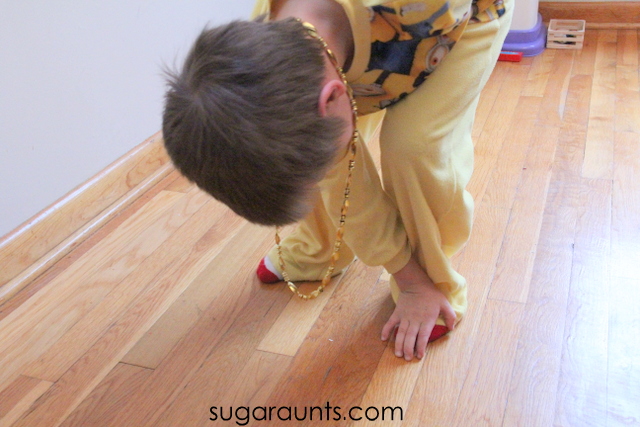
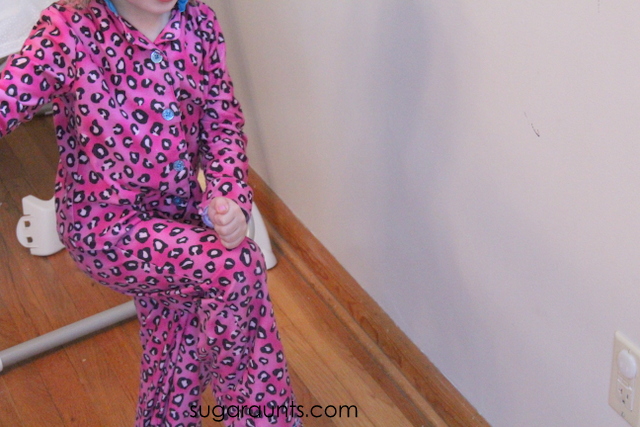
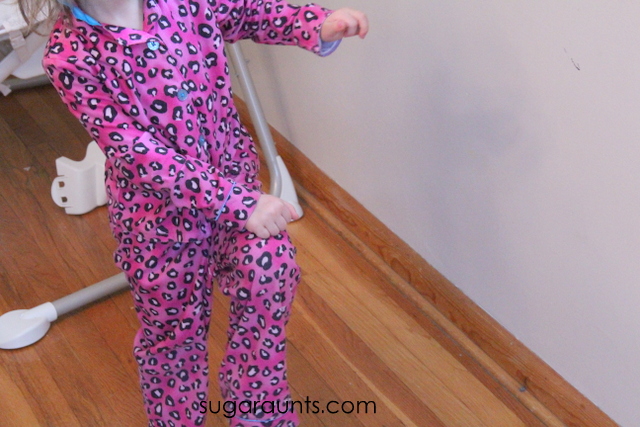
We had fun one winter day with a few crossing the midline exercises, including marching, crossing arms over, and stomping out some wiggles.
Our midline march activity was a marching parade with “Stop Stations”. We marched along to music and when I turned off the sound, the kids had to do a midline exercise.
The midline exercises included:
Place left hand on right knee
Place right hand on left knee
Stand and bend to touch the opposite foot
Standing and place right elbow on left knee
Standing and place left elbow on right knee
Crunches with touching right elbow to left knee
Crunches with touching left elbow to right knee
Cherry picker crunches- lay on the back slightly bent forward at the hips so the upper body is off the ground. Move a ball or small toy from the right side to the left side.
Because we were doing these midline exercises to music that quickly stopped and started, the thought process was quick. The kids had to quickly complete the exercise without much forethought.
This quick start and stop activity allowed them to practice crossing midline without over-thinking about the action.
A crossing midline exercise like the ones in the pictures are easy to incorporate into therapy sessions or occupational therapy at home. Make it fun!
Fine Motor Crossing Midline Exercises
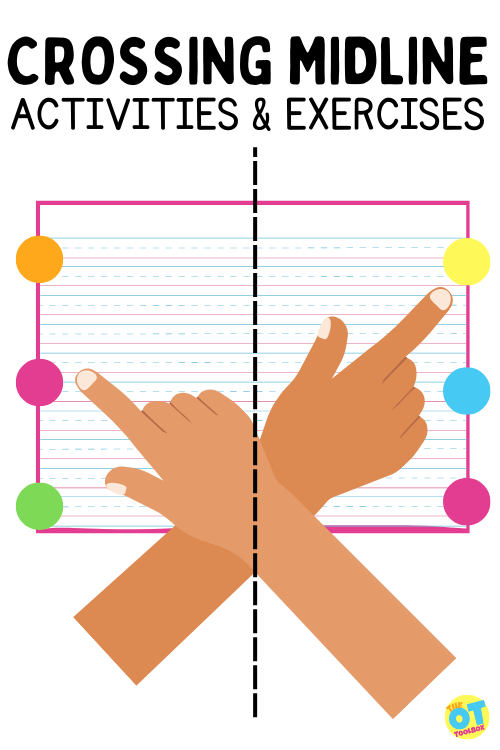
Crossing the midline can be done on a small scale, too. This activity is similar to the midline marching activity described above, but it uses paper, pencil, and small colored dots such as stickers or a small circle drawn with markers.
Draw dots on the left margin of a paper using colored markers or colored stickers. There should be one of each color going down the left margin.
Draw dots using the same colors going down the right margin. Use each color only once.
Turn on music. The student can draw to music on the center of the page using their pencil or markers.
Turn off the music. When the music stops, call out a direction: “Left hand, yellow!” The student should put down their marker and touch the yellow dot on the right margin using their left hand.
Turn on the music to draw again and repeat.
This activity is similar to the gross motor midline exercise because it requires the child to think on the spot. They have to listen to several instructions, but also process the motor skills and cross the midline automatically.
You can adjust this activity by numbering the dots, using less colors, or less dots, and reducing the amount of instructions. This activity can be used with any level by grading the activity.
This post is part of the Gross Motor A-Z series hosted by Still Playing School. You can see all of the gross motor activities here.
Occupational Therapy and Crossing Midline
Now, let’s talk about what an occupational therapy practitioner will assess and why they look so closely at midline crossing during OT evaluations.
As a parent/caregiver you probably do not give “crossing midline” much thought, until you see your little one painting the left side of their picture with the left hand, and the right with the right hand. Difficulty crossing the midline can be caused by several different factors:
Neurological impact – caused by a stroke, brain bleed, or cerebral palsy
Visual deficit – sometimes after having a stroke the visual field is impacted. Persons can see only one side of their visual field, or each side is treated as a separate side, rather than a fluid spectrum. There are other vision disorders that impair the visual scanning field
Low tone and muscle weakness. People with low tone or core weakness may feel unbalanced when they reach across their midline. They might topple over, or feel like they are going to. There are various diagnoses that exhibit low tone, like Down Syndrome and others. It’s important to assess midline crossing skills that might be delayed because of tone or weakness.
Sensory processing – the sensory system is critical in determining position in space, feedback on the muscles and joints, and body awareness. Without this, a person may not notice where their body parts are, or that they are using inefficient movements to complete tasks.
Here is a good hint for new grad OTs or occupational therapy students working in a fieldwork position: Uncovering the “why” is important, in case there is a medical cause that can be corrected. We do want to know the why and that can solve some of the questions that we might have during the evaluation or interventions. However, try not to spend too much time worrying once you have determined the “why”. It is important to get started with treatment.
Pediatric occupational therapists will evaluate midline crossing skills in OT evals.
Evaluating Midline Crossing
Pediatric occupational therapists will note midline crossing in practically every evaluation they do. It might only be a one liner in the eval that you’ll see: “Child crosses midline independently during play.” Or, the description of the midline crossing skills might go more into depth, covering the dominant and the non-dominant hand, various self care skills, whether weighted items were used that triggered more tone during movement, etc. There can be many variances to crossing midline and a skilled eye is key.
Things to look for when assessing crossing midline:
Some symptoms of difficulty crossing the midline will be obvious. Seeing your child eat each side of their plate with a different hand will be hard to miss. In young babies using both hands interchangeably is typical. Movements are not coordinated in young children, neither is hand dominance.
Other signs of not crossing midline might not be as obvious. Watch someone paint a wall. You will probably notice they cross the midline of their body as they reach for different parts of the wall. Someone who does not cross midline will constantly move their body to reach the next part. This type of obvious non-use of the midline might be observed in the child that colors one side of the page with one hand and then complains that they are getting tired and they pick up another crayon with their other hand to color the opposite side of the page. Or, you might see a child struggling to put on a seatbelt in a car. They might pull the seatbelt with their hand closest to the belt, get it to the middle of their body, and then continue to pull the seatbelt with their other hand. They might struggle to engage the buckle of the seatbelt because they only use one hand. Or, they might turn in their seat so the buckle is in the center of their body and midline crossing is taken out of the equation.
Other things to look at when assessing midline crossing:
Hand dominance
Foot dominance
Vision dominance
Hand preference in tasks
Strength, bilaterally
Muscle tone
Motor planning skills
Proprioceptive input and tolerance
Cognition and direction following
How the individual moves when holding items
Different environments (when alone, when in front of peers, confidence in movements, etc.)
Something to consider that isn’t always thought about when you think about midline…vision skills!
Crossing Midline and Vision
Crossing the midline can involve vision also. This means that your eyes scan over the middle of the imaginary line running down the middle of your body. For example, you can move your eyes visually from the far left of your view to the far right. Both eyes should move steadily and together. If there is difficulty with visual midline skills, then you will see a lot of head movement as the individual compensates.
If you can not cross midline visually, you might have difficulty scanning a document, reading fluidly across a page, or doing visual perceptual tasks like word searches, and hidden pictures.
Crossing Midline and Fatigue- Something to Consider
There are times when I fail to cross the midline, even though I am perfectly able. When I am doing strenuous tasks like a large painting, cleaning, or carrying something heavy, I tend to switch hands to alleviate some of the stress on my joints. This does not make me ambidextrous, just tired. Sometimes it takes considerable effort to reach way across my body, when my right hand is already there.
If you have ever broken an arm, you can relate. If you can only use one arm, you have to become adept at reaching across the midline. You may get used to this new movement pattern quickly, while others get off balance, often moving their body to compensate.
Colleen Beck, OTR/L has been an occupational therapist since 2000, working in school-based, hand therapy, outpatient peds, EI, and SNF. Colleen created The OT Toolbox to inspire therapists, teachers, and parents with easy and fun tools to help children thrive. Read her story about going from an OT making $3/hour (after paying for kids’ childcare) to a full-time OT resource creator for millions of readers. Want to collaborate? Send an email to contact@theottoolbox.com.
Here, you will find tools and information for adults with executive function disorder and executive functioning issues that impact day to day tasks in adulthood. For adults, executive functioning skills are a part of everything we do. The ability to use these skills with mental dexterity impacts the way we pay attention, focus, plan, and prioritize. Here, you’ll find strategies that can impact executive functioning needs so that organization, impulse control, planning, time management, and other executive functioning skills are improved and regulated in daily life tasks.
Adults with Executive Function Disorder
Now you might be thinking, “Executive function disorder?! I don’t have a disorder!” And that is probably the case in most instances for those reading this article. However, there are many of us who struggle on a day to day basis with things like getting started on chores or problems (task initiation), staying focused (attention), losing things constantly (organization), getting out of the house on time on a regular basis (task completion), and a variety of other challenges that impact our lives and generally stress us out. These are not the components that define a disorder, but they are executive functioning challenges that impact day to day life. It’s my hope that this resource offers tools to make the overall wellbeing better, and to offer tools for adults with executive function challenges easier!
Let’s break down executive functioning skills in adults and take a look at how things like focus, attention, organization impact life skills in adulthood.
My daughter has battled Executive Function Disorder all of her life, but right now, it is really preventing her from moving forward with her life. Things like completing a task, making decisions, time management, and projecting ahead are SO HARD. Is there anything that can help my adult daughter struggling with executive functioning disorder?
Does this sound at all familiar? So often, executive functioning challenges are present in adults but we don’t stop and think, this isn’t how things have to be. In fact, there are everyday challenges that are very difficult for adults with executive functioning needs. Things like organization, planning, and flexible thinking can be a real struggle that impacts family life, work life, personal relationships, and the things we need to do every day.
As kids with these challenges move into adulthood, some areas that we might expect to develop just never seem to change. It’s not uncommon; the fact is that executive functioning skills are a very broad set of skills. Forgetting things, difficulty with inhibiting behaviors or actions, trouble with planning big projects, or staying organized in the daily life of an adult…everyone deals with these challenges at one time or another.
The challenges become a problem when social, emotional, intellectual, or organizational aspects are disrupted. A person’s career/job/family life/etc. can be devastated by difficulties with executive functioning skills.
Difficulties with the higher-level cognitive skills that make up executive function can impact adults by limiting one’s ability to “connect the dots” and can impact other areas of executive functioning as well.
For the adult with executive function disorder, challenges can present in many different ways. There may be no trouble with impulsivity or attention struggles, however other mental skills can be quite difficulty. Sometimes, seeing the “big picture” is the problem. For others, it’s just making decisions. Still others lack time management and have difficulty with multi-tasking.
Executive Function in Adults
Here’s the thing: There is a lot of information out there for kids who are struggling with these areas. However, for most of us, executive functioning skills are still developing well into the adult years.
Executive function in adults is developmental. In fact, executive function skills don’t typically develop until the early 20s. Development of executive functioning skills occurs up through the college years (and beyond), making that transition from the home setting of high-school into a college dorm very difficult for many.
So, for some adults who are challenged in these areas, there can be simply a few accommodations or strategies put into place. Simply using a few set of tools designed to address these needs can allow for improved skills like organization and time management which are then carried over to other areas.
Making changes to executive function in adults can mean looking at the big picture.
Adults need to do adult things, right? Areas of life skills where executive functioning skills impact “getting things done” include:
Obtaining a job
Maintaining a job
Creating personal relationships
Maintaining personal relationships
Sustaining a clean and safe home
Completing large home projects (inside the home and outside the home)
Shopping
Paying bills
Transporting oneself to work, the community
Making healthy choices
Cooking and cleaning up food
Taking medications
Contributing to the community
Caring for children
When you think about the life changes that happen between high school graduation to accomplishing all of these high-level executive functioning skills, you can see how there is a developmental change that occurs between the ages of 18-25.
Executive Functioning Skill Components
In order to complete high-level thinking and planning tasks, adults require development of several executive functioning areas:
Planning
Prioritization
Attention
Organization
Task Completion
Task Initiation
Problem Solving
Working Memory
Self-control
Flexibility
Self-awareness
For other adults who may have always struggled with seeing the big picture, planning tasks, or staying focused on a task, this is the typical development for that individual. In other words, some adults may be gaining improvements and strengthening the skills they’ve got, just at a lower level than another adult. In these cases, strategies and tools can make a difference here, too.
Adults and distractibility
We are distracted by many things, and that level of distractibility is impacted by advances in screens, stimuli around us, faster lifestyles, more options, and increasing availability of information.
Some good resources to check out on adults and distractibility include:
Below, you will find curated information from around the web that will be instrumental in making an effortful improvement in executive functioning needs. Read through this information and use it as best fits the needs you or an adult with executive functioning challenges might be experiencing.
Remember that everyone is different in their strengths, weaknesses, needs, interests, and experiences. This information is not intended to treat or address specific needs, but rather, as educational material. Seek professional help when needed.
Adult Executive Functioning Disorder
The is fact that adult executive functioning impacts everything we do as adults. Take a look at this adult executive functioning skill checklist.
We all have busy lives. We have kids’ schedules, constant email reminders, to-do lists, deadlines, work needs, social lives, appointments, family, friends…the list goes on and on. It can be easy to feel overwhelmed. Missed appointments happen. The real issue is that when executive function problems in adulthood leads to safety or daily functional skill issues.
Another thing to consider is that you can have comorbidities that lead to executive functioning problems in adulthood. By this, I mean that there is typical aging happening. The level of distractions that we could deal with at a younger age might be more difficult. Ever see the meme that says something like, “I need to turn down the radio volume so I can drive better”? A younger driver might have that radio up full blast and be holding a conversation, and navigating a busy intersection. As we age, there is normal executive functioning skill declines and this is just one example.
Then, there are diagnoses that we receive as aging adults that can have executive functioning challenges that go along with the process. Consider pain. When we are in pain or sick, it’s hard to think, right? It’s hard to remember what’s on your calendar for next week and what work deadlines you have coming up. There are cognitive processes in place that make it harder to focus or attend because our body is trying to heal.
Other diagnoses might have brain fog, cognitive decline, or other medical reasons that make executive functioning skills a challenge. We can put supports in place to help.
Let’s take a look at some of the examples of executive functioning problems in adults…
executive function problems in adults
Some of these problem areas for adult executive functioning issues may include:
Difficulty making plans
Difficulty making decisions
Time management
Trouble with organization
Difficulty keeping important papers organized
Trouble prioritizing
Poor emotional control
Difficulty with flexible thinking
Trouble thinking “on the spot”
Trouble using a schedule
Trouble getting out of the house on time
Trouble with impulsive buys
Difficulty paying bills on time
Difficulty with losing keys or important items
Trouble following through with plans
Trouble picking the most important tasks
Trouble doing the important parts of tasks first
Trying to do too much at once
Constantly running late
Difficulty listening to a person talking without thinking of other things
Easily frustrated
Forget the last step/steps in a multi-step task
It’s easy to see how the list above can look so different for different people, especially when considering aspects such as job requirements, family obligations, outside situations or other issues that may make a difference in the occupational performance of an individual.
These structures and their hormones control functions such as emotions, behavior, motivation, sleep, appetite, olfaction, stress response. In adults, the role of the limbic system impacts household tasks completed, grocery shopping, paying bills, getting to work on time, caring for children and other daily life tasks.
This is really interesting, because you may connect the dots with this list and see that social emotional skills, executive functioning, inner drives, and sensory processing (including the sense of smell and interoception) all centered in one place in the brain! (This is not to say that these are the only places in the brain that operate these functions as well.) All of this can be considered when addressing needs using a specific sensory diet for adults that center on the areas of needs for the individual struggling with executive functioning skills.
You can see how the role of emotions and regulating daily stressors impacts attention, organization, task initiation, task completion, and problem solving.
Generally speaking, the limbic system is the emotional brain but this piece of the EF puzzle has a huge role for adults who are expected to act…like adults!
Tips for adult executive functioning
Some easy to apply tools can impact executive functioning challenges in adults. These strategies include low-tech or high-tech strategies such as:
Use a paper planner or calendar to keep track of obligations
Set up a filing system to keep track of and manage mail and important papers
Use highlighters and colorful sticky notes to make a visual organization system
Set up calendar reminders on a phone or smartwatch
Set up automatic payment plans for bills
Brainstorm routines and weekly/daily tasks and strategies to make decision-making less stressful and easier
Think through and visualize the day or week ahead and predict any challenge that may arise
Create routines and calendars for ongoing tasks
Create brain dumping lists for big tasks and set goals with specific dates and timelines
Use a daily journal to track each day’s events. The Impulse Control Journal can be used by adults as well as kids. The “look” of the journal is not childish, and has many components that can translate to an adult’s needs in promoting organizational, time management, etc.
Resources for Adults with Executive Function Disorder
Here are some symptoms of executive function disorder in adults. Some of the symptoms include time blindness, self-motivation, and an inability to keep future events in mind. Do these symptoms sound familiar?
One symptom that is mentioned is the regulation of one’s non-verbal working memory, or our inner critic. This is an area that can be detrimental to some, especially when self-conscious of weaknesses that impact life choices or struggles. Here is one simple strategy for self-talk in kids, but can be morphed into an age-appropriate version for adults.
If an adult or someone who is trying to help an adult with executive function needs would like to look into testing, here is a self-test that may help with self-awareness of the problems that can easily be addressed through strategies and tools. Use this information to move forward with professional help if necessary.
Another article that can “bring to light” some of the concerns with executive functioning needs is this article about the day in the life of an adult with EFD. It really highlights the challenge of managing other people’s schedules, the workplace juggling act, and managing relationships.
Time management tools, including simple planners and time management apps can be helpful. Here are more tools for addressing time management and other tools such as motivation, scheduling, prioritization, and other challenges.
This article discusses ADHD, but a lot of the tips and strategies can carryover to any need with planning ahead.
Often time, completing household chores is a huge problem for those wiht executive functioning skill challenges. Check out our resource on how to support executive functioning skills with chore tasks.
Finally, remember that many of the executive functioning strategies that are out there and presented in books can be used just as easily and seamlessly by adults. The same strategies that work for keeping track of homework tasks by a child can be used by an adult who needs to manage bills and important papers.
How to plan and prioritize tasks
The Impulse Control Journal is your guide to addressing the underlying skills that play into trouble with planning and prioritization.
The journal is an 80 page collection of worksheets and prompts to discover what’s really going on behind executive functioning skills like planning, organization, prioritization, working memory, and of course, impulse control.
While the guide was developed for students of all ages, this printable workbook is perfect for adults, too. It can help you discover strategies that make a real impact for all of the skills needed to get things done.
Here’s the thing; Everyone is SO different when it comes to struggles related to executive functioning and everyone’s interests, needs, challenges, strengths, and weaknesses are different too. All of these areas play into the challenges we see on the surface. And, this is where the Impulse Control Journal really hits those strengths, weaknesses, and challenges where it matters…in creating a plan that really works for kids of all ages (and adults, too!)
Check out the Impulse Control Journal, and grab it before the end of February, because you’ll get a bonus packet of Coping Cards while the journal is at it’s lowest price.
Read more about The Impulse Control Journal HERE. The Impulse Control Journal has been totally revamped to include 79 pages of tools to address the habits, mindset, routines, and strategies to address impulse control in kids. More about the Impulse Control Journal:
30 Drawing Journal Pages to reflect and pinpoint individual strategies
28 Journal Lists so kids can write quick checklists regarding strengths, qualities, supports, areas of need, and insights
8 Journaling worksheets to pinpoint coping skills, feelings, emotions, and strategies that work for the individual
Daily and Weekly tracking sheets for keeping track of tasks and goals
Mindset,Vision, and Habit pages for helping kids make an impact
Self-evaluation sheets to self-reflect and identify when inhibition is hard and what choices look like
Daily tracker pages so your child can keep track of their day
Task lists to monitor chores and daily tasks so it gets done everyday
Journal pages to help improve new habits
Charts and guides for monitoring impulse control so your child can improve their self confidence
Strategy journal pages to help kids use self-reflection and self-regulation so they can succeed at home and in the classroom
Goal sheets for setting goals and working to meet those goals while improving persistence
Tools for improving mindset to help kids create a set of coping strategies that work for their needs
This is a HUGE digital resource that you can print to use over and over again.
What does executive function disorder look like in adults?
Things like distraction, time blindness, distractibility, and attention or organization issues can be common in adults with executive function disorder. Here are other signs of EF issues in adults:
Time blindness– being unaware of the passing of time (see below for more information)
Trouble remembering names
Losing or misplacing everyday items such as purse, wallet, keys, phone
Difficulty completing multi-step tasks such as laundry
Late for appointments consistently
Difficulty breaking tasks down into steps
Trouble completing tasks that need done daily such as hygiene, grooming, making the bed, etc.
Forgetting to pay bills month after month
Consistently forgetting to take out the trash on trash day
Misplacing items
Unable to multitask
Can executive function be improved in adults?
This can be a difficult question to answer because of the multitude of way’s that an executive functioning difficulties present themselves in adults. There are just so many functional tasks that can be broken down into functional participating.
When taking into consideration the skill areas that make up executive functioning skills, addressing the areas of working memory, attention, organization, prioritization, planning, self-motivation, emotional regulation, problem solving, inhibition…there are many areas to work on when it comes to improving executive functioning skills in adults.
This is to say, however, that it is possible to make habit changes, adaptations, and cognitive, behavioral changes that improve the ability to complete tasks. In the ault with executive functioning disorder, working on small steps and through tools such as lists, organizational changes, executive function coaching, apps, or progress planners, it is possible to make positive changes in the tasks that are impacted by executive functioning issues.
Here are some action plans that can be used to improve executive functioning skills in adults:
Use lists
Work on one task for the day
Use colored markers and a planner to organize how time is spent
Create a morning, evening, and study routine
Have clear goals
Plan ahead for the day by working off an organizer and checklists
Write a letter to future self as a strategy to visualize a future you would like to achieve
Identify strategies to cope and regulate moods better
What is time blindness?
Time blindness refers to the concept of being unaware of time passing.
In most cases, adults and teens (as they develop) are aware of time and have the ability to track its passing. This allows us to move through the morning routine to get out the door on time. It allows us to complete tasks and make it to appointments. It allows us to complete each step of a meal preparation so that dinner is on the table at a reasonable time.
You may recognize time blindness by recognizing that “time got away from you”. We all have felt the impact of time blindness when we say “time flies”.
However, some individuals have a difficult time with time awareness, and “time blindness”.
Time blindness becomes an issue for some individuals when they are consistently late leaving the house for appointment, or when late from returning from a break. Time blindness, when severe, can impact health, social participation, responsibilities, or safety.
Some examples of time blindness include:
Missing appointments
Taking too long to get started on a task
Taking too long to get ready in the morning
Sitting on a phone or device without realizing how much time has passed (This is a BIG one!)
Not realizing how much time a task will take to complete (such as meal preparation)
Getting “sucked into” a leisure activity such as watching Netflix, playing a game on a device, watching YouTube, or talking with friends
How to Deal with Time Blindness
If you know someone who struggles with executive function, it can be frustrating to watch. I am organized, a planner, and get things done. I love checklists. My friend struggles with all of these things. Instead of pushing through and getting tasks done, she shuts down. Things do not get done. She doesn’t feel the pressure or get anxious about her list. She experiences what we call “time blindness.”
Time blindness is an unawareness of the passage of time. I worked with one young adult who said she could spend five hours drawing, thinking only an hour had passed. Try this experiment. Set a stopwatch. Sit idle and see if you can guess when one minute has passed. Do not count the seconds. See how close you get to 60 seconds. When I did this activity it seemed time crawled. My client let the timer go past three minutes before she felt a minute had passed.
While time certainly does fly, we can make some simple changes that deal with time blindness that might impact function, safety, and participation in daily tasks and responsibilities.
Use a timer. The timer app on your phone can be used for a simple task or to use during recreational tasks such as watching YouTube videos. When the timer goes off, turn off the videos and move on to what you need to get done.
Keep track of how long things take and write it down in a planner or journal. Refer back to that time tracker when planning a day.
Use a planner with time slots for the day. Mark down appointment times and mark off how much time it takes you to drive to the location, get ready, eat meals. Be sure to add a small cushion time in your time planner for things like gathering a purse, putting on shoes, or gathering your keys and phone.
Use a clock- wear a wrist band so that the time is always on you. There are smart watches available that offer a vibration as a physical notification.
Make the clock app on your phone show up on the screensaver face of your smart phone.
Break a larger task such as laundry or meal prep into smaller tasks.
Create a system. Tasks such as shopping for groceries can fall into the time blindness category. Set up a shopping system and then a putting away the groceries system. Use what works for you.
Use a Pomodoro app to keep track of how long you are working on a particular task. Use the break period, and then get back to the task.
Addressing skill areas such as organizational skills, time-management skills, focus, memory, goal-setting abilities, and general well-being can have a huge impact on adults struggling with executive function challenges.
Hopefully this video on executive functioning skills helps in some way.
Executive function problems in adults can be normal, but there are signs that it is something more, too.
occupational therapy executive functioning activities for adults
In recent years more adults are getting diagnosed with attention deficit disorder. One of the main difficulties adults experience that lead them to a diagnosis of ADD is executive function disorder. Over 90% of adults with ADD/ADHD struggle with executive function. At some point in your life, you have probably experienced difficulty with executive functioning. You may have struggled to get tasks done, be organized, or remember things. This is normal.
SO when do we intervene with the tactics listed above? How do we know when executive functioning challenges are beyond what is normal aging and normal chaos of everyday life as an adult with full schedules, busy lives, and amongst all of the input we receive on a daily basis?
This might be where occupational therapy comes in. Luckily, there is a lot of information out there on social media to give you some starting points to try.
I know as a mom, business owner, OT, wife, friend, family member, and all of the other roles that I hold, there is a lot of input. I’m bombarded on a daily basis with information, deadlines, schedules, grocery lists, and more. It’s hard to keep it all straight.
When we see real challenges, however, is when there is functional life consequences. There might be safety issues. There might be missed appointments that are beyond the every once in a while occurrence.
Adults with executive function disorder, suffer significant life consequences due to their inability to initiate and complete tasks. They struggle to get or keep a job, maintain healthy relationships, manage money, stay on a budget, or properly care for children.
Are you a procrastinator? Procrastination is the intentional delaying of tasks. People who struggle with executive function tend to be procrastinators, but not intentionally. They delay tasks by their inability to “get it together.” True procrastinators get an exhilarating feeling when rushing to complete a task at the last minute. This feeling reinforces the behavior to delay tasks.
I used to say my oldest daughter and step son have two speeds; slow and stop. They do not feel the pressure to get things done on time. It gets done, but at their speed. They are chronically late for appointments or project deadlines. They are not procrastinating, but working very slowly on tasks. No amount of pressure makes them work faster. They are consistently working on the job, at a snail’s pace. Is this executive function disorder? It certainly might have some roots in it, but both of these young people lead productive lives with great jobs, successful relationships, and happy homes.
Adult Executive Functioning Skill Tips
Do you compensate for executive function difficulties without realizing it? Perhaps you have a calendar on your phone, to do lists, color coded schedules, auto payments for bills, and reminders set on your phone. This is a healthy way to approach organization. People with executive function disorder may need help getting these things set up. It is not in their wheelhouse to make lists and schedules.
Young children build executive functioning skills as they mature. They learn from experience, or being taught. Adults who continue to struggle with their executive function may not have learned these strategies, or can not independently implement them.
Realizing this is a disorder, rather than an annoyance, is a great way to support your loved one who struggles with EF skills. When going anywhere, we know to give my step-son plenty of extra time and warnings before he has to go anywhere. I have learned over time that my daughter will get things done, just not on my timeline. No amount of nagging is going to stress her out, or make her work faster. She does not exhibit the sense of urgency that I do. I just offer to help out, and try to be patient.
Did you know that the prefrontal cortex does not fully develop until age 25 (mid to late 20’s). The prefrontal cortex is responsible for planning, prioritizing, and decision making, otherwise known as executive functioning. It is the last part of the brain to mature. 20 years ago the prefrontal cortex matured much faster, a sign of slowed development in recent years. Therefore we should expect difficulties with our teens and young adults with higher level processing skills. That is a great time to start teaching compensation and organizational strategies.
Colleen Beck, OTR/L has been an occupational therapist since 2000, working in school-based, hand therapy, outpatient peds, EI, and SNF. Colleen created The OT Toolbox to inspire therapists, teachers, and parents with easy and fun tools to help children thrive. Read her story about going from an OT making $3/hour (after paying for kids’ childcare) to a full-time OT resource creator for millions of readers. Want to collaborate? Send an email to contact@theottoolbox.com.
This apple activity is a fine motor activity for occupational therapy sessions with kids that builds many skill areas. I love this fine motor apple activity because you can make it work for the needs of each child. There is power to using hole punch activities with kids! Working on hand strength? Use the hole punch to build skills. Working on dexterity? Pick up the small red circles to place them on the felt apple tree. You can even incorporate it into a vertical plane activity or add apple brain breaks to the session. The sky is the limit!
I love this apple tree activity because you can use dice to work on hand mobility, small apple dots that are precision work, and you can incorporate other skills into the activity.
Pair this apple tree activity with our apple tweezer activity for even more apple themed fine motor fun.
Fine motor strengthening is a hot topic when it comes to back-to-school time. Kids go back into the classroom and need to get back up to speed on all of the fine motor requirements in the classroom. What better way to work on fine motor strength than with a Fall apple theme? This apple themed fine motor activity adds a bit of math, too and it’s super easy to create for hands-on play, learning, and fine motor work.
Fine Motor Strengthening Activity
This apple tree activity is a fun way to build the intrinsic muscle strength of the hands as well as gross grasp strength. It’s an easy activity to throw together, and the steps of the activity help to build strength of the hands, too.
Materials needed to make this apple tree activity:
Scissors (Here are my favorite scissors and why to use each type of scissors for different needs)
To create the apple tree, cut the green felt into a tree-ish shape. Cutting felt is a complex scissor task, so older kids can help with this part. If you are able to use stiff felt, cutting through the material is a strengthening exercise in itself.
Next, cut the brown felt into a trunk shape, by simply cutting strait lines. Consider allowing the child to cut the trunk shape as cutting strait lines on a material such as felt is easier, yet the flimsy material makes it difficult to cut. A stiffer material would work well for this part as well.
Next, cut the red cardstock into small, thin strips of paper. This is not necessary for the end result of the activity, however there is a fine motor benefit to the extra step. Kids can hold the thin strips of paper with a pincer grasp using their non-dominant, helper hand. Using the small strips of paper requires precision. Kids will then be required to slow down while using the hole punch so that they don’t cut the holes over the edge of the strip of the paper.
Need a hole punch that requires less effort for younger kids or those who need to build their gross muscle grip strength? Try this one.
Hole Punch Activity
Before we move on, I want to take a moment to talk about this portion of the activity.
Cutting paper strips and using a hole punch along the strip is an easy fine motor activity that you can set up with items you probably have on hand….Cut strips of paper. Use different grades and remember that cutting thicker paper means more resistance which is good for strengthening the hands.
Use the brown cardstock to make a small apple barrel shape. This can be used in the math part of this activity.
A slower cut with the hole punch allows for the muscles of the hands to exercise with prolonged tension and increases blood flow. Using the hole punch with slow repetitions builds gross grasp strength.
Once the apple tree and apples are created, kids can place them on the tree. The cardstock will not stick permanently to the felt, but they will stay in place for temporary play. Scatter the red cardstock circles, (those are your apples!) onto the table. Show your child or student how to pick up the apples and place them onto the apple tree. Picking up the small cardstock circles is a real workout for the intrinsic muscles of the hand.
To make this activity easier, place the cardstock circles on a piece of felt.
Apple Fine Motor Activity
Add a bit of math to this activity with a pair of dice. Show your child how to roll the dice and then count the number of dots on the dice. They can then add and count the number of apples and place them on the tree.
There are several ways to build on this activity:
Use the dice to add apples.
Subtract by taking away apples from the tree.
Create multiple step math problems by adding and them subtracting the numbers on the dice to put on and then remove apples.
The Apple Therapy Kit is full of fine motor, visual motor, and sensory motor tools to support fine motor skill development needed for handwriting and other functional tasks.
Colleen Beck, OTR/L has been an occupational therapist since 2000, working in school-based, hand therapy, outpatient peds, EI, and SNF. Colleen created The OT Toolbox to inspire therapists, teachers, and parents with easy and fun tools to help children thrive. Read her story about going from an OT making $3/hour (after paying for kids’ childcare) to a full-time OT resource creator for millions of readers. Want to collaborate? Send an email to contact@theottoolbox.com.