Fine Motor Activities and Games with Paper Clips

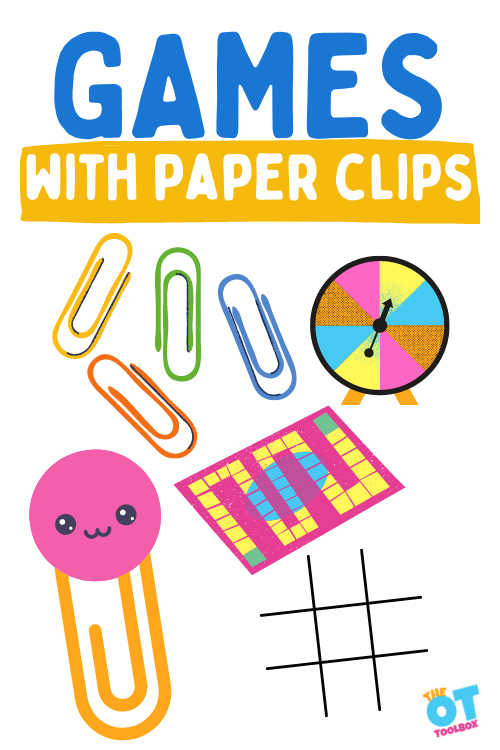
games with paper clips

Occupational therapists love to use everyday items in therapy, so these fine motor paper clip activities and fine motor games with paper clips are the best! Be sure to check out all of our fine motor activities with everyday items. You know what I’m talking about…those craft items, things, and tools that we all have in our therapy bags or supply closets. Today we’re covering fine motor activities with paper clips. Scroll down, friends. Below, you will find easy fine motor activities and quick tips to improve fine motor skills all using the simple paper clip!

Games with paper clips

Catch up on the latest tools on The OT Toolbox. Use other everyday items in your therapy bag to with these fine motor activities with craft pom poms and fine motor activities with playing cards.

Paper clip Ideas

The paperclip. You probably have 6 of them sitting in your junk drawer right now. But have you ever stopped to think about how a simple item can be used as a fine motor powertool to ramp up the motor skills needed for tasks like a functional pencil grasp? Have you considered how a simple item like a paperclip can be used to strengthen and refine fine motor skills? It’s true!

In fact, paperclips are a really great item for improving fine motor skills in preschoolers. The preschool age range is a great time to develop and strengthen particular skills that preschoolers will need for tasks like cutting with scissors, coloring without fatigue, and holding a pencil.

These fine motor ideas are easy and quick ways to boost fine motor abilities using an item that is probably already in your craft supply bin or therapy bag.

Paper clips are a great tool for fine motor development while improving dexterity and the motor skills that preschool (and older) kids need. Read on for fun and easy ways to use paper clips in fine motor play!

Paper clips are some of the best tools for building fine motor, bilateral coordination, and eye-hand coordination skills. Why? You can use them in the typical fashion, or for educational purposes like counting, or you can think outside of the box and add other elements that can address a variety of hand skills that make activities therapeutic and engaging. This even includes creating some games for paper clips, that’s right, games!

Simply adding a die, a spinner, or even a magnetic fishing rod can turn the use of paper clips into a game that kids will enjoy for therapy fun and hand skill development.

One fun idea we use in our Fine Motor Kits is using a paper clip to make a paper clip game spinner that you can easily create for use with many games if you follow the directions in the post and print the spinner templates.

Below are some easy-to-create paper clip activities and games that can build the skills children need to further important development in therapy and beyond. You can make fine motor kits or baggies for the classroom or the home which can generate family engagement and build the skills outside of the therapeutic environment without breaking the bank. We all know that therapists (and teachers) pay for things out-of-pocket, so cheap and easy to implement makes for the perfect set-up.

Games with paper clips

Using everyday materials like paper clips can support development of skills. From using paperclips as a game spinner, or as a game piece counter, you can develop fine motor skills, coordination, and hand eye coordination using a functional item.

The school based OTs will love that playing games with paper clips is a frugal way to extend occupational therapy games and toys with a new spin on typical game play. Plus playing games with paper clips are fun activities kids will get a kick out of!

Kids need fine motor skills for school and play. The problem is when we see functional concerns that limit independence. We might see kids who really struggle with hand strength, dexterity, joint mobility, or precision. We may notice these issues in how a student grasps their pencil.

We may see kids having trouble with buttons, zippers, or snaps because of the fine motor skills they really need to develop. Simple fine motor activities can make a real impact!

Games with paper clips include:

  • Use paper clips as a game spinner- Place the paperclip on a paper. Point the tip of a pencil down into one of of the paper clip loops. Hold the pencil straight up and down. Use your other hand to spin the paperclip around the pencil. This is a great exercise in bilateral coordination, eye-hand coordination skills, and crossing midline.
  • Play games with paper clip counters- Many games can be played using paper clips as game counters. Ask the students to pick up and hold several paper clips in their hand. They can place the paper clips on the game board or use them in various games.
  • Play checkers with paper clips- Use a Checkers board and use two different colors of paper clips. Move the clips to play Checkers.
  • Play Tic Tac Toe with paper clips- Select two different colors of paper clips. Use the clips as game pieces to play tick tack toe.
  • Use magnets and paper clips in game play- Move paper clips using a magnet wand to incorporate bilateral coordination and eye-hand coordination.
  • Flip the paper clip game- Just like paper football, you can flip a paper clip to work on fine motor skills, eye-hand coordination, and proprioception. Don’t flip too hard or too fast by using the “just right” amount of force..
  • Make fun game markers with paper clips- Cut out and glue shapes, images, or icons onto the end of a paper clip. Then use the paper clip game marker in play dough, on games on the edge of a piece of paper, or to keep score along the edge of a piece of paper. We’ve made several paperclip game markers in our Fine Motor Therapy Kits.
  • Hanging Paper Clip Game- Attach string to a table, wall, or between two chairs. Set a timer for one minute. Ask students to clip up as many post its, or pieces of paper as they can in one minute. This is a great activity for upper body strengthening in the upper extremities and working on a vertical plane to develop strength and stability in the core.
  • Find paper clips game- Hide paper clips in a lump of play dough, slime, or thera-putty. Ask students to find the paper clips as quickly as they can.
  • Play a paper fish game with paper clips- Cut out a fish shape from paper. Fold it in half and glue it over a paper clip. Then use a magnet tied to the end of a string in a paper fish fishing game.
  • Creativity Games- Use paper clips to make bracelets, necklaces, and bookmarks. Then, use them as creative prizes in games!
  • Guess the size- Connect several paper clips together and use a ruler to measure how long the string of paper clips is. Then, guesstimate how many paper clips tall things are such as a shoe, a door, or a building! 
  • Timed Clipping- Set a stop watch and clip as many paper clips to the edge of a piece of paper as possible. This is a great activity to support fine motor skills, bilateral coordination, and using a functional task.
  • Paper Clip Threading- Pour a bunch of paper clips on a table. Set a timer for one minute and ask students to pick up and thread as many paper clips as they can onto a pipe cleaner, straw, or piece of thread. This is a great activity to develop refined precision skills needed for dexterity.
  • Build a Tower- Use paper clips and a deck of cards to build a tower as high as you can. This is a powerful fine motor STEM activity.
  • Alphabet Paper Clip Necklace: This is an activity that links paper clips into a chain similar to a necklace by either simply identifying the letters and linking or by linking in alphabetical order. 
  • Magnetic Letters and Numbers Fishing – Place all magnetic letters and numbers into a bowl and then play a fishing game using a paper clip and fishing rod where children ‘go fish’ for letters or numbers and then when caught, they can work on letter identification and formation. 
  • Play number Games with paper clips- Number Game with Paper Clips is a YouTube video explaining how to play. This is a fun activity for kids to create and then do with adult support. It involves a craft-like activity that later allows for the child to use paper clips and number counting as the game.
  • Paper Clip Fishing Game– Use paper fish and draw onto the bodies different shapes or even letters, then attach a paper clip to each fish.  Use a magnet pole to have children fish for different shapes or letters. This one can be tailored to meet the needs of the child making it very versatile. 
  • Paper Clip Fishing Putty – Therapists grab your therapy putty and insert some paper clips vertically for children to use a paper clip and ‘go fish’ for colored paper clips. How do you create?  Place any size paper clips into putty, tie a piece of yarn onto a pencil along with a paperclip, and well, go fish! This makes for an awesome upper extremity activity – grasp, finger strength, upper arm stability, strength, control, and eye-hand coordination! Here is an example of this paper clip game.
  • Play Paper Clip Math Games- Paper Clip Math is an idea makes for a great busy bag or calm-down time activity.  It’s perfect for indoor playtime and hands-on learning.  Not only that, but it is a great way to work on fine motor skills like thumb opposition. 
  • Paper Clip Pattern Hair – This one is cheap and easy and well, fun to create! Cut a piece from a paper towel tube, draw a simple face onto the paper towel tube piece, and then use paper clips along the top to create fun hair. This is part of the back-to-school fine motor kit that can be found here at The OT Toolbox.
  • Also, check out my Crazy Hair Buddies which are created similarly with a variety of tools that can be used such as paper clips, binder clips, and large and small clothespins. 
  • Paper Clip Patterns – All you need for this one is simply just the paper clips! This is an easy visual perceptual activity for older kiddos where you simply use colored paperclips in various orientations and sizes that will help address visual discrimination skills in children. It’s an easy activity to set-up, but highly effective for therapy.
  • Paper Clip Pick-Up – This one is all about paper clips and picking them up one by one.  This is the perfect game to work on fingertip to palm and palm to fingertip translation skills.  First, roll a die and count the dots. Then pick up that number of paper clips using one hand using fingertips to palm translation skills. End with walking them out of the palm one by one using palm to fingertip translation skills and inserting them into a coin bank or other container.
Kids can develop and strengthen fine motor skills using these fine motor activities with paper clips!

paper clip fine motor activities

Adding more fine motor activities into a child’s day can be a struggle. So having an easy list ready to go makes recommending fine motor activities a no-brainer. Use these activity ideas in fine motor home programs or in the classroom for fine motor centers.

Adding them to math centers would be easy…craft pom poms are fun to sort, count, and manipulate!

Why Use Paper clips in FIne Motor Activities?

Paper clips are a tool you need in your therapy bag! They can be a small item that can be used in big ways. Here are just some of the ways that paper clips can address fine motor needs:

Separation of the sides of the hand– Paperclips are the perfect small item to hold in the palm of the hand, engaging the ulnar side of the hand, while encouraging movement and precision with the pointer finger, middle finger, and thumb. This skill is so important for fine motor precision in tasks like pencil grasp and managing clothing fasteners or tying shoe laces.

Pincer grasp– Paper clips are a powerful means of promoting the precision grasp between the thumb and pointer finger. This motor skill is essential for tasks that require strength and dexterity to manage small items like coins or turning pages in isolation.

In-hand manipulation– Paperclips can be used as a manipulative item for transferring from the palm to the fingertips or vice versa. This is an essential skill needed in pencil grasp and other functional tasks.

Finger isolation– Paperclips can be used in various ways to promote finger isolation needed for fine motor dexterity and functional tasks.

Eye-hand coordination– This skill is an essential fine motor precision skill needed for so many functional tasks such as managing small items, copying letters, and other visual motor skills. Paperclips can be a powerful way to work on this skill area.

Use these fine motor activities using paperclips to improve fine motor skills in tasks like pencil grasp.

Paper clip Activities

Here is a big list of activity ideas for using craft pom poms to work on fine motor skills. What would you add to this list? To start, here are more fine motor activities that use craft pom poms. Using this craft item in fine motor development requires easy set-up with activities like the ones listed below. You’ll see using a water bottle to work on fine motor skills in the list. Here’s a better description of how to make that craft pom pom fine motor activity work.

fine motor paper clip activities

Paperclip FIne mOTOr Activities

So, what can you do with a paperclip to support fine motor skills?

Here they are…loads of fun and easy ways to work on fine motor skills using paper clips! Use these ideas in centers, therapy activities, home programs, and play! Use these ideas in part of an occupational therapy fine motor toolkit!

  • Link the clips together to form a chain. Use those paper clip chains for math!
  • Create shapes with linked paper clips
  • Create letters with linked paper clips
  • Write a number on a piece of papers add that same number of paper clips onto the paper
  • Use the paper clips as a stand for small paper puppets
  • Use four paper clips as legs in animal crafts 
  • Sort paper clips by color
  • Press paper clips onto play dough. Use them to make paper clip flowers!
  • Slide onto color coded paper strips
  • Freeze into ice cubes to paint with water on chalkboard
  • Tie to string and use to thread around chairs
  • Poke holes in a plastic lid. Push paper clips through the holes
  • Slide onto edge of a paper plate
  • Use paper clips to make a DIY fidget tool
  • Pick up with a magnet tied to a string
  • Use to draw in sand
  • Chain together to make number strips
  • Connect pieces of paper to create sculptures
  • Place pencil tip in one end and spin
  • Tape label with number to one end. Slide onto edge of toilet paper tubes
  • Paper Clip Playing Cards – Simply use playing cards and paper clips to draw a card and place that number of paper clips onto the cards. Works on number identification and counting along with fine motor skills. 
  • Paper Clip People – This is a fun activity where you draw a picture of a person and cut it out. Then, you simply place paper clips onto the edge of the paper to create “legs” and “arms” the people. This is a fun way to work on fine motor skills, bilateral skills, and the separation of the two sides of the hand. 
  • Paper Clip Pick-Up – This one is all about paper clips and picking them up one by one.  This is the perfect game to work on fingertip to palm and palm to fingertip translation skills.  First, roll a die and count the dots. Then pick up that number of paper clips using one hand using fingertips to palm translation skills. End with walking them out of the palm one by one using palm to fingertip translation skills and inserting them into a coin bank or other container.
  • Paper Clip Porcupine: This is a fun activity that makes the playdough porcupine a paper clip porcupine! This activity is all about paperclips by creating a playdough porcupine, inserting small paperclips, and using a larger paperclip to pluck out the paperclips. A fun activity for fine motor and eye-hand coordination!
  • Paper Clip Rolls – This is also a cheap and easy activity that allows for color matching and number counting. Great for fine motor, bilateral hand skills, and eye-hand coordination, plus a little visual perception as you have to figure out exactly how to put that clip on.
  1. You can keep it simple by just writing a number on the roll and adding that number of paper clips. 
  2. Use a colored dot sticker, write a number on it, and then match colored paper clips by adding that number.
  3. Use a colored dot sticker, write a number on it, and then use colored paper clips to match the dot while also counting that number of paper clips. 
  4. Simply forget numbers and colors altogether and just clip away.
  • Paper Clip Sculptures and Linked ShapesUse several paper clips together to create a variety of sculptures or even link them together to create shapes and images. Be creative and try some linked-together paper clips for letter formation too!
  • Match play dough and paper clips- We shared this idea in our Play Dough Paper Clip Color Match. This is a simple activity that includes colored play dough and paper clips and facilitates a tripod grasp and allows for strengthening of the hand, especially the arches by pressing the paper clips into the dough in a vertical fashion. This activity is a great warm-up activity for kids before coloring, drawing, or writing. 
  • Simple Paper Clip Chain:  With the use of just paper clips, a child can create a paper clip chain and build important developmental fine motor skills. Use colored clips, large and small clips, and plain clips to create a variety of chains.  This activity works on fine motor skills, but also visual perception as the child works on correctly orienting the paper clips for insertion and rotation of each clip as the chain is being built.
  • Add visual perceptual work to fine motor activities with fine motor color sorting activities for improved eye-hand coordination.

Now, that you have the inspiration and ideas, go gather some paper clips and a few other cheap materials and make some fun games and activities that will motivate children to build important hand skills and other areas of development. Why not have them help you create the kits too? They’d love it and it would be a huge help to you! Grab some baggies, pencil bags, or boxes, or even toss all of the goodies into a plastic storage container and you’ve got a paper clip toolkit! 

Colleen Beck, OTR/L has been an occupational therapist since 2000, working in school-based, hand therapy, outpatient peds, EI, and SNF. Colleen created The OT Toolbox to inspire therapists, teachers, and parents with easy and fun tools to help children thrive. Read her story about going from an OT making $3/hour (after paying for kids’ childcare) to a full-time OT resource creator for millions of readers. Want to collaborate? Send an email to contact@theottoolbox.com.
Working on fine motor skills, visual perception, visual motor skills, sensory tolerance, handwriting, or scissor skills? Our Fine Motor Kits cover all of these areas and more.

Check out the seasonal Fine Motor Kits that kids love:

Or, grab one of our themed Fine Motor Kits to target skills with fun themes:

Want access to all of these kits…and more being added each month? Join The OT Toolbox Member’s Club!

Simon Says Commands

Simon Says Commands

If you’ve ever run a therapy session with a fun game of Simon Says, than you know the challenge of coming up with effective Simon Says commands on the spot. The beauty of a good game of Simon Says is that you can target any gross motor, fine motor, sensory motor, and visual motor skill area that you need to, making it the perfect gross motor coordination game that supports a variety of skills.

Simon Says commands

Simon Says Commands

Woohoo, it’s Simon Says for OT! Who doesn’t love a good game of Simon Says? It’s a classic game that builds a variety of skills without kiddos knowing it.

Below, you’ll find a great list of therapist-approved Simon Says game commands and, you can grab a Simon Says commands pdf so you can print off these game ideas and use them in any therapy session, or as a brain break in the classroom or home, too.

Let’s cover all of the Simon Says ideas!

How to play Simon Says in occupational therapy, physical therapy, and speech therapy to develop skills.

How to Play Simon Says

If you’ve never heard of Simon Says or don’t have a clue what it is, it’s a fun game that is easy to implement in any location. 

First, you identify one player for the role of Simon and that player will give the other players commands for actions to perform. (There are many targeted goal areas identified with commands listed later in the post.) 

Second, the game has a trick with it, Simon MUST preface the command by saying, “Simon Says”, or the command is NOT to be followed.

If a player follows that direction and completes the movement when “Simon” doesn’t say “Simon Says”, they are out of the game or can lose one of their tally strokes or chips that is given to each player before play.

If they DO NOT follow one of the stated Simon Says commands, they are out or lose a stroke or chip too. 

Third, the last player standing or the player with the last chip or tally stroke is the winner. 

Simon Says Examples:

  • Simon: “Simon Says hop on one foot.”
  • Other players: Correctly follow the direction and hop on one foot.
  • The players that completed the correct action stay in the game or can stay in the game and do not lose a token or tally chip/tally mark.
  • Simon: “Simon Says hop on one foot.”
  • Other players: Incorrectly do not follow the direction.
  • The players that did not complete the correct action are out of the game or can stay in the game and lose a token or tally chip/tally mark.
  • Simon: “Hop on one foot.”
  • Other players: Incorrectly follow the direction and hop on one foot.
  • The players that completed the incorrect action (Simon didn’t say “Simon Says”!) are out of the game or lose a token or tally chip/tally mark.
  • Simon: “Hop on one foot.”
  • Other players: Correctly do not follow the direction and do not hop on one foot.
  • The players that did not complete the incorrect action (Simon didn’t say “Simon Says”!) stay in the game or do not lose a token or tally chip/tally mark.

Easy, right? Not too fast friends! A child’s (and adults’) attention, impulsivity, and patience can play a role in their ability to listen, act, and wait while playing this game. 

Simon Says is actually a really great game for executive functioning skills, and specifically a game to

Think about each child and what kind of commands you may need to give them to help them play successfully.

Younger students or those working to improve the cognitive skill of following sequences can improve these areas with certain adaptations. Give them simple commands that have few words and one step. Think about saying something like, “Simon Says clap your hands” vs. saying, “Simon Says spin around and then clap your hands”, see the difference? This will help a child focus on one skill at a time and then build from there as they age or become better at following multiple directions. 

If a child struggles with verbal or processing skills, consider the use of a visual choice board, like this one by Panda Speech Therapy, that displays someone speaking coupled with a visual that demonstrates the action that Simon Says to do. This is a great modification to help children that need this type of support to be successful during play or even those who are new to learning how to play the game. 

Think about the OT skills that can be facilitated with this game: 

Target whatever area you need to with children based on their goals and you’ve got a fun time with focus!

Think about the social skills that can be targeted while following and giving multiple skill-driven directions – don’t forget to either simply say the direction or add, “Simon Says” to give kiddos the true direction to DO vs. the fake direction to REMAIN STILL. 

Simon Says ideas for therapy

Simon Says Ideas

The list of Simon Says ideas below are separated by area of development. You’ll find specific movement ideas for:

  1. Visual motor skills
  2. Fine motor skills
  3. Gross motor skills
  4. Sensory motor skills
  5. Social skills
  6. Emotional skills
  7. Oral motor skills

Simon Says Commands to Target Visual Motor Skills

  1. Draw a row of circles
  2. Draw a face
  3. Draw a person
  4. Trade drawing tools with your neighbor
  5. Use different colors and write the letters of your first name
  6. Write the ABCs 
  7. Build a block tower
  8. Build block stairs
  9. Build a block pyramid
  10. Write the numbers 1-10
  11. Toss a ball up to self and catch
  12. Walk a ball on the wall

If you need more visual motor command ideas to help, look at these fun resources:

Rainbow Visual Motor Slide Deck at The OT Toolbox

Flower Visual Motor Slide Deck at The OT Toolbox

Simon Says Commands to Target Fine Motor Skills

  1. Do finger taps to the thumb on both hands
  2. Make the okay sign
  3. Make the telephone sign with each hand
  4. Snap your fingers
  5. Push your fingertips together
  6. Clap your hands
  7. Rotate a pencil from writing to erasing
  8. Do pencil push-ups
  9. Do pencil walk up and down the shaft
  10. Wiggle the fingers on both hands
  11. Do finger pull-ups on both hands
  12. Do victory sign
  13. Make the ‘I love you’ sign

If you need more fine motor command ideas to help, look at these fun resources:

Fine Motor Skills Needed for School at The OT Toolbox

Heavy Work for Little Fingers at Your Kids OT

Simon Says Commands to Target Gross Motor Skills

  1. Do 10 wall push-ups
  2. Do 5 sit-ups
  3. Do 5 planks
  4. Do 8 body bridges
  5. Do 5 lunges
  6. Do 8 squats
  7. Do 6 hand presses
  8. Do 8 cross crawls
  9. Walk like a crab
  10. Walk like a bear
  11. Hop like a kangaroo
  12. Walk like a cat

If you need more gross motor command ideas to help, look at these fun resources:

Sports Gross Motor Slide Deck at The OT Toolbox

Superhero Gross Motor Slide Deck at The OT Toolbox

Simon says Commands to Target Sensory Motor Skills

  1. Stretch to the sky and then to the floor
  2. Wiggle your body all around
  3. Give yourself a hug
  4. March in place
  5. Sway your body left to right
  6. Spin around in a circle
  7. Do 5 deep breaths
  8. Do 5 long blows
  9. Do floor push-ups
  10. Sit and rock back and forth
  11. Army crawl in a line
  12. Walk forward and backward 

If you need more sensory motor command ideas to help, look at these fun resources:

Alerting and Calming Sensory Strategy Cards at The OT Toolbox

Heavy Work Movement Cards at The OT Toolbox

Outdoor Sensory Diet Cards at The OT Toolbox

Deep Breathing Exercise Cards at The OT Toolbox

Simon Says Commands to Target Social Skills

  1. Look to your neighbor and say, “Hello.”
  2. Shake your neighbor’s hand
  3. Say a positive affirmation statement to the group
  4. High-five a friend
  5. High ten your therapist
  6. Look at a neighbor and smile
  7. Look at a neighbor and give a thumbs-up 
  8. Look at a neighbor and introduce yourself
  9. Look at a neighbor and say, “Thank you.” 
  10. Give a compliment
  11. Give an apology
  12. Invite someone to play

If you need more social command ideas to help, look at these fun resources:

Self-Awareness Activities Slide Deck at The OT Toolbox

Simon Says Commands to Target Emotions

  1. Make a smiley face
  2. Make a frowning face
  3. Make a scared face
  4. Make an angry face
  5. Make a surprised face
  6. Make a tired face
  7. Show being shy
  8. Show being worried
  9. Show being embarrassed
  10. Show being sick
  11. Show being proud
  12. Show being scared

If you need more emotional command ideas to help, look at these fun resources:

Emotions Cards at Growing Hands-On Kids 

Simon Says Commands to Target Oral Motor Skills

  1. Stick out your tongue
  2. Open and close your mouth
  3. Wiggle your tongue from side to side
  4. Blow a kiss 
  5. Blow bubbles
  6. Smack your lips together
  7. Touch your nose with your tongue
  8. Massage your jaws with your fingertips
  9. Pull the corners of your mouth into a smile
  10. Scrunch up your lips and nose
  11. Push your tongue into your right cheek
  12. Push your tongue into your left cheek

If you need more oral motor command ideas to help, look at these fun resources:

Oral Motor Exercises at The OT Toolbox 

Themed Oral Motor Activities and Exercises at the OT Toolbox:

Simon Says Ideas for the Alphabet

If you are looking for a combination of Simon Says Commands that address multiple areas, you can find a list of these below from A-Z.  Enjoy!

A – Air write your name

B – Blow pretend bubbles

C – Cross crawls or crunches

D – Deep breaths

E – Excited body movements

F – Fingertip taps to thumb

G – Give a compliment 

H – High 5 someone

I – ‘I love you’ hand sign

J – Join hands or arms with someone

K – kangaroo hops

L – Lick your lips all around

M – Make a sad face

N- Number 8’s in the air 

O – One leg stands each leg

P – Print the alphabet 

Q – quick run in place

R – Roll out a playdough square

S – Stick out your tongue

T – Twirl around

U – Up on toes stretch

V – Valentine’s heart hands

W – Wave to someone

X – XO to give self-hug

Y – Yawn for feeling tired

Z – Zig-zag line in air

Lastly, you can also be creative and think about how you can use Simon Says Commands with commercial board games, like Operation, Perfection, Twister, Whac-A-Mole, Spot It, Avalanche, or Kerplunk. Think about just changing it up by using Simon Says commands or NOT, to direct the child in what they should or should not do.  It’s a new approach to some common board games used in pediatric OT and the kids will love it!

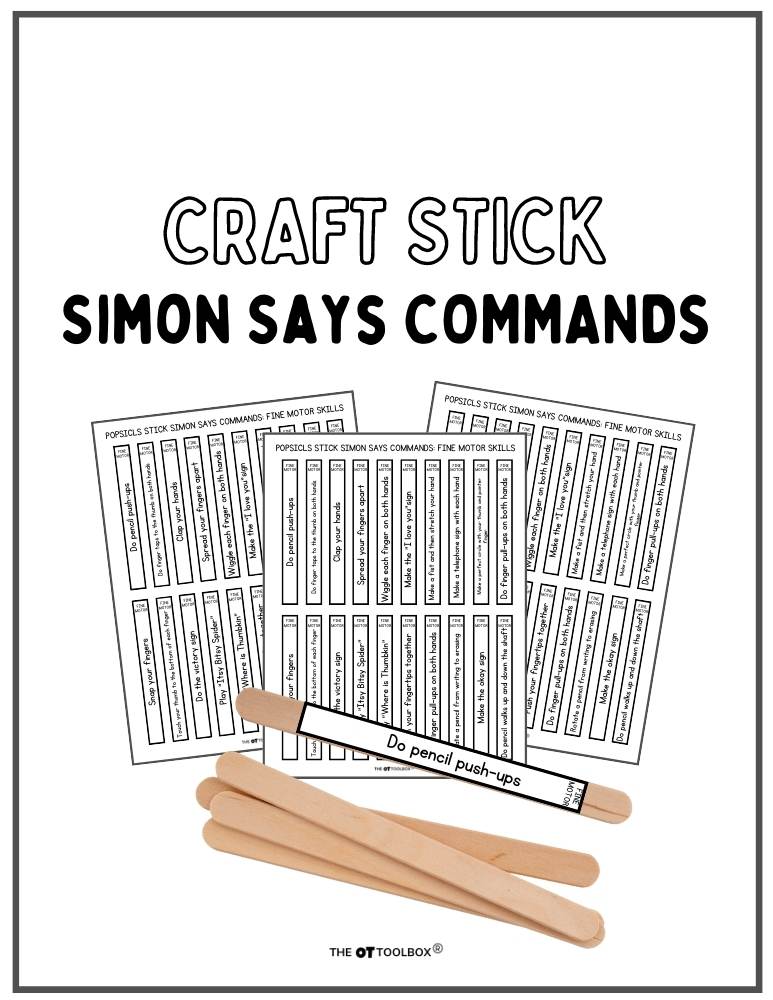
Popsicle stick labels Simon Says Commands
Free printable Simon Says Commands for craft stick labels.

Free Alphabet Simon Says Popsicle Stick Labels

I am so excited to share this newest resource. All you need is a printable page with the popsicle stick Simon Says commands and craft sticks. We used the larger-size popsicle sticks to make the popsicle stick commands.

Kids can pull a craft stick out of a cup and use the command to create actions based on movements for each letter of the Alphabet. This set goes with our Alphabet Exercises blog post where each letter of the alphabet has a corresponding exercise or motor action.

Want a copy of these popsicle stick exercise labels? Enter your email address into the form below. OT Toolbox members can also find this printable inside the Member’s Club (along with the full list of Simon Says cards listed above in printable card form AND in popsicle stick label format).

Free Simon Says Popsicle Stick Labels

    Are you interested in resources on (check all that apply):
    We respect your privacy. Unsubscribe at anytime.
    Regina Allen

    Regina Parsons-Allen is a school-based certified occupational therapy assistant. She has a pediatrics practice area of emphasis from the NBCOT. She graduated from the OTA program at Caldwell Community College and Technical Institute in Hudson, North Carolina with an A.A.S degree in occupational therapy assistant. She has been practicing occupational therapy in the same school district for 20 years. She loves her children, husband, OT, working with children and teaching Sunday school. She is passionate about engaging, empowering, and enabling children to reach their maximum potential in ALL of their occupations as well assuring them that God loves them!

    What is Motor Planning

    motor planning

    You may have heard the term motor planning but wondered what this means and what does it look like to utilize motor planning skills in everyday activities. Here, we are breaking down this important motor skills topic. Occupational therapists are skilled at analyzing movements and underlying skills needed to perform the things we do each day, or the tasks that occupy our time, and establishing an efficient and coordinated motor plan is one of the main aspects of this assessment. 

    Motor planning

    Motor Planning

    When we perform an action, there are movements of our bones, joints, and muscles that enable our bodies to move. It’s through this movement that the body and brain receives feedback, or a motor concept that tells the brain and body that we have moved in a certain way in order to accomplish a specific action. This is the motor plan for that particular task at work!

    Let’s look at a child’s motor skills in a specific action to really explore this concept. 

    Ok, so you’re walking along a hallway with an armful of bags and see a ball in your path. You walk around it and continue walking. But, hold on. That was a pretty cool ball. It was all red and shiny. It looked like a really fun ball to bounce. You stop, turn around, walk back to the ball, stoop down, put down your bags, and pick it up. Woah. It’s not only red and shiny, but it’s a little heavy too. 

    It takes a bit more muscle oomph than you were expecting. You hold your arm up high, with the ball up over your head. Totally not a baseball player’s pose, but all awkward and kid-like. You know. Pure fun throwing. 

    You toss that red, shiny, heavy ball as hard as you can towards a big old blank wall on one of the hallway walls. Now watch out! That red, shiny, heavy ball is bouncing around like crazy! 

    It’s bouncing off of the wall and right back at you! You jump to the side and then to the left and right as it bounces back and forth between the walls of that hallway. You have to skip to the side to avoid your bags. 

    The ball stops bouncing and rolls to the side of the hall. 

    Well, that was fun. You pick up the ball and hold it while you gather your bags. Now, you see a boy coming down the hall who sees that red, shiny, heavy ball in your hand and says, “Hey! There’s my ball!” You smile and toss the ball as he reaches out his hand and catches. “Thanks!!” he says as you wave and start walking down the hall again.

    What is Motor Planning? Tips and Tools in this post with a fun fine motor motor planning (dyspraxia) activity for kids and adults from an Occupational Therapist

    What is Motor Planning?

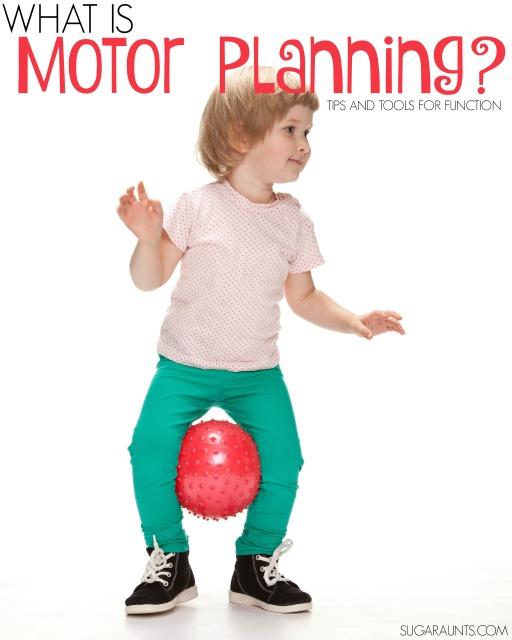
    Motor Planning happens with everything we do! From walking around objects in our path, to picking up items, to aiming and throwing, drawing, writing, getting dressed, and even dodging red bouncy balls…

    Motor Planning is defined as the problem solving and moving over, under, and around requires fine motor and gross motor skills and planning to plan out, organize, and carry out an action. We must organize incoming information, including sensory input, and integrate that information into our plan. We need to determine if a ball is heavy or light to pick up and hold it without dropping it.

    You might hear of motor planning referred to as praxis. 

    Praxis (generally also known as Motor Planning, but also it’s more than simply motor planning…) requires observing and understanding the task (ideation), planning out an action in response to the task (organization), and the act of carrying out the task (execution). A difficulty with any of these areas will lead to dyspraxia in many skill areas. 

    Praxis includes motor planning, but also involved is ideation, execution, and feedback, with adjustment to that feedback. You can see the similarities in motor planning, which refers to the conscious and subconscious (ingrained) motor actions or plans.

    Motor Planning is needed for everyday tasks. Think about the everyday activities that you complete day in and day out. Each of these actions requires a movement, or a series of movements to complete. There are both gross motor movements, fine motor movements, and posture all working together in a coordinated manner.

    There is a motor plan for actions such as:

    • using a toothbrush to brush one’s teeth
    • brushing hair
    • getting dressed
    • putting on a backpack
    • walking down a hallway
    • walking up steps
    • walking down steps
    • holding a pencil
    • writing with a pencil (motor planning and handwriting is discussed here.)
    • riding a bike
    • maintaining posture
    • putting on a coat or jacket (on top of other clothing such as a shirt so that in this case, there isn’t the tactile feedback available of the fabric directly on the skin’s surface)
    • performing sports actions such as swinging a baseball bat or tennis racket, running, or gymnastics like doing a cartwheel

    The interesting thing is that a movement plan, or the physical action that is completed whether the action has been performed in the past or if it is a new movement. A motor plan for a new task can be completed without thinking through how to move the body because it is just inherently completed.

    When we complete unfamiliar tasks and need to stop and think through how the body needs to move, is when we see inefficient movement, or motor planning issues.

    Motor Planning Difficulties

    Above, we talked about praxis as another term or way to name the motor plan concept. When there are difficulties with motor planning, we are referring to the opposite of praxis, or dyspraxia. 

     Dyspraxia can be a result of poor sensory integration, visual difficulties, fine motor and gross motor coordination and ability, neural processing, and many other areas.

    Motor planning difficulties can look like several things:

    • Difficult ability to complete physical tasks
    • Small steps
    • Slow speed
    • Pausing to think through actions
    • Clumsiness
    • Poor coordination
    • Weakness

    These challenges with motor function can exist with either new motor tasks or familiar actions. Deficits are apparent when speed is reduced so that the functional task isn’t efficient, when the motor task is unsafe, or poor completion of the task at hand.

    There are diagnoses that have poor motor planning as a component of the diagnosis. Some of these disorders can include:

    When motor planning difficulties exist, this can be a cause for other considerations related to movements, and demonstration of difficulties when participating in movement-based activities:

    • challenges in social interactions
    • anxiety
    • behaviors
    • social skills issues

    Today, I’ve got a quick and easy fine motor activity to work on motor planning with kids. This activity is part of our 31 Days of Occupational Therapy series where we’re sharing fun and frugal ideas for treatment of many OT skill areas with items you might already have in your house.

    motor planning activity

    Motor Planning Activity

    Affiliate links are included in this post. 

    Motor planning activity

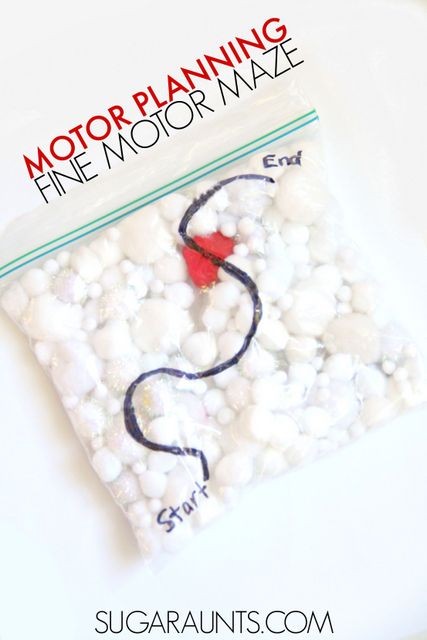
    To make this motor planning activity, you’ll need just a few items: 

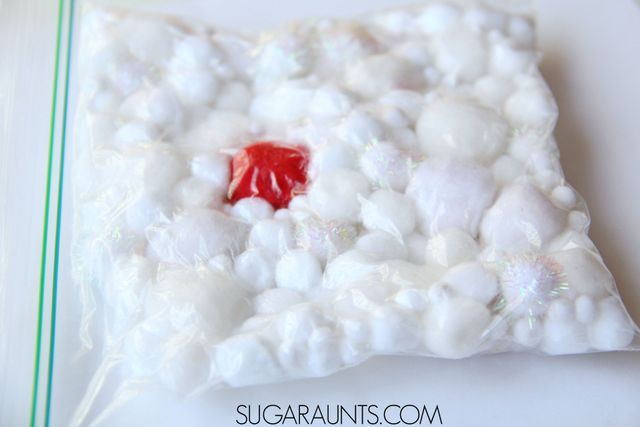
    • a clear plastic baggie
    • white crafting pom poms
    • one red pom pom. These are items we had in our crafting supplies, but you could modify this activity to use items you have. Other ideas might be beads, pin pong balls, ice cubes, or any small item.
    1. Fill the baggie with the pom poms and squeeze out the air. 
    2. Seal the baggie.
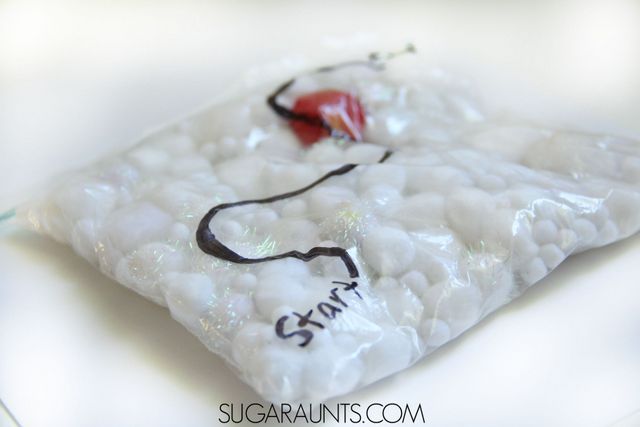
    3. Use a permanent marker to draw on a maze from one side of the baggie to the other. You can make this as complex as you like. 
    4. Add additional mazes, or two different pom pom colors for the maze. Work the red pom pom from one end of the maze to the other.
    Apraxia activity

    Squeezing the pom pom is a fine motor work out for the hands. You’ll need to open up the thumb web space (the part of your hand between the thumb and fingers, and use those intrinsic small muscles of the hand. Both of these areas are important for fine motor tasks like coloring and writing.

    Use this motor planning exercise as a warm-up activity before writing, coloring, and scissor activities. This is a great activity to have on hand in your therapy treatment bag or to pull out while waiting at the doctor’s office.

    Motor planning toys and games

    Motor Planning Activities

    Looking for more ways to work on dyspraxia with your kids? These are some fun fine and gross motor activities that are fun and creative. 

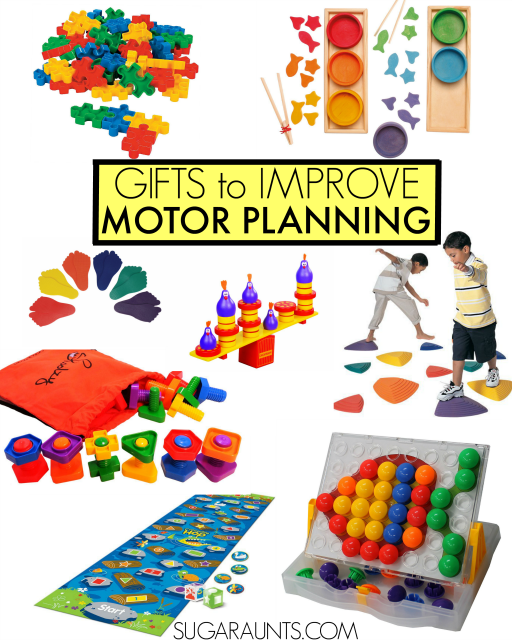
    The best thing about all of them is that they are open-ended. Use them in obstacle courses or in movement tasks to incorporate many skill areas. These are some fun ideas to save for gift ideas. Now which to get first…

    Work on fine motor dexterity and bilateral coordination while encouraging motor planning as the child matches colors of the nuts and bolts in this Jumbo Nuts and Bolts Set with Backpack set. The large size is perfect for preschoolers or children with a weak hand grasp.

    Practice motor planning and eye-hand coordination. This Button Mosaic Transperent Pegboard is a powerhouse of motor planning play. Kids can copy and match big and bright cards to the pegs in this large pegboard. I love that the toy is propped up on an incline plane, allowing for an extended wrist and a tripod grasp. Matching the colors and placing the pegs into the appropriate holes of the pegboard allow for motor planning practice.

    Develop refined precision of fine motor skills with eye-hand coordination. A big and bright puzzle like this Puzzle-shaped Block Set  allows kids to work on hand-eye coordination and motor planning as they scan for pieces, match the appropriate parts of the puzzle pieces, and attempt to work the pieces into place. Building a puzzle such as this one can be a workout for kids with hand and upper extremity weakness.

    Strengthen small motor skills. Kids of all ages can work on motor planning and fine motor skills with this Grimm’s Rainbow Bowls Shape & Color Sorting Activity. Use the colored fish to place into the matching cups, as children work on eye-hand coordination. Using the tongs requires a greater level of motor planning.

    You can modify this activity by placing the cups around a room for a gross motor visual scanning and motor planning activity. Children can then follow multi-level instructions as they climb over, around, under, and through obstacles to return the fish to their matching bowls.

    Encourage more gross motor planning with hopping, jumping, and skipping, or other gross motor tasks. This Crocodile Hop A Floor Mat Game does just that. It is a great way to encourage whole body motor planning and multiple-step direction following.

    Address balance and coordination. These Gonge Riverstones Gross Motor Course challenge balance skills as children step from stone to stone. These would make a great part of many imagination play activities as children plan out motor sequences to step, cross, hop, and jump…without even realizing they are working on motor planning tasks.

    Introduce multiple-step direction following and motor planning. These colored footprints like these Gonge Feet Markers support direction following skills. Plan out a combination of fine and gross motor obstacle courses for kids to work on motor planning skills.

    Make hand-eye coordination fun with challenges. For more fine motor coordination and motor planning, kids will love this Chickyboom Balance Game as they practice fine motor skills, hand-eye coordination, and about balance and mathematics.

    Colleen Beck, OTR/L has been an occupational therapist since 2000, working in school-based, hand therapy, outpatient peds, EI, and SNF. Colleen created The OT Toolbox to inspire therapists, teachers, and parents with easy and fun tools to help children thrive. Read her story about going from an OT making $3/hour (after paying for kids’ childcare) to a full-time OT resource creator for millions of readers. Want to collaborate? Send an email to contact@theottoolbox.com.
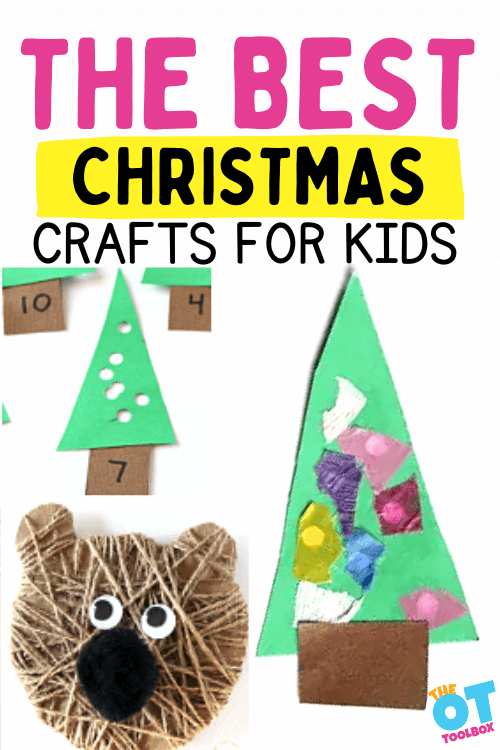
    Christmas Crafts for Kids

    Christmas crafts for kids

    If you are looking for therapy ideas that build skills this time of year, then you will love these Christmas crafts for kids. These are craft ideas driven by fine motor skill development but also promote skills like hand strength, bilateral coordination, eye-hand coordination, precision of grasp, motor planning, direction following, and creativity. These holiday crafts are perfect for adding to your Christmas occupational therapy ideas.

    From garlands to DIY Christmas ornaments, you AND the kids will love these holiday craft ideas. We’ve pulled our favorite Christmas tree crafts, reindeer crafts, snowman crafts, and Santa crafts all into one place. The best part is that these crafty ideas are perfect for the whole family (or therapy caseload…check out the fun Christmas crafts below for ideas that suit kindergarten up through the older kids! 

    Christmas craft for kids


    Christmas Crafts for Kids

    If there is one most of us are short on this time of year, it’s time. There is just NO time to search Google for fine motor craft ideas or Christmas crafts to add to the occupational therapy activities in December. That’s why I wanted to put together a list of tons of ways to be creative with a Christmas craft for kids.

    One of our favorites, and the most easy holiday craft has to be your own set of Christmas memory game cards. Start there, or check out the ideas below!

    Christmas Crafts for kids for the holiday season crafting. These Christmas crafts for kids will keep the kids happy while strengthening fine motor skills, visual motor skills, coordination, and more while working on the skills kids need, all with Christmas crafts!


    Most of these Christmas crafts are process-based but some are not, making them the perfect mix for the therapist looking for crafts that meet the needs of a varied occupational therapy caseload. Use the Christmas craft ideas below to add a holiday theme to your therapy plans this month!

    This post is part of our Christmas Activities for Kids series we’ve got going on this week. It’s all designed to share holiday activities so you don’t need to search all over the internet! If you missed yesterday’s post, you’ll want to check out Christmas Activities for Toddlers to find occupational therapy activities designed for the 2-3 year old age range.

    These are activities, games, and ideas for kids with a Christmas theme that can be used in occupational therapy treatment in the home, school, or clinic!

    If you missed the announcement post on our Christmas Activities for Kids series, you’ll want to check it out. We’ll have a different Christmas activity theme each day this week!

    Christmas Craft for Kids Supplies

    This time of year, it’s a great idea to have a craft supply center out for kids to get crafting. Use the kid-made crafts as holiday gifts for family, package toppers, or to attach to a family holiday card. You can even attach a small craft to a candy cane for easy gift-giving.

    Most of the Christmas crafting supplies can be found in a dollar store or for fairly cheap, making this December bucket list item easy and a fun way to spend days leading up to the holidays. 

    Some Christmas craft supplies you can have on hand include:

    • Pipe cleaners
    • Glitter
    • Craft pom poms
    • Glue
    • Cotton balls
    • Paper plates
    • Clear plastic Christmas ornaments
    • Clothes pins
    • Googly eyes
    • Popsicle sticks
    • Beads
    • Buttons
    • Construction paper or card stock
    • Yarn
    • Ribbon
    • Hot glue
    • Thread
    • Plastic lid
    • Wreath form
    • Mason jar

    Once you have a collection of materials, you can start making an easy Christmas craft!

    As a therapist, I love to see the fine motor skills, scissor skills, and sensory input accomplished through crafting as an occupation. But there is the opportunity for creative thinking, executive functioning skill work, and motor planning at work too. 

    Set out a bin or basket of the crafting materials above and let the child explore and create. You can give them an idea of what to create…Ask them “Do they think they can make a Santa Claus using the materials they have in front of them?” By offering a crafting target and the materials with an open-ended craft idea, you are adding in skills such as planning, prioritization, working memory, problem solving. These skills are very much related to the emotional regulation when a project is needing completed but there are challenges in the way. A simple holiday craft can be a fun way to address and develop this skill. 

    Some Christmas crafting ideas include:

    • Santa Claus
    • Elf
    • Angels
    • Christmas gifts
    • Rudolf 
    • Reindeer
    • Christmas tree ornaments
    • Snowman craft
    • Christmas wreath
    • Gnome
    • Santa’s beard
    • Cookies
    • Christmas tree
    • Christmas art

    You can also challenge kids to use specific forms of crafting: fingerprints art, handprints, salt dough crafts, or one of our Christmas templates. Whatever the type of craft, you’ll find tons of ways to develop skills.

    Christmas Craft Ideas

    Some of our favorite ways to craft this time of year include:

    Our new hot chocolate craft uses a printable template that you can modify to meet the needs of each child on a therapy caseload (or at home or in the classroom!) Just print off the template and go. There are even visual step-by-step directions and a data collection form for this holiday craft.

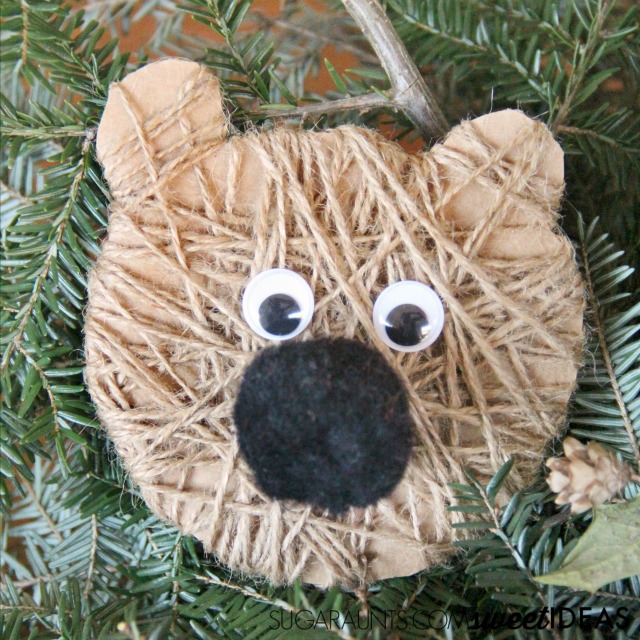
    Bear Christmas ornament craft
    Bear Christmas ornament craft


    Scissor Skills Reindeer Craft- Another Christmas craft that is based on a children’s book is this Olive the Other Reindeer Ornament that doubles as a scissor skills craft. Wouldn’t it be fun to make a whole Christmas tree full of ornaments made in therapy sessions?

    Bilateral Coordination Bear Craft- This bear craft Christmas ornament helps kids use bilateral coordination and motor planning to wrap twine around a bear, making it a fun craft and a powerful therapy tool too! This Christmas craft goes along with a popular children’s book, making it a great craft to share as “occupational therapy homework” over the holiday break!

    Christmas tree craft


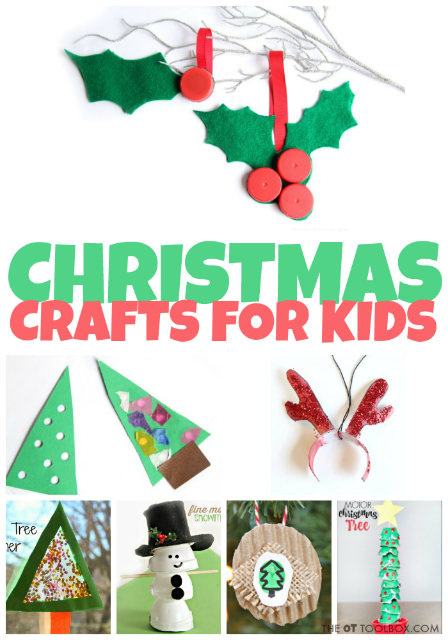
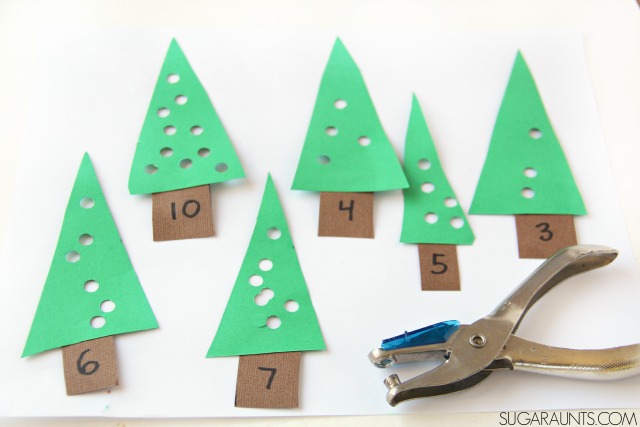
    Hand Strength Christmas Tree Craft- Use this Christmas Tree Fine Motor Craft activity to develop strength in the hands and more. This activity uses a hole punch to create lights for each Christmas tree. The bonus with this craft is the learning and math component. Add a colorful twist by adding colored tissue paper to the backs of the trees with glue.

    Fine motor Christmas tree craft
    Build a Christmas tree with clothespins

    Clothespin Christmas Tree Craft- Paint clothes pins and a painters stick and ask students to build a Christmas tree while developing fine motor skills. You can use this activity over and over again in therapy sessions. Read the instructions and the why behind this Christmas tree craft.

    Pinecone Christmas tree
    Pine cone Christmas tree

    Pine Cone Christmas tree- This is another Christmas tree craft that kids will love. It builds fine motor skills, eye-hand coordination, and bilateral coordination skills, too. Read the instructions to make a pine cone Christmas tree of your own.

    Fine motor Christmas card craft
    Christmas card with tree


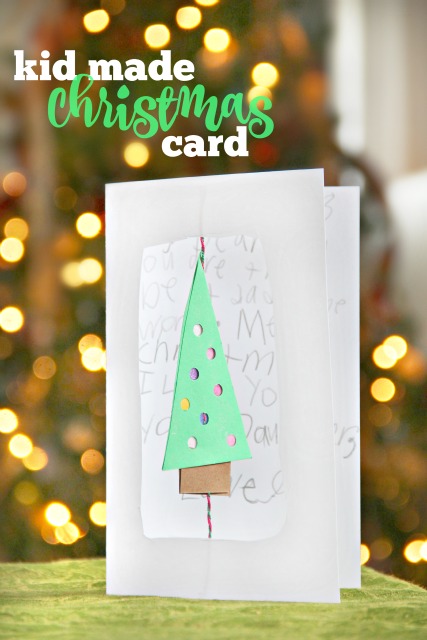
    Hand Strengthening Christmas Card Craft- This Homemade Christmas Card for kids is a fun Christmas card kids can make for family or friends. It provides an opportunity for hand strengthening with the hole punch Christmas tree. Sneak some handwriting practice in, too!

    Bottlecap Christmas tree craft
    Bottlecap Christmas tree craft


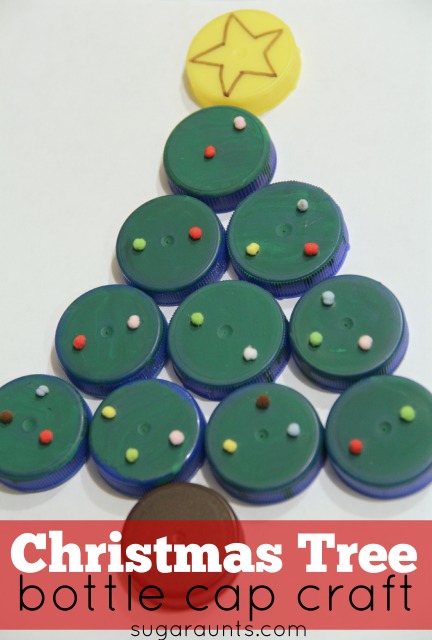
    In-Hand Manipulation Bottle Cap Christmas Tree- Use recycled bottle caps to make this Bottle Cap Fine Motor Christmas Tree Craft. This fine motor activity can be a holiday decoration that boosts fine motor skills such as precision, in-hand manipulation, tip-to-tip pincer grasp, rotation and dexterity of the fingers needed for in-hand manipulation, and bilateral coordination.

    Christmas tree fingerprint
    Christmas tree fingerprint craft


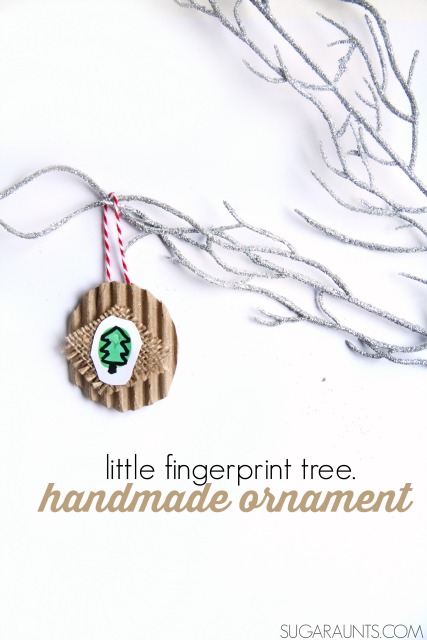
    Finger Isolation Ornament- This ornament craft is based on the well-known children’s book, Little Tree. Read the book and then make the ee cummings Little Tree Christmas Ornament AND sneak in fine motor skills like finger isolation, scissor skills, and so many other skills.

    Christmas holly craft made with bottle caps
    Christmas holly craft made with bottle caps


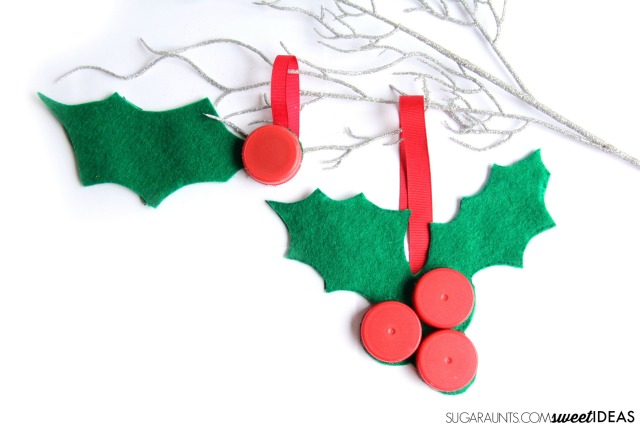
    Process Art Ornament- This Bottle Caps Holly Ornament  is a creative process craft and if you make them with friends or in a classroom setting, there will be no two that look exactly alike. This Christmas craft for kids is a powerhouse for the fine motor development that occurs:  Scissor skills, bilateral coordination, eye hand coordination, and more.

    Plastic lid ornament craft.
    Plastic lid ornament craft.

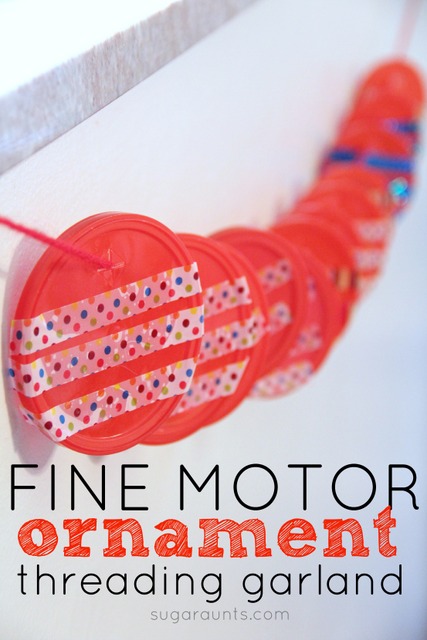
    Plastic Lid Ornament Craft– Use recycled plastic lids to make an ornament craft using washi tape. We then used a bunch of the lids to make an ornament garland. Read the instructions for this ornament garland craft.

    Snowman craft for Christmas
    Snowman craft to build fine motor skills.


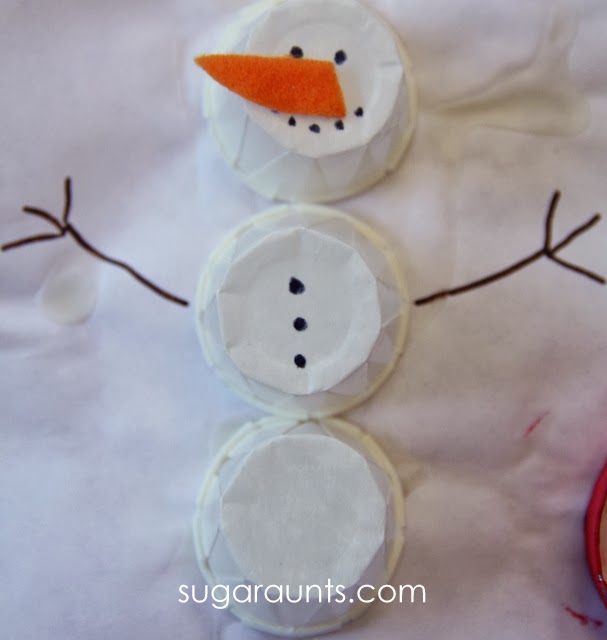
    Paper cup snowman craft- This snowman craft uses crafting materials that build fine motor skills and pencil control skills. Add details with a fine tipped marker to work on pre-handwriting or pencil control skills.

    Egg carton snowman craft
    Snowman egg carton craft

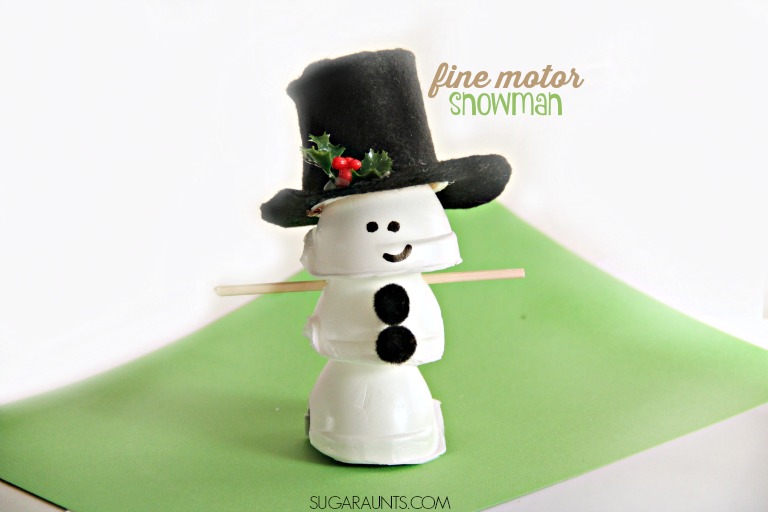
    Snowman Fine Motor Craft- Creating this Snowman Fine Motor Craft is a fun way to develop skills like bilateral coordination, pincer grasp and more. This craft is one that builds fine motor strength and precision while creating a fun holiday decoration.

    Make an egg carton Christmas tree
    Make an egg carton Christmas tree to build fine motor skills.


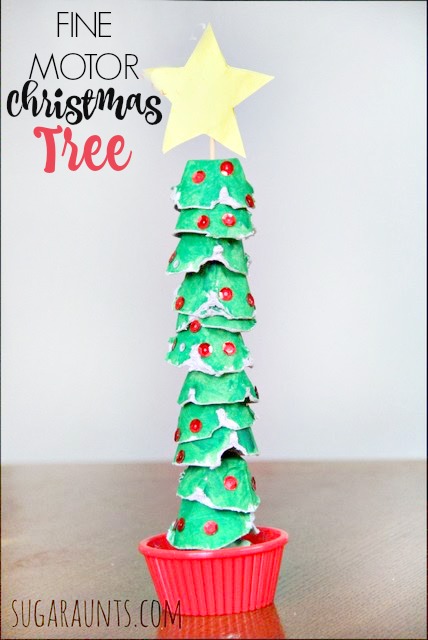
    Fine Motor Christmas Tree Craft- This Fine Motor Christmas Tree Craft addresses many skills needed for development and function. This craft has been very popular here on The OT Toolbox, and for a good reason!  It’s a way to recycle egg cartons while working on various skills: bilateral coordination, fine motor strength, precision, eye-hand coordination, visual attention, spatial awareness, arch development, wrist extension and stability, and more.

    Pipe cleaner Christmas tree craft
    Pipe cleaner Christmas tree craft builds fine motor skills.


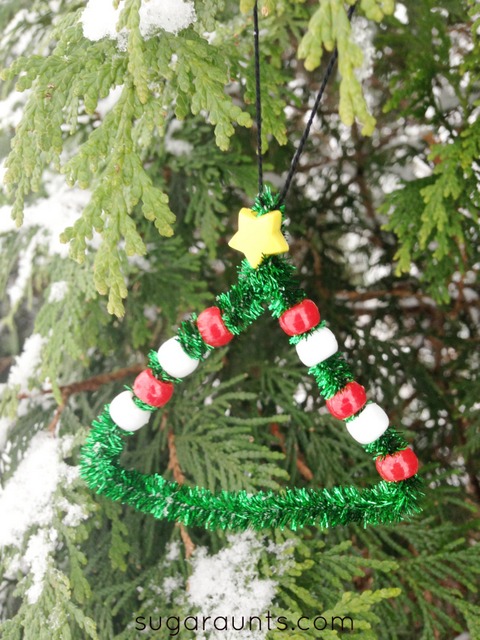
    Tripod Grasp Christmas Tree- Kids will love this Pattern Christmas Tree Craft because they can make it as sparkly as they like! Encourage a little math and visual motor work with patterns on the Christmas tree while promoting a tripod grasp. 

    spaghetti wreath christmas craft
    Spaghetti wreath craft is a great sensory craft for Christmas.


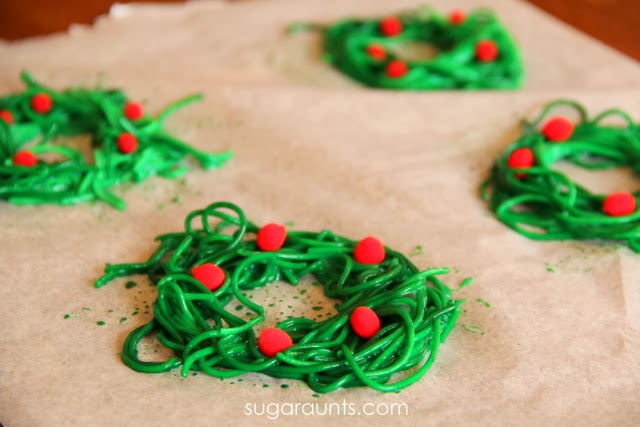
    Tactile Sensory Play Wreath Ornament- This Spaghetti Wreath Ornament is another process art Christmas craft that kids will love. In fact, it’s a sensory goldmine and can be used for sensory play along with fine motor work and crafting! 

    Christmas tree suncatcher
    Christmas tree suncatcher craft


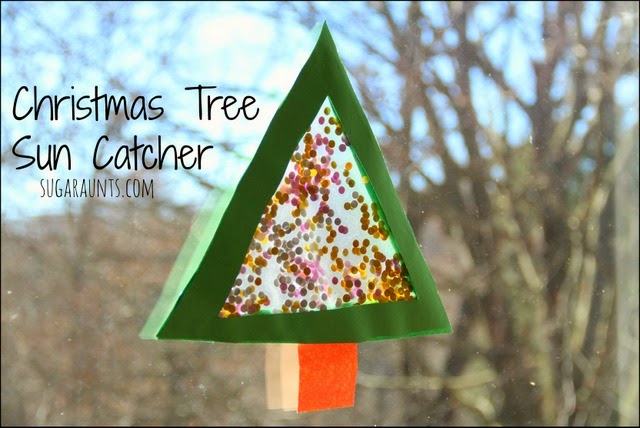
    Precision Christmas Tree Suncatcher Craft- Need a Christmas craft that helps with precision and dexterity? This Christmas Tree Sun Catcher Craft will make the windows look festive!


    Holiday Crafts without a Christmas Theme- To switch things up, here are several Winter Bird Crafts that boost fine motor skills and can be done this month or all winter long.


    Kid-Made Christmas Ornament Crafts Looking for ornaments the kids can make? This collection of ideas has something for everyone. It’s a great way for kids to make a holiday gift for their family while working on fine motor skills and other occupational therapy goals.

    Easy Christmas Crafts

    Therapy professionals are always looking for craft ideas that can be graded to meet the different needs of a variety of skill levels. Especially during this busy time of year, it can be so difficult to manage all of the holiday events in a school day (holiday parties, parades, school-wide assemblies, special events, sick kids that miss days of school, etc.) that meeting required IEP minutes during the month of December is tricky sometimes.

    That’s why a school based OT needs a quick craft idea that builds skills no matter what level the student is at: from preschool or pre-K up through high school and with a variety of skill-building areas. These craft ideas are simple, and can be graded up or down depending on the abilities of the student:

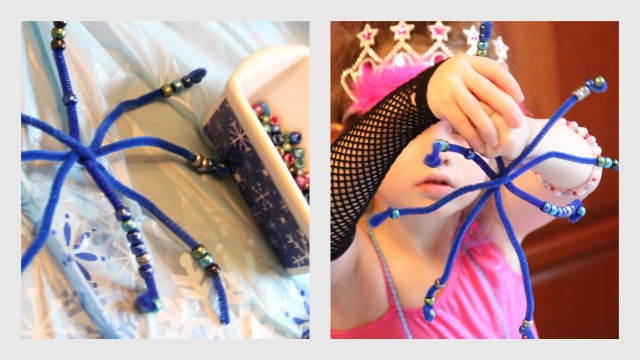
    Pipe cleaner stars are an easy Christmas craft for kids
    Thread beads onto pipe cleaners to work on fine motor skills.
    1. Thread beads onto pipe cleaners like we did in at our winter party.
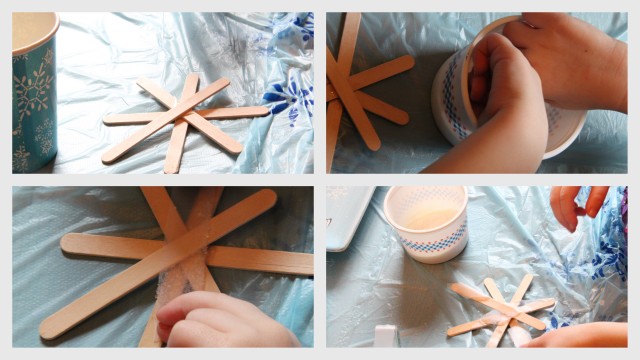
    Popsicle stick snowflake
    Use craft sticks to make a snowflake.

    2. Use popsicle sticks to make a snowflake to challenge tactile sensory touch and fine motor skills.

    paper icicle craft
    Cut paper icicles to work on scissor skills.

    3. Cut out paper icicles (we have a template in that post) to work on scissor skills and eye-hand coordination.

    Need more Christmas ideas? These Christmas Activities for Preschoolers are a big hit, too!

    Need Christmas craft ideas for this holiday season? These Christmas crafts for kids will keep the kids happy while strengthening fine motor skills, visual motor skills, coordination, and more while working on the skills kids need, all with Christmas crafts!

    More Christmas Activities for Kids


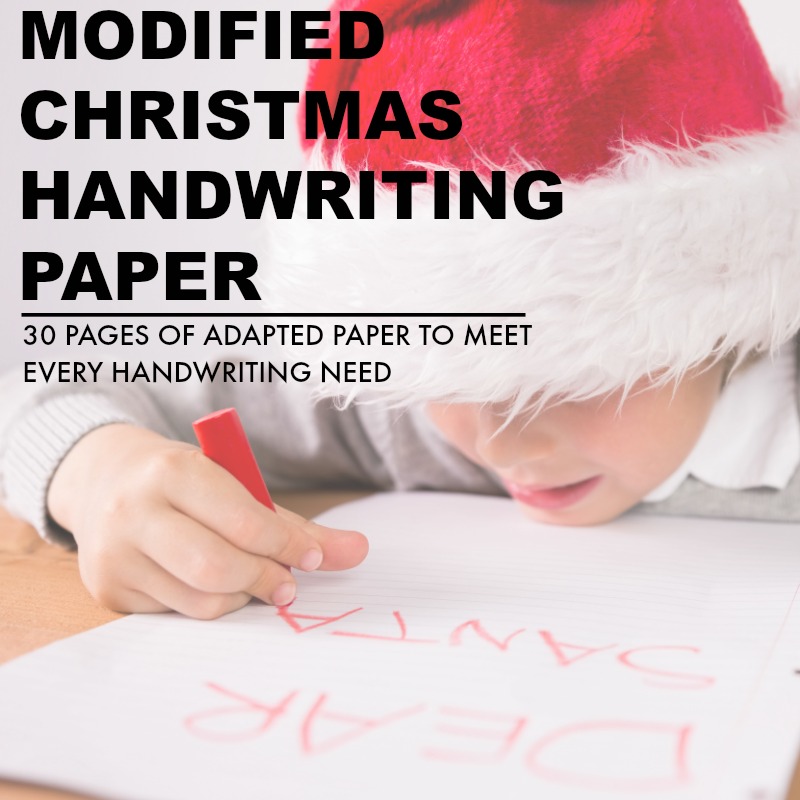
    Working on handwriting with kids this Christmas season? Grab your copy of the Christmas Modified Handwriting Packet.

    It’s got three types of adapted paper that kids can use to write letters to Santa, Thank You notes, holiday bucket lists and much more…all while working on handwriting skills in a motivating and fun way! Read more about the adapted Christmas Paper here.

    Need Christmas craft ideas for this holiday season? These Christmas crafts for kids will keep the kids happy while strengthening fine motor skills, visual motor skills, coordination, and more while working on the skills kids need, all with Christmas crafts!

    Christmas Crafts and Handwriting

    Pair the Christmas crafts with Christmas handwriting. Use one of the Christmas crafts for preschool parties or school holiday parties this time of year.

    Then, students can use the modified paper below to write a list of holiday words or even directions to complete the Christmas tree craft or reindeer antlers! 

    Breathing Star

    mindfulness-for-kids-christmas-coloring-page

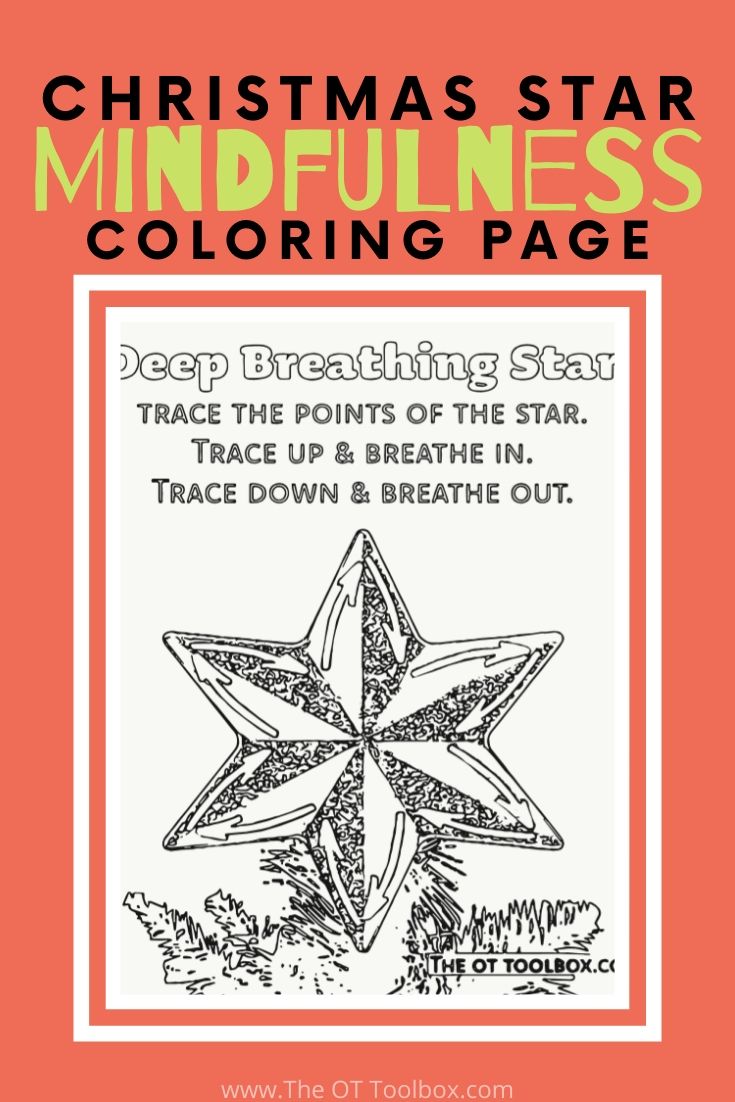
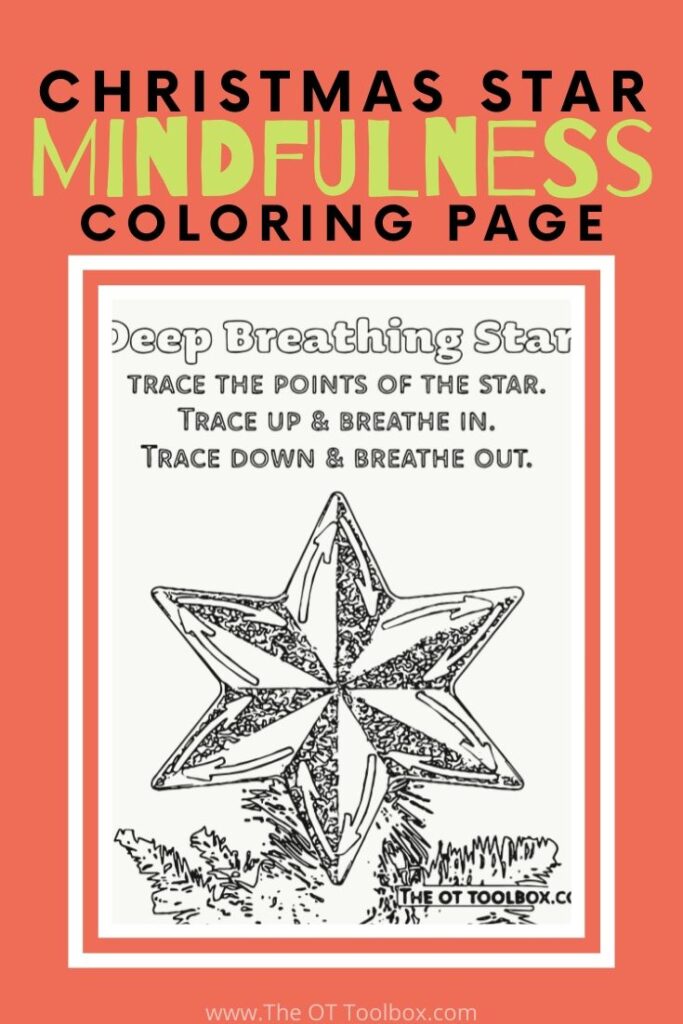
    This breathing star coloring page is perfect for Christmas Mindfulness and winter mindfulness activities…but today, we’ve got star breathing tool for you.

    Discussing mindfulness for kids is a powerful strategy in addressing so many needs. Kids with sensory processing needs or self-regulation needs, or even emotional regulation needs may benefit from this holiday awareness activity.

    Breathing Star

    First, let’s talk about what a breathing star is.

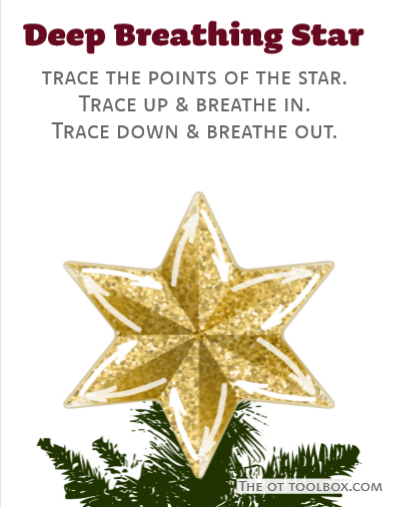
    A breathing star is a visual prompt that allows kids to follow a star design with their eyes or fingers to guide mindful and deep breathing. The breathing star can be a variety of shapes or forms, but the benefits are the same.

    A breathing star might include:

    • A breathing star drawn on paper while doodling
    • A printable star coloring page like the one below
    • A star with arrows that a user can follow with deep breaths
    • This Star of David deep breathing tool

    It’s a free printable Christmas coloring page with benefits! Scroll below to grab your printable page.

    mindfulness-for-kids-christmas-coloring-page

    This mindfulness tool goes along well with our wreath breathing exercise,  Pumpkin deep breathing exercise, and Thanksgiving mindfulness activity.

    what does mindfulness for kids mean?

    Why Use a Breathing Star?

    First, let’s talk about what mindfulness means. Mindfulness in children is the ability to be aware of one’s actions and self in the moment. 

    Mindfulness for kids is an important part of self regulation and the ability to regulate our senses, feelings, and body.

    Consideration of well-being is important in addressing occupations across environments. OT practitioners can address mindfulness as a means for improving regulation, self-efficiency, stress, anxiety, trauma exposure, or other issues the child may face. Some mindfulness strategies for kids include breath awareness, body sweep, and labeling of feelings.

    One such mindfulness tool for children includes deep breathing. Combining this with stress-reducing coloring or focused activity can be a means for helping kids to become aware of how their body is responding to outside input or stressors.

    You’ve probably seen the variety of coloring books out there designed as coping tools for stress or anxiety. These can be a way to teach kids about focused awareness and mindfulness in the moment.

    It allows us to focus on the present moment, while calmly acknowledging and accepting what’s happening on the inside: in our feelings, thoughts, or sensations. This can be a tough skill for kids to master and why a breathing star can support that need.

    For kids, mindfulness is a skill that allows them to be aware of their body and how it’s responding in the moment. Mindfulness for kids is important for them to have the ability to pay attention and responding to input from the world around us.

    Mindfulness in kids means noticing their body and the things happening around them. It has a lot to do with impulse control. Just like any other skill, mindfulness is an ability that develops over time.

    It’s easy to see how this skill relates to so many other areas that occupational therapists address: self-regulation, self-confidence, attention, social-emotional skills, coping skills, sensory processing, impulsivity and inhibition, and overall well being.

    Also be sure to check out these Mindfulness for Kids YouTube Videos.

    How to Use a Breathing Star Visual Support

    A tool like this self regulation star is easy to use:

    1. Start with a pointer finger pointing at any of the points on the star.
    2. Take a deep breath in as the finger traces along the arrow.
    3. When you reach one of the points of the star, pause and hold your breath.
    4. Then, trace along the arrow to the next point as you breathe out.
    5. When you reach the next point of the star, your lungs will be empty. Pause and hold your breath with empty lungs.
    6. Continue as you trace along the outer edge of the star, pausing to hold your breath at each point.

    How Does a Breathing Star Work?

    The best thing about the printable breathing star is that it is a visual cue that can be used in any situation or no matter the environment.

    We cover how a printable tool like this sensory breath star can support a variety of needs in our resource on breathing exercises.

    The benefit of the breathing star is the pause points at the end of each star’s point. This pause point allows for breath control. As the breath is held after filling the lungs or emptying the lungs, the lungs continue to expand as does the rib cage. This offers interoceptive awareness as heavy work fills the chest area.

    We cover this sensory strategy in our resource on relaxation breathing.

    Occupational therapy practitioners working with children are interested in the well-being and the whole child. Functioning and independence in daily occupations are impacted by the “whole child”. The breathing sensory star offers the tool to support these needs.

    Christmas star mindfulness for kids activity and coping strategy for deep breathing and awareness.

    Below is a free printable coloring page for holiday mindfulness. Pair this with our Christmas Mindfulness coloring page for a mindfulness exercise for kids.

    Get a Christmas Star Mindfulness Coloring Page

      We respect your privacy. Unsubscribe at anytime.
      Powered By ConvertKit

      Sensory Touch

      sensory touch

      One of the first postnatal senses to develop is sensory touch.  There are eight senses to sensory processing, with touch being one of the more important ones.  The tactile system helps the brain understand and make sense of the world around it. Starting in infancy, people use touch to explore objects, protect themselves from danger, and safely navigate their world. Sensory touch is an important piece to looking at a sensory processing disorder checklist.

      Sensory touch

      Sensory touch

      According to what we know about sensory processing, and looking at the sensory processing disorder chart, The body sends tactile information to the somatosensory cortex through neural pathways to the spinal cord, the brain stem, and the thalamus.

      The primary somatosensory cortex is the primary receptive area for touch sensations and is located in the lateral postcentral gyrus, a prominent structure in the parietal lobe of the human brain.

      Think of sensory touch and the tactile system as a set of wired pathways, similar to the inner workings of a machine. In a typical body, the wires are the correct size, go the right direction, and send the appropriate information from the touch receptors to the brain. 

      Types of sensory touch

      Three Types of sensory touch

      There are three types of touch; light touch, deep pressure, and discriminative touch.  

      • Light touch is alerting.  It may alert you to danger such as something touching the skin, or brushing against a spider web. For those with sensory sensitivity, light touch can be bothersome, painful, and elicit negative emotions. 
      • Deep pressure tends to be calming.  Hugs, weighted blankets, and compression clothing, offer external deep pressure sensory touch. Deep pressure can also alert the body about how tight something is, if there is too much pressure, or not enough. 
      • Discriminative touch alerts the body/brain to the type of sensory touch.  It helps describe the incoming information.  Was it sticky, wet, dry, rough, bumpy, hot/cold, or smooth?

      Sensory Touch Issues

      How does this affect people with sensory touch difficulties?

      If the sensory touch system is not functioning optimally, the wiring can be off. Some wires might be too large, sending too much information at once (sensitivity). 

      Other wires may be too small, not sending enough information (sensory seeking). 

      Sometimes the wires are too long, taking it longer for the messages to be sent to the brain and registered.

      Other times the wires don’t go where they are supposed to, and misinformation is sent.

      Slow responses to touch sensory input, or the wiring may be too long/send misinformation:

      • Doesn’t notice if hands or face are messy or dirty
      • Doesn’t cry when seriously hurt and isn’t bothered by minor injuries
      • May not notice if bumped or pushed

      Seeking out touch sensory input or the wiring is too small:

      • Touching people to the point of irritating them
      • Loves messy play
      • Likes haircuts
      • Constantly touching objects, running their hands along the walls, or playing in the dirt

      Sensitivity to touch sensory input or the wiring is too big:

      • Dislikes having hair cut or brushed
      • Difficulty with toe and fingernail cutting
      • Fussy with food textures
      • Avoids getting messy, wants to wash hands immediately
      • Does not explore with touch
      • Irritated with certain clothing textures, labels and seams and socks. Avoids new clothes

      Sensory Touch and Function

      So, how does touch affect functional tasks?

      Touch is critical to making sense of the world. Along with the other senses, it teaches the brain the characteristics of an object or situation.

      This is the reason babies and young children touch everything!  They can not understand a new object without physically exploring it.  

      Let’s break down the definition of sensory touch terminology:

      • Stereognosis – a fancy word meaning; the ability to feel an object, and know what it is without seeing it.  An example of stereognosis is reaching into a bag to find a set of keys. 
      • Dyspraxia – difficulty with motor movements. Without the correct sensory touch information, movements and motor planning can be difficult.  Is that sand going to be soft and squishy, how close to the wall am I walking, how much force do I use when petting this puppy?
      • Tactile defensiveness Inability to tolerate touching food, wearing certain clothes, standing in line, being touched, exploring the environment, or experiencing new tactile sensations.

      Another component of touch that impacts functional performance is the information about touch that keeps us safe and gives us information about the world around us. This includes touch information such as:

      • Where is a particular item touching me?
      • The sensory touch awareness that “disappears” over time (feeling your socks on your feet when you put them on, but then not constantly feeling the “feel” of the socks on your feet). This awareness isn’t always present in Autistic individuals.
      • Is this item hot or cold?
      • Is a particular item too sharp or dangerous?

      Somatosensory Touch

      Somatosensory touch is a physiological body process which includes several aspects of sensory touch:

      • Exteroception input which can include touch sensitivity, thermoreceptive input (heat and temperature awareness), pain receptors
      • Interoceptive perception– awareness of pressure or feelings inside the body
      • Proprioceptive perception– feelings and awareness of joints and body awareness.

      Research about the somatosensory touch sense

      There are several research articles available on the somatosensory or tactile system:

      1. This article covers the sensory neurons of touch, including important information about the somatosensory system which serves three major functions; exteroreceptive (perception of sensory stimuli outside the body and on the skin), interoceptive (perception of internal stimuli inside the body), and proprioceptive functions (for the perception and control of body position and balance). Of important mention is the inclusion of
      2. This article which covers the development of touch.
      3. This article which discusses the common influences of the visual and tactile systems in using similar cognitive processes to enable humans to rely merely on one modality in the absence of another to recognize surrounding objects.
      4. This article discusses how Meissner’s corpuscles work in sensory touch, and how the location and presence of the number and distribution of Meissner’s corpuscles occurs in different locations on the human body.

      These are scientific journal articles which provide facts and research on theories about the sensory touch aspect of sensory processing.  To the layperson, they are difficult to read and decipher. Using the wiring example above, along with concrete examples may prove to be more beneficial to caregivers.

      Sensory Integration and Touch

      Sensory integration is the ability to correctly receive and interpret information from the senses. Difficulty with sensory integration, often labeled sensory processing disorder, results in misinformation about incoming information.

      It can be in one or more of the senses.  

      For more information on this theory, please do read our resource on Ayres Sensory Integration for an understanding of what is happening in our nervous systems that results in the motor or behavioral output. It’s truly fascinating!

      Why do babies touch everything?

      Babies and toddlers explore with touch.  A person who has not integrated this sense, may need to explore with touch long beyond the acceptable time frame. Learners who are developmentally delayed may exhibit “inappropriate” sensory behaviors because their system is functioning at a much lower level. 

      A four year old functioning at a one year old level would be expected to explore with taste and touch. 

      Infants and children who are born prematurely may also have difficulty with sensory regulation.  Their sensory systems were not developed well in utero, and it is almost impossible to mimic the womb sensations in an external NICU. 

      Premature children may be especially vulnerable to sensory challenges.

      Sensory Touch Preferences

      Everyone has their own set of sensory preferences.  You might dislike wearing jeans, cut the tags in your clothing, love snuggling under a heavy blanket, or prefer not to get messy. 

      These can be normal reactions to touch.  It becomes a problem when the reaction to sensory input impacts function. 

      The person who can not wear any clothes, is not able to be around people who might touch them, or has a panic attack stepping on the sand, are on the further ends of the typical spectrum.

      Their ability to lead a productive life is being compromised by their sensory difficulties. These are the people who may benefit from treatment.

      What can I do about this?

      The first step is understanding. Understanding a child is not “bad” or being difficult on purpose. Provide good tactile experiences to nurture and build the sensory system. 

      Amazon affiliate links are in this list below.

      Hands on strategies to support sensory touch:

      Understanding sensory touch, along with the other seven senses is tricky and complicated. What seems like a basic human function, can be a tangled web of crossed wires and misinformation.

      NOTE*The term, “learner” is used throughout this post for readability and inclusion. This information is relevant for students, patients, clients, preschoolers, kids/children of all ages and stages or whomever could benefit from these resources. The term “they” is used instead of he/she to be inclusive.

      Victoria Wood, OTR/L is a contributor to The OT Toolbox and has been providing Occupational Therapy treatment in pediatrics for more than 25 years. She has practiced in hospital settings (inpatient, outpatient, NICU, PICU), school systems, and outpatient clinics in several states. She has treated hundreds of children with various sensory processing dysfunction in the areas of behavior, gross/fine motor skills, social skills and self-care. Ms. Wood has also been a featured speaker at seminars, webinars, and school staff development training. She is the author of Seeing your Home and Community with Sensory Eyes.

      Thanksgiving Mindfulness Activity

      Turkey exercise for a mindful thanksgiving

      Having a mindful Thanksgiving is so important, but have you ever considered HOW to achieve Thanksgiving mindfulness during a time when abundance is everywhere? Today, we have a few tips on holiday mindfulness, but also a great turkey exercise. This Thanksgiving deep breathing exercise is a tool to use when the overwhelming feelings of a big holiday event can overcome emotions and behaviors. Add this turkey activity to your Thanksgiving occupational therapy plans.

      Thanksgiving Mindfulness

      This time of year, being mindful is a huge part of the gratitude of Thanksgiving. This Thanksgiving Mindfulness activity doubles as a deep breathing coping strategy but also is helpful in teaching kids to be mindful during a time of year when the holidays can get the best of them.

      A few weeks ago, you may have seen a Pumpkin deep breathing exercise on The OT Toolbox. This mindfulness strategy is inline with that coping tool. Use it to talk to the kids about mindfulness or as a sensory strategy.

      You can also use this activity along with our Thanksgiving tree to work on mindset and gratitude.

      Thanksgiving mindfulness activity with deep breathing exercise to use as a coping strategy with kids.

      During the time of year when signs of a feast is everywhere (from a family get together to a feast in the classroom), it can be easy to become overwhelmed by tensions, boundaries of others, and even the over-abundance.

      For our kiddos with sensory needs, we see this play out in emotions, behavioral meltdowns, and sensory regulation needs.  

      However, for ALL of us, sometimes having an open mind and mindful strategies can support a complex season. 

      Mindfulness for kids can be a creative way to address common concerns with attention, self-regulation, self-awareness, coping skills, and concentration.

      Mindfulness activities can be a way for kids to be more present in the moment, and more aware of themselves in every situation, including in the home, in the classroom, and while performing everyday activities.

      With the turkey exercise below, we use a few areas of mindful attention:

      • Deep breathing
      • Coloring (if using the coloring page)

      Deep breathing exercises can improve a child’s attention, emotional regulation through mindful attention to Breath Control

      Breathing exercises are a coping tool to support relaxation by attentive breathing. When focused breathing occurs with breath control to inhale a deep, diaphragmatic breathing strategy, and then held for a moment to hold the breath at full capacity, there are many calming benefits, which can slow a racing mind. This relaxation breathing is a breath control mechanism.

      Mindfulness Strategies for Big Holidays

      There are many ways to incorporate mindfulness into holidays like Thanksgiving or Christmas. You can still honor the spirit of Thanksgiving or other big holidays even when overwhelm and a racing mind are at play.

      Here are some of our favorite mindfulness tools for holidays:

      • Fun Mindfulness activities for kids–  creative mindfulness exercises that can help kids feel better, reduce stress, address anxiety, and have a greater awareness of their body and mind. Mindfulness activities for kids can be used as a self-regulation tool or a coping strategy. 
      • Go for a quick walk to add movement, heavy work through the body, and the opportunity to take a few deep breaths.
      • Make a list of things you are grateful for. Use that gratitude to pray, give thanks, or use in gratitude meditation.
      • Talk about gratitude with kids. This Bear Says Thanks activity is a great hands-on activity for this lesson.
      • Take a walk in nature and practice gratitude while walking
      • Talk about gratitude. You don’t need to save thankfulness for the Thanksgiving table. Talk about the things you are thankful for each day.
      • Consider mindful eating during big meals or family meals.
      • Winter Theme Mindfulness Activities–  Use these tips for mindfulness in the classroom and creative mindfulness exercises with a winter theme. 
      • Mindfulness Videos on YouTube– Use these YouTube videos to help kids pay attention and responding to input from the world around us, including emotionally and cognitively. 
      • Make gratitude and mindfulness a habit. 
      • Adding a quick morning meditation can help with overall wellbeing.
      • Hug your friends and family. Did you know there are benefits to giving and receiving hugs? Not only do they offer proprioceptive input through deep pressure, but they can be very calming.

      Turkey Exercise for Mindfulness

      This mindfulness activity is a fun one for kids this time of year. Like our pumpkin deep breathing exercise, we used a visual graphic of a turkey paired with directions to breathe deeply as a sensory coping strategy. Use the turkey deep breathing activity to teach kids mindfulness and awareness.

      Use the printable along with these free Thankful Turkey Templates for hands-on play.

      What better activity is there for Thanksgiving and the season of gratitude?

      • Kids can use this Thanksgiving mindfulness activity to wind down after a busy day, cope with sensory overload, and be more aware of things they can express gratitude for.
      • Use the printable turkey exercise as a breathing tool during the chaos of a family dinner.
      • Use this Thanksgiving themed mindfulness tool to address sensory issues such as sensory overload. It’s a great way to add a mini-sensory break into busy days filled with family and festivities. Simply taking a few moments to add deep breathing exercises can help with feelings of overwhelming sensory overload and add the calming moment a child might need.
      • It works for kids of all ages, too…take a few moments with your kiddos to step back, breathe deeply, and express gratitude or awareness.

      It’s a great way to introduce mindfulness to children with a visual representation of the deep breathing strategy and awareness of the world around them.

      Ok, so how does this work? Let’s try this mindfulness meditation task!

      How to Use this Turkey Exercise for Mindfulness

      Print off the turkey exercise by entering your email address into the form below. This resource is also available in our OT Toolbox Member’s Club, on the Thanksgiving Therapy Theme page.

      1. Use the visual graphic to follow the arrows as you take deep breaths in and out.
      2. Pair the deep breathing with thoughts of things that you are thankful for with each breath.
      3. For each feather on the turkey, you will concentrate on one thing, person, or aspect that you are thankful for. Maybe it’s a warm house. Maybe you are thankful for the sun shining outside. Maybe it’s a frantic house filled with family and friends. Maybe it’s a job that pays the bills.

      Thinking about whatever it is that you are grateful for is a simple way to pair the benefits of slow deep breaths with intentional thoughts.

      Use the Thanksgiving mindfulness with kids as a group or individually. You can set this up in several ways. Ask them fist to list out some things they are thankful for. Then, quietly say an item with each breath break.

      Use the Turkey Deep Breathing Exercise in a Group

      This exercise is a great addition to group gratitude activities.

      As a mindfulness group activity, use the turkey graphic and explain that they will be pairing deep breathing with a focus on gratitude. Come up with a list of things the group is thankful for and as you work through he deep breathing exercise, the children in the group can focus on things that they are thankful for personally.

      Or, you could invite the child to think in their head about some things they are thankful for and then with each breath in, they intentionally concentrate on that thing/person/idea.

      Adding the deep breathing exercise with intentional thoughts makes this a Thanksgiving Mindfulness activity that can be so helpful for kids (and adults) of all ages!

      Thanksgiving mindfulness activity for kids

      Thanksgiving Exercise for Deep Breathing

      When focusing on gratitude and mindfulness during the Thanksgiving holiday, having an exercise with a turkey theme is a fun way to support self-regulation needs.

      If you include this Thanksgiving exercise with gratitude and mindful breathing, it’s a great sensory tool, especially when worries or overthinking is happening. Gratitude and mindfulness can be powerful coping tools for anxiety by helping individuals shift their focus from negative thoughts and worries to more positive and present-moment experiences.

      Pair this Thanksgiving exercise with gratitude by asking the user to think of things they are thankful for as they complete each breathing exercise.

      This can help the user because mindful breathing and gratitude helps us to be present in the moment, promotes relaxation, and supports emotional regulation.

      Free Thanksgiving Mindfulness Exercise

      You can print off a version of this turkey exercise deep breathing tool. Enter your email address into the form below. The OT Toolbox Member’s Club members can access this resource inside our Member’s Club on the Thanksgiving Therapy Theme page.

      Free Thanksgiving Mindfulness Turkey Exercise

        Are you interested in resources on (check all that apply):
        We respect your privacy. Unsubscribe at anytime.

        Colleen Beck, OTR/L has been an occupational therapist since 2000, working in school-based, hand therapy, outpatient peds, EI, and SNF. Colleen created The OT Toolbox to inspire therapists, teachers, and parents with easy and fun tools to help children thrive. Read her story about going from an OT making $3/hour (after paying for kids’ childcare) to a full-time OT resource creator for millions of readers. Want to collaborate? Send an email to contact@theottoolbox.com.
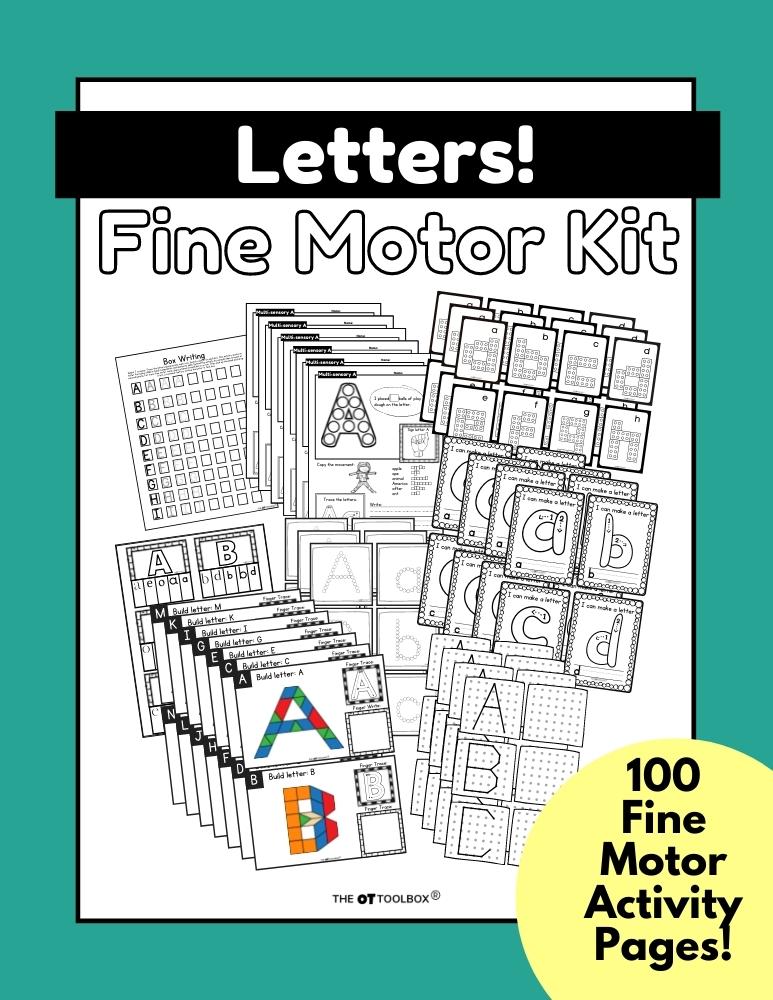
        Turn Taking

        turn taking

        We all use turn taking on a daily basis. Taking turns in conversation, walking through a doorway, during meals, at appointments, while shopping, and even while driving are just some examples of how turn taking occurs day in and day out. While learning to take turns is a part of social emotional development, this can be a real challenge for some kids. Here, we’re covering all things turn taking: development, how to teach kids to take turns for functional independence and self-care, and turn taking activities.

        turn taking

        Turn Taking

        So what does turn taking mean? Turn taking, or the act of taking turns in a situation, conversation, or even means sharing space and time with another individual. Turn taking can look like many things:

        • Speaking and then listening when others speak in a conversation
        • Taking turns in a game
        • Taking turns in line to get a drink from a water fountain
        • Waiting one’s turn in a food like like in the cafeteria
        • Taking turns in speaking during circle time or sharing time in the classroom
        • Taking turns with a favorite toy
        • Waiting while others have an opportunity to receive services such as a food server in a restaurant
        • Waiting for one’s turn in a scheduled event such as at doctor’s appointments or waiting for one’s number to be called at the deli counter
        • Taking turns in moving situations such as when walking through a door or when turning at a stop sign
        • Sharing a responsibility such as when taking turns taking out the family garbage or caring for a family pet
        • Taking turns to get on or off a school bus, or while waiting in line at the car drop off line
        • Taking turns with a toy in the home or in the classroom
        • Taking turns using equipment like slides, swings

        As you can see, taking turns is part of daily life. There can be limitations to aspects of turn taking in some situations, for those with intellectual or behavioral considerations, particularly in the social circumstance of conversation or sharing a toy.

        Other circumstances that offer a more concrete environment such as waiting for one’s turn in a doctor’s office waiting room can be an opportunity to practice the components that allow for turn taking skills.

        Throughout a preschool day, children are expected to wait often. This could be while they wait for a snack, wait to go to the bathroom, wait during a transition, wait for a toy or wait for a turn in a game. As children become exposed to more opportunities to practice taking turns, they get better at it and more patient. But when they first start out, taking turns can be frustrating for children and teachers alike! This aspect of turn taking incorporates the working memory skill in transitions for children.

        Turn Taking in Conversation

        Turn Taking in Conversation- This component is one that is modeled, and a part of social emotional learning. Interrupting a conversation, speaking out of turn, and interrupting instruction is an important skill to understand.

        Turn taking in conversation is important for social reciprocity, but also safety. This skill requires auditory processing skills and receptive language skills.

        What is social reciprocity?

        Social reciprocity refers to the give and take of social interactions, including conversation, verbal interactions, or physical interactions.

        Social-emotional reciprocity (SER), or the give-and-take of a social interaction is also a part of the turn taking continuum. Social reciprocity refers to an individual’s ability to engage in social interactions between two or more people.
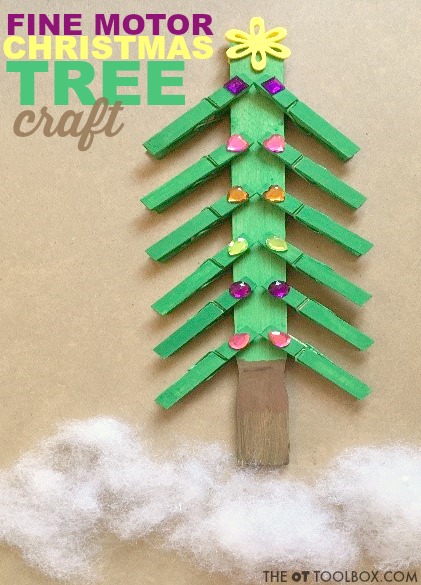
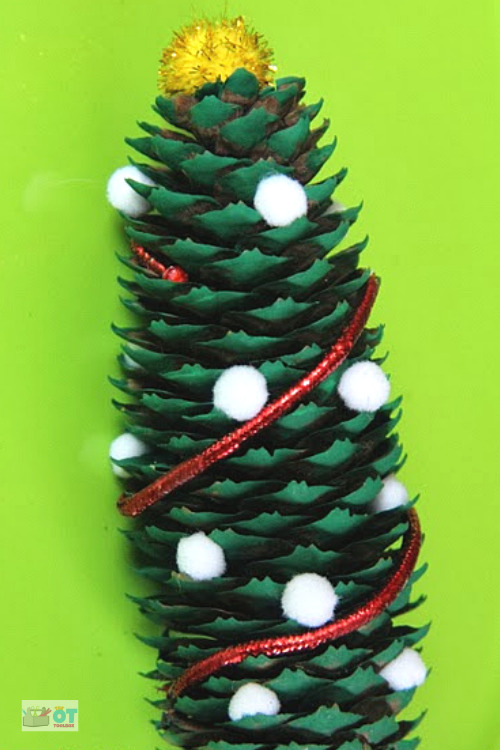
        This ability can be difficult or impossible for some individuals, and may be a consideration especially with some, but not all Autistic individuals.

        Taking turns with others, or social reciprocity, is a social emotional skill that is needed for many areas including learning, play, interacting in the community, conversation, and other areas. Let’s cover social reciprocity and how turn taking games or activities can be used to develop social emotional skills.

        Social reciprocity develops from birth. We see this when babies mimic facial expressions, or eye gaze. This interaction occurs with the parent or caregiver during feeding, but we see this give and take develop very quickly.

        Continued back-and-forth interactions occur through play, vocalizations, and in daily activities like during dressing, wake/sleep time, etc.

        With development of verbal communication, social reciprocity further expands, particularly as verbalizations progress from sounds, to words, to monologue communication, into a conversation.

        When children grow, typically we see a conversation ability expand. This develops as executive functioning, inpuarticular working memory skills, develop.

        We see references to previous conversations or information. We see social interactions in various situations. We see public speaking, or speaking out in a group. All of these are part of social reciprocity and the use of turn taking in social situations.

        For some of the individuals we work with, particularly Autistic individuals, we may see a preference to talk about one particular topic. The give and take of the conversation, or the reciprocity aspect is not there. It might be that they either do not respond to these social initiations because they do not realize that there is a back-and-forth aspect. Or, it could be that the social cues (such as verbal fluctuations, pauses in communication, eye-contact, and other nuances of a conversation or social situation are not addressed.  

        So, as you can see there is a huge social aspect to turn taking.

        Turn Taking Development

        Young children are learning new skills everyday, and even more-so when they are in groups with other children. A child’s environment can include a variety of objects that they would like to use the same time that others are using them.

        Taking turns isn’t a skill children are born knowing how to do. In fact, as babies, we are all very self-serving and aware of only individual needs. This developmentally, serves the infant and baby. Crying out is a survival instinct. There is no “turn taking” in sleeping through the night or wanting to be fed at all hours of the day!

        Turn taking develops as a skill through modeling and observation…and then practice with age.

        There are several developmental components that play a role in turn taking abilities:

        • Awareness of self
        • Awareness of others
        • Executive functioning (working memory, attention, task completion, etc.)
        • Intellectual awareness (first, then concepts)
        • Spatial awareness

        Young children learn how to share through ample opportunities and supported facilitation from adults. When children are in a group with other kids, opportunities to learn how to take turns or comes in a variety of forms, waiting for an object, waiting to participate in an activity and waiting for their turn when they are in a large group of children completing a similar task.

        Below, you will learn some simple ways to support turn taking activities using visuals.

        Turn taking activities

        Turn Taking Activities

        We can support turn taking skills through activities driven by modeling, practice, and play.

        Visual Supports- Visuals support children in understanding what another person wants. Visuals can be utilized with a parent-child relationship, a teacher-child relationship, and even a child – child relationship.

        As children learn more words, they are able to comprehend directions (both new and familiar), but before they learn meanings of words, visuals will help a message be communicated. 

        Other visual supports can include:

        Verbal supports- As an early childhood educator, I like to give children the opportunity to play with an object for as long as they would like without putting a time limit on it. I don’t use timers in my class to signify when a child has to be done with a toy.

        When children are playing with toys, they are using that object for a purpose, and it can be frustrating to hear a timer go off in the middle of their game. This can cause frustration from the child around having to end their play and some friction around the child that will be receiving the toy.

        Instead, we say the phrase “when you are all done, then _________ would like to play.” Typically a child is done using a toy within 15-20 minutes and the next child gladly accepts the toy. 

        Verbal supports can include:

        • Verbal prompts
        • Music or other auditory prompts
        • Modeling
        • Social stories

        activities to promote sharing and turn taking

        In the classroom environment, kids may have their first experience with turn taking and sharing.

        Here are my five favorite ways to teach sharing and turn taking with preschoolers.

        1.Use a turn taking chart. 

        When multiple children are excited about using a toy (such as the tricycle outside), it may take a while for one child to be done playing with that object. When there are multiple children waiting for one item, they tend to become frustrated because they don’t want to loose their spot in line.

        That is where the turn taking chart comes in!

        This chart is simple. It can be made with a chalkboard or white board, hung outside near a highly desired item. When multiple children are requesting an object, the adult can write their name in order on the white board. When one child is done with the object, the teacher can cross that name off and go to the next name on the list.

        This allows children to feel confident they can play with something else while they wait and they won’t be forgotten or skipped. As a bonus, this activity teaches written name recognition to children, as they learn how to read the list and find out when their turn will be.  

        2. Use turn taking cards.

        One of the most common times that “turn taking” becomes an issue in the preschool room, is when a child gets up to go to the bathroom or get a drink, and they come back to find the objects they were using have been swiped up by another child or put away by a teacher cleaning up.

        Turn taking cards are my favorite way to prevent this from happening. This simple 5×7 card has a child’s picture glued to the front and the words “ (child’s name)’s turn!)

        Every child in the classroom has one and they can place it on an object they are using if they need to step away for a minute but want to return to finish what they were doing.

        Children and teachers understand that the child is coming back to continue working and leave the object alone. A wonderful children’s book that has some more examples of turn taking cards is the book (Amazon affiliate link) “Sammy Learns to Share: A Lesson in Turn Taking!”

        3. Teach Large Group Turn Taking. 

        During large and small group activities, such as circle time, centers, specials classes (gym, music, etc.), lunch time, recess, or group activities, children have to wait their turn to participate.

        This could be waiting to share an idea during circle, stir the cookie dough at snack, or wait to be the Goose during Duck Duck Goose!

        There are some fun ways to visually share whose turn it is now and who will be next. If you are going around in a circle (which is often the easiest) the child whose turn it is can hold onto an object. This could be a  “speaking stick” or a “stirring chef’s hat” they are wearing for a cooking project.

        4. My turn Your turn cards- Printable cards that simply say “my turn” and “your turn” could also be used! When children are able to see whose turn it is and who will be next, their patience increases! 

        5. Turn taking routine charts.

        These visual boards are great to use during everyday routines, such as bathroom time, snack time or lunch time. I also add children’s pictures to these visuals, when practicing taking turns during routines.

        Add children’s pictures in a specific order, so the children know who is next to complete the daily task.

        Using visuals communicate to children what is expected of them and when. As they become used to the routine and taking turns, fading out this visual tool may be possible. 

        6. Play turn taking games.

        Turn taking games are fun ways to practice the skill of taking turns. I love giving children plenty of opportunities to practice taking turns with their peers and siblings. When young children have time to practice new skills, including social skills, they will become familiar and attentive to situations where they need to put these skills into practice.

        Luckily, the skill of taking turns and sharing time, space, and physical objects can be practiced with almost every game. This is especially great for toddlers through preschoolers and utilize items that you already have.

        Meltdowns with Taking turns or sharing

        What if after all of these strategies, kids are still frustrated with taking turns? You have probably seen a meltdown or temper tantrum because a child or even teenager or adult is asked or required to take turns or share.

        It’s important to remember with young children or individuals with Autism or other considerations, that turn taking is asking too much of the individual. There is not the ability to cognitively or physically see the reasoning to share or take turns.

        When a meltdown or temper tantrum occurs, what is going on behind the “behavior” or actions that we are seeing? It is likely that the physical or verbal responses to this request is inability to communicate one’s wishes or needs. Or, it could be that the individual simply does not see the reasoning for the turn taking or sharing request.

        Sometimes, children still have a hard time with waiting and taking turns. They could become upset and need a few moments to calm down or be redirected to a new activity.

        Addressing self-regulation tools as a strategy to address emotional regulation needs can help.

        The (Amazon affiliate link) Soothing Sammy Program is a wonderful way to support children in calming down if they become upset or overwhelmed. The sweet story begins with children visiting Sammy, a golden retriever, when they are frustrated, sad or mad. Sammy shares some calm down items with them (such as a drink of water, a squishy ball, a place to jump, etc).

        When the children are calm, Sammy helps them devise a plan so they can decide what happens next. In the back of the book, there are instructions on how to build your own Sammy house for your home, classroom or clinic, for the Sammy plush included in the program. Children can visit Sammy to calm down when they feel overwhelmed. You can find the full Soothing Sammy program here.

        Young children are just learning how to engage in play with peers and their social skills are also developing at a pace that sometimes seems frustrating to adults.

        As children are exposed to more opportunities to take turns, and are given the visuals and extra supports needed to learn how to respond to frustrating situations, they are able to adapt, learn new skills and eventually take turns with minimal interventions.

        Visual supports are a wonderful way to remind children that they are heard and that their turn is coming! Which visual supports are your favorite?

        Jeana Kinne is a veteran preschool teacher and director. She has over 20 years of experience in the Early Childhood Education field. Her Bachelors Degree is in Child Development and her Masters Degree is in Early Childhood Education. She has spent over 10 years as a coach, working with Parents and Preschool Teachers, and another 10 years working with infants and toddlers with special needs. She is also the author of the “Sammy the Golden Dog” series, teaching children important skills through play.

        Executive Function Coaching

        executive function coaching

        In this blog we are covering what you need to know about executive function coaching, and how to use an executive functioning coach to best support cognitive skill needs. Whether as an adult with executive function, or a teen or child struggling with development of specific executive functioning skills, coach strategies can be a tool in the toolbox!

        Executive function coaching

        executive function coaching

        Often when we think of ADHD (Attention Deficit Hyperactivity Disorder), a high-energy young boy “bouncing off the walls” is what comes to mind. While some cases present that way, it is far from the whole picture.

        What many individuals with specific cognitive skill challenges are experiencing, including that energetic little boy, is called Executive Function Disorder (EFD).

        Those with EFD characteristics experience difficulties managing activities in their daily life and can benefit significantly from an ADHD executive function coach.   

        HOW CAN AN Executive Function COACH HELP?

        Specifically for attention and focusing considerations, an executive function coach is going to determine how specific challenges related to a diagnoses impacts this individual’s life.

        Coaching executive functioning skills might include:

        • Coming up with executive functioning skill accommodations
        • Supporting complex tasks like organizing, decision-making, and handling stress
        • Promoting development of skills such as attention to detail, working memory, and time management
        • Providing tools to support organization, focus, and reducing distractions
        • Streamlining functional tasks by creating “cheat sheets”, lists, and visual prompts
        • Offering supports such as apps
        • Helping to reduce clutter to limit distractions
        • Coming up with schedules and plans for functional performance in the home, work, school, or community
        • Helping clients create a plan for the day or week
        • Offering tools for emotional support
        • Providing resources on study skills
        • Support the client to break down tasks into steps
        • Supporting the development of mental dexterity in daily tasks

        By being very specific about what is happening in the brain and how that is impacting their life, a coach can recommend tailored accommodations for their clients. 

        An executive function coach recommends great treatment options by being evidence-based. This means that anything they recommend for treatment should be backed by expert knowledge.

        Supporting specific diagnoses with an executive Function Coach

        The thing about our brain is that we need it to do every task, both big and small!

        So, when things like staying on task, doing what you say you will do, meeting deadlines, and essentially functioning…is difficult, we can look at these tasks and see that there are cognitive skills that are needed to accomplish each task.

        When you break it down, executive functions refer to the skills of the brain which allow us to manage ourselves…to get things done. These skills include areas like planning, prioritization, working memory, attention, focus, task complettion, etc.

        However, executive function also refers to the processing of information in our brain and using that information. As a result we see areas such as managing our emotions, behavioral response, managing distractions, self-fixing to recognize when we are off track so wo can recover and accomplish a task at hand.

        These skills allow us to do everyday activities from making a bowl of cereal in the morning to eating the meal, to cleaning up the bowl.

        Without executive functioning skills, we end up hungry, living in a messy house, and in unsafe conditions. This is just a simplified example, but you can see how staying focused, problem solving, task completion, and using what we know (working memory) allows us to live as a functioning individuals.

        One route to determining how it impacts their life is to fully understand their specific diagnosis. A diagnosis such as ADHD will have certain features that impact executive functioning skills and will differ from a diagnosis such as Down Syndrome which also has features that impact executive functioning. Each diagnosis will present differently, but an executive function coach can support these areas.

        Likewise, executive functioning difficulties can present without a diagnosis in place. A coach will support the features of the challenges the individual has, which impact functional performance: school tasks, work tasks, daily life tasks, etc.

        Let’s break down how a specific aspects of a diagnosis can be addressed with an executive function coach, based on an example diagnosis of Attention Deficit Hyperactivity Disorder.

        There are three subtypes of ADHD, as characterized by the DSM-5:

         1. Predominantly Inattentive

         2. Predominantly Hyperactive-Impulsive

         3. Combined Inattentive and Hyperactive-Impulsive 

        A good executive function coach is an expert in ADHD and will be able to understand which subtype their client has, and how it can affect their daily activities and relationships.

        Luckily for practitioners, the subject of ADHD has been of high interest to researchers and funding sources, so there is a good amount of evidence to support claims.

        This evidence is sourced from high-quality research articles, information from trusted organizations, and experiences from experts in the field. The best coaches provide for their clients by continuing to adapt as new information becomes available. 

        What does an Executive Function Coach Do?

        Getting specific, executive functioning coaching may support individuals with accommodations, tools, and practice.

        A coach will work with a client on developing and using skills to meet executive functioning needs.

        Let’s discuss what an accommodation is, and why they are so often used for those receiving executive function coaching services:

        There are two main pathways to intervention in therapy: changing the person to better the person OR changing the situation to better the person. Accommodations are used when the situation is being changed. 

        Executive Function coaching strategies include:

        • Environmental Accommodations
          • Adjusting the environment to increase attention and comfort. This may include different lighting scenarios, auditory adjustments (i.e. noise cancelling headphones, music for attention, limited sound distractions), flexible seating options, or location. 
        • Tools as Accommodations
          • Memory and organizational tools such as post-it notes, color-coded items, visual ordering, graphic organizers, etc. (and a coach to initiate and educate on the use these tools)
          • Timers, alarms, and schedules to reduce the symptom of time-blindness 
          • Supports for visual noise
          • Specific apps for functioning and task completion. Here are occupational therapy apps that may work.
        • Adjustments to School/Work Requirements
          • Extra time or a separate location for tests, quizzes or other focused work
          • Flexible work deadlines
          • Movement breaks or “brain breaks
          • Additional processing time and/or multiple opportunities to learn a task 

        Additionally, an ADHD coach will work with their client to find what works for them in various settings, including: 

        • Attention-specific tools and practices based on what type of inattention is currently inhibited may be trialed for best outcomes. 
        • A Impulse control journal may be educated on and practiced with to reduce impulsive behaviors that are associated with some types of ADHD. 
        • Frequency and types of breaks to promote efficiency and reduce common ADHD burnout. 

        Executive functioning practice and trial- an EF coach will work with a client on trialing various strategies to see what works and what doesn’t. This can include things such as:

        • Practicing use of timers, schedules, checklists, etc.
        • Playing executive function games to develop skills.
        • Trialing use of Alexa apps to support specific needs in timers, alerts, etc.

        WHEN SHOULD I GET An Executive Function COACH?

        Executive functions develop beginning in infancy and continue to develop well into adulthood.

        Through that development, the symptoms of executive function disorder appear in different ways throughout one’s life. As we grow, our brains become more and more capable of completing complex tasks like organizing, decision-making, and handling stress.

        Experts in the field of ADHD believe the same is true for those with executive function disorder – that the brain will continue to naturally develop skills over time, slowly making up for the deficit in functioning. 

        With that in mind, it’s easy to recommend executive function coaching at any age where the individual is symptomatic. However, as with most therapy, the earlier, the better. The sooner that an individual can learn about themselves, their needs, and what accommodations are helpful for them, the better the long-term outcomes. 

        As an executive function coach, much is identifying and analyzing problems, identifying solutions, choosing the best supports, selecting a plan of action, and implementing a solution. Then, look at the next problem or see how the solution did or did not work. This sounds a lot like OT, right??

        Problem solving steps

        occupational therapy as an executive function coach

        You’ve probably noticed throughout this blog post that the many ways that executive function coaching supports daily tasks, performance of functional skills, and environmental considerations. These are all aspects of occupational therapy, making OTs perfect coaches for executive functioning needs!

        Sydney Thorson, OTR/L, is a new occupational therapist working in school-based therapy. Her
        background is in Human Development and Family Studies, and she is passionate about
        providing individualized and meaningful treatment for each child and their family. Sydney is also
        a children’s author and illustrator and is always working on new and exciting projects.

        Impulse Control Journal the OT Toolbox

        The Impulse Control Journal…a printable resource for helping kids strategize executive functioning skill development. When saying “calm down” just isn’t enough…

        When a child is easily “triggered” and seems to melt down at any sign of loud noises or excitement…

        When you need help or a starting point to teach kids self-regulation strategies…

        When you are struggling to motivate or redirect a child without causing a meltdown…

        When you’re struggling to help kids explore their emotions, develop self-regulation and coping skills, manage and reflect on their emotions, identify their emotions, and more as they grow…

        Grab the Impulse Control Journal to build organizational strategies, planning, prioritization, habits, and mindset in kids.