Crossing the Midline Activity Letter Rainbow

Crossing the midline letter activity

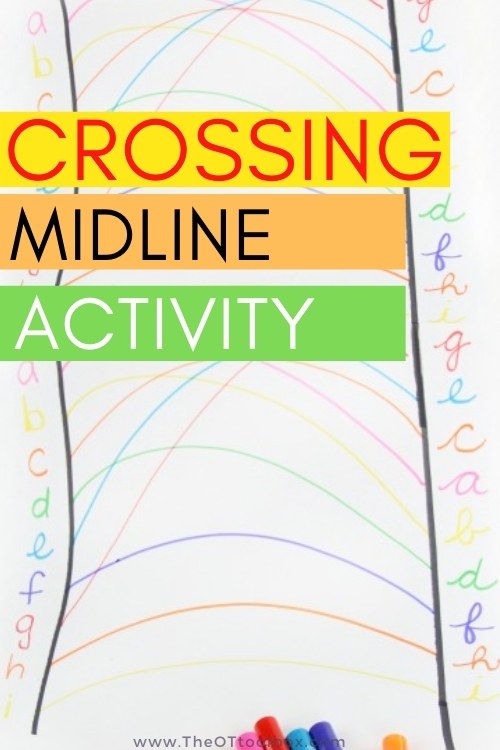
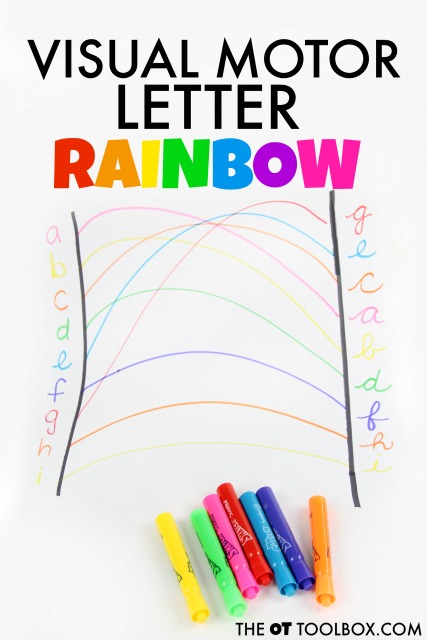
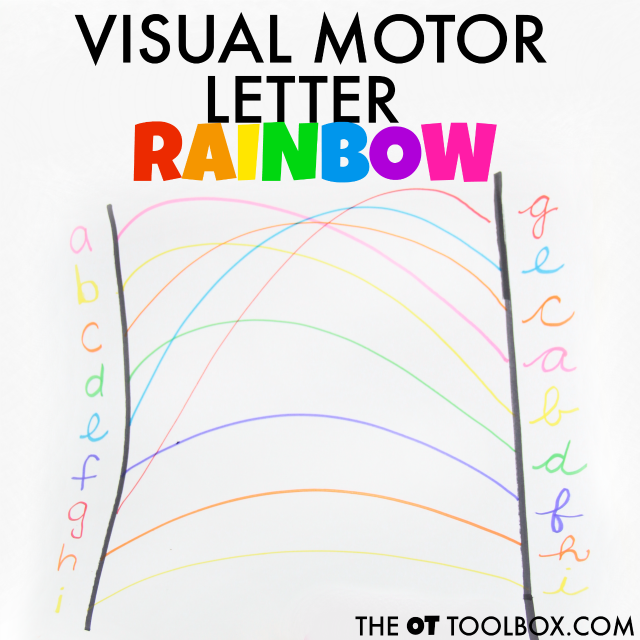
This crossing the midline activity is a way to help kids with crossing midline skills, as well as letter identification, using a rainbow theme. In the simple midline activity, children create a rainbow while visually scanning from left to right to match letters with different colors of the rainbow. It’s a letter version of our rainbow ladder that is also instrumental in helping children with underlying handwriting skills including visual motor integration and crossing the midline. Read more about midline crossing in our cross crawl resource.

Crossing the midline activity for letter fluency, visual motor integration, and midline crossing skills.

This particular  Kids can work on so many skills with this simple visual motor rainbow.  We worked on matching printed lower case letters to cursive letters but you could do this one with upper and lower case letter match-ups or just matching upper case to upper case.  Some of the underlying skills that is necessary for kids to write legibly are visual motor integration and crossing midline.  This visual motor integration letter rainbow works on those skills with a colorful result.

We also used our rainbow of hues to work on the visual motor skills needed for pencil control.  This activity also addresses the ability to coordinate visual input to the motor movements of the hands. Kids can work on their fine motor development with the simple rainbow activity described below.


Work on crossing the midline and letter identification to match letters to cursive letters with a rainbow.


Crossing the Midline

In another blog post, we cover more about crossing the midline, particularly with the lower body, in a midline marching activity for children.

So, what crossing the midline?  

Midline of the body is an imaginary line that drops from the middle of the head, strait down over the nose, to the belly button and divides the body into left and right sides.  Many movements and functional tasks occur with just one hand, like holding a phone. A user could hold the phone on one side of the body and turn their head to that direction. In that particular task and positioning, the activiy is localized to a side of the body and doesn’t cross the midline.

Other tasks occur at the midline. This includes activities such as reading a book or brushing the teeth. The dominant hand will do most of the work, like turning the pages of the the book or manipulating the toothbrush, while the nondominant hand assists in the task.

In our examples, the activity occurs mainly at midline, and there is not much crossing over of the middle of the body. However, the non dominant hand might assist by holding the book or by squeezing the toothpaste onto the tooth brush, (or holding the toothbrush while the dominant hand squeezes the toothbrush).

As a side note, many of these muscle movement patterns are not something that we think through throughout our day. The movement patterns are just automatic and natural.

That is part of muscle memory and motor planning that has been established and ingrained. Trouble occurs when there is a block to the automaticity such as difficulty with crossing the midline.

Still other activities require intense midline crossing. This includes activities where the midline must be crossed in order for the task to be completed. Activities exemplifying midline crossing include dressing the lower body or in play.

In the example of dressing, you notice that one arm reaches over the midline in order to feed the opposite foot into a pants leg. Similarly, with pulling on socks, both hands reach to one foot and the right arm crosses the midline when pulling on the sock of the left foot.

Crossing midline refers to moving the left hand/arm/foot/leg across this line to the right side (and vise versa).  Crossing midline also refers to twisting the body in rotation around this imaginary line, and leaning the upper or body across the middle of the body.

Problems with Crossing the Midline

When crossing the midline is a problem, or it’s not been properly established as an automatic movement pattern, you may notice these movements instead of crossing midline:

  • Switching hands during an activity
  • Twisting the body to complete tasks- rotating the trunk to complete tasks
  • Preferring to use one hand over the other: Using the right hand for tasks on the right side of the body and using the left hand for tasks on the left side of the body
  • Mixed dominance
  • Trouble with fine motor tasks that require two hands: writing, coloring, cutting with scissors, manipulating utensils, cutting with a knife and fork, etc.
  • Trouble with gross motor tasks like jumping, skipping, hopping, crawling
  • Trouble with laterality
  • Trouble with keeping their place when reading across a page

Crossing the Midline Letter Activity

The midline letter activity described here is a beneficial way to work on crossing midline for several reasons:

  • The activity encourages children to cross midline with large motions across a page
  • The activity encourage visual shifting to scan across a page, incorporating crossing the midline into reading and writing tasks which can impact reading fluency and accuracy
  • The activity works on letter identification and challenges children to integrate visual skills with movements (hand eye coordination)

In the crossing the midline letter rainbow activity described here, we worked on cursive letter identification.

Many times when children practice cursive writing, they do so in isolated practice settings: practicing rows of cursive letters, one at a time, and then stringing that letter into words on a worksheet.

Crossing Midline Writing Activities

But sometimes, the cursive letter fluency piece is skipped. Reading a letter or a word pairs the cursive letter with orthographic patterns so that cursive writing and reading becomes fluent.

You could use this midline rainbow activity with any letter matching exercise:

  • Matching shapes or colors
  • Matching letters to images that start with that letter to incorporate phonological awareness
  • Matching lowercase printed letters to uppercase printed letters
  • Matching lowercase cursive letters to lowercase printed letters
  • Matching uppercase printed letters to uppercase cursive letters
  • Matching lowercase cursive letters to uppercase cursive letters

How to Create a Rainbow Arch

Set up a rainbow arch in occupational therapy as a crossing the midline activity:

This rainbow activity can be performed in several ways.  Children can work on a large scale and address bilateral coordination and midline crossing with a large piece of easel paper or butcher paper taped to a wall.  Another option is to set this rainbow activity up at a dry erase board or chalk board.

To make the midline board:

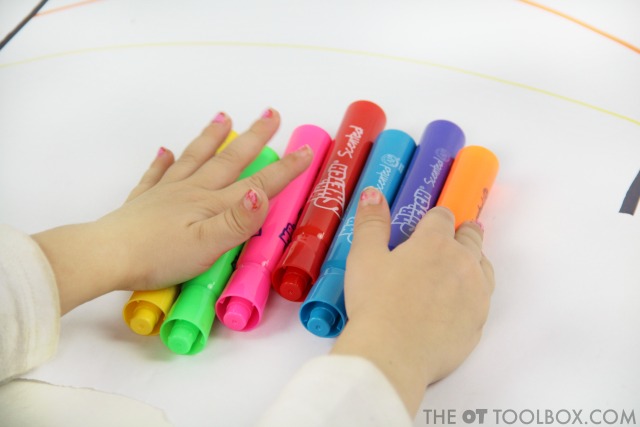
  1. Colored markers/crayons/chalk/colored pencils-We used (affiliate link) Mr. Sketch scented markers to add multisensory learning components.
  2. Next, draw two vertical lines on opposite sides of the paper, or about 2-3 feet apart.  
  3. Along the left vertical line, form letters in one format (print, cursive, lowercase, uppercase, etc.) 
  4. On the opposite line, form either matching letters in upper case/lower case/cursive. Ensure the letters are mixed in order, so the lines need to cross over one another.

Next, work on crossing midline skills:

  1. To perform this visual motor letter rainbow, ask the child to start on the left side and draw an arching line to connect to the matching letter on the right side of the paper.  Working on a large scale to perform this activity promotes crossing of the midline as well as visual motor skills.


    2. Ask the student to start at the left line and stop at the right line when drawing their rainbow lines. When the child is making the arches, they should not start or go over the vertical lines by more than 1/4 inch.  Ask them to connect the matching letters with matching colored markers. 


Grade this activity by asking the child to start and end at the vertical lines without crossing over the lines.  This is an excellent way to address pencil control and visual motor skills.

Rainbow Arch in Occupational Therapy

A similar version of a rainbow arch can be used in occupational therapy interventions to target a variety of skills. You can vary the activity in many ways, depending on the needs of the individual.

Try these rainbow arch ideas in OT sessions:

  • Complete the midline activity by completing the rainbow in a standing or seated position.  Be sure to watch for the child to compensate for midline crossing by shifting weight, rotation of the body, pivoting of the trunk, or movement of the legs.  The child should remain facing forward without any of these motions noted.
  • Kids can also complete this activity with diagonals of with strait lines to connect the letters.
  • Address visual motor skills with the letter rainbow on a small scale as a table-top activity.  
  • Draw the lines on a smaller scale and ask kids to connect letters while touching but not going over the vertical lines with the colored markers.
  • Use different surfaces- dry erase board, chalkboard, asphalt or sidewalk with sidewalk chalk, working on a large piece of paper or cardboard on the ground, and paper hung on a wall are all options.
  • Use a variety of writing materials: If working on a dry erase surface, use Dry erase markers. You’ll need a rainbow of colors.
  • Work in a sensory bin using sand or other sensory bin base materials. Letters can be written under the sensory bin, like we did with this sensory writing tray.
  • This activity works well on the ground too. In that case, use Rainbow colored chalk if working on a large piece of cardboard from an old box or on the sidewalk. This option adds resistance to the activity, providing proprioceptive feedback.
  • You could also use crayons, finger paints, colored pencils, sidewalk chalk, or water colors.
Use scented markers for a multisensory learning approach to crossing the midline and matching letters.

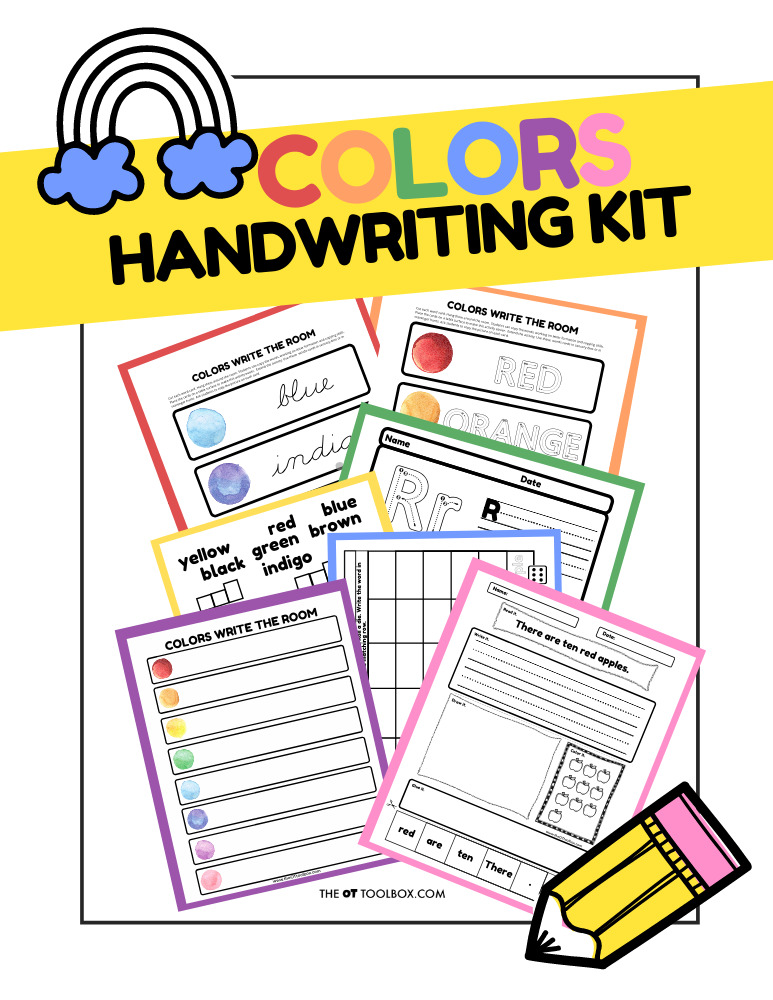
Need more ways to work on visual motor integration, crossing midline, handwriting, and functional skills? Grab the Colors Handwriting Kit. It comes with activities to promote functional handwriting, and multisensory learning. You’ll also get a bonus offer of fine motor activity pages.

Just print and go!

Colors Handwriting Kit

Rainbow Handwriting Kit– This resource pack includes handwriting sheets, write the room cards, color worksheets, visual motor activities, and so much more. The handwriting kit includes:

  • Write the Room, Color Names: Lowercase Letters
  • Write the Room, Color Names: Uppercase Letters
  • Write the Room, Color Names: Cursive Writing
  • Copy/Draw/Color/Cut Color Worksheets
  • Colors Roll & Write Page
  • Color Names Letter Size Puzzle Pages
  • Flip and Fill A-Z Letter Pages
  • Colors Pre-Writing Lines Pencil Control Mazes
  • This handwriting kit now includes a bonus pack of pencil control worksheets, 1-10 fine motor clip cards, visual discrimination maze for directionality, handwriting sheets, and working memory/direction following sheet! Valued at $5, this bonus kit triples the goal areas you can work on in each therapy session or home program.

Click here to get your copy of the Colors Handwriting Kit.

Colleen Beck, OTR/L has been an occupational therapist since 2000, working in school-based, hand therapy, outpatient peds, EI, and SNF. Colleen created The OT Toolbox to inspire therapists, teachers, and parents with easy and fun tools to help children thrive. Read her story about going from an OT making $3/hour (after paying for kids’ childcare) to a full-time OT resource creator for millions of readers. Want to collaborate? Send an email to contact@theottoolbox.com.
Use rainbow colors to work on the skills needed for handwriting with a visual motor letter rainbow activity.

Here are more rainbow activities to pair with ours:

Valentine’s Day Math Activity

valentines day fine motor activity

This Valentine’s Day math activity is an easy activity designed to promote hand eye coordination and other fine motor math activities. Hand eye coordination, otherwise known as eye hand coordination, is a visual motor skill needed for so many functional tasks in children. This particular hands-on math activity was created to not only help with math skills around Valentine’s Day, but also to develop the essential coordination skills that kids need. It was easy to throw together and made working on a few Kindergarten math concepts more fun for my kiddo.  

Add this idea to your Occupational therapy Valentine’s Day activities along with our new printable Valentine’s Day cards, too!

Valentine's Day math activity to help kids with hand eye coordination and math concepts with a heart theme.

Hand Eye Coordination Activity

Full disclosure: This post contains affiliate links.

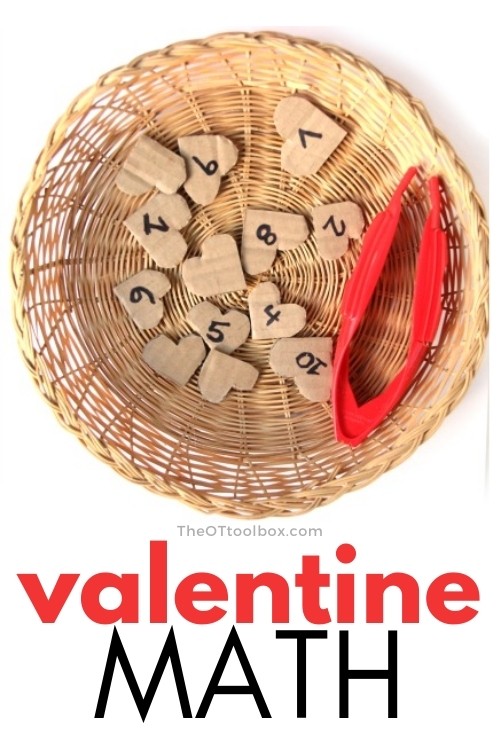
To create this Valentines math activity, I cut a piece of cardboard into smaller pieces and then used them to make small heart shapes. On those hearts, I wrote numbers 1-20.  The hearts that we used were about 1 and a half inches tall but, you could create larger hearts, if coordination skills are something you need to address.

In our hand-eye coordination activity, we used a large red tweezer to work on picking up the hearts from a small container.  

Typically, using tweezers is a great way to work on fine motor skills like hand strength, tripod grasp, and arch development.  Here is information on the fine motor skills that tweezers help to establish, especially when using a smaller, hand-sized tong or tweezer.

With these extra large Jumbo Tweezers, the actual tweezer tool is larger than the hand. Because of this, different muscle groups are working.

The size of the Jumbo Tweezers requires the hands to open and shut with the thumb and all of the fingers.  This adduction and abduction of the thumb and slightly flexed MCP joints uses encouraged more of opposition of the thumb.  The wrist is extended and in an effective position for functional tasks.  

Grabbing up the cardboard hearts requires hand-eye coordination or visual motor integration.  The ability to effectively use hand-eye coordination in activities like handwriting, scissor use, games, and play allows children to write within given spaces, cut along lines, and move game pieces in a coordinated and fluent manner.  

Free therapy resources for Valentines

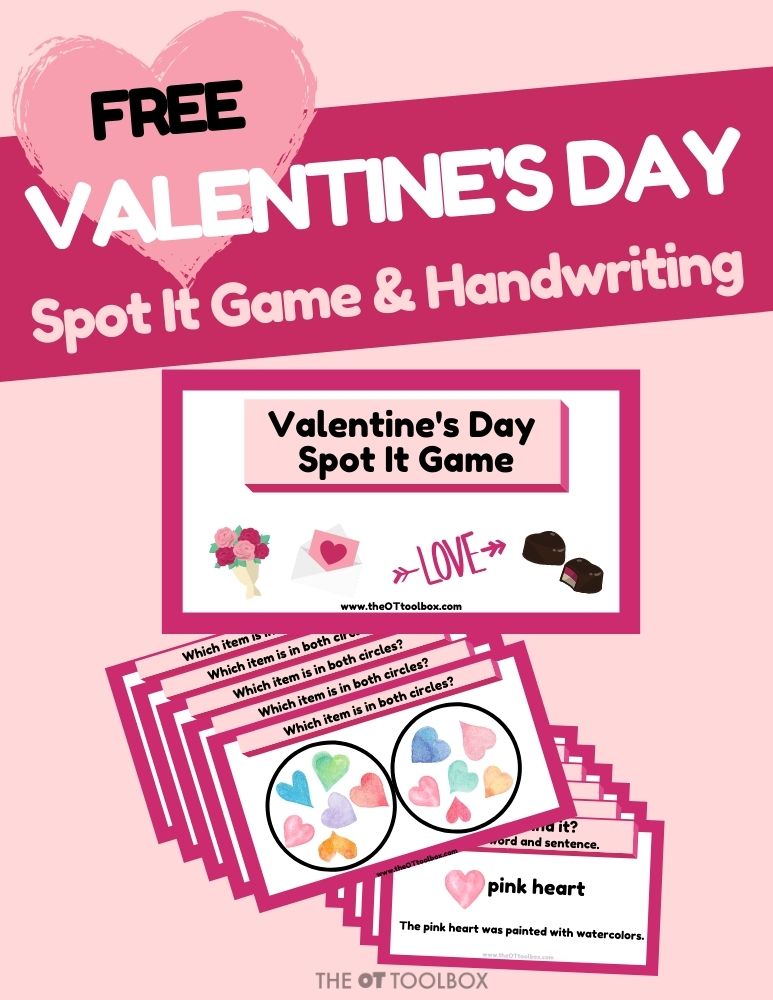
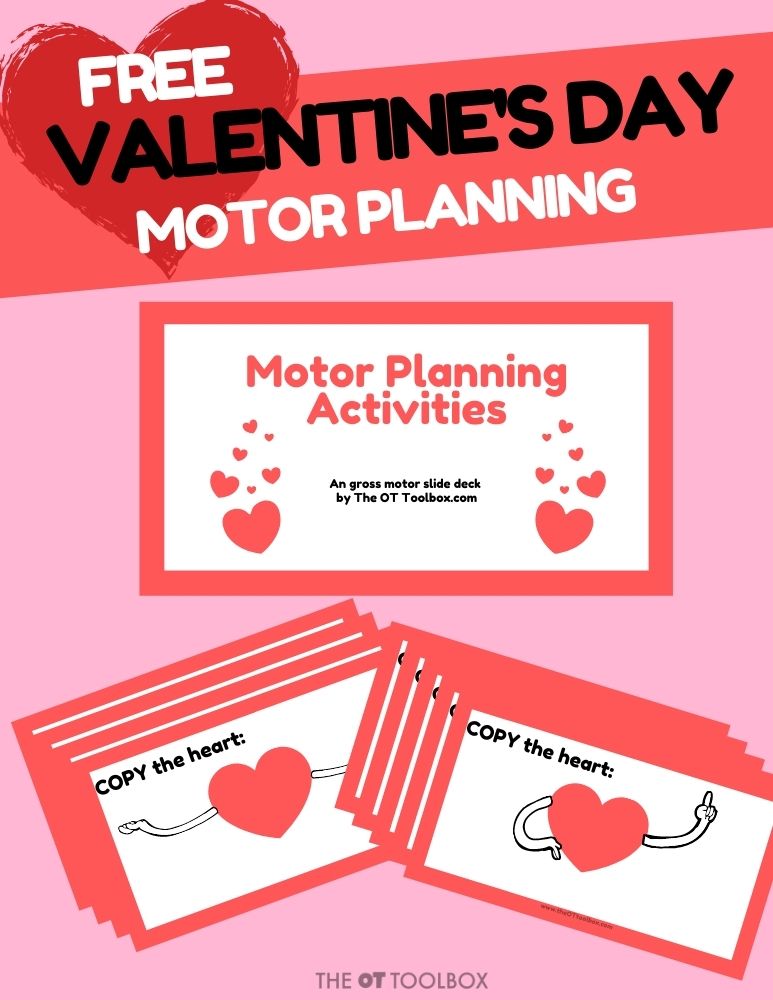
If eye-hand coordination, visual motor skills, and handwriting are tasks that you are working on with children, you’ll love both of these free therapy slide decks. Use them to outline occupational therapy interventions or to use in teletherapy sessions this time of year.

Free Spot It Handwriting Slide Deck

Free Gross Motor Valentine’s Day Activity Slide Deck

Hand-Eye Coordination Valentines Heart activity for math activities with Kindergarten kids or any school aged child. These jumbo tongs are great for visual motor integration skills and recommended by an Occupational Therapist.

Valentines Math Activity

These number hearts worked well with a few different hands on math activities, especially kindergarten math concepts. And, the heart counters made a great Valentines math activity for this time of year.

The activity is very open-ended, so there are many ways you could use this activity to work on math concepts at different levels. Here are some of the hands-on math activities that we completed:

Practice odd/even numbers- We then did a round of looking for and picking up the even numbers and then the odd numbers with the tweezers.    

Number order- To practice our hand-eye coordination with these hearts, I had my son try to find and pick up the hearts in number order.  

Counting by 10s- Practice counting up by tens and then count by tens into 100.

Number bonds- You can use the number hearts to build and take apart numbers to build and understanding of addition and subtraction facts. My son’s favorite was using the side without numbers to build and take apart numbers.  We did a snowman version of number building when my older daughter was in Kindergarten.  

Composing and decomposing numbers- With the cardboard hearts, we practiced composing and decomposing numbers.  I named a number, like “7” and my son had to use the hearts to build number 7 in many different ways.  He pulled out 7 hearts and separated them into two piles: one with 3 hearts and one pile with 4 hearts. We used more hearts to make other ways to take apart 7, too: 6 and 1, 5 and 2, 4 and 3, 2 and 5, and 1 and 6.  

More Valentine Math activities

Try some of these ways to play and learn using the

  • Practice number formation: pull out a heart with the Jumbo Tweezers
    and have your child write that number.
  • Ask your child to pull out a pile of hearts. They can count with one to one correspondence and then write the number.
  • Use the hearts in a ten frame.
  • Practice counting the hearts, starting at different numbers.
Hand-Eye Coordination Valentines Heart activity for math activities with Kindergarten kids or any school aged child. These jumbo tongs are great for visual motor integration skills and recommended by an Occupational Therapist.


Valentines Fine Motor Activities

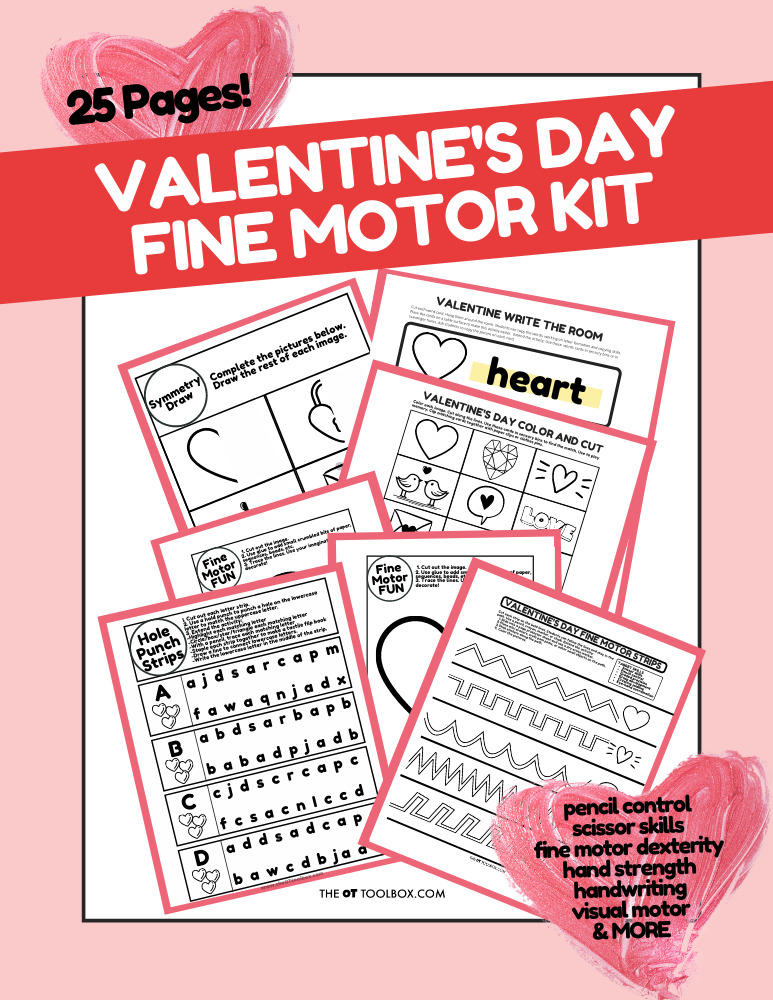
If you need more hand eye coordination activities for Valentine’s Day fine motor fun, try the Valentine’s Day Fine Motor Kit.

The Valentine’s Day Fine Motor Kit is here! This printable kit is 25 pages of hands-on activity sheets designed to build skills in pinch and grasp strength, endurance, eye-hand coordination, precision, dexterity, pencil control, handwriting, scissor skills, coloring, and more.

When you grab the Valentine’s Day Fine Motor Kit now, you’ll get a free BONUS activity: 1-10 clip cards so you can challenge hand strength and endurance with a counting eye-hand coordination activity.

Valentines Day fine motor kit

Colleen Beck, OTR/L has been an occupational therapist since 2000, working in school-based, hand therapy, outpatient peds, EI, and SNF. Colleen created The OT Toolbox to inspire therapists, teachers, and parents with easy and fun tools to help children thrive. Read her story about going from an OT making $3/hour (after paying for kids’ childcare) to a full-time OT resource creator for millions of readers. Want to collaborate? Send an email to contact@theottoolbox.com.
Valentines Day Busy Bag

Fine motor activity using cookie cutters

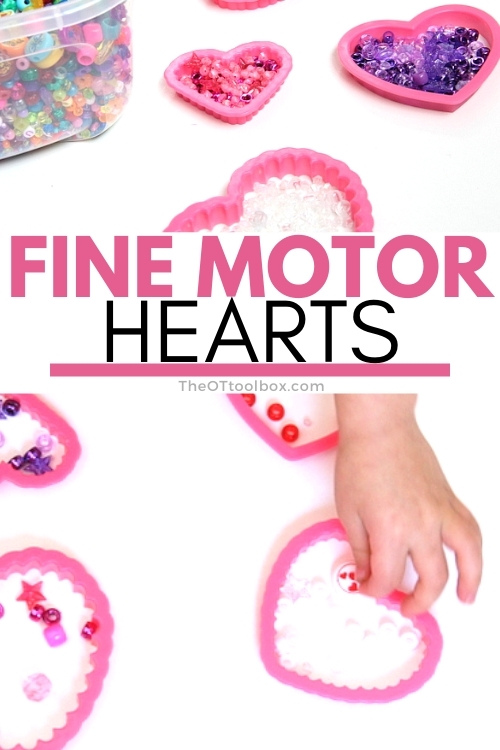
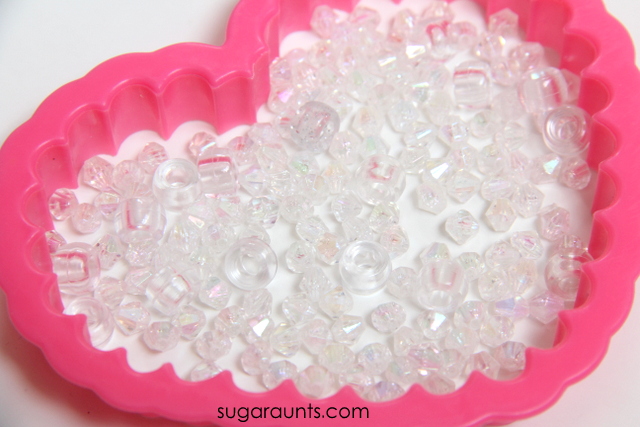
This February fine motor activity is a fun way to use an item you probably have on hand: cookie cutters! We used heart cookie cutters and beads to build fine motor skills in a fun and themed way.  There’s a lot of learning that happens during activities with kids.  We put together this Valentine’s Day busy bag activity as a way to practice fine motor skills and color sorting.  It’s another Valentines Day occupational therapy activity that builds essential skills.

You’ll also love our printable Valentine cards for more fine motor work including writing, folding, coloring, and cutting.

Valentine's Day busy bag with fine motor heart activity using cookie cutters and beads.

Heart Busy Bag Activity

This sorting heart busy bag is a powerful way to improve in-hand manipulation skills.   In-hand manipulation  is a fine motor dexterity skill needed for tasks like managing clothing fasteners, using a pencil when writing, manipulating items like coins or beads, and more.

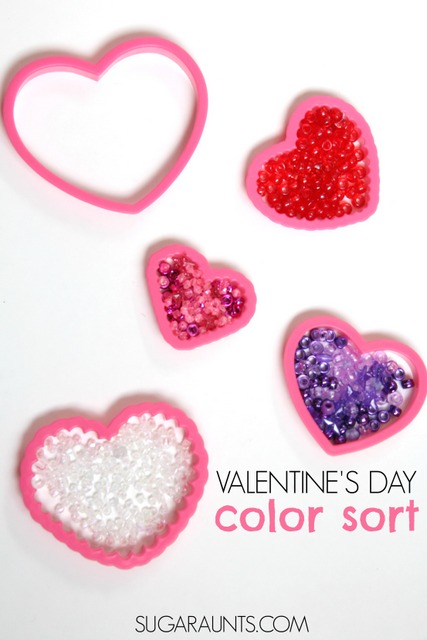
Valentine's Day busy bag color sorting activity with beads for fine motor work and color identification.

Valentine’s Day Busy Bag Activity

Busy Bag Activities are a great way to learn and play during quiet time or down time.

This post contains affiliate links.

Work on fine motor skills with this Valentine's Day fine motor activity

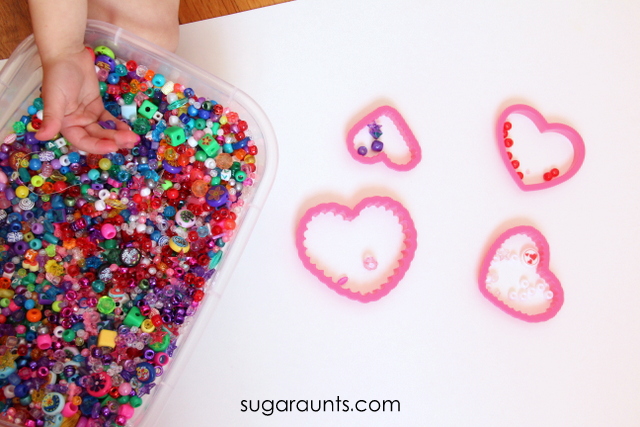
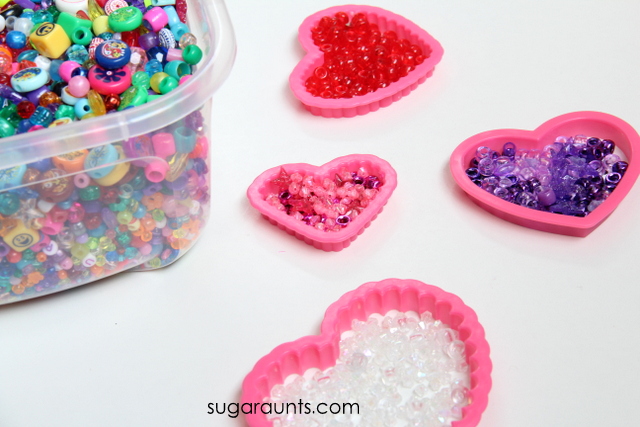
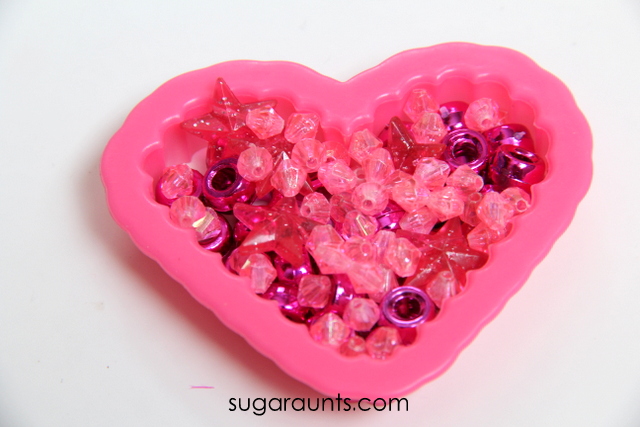
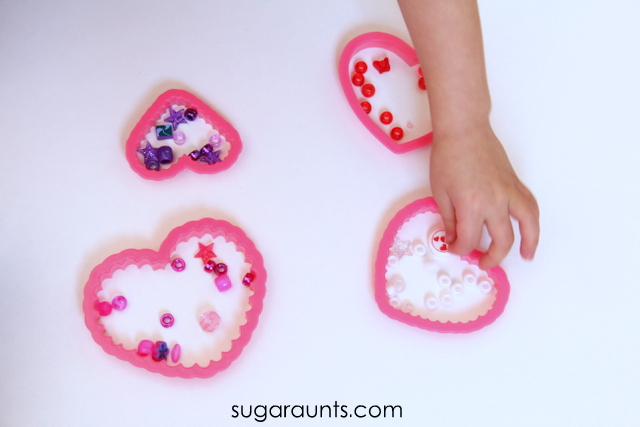
We started with a big bin of  beads and a few heart cookie cutters.  I showed Little Sister (age 3) how to sort the beads by color into the hearts.  She had a blast examining each bead and saying “Oh, this one looks pinkish!  Oh this one looks purple-ish!”  

Valentine's Day busy bag and fine motor activity for skills like in-hand manipulation.
Use heart shaped cookie cutters and beads to work on fine motor skills.
Work on fine motor skills with a Valentine's Day fine motor activity


Fine Motor Valentine’s Day Activity

Manipulating the beads in the big bin to grab certain colors works on some great fine motor skills.  You need to pick up the beads with a pincer grasp (tips of the pointer finger and thumb) with fine dexterity.  

Once she grasped a bead, Little Sister would “squirrel away” the colors into the palm of the hand.  This transfer of beads from the tips of the fingers into the palm of the hand is in-hand manipulation(fingers to palm translation).  

Manipulating small items like beads in this way works on the muscles of the hands and is a great way to work on pre-handwriting or handwriting skills.  A child needs strength of the intrinsic muscles (the muscles within the hand) to manipulate the pencil and maintain endurance for writing and coloring.

Work on fine motor skills with this heart Valentine's Day occupational therapy activity.

More Fine Motor Heart Activities

The Valentine’s Day Fine Motor Kit is here! This printable kit is 25 pages of hands-on activity sheets designed to build skills in pinch and grasp strength, endurance, eye-hand coordination, precision, dexterity, pencil control, handwriting, scissor skills, coloring, and more.

When you grab the Valentine’s Day Fine Motor Kit now, you’ll get a free BONUS activity: 1-10 clip cards so you can challenge hand strength and endurance with a counting eye-hand coordination activity.

Click here to grab your copy of the Valentine’s Day Fine Motor Kit.

Valentines Day fine motor kit
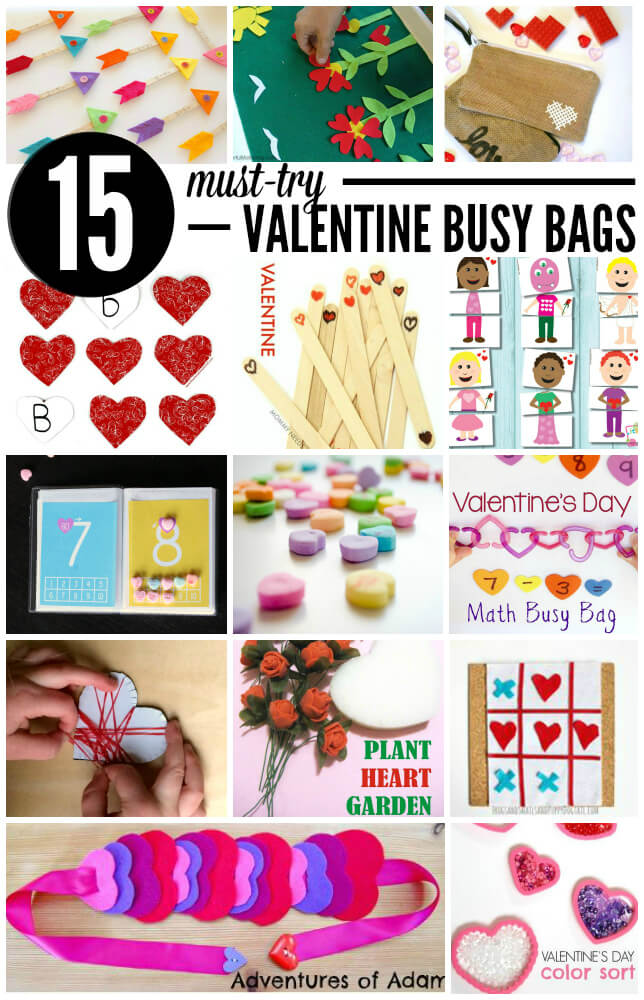
15 Must-Try Valentine Busy Bags

Colleen Beck, OTR/L has been an occupational therapist since 2000, working in school-based, hand therapy, outpatient peds, EI, and SNF. Colleen created The OT Toolbox to inspire therapists, teachers, and parents with easy and fun tools to help children thrive. Read her story about going from an OT making $3/hour (after paying for kids’ childcare) to a full-time OT resource creator for millions of readers. Want to collaborate? Send an email to contact@theottoolbox.com.
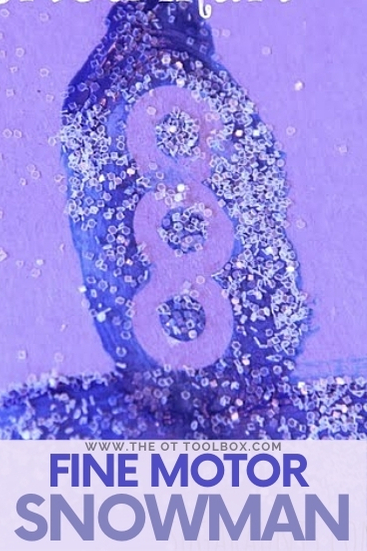
Hole Reinforcement Stickers Snowman Craft

 You know we like to use materials that are on hand to help kids develop fine motor skills. This snowman craft uses hole reinforcement stickers to make a cute craft that works on fine motor skills. We do a TON of Fine Motor activities here! This Fine Motor Snowman art craft was just the thing to work on a little fine motor dexterity while keeping with our wintery freezing theme!  We worked on tip to tip grasp, bilateral hand coordination, and intrinsic muscle strength, while creating our snowmen.  Read all about it below!  

Cute fine motor snowman craft using hole reinforcement stickers.

Craft with hole reinforcement stickers

This post contains affiliate links.

Use hole reinforcement stickers to help kids develop fine motor skills with this cute snowman craft.

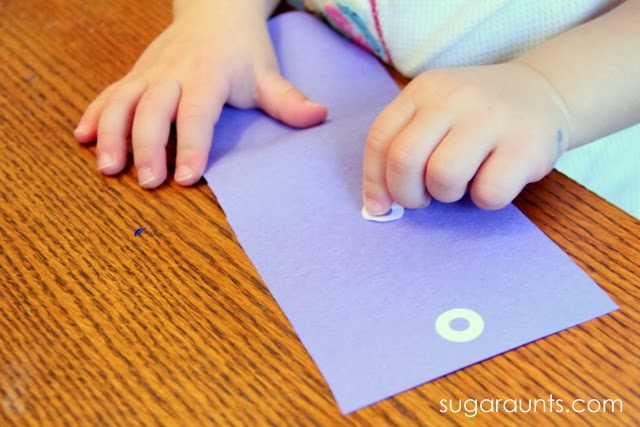
We started with a sheet of Hole Reinforcement Stickers.  These were fun to pull from the sheet and stick onto our blue Construction Paper.

Kids can use hole reinforcement stickers to make a snowman craft and strengthen fine motor skills.

Pulling the reinforcement stickers from the sheet required bilateral hand coordination to manage the page and pull the sticker off with the other hand.  Managing two hands together in a coordinated manner is bilateral hand coordination.  This skill is very important for self care tasks such as buttoning and zippering clothing, tying shoes, and handwriting.

We placed the stickers into a snowman by placing one sticker above the others.  It was starting to look like a snowman party!

Pincer grasp development by peeling and placing small stickers.

Pinching the small stickers from the sheet required precise fine motor dexterity.  Using a tip-to-tip grasp to peel the sticker from the sheet was necessary because the stickers were so small.  A tip-to-tip grasp occurs when the ends of the pointer finger and thumb are used to pick up very small items.  Think about picking up a needle from a table surface.  This can be a very difficult and advanced fine motor skill for some!

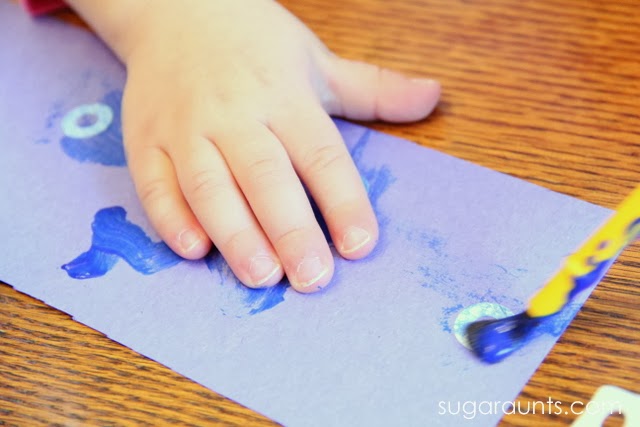
Paint hole reinforcement stickers to make a snowan.

  Once our snowman were placed on the paper, we painted them with blue paint

Fine motor craft for kids.

 While the paint was still wet, we sprinkled clear glitter on our snowmen.  This is the same technique used in our homemade glitter glue craft.

Picking up the glitter and sprinkling activates the small muscles of the hands~ the intrinsic muscles.  These are the muscles that allow for strength in the arches of the hands and are very important for endurance in coloring and writing with a pencil.  The glitter stuck on the paint and made very sparkly snowmen!


To finish the project, peel the reinforcement stickers away and you’ll find a snowman.  Be sure to peel away the reinforcement labels away while the paint is still wet, otherwise it will be difficult to pull them away.   

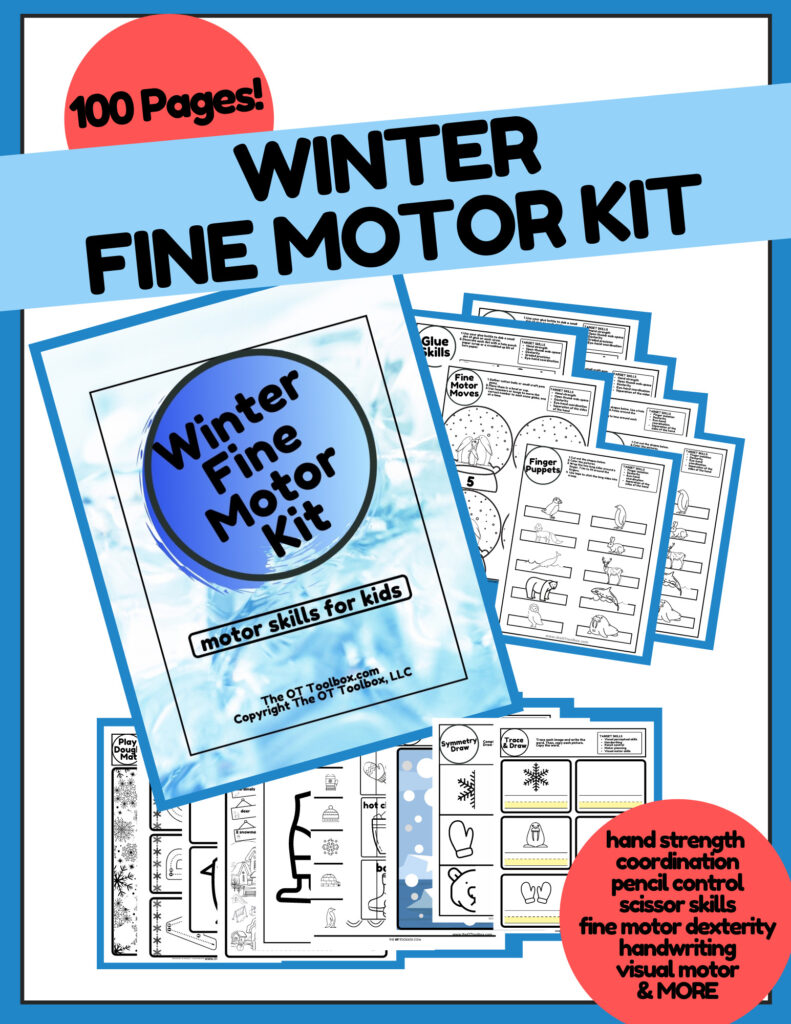
Want more ways to boost fine motor skills with a snowman theme or winter theme? The Winter Fine Motor Kit is on sale now!

This print-and-go winter fine motor kit includes no-prep fine motor activities to help kids develop functional grasp, dexterity, strength, and endurance. Use fun, winter-themed, fine motor activities so you can help children develop strong fine motor skills in a digital world.

More than ever, kids need the tools to help them build essential fine motor skills so they develop strong and dexterous hands so they can learn, hold & write with a pencil, and play.

This 100 page no-prep packet includes everything you need to guide fine motor skills in face-to-face AND virtual learning. Includes winter themed activities for hand strength, pinch and grip, dexterity, eye-hand coordination, bilateral coordination, endurance, finger isolation, and more. 

Click here to grab the Winter Fine Motor Kit!

winter fine motor kit


Colleen Beck, OTR/L has been an occupational therapist since 2000, working in school-based, hand therapy, outpatient peds, EI, and SNF. Colleen created The OT Toolbox to inspire therapists, teachers, and parents with easy and fun tools to help children thrive. Read her story about going from an OT making $3/hour (after paying for kids’ childcare) to a full-time OT resource creator for millions of readers. Want to collaborate? Send an email to contact@theottoolbox.com.
Snowman Theme Bilateral Coordination

Snowman Bilateral Coordination Slide Deck

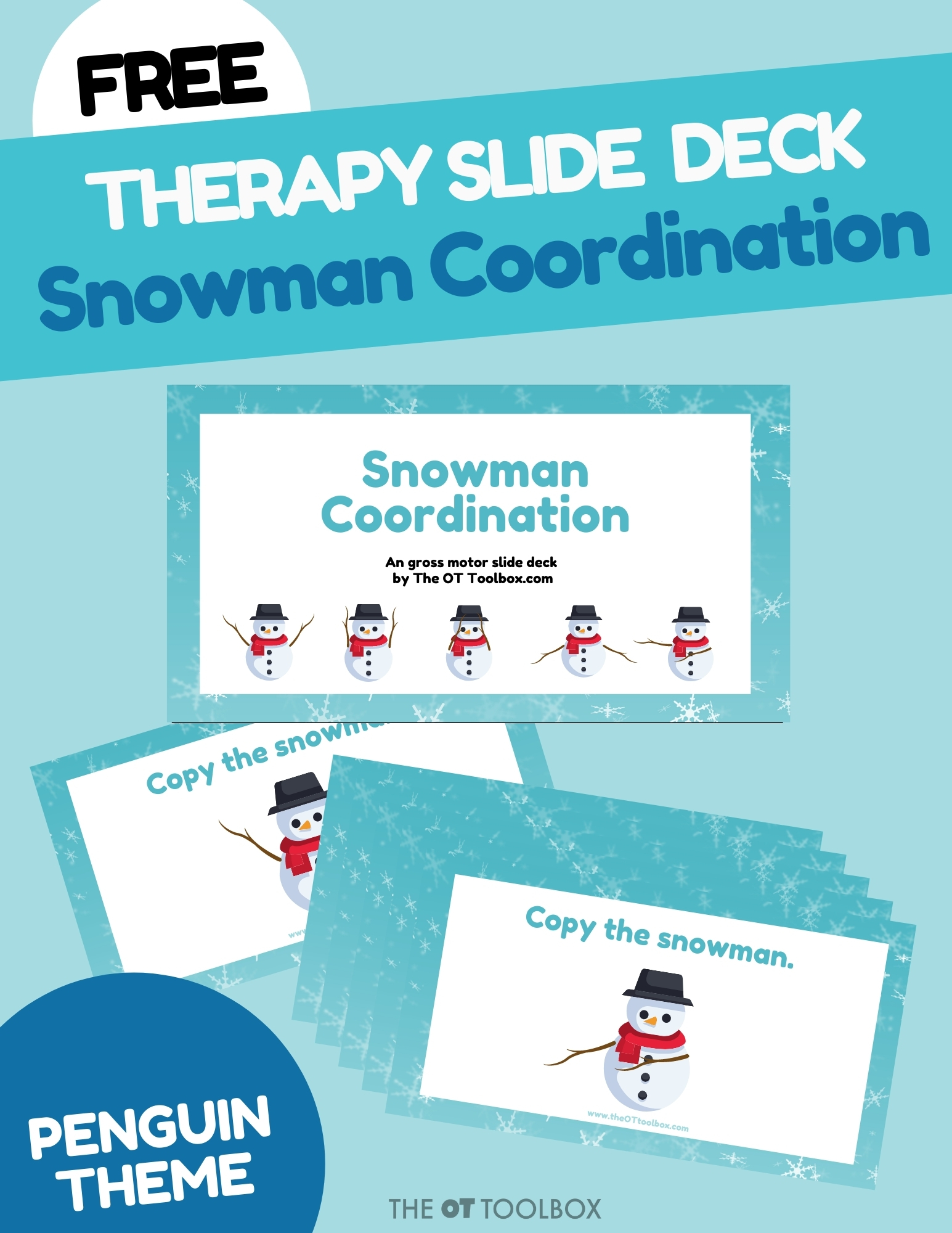
I have something super cute to share with you today. This snowman theme bilateral coordination activity might be one of my favorites of recent resources. If working on bilateral coordination, crossing midline, and motor planning is something you’ve been working on with kids, then this free therapy slide deck is for you. It’s meant as a fun, play-based direction-following therapy slide deck. Use it as a warm-up to occupational therapy interventions, or a brain break, with a snowman theme!

You can use this snowman gross motor activity alongside this snowman deep breathing activity for winter therapy fun!

Snowman Bilateral Coordination Slide Deck

Snowman theme bilateral coordination activity

This therapy slide deck is designed so therapy practitioners need no other materials or items to run a virtual session. The free slide deck can be uploaded to Google slides and then used within a virtual session or distance learning classroom.

There are so many benefits to working on bilateral coordination skills, and motor planning with a fun theme like this snowman activity.

Read here about crossing midline activities and the benefits of this essential skill in handwriting, learning, and functional tasks. This skill integrates with bilateral coordination, or a coordinated use of both sides of the body so that functional use of both hemispheres in everyday tasks are possible.

Be sure to read more on this link about bilateral coordination, because you’ll see that there are three components of bilateral coordination:
Symmetrical movements
Alternating movements
Dominant hand/supporting hand movements

Each of these areas play a role in functional tasks like play, self-care, learning, school-day tasks, and things each of us do all day long.

Motor planning is another important motor skill that impacts everyday functional tasks. Here is more information about motor planning.

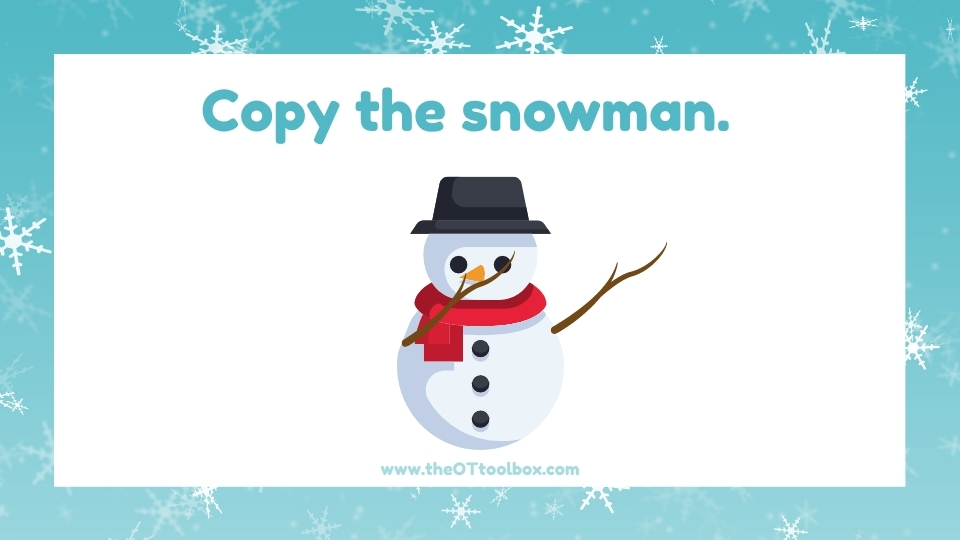
There is a connection between creating a plan for movement, following a visual representation of a body positioning, and then sequencing movements using both sides of the body.

This snowman gross motor activity does just that!

You can scroll back and forth between the slides to really challenge kids with these motor plans. It’s like a “Simon Says” game with snowmen.

Work on all of these areas:

  • Bilateral coordination
  • Motor planning
  • Crossing midline
  • Core strength
  • Stability
  • Balance and equilibrium skills
  • Range of motion
  • Flexibility
  • Movement patterns
  • Posture and postural control
  • Muscle tone
Snowman bilateral coordination activities for virtual therapy

Free Snowman Gross Motor Therapy Slide Deck

To get your hands on this free snowman slide deck, you’ll need to enter your email address into the form below.

Use this polar bear theme therapy slide deck in virtual therapy sessions or as a brain break.

Be sure to make a copy of this slide deck and not change the url to indicate “edit” at the end. When you make a copy of the slide deck onto your Google drive, you will end up with your own version that you are free to adjust in order to meet your student’s needs. By changing the url to “edit”, you can potentially mess up the original version that many other therapists and The OT Toolbox users are given.

You can grab a copy of this Google slide deck and use it to work on specific skills.

Enter your email address below and you will receive a PDF containing a link to copy the slide deck onto your Google drive. Save that PDF file, because you can come back to it again and again and send it to the kids on your caseload (or classroom) so they can make their own copy on their Google drive.

Please use the copy of the slide deck and do not change the url.

FREE Bilateral Coordination Slide Deck- Snowman theme!

    We respect your privacy. Unsubscribe at anytime.

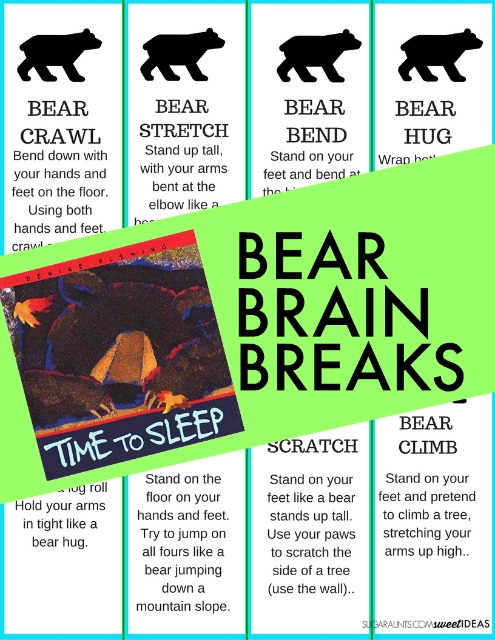
    Bear Brain Breaks

    bear brain breaks

    These bear brain breaks are perfect for winter time movement, or using in a bear theme in school or in therapy. Sometimes, brain breaks are the perfect tool to can help with movement or sensory needs in the classroom.  We used a favorite childhood book to come up with bear themed brain breaks that can be used alongside the book in a movement and learning activity or in a bear-themed classroom activities.  Not long ago, we shared more brain break ideas that you might like to add to your classroom.

    Use these bear brain breaks along with ideas from our hibernation activities for more winter fun!


    bear brain breaks

    Bear Brain Breaks

    Looking for brain break videos for the classroom or home? Here are the best brain break videos on YouTube.
     
    Bear brain breaks for movement and learning in the classroom setting with a bear theme

    This post contains affiliate links.

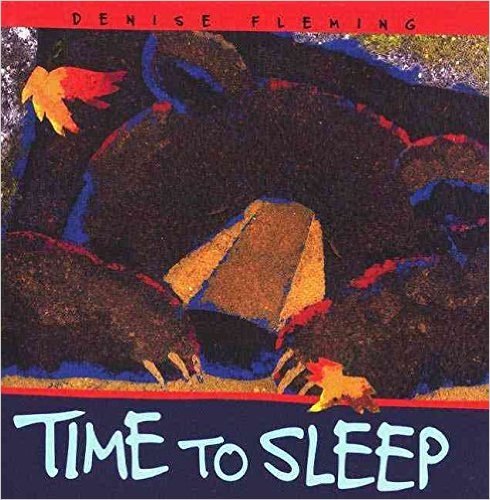
    Have you read the book, “Time for Sleep” by Denise Fleming? My kids loved to hear about all of the animals as they prepared for sleep over the winter.  We decided to try a few bear gross motor moves based on the book.

    Bear Theme Brain Breaks

    Stretches and whole-body movements that happen in a calm manner are a great way to prepare for sleep, so these activities went along nicely with the bear in the book as well as the getting ready for sleep theme.

    If fidgeting, wiggling, or just a break from screens is needed, try these movement breaks to help. 

    We created these themed brain breaks to go along with the book, Time to Sleep, but they are perfect for any day (or when paired with other bear books)!

    If you are looking for resources for sleep or bedtime relaxation stretches, we shared some based on another children’s book.

    Time for Sleep by Denise Fleming and bear themed brain breaks for a bear activity.
     
    This is such a fun book to read with kids.  It would go along perfectly with a bear theme in your classroom.  Try adding some gross motor movement activities based on the book.
     
    Kids can then use the bear themed brain breaks throughout their day when it seems the classroom or individual students need a movement break. 


    Below, you can enter your email to access the free brain break printable that would go along perfectly for teaching the classroom about these bear brain breaks.  They can be cut up and laminated for the children to pull out of a cup.  Or, add them to a key ring for bear themed movement activities.
      
     
    Using these bear brain breaks, kids can stretch, roll, reach, climb, and crawl like a bear.  There are eight bear themed movement activities included that allow kids to move with a bear theme.  
     
    Read the book Time for Sleep and try the movement activities!
     
    Bear brain break ideas for kids
     

    Bear Activities

    Looking for more bear themed activities?  Try these hands-on ways to play with a bear theme based on bear books like “Time for Sleep”.

    Polar Bear Gross Motor Ideas

    Bear Craft

    Fun and Therapeutic Polar bear Activities

    Polar Bear Therapy Slide Deck– Free! Perfect for virtual therapy sessions

    Polar Bear Self-Regulation Deep Breathing Activity

    Bear Says Thanks Fine Motor Activity

    Bear Oral Motor Exercise

    LiTERACY BEAR THEMED ACTIVITIES

    NUMERACY BEAR THEMED ACTIVITIES

    BEAR THEMED RECIPES

    BEAR CRAFTS AND IDEAS FOR PLAY

    Get these free bear brain break activities

      We respect your privacy. Unsubscribe at anytime.

      These brain breaks would be a great addition to our Winter Fine Motor Kit, loaded with winter theme and bear activities! It’s got all things fine motor in print-and-go activities. You’ll find lacing cards, modified handwriting sheets, pencil control strips, cutting activities, crafts, coloring exercises, and MUCH MORE!

      Get the Winter Fine Motor Kit HERE.

      winter fine motor kit

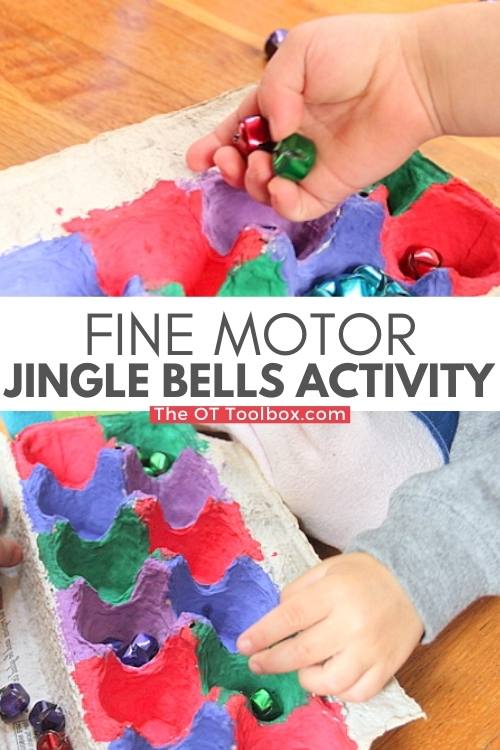
      Jingle Bell Kids Activity

      Jingle bell kids activity for fine motor skills

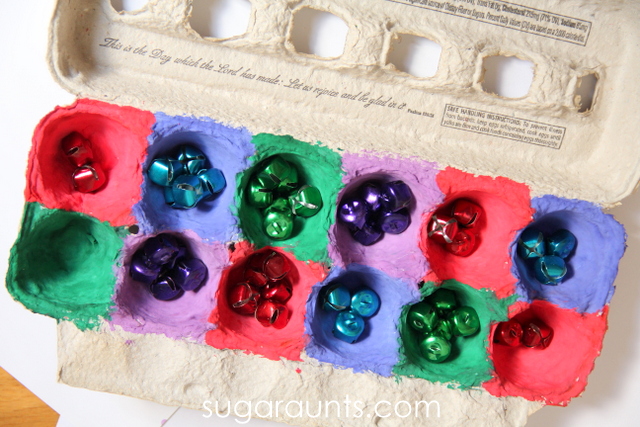
      Christmas is just around the corner, and we’ve got some fun ideas in store for you! This Jingle Bell Kid’s Activity can be a jingle bell game or a Fine Motor Christmas activity that kids will not forget! Use an egg carton and jingle bells kids can manipulate for a color learning and fine motor activity.

      We’ve done our share of Christmas play activities and this Jingle Bell Sorting activity is just one way to play and learn with a Christmas theme.  We’re joining a bunch of other bloggers in a busy bag series where each month, we’ll bring you a busy bag activity to keep the kids busy and occupied (and learning!)   In-hand manipulation activities are a great way to boost fine motor skills needed for tasks like managing clothing fasteners, using a pencil when writing, manipulating items like coins or beads, and more.   

      This jingle bell activity would be fun to incorporate into a Christmas sensory bin, too.

      Jingle Bells for kids are a fun Christmas fine motor activity with an egg carton.

        This post contains affiliate links.  See our full disclosure here.    


      Jingle Bell Kids Activity

      This jungle bell kids activity is a Christmas busy bag that helps children build fine motor skills, as well as other learning components in a game format.

      We’ve done quite a few “busy” time of activities on this blog.  These are the activities that kids can do on their own or with a little set up and explanation.  They are kept busy and learning, creating, or exploring on their own.  Busy bag activities are perfect for times when caregivers need to focus on other children, dinner preparation, or while waiting.  Modern day busy activities might be smart phone apps for some kids, as they “busy themselves” as they wait in a restaurant or doctor’s office.  A busy bag activity that is easy to set up might be something as simple as manipulating small items, or sorting sugar packets by color.  


      Jingle Bell Activity for Kids

      Independent learning is important to a child’s development.  When a child is learning on their own, they are able to come up with questions and ideas independently.  They develop problem solving skills, and exploring during the process of the activity.  When a child has an adult participating in an activity with them, they often times focus on the end product or goal rather than the process of the task. Children become aware of their own strengths and weaknesses during independent play and can gain a sense of satisfaction when they do a task on their own.  Busy bags are great for independent learning!  


      Color Sorting with Jingle Bells

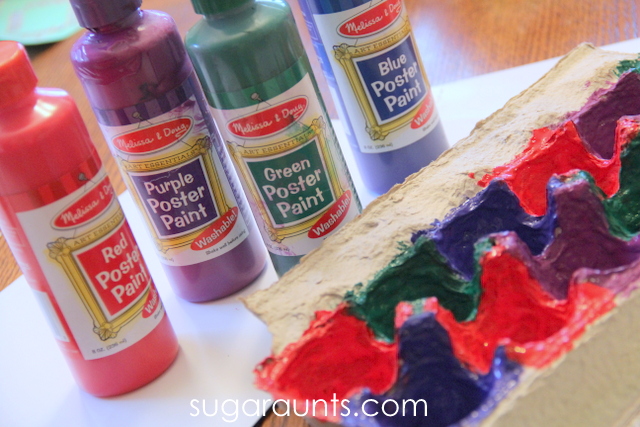
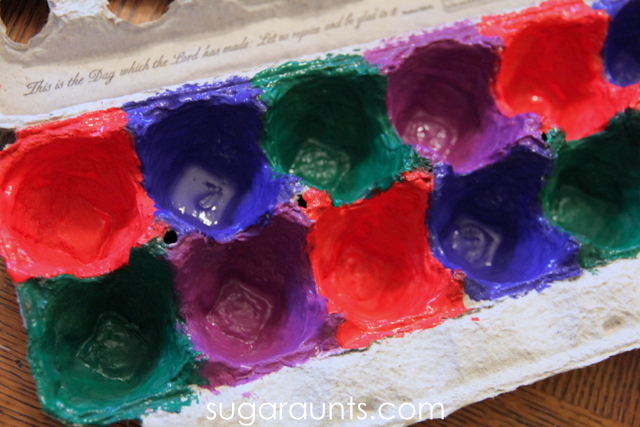
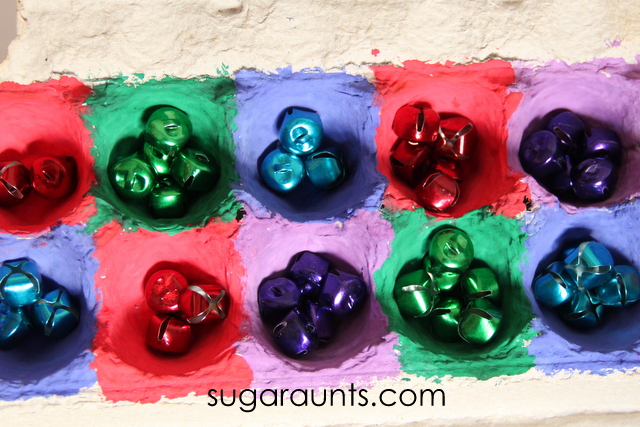
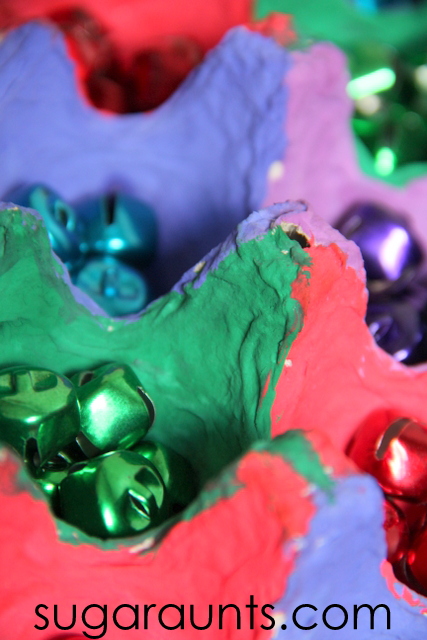
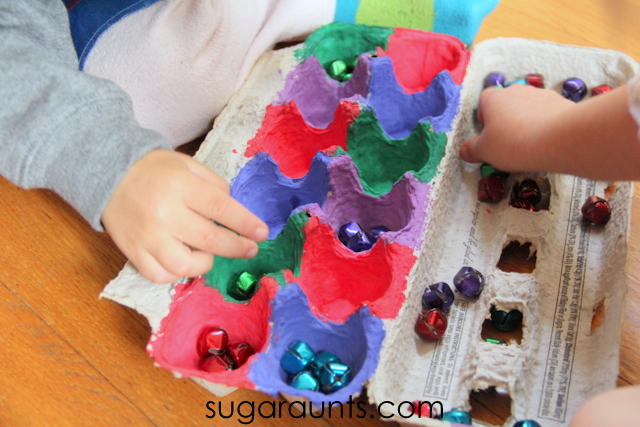
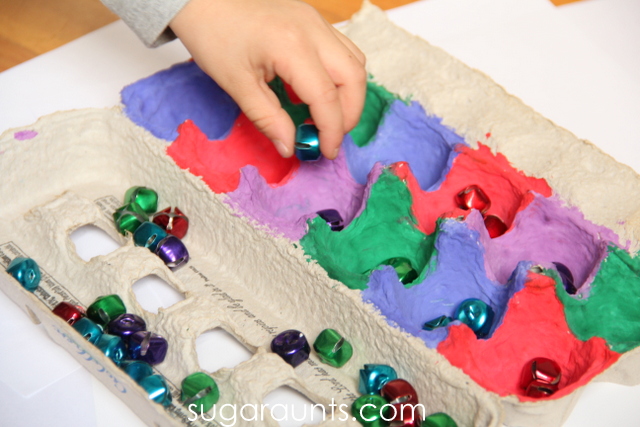
      Paint the egg carton to match the jingle bells kids will use to work on color sorting, counting, and fine motor skills.

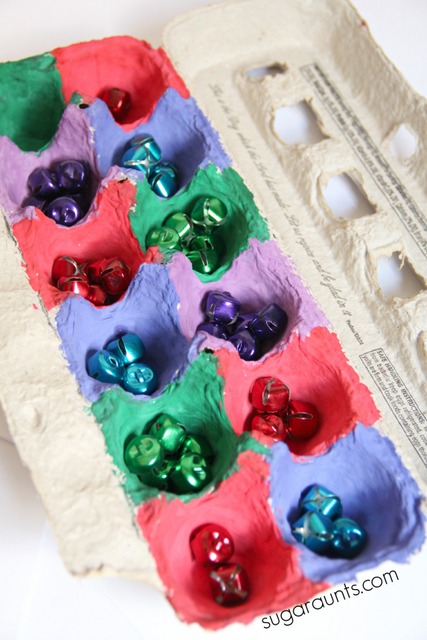
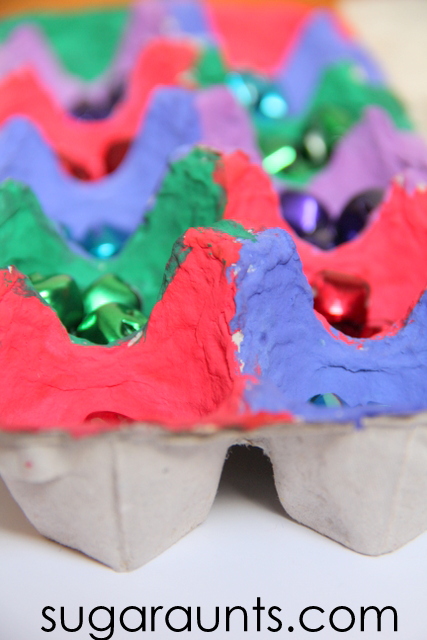
       We started with a recycled egg carton.  Technically, this isn’t a busy BAG since we made our activity in an egg carton…but it is a busy activity, and I love that it can fold up and stow away with the sorting material inside the carton.     The cardboard type was needed for this activity, in order to get the paint to “stick”.  I painted the sections of the egg carton in four colors.  I LOVE these poster paints for their bold colors.   

      Paint the egg carton for a jingle bell sorting activity.

      Little Sister (age 3) helped me paint the sections, and we let them dry overnight…because when Little Sister helps, a lot of paint is used.

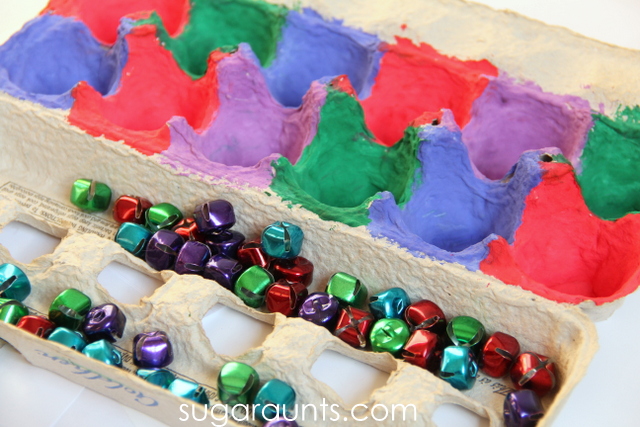
      Jingle bell activity to work on fine motor skills at Christmas.


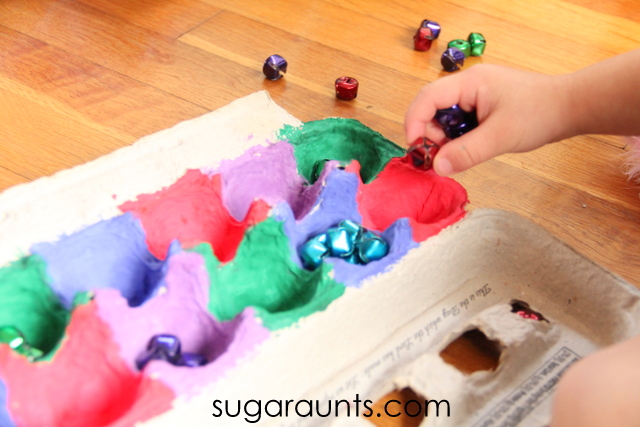
      The next day, we were ready for our jingle bell sorting activity.  We used jingle bells that we received from our friends at www.craftprojectideas.com (Thanks so much!!)  I poured the bells into the top section of the egg carton, and showed Little Sister how to sort them.

      Kids can work on fine motor skills with this Jingle bell activity.

      This is such a great activity for color identification, fine motor skills, scanning, hand-eye coordination, and early math.

      This jingle bell activity is a toddler activity for Christmas because they can work on fine motor skills and color sorting with toddlers.

      The colors are so bright and the jingle of the bells gives a great sensory input to this activity.  Little Sister sorted and sorted while I changed diapers, swept the floor, and watched her sort.

      Christmas jingle bell game for kids
      Kids can sort jingle bells in this Christmas fine motor activity.
      Christmas jingle bells for kids to work on fine motor skills.
      Jingle bell activity for kids
      Preschool jingle bell activity to work on fine motor skills, color sorting, counting.


      One of the cousins came over one day and these two three year olds had fun sorting together.
      I showed them how to extend the play by counting the number of bells in each section.

      Count jingle bells with this Christmas fine motor activity for children.


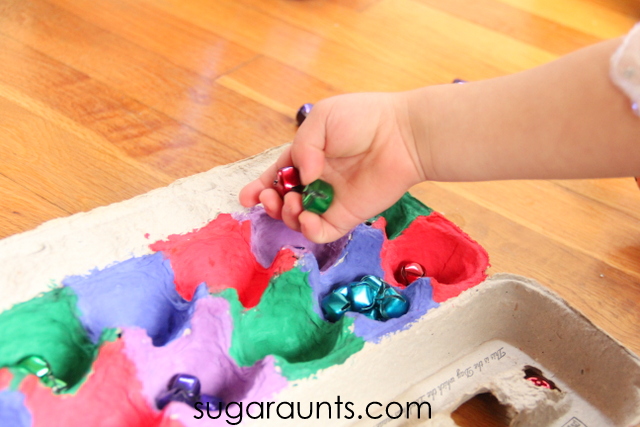
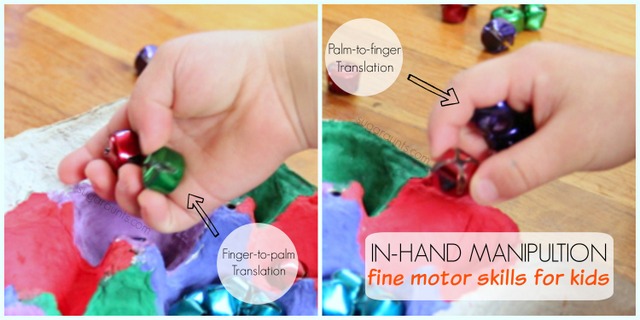
      I love this activity for it’s fine motor aspect, too.  Managing the jingle bells as they picked them up and sorted them into the sections works on many skills.  You can encourage your child to pick up a few bells at a time and pocket them into the palm of the hand as they sort the bells one at a time.


      Picking up several bells works on in-hand manipulation, specifically the skill of translation.  Moving the bell from finger tips to palm as they “squirrel away” bells into their palm is a difficult task for many kids.  This is a task needed in order to manage coins or other small items.

      This jingle bell activity works on fine motor skills like in hand manipulation.


      Placing the bells into the sections requires the child to use in-hand manipulation to move the bells from the palm to the finger tips.  This is also the skill of translation and is needed for pushing coins into a piggy bank or vending machine, or managing small items like marbles.


      Translation is a complex task requiring strength and dexterity of the intrinsic muscles of the hand.  It’s fun to watch these skills develop in an activity like this one!

      In hand manipulation is a fine motor skill that kids can refine with this jingle bell activity for children.

        We’ll be saving our painted egg carton for long after the holidays to sort lots of different items: crafting pom poms, paper clips, paper, dyed pumpkin seeds, and more!  Here is a big list of fine motor activities using craft pom poms.

      With this activity and any other on our blog, please be sure to supervise your children when small items are involved.  If your child is one who puts items into their mouth, you may want to hold off on this activity for a while.  Use caution with this activity as it involves small parts.  

      Christmas Handwriting Activities

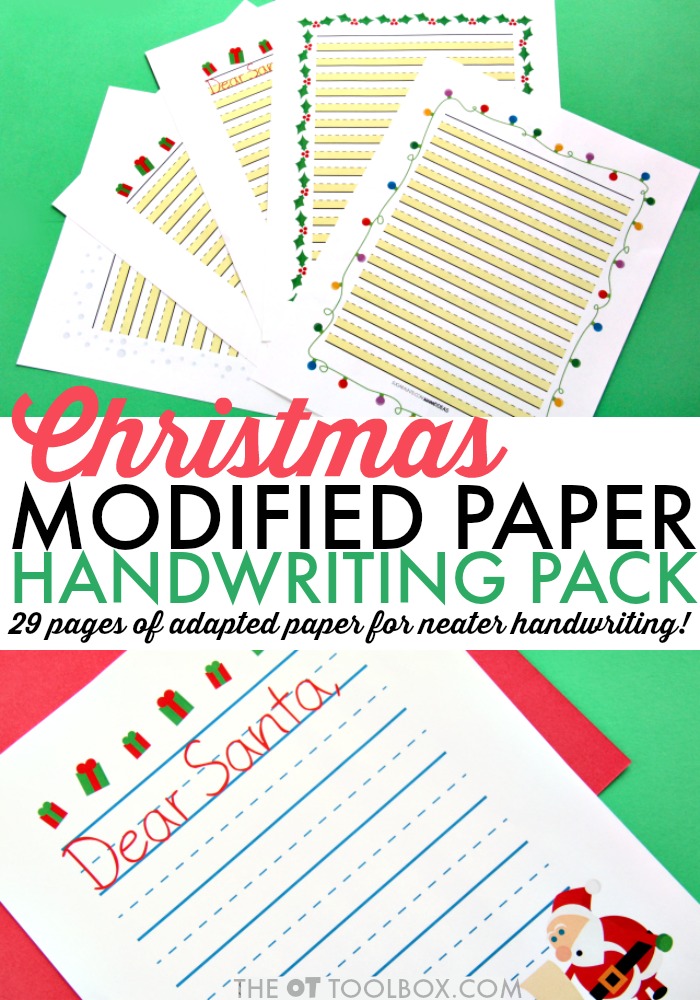
      Writing out that Christmas wish list is a difficult task that brings out tears instead of holiday excitement.  I’ve got a solution for your kiddo with handwriting difficulties: a packet of modified paper for all of the Christmas handwriting tasks that come up each year.  Use this handwriting pack to help kids who struggle with handwriting to participate in holiday traditions while even working on and developing their handwriting skills!

      Working on handwriting with kids this Christmas season? Grab your copy of the Christmas Modified Handwriting Packet. It’s got three types of adapted paper that kids can use to write letters to Santa, Thank You notes, holiday bucket lists and much more…all while working on handwriting skills in a motivating and fun way! Read more about the adapted Christmas Paper here

      Christmas modified paper for holiday handwriting for kids

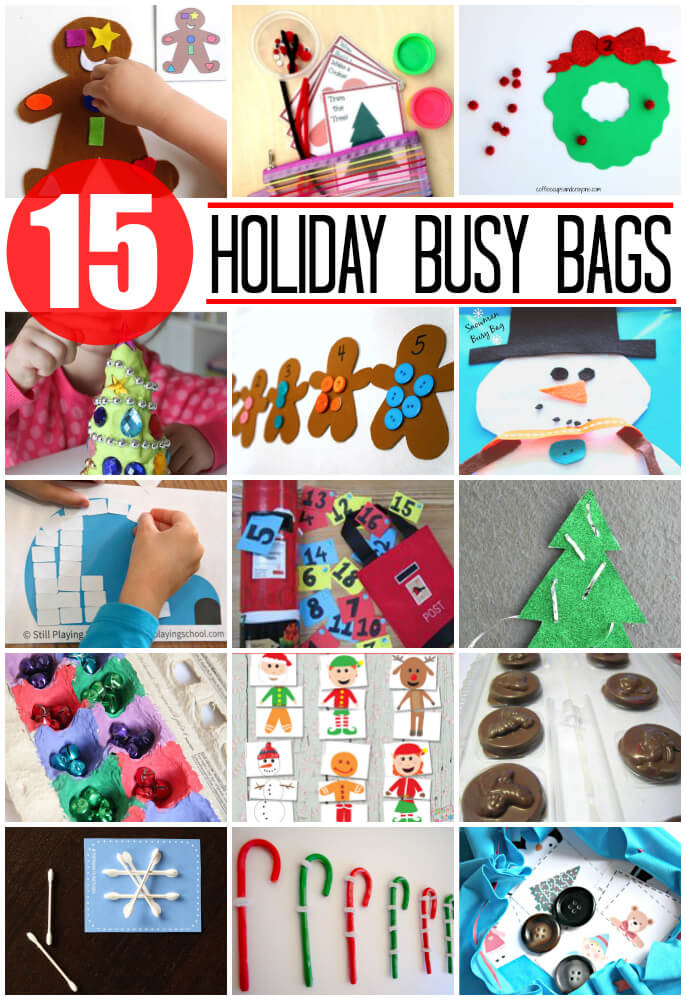
        Check out some more busy bag activities for the holiday season:

      Christmas busy bags for kids

      Christmas Busy Bags

      Christmas Activities for Kids Printable Busy Bag

      Christmas Counting Busy Bag

      Decorate a Play Dough Christmas Tree Play Kit

      Gingerbread Button Counting Busy Bag

      Snowman Busy Bag

      Reusable Christmas Sticker Busy Bag

      Christmas Posting Busy Bag

      Christmas Tree Busy Bag

      Printable Mix and Match Christmas Puzzles

      Christmas Chocolate Maker Busy Bag

      Printable Q-tip Snowflakes

      Candy Cane Stripe Counting

      An Early Reader Christmas Busy Bag


      Colleen Beck, OTR/L has been an occupational therapist since 2000, working in school-based, hand therapy, outpatient peds, EI, and SNF. Colleen created The OT Toolbox to inspire therapists, teachers, and parents with easy and fun tools to help children thrive. Read her story about going from an OT making $3/hour (after paying for kids’ childcare) to a full-time OT resource creator for millions of readers. Want to collaborate? Send an email to contact@theottoolbox.com.
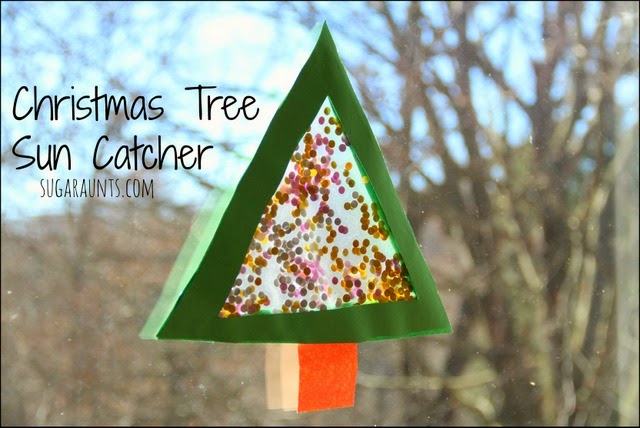
      Christmas Suncatcher Craft

      Christmas suncatcher craft

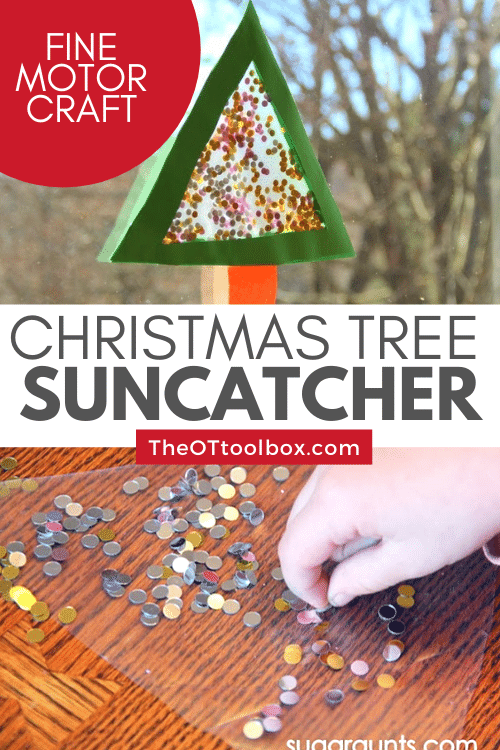
      This Christmas Suncatcher craft has been something we’ve been thinking about for a while.  This Christmas craft for kids is a fun one to add to your holiday line-up. With the sun streaming in through the dining room window, it’s the perfect place for sun catchers.  And this Christmas themed craft is the perfect addition to our big dining room window.  We went a little crazy with the sequins on this craft.  Our Christmas suncatcher craft is very sparkly, and just right for the season!   Big Sister loved making this project and the fine motor work involved was just right for her age.   

      Christmas suncatcher is a great fine motor Christmas activity for kids. They can make the Christmas tree sun catcher and hang it in the window.

      Christmas Tree Sun Catcher

      This Christmas fine motor activity is a fun craft for working on specific fine motor skills such as pincer grasp, in-hand manipulation, and precision, including distal mobility. While we used sequins for our Christmas tree suncatcher, you could use practically any crafting material, from tissue paper, to foam stickers, to pressed flowers or pine needles. Use your imagination and make it an open-ended craft for the kids.

      Kids can make this Christmas suncatcher craft with paper and sequins.

      {Note: This post contains affiliate links.}    

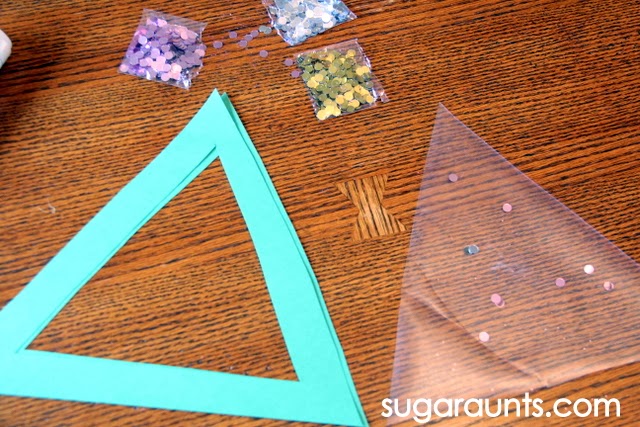
      This craft started with some major Sequins, and two triangles cut from green Construction Paper.

      Make a Christmas suncatcher craft with kids.
      Such a cute Christmas suncatcher craft for kids.

      How pretty are these sequins?? LOVE the colors and sparkles in this Christmas craft!

      Love this Christmas suncatcher craft for a Christmas tree craft that kids can make.

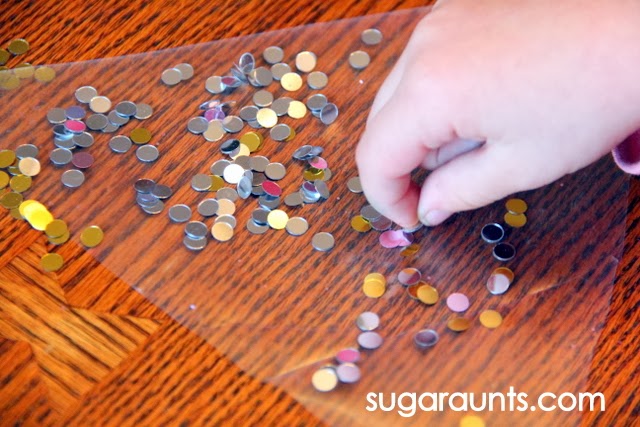
        I cut two triangles of  Clear Contact Paper, just slightly smaller than the green triangles.  Big Sister started placing the sequins on the contact paper.

      Work on fine motor skills with kids with this Christmas tree suncatcher craft.

      This was such a great fine motor activity for that Neat Pincer Grasp.  To pick up the sequins from the table surface and place them onto the contact paper requires tip to tip grasp of the index finger and thumb.  All of those sequins was a great workout!  She did a ton of them, but we ended up sprinkling even more sequins on to the contact paper to give our sun catcher a REALLY sparkly look.

      Cute Christmas craft for kids that makes a beautiful suncatcher craft.

         Next came Big Sister’s favorite part.  Do all Kindergarteners love tape as much as she does?  This girl loooooooves tape!  We stuck the two pieces of contact paper together to sandwich the sequins in the middle.  Then we taped the contact paper onto on of the green triangles.  

      Kid craft for Christmas activities that builds fine motor skills.

      A little glue held the top triangle in place and our sun catcher was complete!  Let us know if you do this craft.  We love to see our projects come to life with your kids! 

      Colleen Beck, OTR/L has been an occupational therapist since 2000, working in school-based, hand therapy, outpatient peds, EI, and SNF. Colleen created The OT Toolbox to inspire therapists, teachers, and parents with easy and fun tools to help children thrive. Read her story about going from an OT making $3/hour (after paying for kids’ childcare) to a full-time OT resource creator for millions of readers. Want to collaborate? Send an email to contact@theottoolbox.com.
      Pumpkin Craft to Build Fine Motor SKills

      pumpkin craft that builds fine motor skills.
      This pumpkin craft is a fun way to build fine motor skills and to use recycled materials at the same time. This cute pumpkin craft was actually designed, created, and photographed by my daughters! I love to see them doing what they love: creating homemade crafts while fostering occupational balance and helping others build skills by sharing such a fun Fall craft.

      Pumpkin craft that helps kids build fine motor skills, using recycled bottle caps.

      Pumpkin Fine Motor Activity

      By making this mini pumpkin craft, kids can build many fine motor skills. It’s a pumpkin fine motor activity without the goopy mess of pumpkin guts and seeds!

      This is a great Halloween occupational therapy activity to add to your toolbox…Just by making this Halloween craft, kids can build dexterity, refined grasp, and precision. Let’s break down how this craft builds fine motor skills:

      Precision– The pumpkin craft is a miniature pumpkin, just sized right for a bottle cap. Working on a small scale, kids can work on precision of grasp as they pick up and manipulate the materials.

      Pincer grasp- In fact, that tip to tip grasp that uses the pads of the pointer finger and they thumb, pincer grasp is used. This refined grasp is needed to pick up the googly eyes, pinch and place tape, maneuver the pipe cleaner piece.

      Neat pincer grasp– When that pincer grasp requires even more precision and the tips of the pointer finger and the thumb bend at the last joint, a neat pincer grasp is used. This grasp is needed to pick up very small items such as a mini-jack-o-lantern eyes and cutouts.

      Separation of the sides of the hand– Manipulating tape, picking up small items, and cutting with scissors fosters the fine motor skill of separation of the sides of the hand. This skill is essential for a functional pencil grasp.

      Bilateral coordination– Pulling and ripping tape is a great bilateral coordination task. Kids can use coordinated use of both hands throughout this pumpkin craft activity. Working on a small scale in a craft like this one pulls concentrated near-point work at the midline, making it a nice pre-cursor activity to refine skills needed for reading, writing, and other tasks requiring fine motor coordination skills.

      Gross grasp– Hand strength is built through the power side of the hand, or the ulnar side. When the power side is strengthened through gross grasp activities like squeezing a glue bottle, kids can gain more stability in the hand as they complete fine motor tasks. Squeezing the glue bottle in a small space requires a refined grasp, so glue is stopped when appropriate and there isn’t a giant pool of glue all over the table. This ability to squeeze a glue bottle in a small spot with accuracy isn’t easy for some kiddos! Here is more information on gross grasp.

      Scissor skills– This fine motor Halloween activity has very small scissor work, making it a nice way to work on precision and graded scissor skills.

      Work on fine motor skills with kids using this fine motor pumpkin craft.

      Let’s make a Cute Pumpkin Craft for Kids!

      Craft supplies to make a pumpkin craft with kids.

      First step is to gather all of your materials. Your materials for this pumpkin craft are: (Amazon affiliate links included below)

      How to make a pumpkin craft

      Let’s get started with making this cutie mini pumpkin craft.

      Cut green and brown pipe cleaners to make the pumpkin craft.
      1. First, cut the pipe cleaners to a length of about one inch. Put the pipe cleaners on the edge of one bottlecap. When you have it in a good spot add orange tape on the sides so it will stick.
      Use recycled bottle caps to make a pumpkin craft with kids.

      2. Place the second bottle cap on the edge of the first bottle cap so the rims are touching and sandwiching the pipe cleaners. Add a strip of orange tape around the outside of both bottle caps for a 3D pumpkin craft!

      3. Cut a small piece of the green pipe cleaner and bend it into a leaf shape.

      4. Then cut out your black construction paper to make a small jack-o-lantern face.

      Use orange washi tape to make a mini pumpkin craft.

      5. Next, glue the small construction paper pieces in the position you would like it to be on one of the bottle caps.

       Have fun building fine motor skills with this mini pumpkin craft!

      Cute mini pumpkin craft using recycled bottle caps.

      More Halloween Crafts you will love

      Pumpkin Thumbprint craft
      Bat craft for halloween
      Pumpkin stamp craft
      Pumpkin activity kit
      Pumpkin Fine Motor Kit

      Grab the Pumpkin Fine Motor Kit for more coloring, cutting, and eye-hand coordination activities with a Pumpkin theme! It includes:

      • 7 digital products that can be used any time of year- has a “pumpkins” theme
      • 5 pumpkin scissor skills cutting strips
      • Pumpkin scissor skills shapes- use in sensory bins, math, sorting, pattern activities
      • 2 pumpkin visual perception mazes with writing activity
      • Pumpkin “I Spy” sheet – color in the outline shapes to build pencil control and fine motor strength
      • Pumpkin Lacing cards – print, color, and hole punch to build bilateral coordination skills
      • 2 Pumpkin theme handwriting pages – single and double rule bold lined paper for handwriting practice

      Work on underlying fine motor and visual motor integration skills so you can help students excel in handwriting, learning, and motor skill development.

      You can grab this Pumpkin Fine Motor kit for just $6!

      Tiny Pumpkin Crafts

      We loved making this mini pumpkin craft for building precision and neat pincer grasp. By cutting the mini pumpkin faces from paper, you really work on refined motor skills.

      You can expand this activity by pairing it with our pumpkin emotions activity. Ask the child/student to identify emotions and then make that pumpkin face with the tiny pumpkins.

      Or, include more self-regulation concepts by using the tiny pumpkins along with our free pumpkin deep breathing exercise. Trace the deep breathing arrows with the tiny pumpkins! You can even discuss how small changes (and mini pumpkins!) make a big difference.

      Colleen Beck, OTR/L has been an occupational therapist since 2000, working in school-based, hand therapy, outpatient peds, EI, and SNF. Colleen created The OT Toolbox to inspire therapists, teachers, and parents with easy and fun tools to help children thrive. Read her story about going from an OT making $3/hour (after paying for kids’ childcare) to a full-time OT resource creator for millions of readers. Want to collaborate? Send an email to contact@theottoolbox.com.