Child in therapy? Start Here

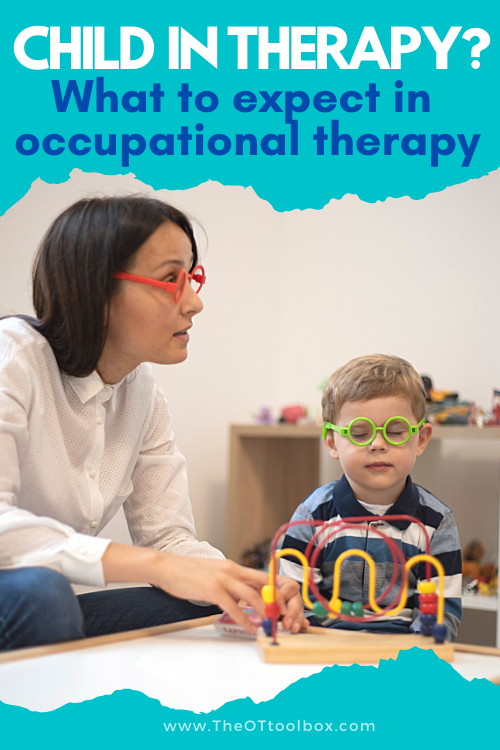
Have a child in therapy? This resource for parents of kids in occupational therapy is a great starting point for OT resources parents need.

Understanding therapy for kids can be overwhelming for the parents. Now especially, with distancing requirements, hybrid learning, or teletherapy, occupational therapy services might look different than you expected. Let’s break down pediatric occupational therapy so your questions and concerns are answered and the overwhelm dissipates a little. If you have a need for some sort of child therapy, then you are in the right place.

Ok, so you’ve received a recommendation to have your child screened or evaluated by occupational therapy. So what next? What does that mean? When there is an apparent need to take your child to therapy, it can be helpful to know what to expect. You might have a lot of questions about getting started with your child in therapy. I want to create a space where your questions are answered when it comes to occupational therapy. So, sit back, relax, and read on…

Have a child in therapy? This resource for parents of kids in occupational therapy is a great starting point for OT resources parents need.

What is occupational therapy?

Occupational therapy is a service that helps people achieve function and independence in the things that are important to them…in the things that occupy one’s day. OTs do this by offering adaptations, modifications, and by addressing underlying factors that impact independence.

Let’s take it a step further; Think about what you do in a single day: getting out of bed, brushing your teeth, getting dressed, making the bed, making and eating breakfast, getting out the door on time and with everything you need for the day, doing your job at work and everything that entails, driving, shopping for groceries, setting the table, balancing your checkbook. This list could go on and on and on!

All of these skills are your daily occupations, or things that occupational therapists can help one accomplish so they are as independent and functional as possible. But there’s more to it than just the daily tasks. There’s also the ability to physically accomplish these jobs. There’s the ability to staying focused on the task at hand, prioritize what’s important, and to stay organized. There’s safety and higher level thinking involved. There’s tolerance to one’s senses and the world around you. There’s balance, vision, coordination, and endurance involved. Essentially, every system in your body needs to be working optimally so that you can be as functional as possible during each and every task that you accomplish during the day.

Kids in therapy can accomplish so much! Occupational therapy works on all of these things!

Occupational therapy is the climb quote.

What do occupational therapists work on with kids?

Occupational therapists can work on many different things with kids.

Occupational Therapy In Schools:

  • Any need that impacts education or learning
  • Fine motor skills
  • Cutting with scissors
  • Handwriting
  • Assistive technology to improve education or learning
  • Managing containers in the lunch room
  • Keyboarding or typing as an accommodation to learning
  • Sensory needs that impact education
  • Staying organized
  • Cognitive processing
  • Attention
  • Visual processing
  • Executive functioning
  • Motor abilities
  • Self-regulation
  • Participation in the classroom

Occupational therapy In the Home or Outpatient Settings:

  • Play
  • Self-care skills- getting dressed, grooming, bathing, caring for oneself and the tasks associated with self-care
  • Leisure activities
  • Sleep
  • Toileting and potty training
  • Safety in the community
  • Feeding and oral motor skills
  • Addressing food texture issues or picky eating
  • Sensory processing
  • Self-regulation
  • Emotional-regulation
  • Social participation
  • Executive functioning skills- organization, attention, working memory, planning, prioritization, impulse control, and other skills
  • Fine and gross motor skills
  • Eye-hand coordination
  • Balance and gross motor coordination

Occupational therapy can also work with children in early intervention or birth though 3 years of age on development of skills. This can occur as a result of a disability or difficulty in developing certain skills. Still other aspects of care can be related to autism, sensory integration needs, mental health, and specific diagnoses.

Who Needs occupational therapy?

The above lists might help explain the question of who OTs service, but it can be helpful to have a list of those who benefit from occupational therapy. This diagnosis list should give you a starting point, but know that OT works with anyone struggling to achieve functional skills or independence in an aspect of any task! This page is referring to pediatric occupational therapy interventions.

  • Autism Spectrum, Asperger’s syndrome
  • Sensory processing disorders
  • Auditory processing disorders
  • Visual processing impairments
  • PANDAs
  • Birth injuries or birth defects
  • ADHD/ADD
  • Behavioral or mental health impairments
  • Visually impaired
  • Traumatic injuries to the brain or spinal cord
  • Traumatic injuries to the body- amputation’s, etc.
  • Learning disabilities or learning problems
  • Developmental delays
  • Brachial plexus injuries
  • Down Syndrome
  • Rett’s Syndrome
  • Spina Bifida
  • Cerebral palsy
  • Childhood stroke
  • Pediatric rheumatoid arthritis
  • Cognitive disorders
  • Broken bones, injuries, surgical impairments, or other orthopedic injuries
  • Post-surgical impairments or conditions
  • Motor or coordination impairments
  • MUCH, much more!

How does occupational therapy work?

When it comes to occupational therapy, one thing is for certain. There are no two treatment plans that are alike. That’s because OT is so specialized! What is important for one child may be goals for them in occupational therapy while another child with similar needs will have completely different goals to address.

Parents can work closely with occupational therapists and occupational therapy assistants to implement strategies and home programs in the home.

Identifying specific needs and progress toward goals requires contact between parents, caregivers, and the occupational therapist professional.

Many times, OTs work with the family as a whole to address challenges faced by the family of a child with needs.

In most states, occupational therapists require a doctor’s order in order to administer evaluation and intervention services. In the schools, typically, the child’s educational recommends a need for occupational therapy evaluation.

How will my child receive teletherapy?

If your child has received occupational therapy services in the past, you might be wondering how teletherapy works. Or, maybe your child is new to therapy and the thought of having a child in therapy via a computer screen seems impossible. You have valid concerns! Occupational therapy is very much centered on hands-on interaction with the therapist who strives to help your child build skills and accommodate for adjustments needed in positioning, motor skills, etc. and that service is very much an in-person skilled service.

Ask any occupational therapist and they will say they WANT to be face-to-face with your child, physically playing with your sweet kiddo, and interactiving in a hands-on ways.

However, occupational therapists are skilled at problem solving, adjusting to needs and the environment, and pivoting on a dime. OTs have got the requirements of social distancing as a result of a global pandemic in the bag!

Therapists are excelling at providing fun, engaging, and skill-building services through digital, virtual therapy, and through motivating and encouraging hybrid versions of therapy that needs to be done during these strange times.

Teletherapy is just one more hat that occupational therapists have had to wear and they are excelling at it! Here is more information on teletherapy and what it looks like.

How to Explain Occupational Therapy to a Child

Starting occupational therapy (OT) can feel like a big unknown, not only for kids, but for parents, too. One of the first questions many families have is: How do I explain occupational therapy to my child in a way that makes sense, and doesn’t feel scary? If you’re wondering where to begin, you’re not alone.

Occupational therapy for kids is all about helping them do the things they need and want to do in daily life, from brushing teeth to holding a pencil, from joining recess games with peers to managing big emotions. OT helps kids build the skills they need for success in daily activities, school tasks, and social participation.

Here’s how to explain it in kid-friendly terms:

“Your OT helps you get better at things that are tricky for you. They do this through games, crafts, obstacle courses, and sometimes even using swings or tools that make your muscles stronger. It’s kind of like having a helper-coach who makes hard things easier, and a lot of fun, too!”

What Is Occupational Therapy for Kids?

When parents ask “What is OT for kids?” the short answer is: OT helps children become more independent in their daily activities, also called activities of daily living (ADLs). These may include getting dressed, using utensils, writing at school, or following instructions in a classroom.

Children might see an occupational therapist if they struggle with:

  • Sensory overload in busy environments
  • Trouble with fine motor skills (like holding a pencil or tying shoes)
  • Delays in gross motor skills, like balance and coordination
  • Difficulties with social skills, emotional regulation, or attention
  • Using adaptive equipment or tools that support independence

In a typical OT session, your child might climb through an obstacle course, squeeze putty to build hand strength, or practice zipping their coat. An OT session is often play-based, but every part is working toward a goal outlined in your child’s treatment plan.

What Does an Occupational Therapist Do for a Child?

An occupational therapist (or OTD, if they hold a doctorate) helps children with different needs improve their ability to participate in their daily lives. OTs evaluate how your child plays, learns, moves, and connects with others, and then create a plan to support skill development across those areas.

Here are some things an OT might help with:

  • Using utensils at lunch
  • Putting on socks or managing fasteners
  • Writing neatly and following classroom instructions
  • Playing with peers and navigating social interactions
  • Managing textures, sensory input, or emotions

An OT may work in different settings, like a school environment, home, or OT clinic, and may collaborate with other providers like physical therapists, teachers, and speech-language pathologists to support your child’s quality of life.

What Should Parents Expect from OT for Their Child?

Parents play a huge role in the success of OT for kids. Whether your child receives OT services at school or in a clinic, you can expect collaboration, check-ins, and ideas to carry over into home routines.

Here’s what to expect:

  • A treatment plan based on your child’s strengths and challenges
  • A blend of structured tasks and play-based activities
  • Support for tasks like getting dressed, focusing during class, or calming down after a meltdown
  • Strategies for siblings, family routines, or school tasks

You may notice changes in your child’s confidence, independence, and even how they interact with siblings or new people. OT is designed to support the whole child, emotionally, socially, and physically.

How to Help Your Child Feel Comfortable with OT

Starting something new can cause anxiety for some children, especially if they’ve struggled in other settings. Here are some ways to ease that transition:

  • Explain OT in positive, simple terms: “It’s a place where you get to work on things you want to be better at, with fun games and friendly helpers.”
  • Practice visiting the OT clinic or look at photos of what it looks like
  • Role-play the first session so your child knows what to expect
  • Involve siblings or peers in supportive conversations
  • Let your child bring a comfort item if they feel nervous (like a fidget or stuffed animal)

OT Is a Team Effort

Every child deserves support that meets their unique needs, and that’s what occupational therapy for kids is all about. Whether your child is working on handwriting, managing emotions, or tolerating textures, OT helps build a foundation that supports success across their day.

If you’re starting this journey, know that collaboration between your family, the OT, teachers, and the school team will be key. And most importantly, OT is often a place where your child will feel seen, supported, and celebrated, while having a lot of fun along the way.

Frequently Asked Questions About Explaining Occupational Therapy to Kids

What is occupational therapy in simple terms?
Occupational therapy helps people do everyday things more easily. For kids, that might mean learning to hold a pencil, get dressed, follow directions, or feel calmer in busy places. OT helps children build skills so they can succeed at home, school, and play.

What is the best way to explain occupational therapy?
You can tell your child, “An occupational therapist helps you get better at things that are tricky, like using scissors, sitting still, or making friends. They do it with fun games and tools that help your body and brain work together.”

What is the definition of occupational therapy for kids?
Occupational therapy for kids is a health service that supports children’s development by improving how they move, think, feel, and take part in daily life. It addresses everything from fine motor skills to emotional regulation, attention, and independence.

How do you explain therapy to a child?
Try saying, “Therapy is a special time where someone helps you practice things that are hard. You’ll play games and do fun activities that make your muscles stronger, your thinking faster, and your feelings easier to handle.”

How do you describe occupational therapy to a child?
Say something like, “Your OT helps you learn new skills through play, art, movement, and fun tools. They’re like a coach who helps your body and brain work better together.”

What are age-appropriate ways to explain the evaluation process to kids?
You can say, “We’re going to meet someone who will play games and do fun activities with you to see what you’re really good at and what might be a little tricky. They want to learn how to help you feel stronger, calmer, and more confident.” For older kids, add: “It’s like a check-up for how your body and brain are working together.”

How do I prepare my child for OT?
Talk positively about the experience. Explain that OT is a fun and helpful place where they get to move, play, and try new things. You might say, “You’ll meet someone kind who helps kids practice things like getting dressed, using their hands, or staying focused.” Let them know you’ll be nearby and that it’s a safe, supportive space.

How to explain OT to a 4-year-old?
Use very simple language: “We’re going to see someone who helps kids get better at things like using their hands, staying calm, and having fun doing crafts or games.” Emphasize play and familiarity: “They have swings, toys, and games to help you grow strong and smart.”

How to explain therapy to a child?
Therapy helps your body and brain learn new things. Say, “Therapy is where you go to practice stuff that’s hard for you, like using scissors or tying your shoes. You’ll play, move, and do fun activities that help make those things easier.”

What does therapy mean for kids?
Therapy is a way to help kids feel better, learn new skills, and handle things that might feel hard. It might involve movement, games, crafts, or practicing everyday routines with a helper.

What is therapy in simple terms?
Therapy is when someone helps you get better at something. For kids, it often looks like playtime with a purpose, building strength, focus, or emotional skills in a fun and safe way.

How to explain treatment to a child?
You can say, “Treatment is something we do to help your body or brain feel stronger or work better. It might mean playing games, using cool tools, or learning ways to stay calm or move more easily.”

What is the main purpose of occupational therapy?
The main goal of occupational therapy is to help kids become more independent and successful in their daily lives. That means building the skills they need for school, home, play, and relationships, all while supporting their development in a personalized and engaging way.

Resources for parents of a child in therapy

Your child’s occupational therapist will be the biggest advocate on your child’s team. Use them as a resource! However, I wanted to offer resources here as well. These are great places to start when it comes to discovering tools, strategies, and specific activities that can help your child. I’ve had many parents of kids receiving therapy tell me that they’ve passed information and resources from this site onto their therapists. I’ve also had many therapists tell me that they’ve found this site because of a parent’s recommendation or request to work on specific areas of need. This is your starting space to find the resources and tools that will best serve your child.

Occupational Therapy Home ProgramsSTART HERE for activities to work on occupational therapy goals or specific skills at home, so kids can do the very activities that your child’s OT might suggest to supplement or support therapy services.

Executive Function Resources for Parents

Executive Functioning ResourcesSTART HERE for resources, activities, and strategies to address attention, impulse control, planning, prioritization, organization, problem solving, and other brain-related challenges that impact learning and accomplishing chores or daily tasks at home.

Fine Motor Resources for parents

Fine Motor SkillsSTART HERE for specific activities designed to help kids develop stronger hands so they can manipulate toys and clothing fasteners…or have enough endurance to color a picture without complaining their hands are tired…or have strong fingers that can hold the pencil so they can write neatly and so you can read their handwriting.

Occupations of Kids…resources for Parents to Help Kids Become More Independent

Occupations– START HERE to help your child build independence in their daily tasks like getting themselves dressed, tying their shoes, learning to type, potty training, staying safe in the community, and all of the exact ways that parents want their children to grow and learn.

HandwritingSTART HERE to understand what’s going on behind sloppy handwriting. You’ll find resources and specific strategies to help kids write on the lines, space between words, form letters accurately, learn cursive writing, so they can write independency and so you and others can read their writing.

Sensory Resources for parents

Sensory– START HERE to help your child manage their behaviors, emotions, and all things “sensory”. OTs help kids tolerate and accommodate for sensory input like that scratchy tag on their clothes or their hatred for the sock seam on their feet. They can help kids with the tools they need for picky eating, specific sounds, or other sensory issues. Therapists can help you create a sensory diet that works and that kids actually want to do. There is so much to sensory and you can find activities and tools to help.

Vision– START HERE for information on what’s going on behind trouble with reading, coordination troubles, or even math. Did you know that vision is related to all of these things? It’s true! Here, you’ll find your way on how to help your child with visual perceptual skills, visual motor skills, eye-hand coordination, and even motor planning! Wondering what these words even mean and how they relate to your kiddo? We’ve got you covered!

A final note to parents of a child in therapy

There is a lot to consider when it comes to occupational therapy for your child. One thing is for certain, though: in occupational therapy, dreams and that far-reaching goal does become possible. Whether it’s getting your child to follow morning routines, banishing picky eating, or helping your kiddo to regulate their emotions, occupational therapy can help.

Occupational therapists use play, activities, and strategies that address underlying areas so that your child can accomplish the goals they have for themselves, too. From learning to ride a bike, learning cartwheels, or mastering climbing that tree.

One thing is for certain; having a child in therapy that is led by an occupational therapist will lead to organizing, motivating, and fun play that drives independence in your child!

Be sure to reach out to your child’s occupational therapist with specific questions!

Colleen Beck, OTR/L has been an occupational therapist since 2000, working in school-based, hand therapy, outpatient peds, EI, and SNF. Colleen created The OT Toolbox to inspire therapists, teachers, and parents with easy and fun tools to help children thrive. Read her story about going from an OT making $3/hour (after paying for kids’ childcare) to a full-time OT resource creator for millions of readers. Want to collaborate? Send an email to contact@theottoolbox.com.

Middle School Occupational Therapy

middle school occupational therapy

Occupational therapy in middle school can bring about a lot of questions. When is OT appropriate for middle school students? What should OT focus on in middle school? And how can occupational therapy services support transition to middle school and further levels of education? This post will explore the tricky transition from elementary to middle school occupational therapy. We’ve previously covered occupational therapy for teens, but this article goes deeper into the middle school years.

Occupational therapy in middle school

Prior to the middle school years, occupational therapy in schools is pretty straight forward. In the younger grades, school based OT practitioners go into the school setting armed with playdough, scissors, pencils, crayons, glue, fidgets, and a few games/puzzles. 

What about the middle school occupational therapy population? These teenagers are not motivated by crayons, Candyland, letter formation exercises, or cut and paste activities.  Nor should they be. 

Unless your middle school caseload is in a self contained classroom functioning at a preschool level, these games and activities are not appropriate or practical.

One thing that comes up a lot at the middle school age is that we might need to use our creative thinking cap as OT practitioners. There might be a little push back from the middle school student. They think they are too old for the therapy session, especially if they had OT in primary school. You can find some strategies and our experience in supporting middle schoolers and tips for how to engage a resistant child in therapy.

Middle School Occupational Therapy 

Many therapists assist with transitions for children as their caseload moves from a direct to indirect, or consultative therapy model at this time, especially if they have been working with a particular student for several years.

Why? There are several valid reasons for doing so.  According to APEX occupational therapy, the primary reasons for transitioning to a consultative model are:

  • Teenagers are self conscious and do not care for a therapist coming into their general education classroom to sit by them, observe, or ask questions
  • Middle school schedules are busy.  Pulling a student for individual therapy weekly means they are missing valuable learning time
  • Handwriting habits are set and unlikely to change at this age.  Pencil grasp and letter formation skills are often formed by the age of eight, making adjustments in middle school difficult
  • Visual perceptual skills are often developed by age 11
  • Students do not want adaptations that make them stand out from their peers. They will resist noise cancellation headphones, a scribe for written notes, alternative seating, weighted items, or noticeable fidgets
  • Executive function – many middle schools already incorporate these skills into their program through schedules, planners, online classrooms, and reminders
  • Students at this age are most likely using technology to do much of their school work by this point, or accommodations have been made in their IEP already
  • Students have often been receiving services since early elementary school.  Changes are less likely to happen at this stage, if they have not already

Middle school occupational therapy is not a one size fits all model

There are several reasons to keep a student on a direct therapy service model during middle school:

  • Self contained students work at a different pace than their mainstreamed counterparts. They may continue to need more intervention
  • Lower level learners will need to be transitioning to a life skills or self help model, if they have not already. This means new objectives and goals to address
  • Middle schoolers are a different breed of people. There are new social expectations, hormonal changes, levels of independence, and increased demands for self help skills
  • It may take time to educate families and caregivers about this change in service model, and expectations. Automatically moving everyone to an indirect model, or discharging them, may be too abrupt for anxious parents or overwhelmed teachers

Barrier of Participation in therapy

One thing to consider in the role of occupational therapy in the middle school setting is the barrier of participation that occurs during the middle school years.

During school-based therapy in the younger school settings (early intervention, primary school years, elementary school years), students enjoy occupational therapy sessions. They are fun and exciting. Kids typically love to participate in therapy during these years.

In the middle school years, the school-based OT can start to see a barrier to participation that impact therapy sessions.

Barriers to participation in middle school occupational therapy can vary depending on individual circumstances and individual needs. These barriers can impact the middle school student’s goal achievement.

Specifically, middle schoolers may experience a social barrier to using the tools OT practitioners promote to support their needs.

The student might experience a social stigma and cultural barriers. surrounding their peers and the middle school culture. They may not want to participate in therapy sessions and this can impact the use of therapeutic supports.

Another barrier to participation in the middle school setting may be the issue of time constraints and scheduling conflicts. Middle school students participate in a full schedule, busy hallways, academic and activity commitments, and other responsibilities can make it challenging for students to participate in therapy sessions.

The Role of the middle school occupational therapist

Seruya and Ellen write about the Role of the Middle School Occupational Therapist.  They highlight several important factors or strategies to intervention.

  • Involve your learner in decision making about goals and objectives. These will be more meaningful and motivating to your students
  • Transition away from typical handwriting goals to more functional goals
  • Teach typing and word processing using a typing program
  • Provide adaptations if your learner is not able to complete work in an effective manner. A scribe to write notes for them, word processing versus written documentation, lessen the workload if writing is too labor intensive, preferential seating to improve attention
  • Address any lingering or new sensory concerns.  Provide adaptation for these with preferential seating, alternative seating, gum or fidgets for self regulation, ear plugs to reduce incoming sounds, and organizational tools
  • Address important life skills – learners need to know their emergency contact information, effectively groom themselves, take care of feminine hygiene issues, advocate for themselves, and follow a schedule
  • Some interventions may require private therapy to be more appropriate such as meal preparation, laundry, ordering from a menu, shopping, budgeting, or filling out an application. These would be appropriate goals for students in a self contained classroom
  • Incorporating brain breaks into a natural and functional movement needs. We talk about this more in our article on middle school brain breaks.

Some additional ways that occupational therapy can support students in grades 6, 7, and 8 include:

  • Working on organization, particularly when it comes to using different books, folders, and materials for each class
  • Managing a schedule with classroom changes, including hallway navigation and reading the schedule as well as sensory needs in a busy hallway
  • Lunch considerations-making meal selections, using money to purchase various meal options, and other mealtime considerations
  • Locker use including use of a combination lock, locker organization for obtaining needed materials for different times of day
  • Self-care including clothing management for gym class or swimming
  • Educate middle school teachers, parents, and other caregivers may not understand the role of the occupational therapist in middle school.  It may be time for a little education on the services provided and the therapeutic model. 
  • Empathy – reducing therapy minutes may feel like the student is not going to improve, or they are being given up on.  It is tough for parents to imagine their learner may never write a sentence, read independently, or live alone.  This is the time to gently begin this conversation.
  • Tool use including: rulers, protractors, calculators, graph paper, three ring binders, smaller desks, etc.
  • Social awareness and behavioral challenges as a result of sensory, self-regulation, or emotional needs
  • Changes in schedules, including bell ringing between classes, navigating between classrooms, short or lack of recess times, larger cafeteria, assemblies, etc.
  • Supporting sensory needs in the cafeteria due to the larger sized room and more students in the area
  • Collaborate with middle school teachers- work with educators and families to determine what are appropriate ADLs or functional goals and needs in the classroom, and how they can be addressed
  • Communicate with family of middle school students on appropriate occupational therapy goals and interventions.
  • Motivate middle school students- There may be a need for direct therapy intervention. Keep your students motivated with relevant and important treatment activities. 
  • Life skills in middle school occupational therapy- This may be the time to address life skills, depending on the needs of the student.  The OT Toolbox has a series of life skills posts including cooking, laundry, filling out forms, and social stories.
  • Keep goals and objectives focused on relevant and functional skills.
  • Educate staff and caregivers about the role of the OT in schools.
  • Provide resources, and make adaptations to the educational environment to help students better access their curriculum. 

Still working on handwriting in middle school occupational therapy?

There are times when therapists are called to continue to address handwriting in their middle school population.  Intervention needs to be functional, beyond basic letter formation. One tool is to use these middle school journal prompts to target handwriting skills, executive functioning skills, social emotional skills, and more.

Miss Jamie, a school based OT, has written a post about Addressing Handwriting in Middle Schoolers.  She has gone so far as to write a second post here.   One goal may be; this student will be able to independently write identifying information (name, address, phone number) without a model with 80% legibility. 

Or;  the student will be able to write or access information to fill out a form independently.  In The Member’s Club, we have several form practicing pages to work on the life skill of filling out forms.

Middle School Occupational Therapy Activities that Build Skills & Confidence

Middle school brings a whirlwind of changes: more complex academics, shifting social groups, growing independence, and rising expectations. Occupational therapy in middle school plays an essential role in helping students successfully navigate these challenges. OT supports students through both direct services and consultation with teachers, staff, and families. These middle school occupational therapy activities are designed to help students with disabilities, including autism, ADHD, and other learning differences stay engaged in daily activities and grow their independence.

As part of special education, OT is considered a related service, meaning it supports the educational goals identified by the IEP team. 

The role of OT at this level also often includes collaboration with other professionals, including occupational therapy assistants, teachers, and school counselors. Whether supporting mental health, developing organizational skills, or promoting social participation, the school OT helps students succeed in both academics and life skills. These strategies and recommendations are tailored to each student’s unique needs, goals, and disability profile.

Middle School OT Goals

These middle school OT goals target key areas often addressed in school-based services and can be adjusted depending on the student’s level of support. They’re designed to align with IEP objectives, classroom expectations, and real-world success.

Executive Functioning & Organizational Skills for Middle School OT

  • Student will use a planner to record assignments with 90% accuracy across 3 consecutive weeks.
  • Student will organize materials for each subject using a color-coded system or binder labels with visual prompts.
  • Student will initiate class routines (like unpacking, turning in homework) with fewer than 2 verbal cues per day.

These skills are especially important for students with ADHD or executive function challenges, and are often addressed through both direct and consultation-based OT services.

Self-Regulation & Mental Health for Middle School OT

  • Student will use a self-selected coping tool during transitions to remain calm in 4 out of 5 observed opportunities.
  • Student will identify emotional triggers and demonstrate appropriate regulation strategies in the classroom.
  • Student will participate in a sensory strategy routine to support emotional regulation and reduce stress during work tasks.

Many students with autism, sensory differences, or mental health challenges benefit from personalized routines that support their self-awareness and self-control in the school setting.

Fine Motor Skills, Writing & Daily Activities for Middle School OT

  • Student will demonstrate correct pencil grasp and maintain legibility during a 10-minute writing task.
  • Student will complete scissor-based assignments (cutting, folding) with accuracy in 3 out of 4 trials.
  • Student will complete locker organization or classroom prep tasks using checklists or visual cues.

Fine motor skill development directly supports academics, note-taking, and participation in school-based routines.

Visual Motor & Sensory Processing

  • Student will accurately complete copying tasks from the board or screen using appropriate spacing and alignment.
  • Student will participate in visual perceptual games or strategies to improve attention to detail in worksheets and tests.
  • Student will recognize sensory overload and use pre-taught calming strategies to re-engage in classwork.

These modifications often support visual processing, spatial awareness, and focus, especially important for students with sensory processing differences or visual stress.

Social Participation & Life Skills for Middle School OT

  • Student will participate in 1:1 or group-based activities to build peer interaction and conversation skills.
  • Student will follow social problem-solving steps with visual prompts during role-play or real scenarios.
  • Student will demonstrate responsibility for personal belongings (e.g., backpack, lunchbox, planner) with 80% independence.

These school OT goals promote confidence, peer connection, and independence—all crucial for the middle school years and beyond.

Frequently Asked Questions about Occupational Therapy in Middle School

Next, let’s cover some of the FAQ about occupational therapy in middle school.

What is the role of occupational therapy in middle school?

In middle school, occupational therapy (OT) supports students as they navigate increased academic demands, growing independence, and complex social expectations. 

The role of OT includes helping students participate in daily routines, improve organizational skills, develop executive functioning, and support emotional regulation. OT can address challenges related to handwriting, sensory needs, transitions between classes, or even managing materials like lockers and binders. Services may be delivered through direct OT sessions, consultation, or a collaborative approach with teachers and other school professionals.

Why would a child need occupational therapy in school?

A student may need occupational therapy in school if difficulties in areas like fine motor skills, attention, self-regulation, or sensory processing interfere with their ability to access the curriculum or participate in school routines. 

Students with autism, ADHD, or other disabilities may benefit from OT support. The IEP team, which includes special education staff and related service providers, determines eligibility and appropriate OT services based on the student’s educational needs—not just their diagnosis.

How do I move from 1:1 OT to a consultation model for middle school students?

Transitioning from 1:1 OT to a consultation model is common in middle school. This shift reflects the student’s growing independence and the increased need for support in natural classroom settings. To make this change:

  • Start by reviewing IEP goals and assessing progress.
  • Collaborate with the IEP team to determine readiness for consultation.
  • Set up a plan to fade direct services while increasing teacher support and classroom strategies.
  • Provide visual supports, checklists, and recommendations the student can use across their day.
    This model emphasizes real-time problem-solving, supports carryover of strategies, and encourages student self-advocacy.

What does an OT consult on with middle school teachers?

An OT consultation with middle school teachers might include:

  • Strategies for improving executive functioning (e.g., managing binders, using planners)
  • Classroom modifications for students with sensory processing needs
  • Tools to support handwriting and note-taking
  • Promoting self-regulation with movement breaks, sensory strategies, or calming routines
  • Helping students navigate transitions, such as changing classes or participating in group projects
  • Addressing mental health concerns with structured supports that build confidence
    Consultation ensures that strategies are integrated across classes and aligned with student goals.

How can OT help with self-regulation in middle school students?

Middle schoolers experience an explosion of emotional, cognitive, and physical changes, which can challenge self-regulation. 

Occupational therapy can support students by teaching sensory strategies, creating regulation toolkits, building awareness of emotions, and integrating movement or sensory activities into the day. 

OTs may also provide visual supports or check-in systems that help students recognize and respond to their internal states. This is especially helpful for students with ADHD, autism, or mental health diagnoses.

How does OT help with transition services in middle school settings?

OT plays an important role in transition planning, especially in the middle school years, when students begin preparing for high school and future independence. OT support may focus on:

  • Building daily living skills (e.g., organizing materials, self-advocacy)
  • Teaching self-determination and participation in IEP meetings
  • Supporting the development of routines at school and home
  • Collaborating with transition coordinators, special education teams, and related service providers
    By addressing barriers early, OT helps students build the foundational skills they’ll need for success in high school and beyond.

transition from elementary to middle school

Students that attend occupational therapy services in the elementary grades may move on through their school career with a continued need for occupational therapy support.

What can you do to help this transition to middle school occupational therapy? This article on AOTA covers transitions to middle school and includes ideas for groups in the middle school transition period.

Ideas include:

  • Consulting with various teachers throughout the day
  • Consult with parents
  • Meeting with students in a small group setting to cover transition issues that are similar for several students
  • Working with students in a group in life skills or support rooms for group therapy interventions.
  • Consulting with student aides (if the individual has this level of support)
  • Creating small groups as extracurricular activities to address areas such as social skills, emotional needs, worries, or intermural types of heavy work activity

Depending on the needs of the individual, therapy interventions for the above areas may move to a consult basis.

Working with middle schoolers can be challenging. They are suddenly big and somewhat awkward as they navigate the changes of adolescence. There is a lot more going on than just navigating a bigger school!

One last tip as an occupational therapy provider in the middle school setting: Try not to be in the hallways when they are transitioning between classes…it can be like walking through a stampede!

Victoria Wood, OTR/L is a contributor to The OT Toolbox and has been providing Occupational Therapy treatment in pediatrics for more than 25 years. She has practiced in hospital settings (inpatient, outpatient, NICU, PICU), school systems, and outpatient clinics in several states. She has treated hundreds of children with various sensory processing dysfunction in the areas of behavior, gross/fine motor skills, social skills and self-care. Ms. Wood has also been a featured speaker at seminars, webinars, and school staff development training. She is the author of Seeing your Home and Community with Sensory Eyes.

What It Means to Be Neurodiversity Affirming: Therapy, Teaching, and Everyday Practices

neurodiversity affirming practices

The term neurodiversity affirming has gained momentum in education, therapy, and parenting spaces. But what does it really mean? Being neurodiversity affirming means recognizing that neurological differences like ADHD, autism, dyslexia, and more are natural variations in the human brain, not deficits to be fixed.

neurodiversity affirming with picture of hands making a heart.

This perspective promotes respect, understanding, and supportive practices that empower individuals across environments, including the classroom, social media, and in therapy sessions.

What Does Neurodiverse Mean?

Neurodiverse refers to the broad diversity of human brains and minds. The term includes individuals with diagnoses like:

  • Autism Spectrum Disorder (ASD)
  • Attention Deficit Hyperactivity Disorder (ADHD)
  • Sensory Processing Disorder
  • Dyslexia, Dysgraphia, Dyscalculia
  • Tourette Syndrome
  • Intellectual or learning disabilities

The term neurodiversity covers many, many more diagnoses (and non-diagnoses) too.

A person is considered neurodivergent if their brain functions in ways that diverge from the neurological norm (often referred to as “neurotypical”). Importantly, neurodivergence isn’t something to “fix” a person. It’s a way to be, and our job is to to understand and support.

What neurodiverse mean? Picture of brain and rainbow tangled strings

What Does Neurodiversity Affirming Look Like?

Next, I want to cover what it means to be neuro-affirming, especially in different environments. Not because the environment makes a difference, per say, but because in different environments, we support individuals in different ways.

On social media, we share posts or comment. When you are neuro-affirming on social media, you have that awareness. It’s good to look at each environment through it’s own lens.

Why Neurodiversity Matters

Recognizing and respecting neurodiversity helps create a world where everyone is welcome as they are. When we affirm neurodivergent individuals:

  • We promote mental health and self-worth
  • We reduce burnout from masking and conformity
  • We build inclusive systems in education, healthcare, and beyond
  • We raise future adults who feel seen, valued, and supported

How You Think Matters

  • See neurodiversity as a natural part of the human experience, not something broken or pathological.
  • Expect variation. We are all different and we all have differences in learning styles, sensory needs, communication, and behavior. Differences are the norm.
  • Reject the “fix-it” mindset. The goal is not conformity. Support individuals to thrive as they are.
  • Recognize disability is not a bad word. Needs are valid, and support is a right. Everyone deserves support and it’s not always the same.
  • Presume competence. Always assume the child is capable, even if their abilities show up in unexpected ways.
neurodiversity affirming practices, picture of brain

How to Support Neurodiversity

Supporting neurodiversity means removing barriers to participation and not changing the person. That includes:

  • Offering sensory-friendly environments
  • Advocating for accessible communication (visuals, plain language, AAC)
  • Using strength-based approaches rather than focusing on deficits
  • Validating that “hard things” might just be different, not wrong

Here are ways be neurodiversity-affirming in day to day situations.

Neurodiversity Affirming Classroom

Being neurodiversity affirming in the classroom might include:

It’s about creating inclusive environments where all students can thrive.

FBA (Functional Behavioral Assessment) with Neuroaffirming Approach

As occupational therapy practitioners we hear a lot about FBA, or Functional Behavioral Assessments and how these are not neuroaffirming in supporting children. A neuroaffirming Functional Behavioral Assessment shifts the question from: “What is wrong with this child?”

to “What is this child communicating through their nervous system and environment?”

When you suspect patterns related to overwhelm, sensory processing differences, or impulse control challenges, a neuroaffirming FBA becomes less about compliance and more about identifying unmet needs, environmental triggers, and lagging regulation skills.

Traditional FBAs often focus on:

  • Reducing problem behavior
  • Increasing compliance
  • Identifying consequences that maintain behavior

A neuroaffirming FBA focuses on:

  • Understanding nervous system regulation
  • Identifying sensory and environmental load
  • Recognizing executive functioning demands
  • Supporting autonomy and dignity
  • Proactive accommodation

To move to a neuroaffirming approach, we want education and assessment or documentation of actions to describe what the nervous system is doing. This might look like assessing the sensory or regulation needs related to the actions we see.

We describe what the nervous system is doing.

When reviewing patterns, examine:

Arousal Level

  • Is the child overactivated (fast, loud, impulsive)?
  • Underactivated (withdrawn, slow, disengaged)?
  • Rapidly shifting?

Sensory Triggers

  • Noise
  • Visual clutter
  • Touch proximity
  • Movement demands
  • Unexpected transitions

Executive Load

  • Multi-step directions
  • Writing volume
  • Time pressure
  • Social interpretation demands

Often, what appears as “behavior” correlates with peaks in cognitive or sensory load.

Neuro-affirming Social Media

On platforms like Instagram, TikTok, and Pinterest, being neurodiversity affirming includes:

  • Sharing content that avoids ableist language
  • Listening to lived experiences of neurodivergent individuals
  • Promoting resources created by neurodivergent voices
  • Avoiding “fix-it” narratives or “how to make your child look normal” posts

Neurodiversity affirming when In Person

In daily interactions, affirming practices might include:

  • Accepting stimming behaviors like fidgeting, rocking, or repeating words
  • Using identity-first language (e.g., “autistic person”) when preferred
  • Asking for consent before giving help or offering feedback
  • Respecting different communication styles and energy levels

Neurodiversity Affirming Practices in Therapy

In neurodiversity affirming therapy, professionals work with (not against) the client’s natural neurology. This might include:

  • Focusing on self-advocacy and autonomy
  • Using co-regulation before demanding self-regulation
  • Collaborating with families to support real-life participation (not “normalcy”)
  • Avoiding masking-based strategies or compliance-focused therapy models
  • Offering choice, consent, and flexibility in every session

Neurodiversity affirming therapy shifts the goal from “normalizing” to empowering.

neuro affirming Evaluation Strategies

  • Focus on the whole person, not just deficits. Assess strengths, interests, and support needs with equal weight.
  • Select tools thoughtfully. Use assessments that reflect real-world function and honor neurodivergent ways of thinking and communicating.
  • Think about the individual. Are you grouping people together instead of treating them as individuals?
  • Prioritize lived experience. Spend time observing and talking to the individual, not just evaluating behaviors on paper.
  • Collaborate with the child or client. They are the expert in their own experience. Let their input shape your goals.

Neuro affirming Communication

  • Honor all communication types. Whether it’s gestures, AAC, scripts, echolalia, or silence. Every kind of communication counts.
  • Never force eye contact. True connection doesn’t require direct gaze. Respect each person’s comfort and culture.
  • Provide choices often. Choice empowers and communicates respect. It builds autonomy and trust.
  • Listen actively. Especially to autistic and neurodivergent voices. They’re your most valuable teachers.

Neurodiversity affirming Sensory & Environmental Supports

  • Support stimming. It can be a self-regulation strategy that is a need. Stimming is not something to suppress.
  • Create flexible environments. Adapt lighting, noise levels, seating, and activity structures to reduce stress and increase access.
  • Adjust the surroundings, not the student. Don’t ask kids to “tough it out” when the sensory environment is overwhelming.

Strengths-Based & Student-Led Approaches

While a strengths-based approach is different, it’s important that we cover this aspect also.

  • Celebrate deep interests. Use them as tools for connection, engagement, and learning.
  • Take a strengths-first perspective. Build on what the child does well, and teach through their existing skills and passions.
  • Stay flexible and responsive. There is no one-size-fits-all approach. Let your strategies evolve with the learner.
  • Stay curious. Be willing to rethink your systems, goals, and teaching methods as you learn more.

Final Thoughts

Being neurodiversity affirming can be a much-needed shift in mindset. Embracing neurodiversity means creating spaces where different doesn’t mean broken.

Colleen Beck, OTR/L has been an occupational therapist since 2000, working in school-based, hand therapy, outpatient peds, EI, and SNF. Colleen created The OT Toolbox to inspire therapists, teachers, and parents with easy and fun tools to help children thrive. Read her story about going from an OT making $3/hour (after paying for kids’ childcare) to a full-time OT resource creator for millions of readers. Want to collaborate? Send an email to contact@theottoolbox.com.

Jack Be Nimble Nursery Rhyme Craft

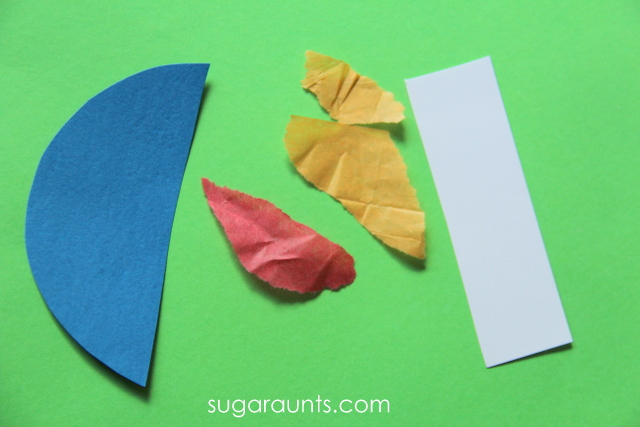
Fine motor skills nursery rhyme craft. child squeezing a glue bottle and picture of cut shapes and torn tissue paper.

Looking for a fun way to bring movement into your circle time? This Jack Be Nimble craft pairs perfectly with nursery rhyme activities that get kids up and moving! Traditional rhymes like this one offer the perfect opportunity to build coordination, balance, and listening skills through gross motor rhymes. Add in a simple hands-on kids crafts, and you’ve got a meaningful activity that supports early learning in a playful way. Whether you’re working with a preschool class or doing OT sessions, this circle time movement idea brings the classic rhyme to life with jumping, crafting, and lots of giggles.

Fine motor skills nursery rhyme craft. child squeezing a glue bottle and picture of cut shapes and torn tissue paper.

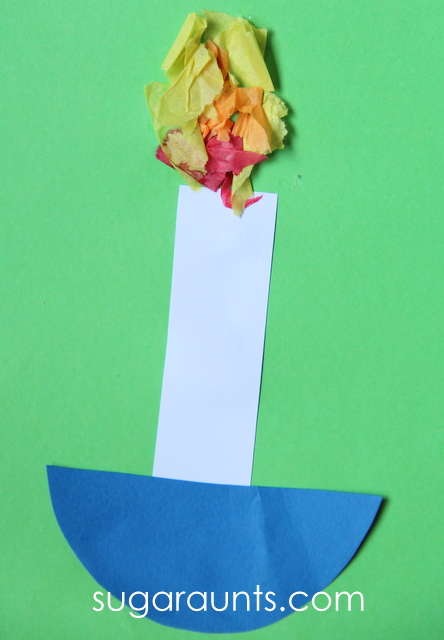
Today’s craft is a Jack Be Nimble craft based on the nursery rhyme, Jack be nimble, Jack be quick. If you are looking for an easy nursery rhyme crafts based on development, this craft supports fine motor skills and scissor skills.

Jack Be Nimble Craft

I love this Jack be Nimble craft because it has so many components that are the building blocks for developing motor skills in kids. You’ll find:

  • Cutting simple shapes
  • Cutting straight lines and curved lines
  • Tearing paper
  • Crumbling paper
  • Gluing the craft pieces in order (direction following)

This craft is one of those kids crafts that is project based, but there are components that can be created by the child with a process-based format. You can have the child add their own spin on things and offer art and craft materials and just let the process go.

 
The Nursery Rhyme craft and activities series is in full swing and we’ve had some great ideas shared for some classic nursery rhyme favorites.  
 
Today’s kids craft is one of our favorite Nursery Rhymes.  We’ve loved this short little rhyme since we started book babies at the library years back.
 
It is a fun rhyme to recite and always brings a smile to my kids’ faces. 
 
Jack be nimble
Jack be quick
Jack jump over the candlestick.


Jack Be Nimble Jack Be Quick, Jack jumped over the candle stick craft for nursery rhyme loving toddlers and preschoolers.


Jack Be Nimble Jack Be Quick Craft for Toddlers and Preschoolers

This post contains affiliate links for your convenience.


To make a Jack Be Nimble craft, you’ll need:

  • cardstock in white, another color (we used blue) and a background sheet (we used green)
  • glue
  • tissue paper (in red, yellow, and orange)

This craft is a nice one because you can work on cutting simple shapes. Here is a scissor skills crash course that talks about how to modify cutting tasks to make it easier or harder for kids at different skill levels.

Use Squeeze Glue Bottles Instead of Glue Sticks 

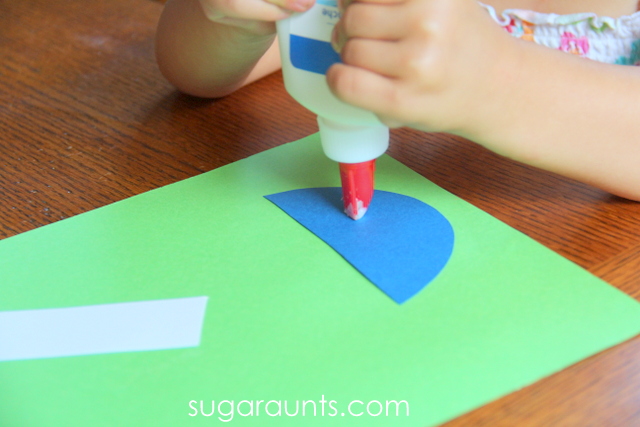
Here’s an occupational therapy fine motor tip: Use squeeze glue bottles for crafts. This is a strengthening tool that also works on graded precision, wrist stability, bilateral coordination, crossing midline, and visual motor skills! 

tip for using glue bottles to work on hand strength

These are skills that kids need for a wider variety of functional tasks and the squeeze glue bottle builds these skills with instant feedback. 

Squeeze too hard and too much glue comes out of the glue bottle. Squeeze too softly and you won’t get any glue. The nice thing is you can modify the amount of pressure needed by opening or closing the cap slightly. 

Wrist stability with fine motor tasks like using scissors and writing is huge. That’s why I love using the glue bottle task as a way to work on this. If the wrists are bent, or flexed when squeezing the glue bottle, the child won’t have stability and strength. It’s easy to point out this concept to them while they are using the glue bottle because it’s right there in front of them with both hands together on the glue bottle. 

This is a great way to make the nursery rhyme craft even more functional and effective! 


To make the Jack be Nimble Jack be Quick craft:

  1. Start by cutting the simple shapes you’ll need to make the candlestick craft.  Older kids can work on scissor skills to cut these simple shapes.  
  2. Cutting from card stock is a great way to work on scissor accuracy because the resistance is greater than regular printer paper.  This allows children to slow their snipping speed and better accuracy when cutting along lines.
  3. Cut a semi-circle from colored paper and a rectangle from white paper.  
  4. Tear a square of each color of tissue paper.

5. Glue the semi-circle onto the paper.  This is a great opportunity to talk about shapes with your toddler or preschooler.


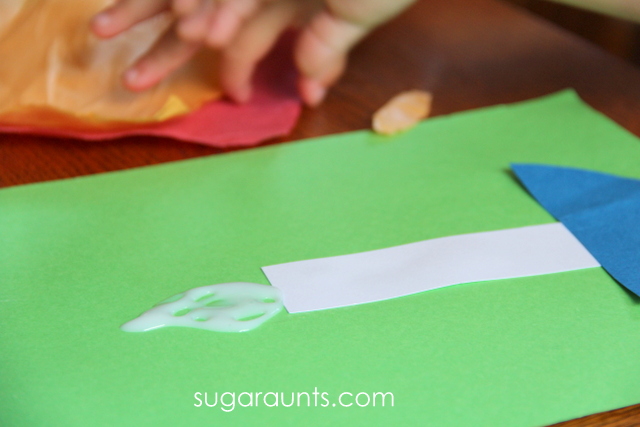
6. Glue the rectangle on top of the semicircle.


7. Draw a flame shape with the glue.

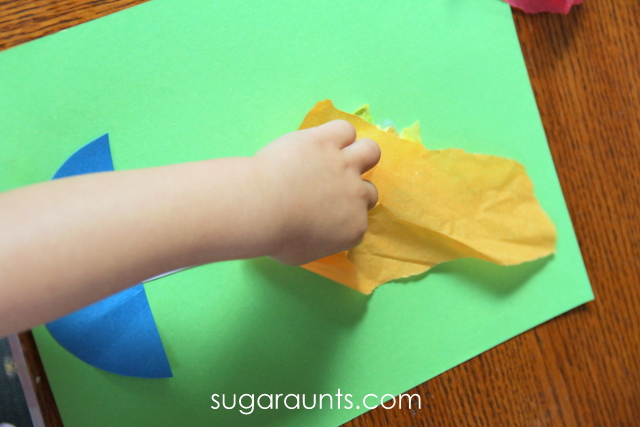
8. Have your child tear small pieces of the tissue paper.  

Tearing paper and crumbling tissue paper is a great way to work on fine motor hand strength, opening of the web space (area between the thumb and index finger), and defining of the arches of the hand.  

All of these areas are important for pencil grasp and endurance in handwriting and coloring.  

Tearing tissue paper is such a great fine motor strengthening activity and one of my favorites!

 
Glue the tissue paper onto the top of the candle stick.  You’re done!  So much fun for little ones who love Jack be nimble!
 
 
Be sure to stop by and see all of the Nursery Rhyme crafts and activities from this week and next week!


Colleen Beck, OTR/L has been an occupational therapist since 2000, working in school-based, hand therapy, outpatient peds, EI, and SNF. Colleen created The OT Toolbox to inspire therapists, teachers, and parents with easy and fun tools to help children thrive. Read her story about going from an OT making $3/hour (after paying for kids’ childcare) to a full-time OT resource creator for millions of readers. Want to collaborate? Send an email to contact@theottoolbox.com.

For more craft ideas, including templates and printable crafts that allow for data collection, be sure to get our resources inside The OT Toolbox Membership.

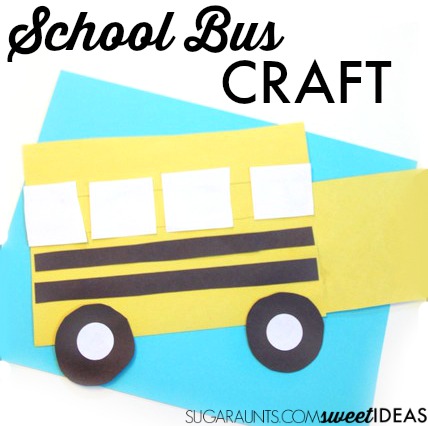
Easy Shapes School Bus Craft

School Bus craft for screening skills during back to school time

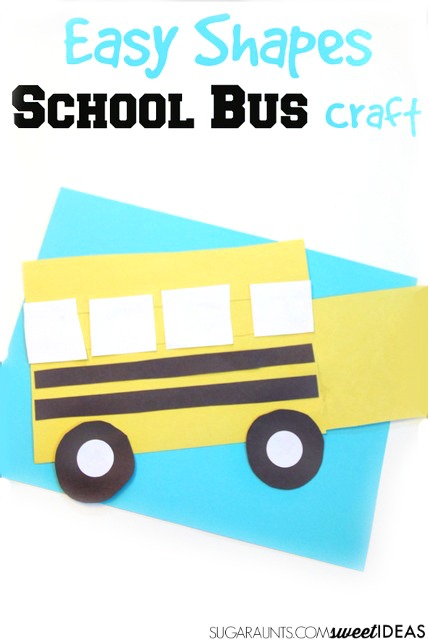
We love this easy bus craft as back to school crafts for kindergarten! School buses and the back-to-school season is the perfect time for a fun, low-prep bus craft that supports creativity and fine motor skills. We love using back to school themed activities in occupational therapy sessions for a reason…This paper bus activity is ideal for young kids, toddlers, kindergartners, and even older kids. Using simple materials like cardstock, glue, markers, and printables, this craft is a great option for the first day of school, a classroom display, or a back-to-school school activity.

School Bus craft for screening skills during back to school time

An easy school bus craft is just what kids need before back to school, along with a little crafting fun!


I don’t want to even think about the end of summer and the start of school.  The summer fun is quickly passing by with long days of outdoor play and water activities.   We’ve got a few of the cousins heading back to school this fall.  A couple on the school bus and a few that will be starting up preschool for the first time. 

New classes, new book bags, and new school shoes happen before the summer fun has even ended.  With all of the newness happening, this mama wanted to touch on an old familiar theme with the start of school quickly approaching.  


This school bus craft was a fun way to create while we explored easy shapes.  This was a great craft for my two year old as we talked about the start of school and some easy shapes.

Kids will love to make this school bus craft as a back to school craft that helps kids learn shapes.

Back to School Craft


This post contains affiliate links. 
 
Easy shapes school bus craft


School Bus Craft

For this craft, all you need is a few items.
 
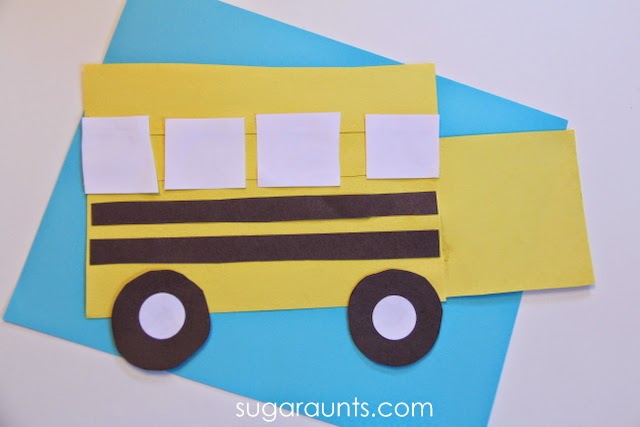
I cut a few simple shapes from the paper.  An older child who is working on scissor skills could cut these shapes.
 
Building our school bus was fun!  We moved our shapes around until we liked the bus.  This was fun for Big Sister (age 6) as she helped us build the bus and made sure the windows were where she liked them. 
 
Baby Girl (age 2 and half) worked on her shape identification with this craft.  Big Sister and I would hold up a shape and ask her what it was.  She was loving the shape test!
 

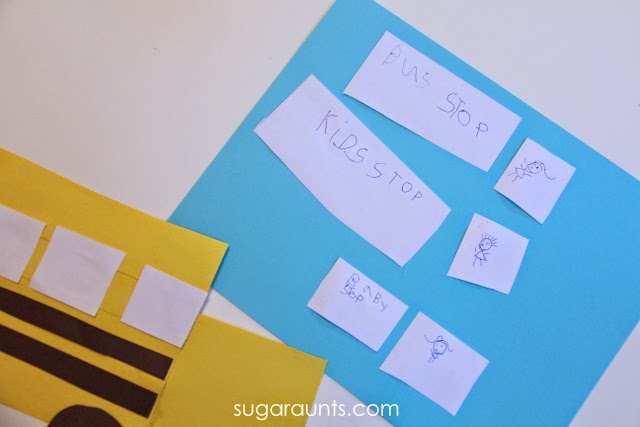
We glued the shapes in place on our bus when we got it looking like we wanted.  Big Sister used some scrap paper to draw bus stops for our bus.  I love the “baby stop”!

school bus craft for learning shapes and preparing for back to school


Easy Bus Craft for Kids of All Ages

As an OT in schools, I love this craft to start off the school year because you can get a quick look at scissor skills, fine motor skills, planning and executive function, and much more. It’s a wonderful way to welcome the new school year with hands-on learning.

Simple Steps and Creative Add-Ons

This paper plate school bus craft (or use cardstock to make a more structured paper bus) is great for easy crafting in small groups or as part of a station activity. Add a black line for the road, draw headlights on the front, or invite kids to sketch their own child’s face in the windows for a personalized touch.

Need a quick solution for class? Provide step-by-step instructions with a visual example, or print out bus shapes with cut-and-paste parts to make this a preschool craft that’s both fun and functional.

Make It a Wheels on the Bus Craft!

Turn your bus project into a Wheels on the Bus craft by adding interactive features to go along with the classic bus song. Use paper brads to make spinning wheels, or glue on circles cut from black construction paper. Attach craft sticks to act out the song as a puppet or prop during circle time. You can also label parts of the bus (“doors go open and shut,” “wipers go swish swish swish”) to reinforce early learning concepts while you craft.

This is a fun idea that pairs perfectly with music, group time, and creative movement!

Turn It Into a Pigeon Rides the Bus Craft

We have many preschool book activities here on The OT Toolbox. This paper bus craft is a perfect way to extend the craft into the book, Pigeon Rides the Bus!

Turn this craft into a Pigeon Rides the Bus craft inspired by Mo Willems’ beloved character. Simply add a drawing or cut-out of Pigeon riding in or driving the bus. Kids can glue Pigeon onto the driver’s seat or draw him peeking out the window using a marker or crayon. Pair the craft with a read-aloud and follow-up discussion to build on literacy and comprehension skills.

This is a great way to tie in book-based learning with preschool crafts or kindergarten art projects.

Why This Craft Works for Young Children

This school bus art project uses simple crafts and easy paper crafts to build important early skills:

  • Promotes fine motor skills through cutting, gluing, and coloring
  • Encourages creativity and storytelling
  • Supports classroom community with a shared fun activity
  • Perfect for first week of school routines

It’s one of those easy craft ideas that is great for building connection and confidence in your preschool class or at home.

School Bus craft for screening skills during back to school time

With one cutting craft, you can assess many areas:

Fine Motor Skills

  • Cutting: Children cut squares, rectangles, and circles, which targets hand strength, bilateral coordination, and scissor skills.
  • Pasting/Glue Control: Squeezing glue bottles or using glue sticks promotes hand strength and precision.
  • Grasp Patterns: Encourages tripod grasp and refined finger movements when handling small shapes.

Visual Motor & Perceptual Skills

  • Visual Discrimination: Identifying and matching shapes (square windows, rectangular bus body).
  • Figure-Ground: Picking out shapes from a group of cut pieces or worksheet.
  • Visual Closure: Recognizing the bus even if parts are missing or partially hidden.
  • Visual-Spatial Awareness: Placing parts of the bus (windows, wheels, stripes) in correct orientation and location.

Bilateral Coordination

  • Cutting with Stabilization: Requires use of one hand to stabilize the paper while cutting with the other.
  • Assembly Tasks: Holding the bus body with one hand while placing and pressing shapes with the other.

Executive Functioning Skills

  • Planning and Sequencing: Following steps in order (e.g., bus body → windows → wheels).
  • Working Memory: Remembering shape placement and order from visual or verbal instruction.
  • Inhibition: Waiting to glue or cut at the appropriate time within the task.

Language and Cognitive Skills

  • Shape & Color Identification: Naming shapes and colors while assembling.
  • Following Directions: Completing a multi-step task with adult guidance or peer modeling.
  • Concept Development: Understanding positional concepts like “on top,” “next to,” “under.”

Postural Control & Endurance

  • Seated Tolerance: Sitting upright to complete a tabletop activity from start to finish.
  • Core Engagement: Maintaining posture while using both hands in front of the body.

Sensory Processing

  • Tactile Input: Handling paper, glue, and possibly stickers or markers.
  • Proprioceptive Input: Using controlled hand pressure for cutting and gluing.
  • Visual Input: Tracking lines while cutting and scanning for shape placement.

Social and Emotional Skills

  • Turn-Taking and Sharing: During group crafts, materials may be shared.
  • Task Completion: Builds confidence by following through on a start-to-finish task.
  • Self-Expression: Decorating the bus with additional details or personalization (child’s name, colors).

For more ways to focus on scissor skills, and the WHY behind development of cutting with scissors, check out our resource, The Scissor Skills Book.

Check out The Scissor Skills Book for tips and strategies based on development from school based occupational therapists and physical therapists.

Colleen Beck, OTR/L has been an occupational therapist since 2000, working in school-based, hand therapy, outpatient peds, EI, and SNF. Colleen created The OT Toolbox to inspire therapists, teachers, and parents with easy and fun tools to help children thrive. Read her story about going from an OT making $3/hour (after paying for kids’ childcare) to a full-time OT resource creator for millions of readers. Want to collaborate? Send an email to contact@theottoolbox.com.

How Sensory Processing, Executive Function, and Emotions Are Connected in Child Development

sensory processing, executive function, emotions

As occupational therapy professionals, we see firsthand how tightly woven sensory processing, executive functioning, and emotional regulation are in a child’s daily life. While each of these systems has its own role, they don’t operate in isolation. Instead, they constantly interact, either supporting or interfering with one another depending on the child’s sensory experience and environment.

Here are some helpful resources to support your understanding and practice:

sensory processing, executive function, emotions

When a child struggles with loud noises (sensory processing), it can be harder to focus (executive functioning) and manage frustration (emotions). These systems work together to support self-regulation.

Sensory Processing and the “Traffic Jam” Effect

When a child’s sensory system becomes overwhelmed by input (like loud noises, bright lights, or scratchy clothing) or under-stimulated by an environment that lacks movement or tactile input, it’s like a traffic jam in the brain. The neural pathways are working overtime to manage the incoming data, but there’s no clear flow. As a result, the child may appear distracted, impulsive, emotional, or even shut down entirely.

This reaction isn’t always a behavior like it might seem. It can actually be sensory overload. The brain is busy trying to process sounds, movement, balance, touch, and other inputs, leaving little bandwidth for higher-level thinking or regulation.

How Executive Functioning Is Impacted

Executive functioning refers to the set of mental skills that help us plan, organize, focus, remember, and manage emotions. These skills are crucial for things like following instructions, transitioning between tasks, or problem-solving in social situations.

But when a child is stuck in a sensory jam, their ability to access those executive functioning skills becomes impaired. Imagine trying to solve a puzzle while someone is shining a flashlight in your eyes, playing loud music, and tugging on your shirt. That’s what it can feel like for kids with sensory processing challenges trying to focus in a busy classroom or crowded lunchroom.

Research published in the American Journal of Occupational Therapy highlights these relationships, showing that sensory processing behaviors are significantly correlated with executive function and emotional regulation difficulties, especially in children who have underlying developmental concerns. Source: AJOT.

Emotional Regulation and Sensory Needs

When a child doesn’t have the sensory support they need, frustration builds quickly. A small demand can feel insurmountable. This is why we often see sensory dysregulation manifest as big emotions: meltdowns, tears, yelling, or complete withdrawal. These aren’t bad behaviors; they’re signs the child needs support.

When we support a child’s sensory needs, we’re helping their nervous system return to a regulated state. And when the sensory system is regulated, the emotional brain can calm down, and the thinking brain can take over. This is where the real magic happens in occupational therapy.

The limbic system and function is a great resource for this.

OT’s Role in Supporting the Whole Child

Occupational therapy can get a reputation in the school environment as the “handwriting teacher”, but we support the student in a much wider way. We’re supporting the foundation of a child’s ability to learn and grow. Through sensory strategies, routines, movement breaks, environmental adaptations, and regulation tools, we build a bridge from sensory stability to emotional and cognitive growth.

Additional supports we offer as pediatric occupational therapists include:

By recognizing the connection between sensory processing, executive function, and emotions, we can better support children in a compassionate, whole-child-centered way.

What This Looks Like in the Real World

Use real-life classroom or home examples to illustrate how these three areas show up:

  • In the classroom: A child distracted by hallway noise may struggle to start tasks and become frustrated quickly.
  • At home: A child who can’t tolerate the feeling of clothing tags may resist getting dressed and have emotional outbursts.
  • Creating a lifestyle that supports sensory needs will support executive functioning. The Sensory Lifestyle Handbook covers this.

Think about a child you know: Do you notice signs of sensory overload, executive function challenges, or big emotions? What small adjustment could support their self-regulation today?

Colleen Beck, OTR/L has been an occupational therapist since 2000, working in school-based, hand therapy, outpatient peds, EI, and SNF. Colleen created The OT Toolbox to inspire therapists, teachers, and parents with easy and fun tools to help children thrive. Read her story about going from an OT making $3/hour (after paying for kids’ childcare) to a full-time OT resource creator for millions of readers. Want to collaborate? Send an email to contact@theottoolbox.com.

Separation Anxiety Activities and Tips

kindergarten separation anxiety

Today, we have a couple of separation anxiety activities that can support kids who struggle with school drop off. Many times, kindergarten or preschool drop off is full of tears, especially those first few weeks of school. Here, you’ll find a great connection activity to help preschoolers and parents find a way to make preschool drop off easier by connecting through the book, Owl Babies. Use this Owl Babies activity to help with that preschool separation stage. This post shares movement based separation anxiety activities that can help kids who are experiencing separation anxiety in preschool drop off, with ideas based on the children’s book.

Separation anxiety can occur at various ages and stages, including toddler, preschool, kindergarten, and school-aged.

For example, in the toddler years, separation anxiety is quite common. However, if there is extreme separation anxiety, this might be a toddler behavior red flag or something to look into.

Separation Anxiety in Preschool or Kindergarten

Step into a preschool classroom on the first day of school and you will likely see a few tears here an there (possibly some of those tears coming from the parents dropping off their child for the first time!).

Separation anxiety in preschool age is normal! But here’s what you need to know about that visible preschool behavior that may be fueled by something besides getting used to leaving mom/dad/caregiver for the first time…and how to help with a simple preschool self-regulation strategy.

The movement-based, sensory activity we share below can actually be used with preschool through kindergarten:

  • the 3 year old preschooler who is just being dropped off for the first time
  • the 4 year old preschool student
  • pre-k kids
  • kindergarten students
  • older, grade school students who are sad or upset on the first day of school

preschool anxiety

So, what is happening with preschool anxiety that causes tears, meltdowns, and clinging to mom or dad at the day care or preschool drop off?

You have probably seen it before:

Every Monday, Wednesday, and Friday, it’s time for preschool. The routine at home is the same: excitement, packing the bag, and gearing up for a day of learning colors, songs, preschool activities, and nursery rhymes. Getting into the car and driving to preschool is no problem.

But then you pull into the parking lot and the worries begin.

Tears, crying, clinging to Mom, negotiations, promises of seeing the little one in just 2 short hours.

Two minutes later, she is happy, playing with play dough, and dry of all nose drips.

It might even seem as if the preschool separation meltdown is just part of the morning routine.

As a momma of four, I’ve seen plenty of tear-filled drop-offs.  

And it just never stops breaking your heart.

Separation anxiety is actually considered a normal process that occurs in early childhood, as a result of a maturing physical, cognitive, and emotional development. Specifically, the areas of development that lead to a period of separation anxiety in young children include:

  • Visual processing system (visual memory, visual closure)
  • Executive functioning skills (working memory)
  • Self-regulation skills (connecting emotions with behaviors)
  • Social-emotional maturation (emotional connections, attachment, and feeling safe with certain individuals)

Despite the normal development that results in fears, worries, or flat out meltdowns following or leading up to a period of separation, severe separation anxieties do have the potential to negatively impact a child’s social and emotional functioning and this is especially true when the young child then avoids certain places, activities, and experiences that are necessary for healthy development.

Separation Anxiety Disorder

Sometimes, the family, parents, or caregivers also avoid these places, experiences, and activities. This can lead to even more negative experiences. When the family supports avoiding certain places or situations because of the young child’s separation, we can have situations where separation anxiety “hangs around” longer than is part of typical development.

Officially, Separation Anxiety Disorder (SAD) is defined as “developmentally inappropriate and excessive anxiety concerning separation from home or from those to whom the individual is attached” (American Psychiatric Association, 2000). However, for the young child, separation angst does not mean a disorder is present. It is only when the anxiety levels are so severe that they are not appropriate for developmental age that the official diagnosis of Separation Anxiety Disorder should be investigated.

For those with severe symptoms, Separation Anxiety Disorder may result in school refusal and a disruption in educational attainment, refusal to attend doctor’s appointments, dentist visits, or other situations where a child is separated, no matter the physical distance, from the parent or caregiver.

What causes Separation Anxiety Disorder?

There are many developmental areas that enable to progression of separation anxiety in toddlers and preschoolers from levels of worry and age-appropriate anxiety at separation to an inefficient and “disorder” level of worry.

Studies show us that some of these considerations may include:

  • Parenting behavior
  • Low parental warmth
  • Poor attachment
  • Trauma to the parent during the baby’s young years (death in the family, environmental, or other big situation)
  • Trauma to the child (Adverse childhood experiences, both large and small)
  • Insecure or anxious attachment styles
  • Diminished sense of control over one’s environment
  • Overprotective and over involved parenting behaviors
  • Parental intrusiveness- including extreme decision making on the part of the parent
  • Parental intrusiveness- including providing excessive assistance in the child’s daily activities (beyond age-appropriate ability)

Common signs of separation anxiety in kids

The natural and developmental stage of separation anxiety occurs from around age 6 months when the baby is able to notice that something is missing from their field of vision. This skill requires development of several areas:

  • Visual perception
  • Attention
  • Working memory (executive function)
  • Sensory motor

Separation anxiety typically continues from around 6 months of age to about 5 years of age, however signs of separation anxiety can persist after age 5 and through age 6.

However, the cognitive and emotional development that occurs during this age allows for kindergarten and younger elementary aged individuals to separate from their loved ones and know that they will be there even when the are not in view.

Once the underlying areas noted above develop (around 6 months of age), you may see some common signs of separation anxiety:

  • Crying when the parent leaves the room or home
  • Upset and crying when a babysitter or caregiver comes into view
  • Tantrums
  • Avoidance behaviors (refusing to participate in activities that require separation)
  • Clinging to parents
  • Refuse to attend certain situations
  • Apprehension about harm coming to parents
  • Fears the parent will leave and not return
  • Running from the classroom/school bus/appointment setting

Separation anxiety activities

Today, I’m sharing a simple trick for helping kids with separation anxiety at kindergarten, preschool, or other drop-off situations like day care, a caregiver’s home, nursery school, or a church Sunday school room. These separation anxiety strategies can be addressed in occupational therapy sessions, used in cognitive therapy, or simply trialed at home or at school.
Each of the separation anxiety activities listed below may be helpful in any situation where there is anxiety and stress as a result of separation from a parent or caregiver.

separation anxiety activities

One tool that can support separation anxiety in the classroom is starting each day with a feelings check in. This can help to get a handle on how emotions are impacting behaviors.

This post contains affiliate links.

Social Stories- Use social stories to create a visual narrative about how drop offs go and that parents will be back to get the child. Social stories can offer a verbal narrative for the child to use during these situations. Some of our social stories include:

Self-Regulation Strategies- Practice the regulation tools that support the individual’s emotional status with self-regulation strategies. Select a set of calming or heavy work strategies that can be used in preparation for the separation situation, whether that be using at the school bus stop (like this deep breathing school bus exercise) or while driving into school. Having those set of strategies readily available and discussing how the child feels will go a long way.

Movement-based separation activity – One fun way to work on separation anxiety in preschoolers that becomes part of the routine…here we are talking about the preschooler or kindergarten aged child that cries, clings to Mom or Dad, but then warms up to the classroom activities.

Practice routines- Do the same thing every day during the week in preparation for school, including bed times, morning routines, and transportation routines. These visual schedules can help with some individuals.

Wearable Charm- Another similar strategy is to create a DIY separation anxiety charm. Kids can make this along with the family adding heavy work through the hands. then, wear the charm to know that parents and caregivers still love and miss them even when not in view.

Get enough sleep– Practicing good sleep hygiene is important for the child as well as the parent or caregiver. This has an impact on behavioral response and self-regulation. Read a related blog post on supporting newborns not sleeping as sleep in young ones in the home can impact sibling and parent sleep.

Books about Separation- The activity listed below uses the book Owl Babies. But we added a heavy work goodbye sign that parents and children can use at school drop offs to ease separation anxiety. Or, this activity could work for kids that struggle with the transition to the classroom, because they are missing Mom and Dad or other caregiver.

Use the book, Owl Babies by Martin Waddell!

Use a magic number- In some cases, it can be hard for children to separate for even a very short period of time, and even in an environment such as the home. One strategy is the magic number technique. In this activity, the child and parent/caregiver can practice away time for short periods of time. Select a “magic number”. Then, move away from each other by going into a different room of the house. Use a timer or a watch to count up to that magic number. Try increasing the magic number up by a few minutes at a time until it’s less difficult to spend time apart.

Create a plan- Having a plan or set of coping strategies prepared for time apart can help. For the kindergarten separation anxiety issues, maybe looking at a picture of the family that is stashed inside a pencil box would help. For another student in kindergarten, maybe touching a special keychain attached to the shoe or belt loop would work. Having this plan prepared before heading into the kindergarten room or daycare setting is key.

Owl Babies Activity

We read the book, Owl Babies (affiliate link- As an Amazon Influencer, I earn from qualifying purchases) and fell in love.  

The sweet little Owl Babies in the book wake up from a nap to find their mother gone from the nest.  The owl siblings go through a series of concerns and thoughts about where their mom might be with a little almost-tears.  

My older kids thought the book was pretty awesome and decided that each of the owl babies in the book were one of the girls in our family.  There were a few similar personality traits that aligned with the owls in the book and the sisters in our house.  

The idea of knowing that mom comes back when she leaves is a lesson we’re going through at Sunday School each week and one that happens so often with kids.  Just like the Owl Babies (affiliate link), it can be hard to stay calm and not worry when mom goes away.  

We decided to come up with an owl themed movement activity that kids could do when they are feeling anxious after leaving mom or dad.  

Try this trick to help with separation anxiety in preschoolers, based on the children's book, Owl Babies.


School Drop Off Anxiety

This activity would be perfect for preschool kids or kindergarten students who are experiencing separation anxiety at the start of school or in a new classroom situation. For kids that cry at school drop off, or really struggle with missing Mom or Dad, this school drop off anxiety activity can help.

To do the activity, first read Owl Babies (affiliate link) together.  Then, talk about how the owls in the book must feel when they see their mother has gone out of the nest. Finally, talk about how when the mom or dad in your family has to go away for a little while, they always come back and that they are thinking of the little one in your home while they are gone.

Try this trick to help with separation anxiety in preschoolers, based on the children's book, Owl Babies.


One easy way to help with separation anxiety is to come up with a hand signal.  We decided that making a bird wing sign would be a lot like an owl in flight.  Hook your thumbs together and spread your fingers out to create the wings of an owl.

Then, wrap both hands around your thumbs to create a little owl baby of your own.  Now, squeeze your hands tight to give them a hug.  Your child can do this motion when the are feeling sad or nervous at school.  Tell them to think about the owl babies in the book (affiliate link) and how they felt when their mom came back.

School drop off anxiety activity for separation anxiety in students

Squeezing the hands tightly can provide a bit of proprioceptive input that is calming in a stressful situation like the preschool drop-off.  A simple hand hug might be just the thing that can help! It’s a self regulation activity that supports the whole body as a mechanism to address emotional regulation needs that show up as crying, clinging, and bolting “behaviors”.


Then, when you pick up your little baby, be sure to swoop them up in a big hug!


This activity would work with preschoolers who are a little older than my two year old.  She really enjoyed the book, Owl Babies (affiliate link), though and we have read it again and again!


Let me know how this tip to help with separation anxiety works with your preschooler!

Try this trick to help with separation anxiety in preschoolers, based on the children's book, Owl Babies.

This Owl Babies activity is a fun and interactive book for kids of all ages!

Use this separation anxiety activity to support kids that struggle at school drop off with anxiety or worries.


kindergarten separation anxiety

Let’s go a bit further with kindergarten separation anxiety and how to support this need.

Kindergarten Separation Anxiety

One thing about kindergarten separation anxiety is that it may not rear it’s head until after school has started. Typically (in many cases, not all cases), young children and parents are very excited for their little ones to head off to kindergarten. There are a lot of new things to experience as a new kindergartener!

However, one new consideration may end up being a case of worries and anxieties after the school year has begun!

What’s going on here?

At the start of a school year, after school has been in session for a few days or weeks, things start to get old, quick. The young child has to wake up early every day. They have to spend 8 or more hours in school, paying attention, and on high alert, every day, Monday through Friday. There are new routines, new peers, new rules, new learning, new transportation, and they can be on high alert all day.

Sometimes we see kindergarten students who experience a separation anxiety from their parents or guardians as a result. This involves stress and worries that might be brought up during the night, before bed, before school, at school, or even during slow times at home.

The kindergarten child who is attached to their special parent, guardian, sibling, etc. are now spending many hours away from their person, people, and routines.

Kindergarten separation anxiety may include fears as well:

  • they are going to miss out on something at home
  • their special person will become sick or have an accident while they are not together
  • they, the kindergartener, may worry that they will become sick, lost, or hurt while away at school
  • they may worry that they will become lost in the school or on the way to school

Some things that we see with kindergarten separation anxiety may include:

  • Outbursts at home before school
  • Refusing to get ready for school
  • Outbursts or meltdowns before bed or on Sunday night
  • Refusing to go to school
  • Refusing to go on the bus
  • Refusing to sleep alone
  • Being afraid or fearful when they weren’t before
  • Refusing to do things they used to like to do like playing with friends
  • Refusing to leave the home or be away from their parent/guardian
  • Feelings of intense fear or helplessness
  • Agitated behavior
  • Anxiety that presents as crying, tantrums, shrinking away, or running away from unfamiliar people or situations
  • Excessive fear about other situations
  • Trouble falling asleep or staying asleep
  • Reverting to younger habits such as sucking their thumb or talking in a “baby voice”
  • Restlessness
  • Trouble concentrating or paying attention
  • Worry during other times of day or night

There may be other things going on too. With the kindergarten age, it might be hard for the child to express all that they are experiencing. We can however, support separation anxiety in kindergarten students.

How to support Kindergarten Separation Anxiety

One of the most important ways to help a kindergarten student who is experiencing separation anxiety is by giving them words for what they are experiencing.

  • Talk about separation anxiety- It’s important for the child to realize and understand that we all have worries and anxiety. We all experience stress at some point or another. We can come up with tools to support and work on these worries, however, so they don’t become all that we think about. What we don’t want is for the worries to prevent participation in all of the fun activities that comes along with kindergarten!
  • Give words to the feelings that the child is feeling. This involves interoception (the sensory system that allows us to recognize internal sensations). One of these aspects is headaches that come because of worries or anxiety. Other feelings might be rapid heartbeat, stomach ache, dry mouth, sweating, cold hands, tingly fingers, etc.
  • Read books about separation anxiety in kindergarten. There are a lot of great books out there about kindergarten separation anxiety in particular. That tells us that this is a very common issue!

  • Focus on Kindergarten Friendships- One of the fun things about kindergarten is meeting new friends. But being worried and over-thinking might mean that there is less time to talk to friends and do all of the fun kindergarten things! Try helping your kindgergartener to focus on friends when they are feeling very anxious about going to school.
    • Enlist a friend to help walk them to the classroom
    • Have a buddy to get started during the day
    • Check in with a friend when they feel the worries
    • Create a social support system with a small group of friends by having playgroups on the weekends or after school.
    • Use a few friendship activities to build awareness and understanding
  • Make a Clock- Using paper, make or draw a clock with the time that the child will reunite with their adult. This visual cue can help them to see that they will return to their loved ones. Include “grace” time for a window of time to allow for the school bus, traffic, etc. Plus this is a good clock activity too!

Separation Anxiety Occupational Therapy

Just like in kindergarten, sometimes we see clients that are worried or anxious about coming into the occupational therapy space. This might especially be the case for the new child experiencing OT for the first time. For parents to better know what to expect in OT sessions, read our getting started with occupational therapy blog post.

Using some of the same strategies listed above and under kindergarten separation anxiety can support these kiddos so they can participate in therapy. Separation anxiety may need work with a child psychologist, however occupational therapy can support families and the team using meaningful and motivating strategies as well as tools that enable the individual to participate in daily functional tasks.

Other separation anxiety OT tips include:

  • Use a timer
  • Work to establish a secure relationship to the teacher/therapy provider/classroom support staff/peers with the aim of reducing dependence on parents or guardians in the school environment over time
  • Use a visual schedule
  • Allow choices in therapy sessions
  • Work together on common goals
  • Make therapy fun and engaging with therapy themes
  • Create a social story on being away from loved ones for short periods of time
  • Educate parents and educators on the limbic system and the possibility of the child being in a fight or flight state as well as tools to support the child in this manner
  • Educate and provide interventions on interoception and support the child with tools to slow a fast heart rate, etc.
  • Educate on emotional regulation along with emotional regulation strategies such as the Zones of Regulation®, the Alert Program® (How Does Your Engine Run)
  • Trial child-led strategies such as DIR Floortime
  • Inquire about the child’s sleep hygiene and support the family in this way
  • Support the child and the family in any trauma related considerations
  • Explore a sensory diet for potential needs
  • Support the child and the family as a unit with education on co-regulation
  • Create a consistent goodbye routine. Try a wave at the window, a special hug pattern, or a simple phrase you repeat each day. This predictability helps ease transitions.
  • Use a comfort item like a small object from home, such as a blanket, scarf, or paper heart with kisses
  • Keep goodbyes short and positive
  • Talk about emotions. Name what your child might be feeling and normalize it: “It’s okay to feel sad or nervous when saying goodbye.”
  • Practice separation in small ways. Try short separations before school starts, such as staying with a trusted babysitter or family member for brief periods.
  • Prepare your child for what to expect. Talk about who they’ll see, what they’ll do, and when you’ll be back. Use visuals or picture schedules if needed.
  • Build self-regulation skills. Use calming strategies like deep breaths, squeezing a stuffed animal, or stretching to help regulate emotions during drop-off.
  • Encourage independence with routines. Allow your child to take part in getting ready, putting on their backpack, or walking to the classroom to build confidence.
  • Involve familiar family members. If multiple caregivers are part of the routine, make sure they follow the same goodbye pattern to provide a sense of security.
  • Watch for physical symptoms. Complaints of stomachaches or headaches can be signs of anxiety. Take these seriously and seek support if they persist.
  • Use books and pretend play. Reading books about school or playing “going to school” with dolls can help your child process and understand their feelings.
  • Limit big changes at the same time. If possible, avoid starting preschool during other major transitions such as a move, new sibling, or recent illness.
  • Stay calm and supportive. Your emotional state influences your child’s. Show confidence in their ability to manage the separation.
  • Communicate with the teacher. Let the classroom teacher know your child’s needs. Teachers can offer extra support during arrival time.
  • Seek help when needed. If anxiety is impacting your child’s daily function or not improving over time, talk with a pediatrician or occupational therapist.

Separation Anxiety and Occupational Therapy

Occupational therapy empowers individuals with meaningful and motivating tasks. When separation worries interfere with the things that matter most to the child, we see the intersection with occupational therapy.

As an occupational therapist supporting families in both early intervention and school-based settings, I often help parents navigate preschool separation anxiety with developmentally appropriate strategies rooted in emotional regulation. One of the first steps is understanding that separation anxiety is a type of anxiety that emerges when a child feels unsafe or unsure when leaving primary caregivers, especially in a new place with new people like a preschool classroom or a new babysitter. 

It can look like temper tantrums, crying, clingy behavior, or even physical symptoms such as stomachaches or headaches. Some children experience nightmares or regressions in sleep routines. These are not behavioral “problems,” but symptoms of separation anxiety that reflect developmental needs. Pediatricians and child development professionals, including an MD, often agree that this is a normal stage that can benefit from structured support and consistency, not punishment or abrupt transitions.

One powerful tool I recommend is establishing a simple and predictable goodbye routine or goodbye ritual. This could be a wave at the window, a special hug sequence, or even a secret handshake. This can be something consistent that becomes part of your family’s life and supports the child’s ability to manage emotions. 

Younger children may also benefit from a transitional object like a blanket or a paper heart with kisses on it tucked into their pocket or backpack. These comfort items act as sensory tools to reduce tension and help children self-soothe throughout the day. When families create and practice these routines together, it eases the stress of the exit and builds resilience over time. 

It’s also important to involve family members in the routine if multiple primary caregivers are involved in drop-off. In some cases, when separation anxiety in preschoolers becomes disruptive or persists beyond the expected developmental window, it may be helpful to consult with a pediatrician to rule out other concerns such as illness or to discuss options if anxiety feels like a disaster at every drop-off. These small, meaningful strategies can transform what feels overwhelming into a smoother, more confident transition. It’s helpful for both the child and the parent!

Occupational therapy empowers individuals with meaningful and motivating tasks. When separation worries interfere with the things that matter most to the child, we see the intersection with occupational therapy.

Colleen Beck, OTR/L has been an occupational therapist since 2000, working in school-based, hand therapy, outpatient peds, EI, and SNF. Colleen created The OT Toolbox to inspire therapists, teachers, and parents with easy and fun tools to help children thrive. Read her story about going from an OT making $3/hour (after paying for kids’ childcare) to a full-time OT resource creator for millions of readers. Want to collaborate? Send an email to contact@theottoolbox.com.

Hand Strengthening Activities

hand strength with image of child's hand pinching play dough

Hand strengthening and finger strengthening are a part of occupational therapy interventions, in every day tasks. There is more to developing strong and efficient hands than just using a hand grip exerciser or therapy putty to strengthen fingers.

Here, you will find a collection of fine motor resources and hand strengthening activities that can be used to improve tone in the hands, increase stability in the thumb and fingers, develop and define arches of the hands, improve precision with in-hand manipulation, improve endurance in hand strengthening activities.

Below, you will find hand strengthening activities for kids, hand strength activities for adults, and therapy tools to develop hand strength. The activities to strengthen fine motor skills included in this post are perfect to improving grip strength, pinch strength, or as part of a finger exercises program for handwriting.

hand strength exercises with child's hand pinching play dough

One thing to keep in mind when it comes to hand strengthening and when creating a hand strength exercise program is that it is very possible (and a theme of a pediatric OT!) to develop fine motor skills and hand strength through play!

Hand Strengthening

Let’s take a closer look at hand strengthening…in fun and creative ways! 

Occupational therapists use functional tasks, or daily occupations, to improve hand strength so that the clients they work with can lead functional lives: so they can have strong and efficient hands to do those tasks that take up their day. 

Think about it this way: with weak hands, it is very difficult for a child to color a coloring page. But, through coloring and using crayons, they are improving their hand strength so they can color larger pictures or tackle more difficult fine motor tasks.

Adequate finger and hand strength is a crucial foundation skill necessary to successfully perform most activities of daily living such as opening snack wrappers, flushing the toilet, opening the tap, buttoning your shirt and so the list goes on.

Not only do we need adequate hand strength for our ADLs, it directly impacts on our ability to perform school related tasks such us cutting, writing and manipulating materials such as glue.

How do you know if a child has weak hands?

Hand strength is an important area of development. 

Kids who struggle with hand strength may have difficulty with grasping a pencil, coloring, holding and using scissors, managing clothing fasteners, attaching a seatbelt, squeezing a glue bottle, opening and managing food containers, tying shoes. There are many fine motor activities needed in school that will be a red flag for determining if a child has weak hands.

Luckily, there are many fun ways to improve a child’s hand strength. 

The best way to improve overall strength is through meaningful and motivating activities…especially everyday play! 

Here, you will find a collection of pinching, pulling, and pushing activities, weight bearing activities, squeezing activities, and overall grip and pinch activities. 

These ideas improve tone in the hands, increase stability in the thumb and fingers, develop and define arches of the hands, improve precision with in-hand manipulation, improve endurance in hand strength, and address hand separation into a fine motor side and a power side.

Fine Motor Strength is essential for so many reasons! From maintaining a grasp on a pencil to opening and closing scissors, to buttoning buttons, snapping snaps, tying shoes, coloring a picture without stopping, to most everything we do…hand strength matters! 


Use these hand strengthening activities to improve hand strength needed for pencil grasp, coloring, clothing fasteners, and using scissors or other fine motor tasks.


I wanted to cover fine motor strength and the skills kids need for pencil grasp, managing scissors, working clothing fasteners, and using those hands. 

So often, we see weak arches, instability, and low tone in the hands that transfers to awkward use of the hands, impractical grasps, and poor endurance in writing or coloring. Sneaking in a few strengthening activities each day can make a world of difference!


Hand Strengthening Activities


Today includes a collection of hand strengthening activities that can be used as hand strength activities for adults, and to develop hand strength. Scroll through the activities below to find creative hand strengthening ideas to improve grip strength, pinch strength, or as part of a finger exercises program for handwriting.

hand strength is made up of several areas. Picture of child's hands buckling their seatbelt.

One way I can tell if hand strength is an issue is if a child (or adult) is able to push the button on a seatbelt or car seat buckle to release the seatbelt. That button requires A LOT of strength in the hands, doesn’t it? You need various components of stability too: wrist stability, thumb stability, arch development, finger strength, separation of the sides of the hand, as well as range of motion of the upper body (shoulder, elbow, forearm, wrist, fingers) and crossing midline. This is a challenging functional task for those with hand weakness. 

For younger kids, it’s a safety issue to be able to push that button on the seatbelt. But at a certain age (different for each child depending on various issues), if they should be able to release their seatbelt, but they can not, this tells me that hand weakness is something to work on. 

There are, of course many other examples at various ages and stages with age-appropriate tasks that also show me that hand strength is lacking. This is just one example.

Let’s go into these factors effecting hand strength…

What Impacts Hand Strength?

Hand strength is impacted by various components. When it comes to hand strength, there is a lot to uncover. Many aspects of motor skills impact strength and endurance in the hands. Some of those areas include these concepts:

  • Intrinsic hand strength
  • Thumb strength and stability
  • Motor control
  • Separation of the sides of the hand
  • In-hand manipulation
  • Wrist stability 
  • Wrist extension
  • Finger strength
  • Range of motion of the arm: upper arm, forearm, wrist, fingers, and thumb
  • Hand muscle tone

A hand therapist will have various hand strength norms by using a dynamometer to measure grip strength, pinch strength of various pinches. Having an understanding of hand musculature and anatomy of the hand and upper extremity is important too.

First, check out our huge online library of fine motor activities. This is a collection of all of the fine motor activities on The OT Toolbox. There’s something for everyone.

One thing that makes a big difference in fine motor dexterity is addressing separation of the sides of the hand. This post explains more about motoric separation of the hand and here is another fun activity that really strengthens those muscles.

Intrinsic Hand Strength


One of my favorite ways to work on hand strength is by using tongs. These OT activities using tongs are great for developing and strengthening the arches of the hands for improved intrinsic strength.


occupational therapy activities with tongs

In fact, the intrinsic muscles are the muscles in the hand that define the arches of the hands, bend the knuckles, and oppose with the thumbs. Activities like this intrinsic muscle strengthening activity can easily be replicated at home or in the therapy room.

child's hands pushing a straw piece into a hole poked in an egg carton
Among these muscles are a group called the lumbricals. The lumbrical muscles have a job to bend (flex) the MCP joints and extend (straighten) the PIP and DIP joints. When the lumbricals are in action, the hand might look like it is holding a plate with the big knuckles bent and the fingers extended. Read more about strengthening the intrinsic muscles here.

Underlying skills needed for tripod grasp. Picture of a drawing of a hand holding a pencil and labelled areas needed for tripod grasp

When kids write or color with a thumb web space area squashed shut, it’s a sign of problems. Then might be compensating for thumb instability, underdeveloped hand arches, and/or poor strength. Each of these problem areas will lead to difficulties with handwriting, dexterity, manipulation of small items like beads, and pencil grasp. 

Another activity that is easy to set up is using play dough or more resistive thera-putty and pushing pegs (we used Lite Bright pegs) into the dough.

Writing with a closed web space is inefficient and will cause poor and slow handwriting, especially as kids grow and are expected to write at faster speeds. A closed web space while attempting to manage fasteners such as buttons and zippers will lead to fumbling and difficulty. So, what do you do if you’ve got a kiddo who is squashing that web space shut during functional tasks? I’ve got a few ideas on how to work on open thumb web spaces.

Thumb Strength and Stability

Next let’s talk about thumb stability and strength. This is needed to support dexterity of the thumb in pincer grasp movements and in opposition of the thumb to the fingertips.

Activities to promote an open thumb webspace

Here are even more ideas to promote thumb stability and tone with activities designed to open the thumb web space.


Strengthening the hand can occur through a variety of pinch and grip exercises. Here are ideas to strengthen the hands using clothespins.

In-hand manipulation Strength

In-hand manipulation is a skill requiring strength in the hands. Activities like this in-hand manipulation activity can boost these skills. 

There are several aspects to in-hand manipulation:
▪ Finger-to-Palm Translation: Movement of an object from the fingers to the palm i.e. picking up a coin and moving it to the palm.

▪ Palm-to-Finger Translation: Movement of an object from the palm to the fingertips. (i.e. moving a coin from the palm to the fingertips to insert into a vending machine.)

▪ Shift: Slight adjustment of an object on or by the finger pads. (i.e. adjusting a pencil up and down in your hand.)

▪ Simple Rotation: Turning or rolling an object 90 degrees or less with the fingers moving as a unit. (i.e. unscrewing a toothpaste lid)

▪ Complex Rotation: Turning an object more than 90 degrees using isolated finger and thumb movements. (i.e. Turning a paperclip)

Each of the above skills can occur with items “squirreled away in the palm using the pinky finger and ring finger. This is called “with stabilization”. If other items are not pocketed away in the palm while in-hand manipulation occurs, it is called “without stabilization”. 

One way I like to work on in hand manipulation is to use a foam puzzle and fill the spaces with beads. You can have the child hold the beads in the palm of their hand. Then, they can drop the beads into the puzzle spaces one at a time. Sort by colors or just drop a certain number of beads into the spaces. This works on coordination skills. 

Stabilization typically occurs around 2 years of age. Read more about in-hand manipulation here. Here are a couple of activity ideas that can be easily replicated at home.

Wrist Stability and Strength

Wrist stability is one of the essential areas that impact hand strength.

Due to the anatomical nature of the tendons in the forearm and hand, a stabile wrist impacts hand strength, specifically grip and pinch.

When the wrist is flexed (bent forward towards curved fingers in a grasp), there is little chance of fine motor dexterity.  A flexed wrist in functional tasks limits use of the fingers due to the tendons of the fingers being shortened as they work to stabilize the wrist.  The fingers just can’t move like they are supposed to.

There are many exercises and activities that can be done to build the stability of the wrist so that it maintains a slightly extended position during fine motor activities. 


One fine motor activity I like to use in OT sessions is to have the child use a small pencil sharpener to sharpen a pencil. A shorter pencil is better because you encourage the hands to move closer to the pencil sharpener. It makes the hands work hard to twist the pencil to sharpen it. This really works on wrist stability and hand strength.

Upper Body Strength Impacts Hand Strength

Upper body strength is made up of the muscles in the upper chest, muscles in the upper back and muscles attached to the shoulder joint. All of these muscles work together to create stability at the shoulder joint. This shoulder girdle stability is essential for establishing a solid anchor for the rest of the arm. Without this anchor it is difficult to develop good control in the lower arm, hands and fingers. In therapy-speak we talk about developing proximal stability before we can achieve distal control. 

The stronger body enables functional performance in purposeful activities, specifically strong and efficient hands.

Occupational therapists can use these hand strengthening activities to improve hand strength in kids or adults for improved fine motor skills.


hand strengthening activities: 

Hand strengthening activities can use the items you have in your home or therapy bag. Activities that involve play are best for developing hand and finger strength in kids. Some of these ideas can integrate play and stronger hands:

strips of paper and hole punch to make small red dots
  • Use a hole punch to create confetti for crafting
  • Everyday play activities using small toys or manipulatives
  • Weightbearing activities: play games on the floor
bubble wrap with numbres on the bubles written in permanent marker
  • Pop bubble wrap (write numbers or letters on the bubble wrap with a sharpie)
  • Attach paperclips onto the edge of a paper
  • Shoot a marble into a target with the thumb
  • Screw together nuts and bolts
hands tearing paper
Stack of plastic gold coins
stack of mini erasers
colorful pony beads and pipe cleaners
  • String small beads onto string or a pipe cleaner
  • Tie and untie knots
  • Pop beads

How will you use the hand strengthening activities and ideas listed above? Maybe in a home exercise program or in a therapy program that runs throughout the school year? Maybe you will use the ideas at home or in a clinic. The ideas are endless!

Think about it, how much do you use your hands throughout the day? Would you say it is from the moment you turn off your alarm clock in the morning to the minute you cover up in bed at night? How about the times you use them during the night, such as when you go to the bathroom or readjust the covers or the pillow?

One trick I like to use is using colored pencils to make little circles and then color them in with small pencil strokes. It really works on intrinsic hand strength and arch development.

If you’re like many of us, the list of necessary tasks you need to do using your hands each day could go on and on and on. No matter how often you use your hands, they need to be in good shape and strong enough to manage all the tasks you need and want to do daily. 

However, with children, they don’t necessarily think about the times they need to use their hands and the strength the hands need throughout the day, but we bet they often think of the times that their hands have failed them and they were too weak and they couldn’t accomplish the tasks and activities that were important to them. We do believe they think about those times.

On a personal note, I work with many kids in the clinic that struggle with cutting, coloring, handwriting, drawing, pencil grasp, gameplay, dressing, and other self-care skills and the one factor that often comes into play with my kiddos is their decreased hand and finger strength. 

Hand Exercises for strength

We put together a list of hand exercises for strength. You can find this below and it includes using tools like hand grippers, therapy putty, a squeeze ball, rubber bands, and other items. We wanted to include both items that you can find in the home and items that might be in a therapy bag or in therapy supplies.

For this blog post, we will be addressing hand strength exercises and activities that can be used in the clinic, classroom, and home setting with many of them simply using some inexpensive supplies that you may already have on hand.

Some are direct exercises for older kids while some will be fun game-like exercises or activities for younger kids because we all know children need to be motivated at their level of age and level of interest, that’s why we’ve given you a variety of ideas. Board games have a lot of small pieces that are great for manipulating and using in play. These are great fine motor items for older kids!

Also, one last note, please don’t forget that even gross motor activities can also help build hand strength too! Things like wall push ups, animal walks, crawling, heavy work exercises, pulling themselves while prone on a scooter board, weight-bearing over therapy balls, climbing, and playing on the playground equipment are all fun ways to add gross motor input but also support wrist strength and stability and strengthening of the arches of the hands.

hand strengthening exercises for kids

Below are hand strengthening exercises for kids that use a variety of different materials. You’ll find different activities and ideas under each section.

theraputty exercises

Therapy putty exercises are a great fine motor exercise for hand strength.

  • power grip is simply taking a ball of therapy putty and squeezing with a gross grasp until as flat as possible, repeat
  • flat pinch is taking the therapy putty and creating a fat therapy log for the fingers to pinch flat as they attempt to stay, repeat
  • full grip is taking the therapy putty and creating a fat therapy log placing it vertically within the hand and then squeezing to make the log grow out of the top within the webspace, repeat
  • thumb press is taking a log or ball of putty and squeezing or pressing the thumb into the ball or log, repeat
  • finger curl is taking the therapy putty and placing at the base of the fingers within the palm and then squeezing the fingers into the putty making and fist, repeat 

Squeeze ball exercises:

  • gross grasp is squeezing the ball repeatedly with the whole hand and holding for 3-5 seconds and repeating multiple times
  • gross grasp with a squeeze ball that has a face – simply squeeze with the whole hand to distort the face on the squeeze ball

Squeeze and feed the tennis ball (the size of the slit opening can make the ball easier or more difficult to squeeze open)

  • squeeze the ball open to feed the ball individual objects
  • squeeze the ball and scoop dry beans with a spoon to feed the ball
Rubber band exercises with Jenga blocks and rubber bands to create block structures

Rubber band exercises

  • wrap rubber bands around the fingers including the thumb and then stretch out the hands and fingers to spread the fingers outward as far as possible, repeat 

Hand pushes and pulls

  • simply place palms of hands together and push together, repeat
  • place a small squeeze ball between the palms of the hands and push together to flatten the ball, repeat
  • simply intertwine fingers together and attempt to gently pull them apart, repeat

Palm rotation with bounce balls or marbles

  • place 2-4 marbles or small bounce balls into the palm of the hand and attempt to rotate them in a circle while only using one hand

Fist to fan to fist fingers 

  • open the hand by fanning (spreading) out the fingers and hold 
  • close the hand by fisting the fingers together and hold

Make an O to fan to O position 

  • curl the fingers into an O shape and hold
  • open the fingers into a fan and hold 

Piano push 

  • slightly curl the fingers like playing the piano and then push against a stable surface such as a tabletop or wall, repeat

Crumbling paper balls 

Use any type of paper and work on this task as bilateral or unilateral exercises.

  • bilateral – use two hands with both working individually to crumple flat sheets of paper into paper balls (you can re-use each sheet by flattening the sheet again after crumpling or you can use a new sheet)
  • unilateral – use one hand at a time to crumple flat sheets of paper into paper balls (same as above you can re-use each sheet or you can use a new sheet)

Wringing water out of washcloths or sponges

  • bilateral – use both hands together to twist and wring out a wet washcloth or a small hand towel 
  • unilateral – use one hand at a time to squeeze a wet washcloth to wring out the water 
  • bilateral/unilateral – use two hands at the same time, but both working individually to squeeze water out of sponges

Create tongs out of a Pringle’s lid or other large flexible lids 

  • use these recycled lids as tongs and squeeze with the whole hand to pick up objects and sort them
  • You can also use cardboard to cut shapes or even small squares. Then use tongs to pick them up and sort them. Here is how we used cardboard hearts with tongs

Condiment bottles and a turkey baster

  • use condiment bottles or a turkey baster to blow cotton balls or pom-pom balls in a fun race against a partner (you can use one or two hands to squeeze)

Milk the latex glove 

  • this hand strengthening exercise is where you fill a latex glove with water and then knot the opening. Use a pin to poke a small hole into the tip of each finger then a child will work on squeezing the water out of each finger like milking a cow.
Paint snow with spray bottles

Spray bottle – Either use water or add food coloring or watercolors to the water. Then spray the water onto paper. We even painted snow with the spray bottles.

  • use a spray bottle to form letters on the sidewalk or side of the building 
  • use the spray bottle to clean a chalkboard  

Robot or Gripper claw apparatus

  • full hand reacher and/or gripper apparatuses are easy for kids to use to pick up objects at a distance to transport to a nearby laundry basket or box or simply from left side to right side or vice versa

Office supply tool use to promote hand strength when in use:

  • Stapler to staple along a strip of paper or even around shapes
  • Hole punch to punch holes along a strip of paper or even around shapes
  • Bottle glitter glue to trace letters or shapes
  • Rubber band wrap to wrap around a canned good or a fun pool noodle friend
  • Marker cap removal or matching to simply remove and put back on the marker or before use mix up the color caps on the markers and have the child fix your mix-up of marker caps 
  • Scissor cutting with play dough or putty to cut play dough or putty logs or snakes into pieces

House tool use to promote hand strength when in use:

  • New plunger removal from the floor (ugh, don’t use a used one) – simply use it on a hard floor surface to push down and pull up 
  • Pushing and pulling a weighted laundry basket – simply have a child push a weighted laundry basket across the floor or tie a rope onto the basket and have a child pull it hand-over-hand to themselves
  • Pulling a rope with any weighted object on the end such as a weighted scooter board, box, or even a chair – make sure they use hand-over-hand
  • Pull pieces of Velcro apart – you can use large strips 
  • Place whole hand chip clips onto the edge of a box, rope, etc., and remove 
  • Grasp and lift a canned good for hand strength in all planes – up, down, left, right, cross midline, bicep curl, etc.
  • Roll a water bottle or canned good in the open hand while supine on the tabletop – probably for an older kiddo
  • Palm down wrist flexion exercise – drape over the edge of a table and grasp a water bottle or dumbbell and flex up while lifting – probably for an older kiddo
  • Bean bag spatula flip (grasp activity) – use bean bags and a kitchen spatula to flip bean bags from one side to the other

Use commercially available tools and games to promote hand strength (Amazon affiliate links included below):

Amazon affiliate links are included in this blog post. As an Amazon Influencer, I earn from qualifying purchases.

  • Pop Toobs – pull apart for the fun sound and push together to do again or use more than one and link them together. Read about how to use pop tubes for fine motor skills.
  • Squigz – push onto a dry erase board, hard surface floor, or therapy ball and pull off in a color sequence 
squeeze a bath toy to work on hand strength
  • Lego brick building and destruction – use the bricks to build simple towers or even buildings or objects with the use of picture cards. You can also use them to build words.
  • Build and destruct Mr. Potato Head – use the fun game to work on hand strengthening. They can build the correct way or a distorted way for fun. 
  • Build and destruct Cootie Bugs using the fun game to work on hand strengthening. This one is a little tricky for younger kiddos as the legs must go in at a slight angle which may make them more appropriate for older kiddos. 

Would you like a fun game-like resource that addresses both hand and finger strengthening? Add these fun resources to your toolkit – Finger and Hand Exercise Game Boards and Year-Round Play Dough Game Boards.

These resources include 10-12 no-prep game boards that you can print and play to practice finger isolation, left and right-hand discrimination, overall fine motor coordination, finger dexterity and build hand and finger strength. If you want to jazz up any warm-up routine, these are what you need as they are engaging for kids and are a great tool to use before coloring, cutting, handwriting, or typing work. 

Want to read more about hand strengthening and further build your therapist toolkit? 

It’s my hope that these resources are a huge help for you! Here are a few more topics related to strength in the hands that you may need in your therapy toolbox: 

Working on fine motor skills, visual perception, visual motor skills, sensory tolerance, handwriting, or scissor skills? Our Fine Motor Kits cover all of these areas and more.

Check out the seasonal Fine Motor Kits that kids love:

Or, grab one of our themed Fine Motor Kits to target skills with fun themes:

Want access to all of these kits…and more being added each month? Join The OT Toolbox Member’s Club!

Intrinsic vs. Extrinsic Hand Muscle Exercises

When working on hand strengthening, it’s helpful to understand the difference between intrinsic and extrinsic hand muscles. This is important for us occupational therapy providers who are explaining WHY we are doing the activities we are doing in therapy sessions, and how they relate to everyday tasks and the daily activities that require fine motor strength. 

Intrinsic hand muscles are the small muscles located within the hand itself, responsible for fine motor control, finger coordination, and refined movements like isolating the index finger, forming a tripod grasp, or manipulating small objects. 

Intrinsic hand exercises: Activities such as putty pinches, finger walks, or buttoning tasks are great examples of intrinsic hand exercises that target these small muscles. 

Extrinsic hand muscles originate in the forearm and are responsible for larger hand movements like gripping, squeezing, and lifting. These muscles work in tandem with the hand to support strength and endurance. 

(Basically, you want to target the small muscles within the hand)

  1. Therapy putty pinches – Pinch putty or clay using the thumb and each finger individually (especially the index finger).
  2. Buttoning practice – Use shirts or button boards to build fine motor coordination.
  3. Paper crumpling – Crumple a sheet of paper into a ball using one hand.
  4. Coin flipping – Practice flipping and stacking coins using the thumb and fingers.
  5. Finger opposition drills – Touch each fingertip to the thumb in sequence.
  6. Bead stringing – Use small beads, LEGO, or Duplo blocks to promote precision and control.
  7. Pegboard tasks – Place and remove small pegs using a pincer grasp.
  8. Clothespin clipping – Pinch and place clothespins on the edge of a container.
  9. Squeeze-and-release sponge – Encourage refined grip with a wet sponge. Bonus: Use chalk pieces on the wet surfaces.
  10. Lacing cards – Thread yarn or string through holes to improve finger dexterity.

Extrinsic hand exercises: Examples of extrinsic hand muscle strengthening activities include wrist curls using a small can, squeezing a stress ball, or using a hand gripper. Supporting both muscle groups builds the foundation for coordinated, strong, and functional hand use in daily tasks.

These activities want to target the larger muscles in the forearm that control hand movement)

  1. Wrist curls – Use a small can or light hand weight to curl the wrist up and down.
  2. Squeeze ball or therapy ball – Strengthen the flexor muscles through repeated gripping. Another good idea is to use squeeze bottles to spray water at a target. You can also use a squeeze glue bottle to get that squeeze action.
  3. Theraband wrist extensions – Anchor the band and pull the wrist up and back.
  4. Hammer rotations – Hold a small hammer or similar object and rotate the wrist side-to-side.
  5. Playdough squeezing and rolling – Roll thick dough into logs using palm pressure.
  6. Weighted object carry – Carry grocery bags or weighted items to build endurance.
  7. Towel wringing – Twist a wet towel to activate both grip and wrist muscles. Bonus: Use the towel for a tug-of-war game.
  8. Opening jars – Simulated or real jars help build functional forearm strength.
  9. Elastic band finger extensions – Place a band around fingers and stretch outward.
  10. Wall push-ups or tabletop push-offs – Engage upper forearm and wrist stabilizers. Kids also love animal walks or wheelbarrow races.

Does My Child Have Hand Weakness?

Wondering if your child might have hand weakness? There are a few common signs to watch for that can point to weak grip strength and reduced use of important muscle groups in the hands.

Kids with hand weakness may tire quickly when writing or coloring, avoid fine motor tasks like cutting or drawing, and struggle with daily activities such as opening jars or zipping jackets.

You might notice them using their whole arm to move rather than isolated finger or wrist motions, or frequently switching hands during a task. A loose or awkward pencil grasp, low endurance during schoolwork, or difficulty with utensils can also signal reduced hand grip strength or limited mobility in the small muscles of the hand.

As an occupational therapist, our job is to analyze function. That’s the everyday activities we do. You can check functional activities like towel wringing, using scissors, or managing clothing fasteners. This can offer insight into different types of grip strength, such as pinch grip and power grip.

If you notice these signs, it can help to introduce functional exercises that build strength through play, such as squeezing sponges, using therapy putty, or practicing with clothespins. A pediatric occupational therapist may use tools like a hand dynamometer to assess hand strength and create a plan that targets specific muscle groups for improved hand function.

Colleen Beck, OTR/L has been an occupational therapist since 2000, working in school-based, hand therapy, outpatient peds, EI, and SNF. Colleen created The OT Toolbox to inspire therapists, teachers, and parents with easy and fun tools to help children thrive. Read her story about going from an OT making $3/hour (after paying for kids’ childcare) to a full-time OT resource creator for millions of readers. Want to collaborate? Send an email to contact@theottoolbox.com.

School Based OT and Getting Organized Tips

get organized as a school based OT

The school based-Occupational Therapist is getting ready to head back into the school year this Fall.  Getting organized can be one of the hardest parts of school-based OT.  These tips and tricks are some that I’ve used during my years as an Occupational Therapist working in the schools.  

Getting Organized for Back-to-School as a School-Based OT

A new school year brings new schedules, caseloads, and responsibilities. The workload can feel overwhelming before the first week ends. Building strong organization systems now is actually a form of self care that supports a smoother year and protects against burnout. A well-planned routine can help you stay focused on your students and the meaningful work you do.

Organization begins with the tools you use daily. Here are some ideas I like that are free or inexpensive and are easy to implement:

Paper Planner

A physical calendar or paper planner keeps schedules, meetings, and deadlines in one place. Writing things down creates a visual record that’s easy to reference during a busy day.

Weekly Brain Dumps

Weekly brain dumps clear mental clutter by moving every task, reminder, and idea onto paper. This keeps priorities visible and reduces the risk of forgetting important details. It’s important to put it on actual paper as opposed to a digital list on your phone. Then cross off those tasks or to-do’s when they are done@

Clean your space

A tidy workspace supports focus. Clearing surfaces at the end of the day means you start fresh each morning. Decluttering removes unnecessary items and creates space for the materials and tools you use most. Having a designated home base for keys, wallet, and phone prevents wasted time searching for essentials.

Morning routines

Morning routines set the tone for the day. Planning clothes, meals, and therapy materials the night before prevents rushing. This extra preparation gives you more time to connect with students and begin the day with energy. Recognizing your own wins, no matter how small, helps maintain motivation and reinforces the value of the work you do.

Strong organization habits allow you to manage the demands of school-based OT more effectively. Clear systems, purposeful routines, and intentional self-care can help you maintain balance through the school year.

Tips for helping the school-based occupational therapist get organized in the schools


One of the tell-tale signs of a school based OT is the suitcase on wheels that is pulled around from school to school.  Some school-based OTs pull a bin or carry a large bag, but whatever the means of dragging around that bag of OT tricks, it needs to be organized and it needs to be all in one place.  


The OT who works in schools might see kids from Kindergarten on up through high school age in the same day.  They could be travelling from school to school within a single school day and have a work day that includes visits to classrooms, scheduled IEP meetings, make parent phone calls, and complete annual reports.  


In order to avoid feelings of overwhelming disorganization, the school-based OT needs to be organized!


This post contains affiliate links. 

School-Based Occupational Therapy Organization Tips


These are some of the ways that I maintained order while working as an Occupational Therapist in the schools:

  • A great travel bag:  A bag on wheels is perfect for pulling fine motor tools, visual motor integration exercises, various types of scissors, and creative treatment activities. You’ll want a bag on wheels because sometimes an OT working in schools has to set up shop in storage areas, stairwell hallways, or backstage extra rooms.  Being a therapist who only visits a particular school one day a week, most Occupational Therapists don’t get a special work area. They might need to find a desk area where they can and that can mean a lot of walking inside the school.  You’ll also want to use a durable bag with a lot of pockets for holding treatment materials.  
  • Paper organization:  An accordion-style file folder is great for organizing different types of writing paper, several thicknesses of paper for teaching scissor skills, and therapist-parent communication forms or home recommendation sheets.
  • Binder: Keep all of your documentation sheets, schedules, calendars, note pages, and treatment planning templates in one place.  A portable three hole punch is perfect for filing away and organizing sheets of paper while on-the-go. 

More School-based Occupational Therapy organization ideas:

  • Take time to observe students in their natural environment.  Plan on “pushing in” to the classroom with treatment occurring right at the student’s work space.  Making adaptations and accommodations can happen with the tasks the student is working on at that moment. 
  • Make time to get to know the “helpers” and staff in your school.  The school principal, secretary, custodian, and teacher’s assistants can be a great help.
  • Keep extra pens, post-it notes, and highlighters in your bag.


I am hopeful that these tips will help with organizing a successful start to the school year.  An organization system can be so helpful in improving productivity, maximizing time management, and reducing feelings of overwhelming stress due to paperwork and disorganization.


One tip that I always use as a school-based OT is using a paper planner. I NEED to write things down on calendars, lists, and have it all in one place. Digital just doesn’t work for me!

That’s why I created my own therapy planner where I can pull out the types of pages that I need for my specific caseload. I print off pages and use them over and over again to make lists, brain dumps, and more.

The Build Your Own Therapy Planner is the ultimate back-to-school organization tool for school-based OTs. Designed with flexibility in mind, it lets you choose exactly the pages that work for your caseload so you can stay organized all year long.

The planner includes a one-page master planning sheet to map out your schedule with teacher lunch, recess, specials, and caseload information all in one place. This is perfect for taking the chaos out of scheduling. You’ll also find monthly calendars, to-do lists, IEP-at-a-glance pages, evaluation and re-evaluation trackers, and monthly consultation logs to keep your workload on track. For a personalized touch, choose from a variety of cover designs and patterned pages that you can print, laminate, and reuse to make your planner fun and functional.

It’s great for tracking meetings, planning therapy sessions, keeping tabs on your students’ progress. The Build Your Own Therapy Planner is designed to help you start the school year organized and confident.

Get it inside The OT Toolbox Membership.

school-based-ot-tips-for-organization

Colleen Beck, OTR/L has been an occupational therapist since 2000, working in school-based, hand therapy, outpatient peds, EI, and SNF. Colleen created The OT Toolbox to inspire therapists, teachers, and parents with easy and fun tools to help children thrive. Read her story about going from an OT making $3/hour (after paying for kids’ childcare) to a full-time OT resource creator for millions of readers. Want to collaborate? Send an email to contact@theottoolbox.com.