Colleen Beck, OTR/L is a pediatric occupational therapist and the owner and author of The OT Toolbox website. She manages all of The OT Toolbox social media accounts and runs the popular newsletter.
Read about Colleen's experience and career as an occupational therapist, including how The OT Toolbox began on our About The OT Toolbox page: https://www.theottoolbox.com/about-us/
Colleen created The OT Toolbox in 2011 and since then has written thousands of blog posts designed to support therapy providers, educators, parents, counselors, admin, and caregivers in promoting the healthy development of kids.
Check out Colleen's blog posts below:
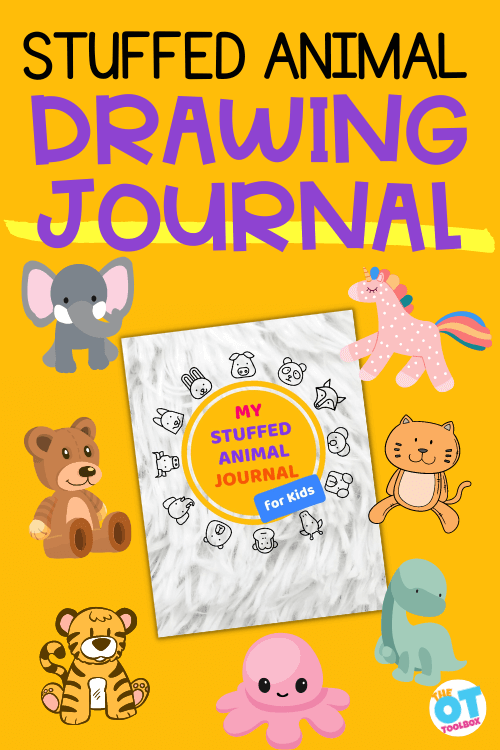
We had the chance to check out a new resource over on Amazon…a drawing journal for kids to use with their favorite stuffed animals! When it comes to helping kids with handwriting needs, coming up with creative and engaging activities can significantly contribute to enhancing various skills. That’s where therapeutic journaling comes into play, using a favorite toy or stuffed animals.
We wanted to share the drawing journal as a tool to support a variety of skills!
Kids love this drawing journal!
Drawing Journal for Kids
The drawing journal, My Stuffed Animal Journal for Kids(Amazon affiliate link) is just that, a drawing journal with writing and drawing prompts for kids to use when writing about their favorite stuffed animals and soft toys.
We had a chance to draw and write about some of our favorite stuffed animals, and it was a hit. As an occupational therapist, I love the large drawing spaces on the page, and the bold writing lines for using line awareness in the writing prompts.
When using a motivating and meaningful writing prompt with kids (like asking them to write about their favorite stuffed animals!), there are many skills that you can target:
The drawing journal has a space for kids to draw a picture of what their stuffed animal looks like. This is such a fun drawing prompt for kids!
When children select a favorite stuffed animal or toy, the drawing prompt is meaningful and motivating. You can target a variety of skills with the drawing prompt section of the book:
The drawing journal offers kids a chance to express emotions and interests when it comes to their stuffed animal. The drawing journal prompts ask what each stuffed animal does at night.
Kids can write about every toy or stuffed animal they own and express their emotions through their stuffed animal journal.
Include prompts that prompt reflection on daily (nightly) experiences, feelings, and imaginative scenarios involving their plush toy companions.
Drawing Journal Prompts for Fine Motor Skills
As an occupational therapist, I love that the drawing journal prompts kids to draw and then write in several sections of the pages.
When kids draw, color, and write on each page, they can use a variety of drawing tools to improve fine motor skills:
Pencils
Colored pencils
Markers
Crayons
Highlight drawing prompts that target fine motor skills, aiding in the development of hand-eye coordination and pencil control. Emphasize the therapeutic value of these activities in occupational therapy sessions, supporting children in honing their motor skills through creative expression.
Stuffed Animals at Night
Kids love to wonder about the fun adventures their favorite toys and stuffed animals enjoy at night while the house is sleeping. It’s a fun and creative writing and drawing prompt that not only engages creativity but also serves as a tool to address executive functioning skills and narrative abilities like working memory, task completion, planning and prioritization.
Beyond the joy of documenting the nighttime adventures of a favorite stuffed animal, a drawing and writing prompt that asks about what a child’s favorite stuffed animals do at night provides a powerful therapeutic avenue for honing problem-solving, creative thinking, critical thinking, working memory, and cultivating a positive mindset.
You can even ask students to add more details to their stuffed animals’ nighttime adventures with challenges the toys have and ask the students to come up with solutions. This process of expanding the writing prompt helps children develop problem-solving skills, teaching them to approach difficulties with resilience and determination. This is a great critical thinking activity for kids!
Colleen Beck, OTR/L has been an occupational therapist since 2000, working in school-based, hand therapy, outpatient peds, EI, and SNF. Colleen created The OT Toolbox to inspire therapists, teachers, and parents with easy and fun tools to help children thrive. Read her story about going from an OT making $3/hour (after paying for kids’ childcare) to a full-time OT resource creator for millions of readers. Want to collaborate? Send an email to contact@theottoolbox.com.
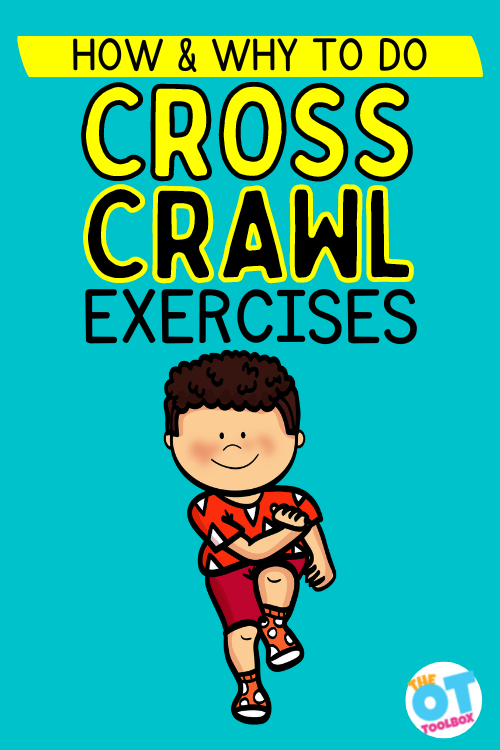
This article covers cross crawl exercises as a brain break tool and a bilateral coordination strategy to add sensory movement. Have you heard the term cross crawl and wondered what that meant? As parents, educators, and therapists, we are always looking for ways to help promote overall development of the children in our lives. One way to build connections in the brain and body is through meaningful exercise. In this post, we will focus in on a super important type of exercise: the cross-crawl.
Cross crawl exercises are used in occupational therapy to support development of many skill areas: bilateral coordination, crossing midline, balance, motor planning, and more.
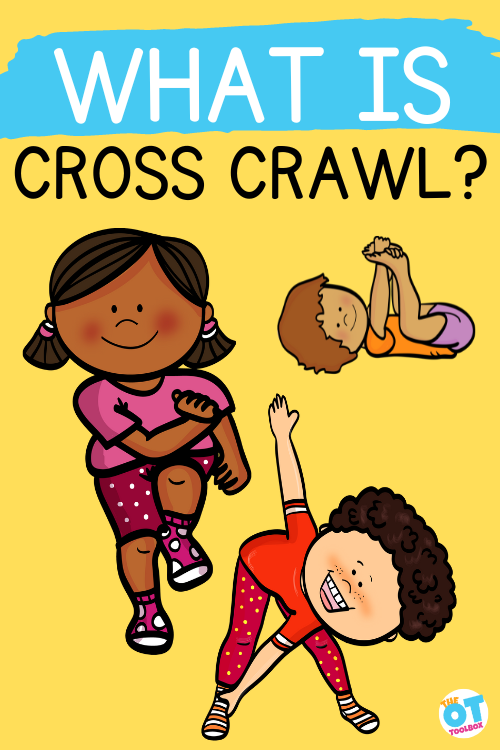
What is a cross crawl?
Cross crawl is defined as movements or cross lateral actions that are exercises that describe a category of movement – not just one exercise. Cross-crawl exercises are movements that involve crossing the midline of the body, which is an imaginary line that divides the body into left and right halves. You may have heard of the phrase bilateral coordination and crossing midline used with cross-crawls, too.
The movement utilizes both hemispheres of the brain in a whole-brain activity by bringing self-awareness to the body (body awareness) as well as the physical coordination needed to create the physical, cross-lateral movements.
Cross Crawl exercises are specific cross lateral (one side of the body crosses, or reaches over to the other side of the body) movements designed to activate both sides of the brain and improve coordination, balance, and motor skills using a set number or repetitions.
Cross-crawl exercises can be as simple as marching or as complex as dancing, but they all involve movements that require the left and right sides of the body to work together while completing opposing actions. This might include: yoga, crunches with oblique rotation, standing and touching the right hand to the left foot/left hand to the right foot, standing and touching one elbow to the opposite knee, etc.
One main benefit of cross crawls is that they improve lower extremity strength, with supports balance and coordination in functional tasks.
Pretty cool, right?
There are many benefits of cross crawl exercises.
What do Cross Crawl Exercises do?
What are the benefits of cross-crawl exercises?
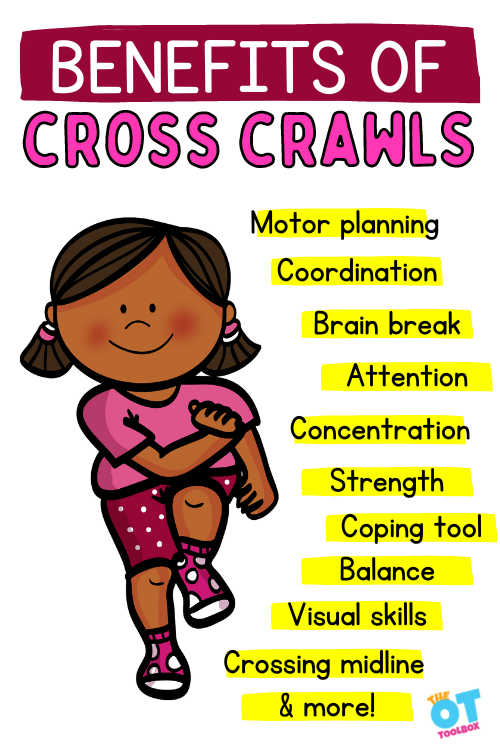
Cross-crawl exercises offer a wide range of benefits for children of all ages. As we show in the image above, using a cross crawl in play, brain breaks, or other motor skill activity may improve:
Motor planning
Coordination
Brain breaks
Attention
Concentration
Srength
Coping tool
Balance
Visual skills
Crossing midline
Bilateral coordination
Core strength/stability
More!
Here are some of the most important benefits of cross-crawl exercises:
Improved coordination: Cross-crawl exercises help to improve coordination between the left and right sides of the body, which can lead to better balance and overall coordination. The cognitive coordination is visible as the child thinks about the action needed to complete the exercise and then works through the motor plan to complete the movements.
As that action becomes more fluid, the movements occur in a more rhythmic way.
Increased brain activity:These exercises activate both sides of the brain and often challenge it to coordinate new motor plans. This can improve cognitive function and help children learn and remember new information.
Brain development occurs through a variety of movements, sensory stimulation, experiences, and learning opportunities. The cross-crawl technique is a tool to add to the sensory movement toolbox as completing the cross-pattern movements moves from slow and intentional to ingrained and automatic. This is fluid movement happening.
Better motor skills: Cross-crawl exercises can help children develop gross motor strength and coordination. They may be able to jump higher, fall less, run faster, climb to the top… you get the idea!
Some of the motor skills that can improve include:
Improved reading and writing skills:Crossing the midline is required during reading and writing. Practicing cross-crawl exercises has been shown to improve these skills by helping children develop better eye-tracking (visual tracking) and hand-eye coordination. These can be a great classroom brain break for academic work.
Reduced stress and anxiety: Cross-crawl exercises can help to reduce stress and anxiety by promoting relaxation and mindfulness. This occurs because the nervous system’s responses play a huge role in how we think, behave, and respond to a given situation. We cover this in more detail in our blog post on the limbic system.
An opportunity to recharge through movement is a great tool to have on hand for a real stress buster!
In addition, there are significant social-emotional benefits to supporting stress and anxiety through movement.
Improved Confidence: When you are able to accomplish new things, like riding a bike, passing the swimming test, or compete in a high level of your sport, confidence soars!
Now that you know why a cross crawl is a great exercise, let’s talk about how to do cross crawls in therapy or at home.
How to do a Cross Crawl Exercise
A cross crawl is a simple, yet effective way to build skills. You’ll see below that development of cross-lateral skills occurs naturally through play in each age range. So what does a cross-crawl exercise look like?
How to complete a cross crawl exercise:
When standing, bend the left knee to lift the left foot up off the floor.
Bend and rotate slightly at the waist to touch your right elbow to your left knee.
Then stand back up straight again.
Next, bend the right knee and bring the right foot up off the floor.
Bend and rotate slightly at the waist to touch your left elbow to your right knee.
Then stand back up straight again.
Essentially, in cross lateral exercises, we are physically moving to connect the left side of the body with the right side of the body. This engages both the right hemisphere of the brain (with one action) to the left hemisphere of the brain (with a different action). Both sides of your brain are engaged and active through the movements.
There are many ways to connect the right leg to the left arm and the left leg to the right arm. Adding upper and lower body movements, plus rotation, to left and right sides of the body occurs naturally throughout the day in daily tasks.
Let’s do a simple activity analysis of a daily task like washing clothes. Think about pulling a load of laundry out of a washing machine.
You might need to bend at the waist and place your left hand into a washing machine, reaching down towards your right side. You see rotation at work, as well as reaching across the body.
You pull heavy, wet clothing out of the washer and pull it across your body to place it into a dryer.
Then, your right hand reaches across your body and down to push the wet laundry into the dryer.
This is just looking at two simple actions in the whole task, and presenting one layout. This daily task can incorporate cross lateral movements in many different ways. What we see though, is that these actions occur naturally.
This simple exercise can be expanded on in many ways. We cover different ways to incorporate opposite sides of the body work in age-appropriate manners below.
We know that development occurs in a predictable pattern. Because of that understanding, we can facilitate development using cross crawl activities that support skill development across various ages and stages.
Cross Crawl Exercises
It’s important to present kids with age-appropriate cross-crawl exercises for children as a tool that supports the areas needed for each individual.
Here is a list of cross crawl exercises that can be incorporated into obstacle courses, brain breaks, exercise sequences, etc. These can be modified to meet the needs of individuals of all ages. Find age-appropriate and play based cross crawl activities that occur naturally in daily tasks and interests listed below.
Standing cross crawl- Stand on the right foot. Raise the left foot and touch the left knee to the right elbow. Hold the pose. Then raise the right foot and touch the right knee to the left elbow. Hold the pose. Try to maintain balance without falling.
Seated cross crawl- Sit on a chair, bench, or surface without a back support. Repeat the directions from #1 in a seated position.
Laying cross crawl- Lie down on the floor on your back. Bend at the waist and touch the right elbow to the left knee. Return to lying flat on the floor. Then, bend the left elbow and to touch the right knee. Repeat with trunk rotation for crunches with oblique muscle involvement.
Bug exercise- Lie down on the floor with your arms above your head on the floor and your legs straight. Keep your right arm straight and raise it up as you raise your left leg straight up to touch your right hand to your left foot. Repeat on the other side.
Standing cross crawl on an unstable surface- Repeat the directions from #1 while standing on an unstable surface such as a pillow, a foam exercise mat, at slanted surface, or a low step.
Standing toe touch- Stand with your feet shoulder width apart and your arms stretched overhead. Bend and reach your right hand down to touch your left foot. Stand back up and repeat on the other side.
Bridge cross crawl- Position in a crawling position with belly lifted up off the ground. Bring one knee up and touch the opposite elbow to the knee. Repeat on the other side.
Plank cross crawl- Position in a raised plank position. Carefully lift one hand and reach down to touch the opposite hip. Return the hand to the plank position. Repeat on the other side. Then try touching the hand to the opposite knee.
Plank leg raise- Position in a raised plank position. Bring one knee up and touch the knee with the opposite hand. Repeat on the other side.
Seated toe touch- Sit on the floor with legs spread wide. Reach across the body and touch the right hand to the left toes. Hold. Then repeat on the opposite side.
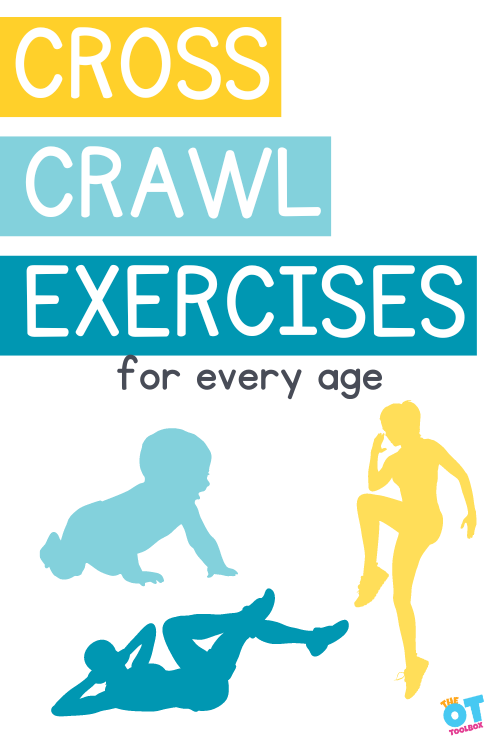
Here are some age-appropriate variations of cross-crawl exercises that children of all ages can enjoy:
Infants (birth -1 year): Before they are able to crawl (my favorite cross-crawl exercise!) you can teach your baby the motions while they lay on their back.
Make it fun with a song or silly sounds and gently move the arm down and across the body while the opposite leg moves up and in – just how it would look if they were crawling.
Place a bin or basket to one side and balls, toys, or blocks the child can place into the basket on the other side to to encourage rotation and reaching across the midline
Toddlers (ages 1-3): Toddlers can benefit from simplified cross-crawl exercises, such as crawling, rolling, and clapping.
Encourage your toddler to crawl across the room (or over furniture or your legs for an extra challenge!), roll from side to side, and complete high fives across all directions. They’ll love being able to play like this with you!
Elementary school-age children (ages 6-12): Elementary school-age children can enjoy a variety of cross-crawl exercises, such as crab walks, mountain climbers, and yoga. These movements can be added to brain break games like Simon Says, Follow the Leader, and Charades.
Encourage your child to try new activities and find ones that they enjoy. This is a great break activity for the classroom or for an after school brain break before doing homework!
More complex yoga activities
Quadruped cross crawl exercises
Twister game
Complex charade games
Gymnastics
Martial arts
Basketball
Soccer
Riding a bike
Climbing trees
Swimming
Climbing walls
Ribbon dancing
Teens (ages 13-18): Teens can benefit from more challenging cross-crawl exercises, such as martial arts, structured dance, and team sports. High school occupational therapy can support this age with various tools to encourage mental health, coping strategies, and learning. Encourage your teen to try new activities and find ones that challenge them both mentally and physically.
It’s clear that cross-crawl exercises are an important aspect of the complex brain and a part of childhood development that should not be overlooked. All ages can enjoy and benefit from cross crawls!
By incorporating these intentional cross-lateral activity exercises into your child’s daily routine, you can help them improve their coordination, balance, motor skills, cognitive function, and overall well-being. So, let’s get moving!
One tool to support cross crawls is using Yoga poses in play or therapy sessions.
Yoga Pose Cards
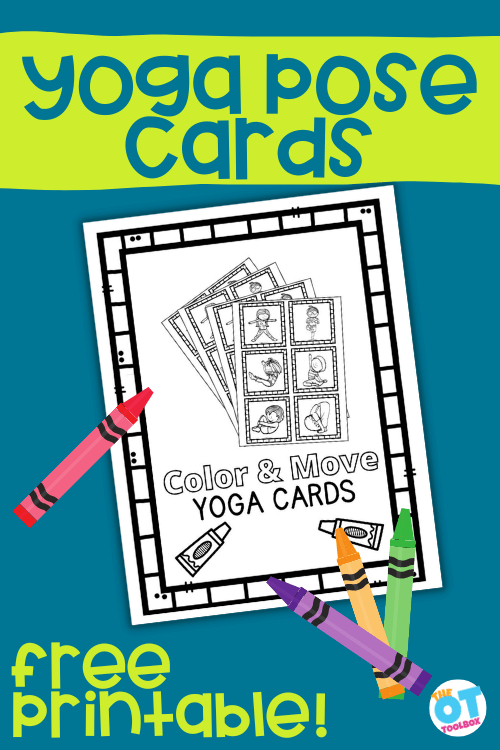
We talked about how exercises like Yoga can incorporate cross crawl positioning as well as support the strengthening of other gross motor skills like balance, coordination, motor planning, crossing midline, etc. Because of this, we wanted to share a great resource to use in improving these areas. Check out our free Yoga Pose Cards!
The Yoga Pose Cards are free when you enter your email address into the form below. We’ll send you the Yoga cards by email so you are able to print them from any device (school, home, work, etc.). Print off these Yoga pose cards and get those kiddos moving!
We made the yoga poses printable free via email, but you can grab it and MANY other movement activities inside The OT Toolbox Membership club. This set is a coloring activity, so users can select one of the printable yoga cards and color in the picture…then copy the pose. Many of these yoga poses on the cards involve crossing the midline and using a cross crawl exercise to foster skills.
Enter your name in the form below to get this printable set of yoga cards.
Colleen Beck, OTR/L has been an occupational therapist since 2000, working in school-based, hand therapy, outpatient peds, EI, and SNF. Colleen created The OT Toolbox to inspire therapists, teachers, and parents with easy and fun tools to help children thrive. Read her story about going from an OT making $3/hour (after paying for kids’ childcare) to a full-time OT resource creator for millions of readers. Want to collaborate? Send an email to contact@theottoolbox.com.
The Sensory Lifestyle Handbook walks you through sensory processing information, each step of creating a meaningful and motivating sensory diet, that is guided by the individual’s personal interests and preferences.
The Sensory Lifestyle Handbook is not just about creating a sensory diet to meet sensory processing needs. This handbook is your key to creating an active and thriving lifestyle based on a deep understanding of sensory processing.
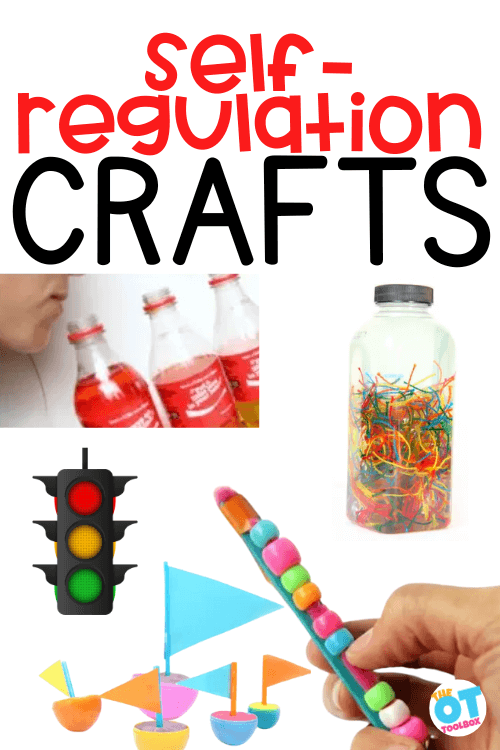
Helping kids understand and regulate their emotions through arts and crafts is a fantastic way to promote self-regulation needs while fostering emotional intelligence and well-being. So, here are 12 self-regulation crafts designed to help kids express themselves artistically and navigate the colorful world of feelings. We know the power of targeting emotional regulation through tools like the Zones of Regulation and self regulation activities…crafts are another facet of those supports!
12 Self-Regulation Crafts for Kids
We’ve covered emotion crafts in the past, but that’s just the start. Once you’ve got a handle on understanding and naming emotions, moving to self-regulation craft ideas is next.
The self regulation crafts below are designed to be hands-on. We love to use social and emotional tools in a way that is fun and engaging. So, if you can incorporate skill-building into making crafts with kids, you are also adding in fine motor, gross motor, functional tasks, heavy work input, and so much more.
The self regulation crafts listed below work in a few different ways. Some of the craft ideas support sensory motor input by offering heavy work through the hands. You can add proprioceptive input by using tools like:
fidget tools- Make your own DIY fidget toys for a craft version.
bubble wrap crafts- pushing through the hands adds heavy work to the joints
Using resistive tools in crafting- This might mean you select a squeeze glue bottle over a glue stick because squeezing the glue bottle adds more heavy work input, which is calming and organizing.
Using resistive paper to tear or cut with scissors. This can add heavy work through the hands to calm and organize the body.
Incorporate oral motor components. Some crafts require breath power! For example, our water xylophone craft requires blowing air through pursed lips to make music. This is a calming and organizing activity!
Another idea that requires breath power is our pinwheel painting craft. This activity uses heavy work through pursed lips to spin paint. This painting activity can get messy (which is why we did this one outdoors!), but it’s a great oral motor craft that calms and regulates the sensory systems.
Still another fan favorite is our egg boat craft. We used a straw to power the boats and blowing through the straw really adds regulating input.
You can see how taking a craft that covers emotions can add organizing and regulating sensory motor input just by the way you use one craft material over another. And, you can actually create a craft that is a self regulation tool in and of itself, for example making a feelings journal or a sensory bottle.
Let’s explore some of these craft ideas…
1. Emoji Faces Collage
This craft allows kids to visually explore and express a range of emotions. By associating facial expressions with specific emotions, children develop a deeper understanding of non-verbal cues.
Plus, the benefit of a hands-on activity using materials that kids cut out with scissors and glue onto a collage enhances fine motor skills and creativity. You could use old magazines or junk mail to encourage flipping pages and cutting a variety of paper types. This is great fine motor work for kids offered in a way that doesn’t look like “work”. It’s more fun than anything!
How to Make an Emojis Face Collage:
Gather magazines or printouts that show various facial expressions.
Provide the kids scissors, glue, and a large sheet of paper.
Instruct the kids to cut out different eyes, mouths, and other facial features from the magazines.
Discuss each emotion represented – happy, sad, angry, surprised, etc.
Have the children arrange and glue these features onto the paper, creating their own emoji face collage.
2. Feelings Thermometer
Another fun self-regulation craft is a feelings thermometer. The feelings thermometer is a simple yet effective craft to encourage open communication about feelings.
The visual representation helps kids connect feelings to a scale, and regularly updating the thermometer encourages children to recognize and regulate their emotions in real-time.
How to Make a Feelings Thermometer:
Draw a thermometer shape on a large sheet of paper or poster board.
Label different levels of the thermometer with emotions (e.g., happy, calm, frustrated, angry).
Provide stickers or markers for kids to mark how they’re feeling on the thermometer.
Encourage them to adjust the marker based on their emotions throughout the day.
You could also quickly draw a thermometer on a chalkboard or dry erase board and ask the student to “check in” with their feelings by marking how they feel using dry erase markers or chalk. We covered a variation of this activity in our feelings check in activity. To incorporate the Zones of Regulation, you could use the colors of the program.
3. Calm Down Glitter Jars
A sensory jar, or a calm down glitter jar is a great self regulation tool for calming emotions or feelings. These jars can act as portable tools for kids to use when they need a moment to relax. One idea, our friendship sensory bottle, is a great way to create a self regulation craft, but also talk about friendship and differences, which is so important when it comes to regulating emotions and feelings.
They encourage deep breathing and mindfulness as children focus on the glitter slowly settling. Watching the settling glitter also provides a tangible visual metaphor for emotions calming down.
How to Make Calm Down Glitter Jars:
Fill clear jars with water, leaving some space at the top.
Add glitter in different colors (representing different emotions).
Seal the jar tightly.
Shake the jar vigorously to create a swirling effect with the glitter.
Discuss how the glitter represents a busy mind or heightened emotions.
4. Traffic Light Feelings
Similar to the feeling thermometer, the traffic light metaphor simplifies the concept of emotional intensity for kids. It provides a visual cue for recognizing and categorizing emotions. Using a traffic light to explore feelings is nice because you can adjust this emotions craft to meet any need and you can use a variety of materials.
How to Make a Traffic Light Feelings Craft:
Draw or print a traffic light template with three circles (red, yellow, green).
Label each circle with a different emotion (e.g., red for anger, yellow for frustration, green for calm).
Provide colored markers or crayons.
Instruct the kids to fill in each circle with the corresponding color and draw facial expressions to represent the emotions.
The traffic light feelings craft idea is a nice one to use on an occupational therapy door or bulletin board in a school environment!
5. Feelings Journal
While a feelings journal isn’t traditionally a craft activity, you can definitely make this self regulation tool your own and add some crafting opportunities. Journaling encourages self-reflection and the expression of emotions through writing or drawing. Over time, kids can observe recurring patterns in their feelings and develop an overall deeper understanding of themselves.
Additionally, discussing their entries can facilitate open conversations about emotions between you and the child.
How to Make a Feelings Journal:
Provide blank notebooks or sheets of paper.
Encourage kids to decorate the cover of their feelings journal with colors and drawings that represent different emotions.
Each day, ask them to draw or write about how they felt and why.
Discuss the entries regularly to promote communication about emotions.
Incorporate art or creativity by adding doodle prompts, adding stickers, or coloring in the margins and blank spaces of the journal.
6. Worry Dolls
Worry dolls provide a tangible representation for abstract emotions or concerns.
Sharing worries with the dolls externalizes the burden and helps kids feel a sense of relief. The act of creating and interacting with the dolls also promotes a sense of control over emotions.
How to Make a Worry Doll:
Provide a wooden craft stick, markers, pipe cleaners, and tape or glue.
Wrap the pipe cleaners around the craft stick and bend them into arms and legs. Use a small piece of tape or a dot of glue to hold the craft sticks in place.
Add facial features to one end of the craft stick.
Decorate the dolls with colorful yarn, markers, or fabric.
Designate each worry doll as a guardian of specific worries or emotions.
Encourage kids to share their worries with the dolls before bedtime.
7. Mood Meter Painting
The mood meter painting helps kids visually connect colors with specific emotions.
It prompts self-reflection as children consider and express their current emotional state. It also fosters a deeper understanding of the fluid nature of emotions.
How to Make a Mood Meter Painting:
Draw a large mood meter on a poster or canvas, dividing it into four quadrants labeled “Happy,” “Calm,” “Worried,” and “Angry.” You could also use a paper plate that is divided into four sections.
Provide various colors of paint corresponding to each mood.
Encourage the kids to paint their current mood on the meter, using colors that resonate with how they feel.
8. Rainbow of Emotions
This craft also introduces the concept of emotions as a spectrum, while connecting colors with specific emotions.
The visual representation of emotions as a rainbow is a positive and inclusive approach to recognizing and managing feelings.
How to Make a Feelings Rainbow:
Create a rainbow template with different emotions assigned to each color (e.g., red for anger, blue for calm, yellow for happiness). Our free rainbow template is one option.
Provide the kids with colored paper, markers, and glue.
Ask children to cut out cloud shapes and write or draw things that make them feel each emotion, then glue them onto the corresponding color.
You can use our deep breathing rainbow along with this activity.
9. Emotion Charades Drawings
This game of charades encourages expression without needing verbal communication. Kids can get involved with making this activity by drawing pictures or facial expressions on the cards to match the feelings and emotions words.
It promotes understanding of non-verbal cues associated with different emotions and enhances empathy development as the kids consider how others interpret and respond to their drawings.
How to Make Emotion Charades Drawings:
Write different emotions on the cards (happy, sad, surprised, etc.).
Ask kids to pick a card and draw a simple representation of that emotion without using words.
Other kids can also guess the emotion based on the drawing.
10. Coping Strategy Cards:
Creating coping strategy cards provides tangible tools for children to use when faced with challenging emotions. Whenever a kid feels overwhelmed, they can pick a card and practice the coping strategy written on it. These can be coping mechanisms that support sensory and emotional needs.
These cards can help encourage proactive thinking about how to manage and regulate emotions. The nice thing is that this craft can be taylored to the individual’s interests and needs.
How to Make Coping Strategy Cards:
Create cards or small rectangles from sturdy paper. Use a set of old cards and decorate them with permanent markers or stickers. You can even tape a piece of paper over the face of the cards. Another idea is to tape paper over the cards and then laminate them for durability.
Write or draw different coping strategies on each card (e.g., deep breathing, drawing, taking a break).
Decorate the cards with colors or illustrations.
Discuss and explain each coping strategy with the children.
11. Paper Plate Emotion Masks
Paper plate emotion Masks allow kids to visually express and embody different emotions. Wearing or holding the masks provides a tangible way for them to explore and share their feelings with others.
How to Make Paper Plate Emotion Masks:
Cut paper plates in half to create masks.
Have children draw or paint facial expressions on the masks to represent different emotions.
Attach craft sticks or elastic strings to turn the masks into handheld or wearable creations.
Once completed, discuss the emotions depicted on their masks.
12. Mood Rocks
Mood rocks serve as tangible pocket-sized tools for recognizing and expressing emotions. Kids can carry these rocks and use them as prompts to discuss or reflect on their current mood which fosters self-awareness.
The process of collecting and decorating rocks also provides a calming activity.
How to Make Mood Rocks:
Collect smooth stones or rocks (or ask the kids to collect them).
Instruct kids to decorate each rock with colors and symbols representing different emotions. (make sure to apply a sealant to protect the artwork).
Discuss each emotion as they work on the rocks.
Encourage kids to keep their mood rocks in a designated space.
Self-Regulation Crafts in Occupational Therapy
Occupational therapy practitioners love using crafts as a tool to support skill building…its’ in the very roots of our profession! So when it comes to supporting the cognitive and emotional aspect of functional skill development, crafting is a go-to OT activity!
And, for therapy providers that are working with students or clients in small groups, the craft ideas we shared in this blog post make great therapy ideas for self-regulation group activities.
These self-regulation crafts not only nurture creativity but also serve as valuable tools for emotional intelligence.
Through the use of colors, expressions, and discussions, kids can gain a deeper understanding of their own emotions and develop empathy for others, laying the foundation for healthy emotional well-being.
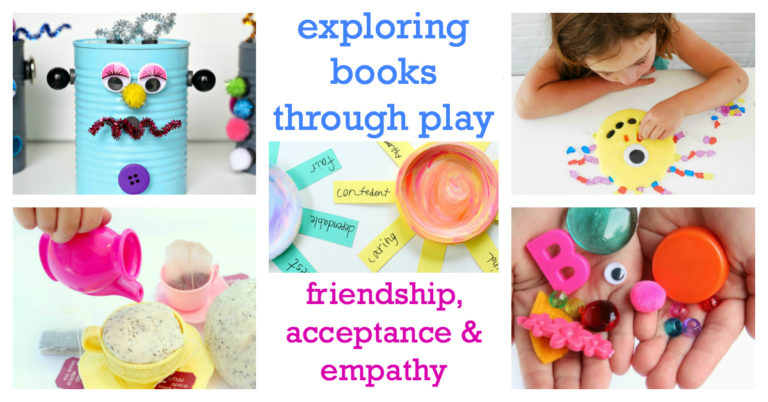
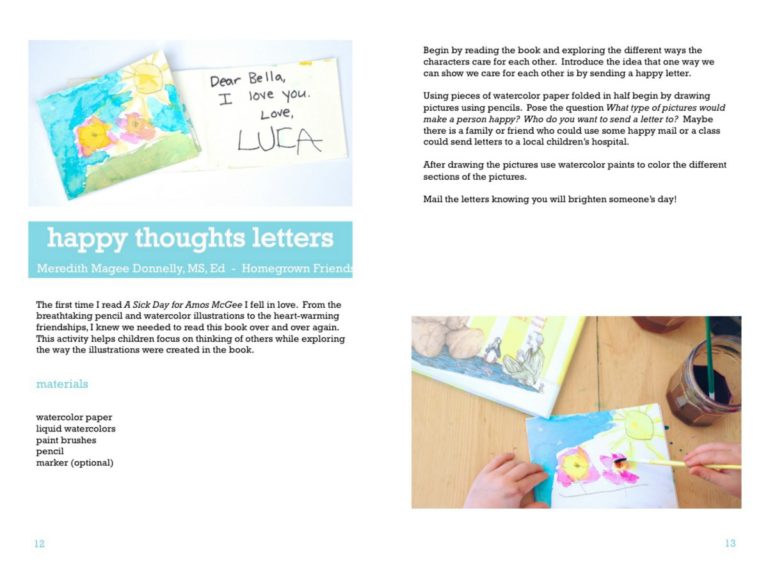
Want a few more craft ideas for self regulation, emotions, and social and emotional development? Check out our e-book, Exploring Books Through Play. The e-book walks you through using popular children’s books to create crafts and hands-on activities based on social emotional areas like empathy, feelings, friendship, and emotions. It’s a wonderful resource to add to your therapy toolbox!
Colleen Beck, OTR/L has been an occupational therapist since 2000, working in school-based, hand therapy, outpatient peds, EI, and SNF. Colleen created The OT Toolbox to inspire therapists, teachers, and parents with easy and fun tools to help children thrive. Read her story about going from an OT making $3/hour (after paying for kids’ childcare) to a full-time OT resource creator for millions of readers. Want to collaborate? Send an email to contact@theottoolbox.com.
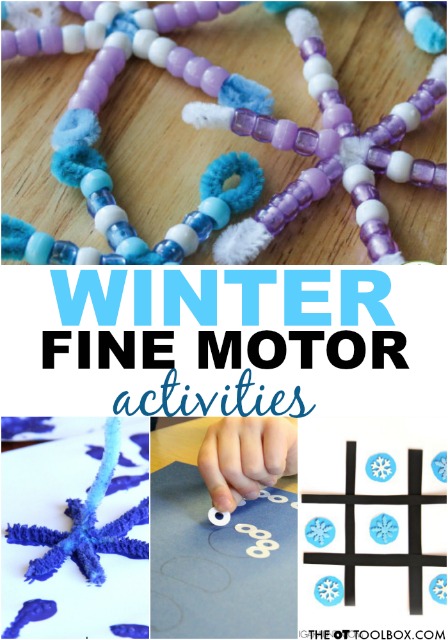
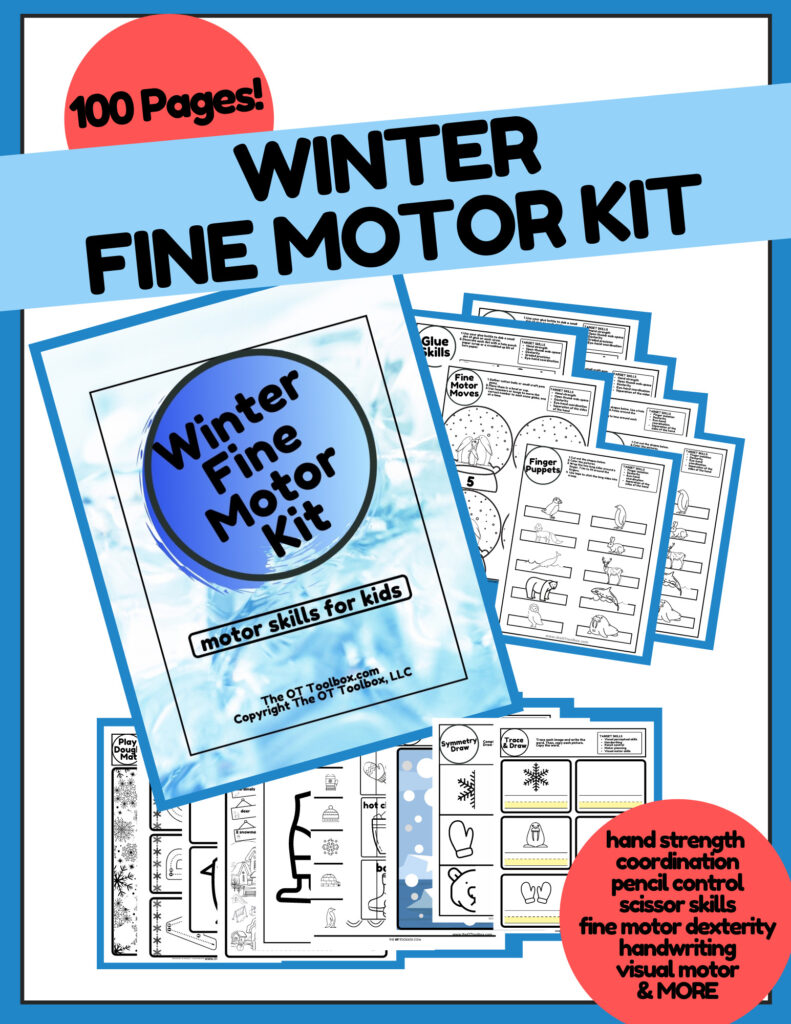
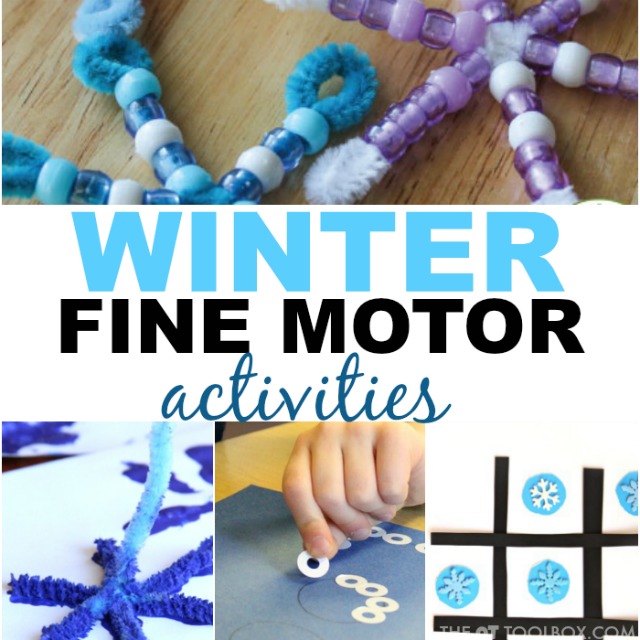
Looking for winter fine motor activities that boost the skills kids need? These fine motor ideas develop the skills that kids need for tasks like handwriting, pencil grasp, cutting with scissors, managing clothing fasteners, and more. You’ll find winter activities that boost hand strength, grasp, precision and endurance in the hands…all through play! We’ve even got a winter fine motor kit, loaded with resources, activities, crafts, and no-prep materials designed to help kids develop fine motor skills. So scroll on!
First, stop by our fine motor skills library for tons of ideas to work on the motor skills kids need.
It has been fun sharing winter activities this week! If you missed any of the posts, be sure to check them out below. We’ve talked about indoor recess ideas for winter, brain break ideas, and activities to address bilateral coordination skills, and even mindfulness! You will have ideas for a season of development!
Check out the Winter Activities on the site this week:
Winter fine motor activities are fun ways to build hand strength.
Winter Fine Motor Activities
Winter is a great time to work on fine motor skills. It’s so functional! You can help kids by getting those hands moving so they have the finger dexterity, pinch strength, and finger isolation to put on a pair of gloves.
You can address gross hand grasp, arch development, and bilateral coordination skills so kids can pull on a pair of boots. You can work on precision, separation of the sides of the hand, eye-hand coordination, and in-hand manipulation skills so kids can zipper and button winter coats. All of these are functional winter tasks!
We used those same hole reinforcer stickers to make a fine motor snowman craft that boosts skills like tip to tip precision, separation of the sides of the hand, and arch strength.
Many winter fine motor activities can be adjusted to meet the needs of the individual. For example, these snow globe letter puzzle cards can address fine motor skills to color and manipulate the cards. The winter-themed activity can be modified to meet the needs of the individual: using less or more cards, incorporating fine or gross motor input, and positioning the cards in different planes or surfaces to work on various levels of fine motor control. It’s just one more way to make therapy skills like fine motor dexterity fun with a winter theme!
Similarly, this snow globe deep breathing exercise can be modified to address fine motor skills. Ask users to point and trace the breathing lines to integrate finger isolation, separation of the sides of the hand, and eye-hand coordination. Then, they can “draw” the same shape on their palm using their finger to point as they breathe. It’s a bilateral coordination and fine motor task that addresses self-regulation, too.
Print off this mitten printable for fine motor skill work while developing other areas like eye-hand coordination, motor planning, precision, and more.
This winter clothing worksheet is focused on tracing numbers. But, this hands-on activity can address many fine motor skills, too. Ask kids to color the pictures. then, they can cut out each number strip to work on scissor skills. Then, ask them to write the winter clothing word. Finally, they can write the number to work on number formation skills. But what if you asked them to then roll the same number of play dough balls for each number? What a great way to work on hand strength. If you asked the child to place the correct number of mini erasers or coins on the table or in a slotted top, they can incorporate in-hand manipulation skills, too.
Another fine motor worksheet is our Also be sure to grab our new winter crossword puzzle. The printable can be used to support pencil control by circling words and individual letters. Or, use the end of a pencil as a stamp to stamp out the letters of the winter words for more fine motor fun.
This beaded snowflake craft from Early Learning Ideas encourages bilateral coordination, separation of the sides of the hand, precision, in-hand manipulation, and a tripod grasp…with pretty results!
Use paper hole reinforcers to improve precision and dexterity by forming letters and names like Fun-a-Day did.
If you’re looking for another craft idea, then this clothespin snowman craft uses a clothespin clip to really work the muscles of the hand. Move that snowman around and clip him onto bags, coats, and books!
If you’re looking for a fine motor activity for kindergarten kids, then this sight word tic tac toe game is the ticket! Kids can make the game pieces, and move them around to play a game of tic tac toe while strengthening skills like tip to tip grasp, arch development, separation of the sides of the hand, and finger isolation.
For more craft ideas that boost fine motor skills, check out all of these winter bird crafts. You’ll find ideas for strengthening the hands and other fine motor skills while making cute bird crafts, bird feeders, and other activities.
If working on scissor skills is a priority, a paper snowflake is the way to go this winter. But what if you took the paper snowflake up a notch by cutting cupcake liners? This cupcake liner paper snowflake activity boosts hand strength with a pretty result!
Working on pencil grasp? You don’t need a pencil! Make this snowflake stamp art and promote the fine motor skills that are needed for a functional grasp: separation of the sides of the hand, arch development, and an open thumb web space for example. This creative winter painting idea has a sensory component, too.
Winter Fine Motor Worksheets
Worksheets can get a bad rap. But, for the occupational therapy professional that thinks outside of the box, it is possible to use a printable tool to address hands-on skills like in-hand manipulation, separation of the sides of the hand, and more than just handwriting or scissor skills.
Print off the pages that you need and you’ll never run out of fresh fine motor activities this winter!
To end out the Winter Week here on The OT Toolbox, I wanted to create a fine motor worksheets that are a true resource during the winter months. These fine motor worksheets that cover a variety of different fine motor abilities:
These reproducible activity pages include: pencil control strips, scissor skills strips, simple and complex cutting shapes, lacing cards, toothpick precision art, crumble hand strengthening crafts, memory cards, coloring activities, and so much more.
Play Dough Roll Mats- We’ve shared some free play dough mats before. They are perfect for developing fine motor skills and hand strength needed for tasks like coloring with endurance, manipulating small items, and holding a pencil. Kids can roll small balls of play dough with just their fingertips to strengthen the intrinsic muscles. The Winter Fine Motor Kit contains 6 winter play dough mats that can be used all winter long!
Pinch and Grip Strength Activities- Includes: glue skills page, tong/tweezer activities, lacing cards, finger puppets, 1-10 counting clip cards, 10 toothpick art pages, find & color page, 5 crumble art pages. TARGET SKILLS: Precision, pinch and grip hand strength, tripod grasp, arch development, bilateral coordination, open thumb web-space.
Pencil Control Worksheets- Connect the arctic animals or winter items and stay on the pencil path lines while mastering pencil control. Some of the lines are small and are a great way to strengthen the hands, too.
Arctic Animal Cutting Strips and Scissor Skills Sheets- Work on scissor skills to cut along lines to reach the arctic animal friends or snowflakes, snowmen, and mittens. This is a great way to strengthen the motor and visual skills needed for cutting with scissors. Also included are 7 scissor skills strips with graded precision designed for data collection and accuracy development, 2 color & cut memory cards, 4 pages simple cutting shapes in small/med/large sizes, 3 pages complex cutting shapes in small/med/large sizes, 2 small and 2 large cutting skills puzzles. These worksheets help kids develop graded scissor skill accuracy and precision, visual perceptual skills, eye-hand coordination, crossing midline, bilateral coordination.
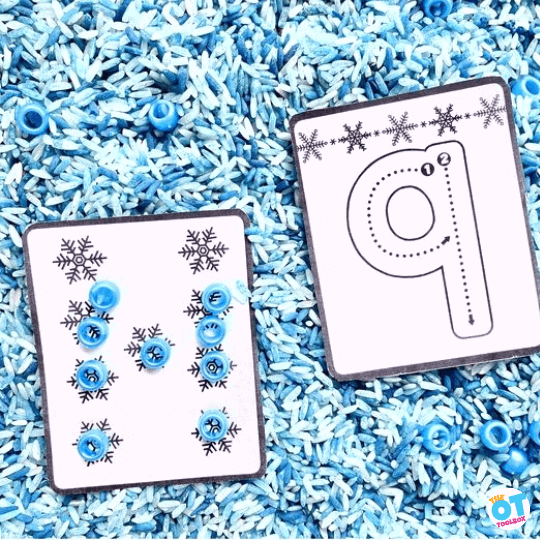
Handwriting Sensory Bin Materials- You and the kiddos will love these A-Z uppercase and lowercase tracing cards with directional arrows, 1-10 tracing cards with directional arrows, 1-10 counting cards. Using the sensory bin materials can develop tactile handwriting, letter and number formation, finger isolation, crossing midline, sensory challenges.
“I Spy” Modified Paper- Includes: Color and find objects in two themes: winter items and arctic animals; 3 styles of modified paper for each theme: single rule bold lines, double rule bold lines, highlighted double rule. Use these pages to develop handwriting, pencil control, line and spatial awareness, legibility, visual perceptual skills, visual memory.
Fine Motor Handwriting Sheets- Try the 4 Find/Color/Copy pages in different styles of modified paper, rainbow writing pages in 3 styles of modified paper. These handwriting worksheets use the winter theme to help with handwriting, visual perception, pencil control, visual memory, visual attention, precision, pencil control, functional handwriting.
Write the Room Activities- Using a winter theme, these Write the Toom cards includes: 5 lowercase copy cards, 5 uppercase copy cards, 5 lowercase tracing cards, 5 uppercase copy cards, 6 cursive writing copy cards, 2 styles of writing pages. TARGET SKILLS: Letter formation, pencil control, visual motor skills, visual attention, visual memory, line placement, functional handwriting at all levels and stages.
Today, we have a fun fine motor activity set to build fine motor strength, dexterity, and coordination skills. It’s an Arctic Animal Fine Motor set that includes play dough or coloring mats and handwriting pages right on the same page, all with a Winter arctic animal theme.
This item is also found inside our Membership Club.
Looking for a consistent way to support fine motor skills all year? This yearlong fine motor system includes seasonal activity kits and monthly data collection tools to support planning and progress monitoring.
If fine motor planning and data collection feel overwhelming, you’re not alone. This done-for-you yearlong bundle organizes seasonal activities and monthly screening tools in one system.
Colleen Beck, OTR/L has been an occupational therapist since 2000, working in school-based, hand therapy, outpatient peds, EI, and SNF. Colleen created The OT Toolbox to inspire therapists, teachers, and parents with easy and fun tools to help children thrive. Read her story about going from an OT making $3/hour (after paying for kids’ childcare) to a full-time OT resource creator for millions of readers. Want to collaborate? Send an email to contact@theottoolbox.com.
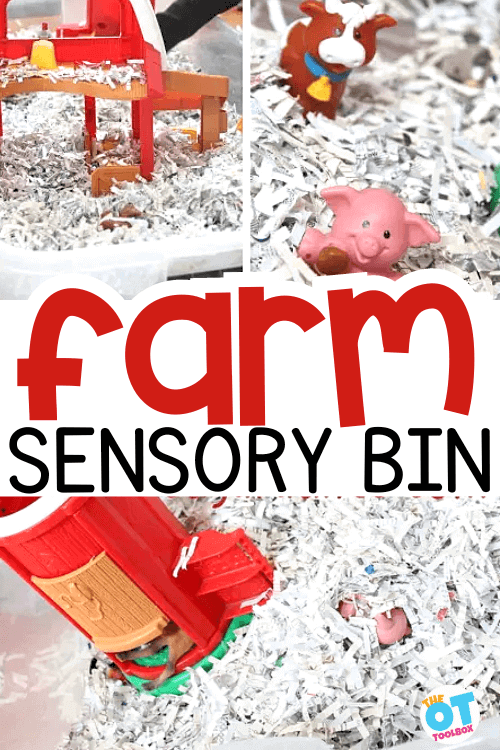
Welcome to a winter wonderland on the farm! In today’s blog post, we’re diving into the magical world of sensory play with a snowy farm sensory bin. This delightful activity combines the charm of a farm theme with the sensory joys of winter, creating an engaging and therapeutic experience for children. This is one of our favorite winter sensory bins because you can focus on so many different underlying skills through play.
Whether you’re a parent looking for creative winter activities or a therapist seeking effective tools for skill development, this farm sensory bin is tailored to captivate young minds while addressing various therapeutic areas. Read all about sensory bins in general as a therapy tool to support skill development.
Farm Sensory Bin
We love a great occupational therapy sensory activity because cold winter temps and less daylight hours mean you might not have a chance to get little ones outside as often as you might like. Plus, a farm sensory bin goes great with a Farm theme in preschool or in occupational therapy sessions.
This farm sensory bin has a winter theme, but you could actually set up a farm sensory bin any time of year. In fact, we loved this play dough farm activity that goes along with a farm theme and supports fine motor skills as well as sensory input.
The base of shredded paper sets the stage for a snowy landscape, providing a tactile experience that stimulates sensory exploration and fine motor skills.
This winter-themed sensory bin features a collection of farm toys and mini figures, turning the snowy setting into a farm scene ready for imaginative play.
Farm Animal Sensory Bin
The farm animal sensory bin takes the excitement a step further, introducing miniature figures of beloved farm animals. As children dive into the bin, they engage in hands-on exploration, feeling the textures of the shredded paper, maneuvering the farm toys, and creating their own farm stories.
This sensory-rich experience enhances tactile input, encouraging self-confidence as children express themselves through play.
Farm Theme Sensory Bin Setup
Setting up the farm theme sensory bin is a breeze:
Begin with a large container filled with shredded paper to create a snowy base. You could also use other sensory bin base materials if you don’t have shredded paper on hand.
Add farm toys such as barns, tractors, and mini figures of animals to bring the farm to life.
Encourage creativity by incorporating small props like faux trees or fences. This simple yet effective setup provides a canvas for endless imaginative scenarios.
Before this weekend, we’ve had a super cool spring. With a handful of days where it snowed. We are ready for outside play in short sleeves, running in the yard, and grass stained knees.
But, we have been loving this fun play activity too 🙂
We had a boat load of shredded paper from doing taxes recently. It came in pretty handy for a small world snowy farm scene!
We put some farm animals, the Little People barn, and of course, Little Guy’s construction vehicles.
(how else can the farmer move allll that snow??)
Little Guy went to farm-town with imagination stories and pretend play.
Baby Girl loves to make the animal sounds and had a blast finding them in the shredded paper.
Why This Farm Sensory Bin Helps Development
Beyond simply playing in the sensory bin, this farm sensory bin serves as a therapeutic tool to foster development in various areas.
Mindfulness- playing in a sensory bin can be calming and regulating for kids. Read about Winter Mindfulness Activities for more information.
So much more
Fine motor skills are particularly important in early childhood development, as they lay the foundation for more complex tasks in the future.
Tactile discrimination, exploration, and sensory desensitization are effectively addressed with sensory bins as they are playful and present in a non-threatening way. The playful nature of sensory bins allows children to control their tactile experiences, fostering confidence in their interactions with materials and gradually increasing their comfort with different sensations.
The hands-on nature of the activity promotes fine motor skills as children manipulate the farm toys and engage with the sensory materials. Communication skills blossom as they create farm narratives, fostering language development.
In addition, occupational therapy providers love sensory bins because they can offer a unique and enjoyable way to engage reluctant children who may initially be hesitant about engaging in the sensory elements of tactile defensiveness challenges.
Tactile input and sensory exploration contribute to a holistic sensory experience, supporting overall sensory processing.
My fun-loving Baby Girl instigated this little incident…
she just couldn’t help herself 🙂
What are we learning through play?
Imagination Play
Pretend Play
Learning Animals
Animal Sounds
Visual Scanning
Sensory Play
Farm Sensory Bin Ideas
You can pair this farm sensory bin with other therapy ideas, too. Use some of these tools and resources to support skills like gross motor skills, coordination, brain breaks, and more:
These Farm Brain Breaks can add movement and gross motor input to a child’s day and fit in great with a farm animal theme. Print off the cards and use them in the classroom or home.
These heavy work cards includes a set of 8 farm themed heavy work activities that can be used as a brain break or added proprioceptive input.
Colleen Beck, OTR/L has been an occupational therapist since 2000, working in school-based, hand therapy, outpatient peds, EI, and SNF. Colleen created The OT Toolbox to inspire therapists, teachers, and parents with easy and fun tools to help children thrive. Read her story about going from an OT making $3/hour (after paying for kids’ childcare) to a full-time OT resource creator for millions of readers. Want to collaborate? Send an email to contact@theottoolbox.com.
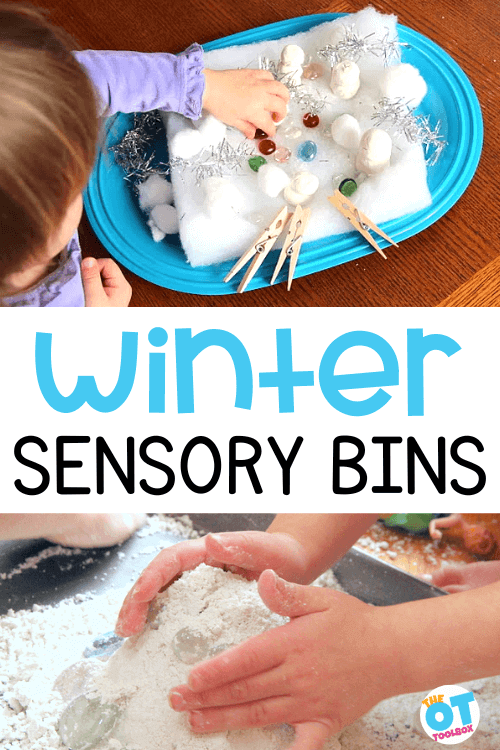
Today, we have some great winter sensory bin ideas to use this time of year. When it’s cold outdoors, indoor sensory play is the way to go when it comes to supporting sensory motor needs and facilitating skills. Why? Sensory bins are the best go-to tool for children to engage in a variety of sensory experiences while learning about a season or holiday so they are fun and motivating. But more than that, a sensory bin engages many of the senses at once and can easily be tailored to your specific needs for a child and to the materials that you have on hand. You can target many occupational therapy goals using a single sensory bin. Adding in wintertime themes is easy with snowman sensory bins, snow sensory bins, and many other ideas.
Let’s explore winter sensory activities using sensory tables and bins…
Winter Sensory Bins
Wintertime Sensory Bins are a great way to foster sensory motor skills and engage students in an individualized activity.
A sensory bin is usually a durable container filled with various types of materials and items that can stimulate and engage a child’s senses such as sight, sound, touch, and/or smell. Winter-themed sensory bins are the perfect tool for engaging children in learning and open-ended play as part of this cold, wet season. They offer a multi-sensory experience that can easily target aspects of a child’s development.
Seasonal sensory bins are a great way to introduce children to the changing seasons and connect them with nature and what is happening in the world around them. With the simple use of textures, temperatures, colors, sounds, and scents, children will engage in a sensory activity that builds tolerance and engagement with materials they may not readily choose to participate with on their own.
There’s no right or wrong way to play with sensory bins, other than eating or tasting anything in them – don’t allow it. Other than not eating or tasting anything, children have the freedom to play creatively and use their imaginations to create scenes and stories about the materials in the bin. This in turn easily allows for work on language development and social interaction as children naturally engage in conversation about the items in the bin and the bins themselves. The sharing of materials helps to facilitate turn-taking and cooperation as children play together.
Motor skills can be targeted by having children work on scooping, pouring, mixing, stirring, and picking up objects with the use of tools. These activities require precision and control of the hands and fingers, which are essential for handwriting, drawing, scissor use, manipulating clothing fasteners, and using feeding utensils.
Fine motor skills are particularly important in early childhood development, as they lay the foundation for more complex tasks in the future.
Tactile discrimination, exploration, and sensory desensitization are effectively addressed with sensory bins as they are playful and present in a non-threatening way. The playful nature of sensory bins allows children to control their tactile experiences, fostering confidence in their interactions with materials and gradually increasing their comfort with different sensations.
In addition, occupational therapy providers love sensory bins because they can offer a unique and enjoyable way to engage reluctant children who may initially be hesitant about engaging in the sensory elements of tactile defensiveness challenges.
When a child needs some time to pull away from the chaos and clutter of an environment or just needs time to ground themselves, sensory bin play can offer a calming effect and help them regulate their emotions. It can easily be used for self-soothing and stress relief.
Sensory bins are just plain fun when it comes down to it. Children are more likely to engage in and with items that they may not normally do so and children find learning fun with the use of the materials that are presented in this fun and playful way. Go sensory bins!!
Whether you are a therapist, teacher, or parent, winter-themed sensory bins are an excellent means for enriching any child’s winter experience and helping to promote holistic development. They are easily adaptable to suit various therapeutic and educational objectives and provide a creative outlet to explore the beauty of the winter season
If you need inspiration for the types of sensory bins you can create to represent the winter season, take a look at the variety of ideas we have gathered for you. These may help to trigger some creative fun that you have buried inside of your tired thoughts this time of year with all of the excitement of the holiday season. We hope you enjoy!
Winter Sensory Bin Themes
You could also do holiday themed sensory bins during the winter months. This might include:
St. Patricks’ Day Sensory Bins (or a Rainbow sensory bin) for the end of the winter season.
Arctic Animal Sensory Bin
An Arctic Animal Sensory Bin is a hands-on explorational bin that is designed to facilitate hands-on educational learning of the animals that inhabit the Arctic region. This type of wintertime bin is typically created with a variety of materials and items that stimulate touch, sight, and in some cases smell.
Here’s how to create an Arctic animal sensory bin:
Use a large plastic sensory bin especially if using frozen items to represent ice and cold.
Fill the bin with Arctic-related materials such as artificial snow, white rice, salt, or potato flakes. Another option would be to fill it with blue-tinted water (use a few drops of food coloring) to represent an icy ocean.
Add Arctic animals such as polar bears, wolves, foxes, penguins, seals, whales, or even snowy owls.
Add rocks or pebbles for an icy terrain.
Add fake plastic cubes or even real ice cubes to represent ice.
Add toy igloos, caves, or icebergs from playsets to represent the Arctic region and create a scene with the animals.
Add blue or silver glitter and blue glass gems for a sparkling, snowy effect.
Add cotton balls or quilt stuffing for snow drifts.
Add tongs or tweezers for picking up and moving items around within the bin.
Add plastic spoons and other scoopers to scoop and pour snowy base materials.
Ideas to encourage children to engage in open-ended sensory play with the artic animal sensory bin:
Scoop and pour the snow and ice to make it look like it is snowing.
Pretend to be the Arctic animals and make voices for them as they talk about the Arctic living.
Stack and build shelters with the cubes.
Create snow drifts and other snowy terrain scenes for the animals to be a part of in play or living.
Have children use their imagination to create scenarios and stories involving the Arctic animal theme.
As children play with the Arctic sensory bin allow them the opportunity for sensory exploration while also encouraging imaginative play with the materials. A great tool for homeschool and preschool environments.
Hot Cocoa Sensory Bin
A Hot Cocoa Sensory Bin is a delightfully fun sensory play bin, especially popular during the winter months. It’s a fantastic way to encourage imaginative play and help children explore different tactile materials while simulating the experience of making, drinking, or serving a warm cup of hot cocoa.
Here’s how a hot cocoa sensory bin can be created:
Use a plastic storage bin to hold the sensory bin contents.
Fill the bin with cocoa-related material such as instant cocoa powder, dried cocoa beans, scented coffee grounds, brown rice or beans, or even brown shredded paper.
Add items like white foam marshmallows, white pom-pom balls, or cotton balls to mimic marshmallows.
Add items like small brown pom-pom balls or plastic chocolate chips from a playset to be used for chocolate chips.
Add measuring cups, spoons, and other containers for children to scoop, pour, transfer, and measure cocoa material.
Add small spoons, wooden dowels, or playset plastic utensils for stirring, mixing, or topping the cocoa.
Add play or toy plastic cups, mugs, and saucers for serving the cocoa. Option: Paper coffee cups would work too.
Adding a cocoa-scented element can add to the olfactory element of the bin while children engage in using it.
Optional additions could be toy figurines, dolls, or stuffed animals to create little friends who enjoy the hot cocoa for imaginative play.
Ideas to encourage children to engage in open-ended sensory play with the hot cocoa sensory bin:
Scoop and pour the cocoa and toppings into the cups and mugs for serving or pretend drinking.
Pretend to make the cocoa by measuring and mixing the cocoa to make hot cocoa recipes.
Experiment with different sensory textures by touching the dry cocoa materials and soft marshmallow materials.
Have children use their imagination to create scenarios and stories involving the hot cocoa theme. They could be selling hot cocoa at a stand or coffee shop or they could be sitting at home in front of a snowy window while sipping their cocoa.
As children play with the hot cocoa bin, they will develop important fine motor skills and engage their senses while promoting creativity and imaginative play. A fun bin for the school and home setting during a particularly cold, wintry day.
Winter Wonderland Sensory Bin
A Winter Wonderland Sensory Bin is a super fun activity for children. This hands-on experience captivates multiple senses simultaneously, fostering imaginative play.
To craft your winter wonderland sensory bin, follow these steps:
Use a large plastic bin or deep tray.
Choose a snowy landscape material for the sensory bin base filler such as white rice, white sand, cotton balls, shredded white paper, or instant snow.
Add winter-themed miniature figurines and props like small animals, trees, houses, snowmen, and people sledding or skiing. If you don’t have these items, make them! Create penguins and snowmen out of recycled paper towel rolls and grab a few pine tree branches from outside to make some trees.
Add small wintertime clothing items such as mittens, scarves, or hats to dress the props.
Add items like pine cones, evergreen pieces, wood pieces, and cinnamon sticks to evoke the scents of winter.
Add textured items like faux fur, soft or fuzzy fabrics, rough pinecones, and mushy water beads.
Add sleigh bells or small instruments to create a few fun sound effects.
Add silver or iridescent glitter or sequins to represent glistening snow. Integrate craft foam snowflakes, known for their shine and ease of use—they can be effortlessly dropped into the bin for an added touch.
Add fine motor tools like small scoops, tongs, or tweezers for scooping and transferring items within the bin.
Ideas to encourage children to engage in open-ended sensory play with this winter sensory bin:
Scoop and pour the snowy content to represent falling snow.
Have children create small scenes in the bin to present wintertime play.
Have children describe the sensory aromas and textures as they explore.
This activity bin is a great way for children to learn about wintertime fun and to stimulate their creativity while developing sensory and fine motor skills. This bin can seamlessly serve as a sensory station in the classroom.
Frozen-themed Sensory Bin
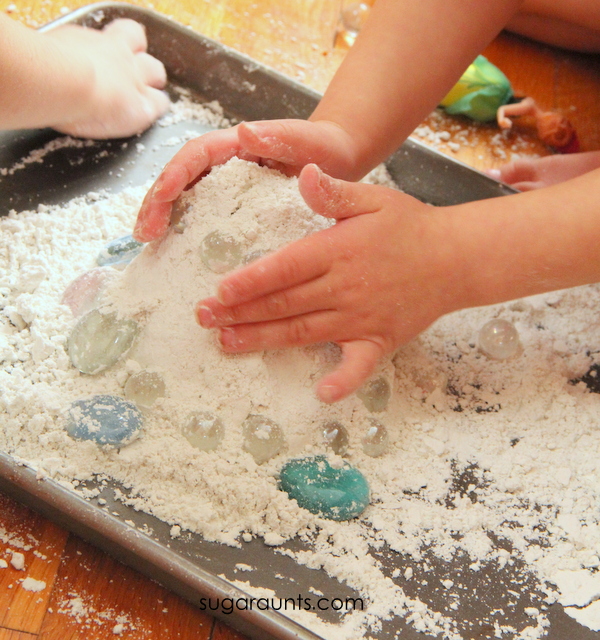
A Frozen-themed Sensory Bin is all about creating an ice or frozen bin that allows children to explore cold and ice while engaging their senses in many ways. We made a Frozen sensory bin using homemade sensory snow made from baby powder and oil.
Here’s how to set up an ice or frozen sensory bin:
Start with a large plastic tray or bin.
Fill it with blue or white glass gems or beads to represent snow and ice crystals. Alternative choices could be white rice or Epsom salt which could give the bin a frosty appearance.
Add plastic polar animals, penguins, or even characters from the movie “Frozen.”
Add real ice cubes by freezing water in ice cube trays and even freeze small plastic objects in ice cubes.
Add textures like fluffy quilt filler, cotton balls, or slippery glass or water beads.
Add scents like mint-scented cotton balls or pine-scented materials.
Add small bells or chimes in the bin to create an ice tinkling sound.
Add a warm water spray bottle or droppers for rescuing the frozen items out of their ice cube confinements.
Add tongs, scoops, and spoons for scooping, pouring, and transferring filler materials.
Add blue or silver glitter to the items in the bin for an added icy look to the setting.
Ideas to encourage involvement in the Frozen themed sensory bin:
Use the sensory tools to manipulate the materials and release the frozen items from their frozen enclosures.
Have the children describe the sensory items as they explore them with their hands and other senses.
Again, create imaginative stories with the animals and characters in the bin.
This sensory bin can be a great way for children to learn about ice and winter while developing sensory and fine motor skills. Brr…it’s a cold one.
Winter Bakery Sensory Bin
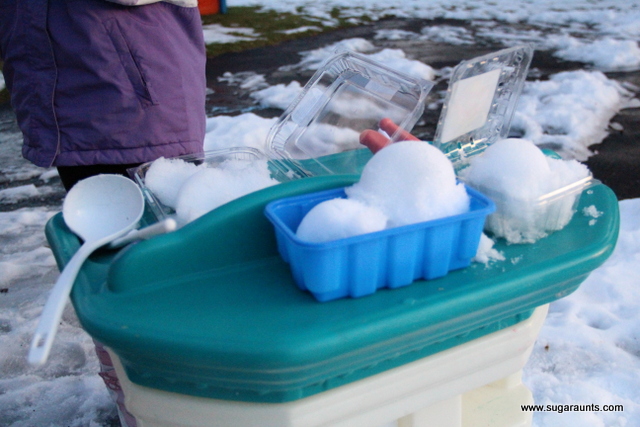
A Winter Bakery Sensory Bin is a delightful and engaging bin that brings the magic of a winter bakery to life for kids. We’ve created an outdoor snow kitchen that was a lot of fun.
How to create a winter bakery sensory bin:
Use a plastic bin.
Fill the bin with flour or cornstarch to simulate the feeling of powdered snow. Alternatively, fill the bin with white rice and then add globs of play dough to create a textured dough for use with the bakery tools.
Add some colorful sprinkles to the bin, allowing children to use them to decorate their baked treats.
Add essential oils to the base materials with scents like gingerbread or peppermint.
Place fun aprons around the bin for children to don and doff before and after play.
Add miniature play bakery items to stock the bakery, such as: cookie cutters, rolling pins, cupcake liners. mini muffin tins, and small baking trays.
Add small utensils and molds for baking play, such as spatulas, cookie molds, and measuring cups and spoons.
Ideas to encourage children to explore and play within the winter bakery sensory bin:
Have children use the bakery items to create imaginative treats.
Have children pretend to have a bakery shop and stand and make orders to go.
Encourage children to tell stories and create scenarios as they serve their “baked goods” and run their winter bakery.
This sensory bin activity offers children an excellent opportunity to learn about baking, develop fine motor skills, and spark their creativity while embracing a wintertime bakery theme. It’s a wonderful addition to either a classroom’s kitchen area or the home kitchen.
Winter Colors Sensory Bin
A Winter Colors Sensory Bin is a fun way for children to explore and learn about the colors and themes associated with wintertime. This sensory bin is as easy as using winter colors (think greys, blues, whites, pearl, ivory, and silver).
Here’s how to make a winter colors sensory bin:
Start with a shallow plastic bin or tray.
Fill it with white rice, salt, light blue or silver shredded paper, white beans, dried pasta, or cotton balls to represent snow or a frosty, wintery look. Consider crafting a unique winter color theme by utilizing a skein of blue yarn as the foundational filler for the bin. Build on this filler by adding other winter-colored items to the yarn base.
Add colorful items with winter hues such as:
Blue or silver glass gems, beads, or buttons
White, blue, and/or silver pom-pom balls
Colored felt or foam shapes in winter hues
Blue, white, or silver pipe cleaners or craft sticks (craft fun snowflakes with the use of the pipe cleaners to add to the bin)
Add scoops, tongs, or small containers to encourage fine motor skills.
Ideas to encourage the use of the winter colors sensory bin by children:
Sort the colorful items by shape or color. Use tongs or tweezers for sorting, utilizing containers for opening and closing.
Create patterns or designs using the colorful pieces.
Describe the colors and shapes they see.
Engage in imaginative play using the items to build structures or tell stories.
This sensory bin helps children learn about wintertime colors, exploration of sorting and categorizing while fostering hand skills, and allows for creativity in play.
Frosty the Snowman Sensory Bin
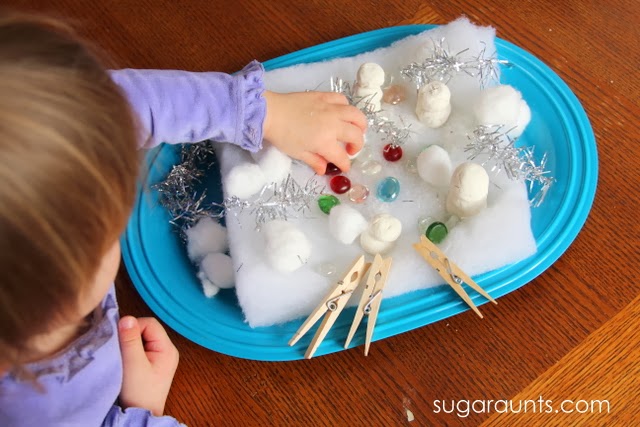
A Frosty the Snowman Sensory Binis a fun way to foster fine motor skills including hand and finger strength. Make the soda dough and use it in a sensory bin with flour or corn starch. This can be a messy play sensory bin, but it’s a good chance to practice hand washing skills.
You could also use real or instant snow (fake snow) that can be purchased. This instant snow on Amazon (affiliate) is a great winter sensory bin base material.
A winter sensory bin can include things like craft pom poms, cotton balls, cotton batting, tinsel, gems, clothes pins, and much more.
Snow Sensory Bin
The Frosty the Snowman sensory bin can be expanded by using real snow or fake snow in a large container or tray. Add a few scoops and spoons, water droppers, and even food coloring to create winter fun with a snow sensory bin.
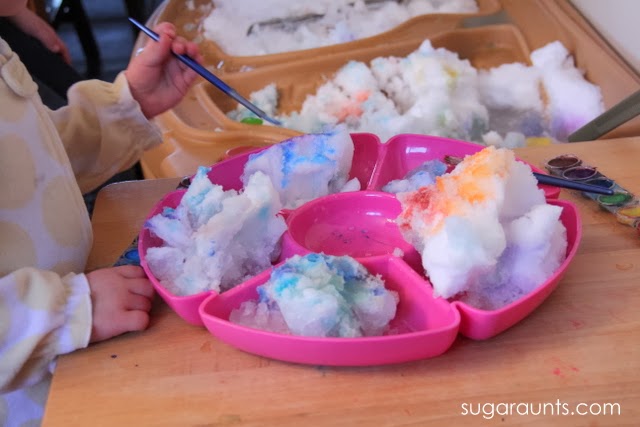
We used real snow in an indoor sensory bin by bringing the water table indoors. This was fun because we painted snow with watercolors using paintbrushes to get creative and develop visual motor skills.
All of the winter sensory bin ideas that we listed above can be adjusted to meet the needs of all kids.
Some of these materials can be used as sensory base materials or added in as materials to manipulate and explore.
Try adding these sensory bin items for tactile sensory input with a winter theme:
Real Snow- Scoop some real snow from outside if you’ve got snow. This is a great way to bring winter indoors, especially if the temps are too low.
Fake Snow or Insta-Snow– An alternative to using real snow (if you don’t have real snow outside) is to use fake snow in the sensory bin. Create a snowy atmosphere with artificial snow that mimics the feel of real snow. It’s a non-messy alternative that provides a tactile sensation.
Shredded Paper- Use shredded paper as a “snow” base for a winter sensory bin activity. We used small toys to make a winter farm sensory bin that was a lot of fun.
Pine Cones– Natural pine cones provide a tactile experience and a festive scent.
Cinnamon Sticks– Cinnamon sticks add a wonderful aroma and a unique texture to the sensory bin.
Cotton Balls or Cotton Snow– Use cotton balls to represent snow. This soft material is gentle and safe for hands, offering a different texture.
Winter-themed Toys– Include miniature winter-themed toys such as snowflakes, snowmen, or polar animals. These can enhance imaginative play and add a visual element.
Silver or White Tinsel– Tinsel adds a shiny and reflective quality to the sensory bin, representing ice or frost.
Sensory Ice Cubes– Freeze water with small winter-themed objects inside ice cubes. As the ice melts, it introduces a cold sensation and reveals hidden treasures.
Pine Branches or Pine Needles– Bring in the natural scent of winter by adding pine branches or needles. This adds an olfactory component to the sensory experience.
Scented Playdough– Create scented playdough with winter scents like peppermint, cinnamon, or pine. Playdough allows for tactile exploration and creative molding.
Winter Colored Rice– Dye rice in shades of white, blue, and silver to represent winter colors. Rice provides a different tactile sensation and is great for scooping and pouring.
Warm and Cool Textures– Include items with both warm and cool sensations, such as fabric swatches representing cozy blankets and icy gel packs for contrast.
Sensory bins offer a playful opportunity for children to engage multiple senses in a non-threatening or intimidating manner, creating a safe and comfortable space for them to explore at their own pace, within a familiar setting.
The nice thing is that themed play scenarios using a sensory bin can target so many different skills, and there is no right or wrong way to play. However, it is always important to supervise young children while they play with sensory bins and ensure the materials used are age-appropriate to prevent choking hazards or other safety concerns. Always be sure to store sensory bins in a safe place when not in use.
These winter number cards are in the Winter Fine Motor Kit and are a great addition to a winter sensory bin.
Want to create a Winter sensory bin using number or letter cards? We have them inside the Winter Fine Motor Kit.
What if you had themed, NO-PREP activities designed to collect data and can help kids build essential fine motor skills?
Take back your time and start the year off with a bang with these done-for-you fine motor plans to help kids form stronger hands with our Winter Fine Motor Kit. This print-and-go winter fine motor kit includes no-prep fine motor activities to help kids develop functional grasp, dexterity, strength, and endurance. Use fun, winter-themed, fine motor activities so you can help children develop strong fine motor skills in a digital world.
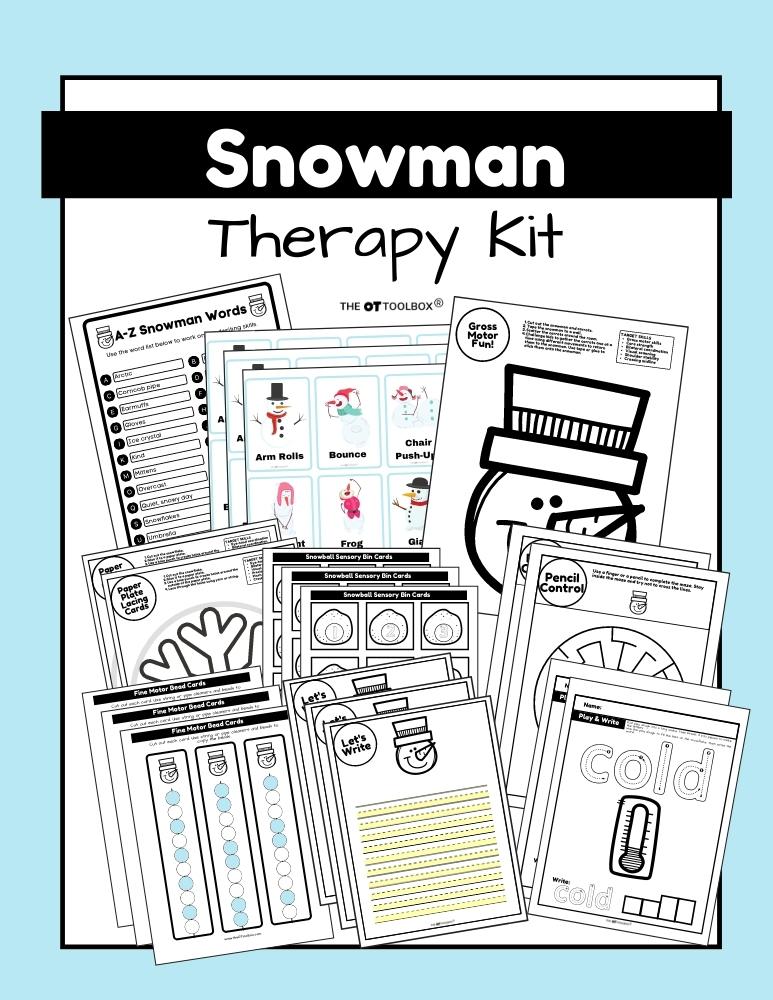
The Winter Fine Motor Kit includes reproducible activity pages include: pencil control strips, scissor skills strips, simple and complex cutting shapes, lacing cards, toothpick precision art, crumble hand strengthening crafts, memory cards, coloring activities, and so much more.
Regina Parsons-Allen is a school-based certified occupational therapy assistant. She has a pediatrics practice area of emphasis from the NBCOT. She graduated from the OTA program at Caldwell Community College and Technical Institute in Hudson, North Carolina with an A.A.S degree in occupational therapy assistant. She has been practicing occupational therapy in the same school district for 20 years. She loves her children, husband, OT, working with children and teaching Sunday school. She is passionate about engaging, empowering, and enabling children to reach their maximum potential in ALL of their occupations as well assuring them that God loves them!
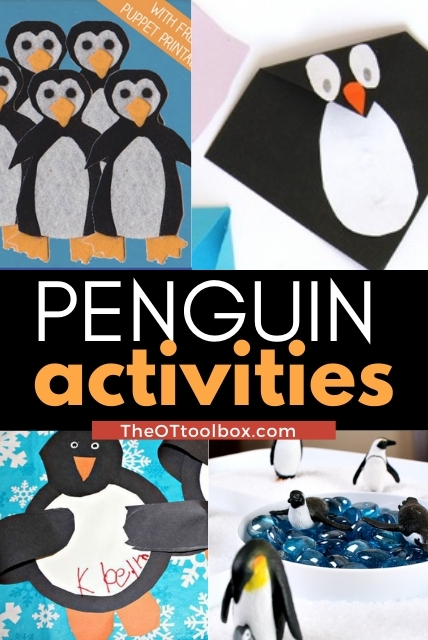
Brrrr it is COLD out there! This is the perfect time of year to add a few penguin activities to a penguin theme or set of winter activities. Here, you’ll find penguin themed ideas for movement, play, cooking, learning, and crafting. Browse these ideas and add them to an occupational therapy intervention therapy plan or learning at home.
The penguin activities for kids here will give you plenty of fun indoor play ideas. When we went through the links this week to pick our features, we had to go with a penguin theme. We’ve been doing a few penguin activities around here (and are so excited to share them with you!) after we got a handful of penguin books out from the library. The features this week show songs, games, crafts, sensory play, books, and even snacks…all about PENGUINS!
Penguin Activities
Penguin I Spy Worksheet– (FREE) This printable activity targets visual perception, fine motor, handwriting, and more.
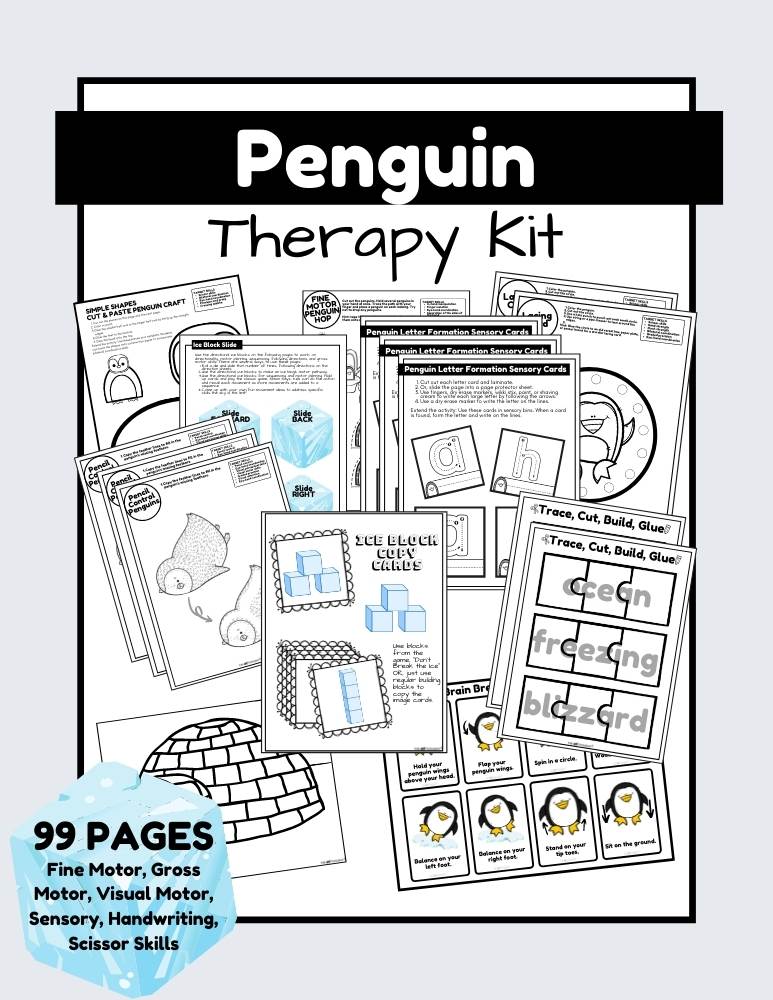
Penguin Therapy Kit– A penguin-themed therapy kit designed to develop motor skills, self-regulation, handwriting, and scissor skills. Includes 99 pages of therapy activities to develop fine motor strength, dexterity, core strength, regulation, functional grasp, and endurance.
FREE Penguin Fine Motor Worksheet– This printable activity can be used to target pencil control, tracing skills, visual motor skills, and fine motor skills. Attach it to a wall to work on strength and stability, or even cut along the lines to target scissor skills.
FREE Penguin Gross Motor (Penguin Yoga)- Use these yoga positions to incorporate gross motor skills, coordination, motor planning, balance, heavy work input (proprioception), and changes in positioning (vestibular input). This is a free Google slide deck. Click here for the penguin yoga activities.
Penguin Executive Functioning Activity (Make a Penguin Treat)- Cooking in the kitchen is a powerful way to develop fine motor skills and executive functioning skills. Try making these penguin snacks for a family treat.
FREE Penguin Self-Regulation Activity– This penguin deep breathing activity can be a coping tool or a sensory strategy to help with self-regulation skills. Included is a free printable deep breathing worksheet.
Penguins Emotions Game- This free penguin emotions therapy slide deck challenges kids to identify emotions based on facial expressions. It’s a great way to work on visual perception, too.
Auditory Processing Activity- Use this 5 Little Penguins Counting Songs from Let’s Play Music to work on listening, sounds, and auditory memory.
Tacky the Penguin Activities
For Tacky the Penguin activity ideas, pair a book with any of the activities listed here. Or try this Fun With Tacky The Penguin idea from Learning is Messy
Penguin Fine Motor Activities
You can add fine motor skills with crafts and motor activities. This penguin craft only requires paper and glue. Use colored paper or use crayons to color your penguin. It’s a fine motor folding craft to work on hand strength and precision.
Or, try this Penguin Math Activity to work on Scissor Skills– This counting/adding/subtracting fish activity builds eye-hand coordination too. Make and cut out fish from paper and catch them to feed the penguins.
Another fine motor Penguin Craft is this Penguin Craft with Printable Pieces from ABC Creative Learning to add fine motor fun to a penguin theme.
Use the fine motor activities, lacing cards, toothpick art, and crafts in the Penguin Therapy Kit. It’s a 100 page packet with all winter themes, and you’ll find penguins there!
Want a printable sheet of therapy plans with a penguin theme? This printable sheet has activities designed to build skills. Enter your email address into the form below and we’ll send you the printable therapy activity sheet!
This printable is also available inside The OT Toolbox membership. members can Log In to their account and get this printable, along with many other penguin activities on our Penguin Therapy Theme page.
Colleen Beck, OTR/L has been an occupational therapist since 2000, working in school-based, hand therapy, outpatient peds, EI, and SNF. Colleen created The OT Toolbox to inspire therapists, teachers, and parents with easy and fun tools to help children thrive. Read her story about going from an OT making $3/hour (after paying for kids’ childcare) to a full-time OT resource creator for millions of readers. Want to collaborate? Send an email to contact@theottoolbox.com.
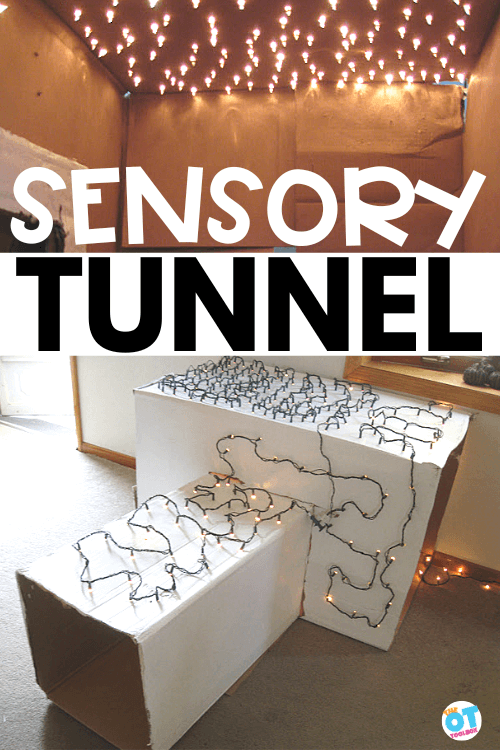
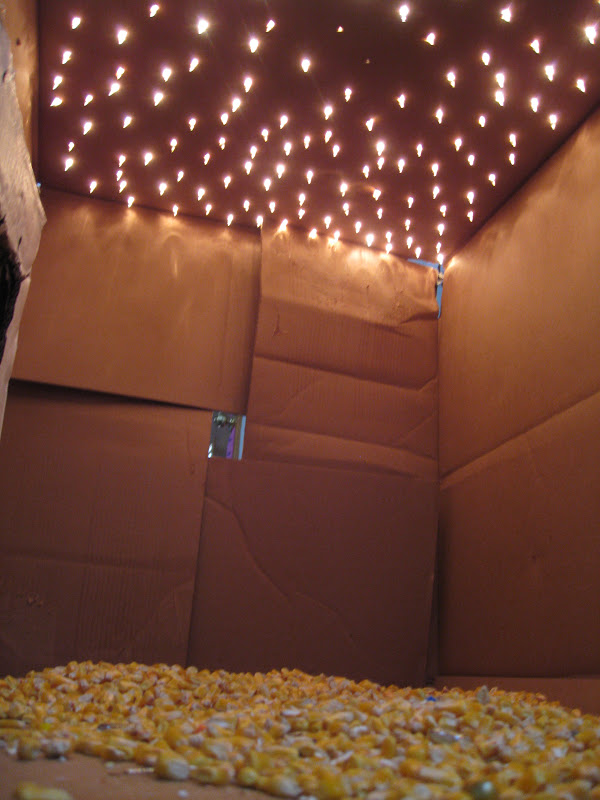
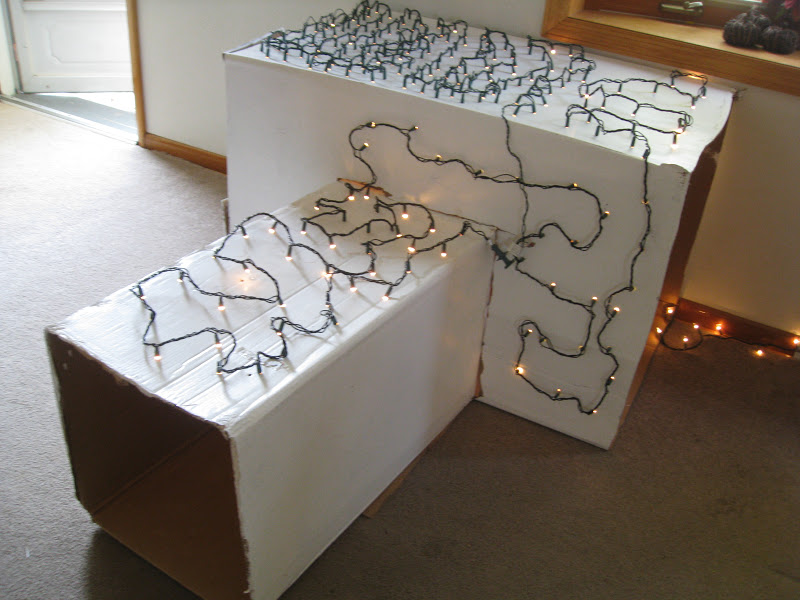
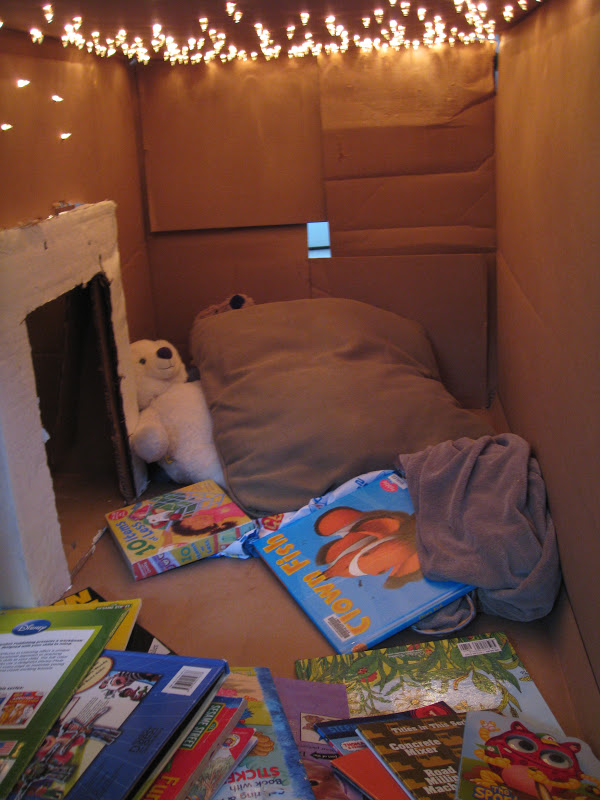
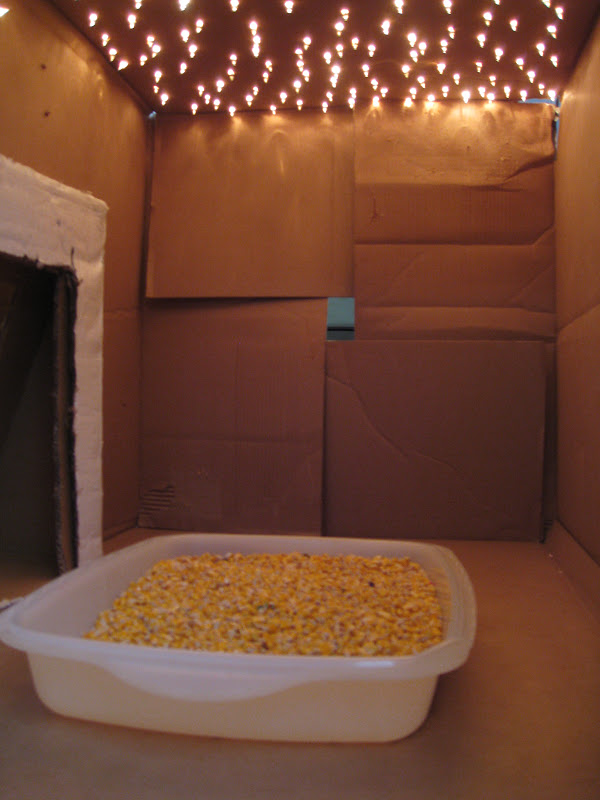
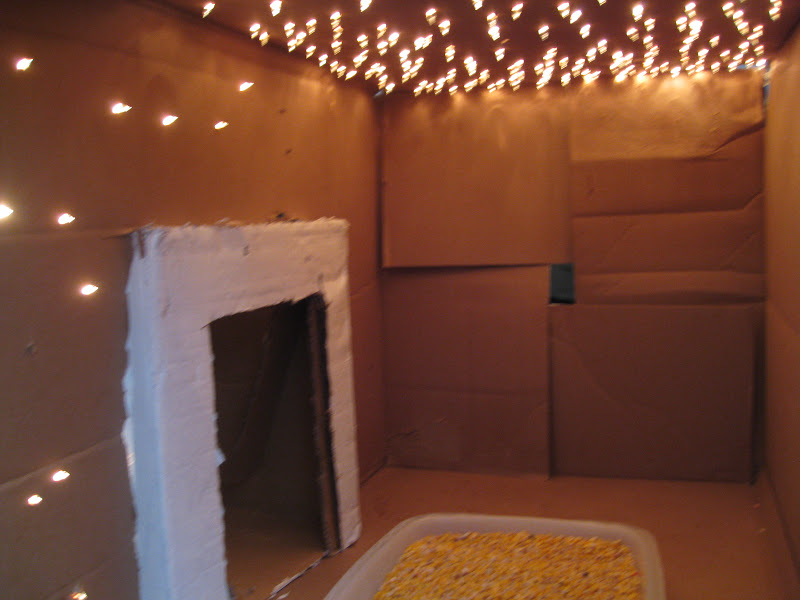
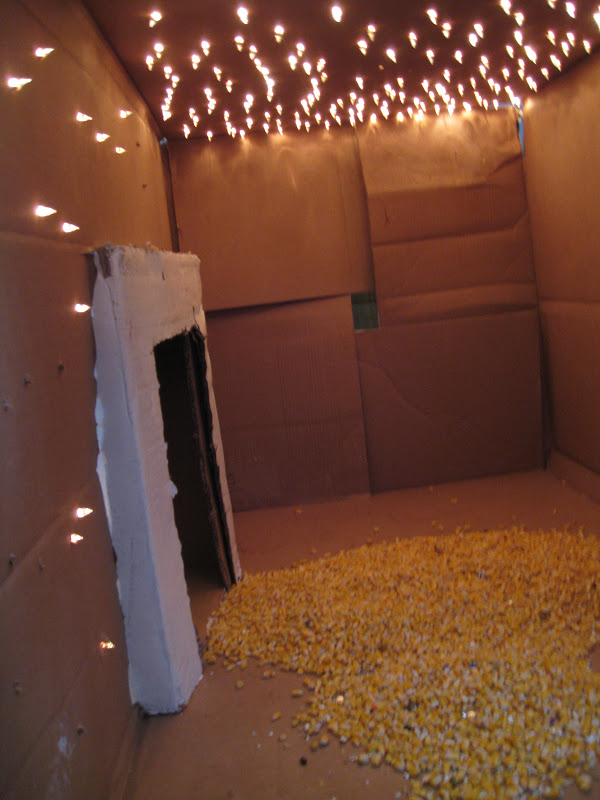
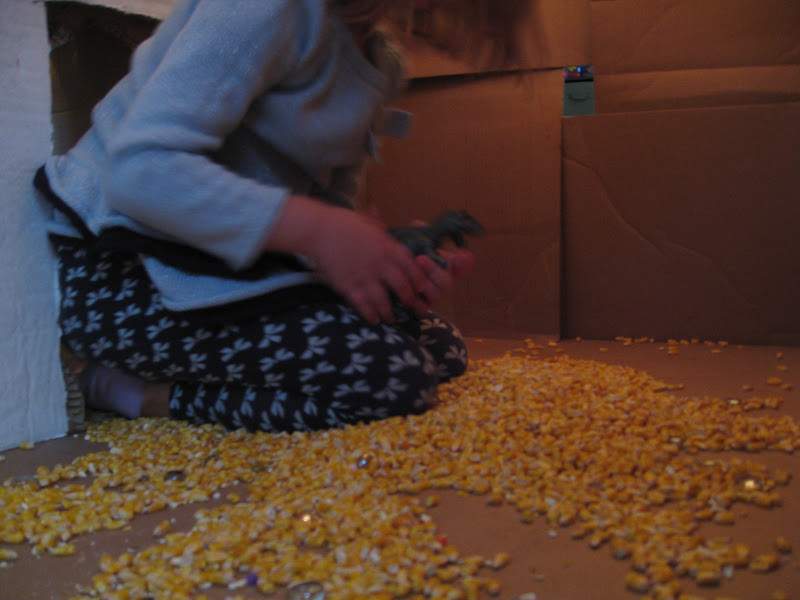
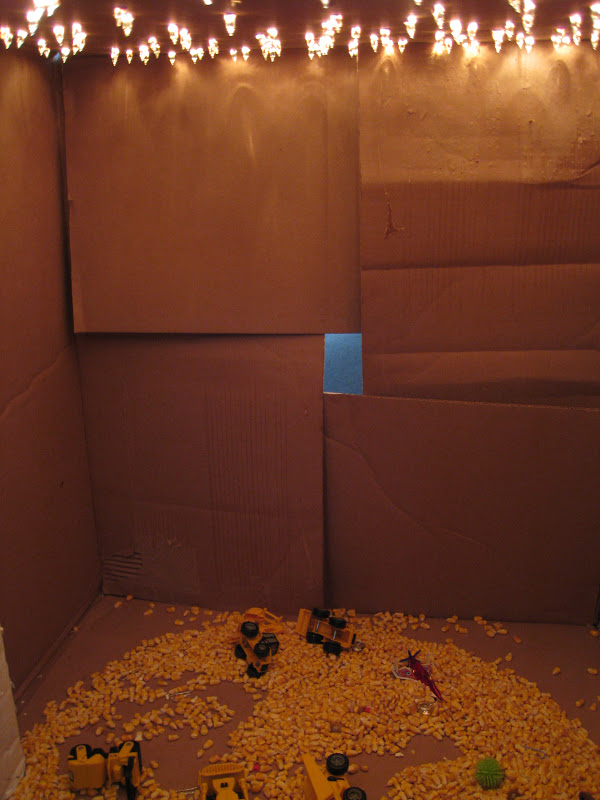
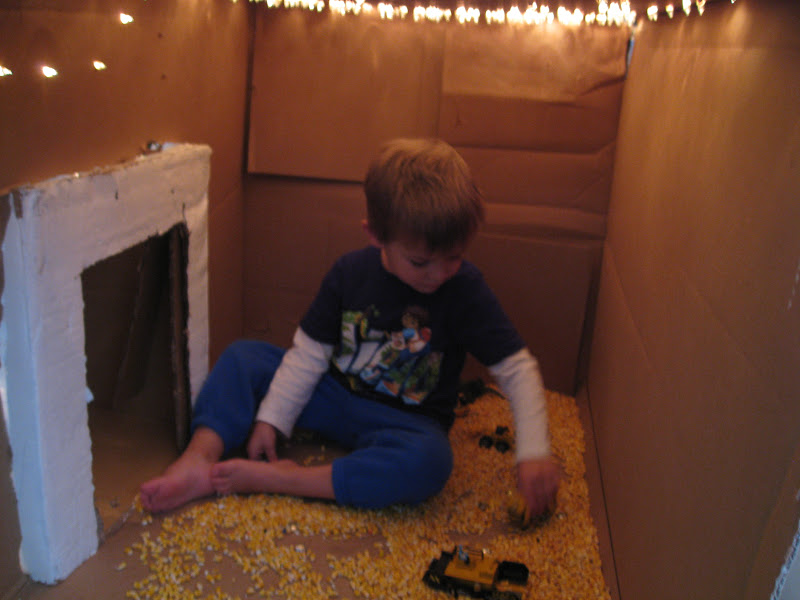
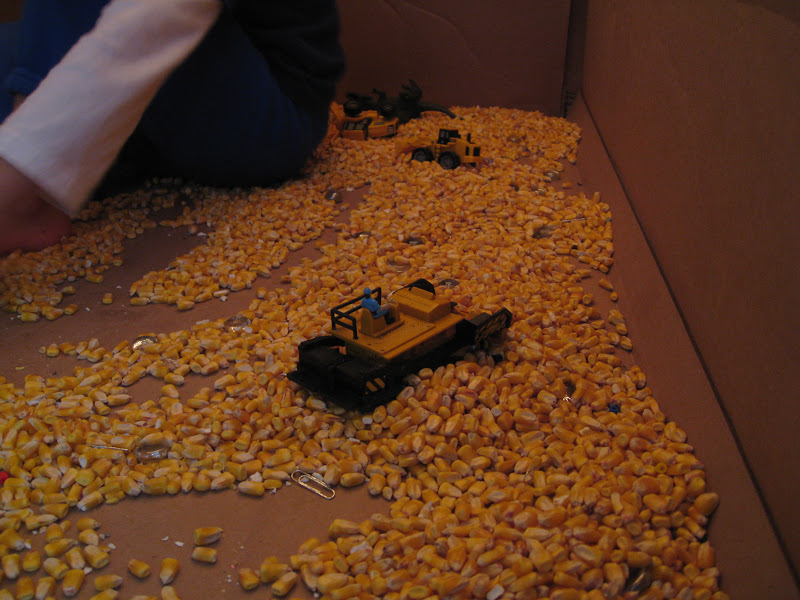
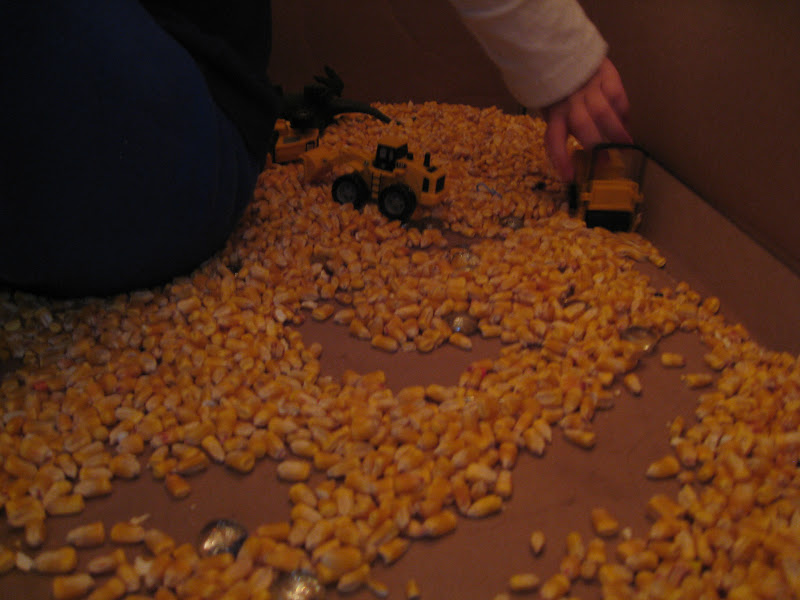
This sensory light box is an old blog post here on The OT Toolbox, but this Christmas light tunnel is one that my kids still talk about.
Creating a sensory-rich environment is essential for promoting optimal child development, and one innovative way to achieve this is through a DIY project like the one we made many years ago… the sensory light tunnel made from a cardboard box with Christmas lights.
Christmas Light Tunnel
This sensory play activity, often referred to as a “sensory light box” or “sensory light tunnel,” can be a fun addition to a child’s play space, providing both visual and tactile stimulation.
A Christmas light tunnel is exactly what you might imagine it to be…a tunnel made from cardboard boxes lit by Christmas lights that poke through holes in the box.
Making a sensory light tunnel is easy and inexpensive for parents and caregivers, making it a fantastic DIY project. Most of us have cardboard boxes available to us from deliveries, and Christmas lights are often times a household item.
The cardboard fort ideas we came up with many years ago come to life after the holidays when we were putting away Christmas lights for the year. WE used a few cardboard boxes, and taped them together to form a tunnel, creating a unique and inviting space for play.
Incorporating Christmas lights not only adds a festive touch but also introduces sensory lighting to the environment, fostering visual engagement and exploration.
Sensory Light Box for Babies
A sensory light box for babies and toddlers involves transforming a simple cardboard box into a magical tunnel of lights. The light box sensory play is designed to captivate young minds and enhance their sensory experiences. This DIY Christmas light tunnel serves as an indoor box fort, offering a cozy and imaginative space for children to explore.
The therapy providers will love this activity because it can be a calming and regulating sensory space in a home or in a calm down corner. For younger children, it’s a great way to encourage crawling.
Research supports the benefits of sensory play for child development. According to studies, sensory experiences contribute to cognitive, emotional, and social development in young children. The sensory cardboard box for babies provides opportunities for them to develop fine motor and gross motor skills, enhance spatial awareness for babies, and stimulate their senses in a safe and controlled environment.
For parents seeking research-backed information to support their child’s needs, this DIY light tunnel aligns with the principles of sensory processing, a well-established approach in occupational therapy for children with sensory processing difficulties. By incorporating Christmas lights into the sensory play, the child’s visual system is engaged, promoting attention, focus, and exploration.
We love this sensory light tunnel made from a cardboard box and Christmas lights for babies and toddlers.
It’s a great, inexpensive occupational therapy tool to use in therapy sessions and as a DIY recommendation for project for parents and caregivers, emphasizing the positive impact on child development through sensory play and exploration.
How to make a Christmas Light Tunnel
(Or a Light Tunnel from a cardboard box…)
I made this light tunnel for Baby Girl’s Twinkle Twinkle Little Star party. Babies love crawling through tunnels, playing in boxes. When I saw this, I knew my kids would love it in so many ways.
We used this light tunnel for the party, but have had it in our living room ever since the party and have used it in so many play activities.
All you need for this project is:
A large cardboard box (or several boxes)
Christmas lights
A Screwdriver or pencil
Duct tape (optional)
To make the Christmas Light Tunnel:
Use a screwdriver or pencil to poke holes into one side of a cardboard box. This side will be the top of the sensory tunnel, so think about which way you’ll want to position the box.
Poke each individual light of the Christmas light strands through the holes and into the box.
If you are creating a tunnel and have a second box, you can cut off the ends of the box to create a tunnel. then, use the duct tape to attach the boxes.
I started with two boxes and stuck them together by cutting a hole in one. I wanted two entrances since we have so many little little kids in our family.
It would be fun for them to crawl in one entrance and out the other. One box was a double stroller box that my sister-in-law had at her house. The big box, I grabbed up at an appliance store (before they crushed it down, apparently this happens fast when they unload appliances…the boxes go right into the compactor).
I stabbed the boxes with a screwdriver and stuck the Christmas lights in. Pretty easy!
This is what the Christmas light tunnel looks like from the outside.
Since the party, we have been using this as a calm down place to chill out with some pillows, blankets, and great books.
Today, I pulled out our bin of corn. The Big kids thought this was a really fun idea. They were so excited to put the corn in the light box.
The Sensory Lifestyle Handbook walks you through sensory processing information, each step of creating a meaningful and motivating sensory diet, that is guided by the individual’s personal interests and preferences.
The Sensory Lifestyle Handbook is not just about creating a sensory diet to meet sensory processing needs. This handbook is your key to creating an active and thriving lifestyle based on a deep understanding of sensory processing.
Colleen Beck, OTR/L has been an occupational therapist since 2000, working in school-based, hand therapy, outpatient peds, EI, and SNF. Colleen created The OT Toolbox to inspire therapists, teachers, and parents with easy and fun tools to help children thrive. Read her story about going from an OT making $3/hour (after paying for kids’ childcare) to a full-time OT resource creator for millions of readers. Want to collaborate? Send an email to contact@theottoolbox.com.
Whether you’re a parent looking to engage your little ones or a therapy professional wanting to host a messy play date at a Mommy and Me therapy clinic, we have you covered with this blog post. We’re talking all things messy play dates and how to set up a messy play day as a therapy tool for supporting child development through sensory play experiences.
Messy play isn’t just about the joyous chaos it brings; it’s a purposeful and therapeutic approach that can enhance a child’s cognitive, motor, and social skills.
For those new to the world of occupational therapy, messy play is more than just an excuse to get messy – it’s a powerful tool to stimulate the senses, encourage fine and gross motor skills, and support various aspects of child development. Throughout this post, we’ll provide explanations and suggestions in a way that’s accessible to everyone, whether you’re a seasoned professional or a parent navigating the vast landscape of child development.
How to Set up a Messy Play Date
If you’ve been thinking about hosting a messy play date, there are a few things to consider.
Disposable Gloves: Especially useful for activities involving substances that may irritate the skin.
Paper towels
Water
Mommy and Me Class
The occupational therapy practitioners here might be thinking about using these ideas for a Summer program with a messy play date theme.
You’ll want to decide if this is a play date for friends or a session that might be used with a therapy clinic or program. Often times, school based therapy providers are looking for ways to support needs of kids over the summer, but also are looking for a way to earn extra income over the summer months. A Mommy and Me messy sensory play day is a great idea.
There are so many ways to support sensory needs and sensory motor development with a sensory play date. This is a great cash-based clinic that you can host at an occupational therapy clinic. We love coming up with summer programming in a summer
Here is information on how to run a therapy camp for a cash-based program or a special event hosted by therapy.
Here is information on setting up a summer sensory camp, and doing a messy play date theme is perfect for this.
Messy Play Dates
If you’ve been to a play date with little ones, you might not be expecting a giant sensory mess. However, a play date designed as a sensory experience can be so beneficial for kids.
We had a messy play day party here at our house this summer. I only wish I had more pictures from the day…I guess my hands were either covered in yuk, or holding the baby (or both) and didn’t have the camera nearby…There were so many FUN moments!
The benefit is that through sensory touch, messy play activities support development in several areas: tactile sensory exploration, tactile challenges, problem solving, communication and language development, fine motor skills, self-care skills (washing hands and putting on a cover-up, etc.) We love messy play!
As an OT, I see SO many benefits of doing messy play with kids. They have NO IDEA they are working on their creativity and fine motor skills, enhancing the learning process, promoting language, and fostering social development! All they think is “WOW, I have a cool Mom!” 😉
I thought I would put the recipes and tips for a messy playdate all in one place. Here!!
We made Goop, Clean Mud, Driveway paints, Dryer Lint Paper Mache, Moon Dough, & Green Spaghetti. I also had Shaving Cream, Bubbles in a baby pool, and Jello to play with.
Goop Recipe
GOOP is the coolest stuff to play with! It’s solid…it’s liquid…it’s messy! Here’s how you make it:
1/2 cup cornstarch
1/4 cup water
Food color
Mix cornstarch and water and color. (You can make a whole water table full keeping the ratio of cornstarch to water 2:1).
Pour into a bin with a lid. Observe and explore. There will be no finished product — just exploration and fun. It can be reused, just store in an airtight container….add spatula, slotted spoon, scoops for added fun.
Tip: cornstarch can be found at Bottom Dollar for 99cents/box!
OoBleck Messy Play
Mix cornstarch and water to create Oobleck, a non-Newtonian fluid with unique properties. Children can squish, squeeze, and explore its texture, promoting sensory integration and fine motor coordination.
We have a recipe and oobleck activities that are great for more messy play day ideas.
Clean Mud Recipe
CLEAN MUD is so fun. The process to make it is easy and cool for the kids, too. Even Baby Girl got into the toilet paper shredding action!
Shred 2 rolls toilet paper into Rubbermaid bin…(it doesn’t have to be shredded real small, I would pull maybe 10 layers away from the roll and then tear into 2-3 square chunks).
Remove the wrapper from a bar of Ivory Soap, put in glass dish. microwave for 2 min…it will blow up like a cloud.
Add soap and warm water to the toilet paper. Mix to a consistency like mud. You may have to add more hot water as needed.
We played with this at the toy kitchen set in the driveway (there were no battery operated parts on this kitchen…important when hosing down to clean up)…You could just play with it in the bin, but we added containers from our recycle bin, glitter, and spatulas, and scoops for “cooking fun”.
Tip: Use single ply toilet paper. Double ply will change the consistency and you will need more soap/water. Look for Ivory soap coupons that are out there. I was able to buy the soap for 35cents for a 3 pack!
DriveWay Paint Recipe
DRIVEWAY PAINTS We did this last year too, and my kids LOVE it! They drew all sorts of pictures & words all over our driveway. This is super easy to make.
Mix flour and water to a paint-able consistency.
Add food coloring. We used paint brushes that we had in the garage. Big Sister loved helping me mix these paints up.
Tip: If you use too much flour, it will be harder to wash away the paints from your driveway. The rain will eventually take it away, but you may have a little reminder of your fun for a while. This year, my paints were more watered down and they washed away with just a little squirt from the hose.
Dryer Lint Paper Mache
DRYER LINT PAPER MACHE is the weirdest consistency! Still fun to play with, but…interesting!
Here’s what you need to make dryer lint paper mache:
3 cups of dryer lint
2 cups of Warm Water
2/3 Cup of Flour
Put the dryer lint in a large pot. Slowly add the warm water, so all the lint gets wet. Add the flour slowly and stirring well.
Cook this mixture, stirring constantly until it forms peaks and holds together. Pour the mache onto a surface ( I used a large throw-away casserole tin) and let cool.
After it cooled, we used it to cover balloons, but there really was so much going on at the party that this station was forgotten about for the “cooler” areas. This might be neat to try covering a balloon like traditional paper mache.
Moon Dough Recipe
MOON DOUGH…Most of the recipes you find online will use baby oil. I used vegetable oil since I had a ton here. It worked pretty well and I would make it this way again.
The ratio is 1 cup of oil to 2 cups of flour. We played with this in a big Rubbermaid bin, adding sand molds and spoons.
Tip: Store this in a covered container and it will keep. Pull it out when the kids need an activity!
Spaghetti Sensory Play
GREEN SPAGHETTI was a HIT with Baby Girl and the other babies! I had been given 4 boxes of spaghetti.
To color cooked pasta:
Cook it in boiling water, Strain, and run cool water over the noodles to keep it from sticking.
Pour the cooked spaghetti in a big bin and add more water so the noodles don’t dry out…eyeball this. You don’t want spaghetti soup!
Add food coloring and stir. I used green coloring and then poured the whole thing into a blow up baby pool right before the party. We added little plastic dinosaurs to the whole mix for added fun.
Tip: Put the baby pool on a tarp for babies who love crawling in and out of baby pools! You will find green spaghetti noodles all over your yard…
messy play shaving foam
Another easy messy play date activity is using messy play shaving foam, or non-scented shaving cream. You can play in a sensory bin or just go full messy by playing out in the driveway.
If you are setting up a shaving cream sensory bin, it’s a pretty easy set up.
Fill shallow bins with shaving cream.
Hide small toys or objects inside.
Kids can dive in, searching for treasures while experiencing the unique texture of the shaving cream. This activity enhances tactile sensitivity and hand-eye coordination.
SHAVING CREAM was a fan favorite. I had some Moms bring a can with them, but was able to find unscented shaving cream at the Dollar Tree. This was the biggest chunk of money spent on this party…$6 on 6 cans of shaving cream…not too bad!
We pulled the plastic Little Tykes picnic table onto the driveway and let the kids spray the shaving cream all over the table to draw, write, mix, etc. Most kids (and the poor nearby tree) ended up with shaving cream ALLLL over them…and had a BLAST!
Tip: Buy UNSCENTED shaving cream. Or your children will smell like old men 🙂
bubble foam sensory play
Next, you can make some bubble foam sensory play using a large bin or a baby pool.
BUBBLES IN THE BABY POOL is so simple and so much fun! I had a free sample of Dawn dish detergent (maybe a 4 oz bottle?) that I squirted all over the bottom of a baby pool.
Add an inch of water from the hose, putting the nozzle at full blast. The bubbles will mound up. You may have to use your hand to get more bubbles.
Tip: Cut a funnel out of the top of a 2 gallon milk jug, keeping the handle on, for extra bubble fun.
jello sensory bin
You can also create a Jello sensory bin using toys like alphabet magnets or mini dinosaurs that are molded into the Jello.
JELLO is so easy and fun if you add unexpected items. We had a ton of ABC fridge magnets and added these to green jello before it set. You can find Jello at great prices if you use a generic brand.
Tip: Jello is a great consistency for sensory play, but ants will love it too! Put the bin on a tarp for easier clean up.
The party finished with a great mixture of clean mud, green spaghetti, moon dough, and shaving cream in the play kitchen. What fun and awesome memories!!
Messy Finger Painting
Another fun messy play date activity is messy finger painting.
Set up a designated area with large sheets of paper and non-toxic finger paints.
Encourage children to explore the texture of the paint with their fingers, promoting fine motor skills and sensory exploration.
Edible Play Dough
One messy play date idea that is great for all ages is making edible play dough. You could even get the kids involved with making the edible play dough recipe. We love this marshmallow play dough recipe because it offers so much heavy work and proprioceptive input to calm and organize the body.
If you don’t want to make edible play dough, you can use any play dough recipe. There are so many benefits to playing with play dough that kids get all of the sensory benefits even when a recipe is not edible.
Here are all of our best dough recipes which have many different sensory benefits depending on the play dough ingredients.
Make edible playdough using ingredients like flour, salt, water, and food coloring. Kids can mold shapes, fostering creativity, and engage in tactile exploration.
water balloon splatter painting
Water Balloon Splatter Painting is a fun and messy activity for all ages. Fill water balloons with washable paint, and let the kids toss them onto large sheets of paper.
The burst of colors creates a beautiful masterpiece, while the physical act of throwing promotes gross motor skills.
Ice Painting
Ice painting is a fun and sensory messy play date activity and you can do this several different ways:
Freeze paints mixed with water into ice cube trays. Add a popsicle stick and use the frozen ice cubes to paint on paper as they melt
Freeze paints mixed with water into ice cube trays. Then smash the ice cubes onto paper using hammers. We smashed ice cubes with hammers and the end result was gorgeous. You can also have kids jump on the ice cubes.
Dip frozen ice cubes into paint and paint with the ice onto paper. The paint and water will mix to swirl the colors as the ice melts.
Stamp ice cubes frozen into different shapes onto paint and then onto paper. Stamping with ice cubes encourages hand-eye coordination and introduces children to the concept of making impressions with different objects.
Another way to incorporate messy sensory tactile input is by stomping on bubble wrap. 1. Lay out a sheet of bubble wrap on the floor.
2. Secure it with tape.
Allow the kids to stomp, jump, and dance on the bubble wrap. This activity enhances proprioception, the sense of body awareness, and provides a sensory-rich experience.
mud sensory play
Mud Pie Making is an easy and messy sensory activity. Set up a “mud kitchen” with pots, pans, and bowls filled with a mixture of soil and water. Kids can engage in imaginative play, promoting social interaction, and work on their fine motor skills while creating mud pies. You could also create a snow kitchen if the weather is cold.
Colleen Beck, OTR/L has been an occupational therapist since 2000, working in school-based, hand therapy, outpatient peds, EI, and SNF. Colleen created The OT Toolbox to inspire therapists, teachers, and parents with easy and fun tools to help children thrive. Read her story about going from an OT making $3/hour (after paying for kids’ childcare) to a full-time OT resource creator for millions of readers. Want to collaborate? Send an email to contact@theottoolbox.com.