Colleen Beck, OTR/L is a pediatric occupational therapist and the owner and author of The OT Toolbox website. She manages all of The OT Toolbox social media accounts and runs the popular newsletter.
Read about Colleen's experience and career as an occupational therapist, including how The OT Toolbox began on our About The OT Toolbox page: https://www.theottoolbox.com/about-us/
Colleen created The OT Toolbox in 2011 and since then has written thousands of blog posts designed to support therapy providers, educators, parents, counselors, admin, and caregivers in promoting the healthy development of kids.
Check out Colleen's blog posts below:
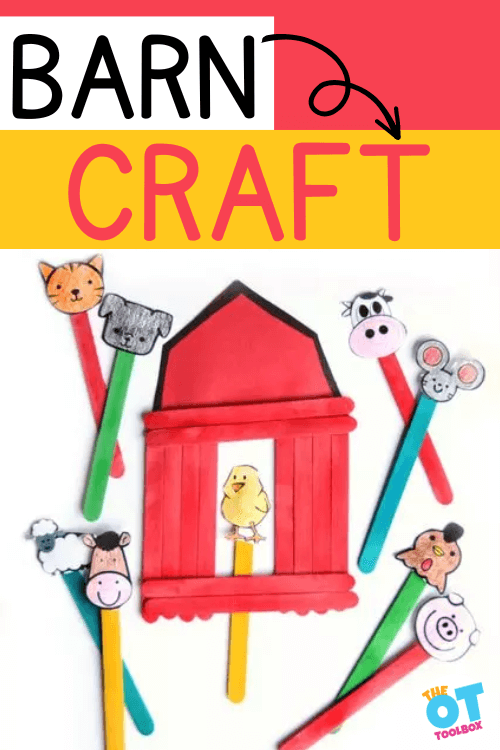
Looking for a fun barn craft to go with your favorite preschool book or farm theme? Get ready for an exciting and educational craft that your little ones will absolutely love. Inspired by the timeless children’s book “Big Red Barn,” we have a fantastic barn craft that not only brings the story to life but also helps develop those all-important fine motor skills. It’s the perfect activity to build precision and coordination skills while gaining the dramatic play benefits of puppets.
So gather your materials and prepare for a barn-building adventure that will have preschoolers buzzing with joy and learning. Let’s dive into this Big Red Barn activity create something wonderful together!
As an Amazon Influencer, I earn from qualifying purchases.
Barn Craft
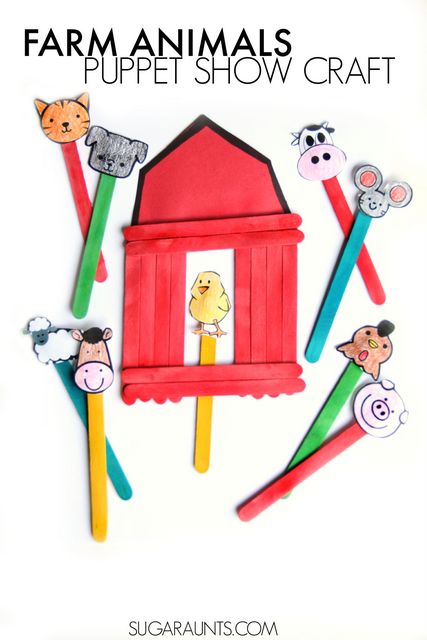
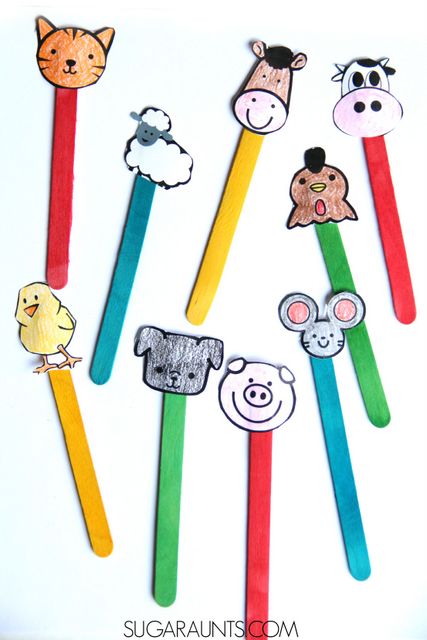
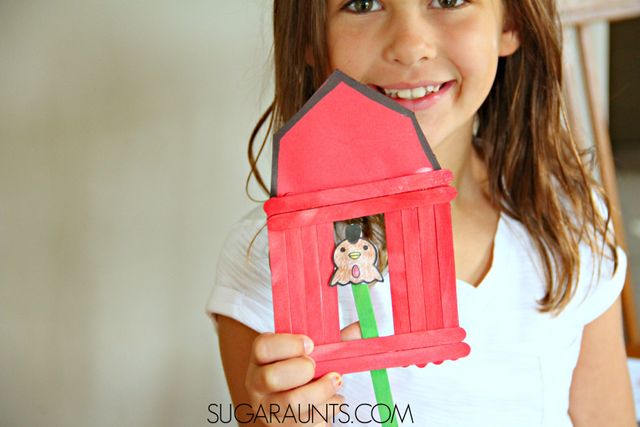
This month for our Book Club Play Date series we’re sharing a craft based on the book, Big Red Barn. What a fun book for preschool aged children! (And, don’t tell, but my older kids really got into this book, too!) We made pretend play Farm Animals Puppets and a barn craft puppet show stage, perfect for farm pretend play. This fun craft goes perfectly with a fun farm animal book!
Big Red Barn (affiliate link) by Margaret Wise Brown is a quiet and calming book with it’s tone and rhythmic text.
The Farm is full of life and this book is all about the animals. We see how the animals play and explore while the children are away. The detailed illustrations are creative and my kids loved looking for the tiny mice or butterfly on the pages of the book.
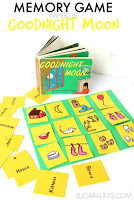
This was a new book to us, but it quickly became a hit in our house. Margaret Wise Brown also authored Goodnight Moon (affiliate link) (one of our favorites! Remember our Goodnight Moon Goodnight Moon Memory Game?) It was fun to talk about the author and recall parts of Goodnight Moon that appear in this book–the barn in the picture, the mouse, and the moon.
We wondered if the Big Red Barn from our story was the same as the barn in the picture in Goodnight Moon. We love coming up with extension activities based on children’s books (more than a little bit!) and this book and activity rose to the top of our favorites!
Big Red Barn craft
You’ll need a few materials for your barn craft and puppets. Affiliate links included below:
This barn craft is perfect for preschoolers. It’s not complex, and the 2D barn is perfect for encouraging bilateral coordination skills and crossing midline while using the printable farm animal puppets.
First, we made the barn craft:
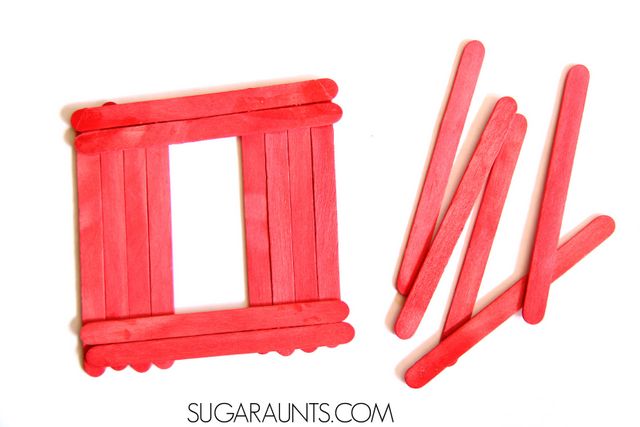
Arrange the red craft sticks (affiliate link) like we did in the picture above.
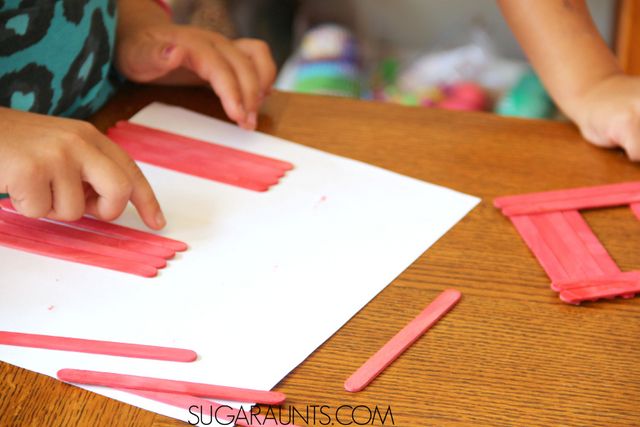
Use glue to stick the top and bottom sticks on top of the vertical sticks. I made a barn as my preschooler copied the steps beside me. This was a good way to practice direction following with visual cues. I was sure to craft my barn slowly so she could follow along with hers.
Count out the Popsicle sticks as you go. We used 12 red sticks all together. You’ll want to make your barn on a piece of paper or waxed paper for easy transporting as it dries.
4. Then we used a piece of Red cardstock(affiliate link) to make the barn roof. Simply cut the roof into an angled shape. I had the roofs already cut out and showed my daughter how to glue it onto the back of the Popsicle stick barn.
5. You’ll need to let the barn dry for a few hours or overnight. Just let it rest right on the paper.
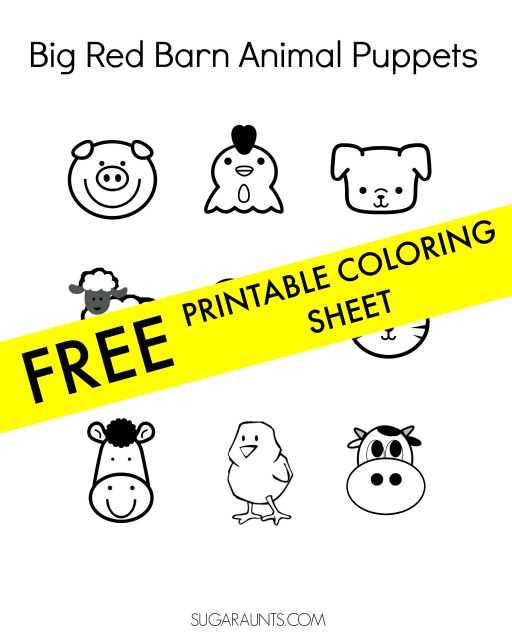
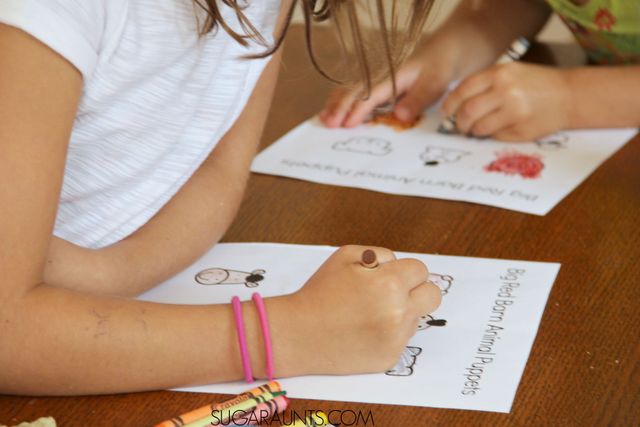
6. Next, color in our Barn Animal Coloring Sheet. You can get the free printable below.
7. Cut out the animals and tape onto craft sticks
Once the barn has dried, you’ll be ready to play Barn Puppet Show with the farm animals. Act out the story in Beg Red Barn, or create your own farm animal stories. We had a lot of fun with our barn puppet animals.
Big Red Barn Activities
Looking for more Big Red Barn activities? Use some of our farm ideas:
See what the Book Club Playdates team have created to go along with this book. With a snack, game, and sensory activity, you’ll have this book covered for your Preschool Book Club:
Use these barn animal puppets along with your barn craft. This resource is also found inside our Member’s Club, under the Farm Therapy Theme. Members can log in and access the resource on our Farm Therapy Theme page (Level 2 Members) or on our Fine Motor Freebie Downloads along with all of our free downloads (Level 1 and Level 2 members).
Colleen Beck, OTR/L has been an occupational therapist since 2000, working in school-based, hand therapy, outpatient peds, EI, and SNF. Colleen created The OT Toolbox to inspire therapists, teachers, and parents with easy and fun tools to help children thrive. Read her story about going from an OT making $3/hour (after paying for kids’ childcare) to a full-time OT resource creator for millions of readers. Want to collaborate? Send an email to contact@theottoolbox.com.
Print off all of the Farm themed resources inside the Farm Therapy Kit, which contains 93 pages of farm activities to target fine motor, gross motor, visual motor, self-regulation, scissor skills, handwriting, and more!
In this blog post, we cover resources on adult sensory processing disorder. So often, as occupational therapists, it’s the pediatric realm that we thing about regarding SPD (sensory processing disorder). However, due to more overall knowledge of sensory processing disorder in adults, access to sensory processing disorder information, and increasing diagnoses among adults, there is more awareness. In this blog post, we’ll cover what sensory processing disorder looks like in adults, sensory overload in adults, and how to support sensory sensitive adults.
As an Amazon Influencer, I earn from qualifying purchases.
When it comes to sensory processing disorder, adults may struggle just as much as children. There is no better time than now to get adults the resources and tools they need to support sensory processing challenges that impact functioning.
We all have a personal bubble, or comfort area when it comes to personal space. All of us have some level of comfort that just becomes “too much” or “too little”. Think about riding a crowded elevator. When you are in that crowded, small space for more than a minute or two, the awareness of how close others are to you becomes very apparent. Being aware of sensory processing in adulthood is a lot like that awareness!
Sensory Processing Disorder in Adults
A reader reached out recently and requested information related to adults with sensory processing disorder. Below is curated content on adults with sensory processing difficulties to accommodate sensory needs in order to live full and functional lives.
Note: The information included below (and, like everything on this website) is not a substitute for therapy assessment, intervention, or medical advice. Please contact a physician or Occupational Therapist to assess and intervene.
In this day, many of us are more informed on everything! The internet and accessibility of information allows us to be knowledgeable beings more so than in past generations. At our fingertips is the ability to ask any question and receive immediate answers. It might be because of this that more and more adults are recognizing their own sensory issues or needs.
About 5-16% of children live with sensory processing disorder. When we think about adults who may have been suffering with undiagnosed sensory processing disorder, there are potentially many, many more individuals who struggle with sensory challenges.
Sensory processing disorder typically presents itself as a response in various, but common ways:
Tactile Functioning- Clothing, being in crowds, light or unexpected touch, etc.
Vestibular Functioning- Riding in cars, elevators, escalators, uneven surfaces when walking, flying, amusement park rides, etc.
Auditory Functioning- Loud or sudden sounds, sounds that don’t normally affect others like chewing, fingernail clipping, etc.
Motor Functioning- Clumsy with gross motor tasks including driving, operating the vacuum, movement changes, etc.
Online Resources for Adults with Sensory Processing Differences
There is a lot of information related to adult sensory processing disorder available online. These resources include:
2. Adult Sensory Processing Checklists- Here is another checklist for adolescents and adults to identify potential red flags of sensory processing disorder. This checklist is broken down into sensory modulation issues, sensory discrimination difficulties sensory-motor struggles, social or emotional regulation challenges, and internal regulation difficulties.
Sensory Processing Disorder Books for adults with SPD
It’s very possible that adults with sensory processing differences had the challenges and sensory sensitivities as a child. As an adult, these sensory challenges may impact work, adult-appropriate self-care tasks, Instrumental Activities of Daily Living (IADLs) like caring for the home, navigating in the community, caring for children, or many other aspects of adulthood.
Compounding the sensory overload that may occur in adults, we have greater demands: paying bills, household management, keeping children’s schedules, work tasks, social media input, mental health needs, and many other issues that impact overall wellbeing.
We know that emotional regulation is related to executive functioning skills, meaning that challenges with “keeping it together” when sensory overload occurs impacts cognitive skills like problem solving, managing time, staying organized, setting priorities, planning and organizing, prioritizing, initiating tasks, and adapting behaviors and actions to achieve goals.
It’s natural that as adults, we notice these sensory issues that impact daily functioning and with all of the information available, we can determine the need to seek out information that relates to us.
We wanted to pull together a list of resources that offer information on sensory processing disorder adults may experience on a day to day basis.
It’s important to note that self-diagnosis is not a substitute for professional evaluation and diagnosis by a qualified healthcare professional, if you think that sensory overload is something you experience as an adult.
Only a trained specialist can provide an accurate diagnosis of SPD or any other medical condition. With that in mind, here are some things you can potentially learn from a book on the topic:
Understanding SPD: Books on SPD can provide you with an in-depth understanding of what sensory processing disorder is, its symptoms, and how it affects individuals. It can explain the different types of sensory processing difficulties, such as hypersensitivity or hyposensitivity, and how they can manifest across various sensory modalities (e.g., auditory, visual, tactile, etc.).
Common Signs and Symptoms of Adult SPD: A book might outline common signs and symptoms associated with SPD. It can describe how individuals with SPD may struggle with processing sensory information, leading to challenges in daily life activities and interactions. This can include difficulties with sensory modulation, discrimination, and sensory-based motor skills.
Case Studies and Personal Experiences: Many books on SPD include case studies and personal experiences shared by individuals who have been diagnosed with or have lived with SPD. These stories can provide valuable insights into the challenges faced by individuals with SPD and help you relate your own experiences.
Sensory Screening Tools and SPD Checklists: Some books may include self-assessment tools or questionnaires that can help you understand your own sensory processing patterns. These tools can guide you in identifying areas of sensory sensitivity or sensory-seeking behaviors that you might exhibit.
SPD Coping Strategies: A book on SPD can provide strategies, techniques, and interventions that can help individuals manage sensory processing challenges. These might include environmental modifications, sensory diet plans, mindfulness techniques, or occupational therapy exercises that can be beneficial.
Professional Resources and SPD Support: Books can also provide information about professional resources, such as licensed occupational therapists or sensory integration specialists who specialize in assessing and treating SPD. They may also recommend support groups or online communities where you can connect with others who have similar experiences.
These sensory processing disorder books can support the individual seeking information on sensory issues in adults:
So, if you think you may have tendencies toward sensory processing challenges that impact daily task completion, it might be beneficial to take stock of what’s occurring in your daily life. We’ve previously covered sensory processing red flags for children, and that’s a good place to start, because many of the signs of sensory overload can exist through adulthood. A checklist of signs of sensory overload can be one way to start identifying needs.
Sensory overload in adults can look different than sensory overload in children, however. Adults have greater tasks, more complex daily tasks, often juggling work, caring for children, social media input, and much more. All of this together impacts sensory overload in addition to the considerations listed below. The compounding effect is monumental.
Adding to the impact is the effect on the whole family. Family wellness, when stressed, affects the overall family dynamics and well-being in several ways:
Each of these areas carries over to the children and other members of the family.
Signs of sensory overload in adults (remember that not all of these sensory challenges will exist for every individual and that the existence of one or more of the following signs are not an indication of SPD):
Hypersensitivity (over-responsiveness) to sensory stimuli such as noise, touch, light, smell, or movement
Hyposensitivity (under-responsiveness) to sensory stimuli such as noise, touch, light, smell, or movement
Seek out intense sensory experiences, such as constantly touching objects or seeking deep pressure.
Avoid certain sensory experiences, such as avoiding certain textures, sounds, or movements
Certain types of sensory inputs are overwhelming or distracting
Struggles with transitions and changes in routine
Difficulty filtering sensory information-feeling overwhelmed by sensory input
Sensory overload or fatigue when exposed to excessive or prolonged sensory stimulation
Difficulty concentrating as a result of stimulation from the environment
Feelings of stress, anxiety, irritability
Difficulty focusing on relevant details
Difficulty shifting their attention
Easily distracted or overwhelmed by sensory input
Trouble adapting to new environments
Difficulty focusing or concentrating on tasks
Trouble staying calm
Constantly fidgeting
Constantly seeking tactile stimulation
Constantly seeks out specific sensory experiences (e.g., rocking, spinning, touching things)
Feeling overwhelmed in noisy or crowded environments
Overwhelmed by bright lights
Challenges with social interactions
Heightened anxiety, stress, irritability, or mood swings in response to sensory triggers
Difficulty with transitioning between tasks
Struggles with personal space boundaries
Feeling overwhelmed by strong smells or textures
Intense emotional responses to situations
Difficulties with motor tasks that require coordination
Feelings of “meltdown”
Aversions to certain tastes or textures
Difficulty with engaging in conversations in noisy environments
Difficulties tolerating textures of toothpaste or foods
Unable to tolerate certain textures of clothing
Difficulty interpreting non-verbal cues from others in social situations
Challenges with engaging in daily tasks
sensory issues in adults at the workplace
Because of the demands of everyday life, work must happen even when sensory issues impact the day to day! An adult with Sensory Processing Disorder (SPD) may face various challenges in the workplace, depending on the sensory input that occurs, job requirements, and levels of sensory processing needs.
These sensory sensitivities can lead to dysregulation that impacts job performance. Some of the ways in which an adult with SPD may struggle at work might include:
Sensory overload at work- Work environments can be sensory-rich and overwhelming for individuals with SPD. The presence of bright lights, loud noises, strong smells, or open office layouts can lead to sensory overload, making it difficult to concentrate, stay focused, and process information effectively.
Difficulty filtering distractions– Adults with SPD may have difficulty filtering out irrelevant sensory information and may be easily distracted by background noises, office chatter, or visual stimuli. This can make it challenging to maintain attention on tasks, leading to reduced productivity and increased errors.
Sensory sensitivities in the workplace- Sensory sensitivities can affect an individual’s comfort and ability to engage in certain work-related activities. For example, individuals with tactile sensitivities may struggle with wearing certain types of clothing or using equipment with specific textures. Sensitivities to smells or sounds may make it challenging to tolerate certain workplace conditions or tasks.
Motor coordination challenges impacting the job- Some adults with SPD may experience difficulties with fine motor skills, gross motor skills, or both. Fine motor challenges can impact tasks that require precise hand movements, such as typing, writing, or using small tools. Gross motor challenges may affect activities that require coordination or balance, potentially impacting jobs that involve physical tasks.
Work Transitions- Individuals with SPD may struggle with transitions and changes in routine. This can make it difficult to adapt to new tasks, switch between projects, or handle unexpected changes in the work environment. These challenges can lead to increased stress, anxiety, and difficulty adjusting to workplace demands.
Social Interactions in the Workplace- Some individuals with SPD may face challenges in social interactions at work. Difficulties with interpreting non-verbal cues, maintaining appropriate personal space, or understanding social dynamics can make it challenging to build relationships with colleagues or navigate workplace communication effectively.
Emotional Regulation in work situations- Sensory processing difficulties can impact emotional regulation, leading to heightened stress, anxiety, or emotional outbursts. Workplace stressors and sensory triggers can contribute to difficulties in managing emotions, potentially affecting interactions with coworkers and overall job satisfaction.
Support for Adults with SPD
For the adult with sensory processing differences, there is support. Awareness and understanding is one of the biggest steps one can take!
Adults who have always had sensory sensitivities may be more aware or have access to information that wasn’t in place when they were a child. Looking into diagnoses such as Autism or ADHD can be part of the overall plan to seek support.
From there, coming up with coping strategies is essential to daily task and work completion.
When sensory differences impact work, requesting workplace accommodations, such as adjustments to the physical environment or flexible work schedules, can help create a more supportive and inclusive work environment.
Finally, working with healthcare professionals, such as occupational therapists, OTAs, or psychologists can also provide strategies and support tailored to managing SPD challenges in the workplace.
References: May-Bensen, T. “Occupational Therapy for Adults with Sensory Processing Disorder”. OT Practice. June 2009: 15-19.
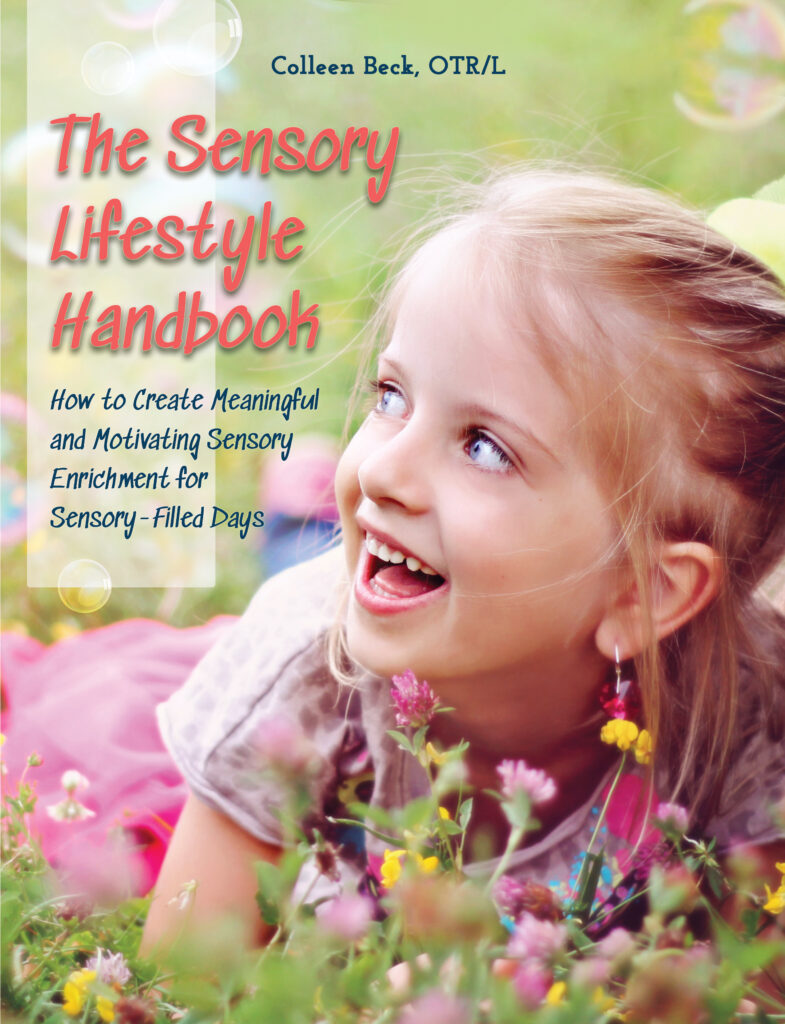
The Sensory Lifestyle Handbook walks you through sensory processing information, each step of creating a meaningful and motivating sensory diet, that is guided by the individual’s personal interests and preferences.
The Sensory Lifestyle Handbook is not just about creating a sensory diet to meet sensory processing needs. This handbook is your key to creating an active and thriving lifestyle based on a deep understanding of sensory processing.
Colleen Beck, OTR/L has been an occupational therapist since 2000, working in school-based, hand therapy, outpatient peds, EI, and SNF. Colleen created The OT Toolbox to inspire therapists, teachers, and parents with easy and fun tools to help children thrive. Read her story about going from an OT making $3/hour (after paying for kids’ childcare) to a full-time OT resource creator for millions of readers. Want to collaborate? Send an email to contact@theottoolbox.com.
To the child with sensory sensitivities, a family road trip can mean sensory overload. Summer break brings long car rides as the family road trip is an essential during the summer months. But how do you prevent sensory dysregulation on a long car ride? In this blog post, you’ll find sensory strategies for road trips including ideas for road trip tips for kids with sensory issues and an oral motor sensory break that helps with sensory needs during car rides.
Get ready for your next road trip while addressing sensory needs!
Sensory Strategies for Family Road Trips
Surviving a long family road trip when a member of the family has sensory sensitivities can make a long car ride challenging. For those with sensory processing disorder, Autism, ADHD or other neurodiversities, sensory sensitivities can make long car rides difficult.
Preparing in advance to support the sensory sensitive individual can make all the difference! In fact, the sensory strategies listed below can support any individual, as we all have differing sensory needs.
These sensory activities for car rides can be used for any age. This is a plan to have in place to prepare for the long car ride when sensory processing needs impact the ability to sit in the car to get to the destination.
Create a sensory story to talk about the trip in advance. Use the travel sensory story to guide use of sensory tools during the road trip.
Pack preferred sensory tools. These items can be placed in the vehicle or alongside the child while travelling so they can access the sensory tools during the roadtrip.
Movement breaks! Stopping in advance of breakdowns is critical. Plan out stops in advance so you know when the next stop is. If possible, plan out stops according to location. Use local playgrounds as areas to run and play during road trip stops.
Use a “crazy straw” in a cup. The smaller opening is great for oral motor input.
Make a sensory kit with fidgets or other sensory tools
Play “Simon Says” with mouth exercises: Suck cheeks in/puff cheeks out/Make a big “O” shape/Stretch out the tongue. You’ll find many on our Simon Says commands blog post.
Make a chewy snack holder (below) along with the kids to plan for sensory needs during the long car ride.
Use a partially deflated beach ball as a sensory cushion on the floor. The individual can move their feet on the wiggle cushion.
Oral motor sensory break for road trips
If you’ve ever taken a road trip with kids then you know how nerve wracking a long trip can be for the kids and the parents. Long road trips with the family are definitely fun. They are certainly stressful and chaotic times with sibling love and revelry, but definitely memory-making. Whether you have one child or 6, a road trip involves planning, especially when sensory needs are at play.
You prepare the books, the activities, the snacks, the music, or videos. You can prep it all, but no matter what, there will be craziness that only kids can bring. There are the potty emergencies that happen 20 minutes after you left the rest stop. There are the drink spills that saturate the car seats. There are spilled toys and fights that break out among sisters. But through it all, you’re plowing 65 miles an hour to memories.
But, when all of this chaos is happening, you can take mini-sensory breaks that will give the kids a chance to calm down the fidgets and the wiggles.
As an occupational therapist in the school-based setting, I often times made recommendations to parents and teachers for kids who needed to move during the span of a class or school-day.
Unfortunately, when you are travelling long distances in a car on a road trip, you can’t always stop and get out to move and stretch. There are definitely times that a rest stop is needed and those are the perfect times for kids to get out of the car and run a bit.
But, when you are stuck in a van or car for a while, sometimes kids just need to have a sensory break. This is true for typical kids or kids with sensory processing disorders (and parents, too)!
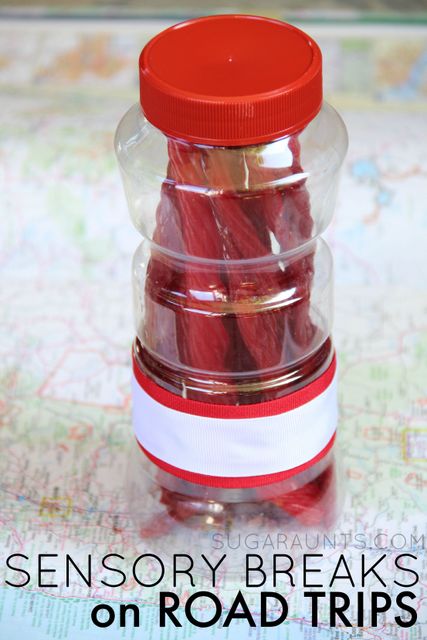
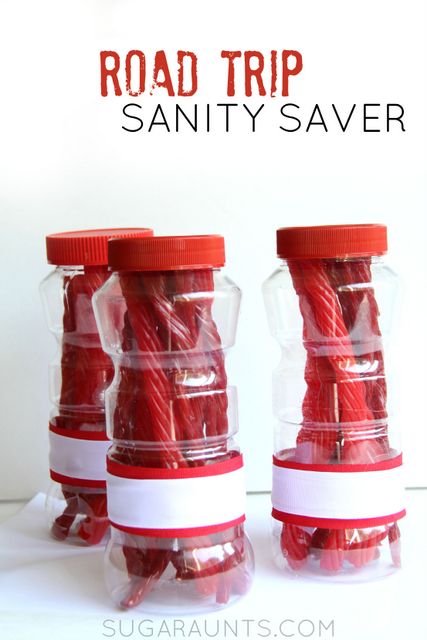
We made these snack bottles to help with calming sensory input using Twizzlers Twists.
Sensory Processing Disorder (and types of sensory needs, outlined in our Sensory Lifestyle Handbook) in children can present with many different sensory needs due to difficulties with modulating sensory input.
The long car ride of a family vacation can cause sensory overload or a lack of sensory input to kids who need help regulating input. Whether a child with sensory processing disorder is sensory seeking, under-responsive to sensory input, or sensory defensive, oral motor sensory integration activities like chewy beef jerky sticks, twizzlers, licorice chews, or fruit leather can help.
The repetition of chewing a licorice twist can help to calm and regulate sensory needs.
Related, please check out our resource on Ayres Sensory Integration for an understanding on the theory of what is happening in our sensory systems.
How To make a Road Trip Sensory Snack
With kids, a road trip almost guarantees a messy car with crumbs and spills. We wanted to create a container that would hold our Twizzlers or licorice twists and keep the mess on the lower end. A cute container is bonus, so we pulled out the ribbons and glue gun.
These snack holders will keep our Twizzlers or fruit chewsready for kids (and the parents) that need a quick sensory break during a long trip:
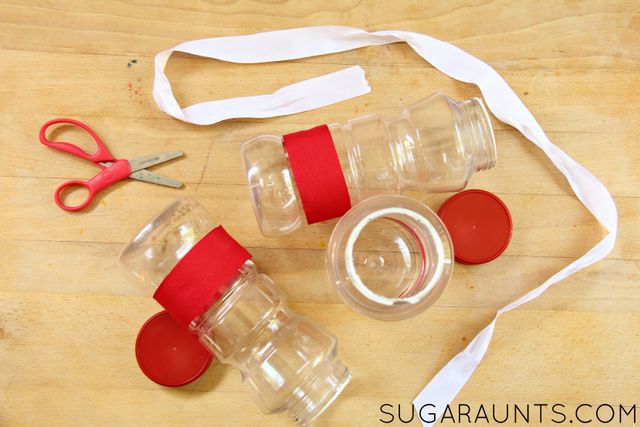
Gather a few tall plastic jars from the recycle bin. We used recycled peanut jars and loved that the lids coordinated with our Twizzlers Twists!
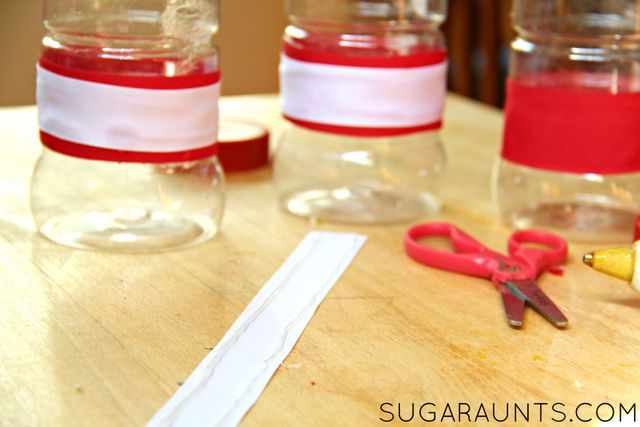
Grab a strand of ribbon and the glue gun to make these jars something special.
Cut the ribbon to fit around the jar. Using the hot glue gun, attach the ribbon. You can layer on colors, or get the kids involved in decorating by using decorative tape or even permanent markers to decorate the snack containers.
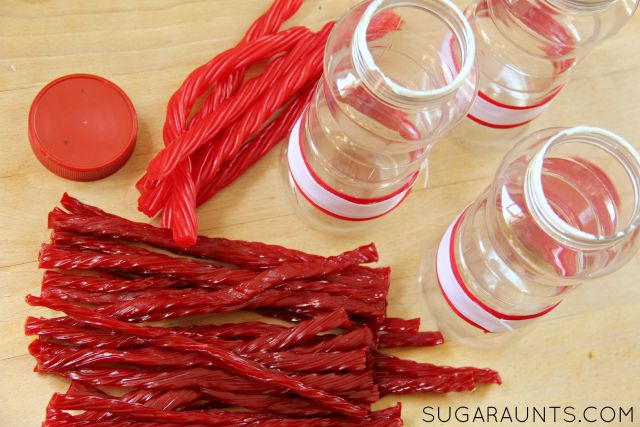
Now you’ll need Twizzlers candy. We grabbed our Twizzlers Twists and TwizzlersPull N Peels along with all of the other must-haves for our vacation.
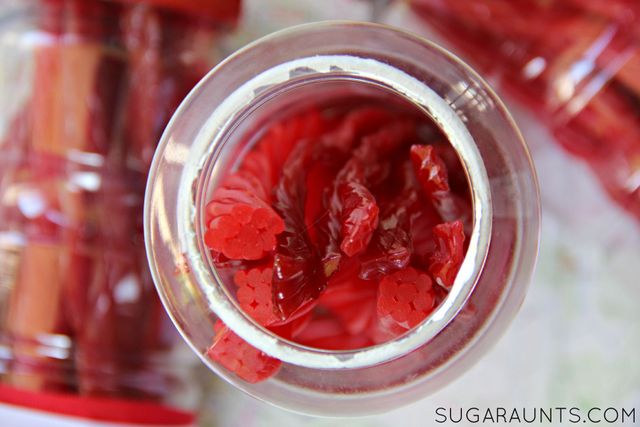
Fill the containers with Twizzlers Twists and TwizzlersPull N Peels. They are ready to grab and go on your next road trip with the family!
More Sensory Strategies for Road Trips
You’ll find more tools to survive Summer road trips with a sensory sensitive child that meet the interests of the child in our book, The Sensory Lifestyle Handbook. The book supports interests and motivating activities that occur naturally during the day to day tasks like a long car ride!
The Sensory Lifestyle Handbook is a comprehensive resource offering a strategy guide to create sensory diets and turn them into a lifestyle of sensory success!
Colleen Beck, OTR/L has been an occupational therapist since 2000, working in school-based, hand therapy, outpatient peds, EI, and SNF. Colleen created The OT Toolbox to inspire therapists, teachers, and parents with easy and fun tools to help children thrive. Read her story about going from an OT making $3/hour (after paying for kids’ childcare) to a full-time OT resource creator for millions of readers. Want to collaborate? Send an email to contact@theottoolbox.com.
We know the power of play as a learning tool, and today we are focusing on the many dramatic play benefits when it comes to pretend play in children. Occupational therapy play is a tool to drive skills, and there is a good reason why…play is the occupation of the child, and pretend play benefits the development of so many skills!
These dramatic play ideas are fun ways to support so many areas of child development using creative small world play. Check out the dramatic play ideas below! Dramatic play is a developmental part of the play age and stages that children progress through.
Dramatic play is important at each stage of child development. First, let’s cover what we mean by dramatic play.
What is Dramatic Play
Dramatic play, also known as pretend play or imaginative play, refers to a form of play where children engage in make-believe scenarios. The child can pretend to be part of a scene or world, or pretend to be a different person. The child takes on different roles in a dramatic play scenario and uses their imagination to create and act out stories, situations, and interactions.
Dramatic play involves the use of small toys, pretend play props, costumes, and the transformation of ordinary objects into symbolic representations. This might include:
dress up clothes
pretend play sets (kitchen toys or a post office play set)
Mini figures like dinosaur figures
Manipulative toys like blocks, building toys, etc.
Pretending to feed a baby
Playing school
SO much more!
Dramatic play benefits include allowing the child to explore and experiment with various roles, emotions, and social dynamics, fostering cognitive, language, social, emotional, and physical development. It encourages creativity, problem-solving, language skills, and the development of social and emotional competence. Through dramatic play, children develop a deeper understanding of themselves, others, and the world around them while having fun and actively participating in their own learning process.
Dramatic play includes two types of play:
Structured Play: Structured play involves rules in games or guided play. This includes setting up a play scenario with props, dress-up costumes, printable themed resources, and toys.
Unstructured Play: Unstructured play is a creative and open-ended play scenario. The child leads the play. This includes using blocks as a pretend phone, or using toys in a way not traditionally intended.
Either version of dramatic play can include parallel play at various ages.
Dramatic play, also known as pretend play or imaginative play, plays a crucial role in supporting child development in various domains.
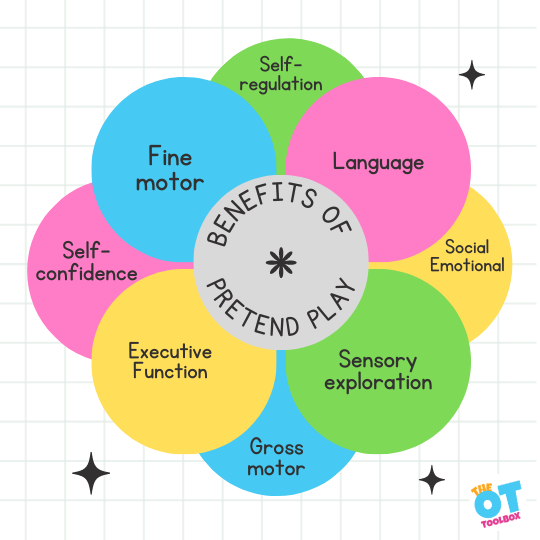
For example, by participating in dramatic play, benefits exist in physical, cognitive, sensory participation, and even executive functioning skills….and more!
Here are several ways in which dramatic play benefits children:
Cognitive Development: Dramatic play enhances children’s cognitive skills. When engaging in pretend play, children create and manipulate imaginary scenarios, which helps develop their problem-solving abilities, critical thinking skills, and creativity. They learn to think flexibly, plan and organize their ideas, and make decisions within the context of their play. Problem solving activities for preschoolers often times involve dramatic play.
Language Development: Pretend play provides children with opportunities to practice and develop their language skills. As children engage in dramatic play, they create dialogue, negotiate roles and scenarios, and communicate with their playmates. This process promotes receptive language, vocabulary expansion, sentence structure, and conversational skills. Children also learn to express their thoughts, ideas, and emotions effectively.
Social and Emotional Development: Through dramatic play, children develop social and emotional competence and social emotional learning. They learn to take on different roles, empathize with others, and understand different perspectives. Pretend play encourages cooperation, collaboration, and turn-taking, helping children build social skills and develop positive relationships. Additionally, dramatic play allows children to explore and express their emotions, experiment with different behaviors, and develop self-regulation skills.
Self-Care Skills: Pretend play benefits include the ability to practice self-care skills. When children dress up in dress up clothing, they have the opportunity to practice putting on and taking off clothing, manipulating buttons, zippers, snaps, etc.
Fine Motor Skill Development: While engaging in dramatic play, children often engage in fine motor skills challenging grasp, strength, object manipulation, and tool use. Whether they are pretending to be a chef, a firefighter, or a superhero, they use their bodies to imitate and enact various roles. This physical engagement supports the development of precision skills, fine motor skills, coordination, and spatial awareness.
Gross Motor Skill Development: Dramatic play benefits includes exploring different motor plans that challenge balance, coordination, movement, manipulating objects, force modulation and more.
Self-Confidence- Participating in dramatic play has the benefit of a stress-free environment for children to practice skills, act out their imagination, and use toys to do a “job”. The play environment can be an opportunity to gain confidence in how their body moves and areas like manipulating objects or using language. This is a powerful tool for the young child to practice skills through play!
Imagination and Creativity: Dramatic play fosters children’s imagination and creativity. It allows them to create and explore new worlds, situations, and possibilities. By using their imagination, children can transform ordinary objects into props and invent imaginative storylines. This imaginative thinking supports their ability to generate new ideas, think outside the box, and approach problems with creativity.
Cultural and Social Understanding: Pretend play often involves children imitating and reenacting real-life situations they observe in their environment. Through dramatic play, children can explore different cultural practices, societal roles, and community dynamics. This process promotes cultural awareness, understanding of social norms, and appreciation for diversity.
Planning and Organization: Engaging in dramatic play requires children to plan and organize their play scenarios. They need to decide on roles, create a storyline, gather props, and coordinate with their playmates. This process develops their ability to think ahead, set goals, and create a structure for their play. Through practice, children learn to plan and organize their actions, which is essential for future tasks and activities.
Problem-Solving: Pretend play often involves obstacles or challenges that children encounter within their play scenarios. They need to use their problem-solving skills to find creative solutions and overcome these challenges. Whether it’s figuring out how to rescue a pretend character or deciding how to handle a pretend conflict, children engage in critical thinking and develop their problem-solving abilities during dramatic play.
Cognitive Flexibility: Dramatic play encourages children to think flexibly and adapt to different roles and scenarios. They need to switch between different characters, adjust their behaviors, and respond to unexpected situations. This cognitive flexibility helps children develop mental agility, adaptability, and the ability to consider multiple perspectives. All of this is part of the development of attention skills that carry over to everyday tasks.
Inhibitory Control: Pretend play involves children pretending to be someone else or engaging in imaginary situations. This requires them to regulate their impulse control and control their behaviors. For example, a child pretending to be a teacher needs to control their natural inclination to act like a student. By practicing inhibitory control during dramatic play, children develop their ability to regulate their actions and emotions in real-life situations.
Working Memory: Dramatic play benefits also includes working memory skills. This occurs through remembering and recalling details, such as the roles, storylines, and actions within the play scenario. Children need to hold this information in their working memory as they engage in play and make decisions. This practice strengthens their working memory skills, which are crucial for learning and problem-solving.
Self-Regulation: Engaging in dramatic play provides children with opportunities to regulate their emotions and behaviors. They learn to take on different roles, manage conflicts, and control their impulses. As they navigate various scenarios, children develop self-regulation skills, including emotional regulation, impulse control, and the ability to modulate their behavior based on the demands of the play.
Dramatic Play Ideas
Dramatic play is a meaningful and motivating way to play with kids. Dramatic play can include:
Pretending to be a doctor and using a doctor’s kit
Pretending to fix things
Playing vet
Playing post office
Pretend shopping with a shopping cart toy
There are many ways to foster and support all of the benefits of dramatic play. Some items to have on hand include:
Dress-Up Clothes: Costumes and dress-up clothes are fantastic for encouraging dramatic play. Items like hats, capes, princess dresses, doctor’s coats, or firefighter uniforms allow children to transform into different characters and bring their pretend scenarios to life.
Props and Play Sets: Having a variety of props and play sets can enhance dramatic play experiences. Examples include toy food and kitchen utensils for a pretend kitchen, dolls or action figures for creative storytelling, toy tools for a pretend workshop, or a toy cash register for playing store.
Play Tents or Forts: Play tents or forts create a designated space for imaginative play. Children can turn these areas into houses, castles, or secret hideouts, allowing their imagination to take flight as they create and act out different scenarios.
Puppets and Puppet Theater: Puppets are excellent tools for dramatic play. Hand or finger puppets allow children to bring characters to life and engage in storytelling. A puppet theater can further enhance the experience by providing a stage for children to perform their puppet shows.
Open-Ended Toys: Open-ended toys with multiple uses and possibilities can stimulate imaginative play. Examples include building blocks, LEGO sets, magnetic tiles, or play dough. These items can be transformed into anything a child imagines, supporting creativity and problem-solving skills.
Play Kitchen or Workbench: Play kitchens and workbenches provide children with a space to pretend to cook, clean, fix things, or engage in other adult roles. These props can spark imaginative play and allow children to imitate real-life activities.
Writing and Drawing Materials: Writing materials such as paper, pencils, markers, and crayons can be incorporated into dramatic play. Children can create signs, menus, or tickets, adding an additional layer of authenticity to their play scenarios.
Costumes and Accessories: Alongside dress-up clothes, accessories like masks, hats, wigs, and jewelry can add excitement and creativity to dramatic play. These items can help children fully immerse themselves in their chosen roles and characters.
Manipulative items like figurines, small toys, glass gems, seashells, etc. These items can be used in sensory bins and small world activities to gain all the benefits of dramatic play in kids.
Sensory Bins: Sensory bins are containers filled with a base material like rice, sand, water beads, or sensory-friendly materials such as kinetic sand or cloud dough.
These bins can be themed based on children’s interests or specific play scenarios. For example, a beach-themed sensory bin might include sand, seashells, toy sea animals, and small buckets and shovels. Sensory bins allow children to explore textures, engage their senses, and create imaginary worlds. They can use the materials to build landscapes, dig for hidden treasures, or simulate real-world experiences.
Small World Activities: Small world activities involve creating a miniature representation of a specific environment or theme. This could include setting up a farm with toy animals, a city with toy cars and buildings, or a jungle with plastic trees and animal figures.
Small world play encourages children to use their imagination to create stories, interact with the characters and props, and engage in pretend scenarios within the miniature world. It promotes narrative skills, problem-solving, and creativity.
The importance of dramatic play is vast, as we’ve covered in the lists above. Dramatic play provides a holistic learning experience for children, encompassing cognitive, language, social, emotional, and physical development. It helps them build a foundation for future learning, problem-solving, and social interactions, while also fostering their innate creativity, imagination, and joy of play. These skills carryover to functional performance of daily activities, and uses the child’s primary occupation as the means and the tool!
So, how can you gain all of the benefits of dramatic play in meaningful and motivating play set-ups?
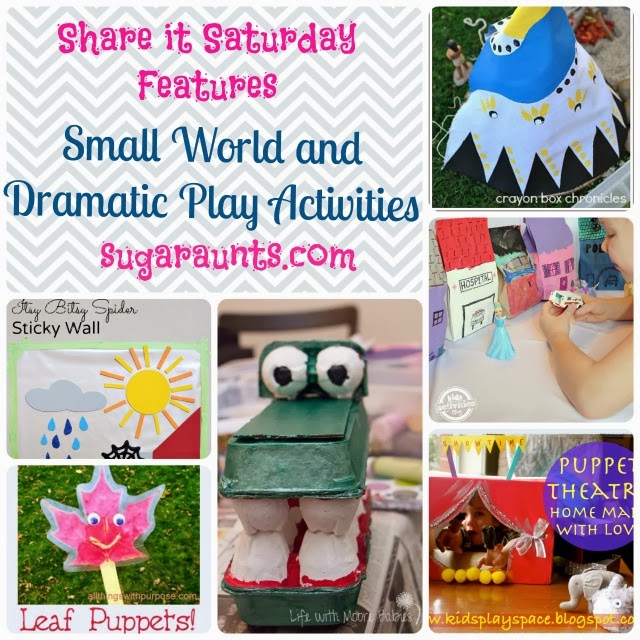
Try some of the dramatic play ideas below!
Puppet-theatre from Kids Play Space-Re-use a box to create your own puppet theatre, ready for show time!
Kids Activities Blog-Uses paper bags and paints to create a small world play area for dolls, we will be doing this one for sure!
Leaf-puppet-craft from All Things With a Purpose- A perfect fall time craft for dramatic play!
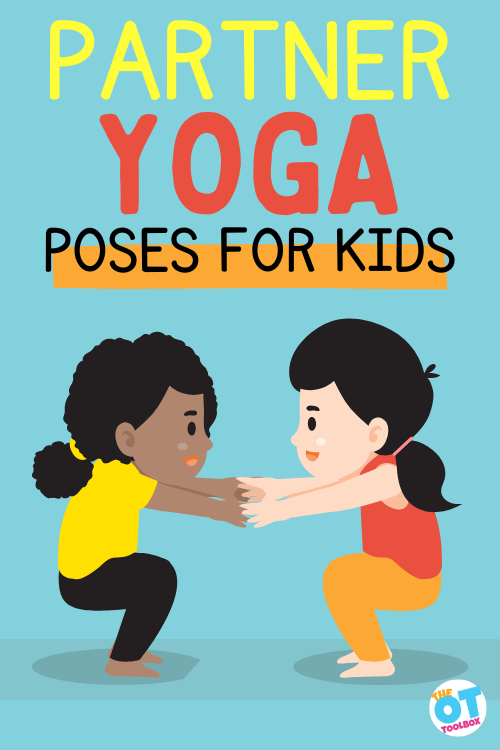
If you are looking for a fun and healthy activity to do with a group of children, partner yoga poses for kids are the way to go. Kids yoga partner poses offer a great option for small groups that not only promotes gross motor coordination, physical fitness, and self-regulation supports, but also encourages social connection and teamwork. In this article, we’ll explore the benefits of partner yoga for kids and share some beginner, moderate, and advanced partner yoga poses that are suitable for children of all ages and abilities.
Partner Yoga for Kids
Yoga is a fantastic way for kids to stay active and healthy while also promoting mental and emotional wellbeing. Some of the benefits of yoga for kids include:
In addition to these benefits, partner yoga for children has the added advantage of promoting social skills, problem solving, and teamwork. By working together with a partner or group, kids can learn valuable skills such as communication, cooperation, and trust.
It may be worth while to try single yoga poses before going straight for kids partner yoga. However, if you start where the child is at, anything is possible! We have tons of adorable yoga card decks to inspire your next step:
Some partner yoga positions for kids can include the list below. We’ve also broken down various partner yoga for kids into levels of difficulty as a way to grade this motor activity, depending on the needs of the individuals.
Double Tree Pose
Double Downward Dog
Partner Forward Fold
Partner Backbend
Partner Boat Pose
Seated Wide-Legged Forward Fold with Partner
Partner Wheel Pose
Double Warrior Pose
Partner Twist
Double Child’s Pose
Partner Plank Pose
Flying Lizard Pose
Partner Shoulderstand
Double Camel Pose
Partner Supported Headstand
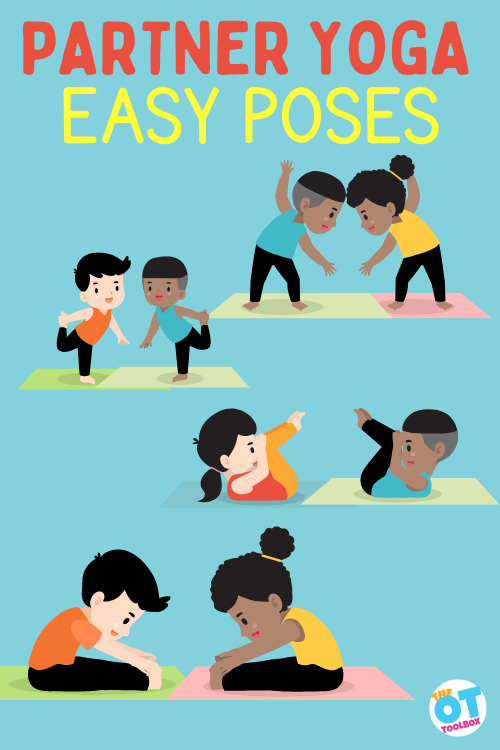
Easy Partner Yoga Poses for Kids
Let’s jump into some great easy partner yoga poses to start with! This is a great starting point for young kids, or for any age when getting started with partner yoga. Just coordinating body movements with another individual can be a challenge in body awareness, force of modulation, and motor planning!
Please keep in mind the physical abilities and coordination skills of your group (we don’t want any injuries!) and be creative with adjusting these poses as necessary for the benefit of the group. You can even have the kids make up their own poses to really get them involved!
Try these easy 2 person yoga poses:
Partner Forward Fold: Partners sit down facing eachother in the straddle stretch, where you sit upright with legs out in front of you like a “V”. Partner’s press their feet together and hold hands, taking turns stretching forward and backward.
Partner Seated Twist: Sit back-to-back with your partner in a criss-cross legged position. Lift your arms and reach and twist to the right. Your left hand should be on your right knee, and your right hand should be on your partner’s left knee. Don’t forget to twist both ways!
Lizard Sunbathing on a Rock: A crazy fun name, but it’s easier than it sounds! The partner who is the “rock” will curl up into child’s pose. The “lizard” partner will stretch out onto the rock with their arms over their head and legs straight, arching their back over the back of the “rock”.
Double Chair Pose: Stand back-to-back with your partner, locking elbows. Squat down together until your body resembles a chair – your knees should make a right angle.
Moderate Partner Yoga Poses
Next, let’s move into slightly more challenging poses when it comes to yoga for two kids or individuals. These partner poses can be a little more difficult because they require more balance, coordination, and partner involvement.
For children struggling with body awareness and force modulation, this can be a real challenge, but as occupational therapy practitioners, we know the value of using an activity to challenge and build skills at a level that fosters the just right challenge while developing skills.
Partner Tree Pose: Stand side-by-side with your partner and raise your inner arms up to “high five” your partner as high as your can reach. Your inner hips should touch and lean on eachother. Lift your outside foot and place it against your inner thigh. Place your outside arm at your hip, up in the air, or at your partners other hand. You have become one tree with your partner!
Double WarriorI: Partners face opposite each other and lunge forward with their right leg. Their back legs should make an “x” shape. Raise both arms up and reach slightly behind you to touch the hands of your partner.
Double Reverse Warrior: Partners will stand side-by-side with their legs far apart. The outer leg bends and the back leg is straight, as in Warrior II. Partners lean back towards eachother in reverse warrior pose, touching fingertips with outside arms. Inside arms can hold hands or rest on the thigh.
Partner Boat Pose: Sit facing your partner with your legs straight out in front of you. Lift your feet off the ground, touching the soles of the feet together in the air while you balance on your sit bones. Hold hands through or around your legs to help you and your partner balance.
Advanced Partner Yoga Poses
These yoga poses for kids require 2 people and more advanced motor skills, balance, and coordination, but the benefits are great. For individuals that need more heavy work input, greater balance and motor planning challenges, these partner yoga positions are ideal.
Double Downward Dog: One partner will go into downward facing dog. The second partner will begin in downward dog and carefully place their feet on the back or hips of their partner, instead of on the ground.
Balancing Warriors: This partner pose is in warrior III, where the front leg is straight, the body is leaning forward, arms reaching, and the back leg is lifted up into the air to make a “T” shape in the body. Face your partner so when you reach your arms in front of you, you can touch eachother’s shoulders and balance together.
Bridge and Shoulder Stand: One partner will go into bridge pose, lying on their backs with their hips up. The second partner will start in bridge pose, but place their feet on the knees of their partner, and push up a bit higher into a shoulder stand.
Plow and Seated Forward Fold: Partner one is in a plow pose, where they are on their backs and bring their feet up over their head so they are sort of folded at the stomach. The second partner brings their legs on top of the plow and leans forward into a seated forward fold. Partners reach towards each other to grab hands – this pose looks a bit like an infinity symbol!
Tips for Partner Yoga for Kids
There are many ways to target specific skills through yoga activities. Try some of these tips to foster all of the benefits of partner yoga with kids:
Make sure to switch up partner placements for the poses where they have different tasks!
Switch sides as well, so both the left and right get the same level of exercise or stretch.
Encourage the kids to listen to their bodies, keep breathing, and laugh when they fall.
Consider using the ideas listed above within the family before moving to friends or small groups in therapy sessions. Offer the ideas listed above as options for family yoga poses. This can provide all of the benefits while participating in a more comfortable environment.
All in all, yoga poses for kids with 2 people is a fun and healthy activity for kids that promotes physical fitness, mental and emotional wellbeing, and social connection.
By practicing a wide variety of poses – ones for flexibility, balance, and strengthening – kids of all ages and abilities can enjoy the benefits of yoga while building valuable teamwork and communication skills.
Sydney Thorson, OTR/L, is a new occupational therapist working in school-based therapy. Her background is in Human Development and Family Studies, and she is passionate about providing individualized and meaningful treatment for each child and their family. Sydney is also a children’s author and illustrator and is always working on new and exciting projects.
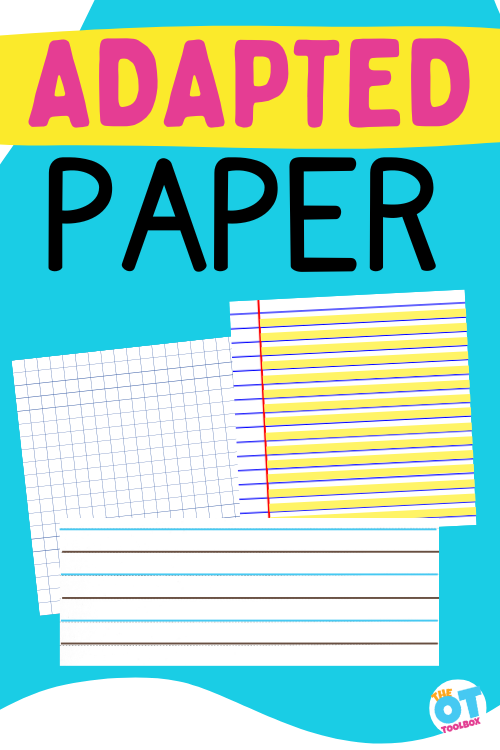
Children who struggle with handwriting often times benefit from adapted paper. These free printable sheets are perfect for kids with handwriting challenges that need bold baselines, colored spaces, or increased space on a page.
Children with visual perceptual deficits or visual motor impairments can benefit from these adapted paper ideas.
The best news is that this is your one stop spot for everything free printable paper!
Adaptive Paper
Adaptive paper refers to any handwriting paper which contains visual or physical prompts to support legible and functional handwriting. This can include raised lines, highlighted lines, margin cues, or other visual prompts to support written work.
Your child who struggles with letter formation, letter size, line use, spatial awareness, or margin use will benefit from these printable pages.
In addition to these various types of adaptive paper lines, there are paper styles associated with handwriting curriculum:
Handwriting Without Tears paper/Learning Without Tears paper
Fundations lined paper
Other handwriting curriculum
Free Adapted Paper
These are free adapted paper that is available as printables.
I’ll add to this list as I find them.
There are many ways to use graph paper in addressing therapy goals, so be sure to grab some of the free graph paper options.
Paper in The OT Toolbox Membership Club includes several levels of printable sheets for upper and lower case letter formation and line use.
This paper printable pack from 1+1+1=1 includes a variety of lined paper styles, both with and without letter strips right on the paper.
This kindergarten paper that has a shaded bottom space or highlighted area for small letters is perfect for kids who need help with letter size, line awareness, and spacing.
This handwriting pack from 123 Homeschool 4 Me includes three types of lined paper for each style to accommodate Preschool-1st grade, 1st-3rd grade, and 4th-6th grade.
Handwriting Net has printable pages that can be easily individualized in several styles of handwriting, including print and cursive.
These themed printable pages from What the Teacher Wants are writing prompts with a bold baseline and an are for picture drawing.
This sky/dirt paper on Teachers Pay Teachers is perfect for teaching kids about line use and letter size.
In The OT Toolbox Member’s Club, you’ll find many forms of adapted paper including grid paper, lined paper, and more.
The Handwriting Book is a comprehensive resource created by experienced pediatric OTs and PTs.
The Handwriting Book covers everything you need to know about handwriting, guided by development and focused on function. This digital resource is is the ultimate resource for tips, strategies, suggestions, and information to support handwriting development in kids.
The Handwriting Book breaks down the functional skill of handwriting into developmental areas. These include developmental progression of pre-writing strokes, fine motor skills, gross motor development, sensory considerations, and visual perceptual skills. Each section includes strategies and tips to improve these underlying areas.
Strategies to address letter and number formation and reversals
Ideas for combining handwriting and play
Activities to practice handwriting skills at home
Tips and strategies for the reluctant writer
Tips to improve pencil grip
Tips for sizing, spacing, and alignment with overall improved legibility
There are many reasons why a piece of adapted paper can be just the support needed to improve handwriting. Adding a small adjustment to the writing space can make adapted paper which offers visual prompts necessary for legible (and functional) handwriting.
Adapted paper can be used for reasons such as:
Visual Structure- Visual prompts like highlighted lines, vertical lines of graph paper, or a bold baseline can offer the support needed for line use, letter placement, letter spacing, and letter size.
Consistent writing space- Adapted paper offers consistent guide lines that structure handwriting, allowing for carryover of visual motor skills.
Baseline support- Some adapted paper offers a visual or physical cue in the way of a bold baseline or a raised baseline. These visual and physical prompts may support improved baseline use for letter placement, letter sizing, and spacing.
Visual scanning- Some adapted paper tools offer a margin guideline on the left and right sides of the page. These visual lines support visual scanning skills so that written work starts at the left margin without drifting in toward the middle of the page. The right margin line offers a visual cue to stop at the right side of the page.
Letter sizing- Some versions of adapted paper include visual prompts or icons for sky letters, dirt or grass letters, and underground letters. This can improve consistent letter sizing.
There are many different versions of adapted writing paper. Trying different styles can be one way to determine which style is best.
Colleen Beck, OTR/L has been an occupational therapist since 2000, working in school-based, hand therapy, outpatient peds, EI, and SNF. Colleen created The OT Toolbox to inspire therapists, teachers, and parents with easy and fun tools to help children thrive. Read her story about going from an OT making $3/hour (after paying for kids’ childcare) to a full-time OT resource creator for millions of readers. Want to collaborate? Send an email to contact@theottoolbox.com.
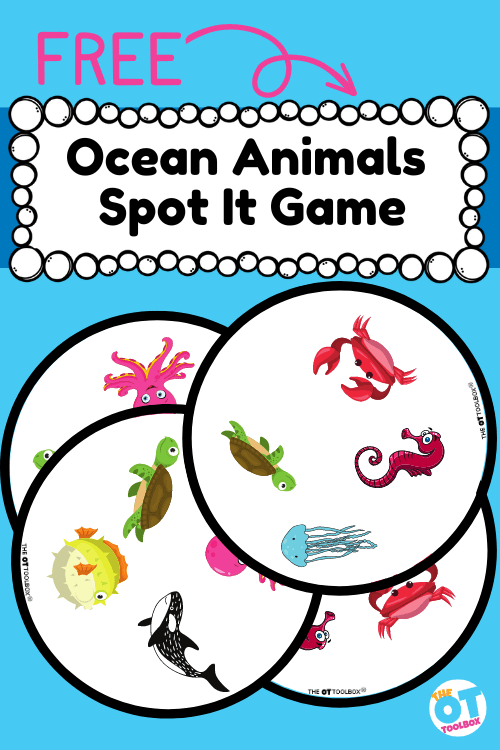
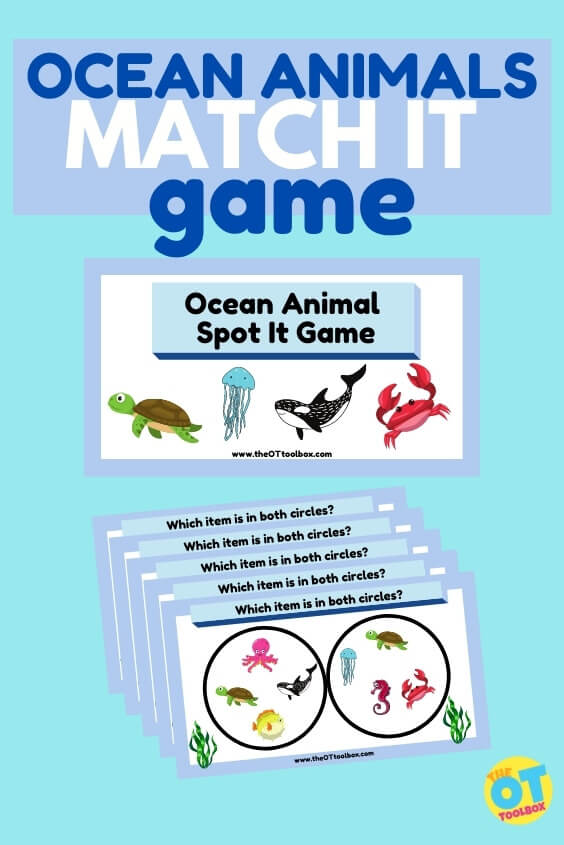
This ocean animals matching game was originally published when many OT professionals were conducting virtual therapy sessions a few years back. Now that therapy is back to in-person sessions, resources like this sea animals matching game slide deck are a useful tool for many reasons! It’s a great addition to a summer occupational therapy session or any sea animal theme.
Sea Animals Matching Game
Animals of the sea are a fun and engaging theme for kids, so this sea animals game is a motivating way to build on that.
Originally, this slide deck was a tool for targeting skills in visual memory, visual perceptual skills, attention, executive functioning skills, handwriting, and more. Therapy providers could access the slide deck and work on specific skills with kids over virtual therapy sessions.
Now, a few years later, the same therapy tool can still be used in several different ways:
Print off the slide decks and use them as Ocean animal “Spot It” worksheets.
Pull up the sea animal game on a tablet or computer in face-to-face therapy sessions to work on visual perceptual skills.
Use the slide deck on a larger screen such as a Smart board or TV. Add gross motor actions for each sea creature. Use the visuals as a prompt for various gross motor coordination tasks by acting out the sea creatures.
Use the slide deck as a prompt for sea animal yoga, ocean animal brain breaks, or in a Simon Says command.
Work on handwriting by writing down the names of the ocean animals that the user spots in the matching activity.
Print off the slide decks and ask the user to cut out the circles for each matching game. Then, they can clip a paper clip onto the edge of the circle when they find the match. This is a powerful hand strengthening activity that addresses bilateral coordination and motor planning. (Here are more paper clip activities to build fine motor skills.)
To really ramp up the gross motor skills and incorporate visual scanning skills, print off the pages as PDFs and then cut out the individual circles. Place them at greater distances around the room. This activity targets visual attention as well. It’s a great way to grade the task to foster near point copying skills and far point copying skills.
Incorporate the activity with other ocean animals games like “guess who” to identify features in the mind’s eye and work on executive functioning skills.
Matching games are such a great way to work on visual perceptual skills that are needed for hand writing and reading. This ocean animals matching game is a therapy activity that helps kids to work on several visual perceptual skills including visual discrimination form constancy visual scanning and other skills. Add this idea to your summer occupational therapy line-up!
Ocean animals Matching Game
This is a great activity for an ocean theme this summer.
Kids that love ocean animals like fish seahorses seahorses octopus and see turtles will get love working on this spotting game.
To play children can look at the two circles on the slide deck. They can visually scan to locate the identical ocean animal that is the same on each part of the slide. Then the interactive piece of this game is a movable seaweed option. They can click and drag on the seaweed icon and drag it over to cover up the matching animals. By doing this interactive piece kids can improve eye hand coordination and visual tracking skills as well.
Ocean animals writing prompts
Then after the students find the matching ocean animal there is a slide that is a self-checking exercise. The slide asks “did you find the missing item?” and then offers an ocean animals writing prompt.
On the handwriting portion of this ocean animals activity kids can copy the ocean animals word from the slide.
They can work on letter formation and copying skills from a near point or a distance point.
There’s also an open ended writing prompt where kids can copy a full sentence.
You can then expand the activity to an open ended writing prompt by asking that student to expand on that topic or ocean animal.
For example kids can copy the word octopus and work on letter formation letter size and spacing between letters. Then they can copy the octopus sentence. They can work on spacing between letters and words, letter formation, line use, punctuation, capitalization, and overall legibility.
Then finally expand on the activity and ask students to continue to write about an octopus they can either write a silly sentence or another fact if they know one. This slide deck includes many ocean animals that kids will have fun finding and writing about. Other ocean animals included in this slide deck include:
seahorse
sea turtle
crab
puffer fish
octopus
jellyfish
whale
shark
conch shell
school of fish
Sometimes kids will have difficulties copying or reading without losing their place on the paper. Convergence insufficiency can be one cause for this. Other reasons can be visual scanning or visual attention skills. This slide deck is one way to work on these skills.
Copying from a near point is a great way to work on visual shift visual attention and visual memory skills that are needed for kids to copy words from a workbook onto paper or from some other source like a book into a notebook.
By shifting the slides to an overhead screen such as a SmartBoard that is positioned across the room children can work on distance copying. This visual motor skill can be a challenge for some kids who struggle with visual attention and visual memory. In order to copy from a source children need to visually recall where they left off and then shift their vision while holding the visual information in there our minds eye and then realizing where to go back to on the board to copy from. That shift can be difficult for kids so this open ended and fun activity can help with visual motor skills and copying from near and far points.
This matching game is similar to others that we have here on the website so if a spotting and matching game is an interest and helpful for you and the children that you serve check out these other spotting and matching activities:
Would you like to access this free ocean animals activity to work on visual perceptual skills, eye-hand coordination, and handwriting? Enter your email into that form below and you can access this resource to use in teletherapy sessions in home programming in face-to-face therapy sessions or in homeschooling activities. Another option is to also use for hand writing prompts in the classroom.
Colleen Beck, OTR/L has been an occupational therapist since 2000, working in school-based, hand therapy, outpatient peds, EI, and SNF. Colleen created The OT Toolbox to inspire therapists, teachers, and parents with easy and fun tools to help children thrive. Read her story about going from an OT making $3/hour (after paying for kids’ childcare) to a full-time OT resource creator for millions of readers. Want to collaborate? Send an email to contact@theottoolbox.com.
Pausing for a moment to stop to think before acting is an essential executive functioning skill that stems from the development of impulse control, working memory, flexible thinking, self-control, and metacognition. The skill of pausing to think allows individuals to consider the potential consequences of their actions, make informed decisions, and exercise impulse control. This is something we all learn, but can take time and practice to master. Let’s explore this cognitive skill further.
This blog post, titled “Stop and Think” was originally published in 2017 and updated May 4, 2021 as occupational therapy practitioners use this phrase to support self-reflection for safety and working memory in daily occupations. The original post was not about the (Amazon affiliate link) Stop and Think Program®. It was updated again on June 5, 2023.
Amazon affiliate links are included in this blog post. As an Amazon Influencer, I earn from qualifying purchases.
Stopping to Think before Acting
By taking a moment to pause and reflect, individuals can evaluate the situation, think about alternative courses of action, and choose the most appropriate response.
This practice helps develop self-regulation, emotional intelligence, and the ability to manage impulsive behaviors. It also fosters the development of metacognitive skills, enabling individuals to monitor and evaluate their own thoughts and actions.
By incorporating a stopping and thinking strategy into daily activities, children and individuals of all ages can enhance their executive functioning skills and cultivate a more thoughtful and deliberate approach to their actions.
Occupational therapy: A Must to Pause to self-reflect
Occupational therapy practitioners play a vital role in supporting the development of self-regulation skills, including the ability to stopping and thinking before completing daily occupations. These therapy practitioners understand the importance of this skill at every level of development. By helping individuals cultivate this skill, occupational therapists and OTAs enable their clients to engage in daily activities effectively and safely.
Examples of this tool in occupational therapy include:
How did I accomplish this task last time? What steps did I take?
What did I do well last time I completed this daily task?
What did I not do well last time when I completed this task?
Before I step into the shower, do I have all of the items I need?
Thinking about energy conservation, is there anything else I need to get out of the refrigerator before moving back across the kitchen?
When I respond to a friend’s text, what do I want to get across in my message?
Stopping to think before acting allows individuals to utilize their working memory as a tool for completing everyday tasks at home, school, and in the community. Whether it’s a child learning to control impulsive behaviors, a teenager navigating social situations, or an adult managing stress in the workplace, the ability to pause and consider the consequences of actions is critical for successful functioning.
Not only that, but there are other reasons why a quick moment to pause in an activity is so important for completing tasks:
Safety
Energy conservation
Time management
Self-awareness
Body awareness
Stress management
Mindfulness
Social interactions
Behavioral (emotional) responses
Behavioral (physical) responses
Use of previous successes
Non-use of previous trials and errors
Using phrases, like “let’s take a moment to re-group”, or “let’s pause for a moment” are designed to help our clients and patients as a a valuable resource for developing social-emotional skills such as self-regulation and emotional intelligence. One way to target these skills and walk away with a handbook is using the printable executive function worksheets listed at the bottom of the page.
These worksheets are specifically created to enhance working memory, impulse control, and the ability to think before acting. They can be utilized in various activities, games, classroom learning, and everyday tasks.
In conjunction with the Zones of Regulation activities and strategies, these worksheets can effectively assist children in emotional and behavioral regulation.
Included in the worksheet packet are multiple resources to teach children the important skill of pausing and thinking before impulsively acting.
The worksheets that specifically target the ability to self-reflect includes:
Red flags indicating a lack of impulse control
Thought-provoking questions for children to reflect on
Cards that encourage children to pause, think, and then act
Tools and strategies for stopping and thinking
Daily reward chart
Struggle with stopping and thinking?
Occupational therapy practitioners employ various strategies and interventions to promote self-regulation, empowering individuals to make informed decisions, regulate emotions, and respond appropriately to their environment. Through collaborative efforts, occupational therapy practitioners equip individuals of all ages with the necessary skills to thrive in their daily lives.
Developing executive functioning skills takes time, as these cognitive abilities continue to develop until early adulthood.
It’s natural to encounter issues with impulsivity, foresight, and cognitive flexibility during childhood. By providing age-appropriate opportunities for children to practice stopping and thinking before acting, we can help them enhance their working memory, impulse control, and self-monitoring skills.
These skills are crucial for learning, safety, and social participation.
Recognizing the red flags showing challenges one might have when they struggle with stopping to think can indicate it’s appropriate to address these skills.
As we know, executive functioning skills do not fully develop until early adulthood. This is because the cognitive functioning center of the brain in the frontal lobe continues to develop into the twenties. You can probably think about specific incidents during your young adult years where impulse control, prioritization, planning, inhibition, and other executive functioning skills were not at their prime. You may have made some inappropriate or unwise decisions during those years.
Our children are developing these skills and won’t fully be developed until much later, so it is natural to see issues with impulsivity, foresight, cognitive flexibility and other skills that are inappropriate.
To help children develop these skills on an age-appropriate level, however allows kids to have the working memory for classroom lessons, the impulse control for safety and homework completion, and the self-monitoring skills to not interrupt. All of these skills and abilities take practice, modeling from adults, and repetition.
Pausing to Think Red Flags
When children are given opportunities to practice stopping and thinking before their actions, they have that chance to develop these skills effectively participate in occupations such as learning, self-care, social participation, and within safe environment.
Some examples of red flags include:
Displaying impulsive physical behavior
Being easily distracted
Speaks out or blurts out answers
Interrupts others
Quits or gives up on tasks, assignments, games, etc.
Shoves in lines
Cuts in front of others while waiting in lines
Jumps up from seat
Asks questions about irrelevant topics
Shows physical impulses
Hyperactive behavior
Hypo-active behavior
Jumps to conclusions
Reacts strongly to criticisms
Gets sidetracked by strong emotions
Personal boundary issues
Jumps from one task to another
Easily distracted
The worksheet packet provides a comprehensive list of red flags, enabling children to identify situations where they should apply the ability to stop, think to consider their options, and then act or respond to the situation at hand.
Pause to Think Worksheets
The worksheet packet below has been updated to include even more resources targeting self-regulation, impulse control, self-control, working memory, and other executive functioning skills that impact behavioral responses to everyday situations.
In the packet, you’ll find:
Impulse Control Red Flag handout
Pause to Think list and self-reflection activity
Self-reflection cards
Tools and resource list to try when one needs to stop for a moment before acting or speaking
Problem and solution mind map
Think before you speak sheet
Social and emotional challenges and functional results
Social-emotional observation tool
Daily reward chart
Emotional regulation and executive functioning skill handouts (6)
This packet of free, printable working memory/self-control activities just got better than ever!
Self-Reflection Questions
Additionally, the packet includes questions one can ask themselves as they consider their response to a situation. There are self-reflection questions one can ask themselves as a self-regulation tool. Self-reflection is another aspect of development that takes practice to master.
These questions serve as prompts for children to pause and reflect within specific situations, activities, games, or events. They can jot down their answers in the provided writing area and even cut out the questions as visual reminders for future situations.
These questions can also be helpful for adults in addressing mindfulness, emotional regulation, and executive functioning.
There is space to answer the questions in a blank writing area, and you can cut out the questions as a visual model for future situations. Sometimes having that visual prompt listing out the questions is a good prompt for children, teens, and young adults. These stopping to think questions can even be useful for adults to address mindfulness, mindset, emotional regulation, and executive functioning.
One way to expand the activity is using the pausing to think through actions along with our growth mindset sorting activity. Encourage users to stop to think about their response to a potential situation before responding. This particular process supports an understanding of growth mindset mistakes and turning a potential negative situation into a successful one.
This letter to future self is a great activity to look at where one is and where one would like to be as a future version of themselves. Pair that future version with a goal ladder to break down the steps to achieve that version.
The thinking-then acting cards, which can be cut out, allow students to write down their current situation while considering their emotions, behaviors, and the surrounding environment.
The questions on the cards include:
What am I supposed to be doing?
What am I doing?
How do I feel and why?
I feel___because____.
What might happen?
What tools can I use to help myself?
These cards serve as a tangible reminder for individuals to pause and think, and then respond to a given situation.
To make the most of these resources, try incorporating them into activities like executive functioning skills games, engaging activities that target executive functioning, and more.
Additionally, the worksheet packet provides a printable page featuring tools to use in the moment after pausing and thinking.
These coping tools encompass sensory input, heavy work, oral motor input, and vestibular movement. They serve to calm and regulate individuals, helping them refocus and reach a calm and alert state. There is also space to personalize the list with specific tools that work for each individual.
These tools, along with the entire worksheet packet, are invaluable in helping children and individuals of all ages stop and think before acting impulsively.
Stopping to to Think Resource
Finally, the last page of the pausing to think worksheets set is a reward chart sheet. This is a visual prompt for achieving goals as a result of stopping and thinking in the moment. This reward chart may not work for every child or every individual using these stop and think strategies, but it is a tool that is available.
Helping kids to set goals for stopping and thinking is so valuable and this reward chart page can be used in that process.
Would you like to use this printable resource in your interventions, home programing, or classroom? You can grab this resource, print it off, and use over and over again.
Simply enter your email address into the form below and the file will be delivered to your inbox. NOTE: Due to increases in email and internet security for those using work email addresses, the email that delivers this file may be blocked. If you typically use an email ending with .edu, .org, .uni, .gov, etc. consider using a personal email address instead for deliverability.
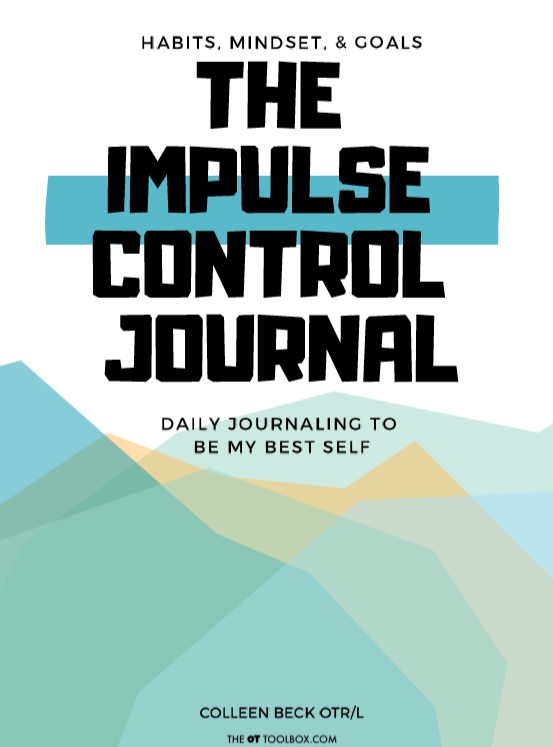
The Impulse Control Journal…a printable resource for helping kids strategize executive functioning skill development. When saying “calm down” just isn’t enough…
When a child is easily “triggered” and seems to melt down at any sign of loud noises or excitement…
When you need help or a starting point to teach kids self-regulation strategies…
When you are struggling to motivate or redirect a child without causing a meltdown…
When you’re struggling to help kids explore their emotions, develop self-regulation and coping skills, manage and reflect on their emotions, identify their emotions, and more as they grow…
Grab the Impulse Control Journal to build organizational strategies, planning, prioritization, habits, and mindset in kids.
Colleen Beck, OTR/L has been an occupational therapist since 2000, working in school-based, hand therapy, outpatient peds, EI, and SNF. Colleen created The OT Toolbox to inspire therapists, teachers, and parents with easy and fun tools to help children thrive. Read her story about going from an OT making $3/hour (after paying for kids’ childcare) to a full-time OT resource creator for millions of readers. Want to collaborate? Send an email to contact@theottoolbox.com.
This toothpick activity requires only one item: a toothpick container found at the local dollar store. Typically a toothpick container is filled with toothpicks and has a few holes in the removable lid, making it a great fine motor tool for children. This occupational therapy activity is used because you can target many precision skills and finger dexterity in kids. Let’s check it out…
Amazon affiliate links are included in this blog post. As an Amazon Influencer, I earn from qualifying purchases.
Toothpick Container Activity
I’ve had a toothpick container in my therapy bag for many, many years. While we don’t actually use the toothpicks in their traditional use, we do, use the toothpicks in a fine motor activity that kids seem to love!
First, look for a holder that has small holes in a removeable lid. Amazon (affiliate link) has a three pack with color coded lids which would be great for sorting colored toothpicks.
Next, place toothpicks on the table and show the child how to pick up one at a time and drop them into the holes of the lid.
Use this basic activity in many ways:
Play pick up sticks
Roll a dice and pick up that many toothpicks. Drop them in the holes of the container.
Set a timer and place as many toothpicks in the holes as possible
Hide toothpicks in a sensory bin. Pull out a toothpick and drop them into the holes as they are found.
What other ways to use this toothpick container activity can you think of?
Talk about an easy set- up and great fine motor dexterity task…
Picking up those tooth picks from the table surface is perfect for a fine motor neat pincer grasp.
Putting them into the little holes of the container works on a tripod grasp and extended wrist.
Holding the container with the non-dominant hand is great for establishing a stabilizer hand (supporting the paper when writing).
More Toothpick Activities
STEM Towers: Challenge your child to build towers using toothpicks and marshmallows. There is power in fine motor STEM! This activity promotes precision and hand-eye coordination.
Pincer Grasp Practice: Encourage your child to pick up toothpicks using only the tips of their thumb and index finger in a neat pincer grasp. They can transfer toothpicks from one container to another, enhancing their fine motor control.
Build letters: Use toothpicks to shape letters of the alphabet. Your child can place the toothpicks on a flat surface to form letters, improving their finger dexterity and control.
Counting and Sorting: Have your child count and sort toothpicks into different groups based on length, color, or other criteria. This activity develops counting skills and promotes attention to detail. One way to expand this activity is to use a marker or paint to color the toothpicks or use (Amazon affiliate link) colored craft matchsticks.
Geometric Shapes: Challenge your child to create geometric shapes, such as squares, triangles, or hexagons, by connecting toothpicks. This activity sharpens spatial awareness and fosters creativity.
Playdough Poke: Make a playdough snake and then use the toothpicks to poke along the play dough. This threading exercise improves hand strength, hand-eye coordination, and fine motor control.
Toothpick Art: Encourage your child to create miniature sculptures or artwork using toothpicks. They can connect toothpicks with glue or build structures, allowing their creativity to flourish while refining their fine motor skills.
Sensory Play: Combine toothpicks with sensory materials like kinetic sand or rice. Your child can bury toothpicks in the material, dig them out, or create patterns and designs. This activity provides tactile stimulation and enhances finger strength.
Fine Motor Mazes: Draw or print mazes on paper and use toothpicks as a stylus to navigate through the maze. This activity strengthens hand control and precision movements.
Plus, you can use the toothpicks in the toothpick art found in our seasonal Fine Motor Kits:
Working on fine motor skills, visual perception, visual motor skills, sensory tolerance, handwriting, or scissor skills? Our Fine Motor Kits cover all of these areas and more.
Check out the seasonal Fine Motor Kits that kids love: