Heavy Work in Teletherapy Slide Deck

Spring heavy work activities for teletherapy

Offering sensory, heavy work in teletherapy doesn’t need to be difficult. Wondering how to support sensory kids virtually? Need ideas to help with attention or focus in the classroom? This free teletherapy slide deck covers an area that is much needed for many children. We know that kids today need to move more. But did you know the part that heavy work plays into development and self-regulation strategies in kids?

We see it all the time: kids in teletherapy or in the virtual classroom that just can’t sit still or pay attention. And there’s a lot going on when screens are involved. The research on screen time is telling. But other times, kids are just being kids and movement is needed! Brain breaks and movement breaks are as necessary as hydration and eating healthy meals when it comes to learning.

What is Heavy Work?

Heavy work is a sensory strategy that helps children regulate so they are at a calm-ready state of learning and participation in tasks. For kids, heavy work helps them know where their body is in space by using the proprioceptive sensory system.

When deep heavy input is offered, the child challenges their proprioceptive system. Input in the child’s muscles and joints lets their brain know about body position, weight, pressure, stretch, movement and changes in position in space.  Then, the body is able to grade and coordinate movements based on the way muscles move, stretch, and contract. In this way, the proprioceptive system allows us to apply more or less pressure and force in a task.

Proprioception and that heavy work input occurs when we lift, jump, pull, carry, hug, snuggle, crash, climb, push, etc. All of these movements incorporate the muscles and joints and offer “heavy work” input.
Kids who may benefit from heavy work input might do some of these things:

  • Appear clumsy
  • Fidget when asked to sit quietly.
  • Show an increased activity level or arousal level.
  • Seek intense proprioceptive input by “crashing and bashing” into anything.
  • Slap their feet when walking.
  • Flap hands.
  • Use too much or too little force on pencils, scissors, objects, and people.
  • “No fear” when jumping or walking down stairs.
  • Or, are overly fearful of walking down steps/jumping.
  • Look at their body parts (hands/feet) when completing simple tasks.
  • Sit down too hard or miss chairs when sitting.
  • Fall out of their seat.
  • Fluctuates between over-reacting and under-reacting in response to stimulation.
  • Constantly on the move.

Heavy work is a huge part of sensory diets that are created to help kids organize their sensory systems and regulate those sensory needs.

Occupational therapists recommend heavy work to calm and help kids pay attention. And, if there were any time that heavy work was more needed, it might be during virtual learning.

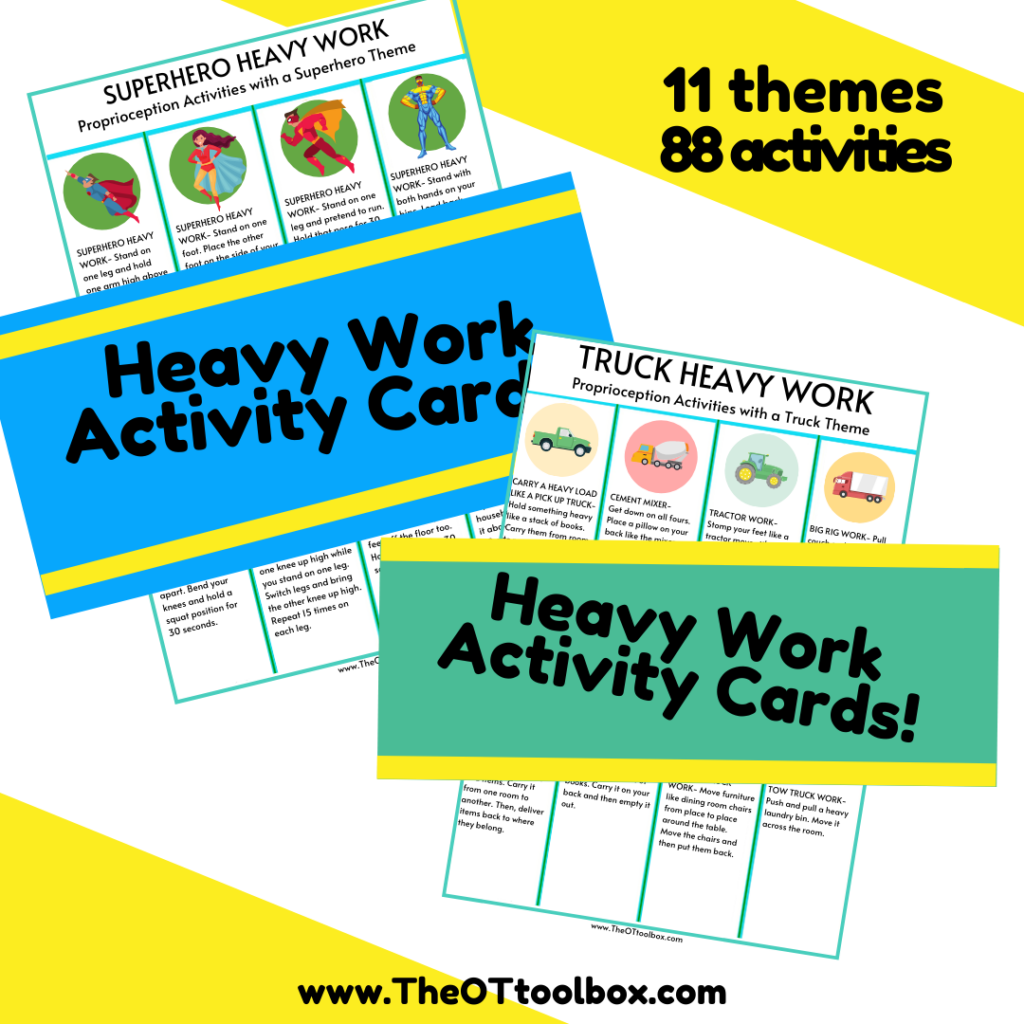
For more heavy work ideas that cover a variety of themes, grab a copy of the Heavy Work Movement cards.

Spring activities that offer heavy work sensor input

Heavy Work Teletherapy Activity

So how do you incorporate heavy work and all the benefits of proprioceptive sensory input into a teletherapy or virtual learning environment?

That’s where this heavy work virtual therapy slide deck comes into play. I created this slide deck as part of our free slides here on the site, as a support for therapists working with kids in virtual environments. We know that kids need movement to support learning and development of motor skills. They need to move and get that heavy work feedback so they can pay attention, focus, and learn.

This heavy work activity does just that.

Therapists (or teachers, or parents) can use this heavy work activity to help kids get the deep resistive input that they need.

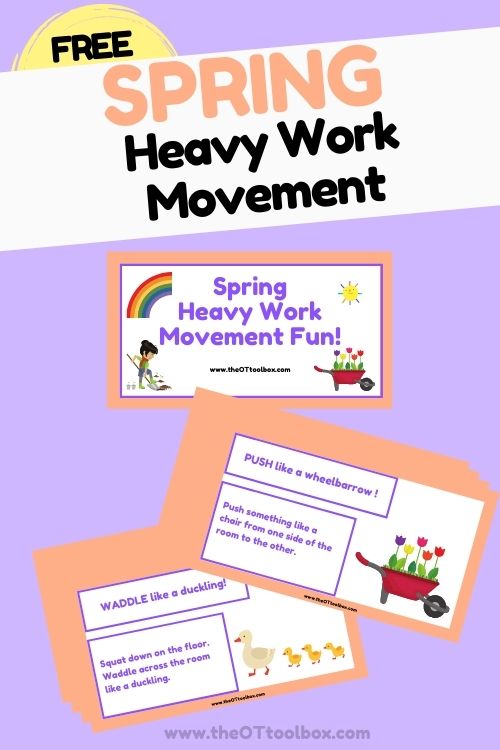
Kids can go through the slide deck and complete each activity. The slides use Spring images and concepts to incorporate proprioception and to offer FUN ways to add heavy work and help kids calm or regulate their sensory needs.

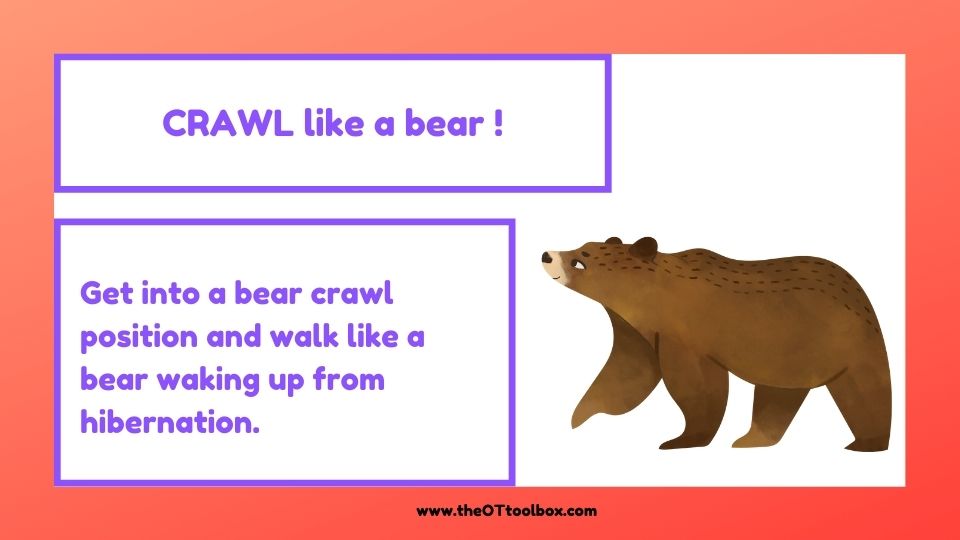
Spring heavy work activities for teletherapy include crawling like a bear that is waking up from hibernation.

Spring heavy work activities in the slide include:

  • Digging in dirt
  • Pushing a wheelbarrow
  • Crawling like a bear coming out of hibernation (Pair the activity with others from our collection of hibernation activities!)
  • Waddling like a duckling
  • MORE!

Users can act out each heavy work activity on the slides and work on motor planning, coordination, bilateral coordination, gross motor skills, AND gain the benefits of heavy work input!

Free heavy work slide deck

Want this slide deck in your therapy toolbox? Enter your email address into the form below to access this free slide on your Google drive.

Heavy Work Activities Slide Deck!

    We respect your privacy. Unsubscribe at anytime.

    Colleen Beck, OTR/L has been an occupational therapist since 2000, working in school-based, hand therapy, outpatient peds, EI, and SNF. Colleen created The OT Toolbox to inspire therapists, teachers, and parents with easy and fun tools to help children thrive. Read her story about going from an OT making $3/hour (after paying for kids’ childcare) to a full-time OT resource creator for millions of readers. Want to collaborate? Send an email to contact@theottoolbox.com.
    heavy work cards for regulation, attention, and themed brain breaks
    Heavy Work Movement Activity Cards

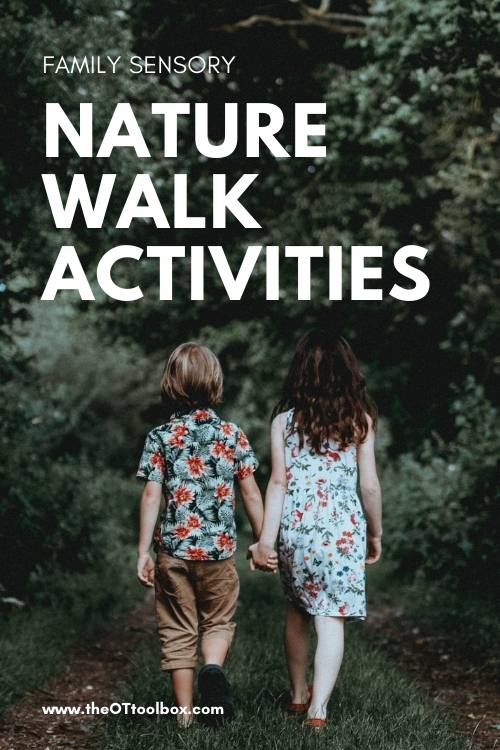
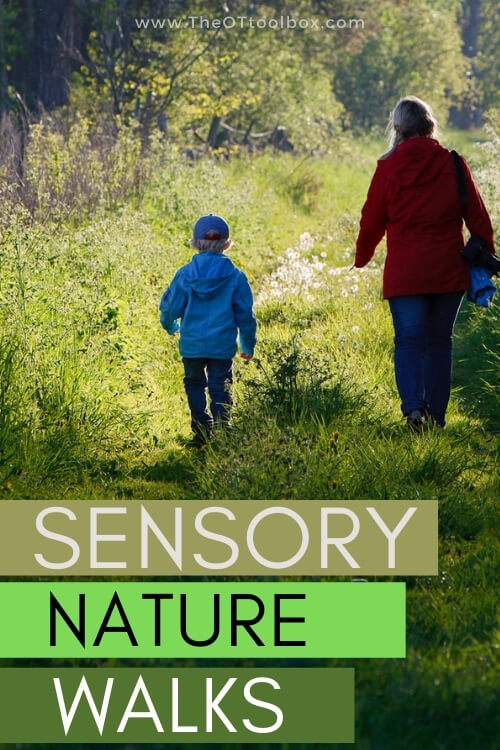
    Sensory Nature Walk for the Family

    Nature walk activities for sensory nature experiences for the whole family

    There are so many benefits to getting the whole family out for a family nature walk. Besides the physical exercise and family time, nature walks are powerful tools to incorporate all of the senses without any sensory equipment. Research tells us outdoor sensory play has many benefits. Use the sensory activities described here to learn and explore all of the senses (including the proprioceptive, vestibular, and interoceptive senses!) and add these sensory nature walk ideas to an outdoor sensory diet to help kids achieve an optimal sensory state so they can complete functional tasks and daily occupations.

    Nature walk ideas for sensory based family walks.

    Nature Walk Sensory Benefits

    A nature walk and all of its colors, sights, and sounds make for a multi-sensory experience that can be easily shared as a family.  There are so many sensory benefits when going on a nature walk or simply just by getting outdoors. The sensory input, learning and development, and simple family connection are just a few long-term benefits that can be provided by hiking in the woods.

    Nature walks promote wellness by meeting many different needs:

    • Physical exercise and physical activity
    • Relaxation
    • Establishment of healthy habits in kids
    • Emotional management
    • Mindfulness
    • Facilitate engagement and an alert state of regulation
    • Learning and cognitive benefits
    • Play and activity
    • Social interaction
    • Rest and sleep

    All of these benefits make a family nature walk perfect for a family fun day! Or, pull out the flashlights and headlamps and go on a night walk as part of a family fun night.

    Sensory nature walk for families to explore the senses and support sensory needs.

    Sensory Nature Walk

    Stimulating the senses can help a child reconnect with their inner self, helping them identify how their body calms and relates to a free-flowing natural environment. Parents can help facilitate a child’s interaction in nature and the outdoors by simply being aware of a few activities that can be enjoyed as a family while experiencing the outdoors. Every sense can be utilized and engaged with a few fun ideas.

    To help get you started, take look at the sensory components of a nature walk:

    Nature Walks and the Visual Sense

    The visual (sight) sense can be stirred by the abundance of colors with the trees and leaves and don’t forget to take some time to seek out a few outdoor critters or insects which can add a little element of fun while observing.

    Try these visual processing activities during a family nature walk:

    • Play a game of I-Spy during your outdoor adventure. Think about playing using colors or items found in the environment. Take turns, and work on building vocabulary while playing this game.
    • Do a scavenger hunt and look for certain things found in the woods (you can find printable nature scavenger hunts on the internet).
    • Complete some nature rubbings with paper and crayons. Maybe rub some leaves within a notebook or complete rubbings of different types of tree bark.
    • Take a notebook and write down items you see in nature. It can be a nature journal that adds an opportunity to work on handwriting.

    Auditory Processing and Sensory Walks

    The auditory (hearing) sense can be jostled by the crunching of leaves under the feet as well as the snapping of twigs that can be heard while walking along a path or in the woods.

    • Snap twigs and listed to the cracks. Maybe even taking some time to build a few fun critter forts allowing for snapping of twigs to measure and build.
    • Also, try snapping twigs and building letters to add a little handwriting into the nature walk.
    • Listen for the birds and their chirping of songs and listen for some rustling of leaves when squirrels and other critters move about the woods.
    • Maybe the breeze is blowing, is it causing the trees and leaves to sway back and forth? Close your eyes and simply just listen to hear (it adds another fun element).

    Gustatory Sense and Family Walks

    The gustatory (taste) sense can be provided a little nudge, with adult supervision of course, if you find some wild blackberries or strawberries. They can be yummy to eat, but they do require cleaning so you may want to wait until you get back home to eat them so they can be properly cleaned for complete safety. If you are not that adventurous though, that’s okay you can still stimulate the gustatory sense on your walk if you work to prepare a fun trail mix before you leave the house so you can eat it on your outdoor adventure.

    • Bring a cold drink- A water bottle can be added to a backpack and brought along for a cold drink during a family walk. Remember the proprioceptive and oral motor benefits to drinking through a sports bottle, or a straw in a water bottle with a straw lid.
    • Nature walk snacks-Don’t have time to make trail mix, that’s okay too, you can just grab some granola or granola bars or maybe even some veggie sticks or beef jerky!

    Tactile Sensory Nature Walk

    The tactile (touch) sense can be heavily engaged with all of the different textures that can be explored and possibly gathered on your nature walk. Try some of these strategies on your nature walk:

    • Take some time to feel the leaves, moss, tree bark, rocks, dirt, and even a few fuzzy critters that can be given a little lift to their next destination.  
    • Tossing rocks into small streams or even walking through puddles of water could provide a multi-sensory experience.
    • Write a few letters in the dirt with use of broken twigs as a pencil.
    • Take some time to feel the warmth of the sun or the breeze on your face as you walk.  
    • Be sure to collect some nature items along the way though so you can explore them later either in a sensory bin or in an art project.
    • Find and count nature items in an egg carton.
    • Play toss and catch with pine cones as appropriate. Toss and catch to each other or have kiddos toss to themselves including back and forth between their left and right hands.
    • Stick nature items to contact paper while on a nature walk.

    Olfactory sense and family sensory walks

    The olfactory (smell) sense can be triggered by taking time to smell the dried leaves, flower scents, and even the smells that get blown as the wind or breeze lifts them through the air. Let’s face it, the wilderness has many smells that are unidentified and when mixed together create scents that are unusual kind of, musty. Even decaying wood has a very unique smell. Try these olfactory activities:

    • Smell flowers
    • Close your eyes and smell the air. Can you identify any scents?
    • Talk about scent words and the meaning of those terms. Some concepts to explore are: fresh, musty, moldy, sweet, sour, dry, etc.

    Proprioception and Nature Walks

    The proprioceptive (muscles and joints) sense can be impacted if you allow the child to lift heavy rocks, larger limbs and even just jump from higher elevations such as large rocks. All of the walking, climbing, and exploring adds heavy work input that tells the body where it is in space so the legs and body as a whole can move. Heavy work is a calming and regulating source of getting to a calm and alert state. Consider these opportunities for adding proprioceptive input on a nature walk:

    • Allow them to climb some trees and hillsides.
    • Explore trails with variations on elevation.
    • Consider the walking surface. Walking through a field, even trail, flat trail, or wooded hiking trail, or paved sidewalk offer different variants of heavy work though the legs and core.
    • Add hopping, jumping, bending, leaping, galloping, or skipping as you walk.
    • Even just the act of walking up and down the trail inclines can provide muscle and joint input that can be regulating for some kiddos.
    • Carrying water bottles in a backpack is an additional opportunity for heavy work.

    Nature walks and the Vestibular sense

    The vestibular (movement) sense can be activated as a child moves their body around the trees and rocks even while crawling up large rocks and trees. Incorporate vestibular input through these ideas:

    • Have them try some simple spinning with their eyes open and closed and arms outstretched to get a unique view of the outdoors maybe even doing some somersaults or cartwheels.
    • Allow them to try out their balance skills as they walk across a downed tree or along a trail of rocks.
    • Climb trees.
    • Run up hills.
    • Roll down grassy hills.

    Nature walks and interoception

    The interoception (inner body awareness) sense can be explored by the act of simply disconnecting from technology and other distractions and identifying how the body feels during this change of setting and heavy multi-sensory environment. An additional benefit of family walks is the connection to sleep (described more in detail at the bottom of this post.) Sleep has been noted to be included in the interoceptive processes much like hunger or thirst, as a brain process similar to other homeostatic processes.

    Incorporate interoception in nature with these strategies:

    • Work on identifying their feelings and bodily responses to the sensory input such as noticing their breathing, heart rate, temperature, or possibly if they feel either tired, hungry, or thirsty.
    • How do you feel? A walk can change how you’re feeling. Maybe you feel re-energized and more alert. Talk about it.
    • Mindfulness is impacted by nature. Take deep breaths. Can you feel your heart rate slowing down?
    • Thirst inventory- How do you feel after a hike in nature? Thirsty? Dry mouth? These are signs that your body is thirsty. Some people struggle with this internal awareness. Talk about the signs of thirst and how the body reacts to this need and then afterwards once you’ve got a drink.
    Nature walk activities for families to incorporate sensory systems.

    Nature Walk Activities

    A nature walk is a fun time to collect items from nature for exploring. While out on family walk, collect items from nature such as rocks, pebbles, sticks, leaves, moss, etc. These items can be placed into a backpack or bag and brought home to explore and create. (Be sure to return items to nature, afterwards as long as they are free from paint or glue.)

    After you’ve finished your outdoor adventure and you’ve collected some fun nature goodies from your walk, take those items home and create a sensory bin, fine motor craft kit, or maybe even use them in a fun art project. What can you collect?

    Look for some of these items (and explore the visual sense as you seek and find items):

    • Acorns
    • Twigs
    • Leaves
    • Rocks
    • Feathers
    • Pine needles
    • Pine cones
    • Moss
    • Seeds
    • Grasses
    • Sand
    • Dirt
    • Sunflower seeds
    • Fallen tree bark

    Nature Walk Sensory Bins

    Use these materials to make a sensory bin. Add the items you’ve collected to a large bin, basket, or tray. Now it’s time to explore! Try these nature sensory bin ideas:

    Nature Walk Art Projects

    The nature items collected on a family walk can be used to make art, too. Incorporate some added art supplies to get started:

    • Paint
    • Paint brush
    • Playdough
    • Beans/Peas
    • Glue
    • String
    • Paper/paste or cardboard
    • Googly eyes
    • Chenille stems
    • Egg cartons
    • Contact paper

    Then, try these nature art projects that help to develop motor skills, fine motor strength, coordination, motor planning, and more:

    Sensory Nature Walks and Rest

    An added benefit of incorporating a nature walk into the family routine is that walks in turn promote rest. All of the physical activity of nature walks may be helpful in encouraging rest and as a result, sleep.

    Additionally, research suggests a relationship between sleep difficulties and patterns of sensory processing issues in children.

    Studies show that sensory processing differences, considerably including increased sensory sensitivities, sensory-avoiding patterns, sensory-seeking patterns, and poor sensory registration have been associated with changes in sleep quality. (Vasek, M., Williamson, J., Garden, J., Zwicker, J., 2015).

    Occupational therapists play a role in sleep by offering tools and strategies to promote adequate and restful sleep. Because sleep is a necessary component of performing functional tasks and daily occupations, occupational therapists can assist with promoting adequate and healthy sleep by using evidence based methods, once of which can include physical activity such as family nature walks.

    A final note about sensory walks

    Take a seasonal nature walk to simply allow children to explore with their senses while building skills needed for learning and development! Allow children the freedom to explore at their own pace and to be creative. Give them the opportunity to come up with a fun, family activity outdoors. They’ll surprise you!

    Don’t live near a colorful hiking area? Take some time to visit a farm, a pumpkin patch, a flower garden, a cornfield, or even the beach. Really, just get outdoors and explore anywhere! By being outside away from technology and other distractions, children can rejuvenate their bodies and minds while stimulating their senses.

    Try these resources to incorporate the sensory system when in the great outdoors:

    Outdoor Sensory Diet Activities

    Outdoor Sensory Diet Activities in the Backyard

    Outdoor Recess Sensory Diet Activities

    Sensory Diet Activities at the Playground

    Sensory Processing at the Playground

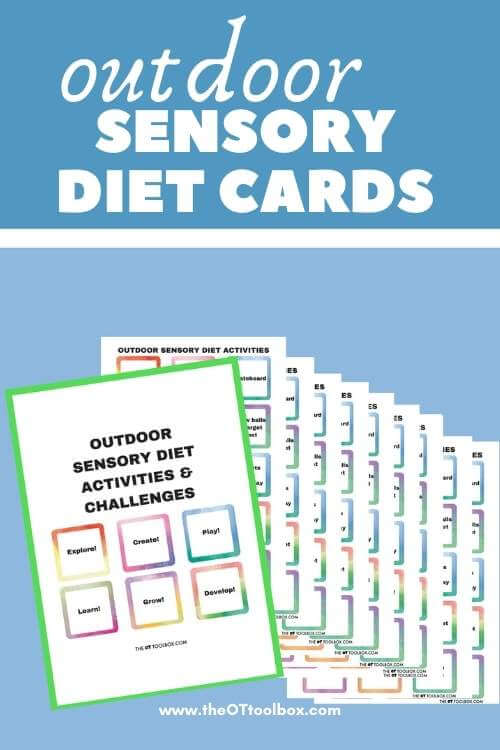
    Add the Outdoor Sensory Diet Cards to your therapy toolbox:

    Create the “right kind” of sensory experiences to improve regulation, attention, focus, body awareness, motor development, and sensory processing.

    • 90 outdoor sensory diet activities
    • 60 outdoor recess sensory diet activities
    • 30 blank sensory diet cards, and 6 sensory challenge cards
    • They can be used based on preference and interest of the child, encouraging motivation and carryover, all while providing much-needed sensory input.
    Outdoor sensory diet cards

    References:

    Mark Vasak, James Williamson, Jennifer Garden, Jill G. Zwicker; Sensory Processing and Sleep in Typically Developing Infants and Toddlers. Am J Occup Ther 2015;69(4):6904220040. https://doi.org/10.5014/ajot.2015.015891

    Regina Allen

    Regina Parsons-Allen is a school-based certified occupational therapy assistant. She has a pediatrics practice area of emphasis from the NBCOT. She graduated from the OTA program at Caldwell Community College and Technical Institute in Hudson, North Carolina with an A.A.S degree in occupational therapy assistant. She has been practicing occupational therapy in the same school district for 20 years. She loves her children, husband, OT, working with children and teaching Sunday school. She is passionate about engaging, empowering, and enabling children to reach their maximum potential in ALL of their occupations as well assuring them that God loves them!

    Polar Bear Sensory Bin

    Use a polar bear sensory bin for occupational therapy interventions

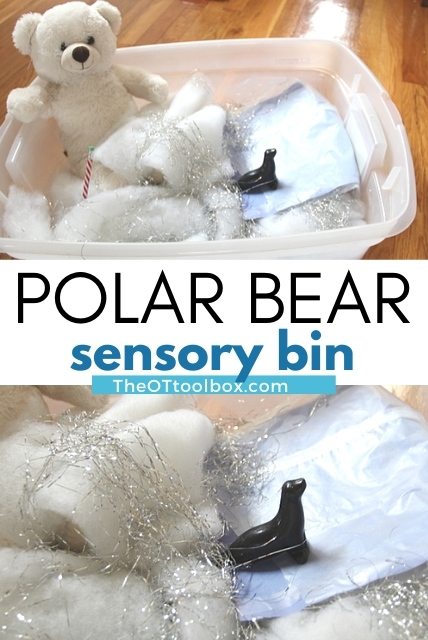
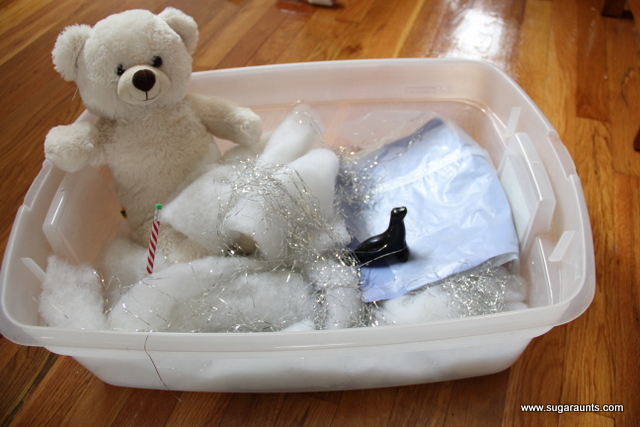
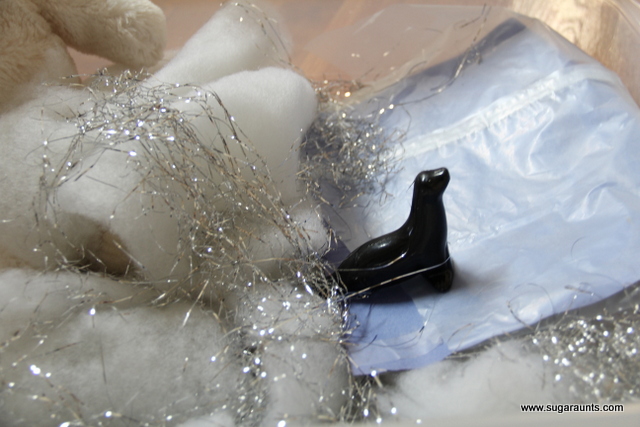
    This polar bear sensory bin is an old one from The OT Toolbox site archives. This tactile sensory activity is a fun way to challenge sensory exploration with a variety of textures and materials. But more than that, this polar bear activity can be used in a therapy theme to address skills. The next part of the polar bear gross motor activity included a Our Polar Bear Sensory bin was cotton batting, tinsel, a stuffed polar bear, and a seal toy.  This is a Winter Sensory bin that can go along with an arctic animals theme.

    Polar bear sensory bin

    Polar Bear Sensory Bin Materials

    There are many ways to set up this sensory bin. Use items you have in your home or therapy space. Use some of the materials listed below. You DO NOT need all of these items. The nice thing about creating a themed sensory bin is that you can use what you have on hand. Some ideas for the sensory bin include:

    • Container or bin
    • Teddy bear
    • Tinsel
    • Cotton balls
    • Cotton batting
    • Tissue paper
    • Rice
    • Dry beans
    • Blue or white construction paper
    • Tape
    • Wax paper
    • Clear cellophane
    • Aluminum foil
    • Arctic animal figures
    Make a polar bear sensory bin with figures, and sensory materials.

    Other materials that you may want to add to the polar bear sensory bin to encourage fine motor skills and coordination skills:

    • Tweezers to pick up and manipulate materials
    • Small bowls
    • Tongs
    • Spoons or scoops
    • Chopsticks
    • Pickle picker
    • Containers
    • Counting cards (try the winter themed ones in the Winter Fine Motor Kit)

    Fine Motor Skills in a Sensory Bin

    Using the materials and tools above, students can work on fine motor skills to manipulate and explore the items in the sensory bin. Some ways to work on fine motor skills include:

    Address in-hand manipulation by sorting items in the hands into containers or cups.

    Work on hand strength and arch development by moving items with tongs, tweezers, or pickle picker.

    Work on open thumb web space by pinching and pulling cotton balls.

    Work on finger isolation by moving materials and items around in the bin.

    Work on grasp and precision by picking up small items such as tinsel, mini-erasers, crumbled paper or tissue paper, etc.

    Use a Sensory Bin for Visual Perception

    This polar bear sensory bin can be used to address a variety of visual perceptual skills: visual discrimination, visual memory, visual attention, figure ground, and visual closure.

    Ask children to locate specific items by color or texture. They can also recall items that they found in the sensory bin. Ask kids to locate items that are partially hidden by other objects or sensory bin filler materials. These are all ways to work on visual perceptual skills with this polar bear sensory bin.

    Use a Sensory Bin for Eye-Hand Coordination

    A sensory bin like this polar bear theme can be used in so many ways to address eye-hand coordination:

    • Pouring materials
    • Scooping materials like beans or rice
    • Using tongs or tweezers to pick up and move items like mini erasers
    • Sorting sensory bin items into piles or containers
    • Picking up and exploring various sensory bin items

    Polar Bear Imagination Play

    My kids had fun just imagining stories for the items in the sensory bin. We used the stuffed bear as a polar bear and a seal figure who was trying to escape into the ocean…Imagination play!  

    Polar bear sensory bin with tinsel and arctic animal figures.

    Little Guy glued some waxed paper to blue construction paper to make an ocean covered with ice.  We had a striped Christmas pencil for our “North Pole”. 

    Baby Girl did NOT like the texture or “feel” of the tinsel. It got stuck to her hands and she would try to pull it off…The seal is another story.  She carried that thing around all day 🙂  

    Kids of all ages can use the materials in the sensory bin to work on tactile sensory exploration, fine motor skills, and visual perception.

    Looking for more Polar Bear play ideas??  We had fun with our first Polar Bear Theme activities day!   We should have more ideas up tomorrow to go along with the Polar Bear theme. 

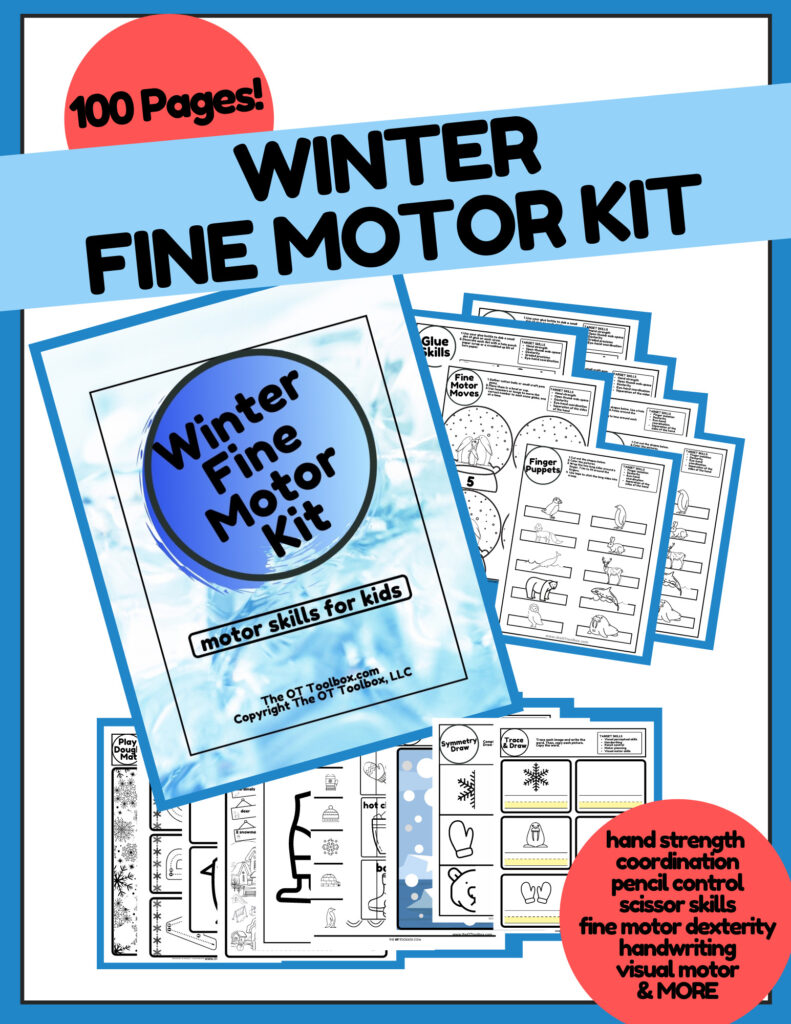
    You’ll also love all of the items in our Winter Fine Motor Kit. It’s loaded with coloring sheets, handwriting pages, puzzles, and crafts with a polar bear theme. There are sensory bin materials, polar bear finger puppets, lacing cards, and so much more.

    winter fine motor kit

    Click here to grab the Winter Fine Motor Kit.

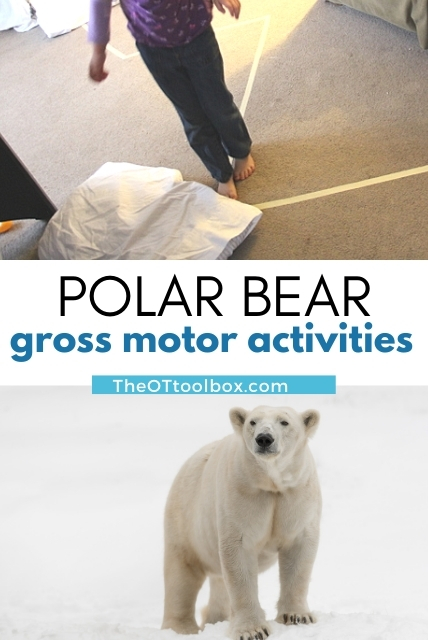
    Polar Bear Gross Motor Activities

    polar bear gross motor activities

     We are continuing with our Polar Bear Theme with all kinds of play ideas.  Check out the polar bear gross motor activities listed here and challenge kids to move, and develop coordination, balance, direction changes, movement patterns, core strength, stability, and more. These polar bear activities go well with our polar bear gross motor virtual therapy slide deck, too, so you’ll want to check that out as well. Add gross motor play to your winter line-up!

    polar bear gross motor activities

    Polar Bear Gross Motor Activity

    For this gross motor activity, you’ll need masking tape, some couch cushions, and other small items (cotton batting, polar bear figures, or other materials can be used).

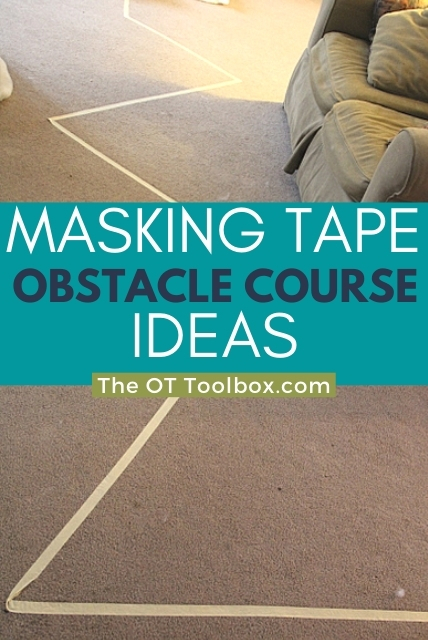
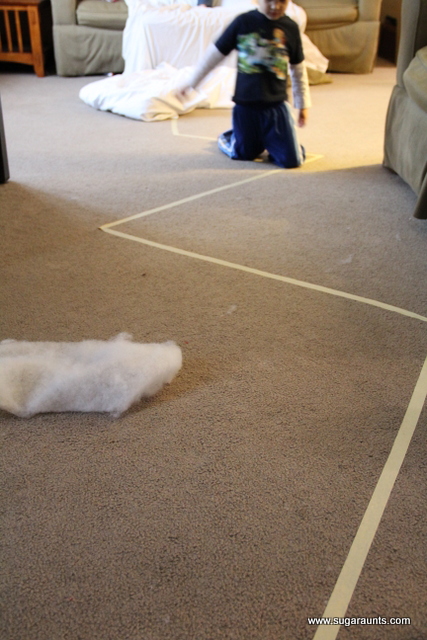
    Start by creating a path with the masking tape. We made a zig zag path across the room, but the options are limitless here.

    The masking tape path is perfect for polar bear crawls, toe walking, walking backwards, and knee walking. 

    indoor obstacle course ideas with masking tape obstacle course

    Masking Tape Balance Beam Ideas

    Once the masking tape is positioned on the floor, there are so many ways to use this in therapy in a classroom, hallway, clinic, or therapy at home activity.

    I put a couple of pillows at the end to make a “snow pile” for the polar bears.  Your kids can jump or hop into the pillows, or use them as balance challenges.

    We put some cotton batting along the path that the kids had to bend and stoop to grasp using one hand or the other. Then, they had to transport the “snow” to the other end of the path.

    Polar bear gross motor obstacle course

    A balance beam is so great for gross motor skills including coordination and balance.  You can start with normal toe to heel steps, and then increase the balance and coordination needed by asking your child to take bigger steps, side steps, backward steps, tip toe, go fast/slow.

    Polar bear gross motor activity for therapy at home or in a clinic.

    Kids can hold an object and transport it from one end of the path to the other. Ask them to hold the item in their hands, on their head, on their toes, or on their back as they bear walk. Objects can be large or small, heavy or light.

    Use couch pillows as pretend ice blocks for the polar bears.

    Use tongs and a small plastic ice cube to incorporate fine motor skills and eye-hand coordination skills. You can place buckets or bins along the path for obstacles to place the small objects in while challenging core strength, motor planning, and movement changes.

    Add buckets or cones along the path for children to step over or hop over. If cones aren’t available, just use couch throw cushions as an obstacle.

    Add a big duvet blanket or other large blanket at one end or both ends as a DIY crash pad for heavy work and proprioceptive input. Crawling into and under the heavy blanket offers heavy work, and that blanket makes a great “igloo” for your little polar bear.

    Advance the motor planning and core development by asking kids to stand along the path as they try to catch/toss a ball, navigate turns, curves, hop…There is so much you can do with the masking tape balance beam!  Add more fine motor skill work by using paper snowflakes along the balance beam.

    Challenge kids in a masking tape obstacle course with a polar bear theme.

    Use a polar bear sensory bin along the path to challenge kids to transport items from one end of the path and to place them into the sensory bin. This is a fantastic occupational therapy or physical therapy intervention that challenges so many skills.

    Use masking tape to make an obstacle course in the living room, with a polar bear theme or other animal walks.


    For more polar bear gross motor activities, (and fine motor work), grab the Winter Fine Motor Kit, with 100 pages of done-for-you therapy activities, including polar bear themes. There are sensory bin materials, crafts, and activities designed to boost fine motor skills. These would be great additions to a polar bear gross motor theme in therapy sessions.

    Grab it now before January 9th and you get a bonus of 3 fine motor slide deck activities.

    CLICK HERE TO GET THE WINTER FINE MOTOR KIT.

    winter fine motor kit

    Colleen Beck, OTR/L has been an occupational therapist since 2000, working in school-based, hand therapy, outpatient peds, EI, and SNF. Colleen created The OT Toolbox to inspire therapists, teachers, and parents with easy and fun tools to help children thrive. Read her story about going from an OT making $3/hour (after paying for kids’ childcare) to a full-time OT resource creator for millions of readers. Want to collaborate? Send an email to contact@theottoolbox.com.
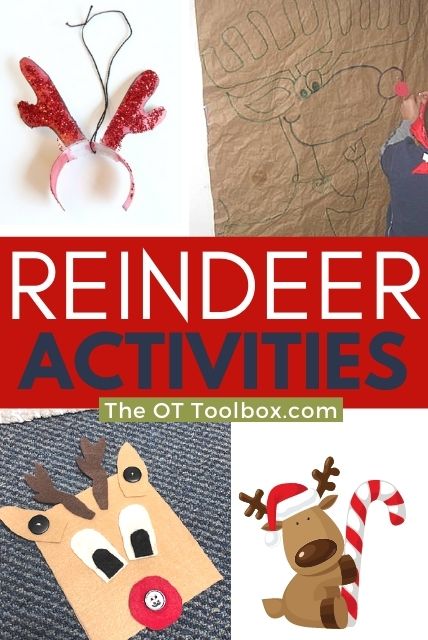
    Reindeer Activities

    reindeer activities for kids

    If you love Dasher, Dancer, Prancer, Vixen, Comet, Cupid, Donner, Blitzen, and of course, Rudolph, then you’ll love all of these fun reindeer activities!  The reindeer crafts and movement activities you see here will get kids grasping, pinching, jingling, buttoning, writing, sniffing, moving, creating, and partying. All of these developmental skills are included with the completion of these fun and festive reindeer activities. Kids will be engaged and motivated to do even the most difficult of tasks. These reindeer play ideas cover a variety of skills. So, let’s get to it! 

    reindeer activities, reindeer crafts, and reindeer art for kids

    Reindeer Activities

    I’ve broken these holiday activities up into sections: sensory activities, fine motor activities, movement, and reindeer crafts. These should help you with therapy planning this time of year. These reindeer fine motor cards will be a fun way to play, too.

    Reindeer Sensory Activities

    First, are some fun SENSORY activities, do you need some sensory tools with a festive reindeer theme? Then here ya go!

    Chocolate Scented Reindeer Play Dough gives you the recipe to create a yummy smelling play dough and when it’s in use as part of an invitation tray, children work on fine motor strengthening as well as tactile tolerance while building fun reindeer faces and more.

    Rudolph Jingle Bell Sticks gives you a fun way to incorporate music jingling into your daily activities.  The sticks include the creation of a unique musical instrument that can be used when working on dance moves, gross motor exercise, or even as a fun reading tracking stick. 

    Reindeer Food Writing Tray provides you a recipe for reindeer food that children create while working on eye-hand coordination to pour, shake, scoop, and stir while creating the food mixture.  Once made, it provides a fun sensory tool for children to work on letter, number and shape formation.  

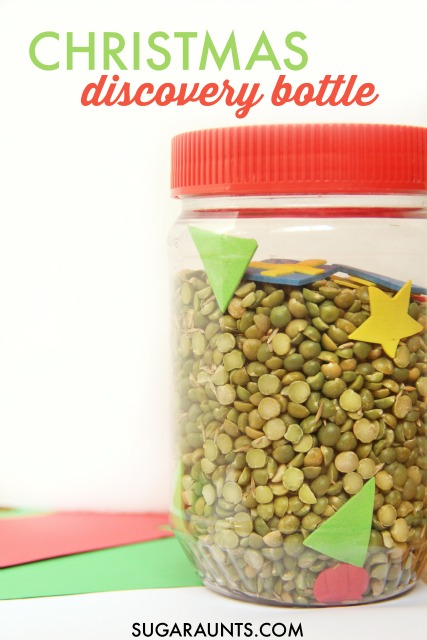
    Christmas Sensory Bottles includes a reindeer-themed sensory bottle that can be used as a calming tool for use in a sensory or calm down corner. Super cute!

    Reindeer Crafts

    Next, are some fun FINE MOTOR and ART and CRAFT activities that can help if you need festive ideas for building fine motor strength, pincer grasp, bilateral coordination, hand dominance, fastener manipulation, tool use, and sequencing skills.  Use these reindeer crafts to help kids develop fine motor skills in a big way. Take a look: 

    Add these reindeer fine motor cards to your therapy toolbox to work on a variety of areas: pencil control, writing lines, coloring, scissor skills, precision, hand strength, spatial skills, and more.

    Olive, the Other Reindeer Book Ornament is a cute ornament craft that uses a recycled toilet paper roll to create a set of antlers. The ornament is based on the book, Olive, The Other Reindeer, who is a dog-reindeer, that’s right a dog-reindeer.  She thinks she’s a reindeer and goes to the North Pole to help Santa and the reindeer save Christmas. Olive earns her own set of antlers from Santa, so, why not create her antlers after reading the book? 

    Reindeer Antler Match includes matching and clipping multi-colored, miniature clothespins onto foam reindeer heads with the matching nose color. Works on pincer grasp and color recognition. 

    Reindeer Buttoning involves the use of felt and buttons to build a reindeer’s face while working on buttoning or unbuttoning skills, sequencing, and following directions.

    Feed Rudolph the Reindeer will work on pincer grasp and eye-hand coordination while children pinch small pieces of pipe cleaner to push through the holes of a recycled spice bottle. 

    Cocoa Pebbles Reindeer Craft includes the use of Cocoa Pebbles to fill a reindeer outline. Have kiddos pinch small piles of pebbles from a bowl and sprinkle onto the outline to work on fine motor pinch skills. Note: With the yummy smell of this cereal while doing the activity, it just might make it a little difficult not to sneak a nibble while creating this cute craft! 

    Toilet Paper Roll Reindeer includes the tracing of hands and cutting them out to create antlers for pasting onto a recycled toilet paper roll. Finish with adding cute googly eyes and a red pom-pom nose. Easy, but really cute and what great skills are worked on with tracing and cutting!

    Yarn Wrapped Reindeer Craft is really a fine motor activity that turns out to be a cute craft when completed. Children wrap yarn around a cardboard triangle, add googly eyes and a pom-pom nose, and then clip on two clothespins that are wrapped with pipe cleaners to create antlers. 

    Preschool Build a Shape Reindeer is a fun way to have prechoolers work on shape recognition by building a fun construction paper reindeer with use of precut shapes. You can easily have a child work on cutting skills with this activity, if you have them cut out the shapes and then assemble the reindeer. 

    Handwriting Reindeer Activities

    Next, are some multisensory HANDWRITING reindeer activities that help children to work on handwriting mechanics along with other skills in a fun and unique way that will motivate them to engage in the task!

    Reindeer Multisensory Handwriting Freebie involves a multisensory approach to handwriting that includes tracing, cutting, pasting, moving, scanning, visual discrimination, and handwriting. Check it out. 

    Meet My Pet Reindeer is a holiday craftivity that includes cutting, tracing, gluing and writing. 

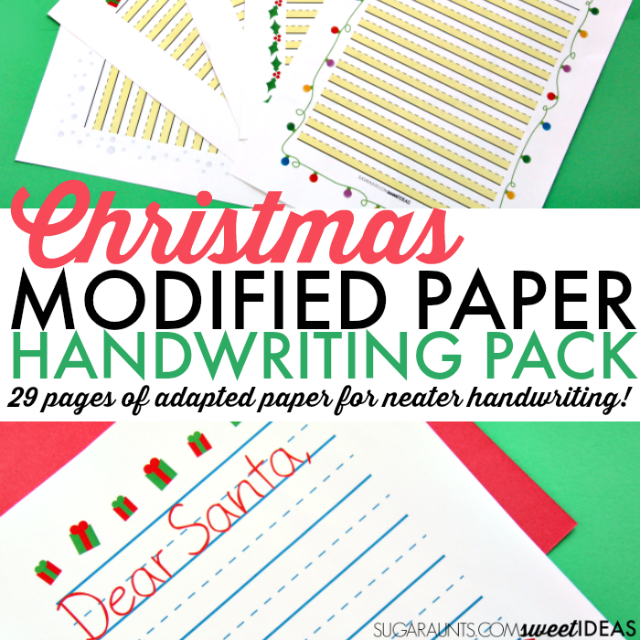
    But, if you just need some festive holiday handwriting paper that is modified to help a variety of children with their handwriting needs, check out this Christmas Modified Handwriting Paper, by The OT Toolbox. 

    Gross Motor Reindeer Activities

    Next, are some super fun GROSS MOTOR Reindeer Activities that could be used for transitions while building gross motor skills and working on motor planning too!  Fun activities that can be used at home, at school, and during remote learning or therapy. 

    Try the pin the nose on the reindeer activity in our Reindeer Party Games for a gross motor game with the whole family.

    Reindeer Brain Breaks is just that, a break for the brain with a reindeer theme! Each of Santa’s reindeer has a brain break card and children can use them while at home, during a transition, in the classroom, or while online. These brain break moves can easily be done in small spaces making them perfect for most anywhere! 

    Reindeer Testing will get kids moving as they perform some fun reindeer moves that may be needed when pulling Santa’s sleigh! This fun resource helps to get kids moving while testing their reindeer skills with running, jumping, stomping, and prancing. 

    Reindeer Boot Camp is an excellent source for gross motor activities and they are perfect for either a classroom, home party or just to get kids moving! The reindeer training activities include balancing, galloping, leaping, scooter pulling, and tossing bean bags at a target. Don’t have been bags? That’s okay, use some stuffed animals. 

    Reindeer Games Camp is a boot camp that works on a variety of gross motor skills. Children will pull sleighs, do agility drills, do hoop and cone training, practice reindeer moves, and work on present stacking. These skills are important when you’re a reindeer!

    Lastly, do you need a resource that literally has all you need in one place?  Try this fun resource by The OT Toolbox called, Reindeer Playdate Party. There is food, activities, snacks, and reindeer games! This will give you all you need to party like the Reindeer! Have fun!

    Try these ideas for more Christmas activities that help kids develop skills…Just click on the images below for holiday fun!

    gingerbread man activities
    Christmas occupational therapy interventions
    Christmas Fine Motor activities

    Colleen Beck, OTR/L has been an occupational therapist since 2000, working in school-based, hand therapy, outpatient peds, EI, and SNF. Colleen created The OT Toolbox to inspire therapists, teachers, and parents with easy and fun tools to help children thrive. Read her story about going from an OT making $3/hour (after paying for kids’ childcare) to a full-time OT resource creator for millions of readers. Want to collaborate? Send an email to contact@theottoolbox.com.
    Peppermint Moon Dough Recipe

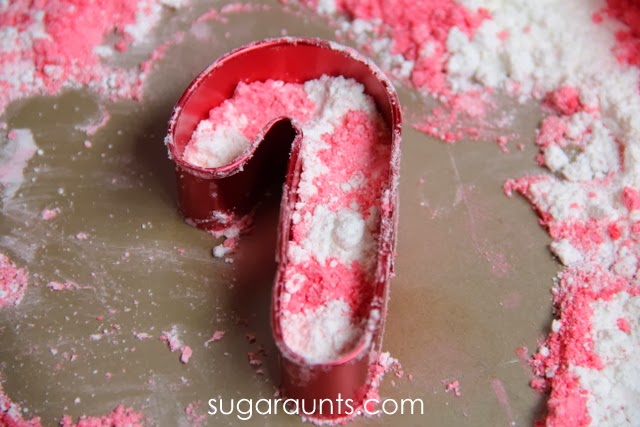
    Moon dough recipe is a peppermint dough recipe for Christmas sensory play.

    Have you ever played with moon sand, or moon dough? This moon dough recipe is an old post here on The OT Toolbox, and one that we loved looking back at. Have you made your own moon dough?  This stuff is seriously messy and majorly fun!  We made our Peppermint Moon Dough recipe a little different than the usual moon dough recipe that is out there.  This moon dough recipe is very soft and fun even for moms to play with!  It’s a great companion to our peppermint play dough recipe from years ago, and our free printable candy cand puzzles, too.

    Moon dough recipe is a peppermint dough recipe for Christmas sensory play.


    Moon Dough Recipe

    We started with what we had on hand.  When it comes to kid-related messy play and making these sensory play activities, we love to use something that otherwise would be thrown away.  Likewise, waste in these activities is not something we are big fans of.  So, when ever possible, we’ll re-use sensory play materials for other activities and save things like dyed pasta and rice for future sensory activities.  

    Note: This post contains affiliate links.  

    This moon dough recipe used something that would otherwise be headed to the trash bin…I had some scented lotion that I had for a while… I really didn’t care for the scent.  That and some corns starch were all that were needed to make the base of our moon dough!  

    Moon Dough Ingredients

    There are only four ingredients in this easy moon dough recipe. You could even omit the food coloring and make this a 3 ingredient moon dough recipe!


    To make the consistency of moon dough, use a 4:1 ratio of corn starch to lotion.  This will make a nice and fluffy, but moldable moon dough. 

    We added a few drops of peppermint extract and some red food coloring.  We used the gel type of food coloring, but only because that is all we had on hand.  I’m sure liquid food coloring would work just as well, although with the added liquid of scent and food coloring, a little extra corn starch might be needed. 

    Also to note when making your moon dough recipe is that different brands of lotion may effect this recipe.  As you mix the ingredients together, you many need to use more or less corn starch depending on the consistency.

    Moon dough recipe that kids can make for a Christmas sensory activity. Make this candy cane scented sensory dough with kids.

    Half of the moon dough, I kept plain white and the other half got the red food coloring for a very candy cane look.   Add a few little bowls and spoons for scooping, and a couple of Candy Cane cookie cutters, and we were ready to play!

    Peppermint dough for Christmas sensory play with an easy moon dough recipe.

    We all got busy scooping, fluffing, and mixing.  This was such a fun sensory play experience (for mom, too!)  The lotion made this dough very soft and with the peppermint scent, you could no longer smell the lotion’s scent.

    Peppermint moon dough recipe that kids can use to scoop and pour for fine motor work.

    Baby Girl (age 2) especially loved to scoop the moon dough.  She used the spoons and filled one cup after another.  And what great fine motor skills this was for her!  She liked to mix the red and the white colors together, dump it all out, and start scooping again!  Here is information on the developmental benefits of scooping and pouring with toddlers.

    We played right on the hard wood floor of our dining room for an easy clean up.  Any stray moon dough bits were easy to broom right up.  

    Moon dough activity for kids to scoop and pour for a holiday sensory activity.

    Little Guy’s favorite part was making the candy cane molds.  We packed the moon dough into the cookie cutters and then pulled it up.  The moon dough would hold it’s shape of the candy cane.  There were a bunch of little moon dough candy canes before we finished!

    Candy cane moon dough is a sensory material that smells so fresh for holiday family fun.

        The scent of peppermint candy canes filled the room!  We had so much fun playing with this moon dough!   

    Christmas sensory dough with a 4 ingredient moon dough recipe.

    When we were finished playing, I poured all of the moon dough into a storage bad and saved it to make a new play activity.  We’ll be using it again, soon!

    Have you made moon dough? How about candy cane scented moon dough? 

    Looking for more fun candy cane scented sensory play? 

    More Christmas sensory ideas

    You’ll find more Christmas sensory activities here, but be sure to try some of these sensory dough materials this holiday season.

    Christmas modified paper

    Christmas Modified Paper Pack

    Colleen Beck, OTR/L has been an occupational therapist since 2000, working in school-based, hand therapy, outpatient peds, EI, and SNF. Colleen created The OT Toolbox to inspire therapists, teachers, and parents with easy and fun tools to help children thrive. Read her story about going from an OT making $3/hour (after paying for kids’ childcare) to a full-time OT resource creator for millions of readers. Want to collaborate? Send an email to contact@theottoolbox.com.
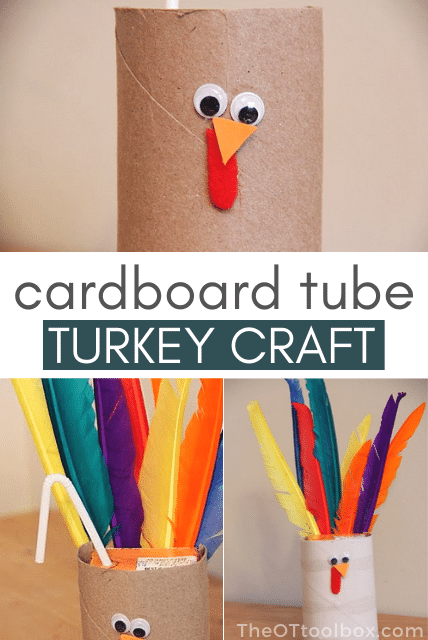
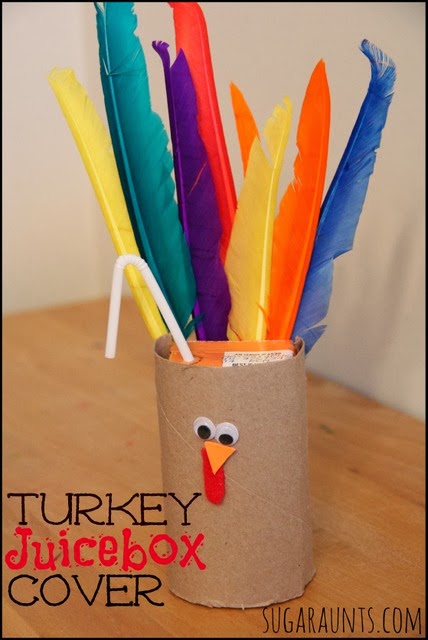
    CARDBOARD TURKEY CRAFT

    Cardboard turkey craft that doubles as a juicebox cover and an oral sensory tool

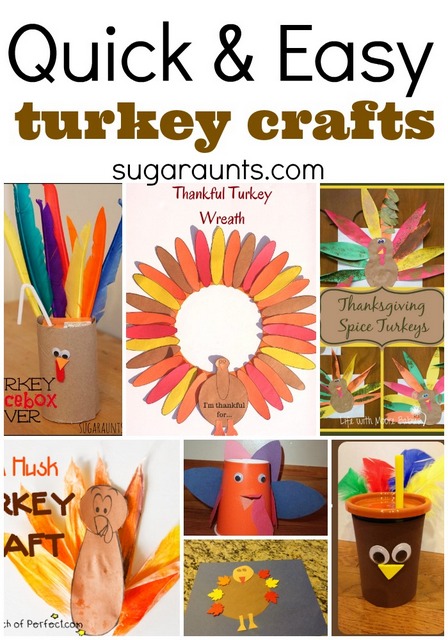
    Turkey crafts are all around this time of year!  This fun cardboard turkey is a great Thanksgiving activity that doubles as a therapy tool for kids. It is a juicebox cover, making it a fun way for kids to use their little cardboard turkey, but it also is a fine motor craft AND a way to help kids regulate by adding proprioceptive input through oral motor sensory input. We’ll get into more on this below.

    Cardboard Turkey

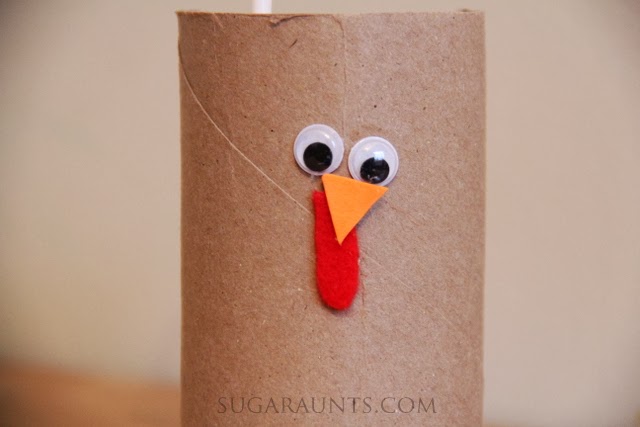
    While taking the time to run out and purchase craft materials can be difficult this time of year, and adding that extra expense isn’t always a possibility, using materials that you have on hand for kids crafts is the way to go. This cardboard turkey is a cardboard tube craft. We used a cut paper towel roll for the turkey craft and had some of the other materials in our craft closet.

    For this cardboard turkey craft you’ll need just a few materials:

    Amazon affiliate links included below.

    • Cardboard roll (paper towel roll)
    • Feathers (these are available at the dollar store, or on Amazon, but you could substitute these with paper cut feathers, too.)
    • Red and orange paper (or draw them on with a marker)
    • Googly eyes
    • Glue
    • Tape
    • Juice box
    Love this cardboard turkey craft. It's a Thanksgiving Turkey Juicebox Cover that kids will love to use.

    Glue those details onto the cardboard roll and this turkey is ready to make someone smile!

    Cute cardboard turkey craft, a Thanksgiving Turkey Juicebox Cover for kids.

    Colored feathers and googly eyes, along with a couple of little crafting scraps made a simple cardboard tube into a party-friendly turkey… just in time for Thanksgiving dinner!

    If you are just making a cardboard turkey craft and skipping the juice box cover portion of this Thanksgiving craft, you could definitely use a recycled toilet paper roll to make a cute toilet paper roll turkey craft. But, if you are going to make this into a juicebox cover, I would go with using a paper towel roll instead.

    So, let’s discuss the benefits to making this turkey craft into a Thanksgiving juice box cover…


    Turkey Juice Box Cover

    This cardboard turkey would work without the juice box part, but we added that as an oral sensory input opportunity to allow children to get a little calming sensory input through the straw. Plus, it’s a great way for children to see their handiwork in action right on the juice box.

     To make the cardboard turkey into a juice box cover, cut the paper tube with one cut strait down.  Wrap the cardboard tube around the juice box and secure with clear tape.  Gather your colorful feathers and tape in place on the back of the juice box.  

    Kids can make this cardboard turkey craft and gain organizing oral sensory benefits from drinking from a small straw.
    Tape feathers to the back of a juice box to make a turkey craft for kids at Thanksgiving dinner table.

    Oral sensory input with a straw

    Sucking is a form of calming sensory input through the mouth, and it’s a way to offer children organizing sensory input in situations when they might have trouble regulating their sensory systems.

    Sucking through a small straw like a coffee stirrer can be calming and provide organizing input, a juice box straw is an easily accessible sensory tool that might be overlooked.

    When kids such through that small straw, they are getting heavy work, or proprioception through the mouth and jaw. This is very organizing for children as it allows them to become aware of proprioception (even if they don’t realize it). This deep pressure allows for resistive work in the mouth. It takes effort to suck in through a small straw, and that offers a quick way to add calming input.

    Sucking in through a small straw is a way to offer sensory input for sensory seekers, but it’s also a way to support a child’s sensory needs by offering calming and resistive oral motor input.

    Now, the parents reading this are probably thinking the same thing that I immediately think of when I see a small child with a juice box. What happens as soon as that child has a juice box in their hand? They squeeze it and juice streams out of the straw all over the place, right?

    Here’s the thing about juice boxes- there is a contradiction on it’s benefits and detriments. The oral sensory input when a child sucks on a juice box straw is perfect for helping kids with sensory needs, and to help them develop oral motor control. However, that squeezable little cardboard box is so easy to squeeze the juice right into a toddler’s mouth.

    So, using a juice box cover that invites children to gently hold the juice box, rather than squeezing it in a death grip of streaming, sticky juice is so powerful! Children can use the turkey juice cover we made and either not use their hands to squeeze the juice box OR, they can gently hold the turkey craft and use their mouth to suck the juice. They can gaining oral sensory input and oral motor skills. What a win-win!

    Here is more information on oral motor skills development.

    Read here to understand the connection between oral motor skills and problem eating.

    This is a great resource on pediatric feeding and the differences between sensory issues and oral motor issues.

    This oral motor exercise is another way to add proprioceptive input through the mouth as a calming and organizing sensory tool.

    Wouldn’t this little guy be perfect for a preschool party or on the kid table at Thanksgiving dinner?

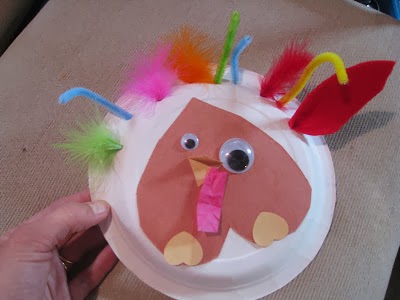
    Looking for a few more cardboard turkey crafts?

    Try these:  

    Recycled Paper Roll Turkey Stamp Craft

    Fine Motor Turkey Craft

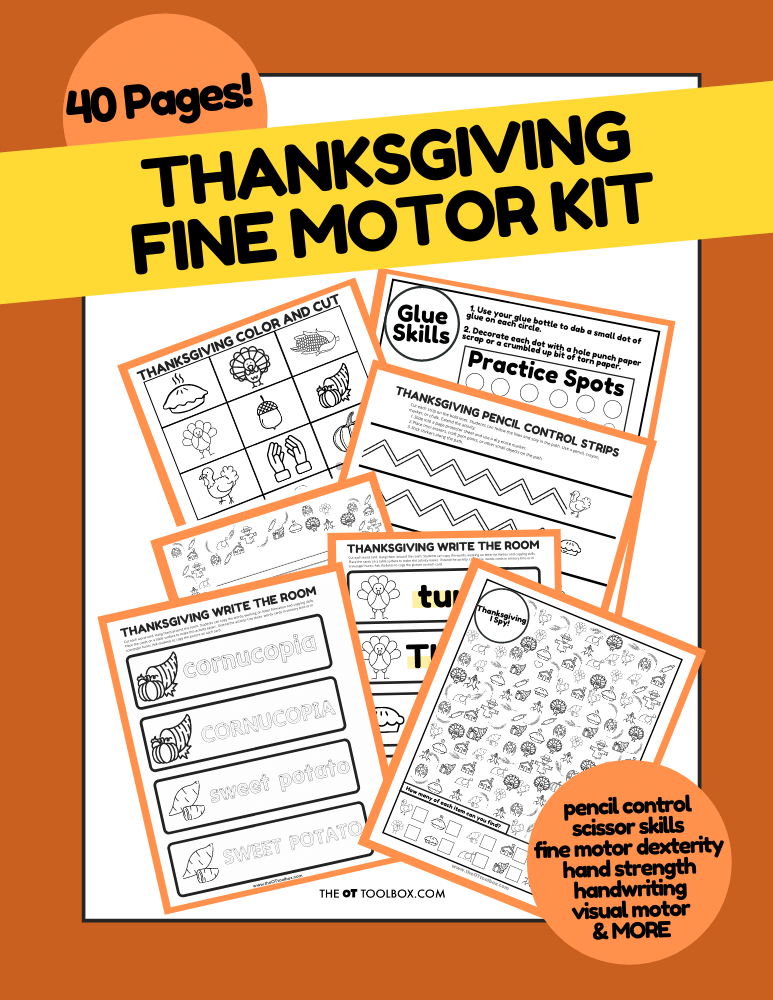
    Thanksgiving Fine Motor Kit

    Thanksgiving Fine Motor Kit…on sale now!

    Colleen Beck, OTR/L has been an occupational therapist since 2000, working in school-based, hand therapy, outpatient peds, EI, and SNF. Colleen created The OT Toolbox to inspire therapists, teachers, and parents with easy and fun tools to help children thrive. Read her story about going from an OT making $3/hour (after paying for kids’ childcare) to a full-time OT resource creator for millions of readers. Want to collaborate? Send an email to contact@theottoolbox.com.
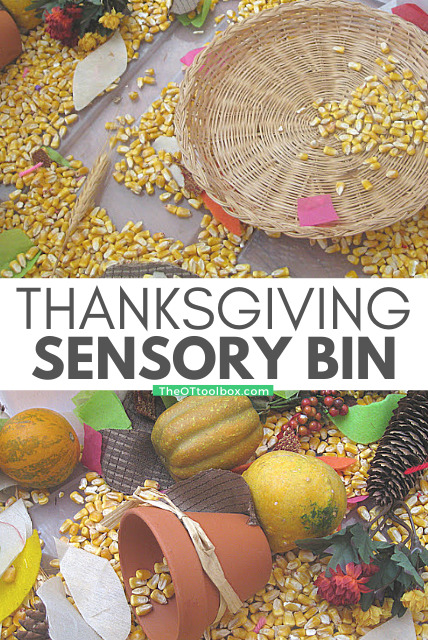
    Thanksgiving Sensory Bin

    Thanksgiving sensory bin

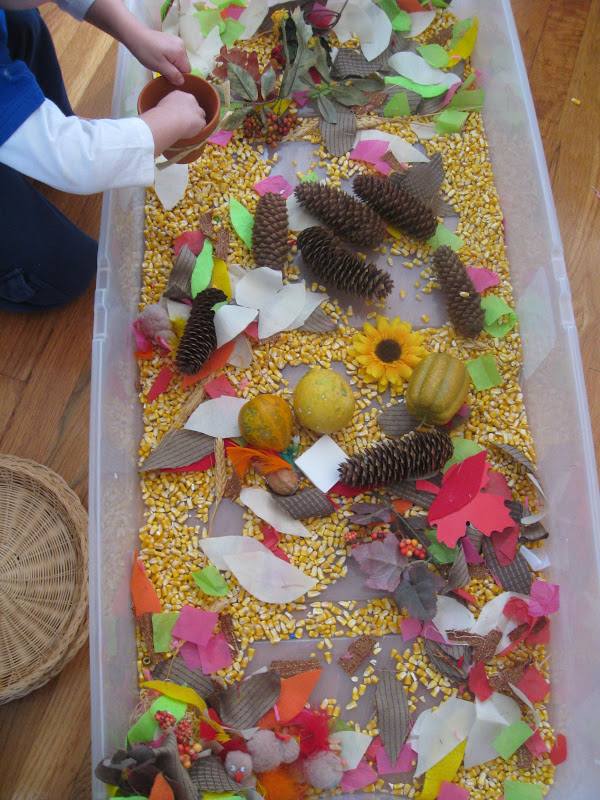
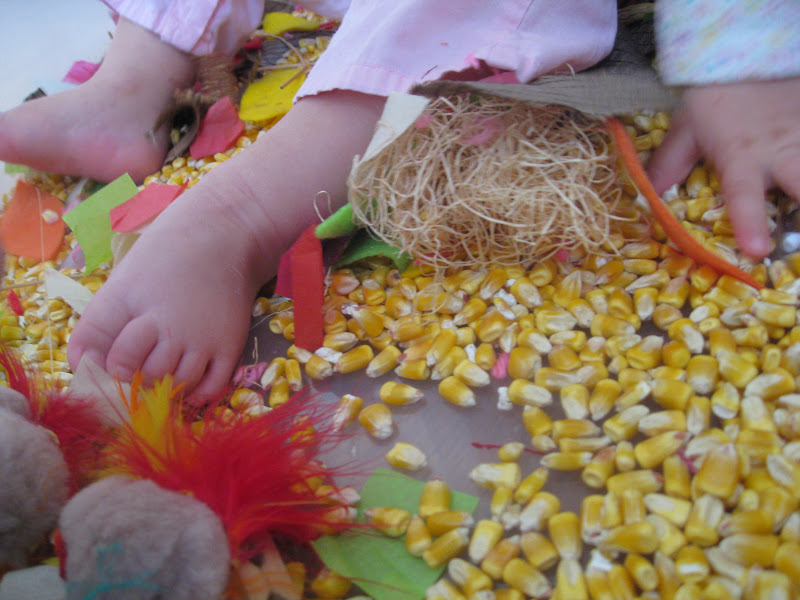
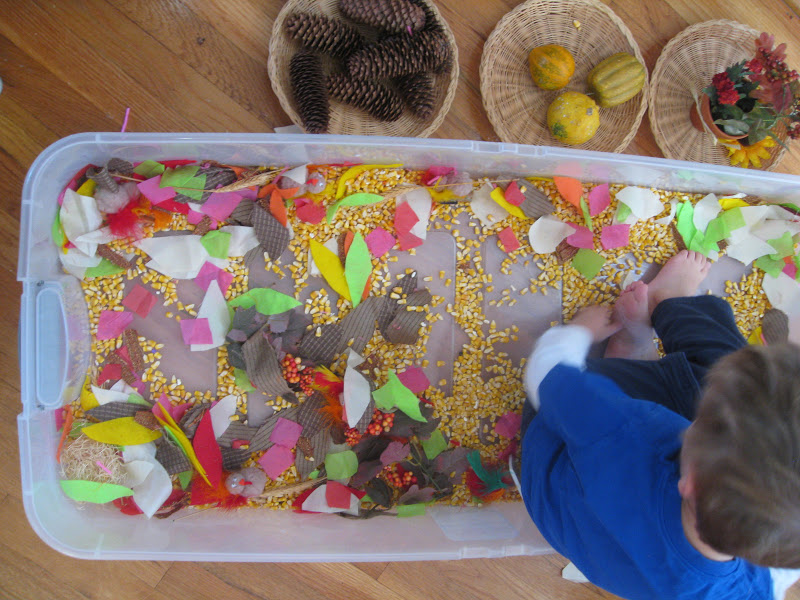
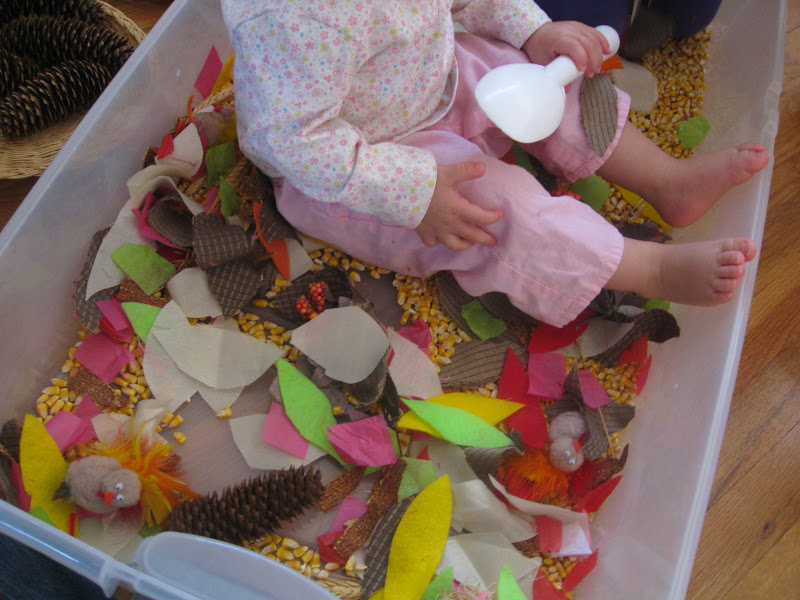
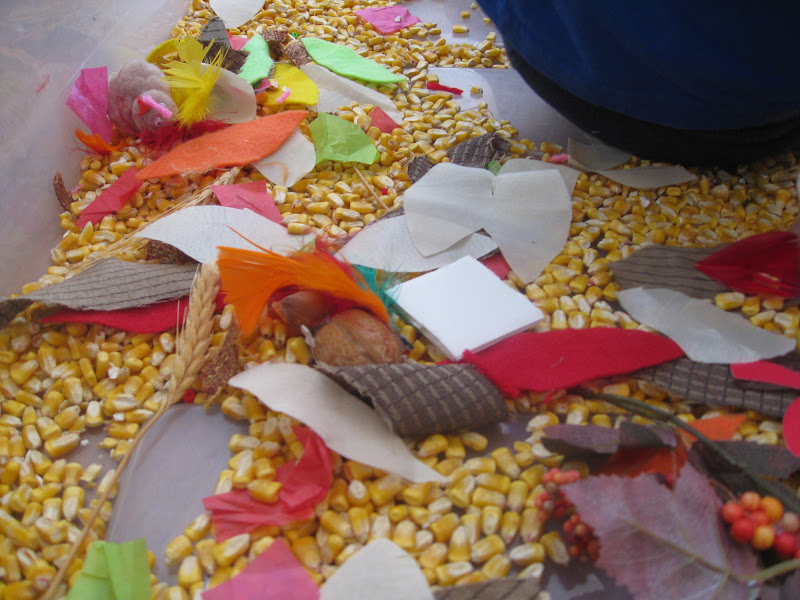
    This Thanksgiving Sensory Bin was a fun way to foster imaginative play and develop motor skills through a sensory, textural experience. The sensory bin is a Thanksgiving activity that we enjoyed, but it would make a fun Fall sensory bin too, as it used many colors and textures of Fall. Adding in field corn, dry leaves, feathers, textured materials adds opportunities for scooping, pouring, and exploring with a Thanksgiving theme!

    Thanksgiving sensory bin for kids to play and explore textures while building fine motor skills.

    Thanksgiving Sensory Bin

    Sensory Bins are so great for exploring textures and fostering imaginative play.  They are so easy and inexpensive to make up  and can go in any theme…If your son loves superheroes, throw Spiderman figures into a bin of rice with a couple of Halloween spider rings, and you have an instant play area that can last all day long!  Use items and toys that interest your child’s passions for a sensory play experience that can also build skills.

    While the kids are exploring, imagining, fostering creativity, they are learning so much…building their confidence,  language skills, fine motor dexterity…and SO much more!    

    This holiday sensory bin offers a chance for kids to talk about Thanksgiving and discover items that foster thought, creative thinking, or family-centered materials. Items in the Thanksgiving Sensory bin can inspire gratitude and can be centered on what’s important to your family.

    Thanksgiving sensory ideas for sensory play and exploration, using many Fall materials.

    Thanksgiving Sensory Bin Base Materials

    Sensory bins can be made from any dry or wet material, water, shredded paper, packing peanuts…The possibilities are endless. Here are sensory base ideas to start with.

    To make this Thanksgiving sensory bin, you can use materials that you find around your home or outdoors. Other items can be found at the dollar store.

    Start with your Thanksgiving sensory play base material. Some ideas include dry field corn or regular popcorn, rice, dry beans, split peas. Non-food sensory bin materials can include shredded paper, feathers, or Fall leaves from outside. Dump the sensory bin base material into an under-the-bed-storage bin or other large, low bin or tray.  

    NOTE: Be prepared for corn/rice/split peas to scatter all over the floor.  Ignore it. Play with the kids, they can help clean up later…working that pincer grasp to pick up grains of corn from the floor 😉   Or not… Either way, enjoy the play/learning/growth experience with your kids and don’t worry about the mess. Brooming up corn into a dustpan is another fantastic occupation for kids. 🙂

    If keeping the spill factor to a minimum is a must, try using a tablecloth under the sensory bin. Or, take the sensory bin outdoors if you like.

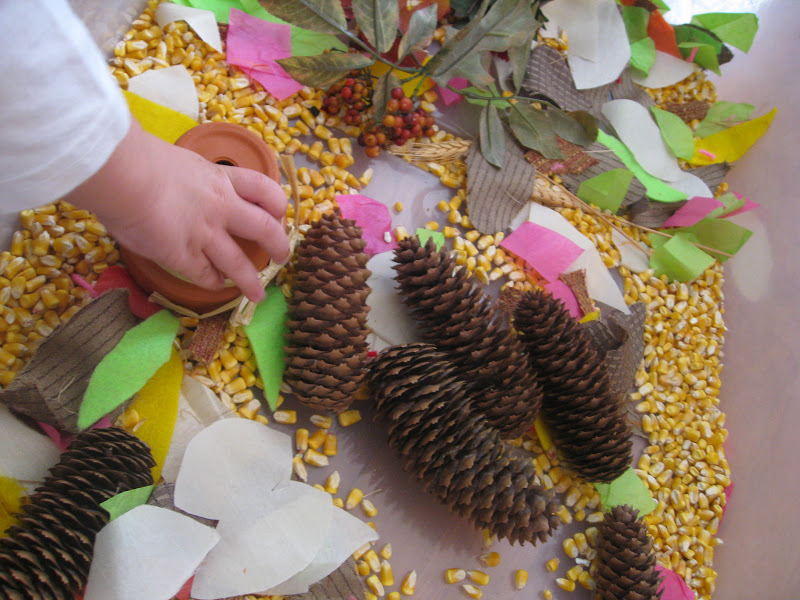
    Thanksgiving sensory play ideas for kids include making a sensory bin with turkeys, wheat stalks, gourds, and more.

    Add Thanksgiving Items

    Next, add materials to manipulate, find, hide, scoop, and pour.

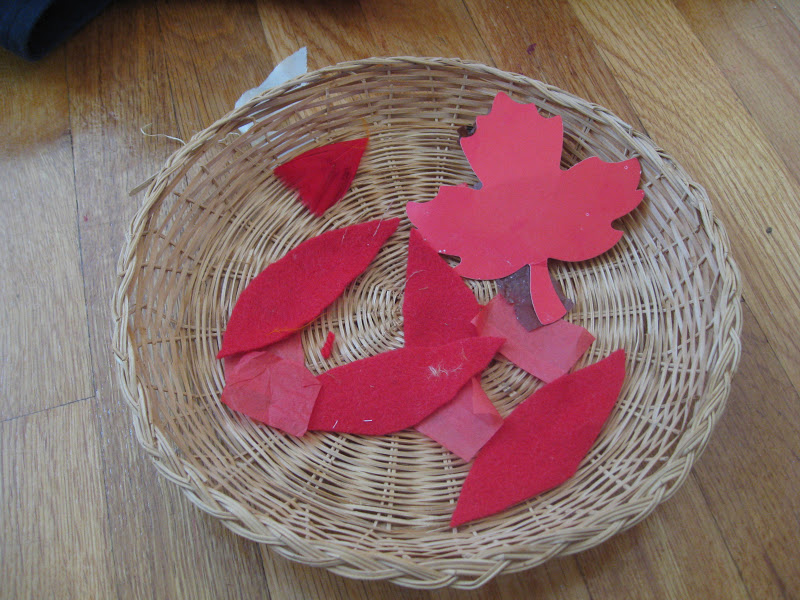
    Make the Thanksgiving sensory play meaningful by adding items that foster gratitude and thankfulness. One sensory bin item can include gratitude leaves like we made for our Thanksgiving tree. Cut paper leaves and each family member can write what they are thankful for. Scatter the leaves in the sensory bin. Best of all, you can reuse those gratitude leaves after the sensory play is done. Make a Thanksgiving tree like we did, or hang them on a Thanksgiving garland.

    Other Thanksgiving Sensory Bin materials include:

    • Fabric scraps
    • Gratitude leaves
    • Fake leaves
    • Real leaves
    • Paper leaves
    • Fall décor
    • Feathers
    • Acorns
    • Scraps of paper
    • Gourds
    • Decorations
    • Turkey figures
    • Wheat sprigs
    • Pine cones
    • Acorns
    This Thanksgiving sensory bin offers opportunities for fine motor skills.

    ADD Sensory Bin Scoops

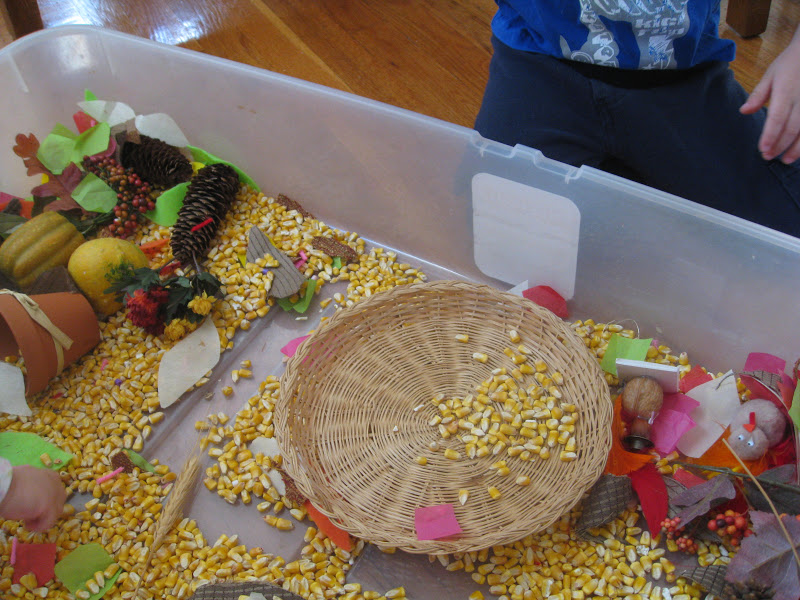
    One final piece to a sensory bin are tools to scoop, pour, and sort. These items help to develop areas like fine motor skills, dexterity, eye-hand coordination, and bilateral coordination.

    Pouring and scooping are an oppourtunity to work on refined motor skills as kids pour the materails without spilling. They can explore how much to tilt the container or how much precision is needed to scoop the materials they want to manipulate.

    Some manipulating items to consider for a Thanksgiving sensory bin include:

    • Cups
    • Tongs
    • Tweezers
    • Baskets
    • Small cups
    • Spoons
    • Small bowls

      And baskets for sorting!  

    Use baskets, cups, and scoops to help kids build fine motor skills in a Thanksgiving sensory bin.

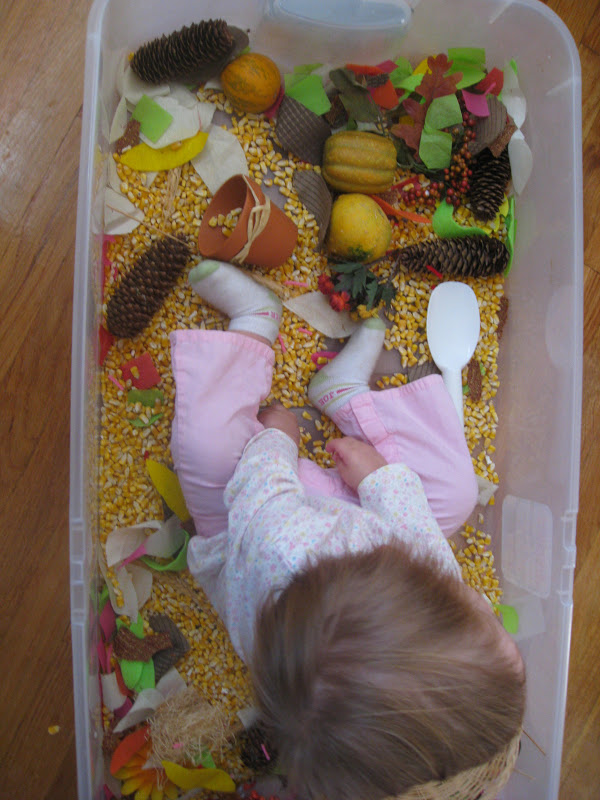
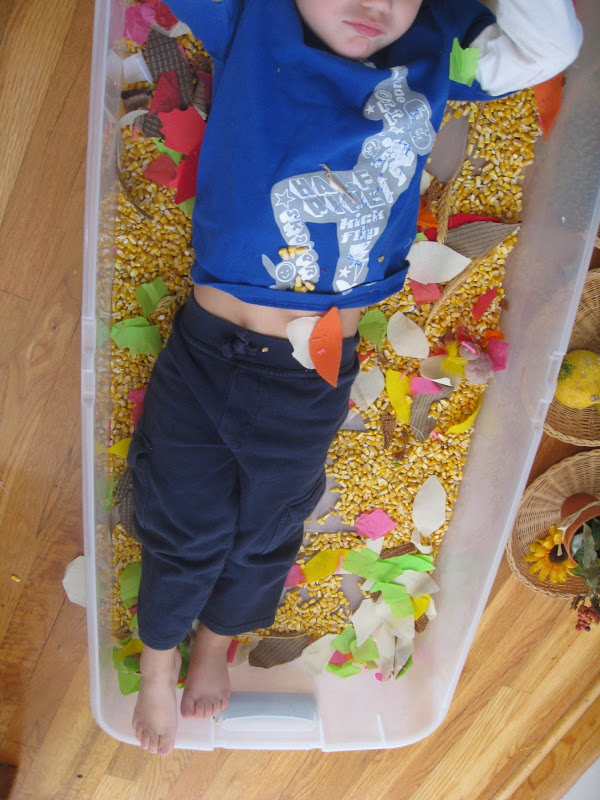
      Baby Girl thought it would be more fun to climb INTO the corn bin!  

    Sensory bin ideas for toddlers

      It feels great on the toes!    (Yes, I stuck my toes in the corn with the kiddos… NO, I will not harm your eyes with THAT picture!)  

        Cute baby toes, YES, we need more pictures of those!   

    Thanksgiving sensory bin for toddlers using materials to explore sensory.

        Big Sister started the sorting game.  She collected all of the flowers into this pot.  

    Thanksgiving Sensory Bin for Learning

    Work on specific concepts with your sensory bin, including:

    • Sorting by colors
    • Adding or subtracting
    • Sorting by patterns or textures
    • Sort by type of object
    • Spatial awareness
    • Size awareness
    • Sort by texture
    • Shapes

    Use a sensory bin to help kids learn to sort by color.

    Sorting by Color…

    Sorting by Object…

    Little Guy thought we needed to sort the socks… 🙂

    Sensory bin ideas for Thanksgiving include sorting items by texture, shape, and color.
    Thanksgiving sensory ideas include this sensory bin with items to scoop and manipulate.

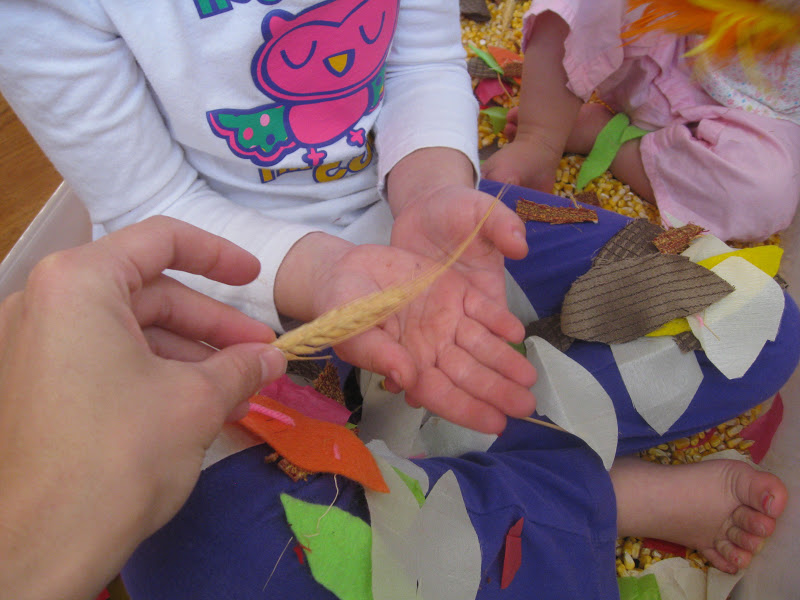
      Everyone enjoyed talking about and feeling the objects… Scratchy wheat stalks:  

        Soft feathers (these were cut from scraps of fabric I had around the house):  

    A toddler sensory bin can include different materials and items to explore.

     Little Guy thought it would be pretty fun to lay IN the cool corn to see how that felt: “It’s pretty comfy, Mom”!  

          How many kids can you fit into a bin? It looks like the answer is three. 🙂  

    Sensory bin materials include dry corn, fabric swatches, feathers.

          There were lots of colors and textures to explore in this sensory bin!    

    Thanksgiving theme sensory bin for exploring colors and textures.
    Thanksgiving sensory bin to manipulate and build fine motor skills.


     Scooping, sorting, exploring the senses, fostering creativity, building language skills, working on fine motor skills…We did so much more than just playing with this fun Thanksgiving Sensory Bin! I am Thankful for Today!    

    Have you made a fall themed sensory bin? 

    More Thanksgiving activities

    Colleen Beck, OTR/L has been an occupational therapist since 2000, working in school-based, hand therapy, outpatient peds, EI, and SNF. Colleen created The OT Toolbox to inspire therapists, teachers, and parents with easy and fun tools to help children thrive. Read her story about going from an OT making $3/hour (after paying for kids’ childcare) to a full-time OT resource creator for millions of readers. Want to collaborate? Send an email to contact@theottoolbox.com.

    Mask Social Story Slide Deck

    wear a mask social story for sensory issues

    Here, you can get a mask social story for kids with sensory needs. Trying to help kids with the task of wearing a mask? Social stories are a great tool for explaining concepts using pictures and affirming words. This social story about face masks is an important one for kids. Whether face masks are needed for immunity needs, doctor or hospital visits, health or safety needs, or something else, it can be important concept to address with children and a social story about masks is a great visual tool.

    Social Story about Wearing Masks

    When our kids were moving from full virtual to hybrid learning, so that means kids that have been out of the classroom since March are now going to be back in the physical school location, wearing masks was a new and different thing!. And, getting kids to wear masks…and keep those masks on…can be a real concern, especially for kids with sensory needs!

    Today, I’ve got a free teletherapy slide deck to help kids learn the importance of wearing a mask and it covers the sensory concerns that might come up with mask wearing. This slide deck is a social story for mask wearing with sensory issues, so it adds a story component while allowing kids to understand why they need to wear a mask when it feels itchy or scratchy. This slide deck is free, so grab it below.

    Get this free mask social story to help kids with sensory needs tolerate and accommodate for mask wearing.

    Wearing a mask with sensory needs

    For kids with sensory needs, wearing a mask can be a big problem. But some schools, businesses, and situations require a mask for entry. So how does the child with sensory needs deal with this situation? For some, the softest of face masks can feel scratchy or itchy. It can make others feel like they are contained. Still others are frustrated wtih the feel of mask straps behind their ears.
    Kids with sensory needs and masks don’t mix!

    That’s why I wanted to put this social story together and get it into your hands. Because some kids are truly struggling with wearing a mask and don’t understand why they need to have this itchy, scratchy fabric attached to their face!

    Help kids wear a mask when they have sensory preferences due to sensory processing disorder.

    Wearing a Mask Social Story

    Some kids respond really well to social stories, so this slide deck should be a good way to teach this concept. I’ve made the slide deck interactive, so kids can read through the slide, and move the checkmark to the “finished” square once they understand the concept on each slide.

    Kids with sensory needs can struggle with wearing a mask. This mask social story can help if the mask feels too tight.

    The slides cover various aspects of masks for kids with sensory needs, including how masks feel on the skin, or how they may make a person feel hot.

    I’ve also included slides in this social story that tell the reader they can ask for help if they need it when wearing a mask.

    Some children may chew on their face mask to meet oral sensory needs as calming input when they attempt to self-regulate. However, another sensory tool could be used in place of the mask. This sensory social story helps kids to understand that by reading the words of the story and by matching those words to the image.

    Kids with sensory needs can feel a mask as too tight or scratchy. This mask social story can help.

    Kids with sensory needs or those with sensory processing disorder may feel the temperature difference between having a mask on or off. This mask sensory story covers those issues.

    You’ll find slides for kids that feel that mask move in and out with their breath, as well. All of these sensory sensitivities can be very apparent with the use of a face mask!

    use this free mask social story in teletherapy or to help kids with sensory needs adjust to wearing a mask by offering other alternatives that meet their sensory needs.

    Free slide deck for wearing a mask with sensory needs

    To get this slide deck, enter your email address below. By doing this, I am able to deliver the slides to your email inbox.

    Be sure to log into your Google drive first. You will get a pdf that you can save and use over and over again. Click the document to make a copy of the slide onto your drive.

    Use the slide deck in “edit” mode to allow students to move the check marks on each slide as the individual slide is read. You can also use this slide deck in “present” mode, but the movable piece won’t work.

    Get this Free “Wearing a Mask” Social Story slide deck

      We respect your privacy. Unsubscribe at anytime.

      Colleen Beck, OTR/L has been an occupational therapist since 2000, working in school-based, hand therapy, outpatient peds, EI, and SNF. Colleen created The OT Toolbox to inspire therapists, teachers, and parents with easy and fun tools to help children thrive. Read her story about going from an OT making $3/hour (after paying for kids’ childcare) to a full-time OT resource creator for millions of readers. Want to collaborate? Send an email to contact@theottoolbox.com.