Colleen Beck, OTR/L is a pediatric occupational therapist and the owner and author of The OT Toolbox website. She manages all of The OT Toolbox social media accounts and runs the popular newsletter.
Read about Colleen's experience and career as an occupational therapist, including how The OT Toolbox began on our About The OT Toolbox page: https://www.theottoolbox.com/about-us/
Colleen created The OT Toolbox in 2011 and since then has written thousands of blog posts designed to support therapy providers, educators, parents, counselors, admin, and caregivers in promoting the healthy development of kids.
Check out Colleen's blog posts below:
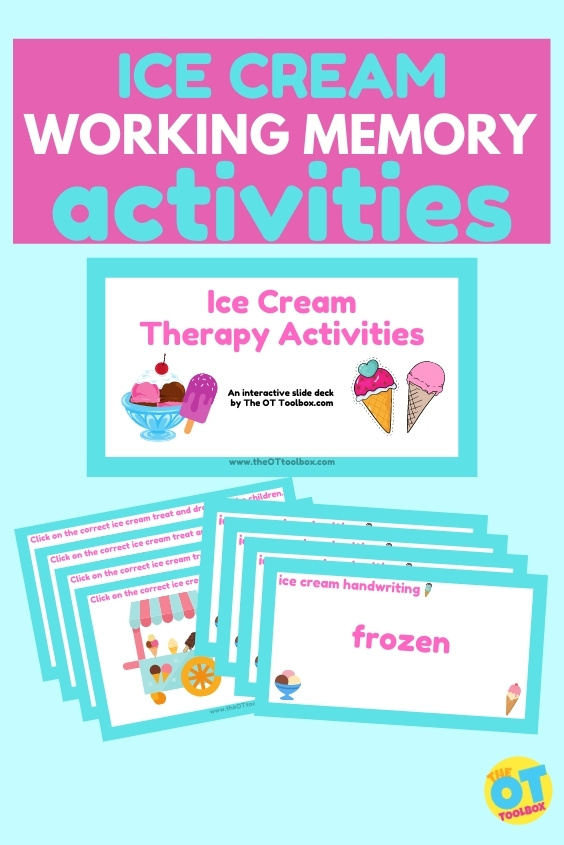
This ice cream activity is also a working memory activity that combines the two themes into a hit of a therapy tool…a lot like combining ice cream and sprinkles! If building working memory skills this summer is on your to-do list, than this interactive ice cream ice cream activity is sure to be a hit! Add this to your summer OT activities and let’s build executive functioning skills!
Working Memory Activity
Working memory is a skill that can be difficult for many children but is used and needed for so many functional tasks. Working memory is an executive functioning skill that kids need for safety completing assignments reading participating in self-care tasks interacting with others and basically every task that we complete throughout the day.
We use working memory to complete school tasks, self-care tasks, and everyday living tasks!
Processing short term memories and using it allows us to respond in new situations. Working memory allows us to learn, play, and interact with the world around us. The skill allows us to self-regulate, and pull strategies that have worked (or didn’t work) for us in the past. Using working memory skills we can use past information in reading in order to read, spell, know math facts, phone numbers, faces, addresses, sight words…and so much more. We can remember our way back home, state capitals, mnemonics, phone numbers, addresses, and friends’ names. We can then use that information to answer questions based on what we know and apply that information in new situations. All of these abilities are working memory at work!
Ice Cream Working Memory Activity
That’s where this ice cream activity that address is working memory is comes in handy.
This ice cream working memory activity is a free virtual slide deck that can be used with teletherapy or to facilitate face-to-face therapy sessions as well as home programming or school activities.
In the ice cream working memory slide deck kids can move through the slides and work on various skills while they complete each slides instructions. The slide deck is designed to support and practice skills including:
working memory
visual attention
visual scanning
eye-hand coordination
direction following
sequencing
This slide deck is able to be graded to expand the activities and make them easier or harder for individual students based on their needs.
You can grade the activities by asking students to complete two or more tasks for each slide.
For example you can read the directions on the slide and then add additional steps or additional details that they need to remember and recall. Each ice cream ice cream on the slide deck is movable so this interactive slide deck is an interesting and fun way to work on specific skills for kids. When you open this slide deck in your Google Drive you can edit it in order to move the individual ice cream cones.
This is an engaging and motivating way for kids to work on listening sequencing motor planning and direction following. And this slide deck can be adjusted so that it addresses specifically different needs for kids you can for example move the ice cream cones to other areas on the slide that were give them to individual children based on descriptive colors or positions so that you’re working on other skills as well such as body awareness and position in space or other listening and comprehension skills.
Working Memory Activity for handwriting
When we write or copy material, we need to recall how to hold the pencil including verbal cues or physical cues we’ve experienced in the past. The ability to recall those cues during a similar task involved working memory. The ability to translate those cues to a muscle memory involves working memory as well.
You can see how working memory plays a role in letter formation, number formation, line use, spacing, sizing, pencil grasp, margin use, capitalization, punctuation, and overall legibility in handwriting.
Ice Cream Activity for Working Memory Skills
The slide deck with an ice cream theme is very engaging and fun for kids and it can be used to work on other areas to such as handwriting and visual motor skills.
There are several slides in the slide deck that work address on hand writing and copying skills kids can copy the different ice cream terms in and work on handwriting skills such as:
letter formation
letter size
line awareness
copying from a distant or near point
There are also drawing activities to address visual motor skills.
Kids can copy the simple and complex forms on the slide deck and work on details that are needed for copying work such as handwriting or lists in the classroom. When kids copy from a form they are working on visual motor skills in order to copy the form but they are also furthering their working memory skills by not missing any pieces of the drawing.
There are so many ways to use this engaging and motivating ice cream activity to work on working number memory skills!
Would you like to add this ice cream working memory activity to your therapy Toolbox? Enter your email address into the form below and you can access this therapy tour on your Google Drive. It’s able to be used in teletherapy sessions home programming face-to-face therapy sessions or in the home or classroom.
More Ice Cream Activities
Want more movement activities? Check out these fun ideas:
Colleen Beck, OTR/L has been an occupational therapist since 2000, working in school-based, hand therapy, outpatient peds, EI, and SNF. Colleen created The OT Toolbox to inspire therapists, teachers, and parents with easy and fun tools to help children thrive. Read her story about going from an OT making $3/hour (after paying for kids’ childcare) to a full-time OT resource creator for millions of readers. Want to collaborate? Send an email to contact@theottoolbox.com.
Here we are sharing tips for sleep hygiene for kids, and the role that occupational therapy has on sleep. Did you know that sleep is an occupation? It’s a part of our daily activities that impact function. And, sleep has been established as critical for optimal health, wellbeing, occupational performance and participation (American Occupational Therapy Association, 2012). When it comes to sleep hygiene, occupational therapy can be a big help in offering tips for better sleep, suggestions for more efficient or effective sleep, and how to manage areas that impact sleep.
sleep hygiene for kids
It seems as though every parenting book has something to say about sleep; Whether you are a parent of young children or a therapist serving kids (and their families), you’ll probably come across sleep questions such as:
How to get your infant on a sleep schedule?
How many hours a day a child should sleep based on their age?
How some behavior problems may be related to the amount or quality of sleep?
As kids get older, they may change their sleeping habits, or never grow out of old ones. They may be too needy or dependent on you come nighttime, or maybe your five-year-old still co-sleeps and you’re wondering how in the world can you get them to sleep in their own bed. Sleep hygiene is necessary at each stage of childhood.
When it comes to babies and newborns, there is a big range in sleep, but the intervention of an occupational therapist can support families during this stage of parenting. Specifically, OT professionals can support caregivers with newborns not sleeping as this can be a new change to the family dynamic that changes many activities of daily living for the whole family.
What is sleep hygiene for kids?
Sleep hygiene refers to quality sleep and making the actions, habits, and necessary actions to set up a child for success in their sleep. Sleep hygiene involves nightly routines, modifications to the environment (quiet sleep space, dark room, etc.), and daily decisions (limiting caffeine in the hours before bedtime, being active during the day, etc.) that will optimize sleep.
According to the CDC, there are specific amounts of time that children of different ages need to sleep. And, the amount of sleep needed at each age changes as you grow. Here is a simple breakdown of sleep needed at each age:
Age
Hours of sleep needed per 24 hour day
Newborn (0-3 months)
14-17 hours
Infant (4-12 months)
12-16 hours
Toddler (1-2 years)
11-14 hours
Preschool (3-5 years)
10-13 hours
School age (6-12 years)
9-12 hours
Teen (13-18 years)
8-10 hours
Adult (18 years +)
7+ hours
The Importance of Sleep Hygiene
Occupational therapists can help with sleep hygiene. OTs help to improve sleep in children (or adults) because sleep has been determined to be an occupation, or a task that occupies your time. Not only that, but sleep impacts your ability to complete functional tasks, and perform activities. When poor sleep occurs, mood, cognitive processes, emotional regulation, can suffer. In kids, sleep hygiene is needed to learn, play, and complete tasks.
OTs work with individuals on task completion, participation in activity, and engagement in daily tasks. In each of these aspects of function, sleep is pivotal. Sleep is needed for overall health and wellbeing.
Just some of the implications of consistently poor sleep hygiene include:
Poor focus
Trouble concentrating
Problems paying attention
Health problems: obesity, type 2 diabetes, poor mental health, and injuries
Attention and behavior problems
Poor academic performance in school
Excess weight
Decreased physical activity
Increased food intake
Poor mental health, including depression, depressive symptoms
Unhealthy risk behaviors including alcohol, tobacco, and drug use
Risk-taking behaviors, bullying,school violence-related behaviors, and physical fighting
Higher risk of unintentional injury
In this article we will break down sleep hygiene for children, and how you can improve sleep so that kids can perform functional tasks.
healthy sleep habits for babies
For starters, we want to reassure you that no one has the exact right answer that will work for everyone. What works for you and your family may not work for your neighbor. We hope to provide you with education, resources, and maybe even some new things to try, as you and your family find what works best for you.
One thing to remember is to start healthy sleep habits early.
Sleeping habits, like most things, are easier to maintain if you start off on the right foot early in life. For example, if you know that you want your child to sleep independently for whatever reason, do not have them sleep in your bed from the start. Simply put: do not start a habit if you do not want it to continue.
This is easier said than done, as with most things in parenting life, but remain resilient. For those of you with babies, start their sleeping journey off right with a routine that you can stick to for years to come.
Usually 4 months old is a good time to start developing a routine, and by 6 months, most babies can sleep through the night. For older children, it is never too late to start these healthy sleep habits! Better now than never.
Healthy Sleep Habits for Toddlers
Sleep in the toddler years builds on the earlier baby stage. Habits that were established in the first year can become routine. This is when you may see the toddler that needs to sleep in the parent’s bed every night. You may have a pre-bedtime routine that is long and tedious. You might see separation anxiety at bedtime rear it’s head. Maybe you have the toddler that wanders from their bed and room each night. In each of these cases, a few bedtime relaxation stretches may support the child.
Sleep hygiene for toddlers involves different environmental set-up compared to babies. For toddlers, optimal environment can involve a toddler bed that is low to the ground for safe entry and exit, bed bars for safety, comfortable sheets, or stuffed animals that comfort the toddler. Children may begin to prefer a nightlight at this age, or a dim light that shines onto the ceiling.
Other strategies to promote sleep hygiene in toddlers can include:
Bedtime routine with bath, story, song, prayers, etc.
Cozy pajamas with feet to prevent diaper removal during the night or socks being lost
Settling down an hour or more before bedtime
Physical activity during the day time hours
Reading the same story each night as part of a routine
Consistent routine and sleep space
Quiet the home after bedtime
Remove screens, tablets, phones, etc. from the bedroom
Limit screen time prior to bedtime
Safe sleep space (toddler bed, bed rails)
Comfortable sleep space with sheets, blankets)
Stuffed animal or special blanket to comfort the child
Healthy Sleep Habits for Preschoolers
During the preschool years, children may be more exposed to tablets, cell phones, and learning apps. They may have more use of these screens as a learning tool. But when limits are not put into place, we can see overuse at this young age. For preschoolers, we might see screen use right before bedtime so that it impacts sleep quality.
In the preschool years, there is much learning. Children are gaining physical, cognitive, emotional, social, and communication skills daily it seems! Sleep is very much needed as a rest for the brain and body. But, some children may fight the sleep time and it is possible to impact hygiene of sleep.
Let’s break down healthy sleep hygiene habits in preschool aged children:
Bedtime routine
Consistent bedtime
Dark room or dimmed lights
Nightlight
Bedtime stories
Bath before bed
Songs and/or prayers before bed
Limit caffeine during the day
Consistent nap times or quiet time during the day
Consider a wake up clock so that kids can see the time to get out of bed in the morning (and not wake up too early)
When it comes to older kids, including grade school aged kids (6-12 years), middle school aged children (12-14), and high school aged kids (14-18 years), healthy sleep habits change. Even within these age ranges, there are different sleep requirements, but many of the contributing factors of sleep hygiene are similar. Also, many of the tips for healthy sleep hygiene are alike in these age ranges. I’m including these tips and contributing factors together, for these reasons.
In older children, factors that impact sleep hygiene may include:
Later bedtimes
Earlier rise times related to earlier school star
Increase in schoolwork (later bedtimes as a result)
Later afterschool and evening activities
Working in the evening
More child-led decisions and fewer parent-set bedtimes
Use of late-night technology in the bedroom
Puberty
Caffeine intake in the afternoon or evening
Many of these reasons for poor sleep qualitity can not be changed, such as the need to work or complete school work in the later evening hours, or puberty that impacts sleep and circadian rhythems. However, in the older children, there are some ways to impact healthy sleep:
Limit screen use before bed
Remove screens from the bedroom
Limit caffeine use in the evening hours
Encourage physical activity
Relaxation strategies
Low lights and relaxing music in the bedroom
Limit snacks before bedtime
Sound machines
Create a sleep log to monitor sleep and outcomes
Try light reducing shades or curtains for a darker sleep environment
Avoid sleeping in during the weekends; stick to a routine on the weekends
This literature review covers aspects of sleep hygiene in older students.
Like previously mentioned, there are many different aspects of sleep habits in this stage, and no two children and family dynamics may be the same.
Successful Bedtime Routines
Following a bedtime routine, no matter the age, will convince the brain that it is almost time to sleep, and it will start producing melatonin. This sleep hormone will cue the yawns, stretches and sleepy eyes that parents dream of.
Allow for some habit-breaking if it is a special day (late-night sleepover, anyone?), your child is sick, or the routine is just not going to work that day. Otherwise, maintain your chosen routine and your child is likely to sleep soundly throughout their lives.
Using a bedtime routine signals relaxation to the body and the brain. For some children, a visual schedule is needed for sleep routines. It can become automatic for other children.
Example of a sleep routine
Baths before bed- Start at a specific time
Reading books in bed- Consider a selection of the same books or types of books
Singing a song together- Use the same songs
Saying your prayers- Follow a consistent or similar prayer
Always sleep in the same spot
Lights out, parent leaves the room (door open or closed, nightlight or not, etc.)
General Tips for Good Sleep Hygiene
The ideas and tips below are general strategies that can impact sleep hygiene across different ages and stages.
If your child needs you in order to fall asleep, you are their sleeping aide. This is not always sustainable, and if your child wakes in the middle of the night without you by their side, you may be in for a rude awakening in the way of nighttime wake-ups or a difficult to change routine.
Go for a tired/awake stage- Leave the room before they are asleep, and offer them a different sleeping aide that they can snuggle all night long. They may be over-tired if they are screaming and crying for hours, have the delirious “sillies” late at night, or cannot settle their bodies, minds, or voices after 30 minutes.
Shift the bedtime routine up a bit if you sense that they are getting tired earlier than usual. If this doesn’t work, think about their activities from that day. Did they eat too much sugar? Not enough physical activity? How was their rest time? Find the right balance of daily activities that leads them to be ready to sleep around bedtime. Bedtime stalling is another reason why kids may not be getting enough sleep. If your child tends to ask for one more story (again), another drink of water, to go “check” on one of their toys, or needs more than one potty break at bedtime, they are a bedtime staller.
Stick to your bedtime routine! Be kind, but be firm: it is time to sleep. Make return visits to their room as short as possible, and know when to stop going back. What if your child just doesn’t like sleep? Every night is a struggle and nothing seems to be working. You may be frustrated and dread bedtime, too.
Check your attitude towards sleep, your child’s perspective, and what both of your emotions are like at bedtime. The caregiver’s mood is most important – you must believe that they will sleep in their bed (or whatever desired place), happily and peacefully. You should also try and use your mood to signal that sleeping is wanted and really, quite lovely. If you believe it, and your emotions follow, your child is likely to follow along. Although it can be frustrating, never use anger or threaten your child into going to bed – this may work short-term, but it is not going to benefit their sleep in the long run.
Create a “bedtime” and stick to it even on weekends. (Ex: In bed by 8:30pm)
Remove stimulating toys, video games, TV, music, lights, etc. an hour before bedtime. Tip: Install light dimmers so that you can lower the lights in the house at this time.
Think about sleeping space. If your child sleeps better on the floor, let them!
Keep sleeping areas consistent (i.e. always the floor in front of their bed), and eventually your child will want to climb into their bed.
Find the “cozy” in your child’s life. Maybe they have a special blanket or lovey. Perhaps they feel most restful underneath only a sheet, while your other child needs a weighted blanket to find rest.
Light and Noise Sound machines and nightlights can be a nice signal for bedtime and provide comfort, but they are not always necessary. Hold off on purchasing them until you see a need.
It should go without saying that these “easy fixes” may not work overnight. They may not feel all that easy, either. Be patient, be kind, and be strong. You can do this! If all else fails, talk to the learner about how animals sleep and bring it all together with a few hibernation activities for building skills in therapy, the home, or the classroom.
Don’t hesitate to reach out to your physician to discuss your child’s sleeping habits, especially if you or your child are getting significantly less sleep than you should. They will guide you in the right direction.
Sydney Thorson, OTR/L, is a new occupational therapist working in school-based therapy. Her background is in Human Development and Family Studies, and she is passionate about providing individualized and meaningful treatment for each child and their family. Sydney is also a children’s author and illustrator and is always working on new and exciting projects.
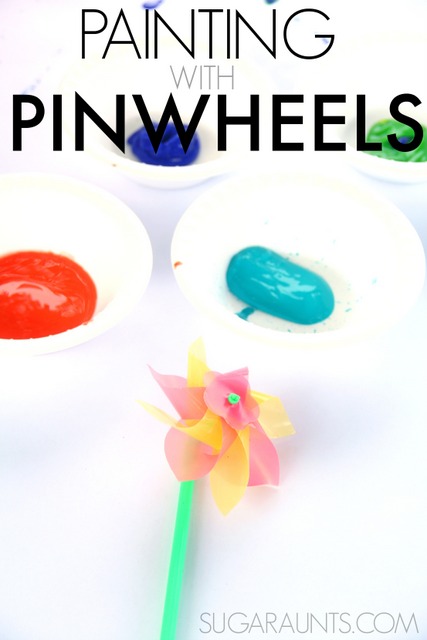
This pinwheel painting is a creative art idea and sensory painting art activity is one that we actually did YEARS ago. It was such a fun messy, creative art activity and a fun one to add to your summer painting ideas, and I wanted to be sure to show you all! My kids still talk about painting with pinwheels, so we’ll be doing this one again soon, especially now that the weather has warmed and we can get back outside for sensory play with the kids! This is such a fun creative painting activity!
Painting with pinwheels is such a simple and fun outdoor painting activity for summer. Or, if you’re looking for a “letter P” theme for preschoolers, painting with pinwheels would be perfect!
You can definitely take this painting activity indoors, with paper spread over the table surface.
To paint with pinwheels, there is just steps to set up this sensory painting activity:
Set the stage- Find a space to work in the grass or on a table which can be wiped down. This is a messy sensory painting activity! Consider using a wipeable plastic table cloth.
Pour a little washable paint into bowls. (Click here for our favorite paint for it’s bright colors that don’t fade as they dry.)
Prepare your paper or canvas. We used a giant roll of paper for big art.
Dip the pin the pinwheels into the paint.
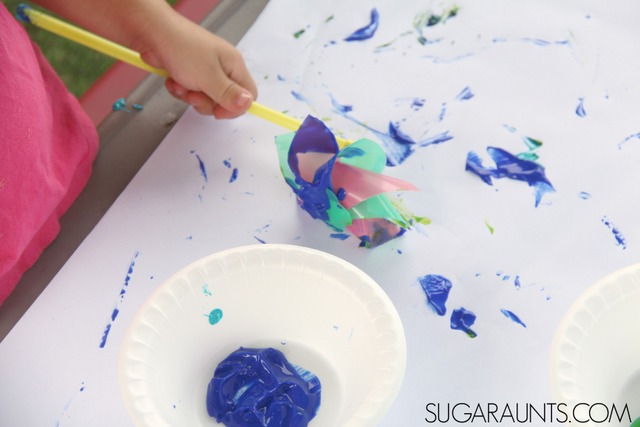
Roll, blow, spin, and tap the pinwheels onto the paper with color mixing. This is such a fun and creative painting activity!
Sensory Painting Activity
The paint coated pinwheels make the paint spray, especially as kids start getting more into the activity and discover that blowing the pinwheels makes paint spray in super artistic ways!
There are many sensory benefits to this Sensory painting activity:
Oral motor benefits- When children blow out through their mouth with concentrated effort, they are gaining proprioceptive input through their mouth. This is a calming and regulating sensory input that can help to organize and calm down. Read here about the development of oral motor skills. And, check out these oral motor activities for summer play.
Visual Convergence benefits- When we visually track an object as it nears our eyes (such as a pinwheel), and then track it as it moves away from the eyes, visual convergence is occurring. This visual processing skill is needed for functional tasks that we do throughout the day. Here is more information on convergence insufficiency and here are more activities to promote visual convergence skills.
Let us know if you do this Pinwheel Painting art with your kids or your class. More creative sensory painting techniques you may enjoy:
Colleen Beck, OTR/L has been an occupational therapist since 2000, working in school-based, hand therapy, outpatient peds, EI, and SNF. Colleen created The OT Toolbox to inspire therapists, teachers, and parents with easy and fun tools to help children thrive. Read her story about going from an OT making $3/hour (after paying for kids’ childcare) to a full-time OT resource creator for millions of readers. Want to collaborate? Send an email to contact@theottoolbox.com.
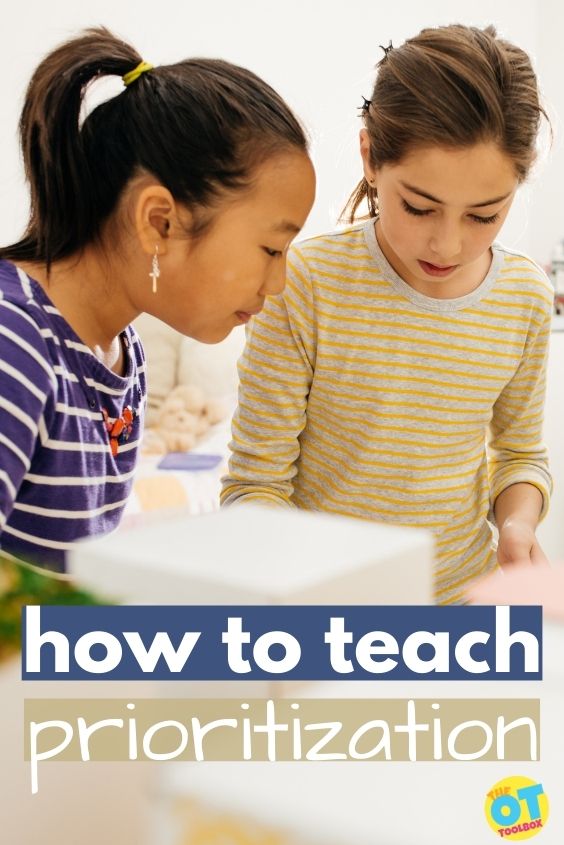
Prioritization is a challenge for many. Here, we are talking all about tips for prioritizing tasks and time management. Did you ever has so much to do that you didn’t know where to begin? Prioritization is a huge part of accomplishing a task, but also getting started and task completion. These executive functioning skills can stall the most organized person. For our kids and teens, these skills can be a challenge that impacts learning and functioning. With a few tools and strategies, prioritization can become second-nature.
Previously, we have talked about planning and prioritization. You’ll find some tips and ideas on that blog post. But the process of thinking through a multi-step task and ordering the steps to completion can be the breakdown area for some kids. That ability to identify high priority tasks and rate them compared to low priority tasks can be quite difficult.
That ability to prioritize tasks can become so challenging in the face of a giant to-do list. How does prioritization impact functioning? How does executive functioning development impact the ability to prioritize tasks so that things can get done? Let’s explore prioritization skills and how to develop this essential skill.
What is prioritization
Prioritization is the process of figuring out what parts of a task or activity are the most important and what is the first thing that needs to be done and what is the most important part of the project that needs to be completed. Prioritization is an executive functioning skill that requires several other executive functions.
Prioritization is the ability to identify tasks in an order that makes sense.
When tasks are identified as high priority tasks or low priority tasks and then ranked, a job can be accomplished. For some, writing out these tasks is essential. For others, breaking those high and low priority tasks into mini-goals is also essential to Executive functioning skills development
Prioritization is a skill necessary for classroom activities, homework, multiple step projects, and tasks like cleaning a room or playing games. Kids who struggle with one piece of the many parts that make up prioritization will have difficulties figuring out what is the important parts of a task in order to even get started.
To pick out important parts, begin a project, and complete a part of a project, it’s important that the child has the following skills:
Initiation
Sustained attention
Task completion
Working memory
In addition to these executive function skills, a child needs attention and focus in order to propritixe part of an activity.
The key to prioritization is understanding and determining a specific task or part of the task that is most importat.
Tips for improving prioritization
It can be overwhelming for a child who struggles with any of the executive function skills that enable prioritization. Big jobs or even big activities like reading a chapter book can seem like a giant looming over them and getting started just doesn’t happen!
prioritizing tasks and time management
Prioritizing tasks impacts time management and vice versa. If a child struggles to identify which task is high priority in a project or functional task, they can struggle with task completion. For tasks that have a specific end date or deadline (such as homework or a bigger school project), this directly impacts the child’s ability to effectively manage their time. Then, the task isn’t completed.
To help a child with the ability to complete big tasks, help them break down the steps.
Start by listing out all of the parts of a task. Cleaning a room requires toys to be cleaned up from the floor before vacuuming can be done.
It can be helpful to sit down with your child and list out all of the parts of an activity to teach and model prioritization.
Use a blank piece of paper and together, write down all of the individual pieces that make up a big job or project. Once they are all written down, don’t let that list overwhelm your child!
Then, add numbers for each job task. Order them in order that they must be completed or in order of importance.
Once a starting point is identified, it can be easy to set small goals to complete that part of the job.
Set up a time slot for the individual tasks to be completed. It can be helpful to use a timer to help with initiation.
Prioritization Strategies
There are different strategies for addressing prioritization of a multi-step task, involving breaking out the individual tasks into steps.
Try these strategies to help children prioritize tasks:
Doing the easiest task job first might be helpful for the child who feels a sense of accomplishment and then gets a self-esteem boost.
Other kids might do the smaller jobs first so that a bigger portion of the overall job is completed.
Another strategy is to do the more complex parts first when the child has more attention and focus on the project.
Use a graphic organizer. Put the big job in the middle and write out completed parts in smaller circles that shoot off from the center. Kids can color in each circle as they compete the individual smaller jobs.
Make lists
Use a calendar with color-coded sections for more complex jobs or ongoing tasks such as parts of a large homework project.
Use a graphic organizer to draw out tasks and sub tasks.
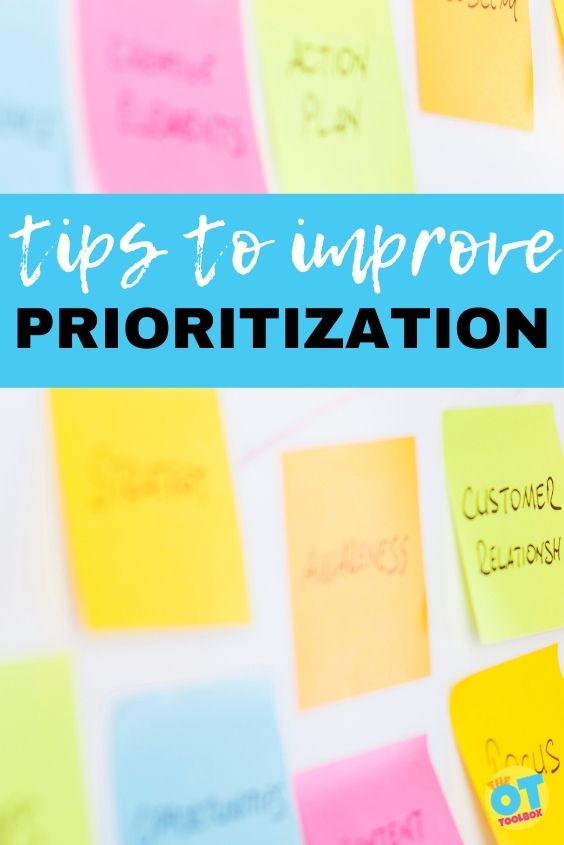
Use sticky notes to write out the small jobs of a larger task. Kids can pull off the sticky notes as they complete each job.
More ways to help with prioritization
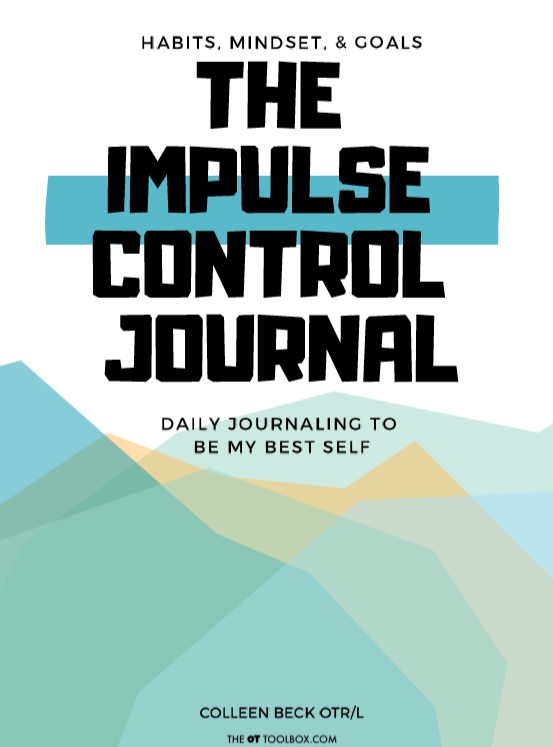
Want to really take executive function skills like planning and prioritization to the next level of success? The Impulse Control Journal is your guide to addressing the underlying skills that play into trouble with planning and prioritization.
The journal is an 80 page collection of worksheets and prompts to discover what’s really going on behind executive functioning skills like planning, organization, prioritization, working memory, and of course, impulse control.
The Impulse Control Journal…a printable resource for helping kids strategize executive functioning skill development. When saying “calm down” just isn’t enough…
When a child is easily “triggered” and seems to melt down at any sign of loud noises or excitement…
When you need help or a starting point to teach kids self-regulation strategies…
When you are struggling to motivate or redirect a child without causing a meltdown…
When you’re struggling to help kids explore their emotions, develop self-regulation and coping skills, manage and reflect on their emotions, identify their emotions, and more as they grow…
Grab the Impulse Control Journal to build organizational strategies, planning, prioritization, habits, and mindset in kids.
This is a HUGE digital resource that you can access and print to use over and over again.
Colleen Beck, OTR/L has been an occupational therapist since 2000, working in school-based, hand therapy, outpatient peds, EI, and SNF. Colleen created The OT Toolbox to inspire therapists, teachers, and parents with easy and fun tools to help children thrive. Read her story about going from an OT making $3/hour (after paying for kids’ childcare) to a full-time OT resource creator for millions of readers. Want to collaborate? Send an email to contact@theottoolbox.com.
Today I have a fun baseball and softball activity to add to your therapy toolbox. This interactive therapy slide deck goes really well with our other baseball activity (perfect for softball themed fun, too!); this baseball matching game.
Baseball and softball activity
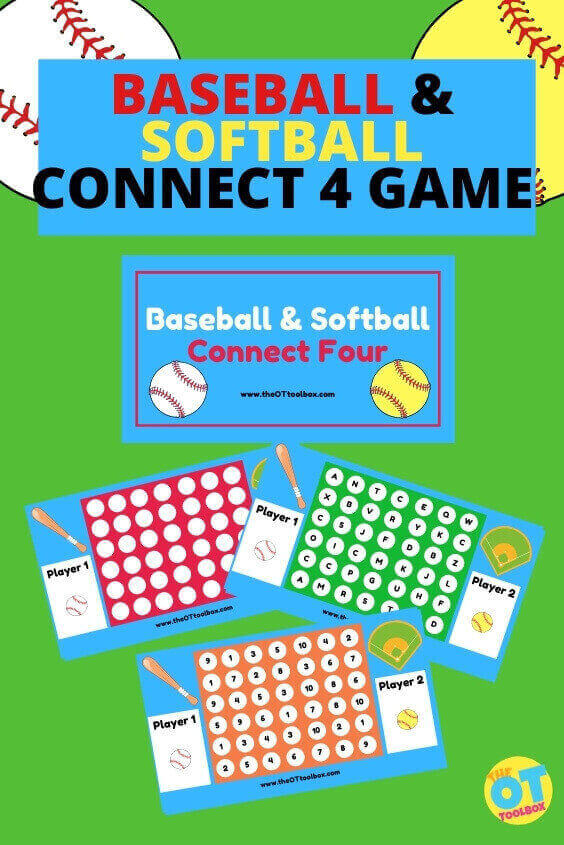
This baseball and softball activity is a digital connect four game is a lot like our other more recent digital connect four game with a space thing.
However this online connect four game has a baseball and softball theme that fits perfectly with the interest of many of the kids we work with.
Kids that love baseball or softball will love this Connect 4 game that actually addresses therapy goal areas and functional tasks, such as handwriting, letter formation, number formation, eye-hand coordination, visual scanning, visual memory, working memory, visual attention, and more.
Baseball & Softball Writing Activity
When you use it in Google slides the game is interactive, allowing kids to move the baseball and softball game pieces to play Connect Four.
This is just one of the many free slide decks available here on the site. Be sure to grab them all!
Because users can select the baseball or the softball game pieces, and then move them to cover spaces and play traditional Connect 4 games.
There is also a slide with letters on each space on the board. When players move their piece to cover that letter, they can write the letter focusing on letter formation. Expand the activity to ask kids to write a word that begins with that letter, or to write a sentence containing words that only begin with that letter. The game is very open-ended to meet the needs of all levels of students.
You’ll also find a game board containing numbers. Use this to work on number formation. OR, incorporate gross motor movement, balance, coordination, motor planning, and ask kids to do that number of a specific task, like jumping jacks, hops, skips, etc.
The online connect four game can be played with a therapist or another person and each participant can move the game pieces. Kids that love baseball or softball will love this virtual connect four game!
All of these are fun ways to address letter and number formation with an interactive and engaging activity.
Want to add this baseball themed activity or softball themed activity to your therapy Toolbox? Enter your email address into the form below to receive this interactive slide deck. It can be a great tool for a virtual therapy sessions teletherapy or face-to-face therapy activities. Consider even using this in-home or brain break activities in the classroom or at home.
To receive this free interactive connect four game enter your email address into the form below and it will be delivered to your email address via PDF.
Colleen Beck, OTR/L has been an occupational therapist since 2000, working in school-based, hand therapy, outpatient peds, EI, and SNF. Colleen created The OT Toolbox to inspire therapists, teachers, and parents with easy and fun tools to help children thrive. Read her story about going from an OT making $3/hour (after paying for kids’ childcare) to a full-time OT resource creator for millions of readers. Want to collaborate? Send an email to contact@theottoolbox.com.
Summer is coming! And, I have some fun ways to improve executive functioning skills during the summer months, while the kids are on a break from school. Working on executive functioning doesn’t need to involve boring projects, long checklists, or tedious tasks that make the kids run. These executive functioning activities can help to improve the skills that translate to better planning, prioritization, and staying on task during day-to-day functional tasks and when back in the classroom.
How to Improve Executive Functioning Skills This Summer
When school ends for the year, we can all have wonderful intentions of a great summer filled with enriching activities to continue our student’s growth. Sometimes, that means having plans that are hard to achieve. Sometimes, that means having absolutely no plans, but then realizing this is a bit too unstructured!
Under each activity idea below, you’ll find strategies to improve executive functioning skills. Use these tips to work on areas like:
Planning
Prioritization
Organization
Task Completion
Attention
Working memory
Then, when children see success that they’ve made in fun and meaningful tasks, they can carry those skills over to other tasks. Be sure to point out hard work, worthy attempts, and small successes. This auditory input can help to get a point to stick later down the road.
Get started with some fun summer games. Planning a weekly game night with the family can get this on the calendar and make game playing an event. Think about even adding themes or special fun snacks to the game night events.
Interest Based Occupations to Work on Executive Functions
Occupational therapists use meaningful occupations (or the tasks that occupy one’s time) as a therapeutic tool to improve independence, functioning, safety, and meaning in one’s life. The use of motivating interests play a strong role in building essential executive functioning skills, too!
Use your child’s interests to improve executive functioning that carries over to less preferred activities (like school, homework, and even chores).
Whatever your child’s leisure interests, there is likely an easy way to integrate executive functioning growth opportunities!
sports to work on executive functioning skills
Do you have a budding athlete in your family?
Have them set up a tournament for your family or neighborhood: create the brackets (requires planning and organizing, working memory, and initiation)
Winning/losing (requires emotional regulation and impulse control)
Create the court or field (planning and organizing, organization of materials)
Art to work on executive functioning skills
How about your budding artist? There are so many fun summer-themed crafts for all ages!
Have your child think flexibly about different materials they can use, especially if you do not have all of the items needed to make a certain masterpiece!
Plan projects
Set a completion date and write out steps with small goals that need to be achieved before the next step can be accomplished
Use a large project such as a mural, pottery, or painting garden planters to expand executive functioning development over weeks or months
Reading to work on executive functioning skills
Have a bookworm?
A summer book club could be fun! They could create a plan for each club meeting, including creating the invitations and agenda, working on their skills of initiation, time management, planning and organizing, and working memory.
Mark off on a calendar when library books need to be returned
Schedule time daily for reading and make it relaxing: a book picnic in the yard, taking books to the park, or reading under twinkle lights can be fun and interesting, and all need to be planned out with thinking ahead.
Chores to Improve Executive Functioning Skills
Summer is a great time to start integrating family chores without the pressure of starting a new routine in the middle of a school year. Activities like cooking and recycling are approachable for many ages.
Cooking to work on executive Function
Find a recipe that works for your family’s ages, needs, and foods. Then, to work on executive function, try some of these tips:
If cooking is something that you would like to try with kids, be sure to pick out a recipe that is motivating to the child. Here are tons of cooking with kids recipe ideas.
Break up the recipe into the planning stages, the executing stages, and the eating stages!
With each step of the recipe (including preparation and clean-up), assign different family members different jobs, like making the list (while giving them 3 steps to remember and write down for a working memory challenge).
Work on planning and prioritization by estimating when each step will need to start for more complex recipes (time management).
Think about the items and recipe ingredients that are needed as well as steps of the process, including smaller tasks like emptying the sink or dishwasher after you finish cooking (organization of materials).
Recycling to work on executive function
Take the opportunity to teach your children about recycling. Here are tips to use recycling as an opportunity to build specific executive functions:
Can they identify what items should go in the garbage versus the recycling (working memory)?
Can they initiate and show impulse control in this task, such as taking the extra steps to the recycling bin, rather than just throwing that can in the garbage?
Use a calendar to mark off the day when recycling materials should be collected and the bin taken to the curb or recycling center.
Use a list to identify materials that can be recycled.
Summer Learning and Executive Functioning Skills
While neither a strong academic focus nor a lack of academic focus tends to be the best for any child, there are ways to integrate academics into the more relaxed environment of summer activities.
Have some sidewalk chalk? Work on sight words (both from previous grade and the soon-to-be grade), letter formation, math problems, you name it!
If slime is still a trend in your house, find a good recipe and have your child use their executive functioning skills to complete and reflect on the creation. What went well? What did they struggle with or would they change?
Make a ninja or obstacle course! This takes incredible amounts of executive functioning skills: initiation, shifting, impulse control (“No, Johnny, it probably would not be best to put that plank on top of the playground as a launchpad.”), emotional control/failure tolerance, time management, working memory, planning and organizing, and organization of materials.
Have fun this summer, stay safe, and keep the growth going!
The Impulse Control Journal…a printable resource for helping kids strategize executive functioning skill development. When saying “calm down” just isn’t enough…
When a child is easily “triggered” and seems to melt down at any sign of loud noises or excitement…
When you need help or a starting point to teach kids self-regulation strategies…
When you are struggling to motivate or redirect a child without causing a meltdown…
When you’re struggling to help kids explore their emotions, develop self-regulation and coping skills, manage and reflect on their emotions, identify their emotions, and more as they grow…
Grab the Impulse Control Journal to build organizational strategies, planning, prioritization, habits, and mindset in kids.
Colleen Beck, OTR/L has been an occupational therapist since 2000, working in school-based, hand therapy, outpatient peds, EI, and SNF. Colleen created The OT Toolbox to inspire therapists, teachers, and parents with easy and fun tools to help children thrive. Read her story about going from an OT making $3/hour (after paying for kids’ childcare) to a full-time OT resource creator for millions of readers. Want to collaborate? Send an email to contact@theottoolbox.com.
This Baseball matching game is another free slide deck to use in digital or face to face therapy sessions while working on a variety of occupational therapy skill areas. It’s a fun way to foster visual perceptual skills and social emotional learning through a baseball theme!
Today we have another social emotional resource for teaching emotions and showing children how to match facial expressions to meaning of emotions this baseball emotions game uses the spot it matching strategies to work on social emotional development as well as visual perceptual skills kids can.
This is a free therapy slide deck, so it can be used in teletherapy services or virtual sessions. However, now that more schools are moving to a face to face setting in the fall, this resource is still a great way to outline therapy sessions. Use the slides as activities with a baseball theme in therapy.
Kids can work on social emotional development skills that they need for communication playing with others and social participation by using the game as a tool for social emotional learning skills such as naming facial expressions.
Baseball matching Game
This baseball matching activity is great for a baseball theme or for kids that love all things sports and baseball.
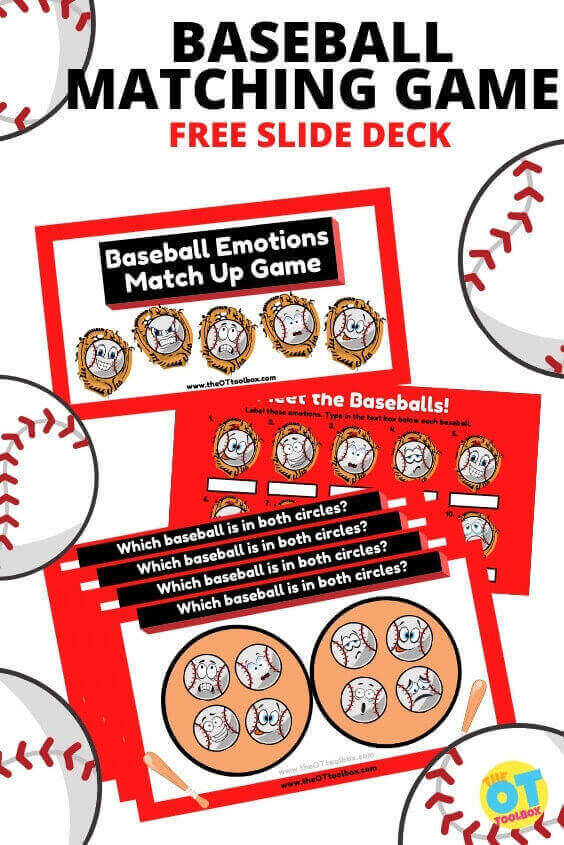
On the slides kids will notice baseball gloves and baseball mitts that have different facial expressions.
When they play the game they can begin with the first slides that ask them to name and label emotions.
Kids can type right into the slide deck and name the emotions on different baseballs.
Then, the slide deck includes a matching component. Users can look at each circle on the slide and look for one matching pair. When they find the match, they can move the baseball bat to cover the matching baseballs.
These visual perceptual and visual motor skills are needed for hand writing and copying materials from a written source such as the chalkboard or dry race board.
If you were looking for baseball themed activities for therapy this slide deck is a great resource.
Access this slide deck in by entering your email into the form below and you can receive a free printable PDF which will lead you to the slide deck. This is a great activity for teletherapy or for using to facilitate face-to-face therapy sessions with children who love all things baseball or sports.
Colleen Beck, OTR/L has been an occupational therapist since 2000, working in school-based, hand therapy, outpatient peds, EI, and SNF. Colleen created The OT Toolbox to inspire therapists, teachers, and parents with easy and fun tools to help children thrive. Read her story about going from an OT making $3/hour (after paying for kids’ childcare) to a full-time OT resource creator for millions of readers. Want to collaborate? Send an email to contact@theottoolbox.com.
If you are looking for outdoor sensory activities, this is the place to start. Here, you’ll find outdoor sensory ideas to address each sensory system. Also included are sensory play ideas to use in the backyard when creating an outdoor sensory diet for children.
Outdoor Sensory Activities or a Sensory Diet?
So often, kids are sent home from therapy with a sensory diet of specific activities and sensory tools that are prescribed for certain sensory processing needs. When a therapist creates a home exercise program, they do their best to ensure carryover through small lists of activities, parent education, and motivating activities that are based on the child’s interests and personal goals.
The important thing to recognize is that there is a difference between sensory play and sensory diets. Read here for more information on what a sensory diet is and isn’t.
When therapists develop a specific and highly individualized sensory diet, it’s not just throwing together a day filled with sensory input. A sensory diet is a specific set of sensory tools used to meet and address certain needs of the individual based on sensory need and strategizing.
Each of the sensory diet activities above should meet specific needs of the child. Every child is different so applying sensory input to one child may look very different than that of another. Parents should use the tactics below along with your child’s occupational therapist.
So, using sensory diet tools within the context of environments or activities that are deeply meaningful to a family and child such as play that is already happening, can be the meaningful and motivating strategy to actually get that sensory diet task completed. And it benefits the child along with the whole family.
Outdoor Sensory Activities
These outdoor sensory activities are those that can be included into backyard play. That may look like independent play by the child or it might mean family time on a Sunday afternoon. Use these outdoor sensory diet activities in the backyard to as sensory tools that double as playtime for the child while he/she learns and grows… or to meet the sensory needs of the child while creating memories and enjoying time together!
Below is a huge list of outdoor sensory activities, but to focus on each sensory system, check out these resources:
Backyard dance party. Encourage lots of whole body movements and spinning.
Cartwheels
Tumbles
Hopscotch
Play Leapfrog
Mini trampoline (or the big sized-trampoline) Catch a ball while standing, sitting, swinging, rolling a ball, catching between legs, etc.
Hit a tennis racket at a target including bubbles, falling leaves, large balls, small rubber balls, and balloons
Catch butterflies in a net
Bubble pop, including popping bubbles with a toe, knee, foot, head, finger, or elbow
Play with goop
Draw in shaving cream on a cookie sheet outdoors. Then squirt off in the hose.
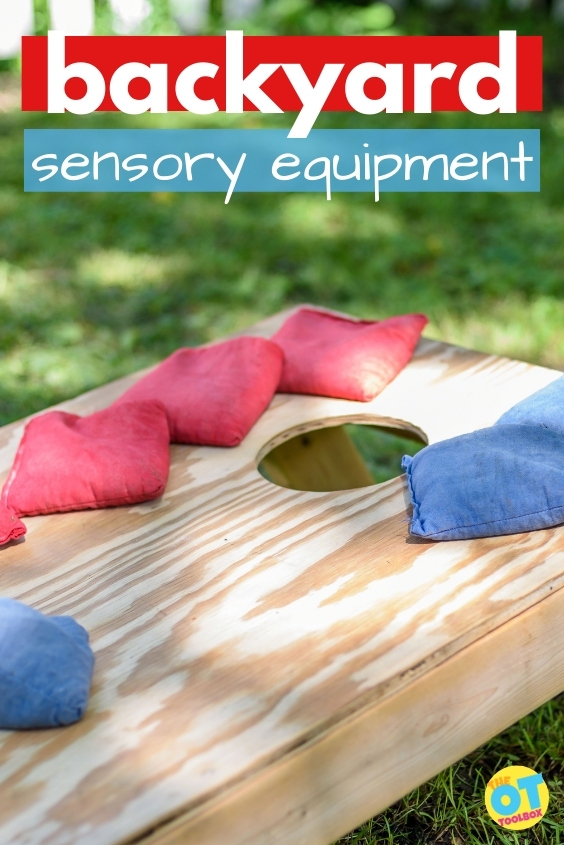
Backyard Sensory Equipment
There are outdoor play items you may have already that can be repurposed to use in outdoor sensory play. These are common backyard toys or things that might be in your garage! It can be fun to re-think these items for a means of adding sensory input.
Make a bin of outdoor toys that are readily available in your garage or storage area so that sensory play experiences are at your family’s fingertips. For example, all of these items could be used in an outdoor balance beam.
Hoola Hoops
Jump Ropes
Balls
Bat
Tennis Racket
Butterfly Net
Baby Swimming Pool
Tarp or Slip and Slide
Water Hose
Scoops and cups
Sidewalk chalk
Bike
Scooter
Skateboard
Cardboard
Target or net
Shovels
Buckets
Play wheelbarrow
Swing set
Climbing structure
Flashlight
Magnifying glass
Cones
Bubbles
Bean bags
Outdoor Sensory issues
Summer can mean sensory processing issues that impact kids with sensitivities or over responsiveness to sensory input. For autistic children or anyone with a neurodiversity that impacts sensory processing, summer can mean a real hatred for being outside in the hot summer months.
So what are some of the reasons that sensory kids have issues with being outside during the summer?
It can be hard to encourage outdoor play (and gain all of the benefits of outdoor play) when the summer months add a different level of sensory input. Here are some of the reasons that sensory kids are challenged in the summertime:
For kids with sensory needs, it can be overwhelming to have an open space full of sights, sounds, scents, and textures.
Tolerance of the cuffs of shorts or sleeves
Tight bathing suits
Sensation of sunscreen
Sensation of socks or other clothing in hot weather
Humidity changes
Summer thunderstorms (can change the air temperature)
Short clothing that brushes on legs or arms
Sandals or open-toed shoes
Crowds or places where others are in close contact
Wearing a mask in warmer temperatures
Honking horns, barking dogs, and other sounds that frequent the backyard or lawn can be too much for the child with sensory sensitivities
Bright sun that is at a different angle in the sky than other months of the year
Interoceptive issues with body temperature, increased need for water, less hunger due to heat
All of these sensory issues can occur unexpectedly and that unexpectedness of sensory input can be overwhelmingly alarming for those with autism or neurodiversity.
How to help with summer sensory overload
Visual schedule
Help the child know what to expect
Wear shoes instead of sandals or bear feet
Proprioceptive input such as firm touch to the shoulders
Limit time outdoors
Know triggers for sensory overload and plan ahead when possible
Oral motor jewelry
Communicate travel or outdoor time needs
Calming vestibular sensory input such as side to side or forward-front slow swinging
Play that involves throw and play catch with a weighted ball
Bucket of water to rinse hands if child is sensitive to messy hands or dirt
Sheltered area if child is sensitive to wind blowing on skin
Wear a lightweight wind jacket
Bring a water bottle with straw for proprioceptive input
Calming or alerting snacks
Portable fan to help with overheating if needed
Hat with brim to reduce bright light or intense light in eyes or on face
Umbrella to deflect direct sun rays and prevent overheating
Sunscreen with firm touch before going outdoors
Scent free sunscreen
Sunscreen lotion vs. spray sunscreen (or vice versa depending on the particular needs and preferences)
Sensory friendly clothing, bathing suits, goggles
Wear sunglasses
Wear headphones to reduce background noise
Be aware of freshly cut grass which as a strong scent
Wear thin gloves for tactile activities
Use water shoes or crocks instead of sandals
More about outdoor sensory diet activities
Sensory diets and specific sensory input or sensory challenges are a big part of addressing sensory needs of children who struggle with sensory processing issues. Incorporating a schedule of sensory input (sensory diet) into a lifestyle of naturally occurring and meaningful activities is so very valuable for the child with sensory needs. That’s why I’ve worked to create a book on creating an authentic and meaningful sensory lifestyle that addresses sensory needs. The book is now released as a digital e-book or softcover print book, available on Amazon. The Sensory Lifestyle Handbook walks you through sensory diet creation, set-up, and carry through. Not only that, but the book helps you take a sensory diet and weave it into a sensory lifestyle that supports the needs of a child with sensory processing challenges and the whole family.
Colleen Beck, OTR/L has been an occupational therapist since 2000, working in school-based, hand therapy, outpatient peds, EI, and SNF. Colleen created The OT Toolbox to inspire therapists, teachers, and parents with easy and fun tools to help children thrive. Read her story about going from an OT making $3/hour (after paying for kids’ childcare) to a full-time OT resource creator for millions of readers. Want to collaborate? Send an email to contact@theottoolbox.com.
Visual sensory processing may be over-responsive or under-responsive. We explain how these areas appear as a result of sensory challenges in our blog post with a visual graphic sensory processing disorder chart.
Outdoor Sensory Activities for Visual Processing
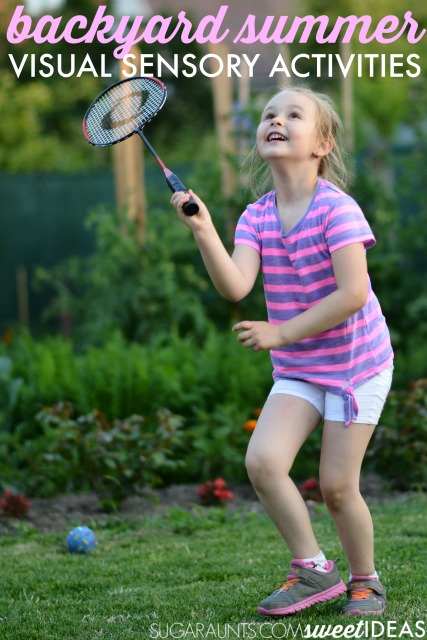
Today, I’m sharing visual sensory activities that can be done right in the backyard. The visual sensory system is so closely related to the auditory and vestibular systems and is essential for function and independence in skills like reading, writing, and motor planning, balance, eye-hand coordination, among many other areas. The visual sensory system is responsible for visual acuity, oculomotor control of the eyes, and processing of what our eyes take in. When one or more of these areas are a problem, functional skills are affected.
We’ve been sharing creative and easy sensory-based activities that can be done right in the backyard. This is perfect for summer (and the series was intended as a backyard summer series!) but each post in the series can totally be adapted for year-round sensory ideas for backyard play.
Backyard SENSORY ACTIVITIES for Visual Processing:
Grass hide scanning- Use grass clippings to fill a large plastic bin. Tuck small items, coins, or small parts into the bin. Ask kids to scan the area and locate items with just their eyes. Kids can try to remember the order that they found the items in a visual memory game.
Backyard Toy Memory Game- Continue to work on visual memory and scanning visual perceptual skills by spreading out small toys into a plot of backyard. Ask your child to look at the toys and try to remember all of the items. Cover the toys with a blanket and then remove one or two items. Remove the blanket and ask your child to recall the missing item.
Cloud Scan- Lay on the ground with your child as you look up at the clouds on a clear but cloudy day. Watch clouds as they move across the sky. Ask your child to see images in the clouds shapes. Ask them to rotate on the ground so that their head is now where their feet just were. Ask them if they still see the same shape or if it is a new shape. Discovering an outline of a shape in a form uses a visual perceptual skill known as form perception and works along with visual closure and form constancy to allow us to determine that shapes, letters and numbers are the same no matter what their direction.
Figure Ground Hunt- Use rocks and letters to practice visual perception with a sensory bin like we did in this activity.
Catch a ball. Try catching while standing, sitting, swinging, rolling a ball, catching between legs, etc.
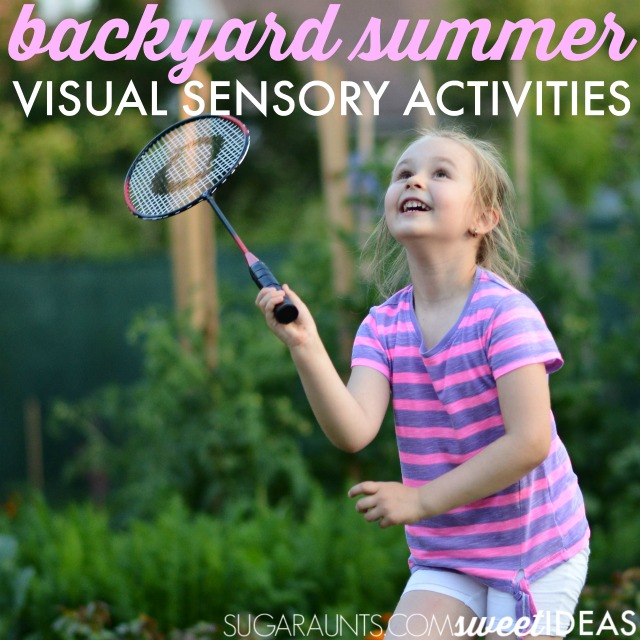
Hit a tennis racket at a target. Ideas include bubbles, falling leaves, large balls, small rubber balls, and balloons.
Scavenger hunts-try doing these while crawling.
Catching butterflies in a net. Try catching fire flies, too.
Visual scanning between targets.
Bubble pop- Try popping bubbles with a toe, knee, foot, head, finger, or elbow.
Looking for more backyard sensory ideas for summer?
The Summer Sensory Activity Guide is the place to find everything you need for a summer of sensory input. Use the sensory activities described in the booklet as a guide to meet the individual needs of your child. The activities are not a substitute for therapy. Rather, they are sensory-based summer activities that are designed to address each sensory system through summer play. Activities are described to involve the whole family. Check out the Summer Sensory Activity Guide today!
The guide is included in our Summer OT Bundle:
Colleen Beck, OTR/L has been an occupational therapist since 2000, working in school-based, hand therapy, outpatient peds, EI, and SNF. Colleen created The OT Toolbox to inspire therapists, teachers, and parents with easy and fun tools to help children thrive. Read her story about going from an OT making $3/hour (after paying for kids’ childcare) to a full-time OT resource creator for millions of readers. Want to collaborate? Send an email to contact@theottoolbox.com.