Colleen Beck, OTR/L is a pediatric occupational therapist and the owner and author of The OT Toolbox website. She manages all of The OT Toolbox social media accounts and runs the popular newsletter.
Read about Colleen's experience and career as an occupational therapist, including how The OT Toolbox began on our About The OT Toolbox page: https://www.theottoolbox.com/about-us/
Colleen created The OT Toolbox in 2011 and since then has written thousands of blog posts designed to support therapy providers, educators, parents, counselors, admin, and caregivers in promoting the healthy development of kids.
Check out Colleen's blog posts below:
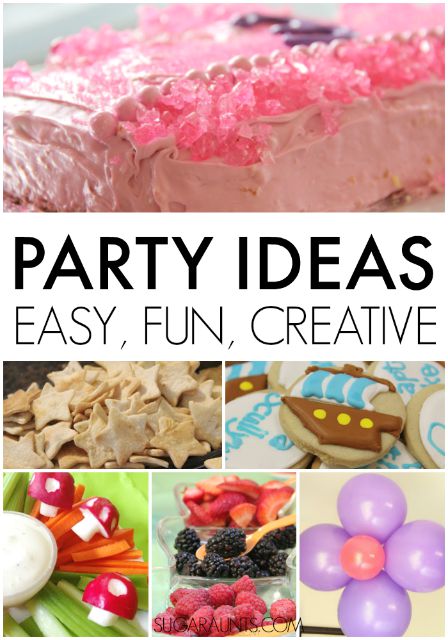
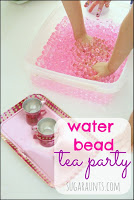
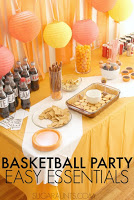
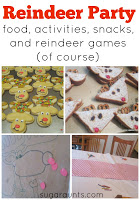
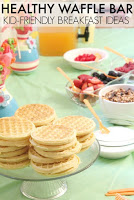
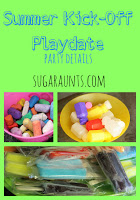
Kids’ parties don’t need to be outrageous and extravagant. We love to throw easy and creative birthday parties and themed play dates (occasionally-themed days are NOT an every day thing. Or even a frequent thing around here!). Sometimes it is nice to celebrate the child and the excitement of youth with a special day. Sure it can be easy to get out of control with themed days or celebrations. But, childhood is such a fleeting time and being a mother to a child is such a thing to celebrate. It is an honor to use creative ideas in celebration of the day…whether it be a birthday or a special play date. Then there are the creative ways to celebrate neighbors or special people in you life. A thoughtful special day would be a fun way to spend time and build memories with a niece or nephew. Put together a quick and easy water bead tea party or a sleepover waffle bar for special time with your special little ones!
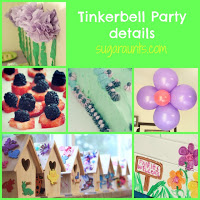
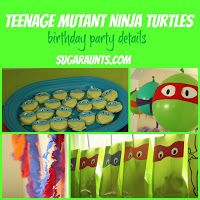
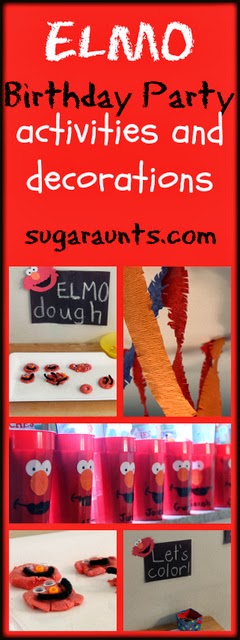
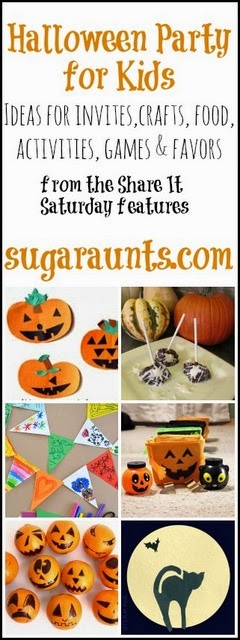
Party Theme Ideas for Kids
Some of our favorite ways to celebrate special times with our kids and nieces and nephews: Kids party themes, games, themed food and snacks, decorations, activities, favors, and crafts can be found for each party theme. Have fun planning your child’s party or themed play date. Don’t stress about making the day extra special, just enjoy the being creative in honor of your special someone!
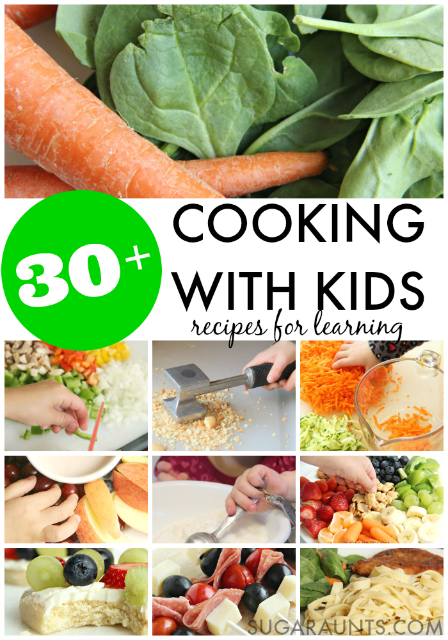
We’ve been busy cooking our way through the alphabet with our Cooking With Kids A-Z series. You can find all of the recipes here. We love the learning and therapeutic benefits to cooking with kids so this series is a winner for us. Try all of these recipes for tasty dishes that you can cook together as a family.
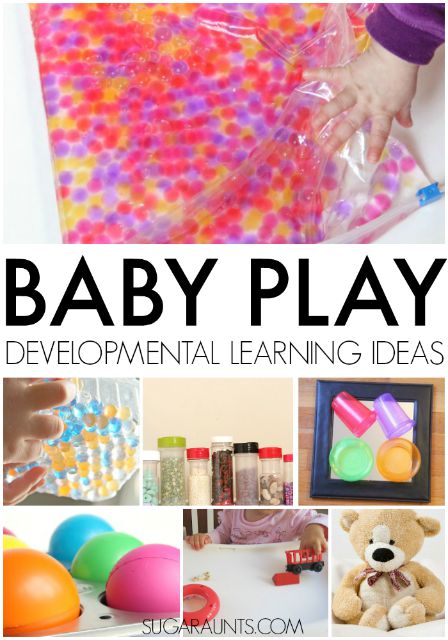
This is a space where we share our favorite play ideas for babies. The youngest kids can have fun while learning through play at home, too!
Babies are such an amazing miniature human. They are developing at a rapid pace and taking in the senses of our world with wide eyes. Simply holding and talking to your baby is such a wonderful sensory experience. Then there is the sensory overload of bath time. We’ve got some easy play ideas for babies and young toddlers here, as they take on and take in the world around them.
Read this resource on baby container syndrome for an occupational therapist’s perspective on baby positioner devices such as swings, seats, and exer-saucers as these items can have an impact on baby play.
Resource for New Parents
Many people think new parents are the only ones that need baby advice. Maybe you found yourself as a new mother who suddenly had a lot of questions on sleep patterns, eating and childhood milestones. But, if there is one thing that therapists wish they could tell new parents, it’s that parents could have a better understanding of how movement plays into development.
Therapists are many times, seeking resources to share with parents to support a family through the first year of baby’s development so they can thrive.
Remarkable Infants is a great opportunity for parents and professionals alike to educate more people on how to support a baby’s first-year development for future learning development.
Yes, this course does provide information on helping a baby sleep and eat, but this course is the other more comprehensive sections. The pieces most other baby trainings don’t provide.
It’s a 5-step, all-inclusive online training for new moms focusing on the development of the whole child from birth through 12 months of age. It includes the following:
Language Development (Talking with your baby)
Healthy Sleep Habits (Understanding baby sleep)
Cognitive Development and Motor Development (Playing with your Baby)
Reading with your Baby (Vocabulary, visual-motor, speech and language)
Infant Nutrition (Feeding your baby)
Even though this course is geared to moms, it’s also great for professionals. It can be a HUGE help to clients, expecting moms you work with and those that have kids with learning challenges. The more we can help educate parents on the necessity of building a baby’s cognition, speech and language and motor movements in their first year, the further ahead that child will be later in life.
The 2 best parts are:
1. Each section is taught by a specific professional (Occupational Therapist, Speech and Language Pathologist, Pediatric Sleep Sleep Specialists and Registered Dietitian) with evidence-based research. So you know you’re getting advice from the pros!
2. If you are a professional, you can get CEU credits/Certificate of Completion for taking this course.
You can also get an additional 10% discount when you use our coupon code “COLLEEN10.” To join the Mommy Academy, click here. Don’t forget to enter the discount code!
This spatial awareness for babies post shares tips and tools for promoting child development through play, especially tummy time for babies.
For more information on development, check out this development of eye-hand coordination information post to better understand how fine motor skills and visual processing develop in babies and toddlers.
Additionally, the baby stage and development is an important time for the integration of primitive reflexes. Check out some of these books on primitive reflexes to read more on child development.
Also important in the baby stage is the development of oral motor skills. It’s through the mouth that babies explore their world around them and gain the skills needed to progress from liquid feedings to more complex foods.
Typical Baby Development:
Baby development begins before birth and continues to evolve into functional skills each and every day. From birth, a baby typically demonstrates random limb movements and a rounded back with drooped head. Asymmetrical postures dominate and no weight is bared through the legs when a baby is held up.
By one month, baby is able to rotate their head and lift their head momentarily. Asymmetrical postures continue to dominate
At three months, baby holds their head mostly in midline and is able to bob their head in supported sitting. At three months, baby can visually follow a dangling toy from side to side. Baby may roll to either side from their back.
At 4-5 months, baby kicks and waves arms and shows excitement with movements. They are unable to typically manipulate or purposefully grasp items. However, baby will demonstrate a strong grasp when an item such as a rattle is placed in their hand. They are unable to let go of an item in their hand.
By six months, baby will demonstrate a greater variety of gross motor patterns. You will see movements of elbows and knees and they follow objects with their eyes in all directions.
At 6 months, object exploration begins with crude manipulation.
At 7-8 months, baby will take objects out of a container and drop them with crude manipulations and exaggerated movements. Baby is typically able to sit up by leaning forward for support.
At 9-10 months, baby will explore more of his environment and will show isolated movements of fingers as they poke and explore items. They can pick up small items and begin to demonstrate purposeful play.
Note: This is not a complete list of Baby’s development. There are stages of typical development and changes in each skill area, as well as positional developmental changes. Watch this space for more baby developmental play and information.
Beyond this, baby is continuously developing in their gross motor, fine motor, hand dominance, language, and visual perceptual, skills. All of these areas can be built on with stimulating and encouraging play environments.
Try some of these play ideas with your baby:
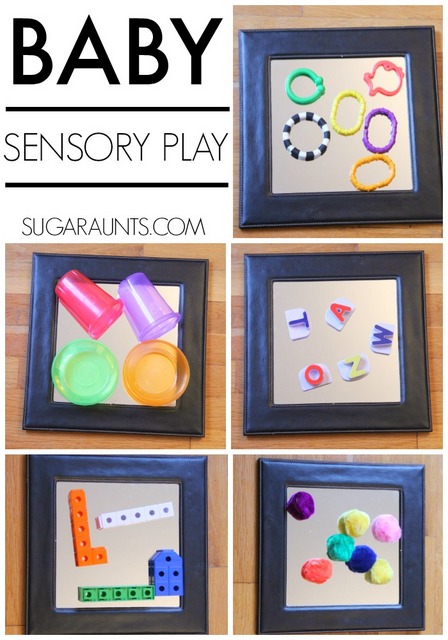
Baby Play Ideas
One of our favorite ways to support development through the first year is by simply playing on the floor on a blanket. A baby gym is one toy that will always be a recommendation, although it’s definitely not necessary.
We’re adding new and older posts every day to our collection of baby and toddler play ideas. Be sure to stop back and see what’s new! As always, keep a close eye on little ones while playing with babies and toddlers with any activity. Children should always be supervised while completing any of these activities. Some children may be able to participate in a particular activity, while others are not developmentally appropriate. Please use your judgment and adjust the activity to meet the needs of your child. Or, pull out these ideas in a few months when it is safer for your child to participate.
When it comes to vision, there is so much to learn! Here we are covering visual motor skills for kids and the specific activities that empower development through visual motor activities for kids. Start by checking out Visual Motor Integration developmental milestones for age-appropriate skills that children typically master from age 0-5.
Visual Motor Skills for Kids
Visual motor skills are made up of many areas related to vision and the ability to perceive sight with relation to movement of the hands and body in functional tasks. Visual perceptual skills in kids are necessary for so many things…from self-care to fine motor skills, to gross motor skills…all parts of a child’s development require visual perception. There are many pieces to the giant term of “visual perception”.
Visual motor skills are needed for coordinating the hands, legs, and the rest of the body’s movements with what the eyes perceive. There is more that plays into the integration of visual motor skills into what we do and how we use our hands in activities. Read on to find out more about how visual perception, eye-hand coordination, and visual processing skills play a part in the overarching visual motor skill development so we can perceive and process visual information and use that information with motor skills to manipulate and move objects in tasks and activities.
Visual Motor Activities
Activities to help develop visual motor integration:
Looking for TONS of information that really explains how visual motor skills and visual perception are part of the whole visual processing system? All of these pieces play a part and work together. Join us in the Visual Processing Lab, a free email series that covers everything you need to know about visual motor skills, visual perception, and what you see in eye-hand coordination.
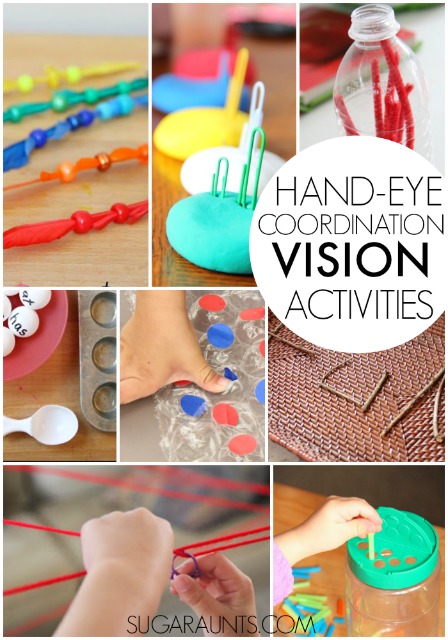
Hand-Eye Coordination Activities for Kids
Hand-eye coordination is using the information received through the vision system to coordinate the hands with control, in order to complete a task, such as handwriting or catching a ball.
Below are TONS of activities designed to promote this skill.
Hand-Eye Coordination for Babies and Toddlers
The activities below can be used with all ages, but may be a great way to promote fine motor and visual motor skills in kids through eye-hand coordination tasks. Be sure to use supervision with children during these activities and remember that all activities should meet the individual child’s needs. Activities can be modified or adjusted as needed.
Visual scanning is essential for handwriting skills, puzzles, word searches, mazes, and many many functional tasks. Scanning a room for a missing sock may be difficult if a child demonstrates difficulty with visual scanning.
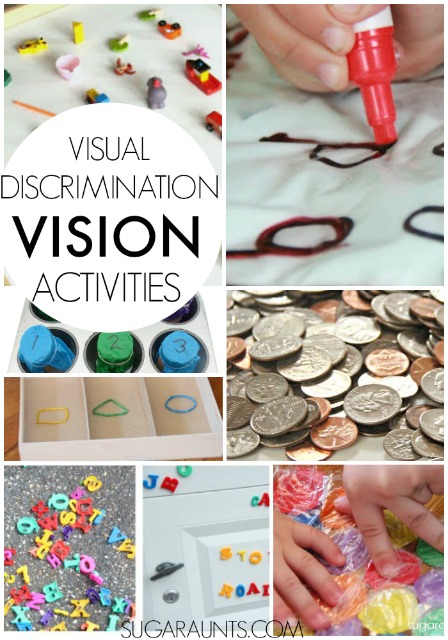
We have shared quite a few posts relating to vision and visual perception!
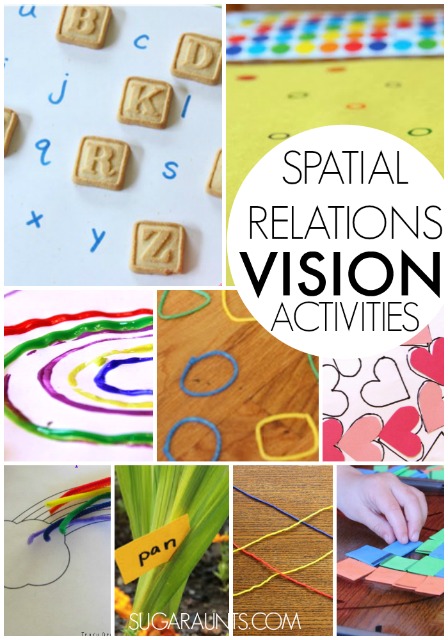
Visual Spatial Relations is organizing the body in relation to objects or spatial awareness. This is an important part of handwriting. Spacing pieces of a puzzle amongst the others and writing in relation to the lines is one way to work on this skill.
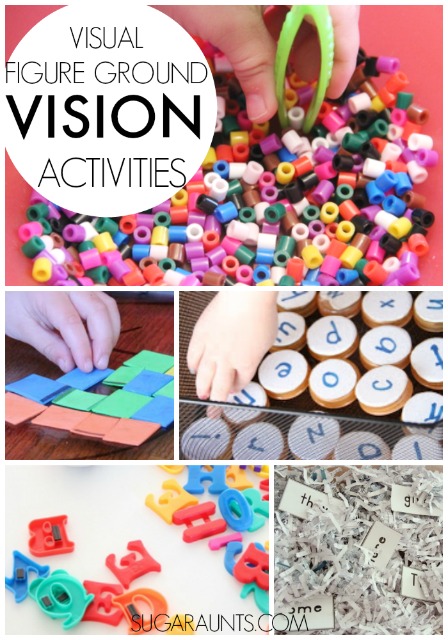
Visual Figure Ground is the ability to locate objects within a cluttered area (think “I Spy”). Finding a red square among the pile of foam pieces is one fun way to work on this area of visual perception.
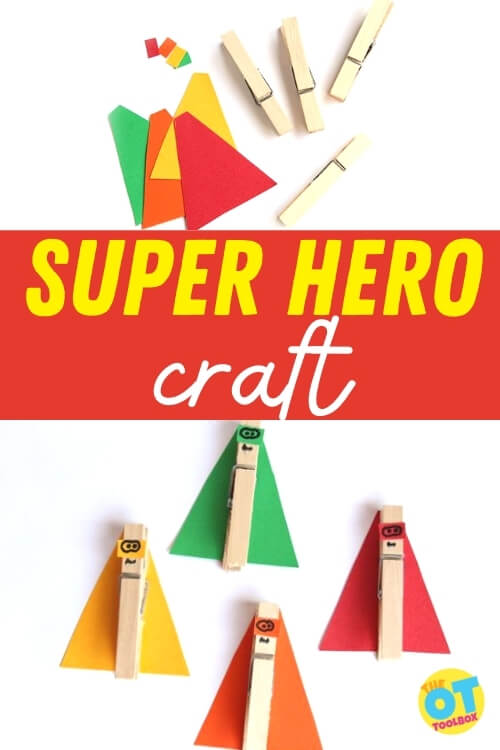
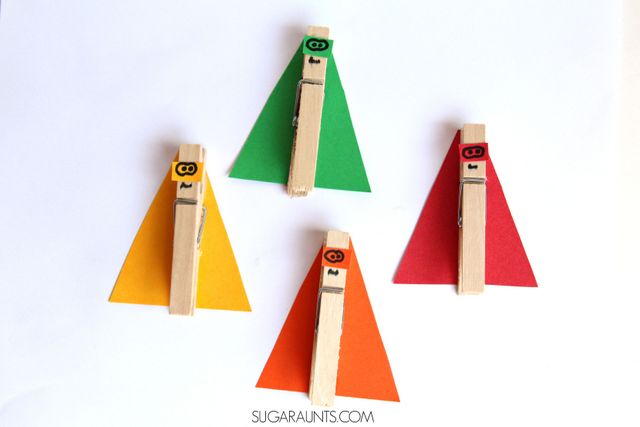
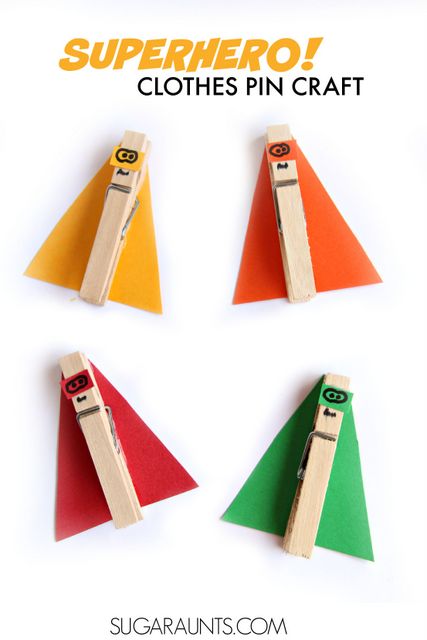
I have a fun occupational therapy craft to share today. This superhero craft is a SUPER way to help kids develop fine motor skills and hand strength. It’s a clothes pin craft, so when kids make these super hero clothes pins, they are really strengthening hand strength and endurance in the hands.
Add these superhero craft to these superhero activities:
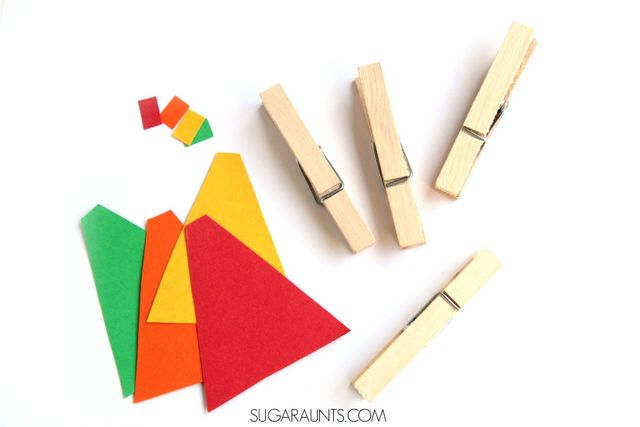
Cut the card stock into triangle shapes with a flat top. Measure the size against the length of the clothes pins.
Glue the Triangle to one long side of the wooden clothes pins with the narrow part of the triangle at the part that pinches. The “head” of your superhero will be the part that pinches paper.
Cut small rectangles from the card stock to fit the width of the clothes pins. These will become the superhero’s mask.
Glue the mask onto the clothespin about a 1/4 inch from the top of the clothes pin.
Use a marker or permanent marker to draw a smirk (or angry face, if you like) and eyes on the mask.
This super hero craft is ready to fight math crime!
Skip Counting by 1000
You may know that occupational therapists love hands-on learning. We love to seek multisensory learning and activities that kids can move and learn at the same time. This superhero craft does just that.
The school year is about to begin and we will have a second grader in our house. HOW did that happen?? She loved math in first grade and I’m excited to see her growth and learning this year in second grade. We do so many enrichment and homework extension activities and it is fun to come up with creative ways to practice what the kids have been learning in school.
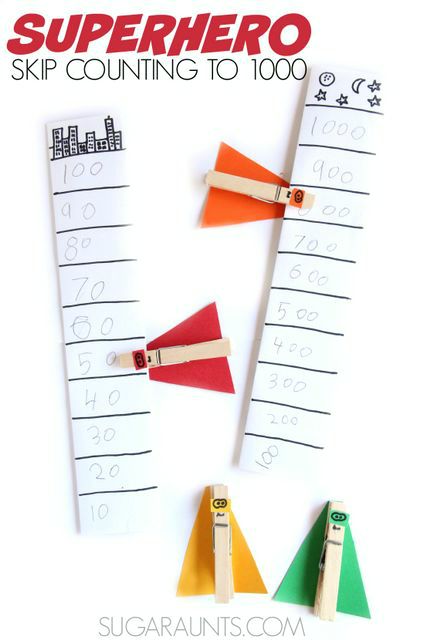
This Super hero Skip Counting Activity was a fun way to practice skip counting and basic addition up to 1000. (Affiliate links are included in this post).
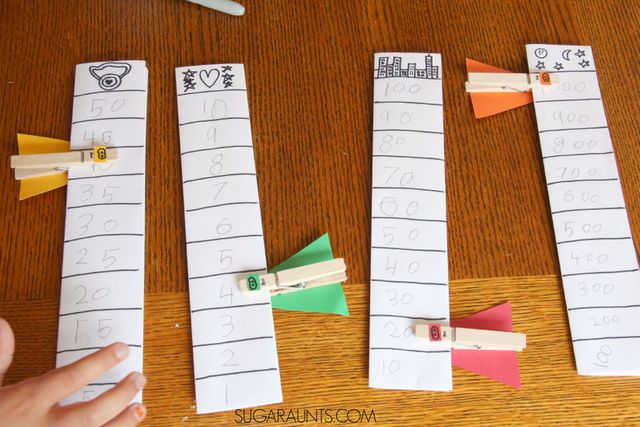
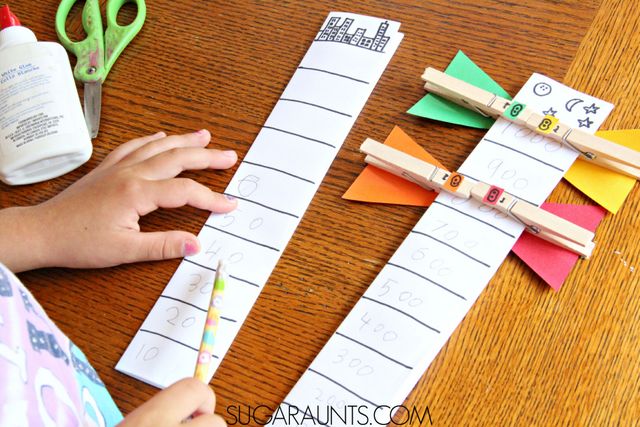
Next, we used the printer paper to create strips of paper that became our math skip counting columns. Simple fold the paper into quarters lengthwise. Then, use the sharpie to draw ten horizontal lines. You can draw a picture at the top of the strip of paper, like buildings, stars, a medal, or other superhero-ish pictures.
Multisensory Math- Skip Counting to 1000
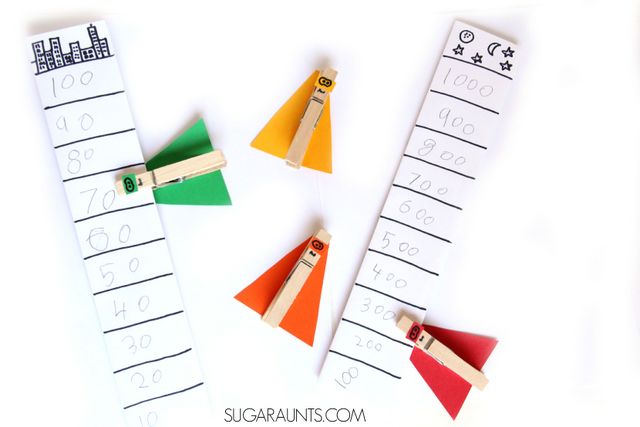
We made four strips of paper and my daughter wrote in numbers. On one strip she wrote 1-10. On the second, she wrote 1-100 by tens. On the third strip she wrote 5-50 by fives. On the last strip, she wrote 100-1000 by hundreds.
We then used the superheros to skip count up to 1000.
She was able to use the various strips together to do basic adding by 1’s, 5’s, 10’s, and 100’s.
One of the standards in second grade math is understanding place value. Skip counting to 1000, and reading and writing numbers up to 1000 are important concepts in place value.
You can position the hundreds strip next to the ones strip and easily note that the numbers 100, 200, 300, 400, 500, 600, 700, 800, and 900 refer to one, two, three, four, five, six, seven, eight, nine, or ten hundreds (and 0 tens and 0 ones). There are so many ways to use these superhero skip counting strips and superhero counters.
My daughter has been using them every day (and carting them around in her tote bag) to count out how many silly band bracelets she’s made. She will slide the superhero counters up the strips one by one on the ones strip.
Then when she reaches the 10, she slides the superhero up on the tens strip. She’s got a long way to go to reach one thousand silly band bracelets, but she sure does have lofty goals (and a super fun superhero way to keep track)!
These make a great fine motor strengthening activity, too. Pinch these superheros on yarn or paper for superhero fine motor strength! Looking for more Superhero themed ways to learn in second grade? Try these from our Second Grade Blog Team:
We’ve updated our Cooking With Kids Page! Now you can find all of our recipes in one place when you are looking for a snack, appetizer, breakfast, lunch, dinner, or desert idea to make with the kids in the kitchen. Cooking with Kids is such a sensory-rich learning experience and a development of life skills, as well. Stop by and see all of our recipes here.
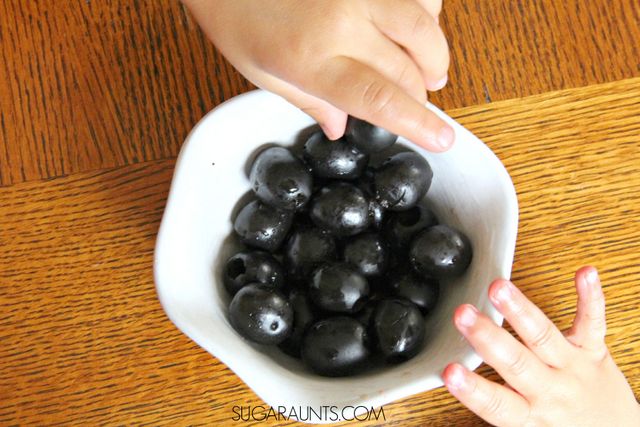
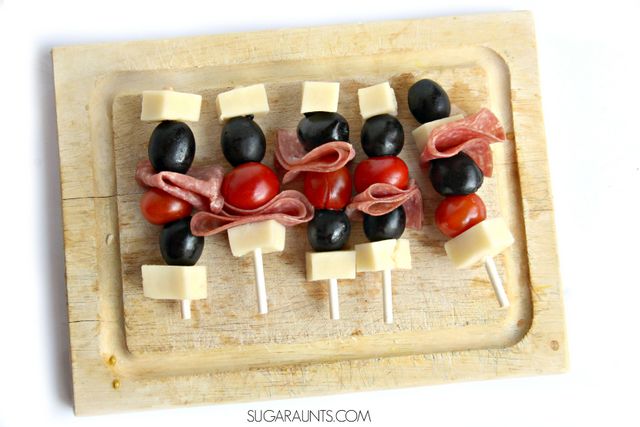
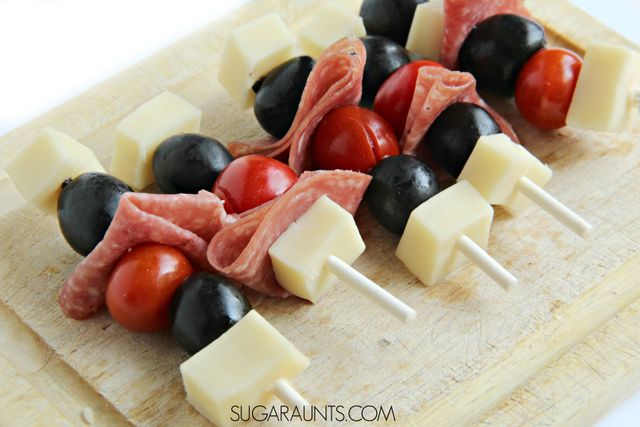
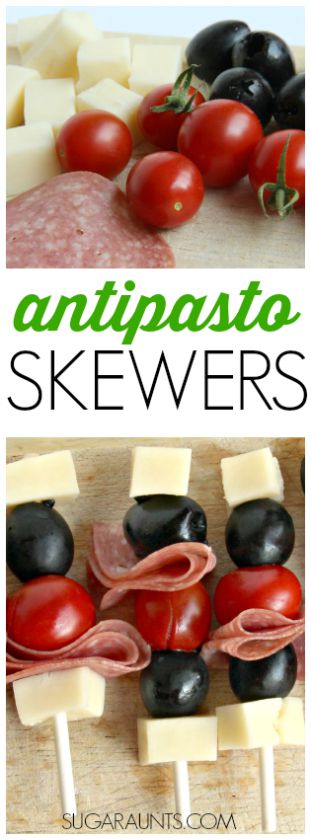
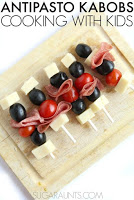
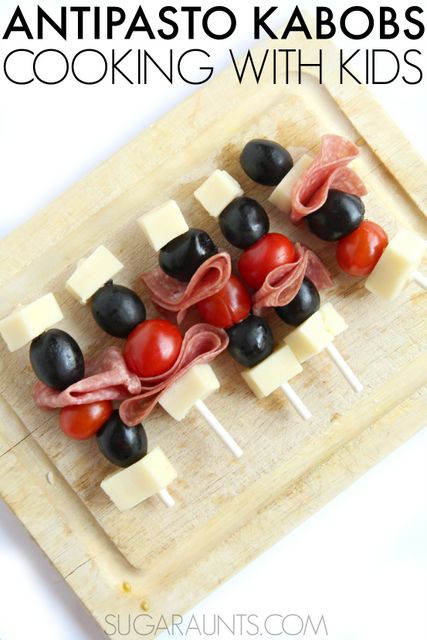
This week on our Cooking With Kids series, we’re sharing some of our favorite ingredients in a kid-friendly Antipasto Kabob Skewer Recipe. Every other week, we’ve been cooking our way through the alphabet with the Cooking With Kids A-Z series and we are up to O for Olives. My kids could eat a whole can of black olives. Combine them with garden fresh tomatoes, mozzarella cheese, and salami, and they are in antipasto heaven. To make this recipe even better, we put it all on a lollipop stick for a kid-friendly skewer recipe. And, who doesn’t love food on a stick?
Kid-friendly Antipasto Skewers
This post contains affiliate links.
Antipasto can contain many different ingredients. What is nice about this recipe is that you can modify it to meet the tastes of your family–or use what you’ve got on hand. We made our antipasto skewer kabobs kid-friendly by using one of our favorite tools- Lollipop sticks! You may have seen us use them in play or our shamrock pops. Today, we’re using them to make an eye (and mouth/arm/sibling)-friendly skewer that the kids will love.
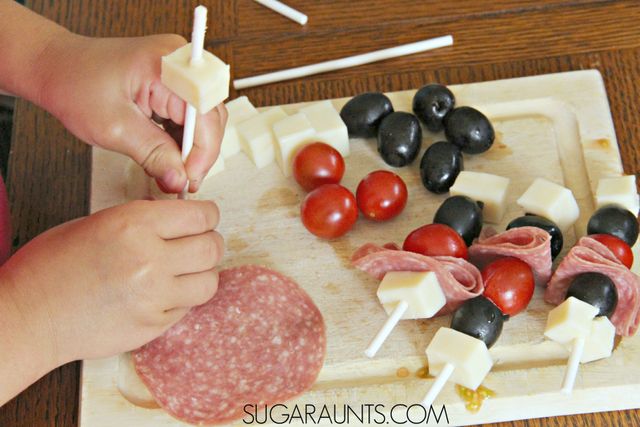
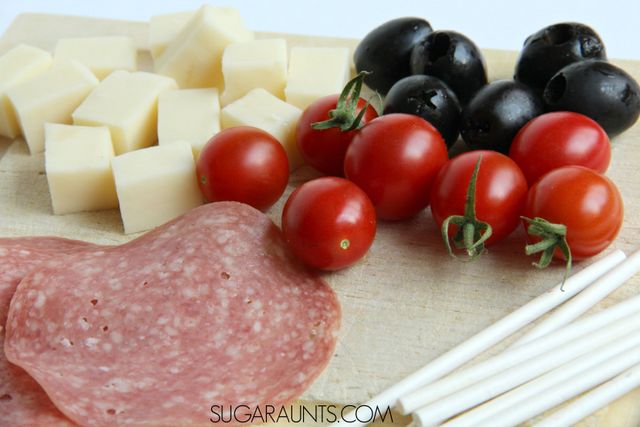
To make your antipasto skewers, gather the ingredients you’ll use. We used garden-fresh cherry tomatoes, black olives, mozzarella cheese, and deli sliced salami.
Slice the mozzarella into strips and have the kids chop large squares. We used a regular butter knife to chop the strips of cheese into cubes.
If your kids are like mine, there will be sneaking of the olives as you cook.
Next, simply skewer the ingredients onto the Lollipop sticks. We found that first skewering the cheese cube kept the other items securely on the stick. Then add the other items. Fold the salami into quarters when you add that part. Finish up with a cube of cheese to keep all ingredients in place.
This recipe was such a hit with my kids that there requests for another round the next day. This easy antipasto recipe would be a great addition to lunchboxes or after-school snacks.
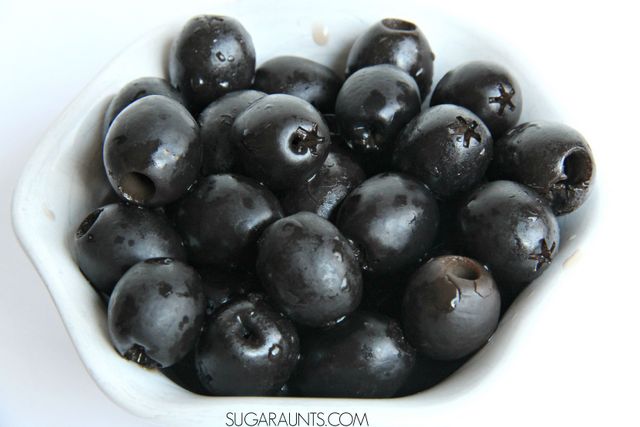
The black olives make a great snack in themselves. That is, if the kids don’t gobble them up too quickly!
Stop by and see what the other Cooking With Kids A-Z team have created using olives:
Getting out of the house and experiencing your city or town is a must when you have kids. Whether you pack a picnic for the park or play in a nearby creek, getting out and being on-the-go is fun for the whole family. Outings to parks, zoos, local amusement parks, or museums are a great way to learn and play while making memories with the family. Family Time can be hectic and chaotic when you need to pack lunches, sunscreen, diapers, and extra clothes, and it can be a little overwhelming. Not to mention the price tag of buying a lunch while out and about in your town…it can get expensive to plan family time while enjoying your local sights. Packing snacks and lunches for busy days saves money while being a healthy option.
Packing a lunch and snacks is our number one way to save money while enjoying time together as a family during outings. When kids are used to a packed lunch with healthy snacks and lunch ideas, they are likely to eat the same lunches during the school year. We’ve got ideas for healthy lunch and snack ideas that will keep the kids happy and full.
Healthy options are important to us and I love to pack snacks and lunches that keep the kids going while monitoring sugar and calories. We spent a day out at our city’s zoo one day recently and packed our favorites in the princess lunchbox to save on money and sugary snacks. Some of our favorite healthy snacks and lunch ideas are easy to throw into the lunch box while trying to get out the door.
More healthy lunch ideas for On-The-Go days with family:
Add a bottle of water to your lunch bag. Try to have a reusable water bottle for each family member, instead of pop or sugary juice boxes. Re-fill water bottles often, especially during hot summer outings.
Fruit Tubes (real fruit purees served chilled or frozen)
Sandwiches and wraps using whole wheat bread and wraps.
Hummus and vegetable dippers.
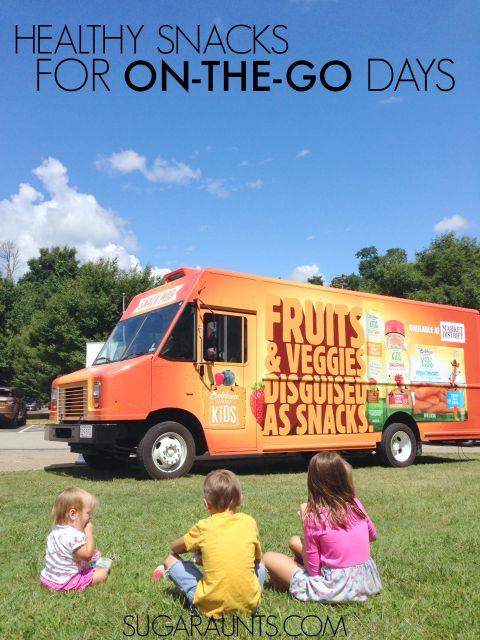
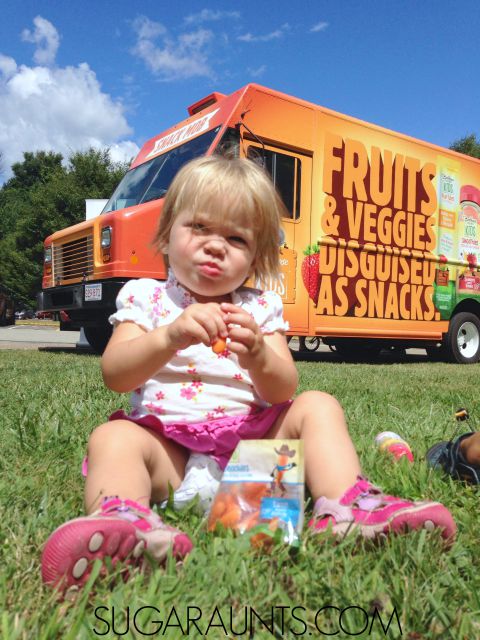
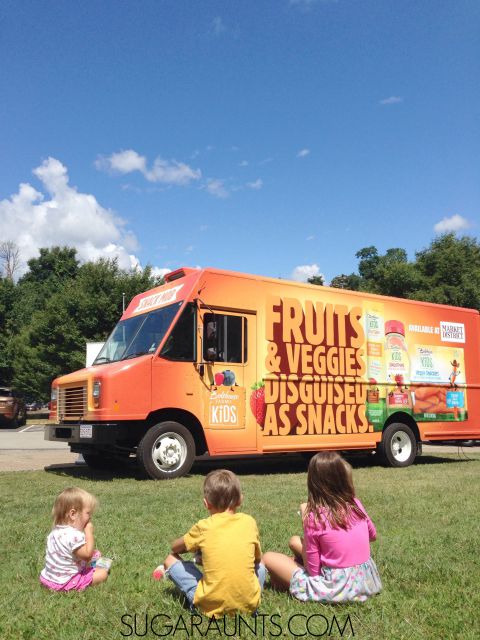
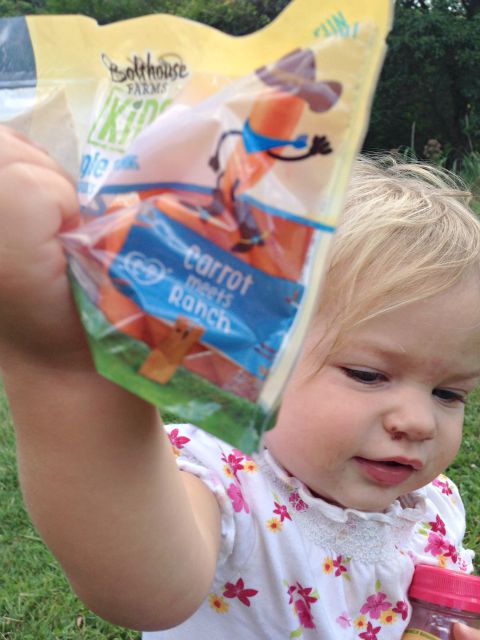
They loved the beautiful day at the Pittsburgh Zoo and the free snacks to add to our lunch was a big hit. It was fun to see the big orange truck handing out free samples to the HUGE crowd at the zoo. We could see kids all over the zoo snacking on carrots and smoothies!
We had our snack right on the grass in front of the zoo. It was the perfect resting spot during our an on-the go summer adventure!
This blog post on aunt quotes is an OLD one on this website. The origins of this blog began many years ago (You can read all about The OT Toolbox and our start.) But one thing we love is being an aunt to many nieces and nephews. This brings us to our favorite quotes about being an aunt! Let’s explore them all!
Aunt Quotes
Aunts have the best job there is. Life with nieces and nephews is all about giving hugs, talks like a sister, and loving like a friend.
So what does a fun Aunt do with the nieces and nephews for quality time and building memories? Check out our HUGE resource of kids crafts, activities, cooking fun, and general awesome Aunthood ideas for Aunts to pull out of her sleeve when the best nieces and nephews on the planet are looking for some fun?
Here are some of the best quotes about Aunts:
“Aunts are to be a pattern and example to all aunts; to be a delight to boys (and girls) and a comfort to their parents; and to show that at least one daughter in every generation ought to remain unmarried, and raise the profession of auntship to a fine art.” – Louisa May Alcott
“Aunts are like chocolate. You can live your life without them, but wouldn’t want to.” – Unknown
“An aunt is a safe haven for a child. Someone who will keep your secrets and is always on your side.” – Sara Sheridan
“Aunts are the ones who stand beside moms when nieces and nephews enter the world and they’re the ones who teach them to be good and kind and strong and true.” – Unknown
“Aunts are like second moms, only cooler.” – Unknown
“Aunts are the ones who tell you the stories your mother and father don’t have the time to tell you.” – Unknown
“Aunts are always offering cookies and candy, but they’re also always there to listen and help you in any way they can.” – Unknown
“Aunts are angels sent down to earth to watch over their nieces and nephews.” – Unknown
“Aunts are not just relatives, they are special friends who hold a piece of our hearts forever.” – Unknown
“Aunts are like magical fairies. They make everything better just by being there.” – Unknown
Favorite Aunt Quote
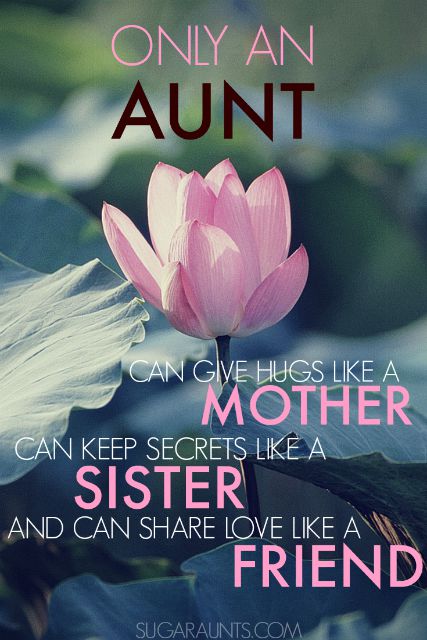
“Only an Aunt can give hugs like a mother, can keep secrets like a sister, and share love like a friend.” ~Unknown
(I searched for the origin of this quote but was unable to find a source. If you know of the original author of this quote, please let me know!)
(But all of the moms, grandparents, Occupational Therapists OTAs, child care workers, and educators will find fun ideas too!)
quotes on aunts and nieces
When it comes to Aunts and nieces, there is a special bond! These are some of our favorite quotes about aunts and nieces…
“The bond between an aunt and a niece is something special, like a mother and daughter, but different.” – Unknown
“Aunts and nieces are forever bound together by love and adventure.” – Unknown
“Aunts are like second mothers, only closer.” – Unknown
“An aunt and a niece have a bond that is like no other. They can talk about anything, do anything, and laugh about everything.” – Unknown
“Aunts and nieces may be separated by distance, but never by heart.” – Unknown
“Aunts are a niece’s best friend and confidant.” – Unknown
“A niece is a gift whose worth cannot be measured except by the love in one’s heart.” – Unknown
“Aunts are there to teach their nieces everything their mothers can’t.” – Unknown
“Aunts and nieces share a special bond that no one else can understand.” – Unknown
“The love between an aunt and a niece is like no other. It’s a bond that can never be broken.” – Unknown
nephew quotes from aunt
What about Aunt and nephew quotes? Let’s share some of our favorites…
“Aunts are like second mothers to their nephews. They are always there to offer love, guidance, and support.” – Unknown
“An aunt and a nephew have a special bond that is unbreakable.” – Unknown
“Aunts and nephews share an unbreakable bond of love that grows stronger with each passing year.” – Unknown
“An aunt is a caregiver, a friend, and a confidant to her nephew.” – Unknown
“Aunts have the magical ability to make their nephews feel special and loved.” – Unknown
“An aunt’s love for her nephew is like no other. It’s pure, unconditional, and everlasting.” – Unknown
“An aunt is a superhero in her nephew’s eyes. She is always there to save the day and offer a listening ear.” – Unknown
“Aunts and nephews may not see each other often, but when they do, it’s like they were never apart.” – Unknown
“The bond between an aunt and her nephew is something that cannot be explained, but only felt.” – Unknown
“Aunts and nephews share a bond that is built on love, trust, and lots of fun.” – Unknown
Cool Aunt Quotes
So, which is your favorite? We love them all! You can pick and chose the cool Aunt quotes you like and use them to make a card, add to a mug or t-shirt, or just write in a quick note to your favorite Aunt!
Colleen Beck, OTR/L has been an occupational therapist since 2000, working in school-based, hand therapy, outpatient peds, EI, and SNF. Colleen created The OT Toolbox to inspire therapists, teachers, and parents with easy and fun tools to help children thrive. Read her story about going from an OT making $3/hour (after paying for kids’ childcare) to a full-time OT resource creator for millions of readers. Want to collaborate? Send an email to contact@theottoolbox.com.
















 ! You may have seen us use them in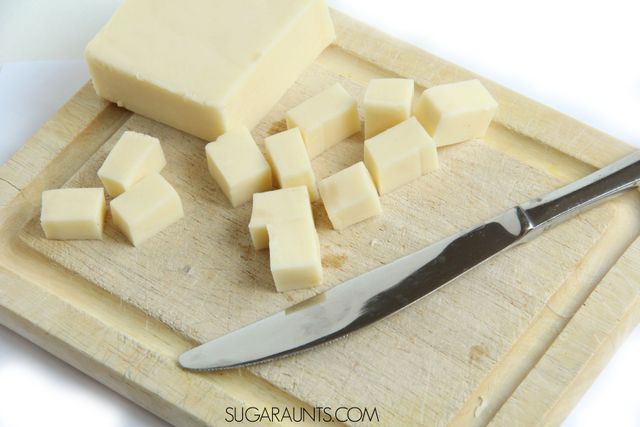
 to chop the strips of cheese into cubes.