Colleen Beck, OTR/L is a pediatric occupational therapist and the owner and author of The OT Toolbox website. She manages all of The OT Toolbox social media accounts and runs the popular newsletter.
Read about Colleen's experience and career as an occupational therapist, including how The OT Toolbox began on our About The OT Toolbox page: https://www.theottoolbox.com/about-us/
Colleen created The OT Toolbox in 2011 and since then has written thousands of blog posts designed to support therapy providers, educators, parents, counselors, admin, and caregivers in promoting the healthy development of kids.
Check out Colleen's blog posts below:
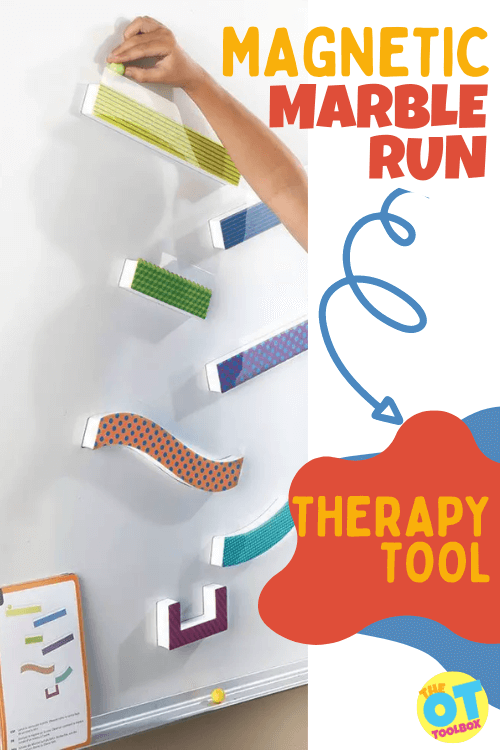
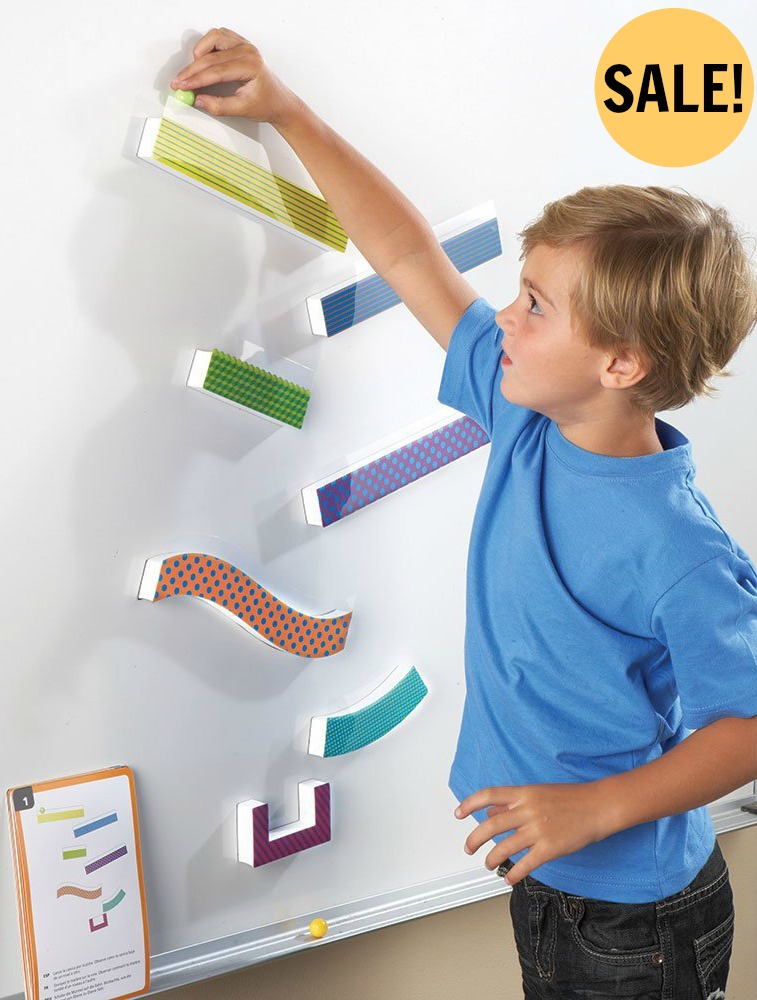
One thing occupational therapists love is using fun toys to develop skills and this magnetic marble run fits the bill. We found this Tumble Trax magnetic wall marble run and loved the ways to support fine motor skills, visual motor skills, and gross motor skills. Let’s take a better look at how to use a marble run to support development, and break down the activity analysis for this particular magnetic marble run toy.
Amazon affiliate links are included in this post.
How to Use a Magnetic Marble Run
Use this magnetic marble run in so many ways to work on a variety of skills. From fine motor, to core strength, to visual tracking, to crossing midline…this marble run can be so helpful.
We covered how to support skills such as visual tracking using marble runs in a different blog post but here, we hope to cover more ways to support development with a simple toy.
Because this marble run attaches to the wall using magnets, and because the magnetic marble run pieces are movable, there are so many ways to support development.
Some of these skills include gross motor development, visual motor skill development, fine motor development, and more.
Use a Magnetic Marble Run for Gross Motor Skills
Use the magnetic marble run on a vertical surface to address skill development:
Work on core strength by working on a vertical surface.
Address visual shift and upright posture by working at a plane equal or slightly above the head and line of sight.
Work on postural control
Address changes in positioning to bend, squat, and challenge different muscle groups by bending to retrieve marble run pieces and place them on the magnetic surface.
Work overhead to visually track and shift vision in different planes.
Address balance and coordination skills
Incorporate breathing
Use a Magnetic Marble Run for Visual Processing Skills
Move magnetic marble run pieces to target specific visual motor skills:
Work on visual tracking to watch the marble run through the track.
Address visual scanning skills to shift vision to the next area the marble will move
Incorporate eye-hand coordination skills
Address visual perceptual skills such as figure-ground, visual closure, visual discrimination, etc.
Address visual motor skills by copying designs using the movable track pieces, included with the Tumble Trax Magnetic Marble Run set. (affiliate link)
Use a Marble Run for Fine Motor Skills
Address crossing midline to move a marble to a starting point across the midline.
Trace the track with fingers.
Pick up and manipulate the marble onto the Tumble Trax (affiliate link) ledge.
Strengthen hands, including grip and pinch to manipulate and move the track pieces against the magnetic surface.
Attach it to a magnetic wall or board, garage door, and even the refrigerator. It’s a fun way to play and work on the skills kids need.
Learning Resources Tumble Trax Magnetic Marble Run
This marble run attaches to the refrigerator or any magnetic surface for endless visual motor integration exercises. Visually tracking the marble is a skill builder for reading and writing tasks. Kids can address the form copying skills needed for handwriting with this interactive toy.
Colleen Beck, OTR/L has been an occupational therapist since 2000, working in school-based, hand therapy, outpatient peds, EI, and SNF. Colleen created The OT Toolbox to inspire therapists, teachers, and parents with easy and fun tools to help children thrive. Read her story about going from an OT making $3/hour (after paying for kids’ childcare) to a full-time OT resource creator for millions of readers. Want to collaborate? Send an email to contact@theottoolbox.com.
Looking for more ways to support fine motor skills, visual motor skills, sensory challenges, and gross motor skill development? Grab one of our therapy kits to work on so many areas!
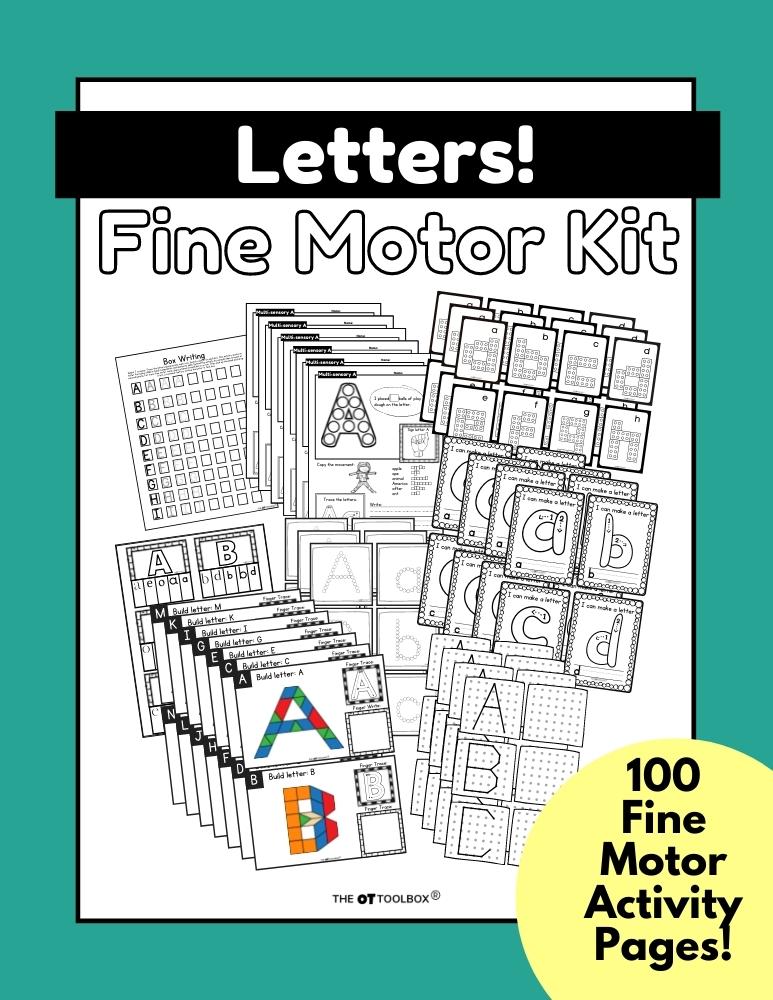
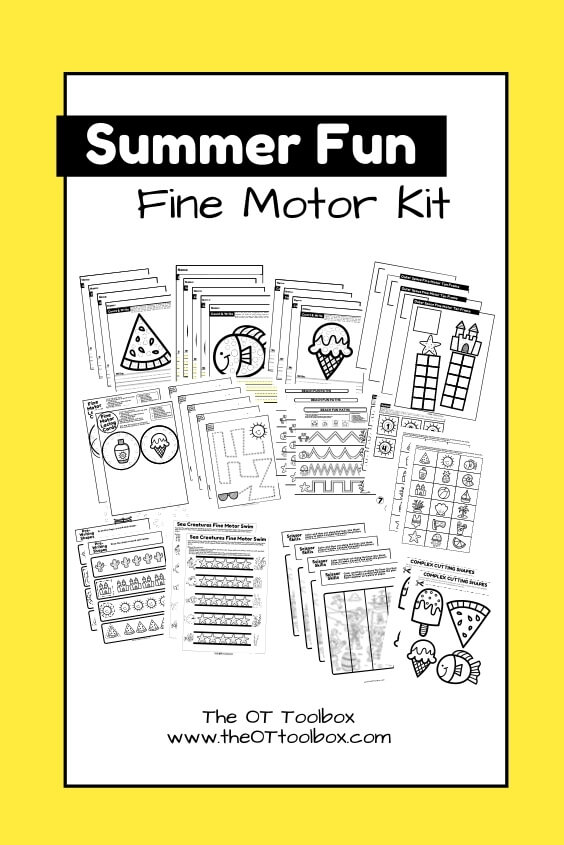
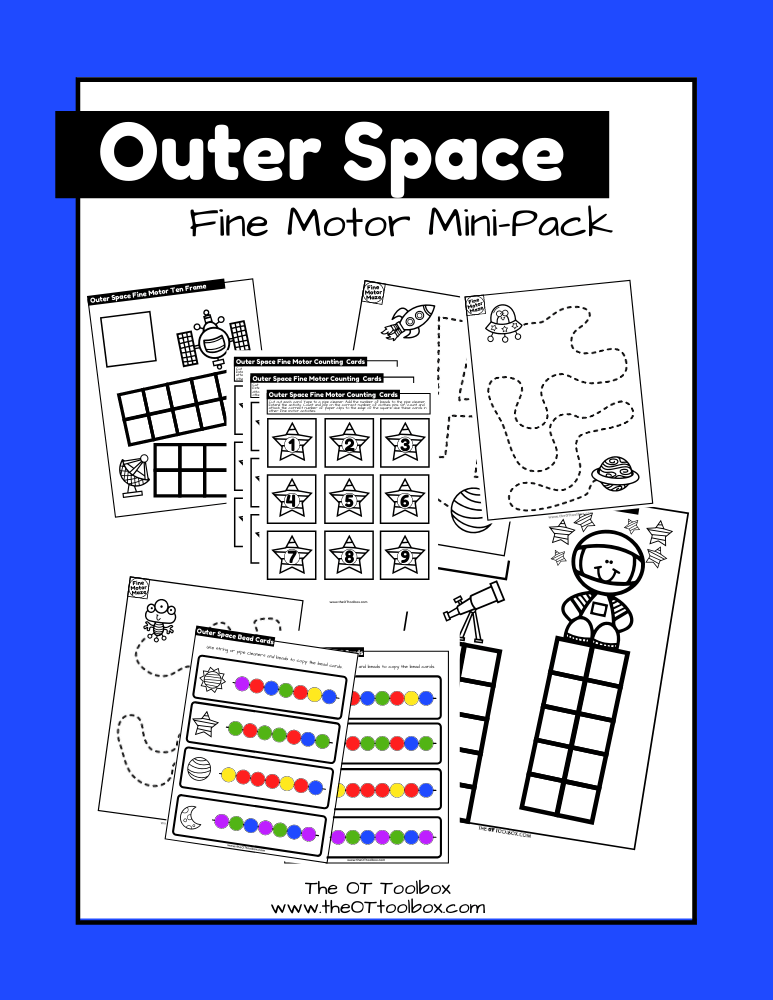
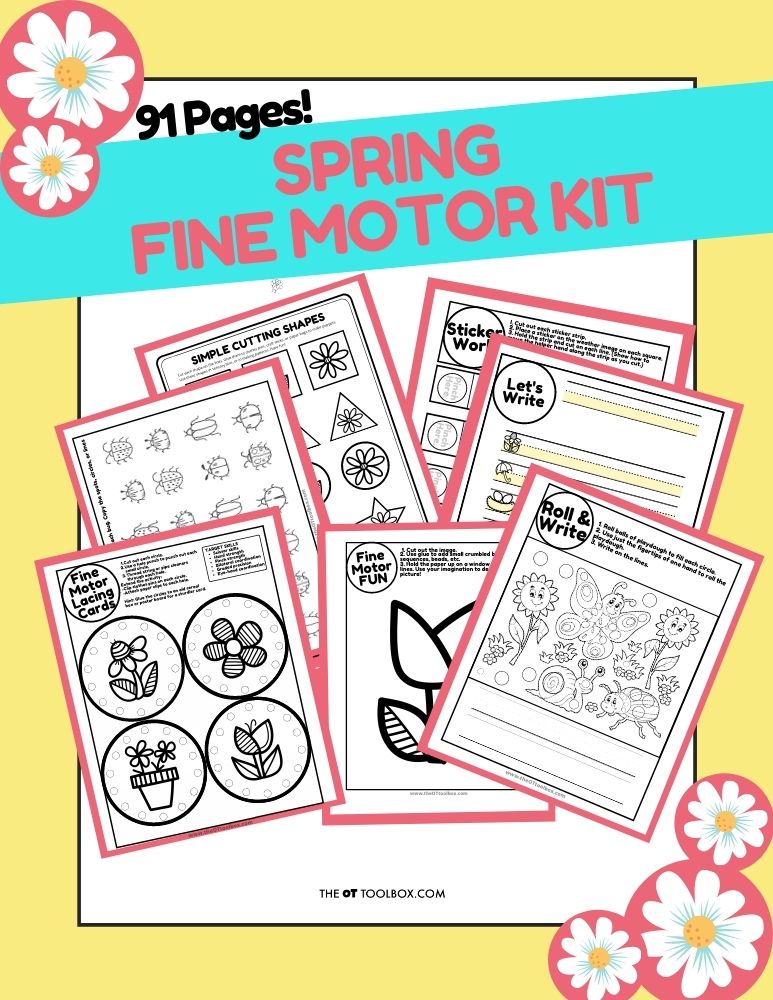
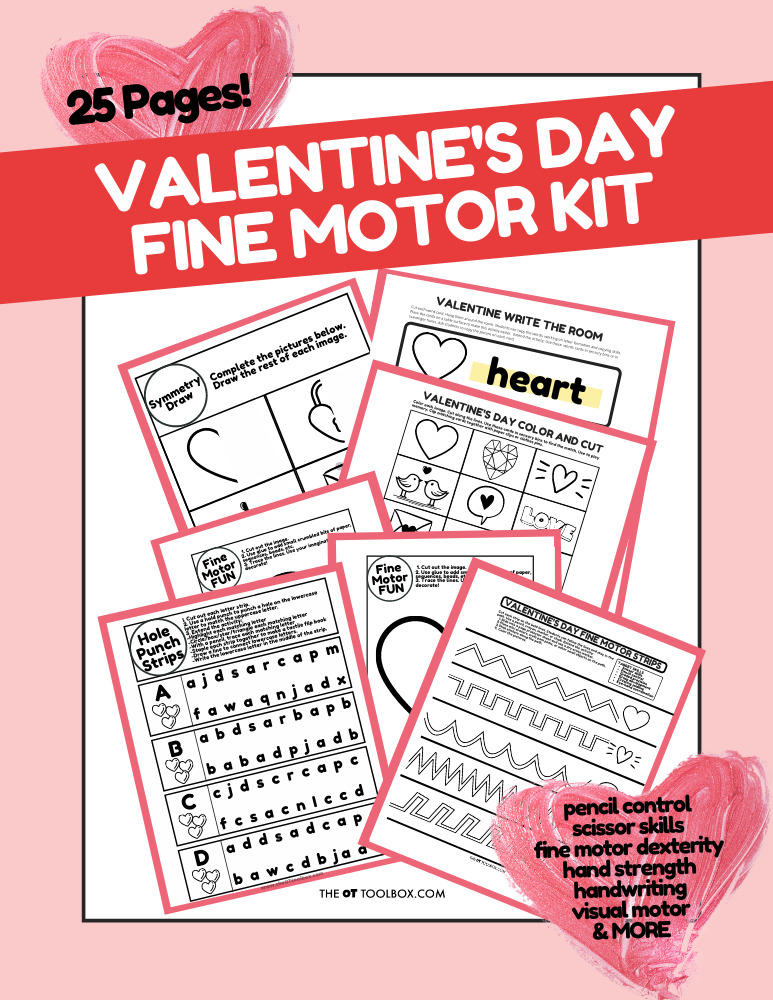
Working on fine motor skills, visual perception, visual motor skills, sensory tolerance, handwriting, or scissor skills? Our Fine Motor Kits cover all of these areas and more.
Check out the seasonal Fine Motor Kits that kids love:
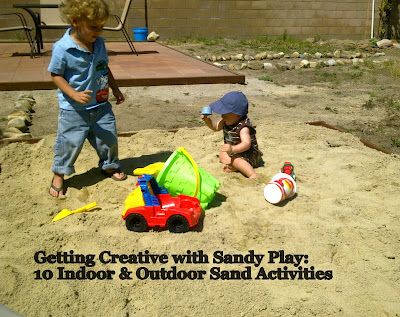
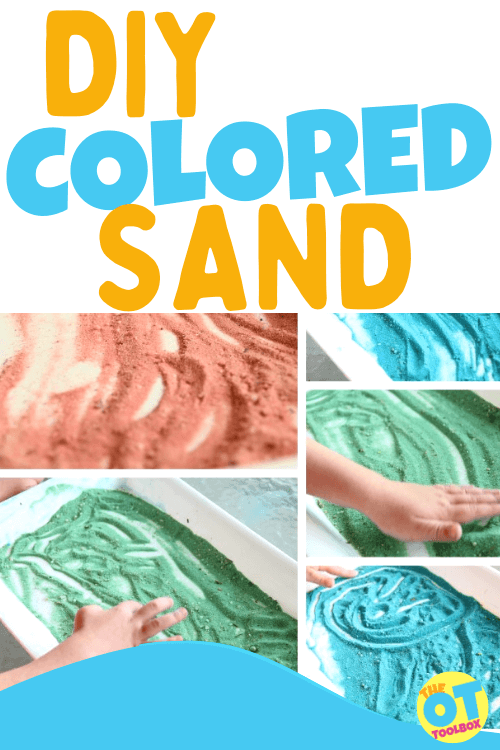
Have you ever thought about making colored sand? It is possible to color sand, easily, and get the kids involved in the process, too. Here, we are covering how to color sand as a sensory play material for the sandbox, for art, and for homemade colored sand fun!
We have been playing outside so much recently. Our sandbox is right outside and the kids are in there daily. We added a little color to some of the sand this week and have been having fun with our colored sand!
Color Sand for Developing Skills
Kids love to color sand, and the process is a fun motor and sensory activity to support development of a variety of skill areas, too:
Bilateral coordination to pour sand into a bag or container
Gross motor skills, heavy work, proprioception, and motor planning skills to shake the containers of sand and paint
Executive functioning skills to mix and color the sand
Tactile sensory play to manipulate the mixed textures of dry sand and wet paint.
Fine motor skills to pinch the crumbled dry clumps of colored sand
How to Color Sand
We made a simple batch of colored sand very easily. This simple recipe is a great activity for kids to make as a cognitive and direction-following activity. Read on for directions on how to make colored sand…
Big Sister helped me with this and we had fun while the little kids were napping. So how did we make our colored sand?
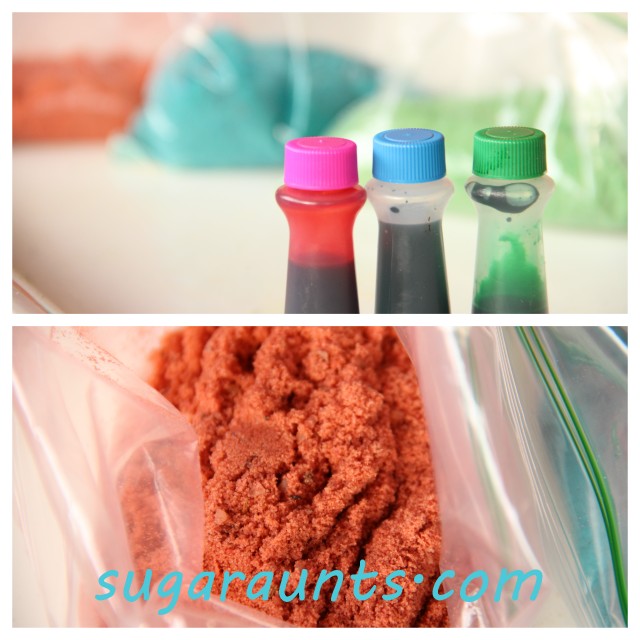
Scoop a little sand into plastic baggies.
Add around 10-15 drops of food coloring.
Seal the baggie and shake it up. (great for some gross motor play!!)
Let the sand dry and have fun playing.
We left our sand right in the open baggies and let it dry overnight. If you wanted to play right away, you could spread the sand out on a tray and it would dry much sooner.
Color Sand Activities
Once you have mixed a batch of colorful sand, you can use it in various sensory and motor activities.
Make Color Sand Pictures
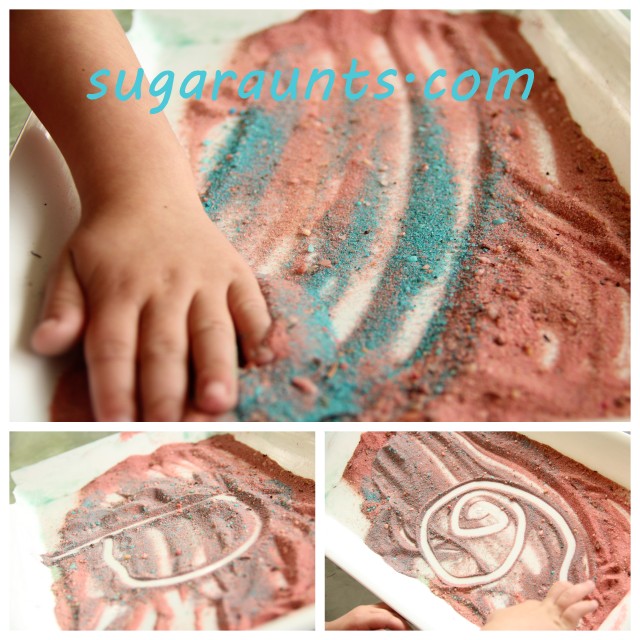
So the next day, we spread the sand out on a tray and played! She loves making pictures in the sand and telling stories (like Nina on Sprout!) This was such a fun activity.
Practice Writing Letters with Colored Sand
We spread out the sand onto a low tray and used it as a writing tray. My preschooler told me all kinds of stories, made words, and we practiced some lower case letter formation.
Big Sister is knows how to make most lowercase letters and can copy all of the letters. This is a great activity for letter formation and practicing handwriting.
Use Colored Sand for Pre-Writing Skills
For kids that are still working on diagonals, crossed lines, and shapes, a sand sensory writing tray is a great tool to work on pre-writing skills. The tactile feedback offers muscle memory for forming lines and shapes.
The sand adds a sensory aspect to letter formation. Using a large tray like this one adds whole arm movements which are perfect for the young child who is just learning letter formation. I love the contrast that the white tray adds to the colored sand.
We played for a long time with this (again during Little Kid nap time).
Of course, when you have bags of colored sand, you have to mix the colors together to see what happens 🙂
Grade the colored sand activity for therapy
How can you grade this activity for different aged children? There are many ways to color sand and use one batch with several ages. This is especially good for families with children at various ages. Consider the contamination aspect when using a batch of colored sand in the therapy setting.
Toddlers would love to explore the colors and sensation of the sand on their fingers.
Pre-writers can copy and trace shapes, zig-zag and intersecting lines
Early writers can trace upper case letters.
Older hand-writers can copy a word from a card positioned off to the side.
Practice spelling words with school-aged kids.
We saved our bags of colored sand and will be using them again. Have you done any projects with colored sand?
Finally, after playing with your homemade colored sand, use the opportunity to add this tactile sensory play experience to your toolbox of handwashing activities!
Colleen Beck, OTR/L has been an occupational therapist since 2000, working in school-based, hand therapy, outpatient peds, EI, and SNF. Colleen created The OT Toolbox to inspire therapists, teachers, and parents with easy and fun tools to help children thrive. Read her story about going from an OT making $3/hour (after paying for kids’ childcare) to a full-time OT resource creator for millions of readers. Want to collaborate? Send an email to contact@theottoolbox.com.
Working on other fine motor skills through play? Grab one of our Fine Motor Kits to get started!
Working on fine motor skills, visual perception, visual motor skills, sensory tolerance, handwriting, or scissor skills? Our Fine Motor Kits cover all of these areas and more.
Check out the seasonal Fine Motor Kits that kids love:
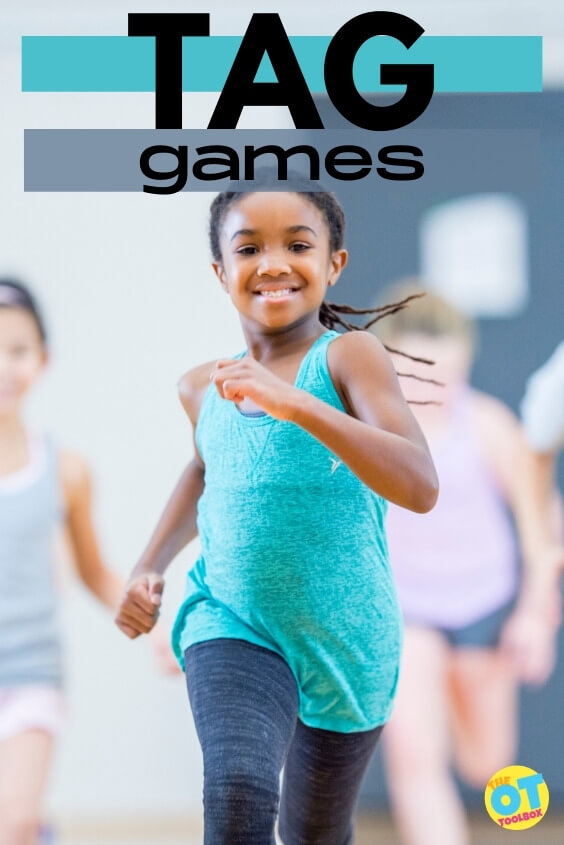
The thing about playing tag games is that you can take a classic lawn game and make rules to change the game a thousand different ways and never play the same game twice! Chase games are a fun way to get kids moving and outside with movement, balance challenges, development of the visual system, and heavy work. Best of all? Tag activities can support developmental needs on all levels and abilities. Add these tag games to our massive list of outdoor lawn games to get kids moving, running, jumping, and building motor skills!
Tag games
There are so many reasons why tag games are a must for summer time fun. Let’s break it down:
Tag games are great ways to add motor movement to kids, to get them off the screens, and outside. Running and playing tag supports gross motor coordination.
Tag also is a powerful way to play together as a family, adding a chance for connection and creating memories. What better way to spend some time together as a family than playing a game of tag that offers heavy work, sensory input, in the great outdoors?
Tag games are also great running games for physical education.
Tag is a fun way to support therapy goals with a small group. Use the tag games in a group therapy setting, in PE planning, or in summer camp activities.
Playing tag at summer camp offers a break between activities, adds heavy work, and can get kids moving and building skills. Best of all- you can modify the tag game to meet any theme or topic!
The options are limitless! Here are more summer camp ideas that tag can fit well into with therapeutic and team-building benefits.
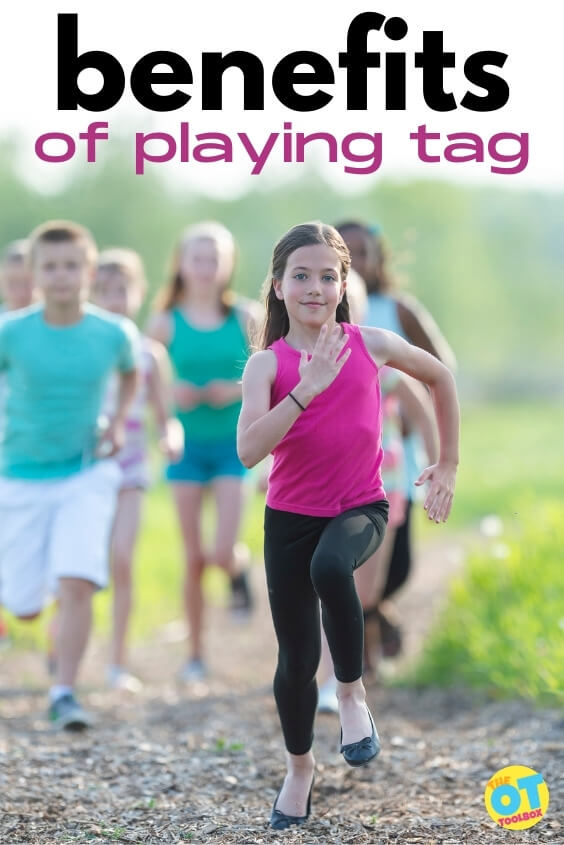
Therapeutics benefits of playing tag
When kids are running, stopping, turning course, running around obstacles, there are many developmental benefits.
Let’s break down games of tags for their therapeutic benefits:
Running- running in short bursts offers cardio input that gets the blood pumping. When kids run and stop in short bursts, they are gaining heavy work input through their legs and core.
The short intervals involved in tag games build muscle strength, and allow for running at various speeds. As opposed to longer distance running, kids can be successful in running in short bursts.
This is also a great way to “reset” after being indoors for a while, on a long car ride, in the classroom all day, or on screen devices for a long period of time. We talked here about the benefits of treadmills and wellbeing, but for shorter bursts of running, the mindfulness benefits definitely exist!
Stopping and Starting- When we run and then stop abruptly or stop and turn, there are so many motor components occurring at one time.
The muscles that are actively engaged need to stop abruptly, adding heavy work input through those muscles and joints. Then the opposing muscles and core need to activate to maintain posture. The whole body is engaged in this action. Kids often play tag in a yard or park where there are trees or other stationary structures.
These provide a need to move around targets and slow running speed. This requires the visual processing system to interact with the motor tasks. When kids are running around other tag players, they are running around moving targets, which further engages muscles and visual processing system.
Stopping and starting motor skills are a challenge for:
Proprioception
Vestibular input
Motor planning
Body awareness
Depth perception
Balance
Coordination
Postural control
Tagging others- Tag is such a great way to interact with others in an appropriate way. You may have had a school yard experience where you were pushed down in a game of tag. When others tag you and it occurs unexpectedly or with too much force, a fall can happen!
However, by playing tag, kids get that experience with proprioceptive input, vestibular input, and visual motor skills.
How much force must they exert to tag without pushing over a playmate?
How far do they need to reach out to tag a friend without hitting their face?
All of this experience in movement is powerful! It helps kids learn about how their body moves in space, body awareness skills, visual perceptual skills, spatial awareness, and eye-hand coordination skills.
Spatial awareness- Expanding further on the spatial awareness skills, or spatial relations, body awareness, posture exercises for kids, and position in space, all of these body concepts are able to be carried over to other functional tasks.
This experience allows kids to use this knowledge when walking in crowded hallways without bumping into others, spatial awareness in handwriting on a page, moving while carrying plates or heavy items. All of these experiences can be integrated for functional movement.
Executive functioning skills- Playing a simple game of tag can build executive functioning skills, too! Think about it: when you play tag, there is working memory to recall movements that allowed you to escape in a previous game or trial.
If you’re playing a fun tag game version, you need to recall specific words or phrases that were already used. Other executive functioning skills that are used in tag include planning, prioritization of movements, impulse control, task completion, initiation, processing speed, self-monitoring, foresight, mindset, and cognitive shift. What a powerful game tag is in building cognitive skills!
Motor planning- Moving, making motor plans, running around obstacles and other children…what a great game tag is to build motor planning skills.
There’s more: tag is a fast-paced game. So those motor planning sequences and movements need to happen quickly. The good news is that a game of tag offers many trials and repetitions to build motor plans and muscle memory.
Visual Processing Skills- Visual processing skills is an umbrella of visual skills and tag addresses many of these areas through play. And playing tag requires many visual processing skills under that umbrella!
Take a look at all of the visual skills needed for tag:
So, now that we know the massive therapeutic benefits of tag, let’s take a look at some fun tag games for kids.
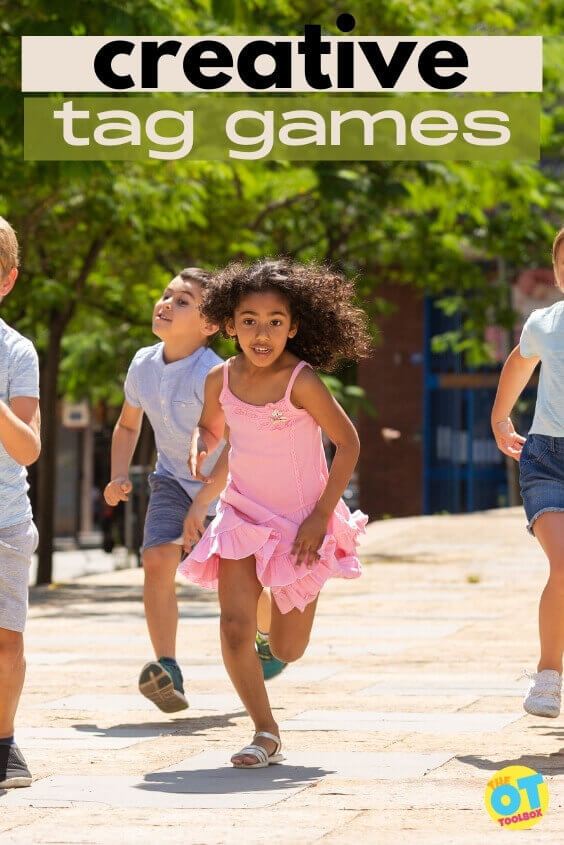
Fun Tag Games
Classic tag–
Someone is it and chases the others in the group. When they touch someone else, that person is now “it”. The game continues.
TV Tag
One person is “it”. When they approach another person, the player yells the name of a TV show and drops to the ground. They are then safe and the person that is “it” needs to run and tag another person. This type of tag can be adjusted to call out music, songs, YouTube shows, games, sports, favorite foods, animals, etc.
Flashlight Tag–
Play tag in the early evening hours with flashlights. When you shine your flashlight on a fellow tag player, that player is tagged and they are now “it”. This is a great activity for challenging visual scanning skills, visual discrimination, visual figure ground, and visual tracking skills.
Sharks and Minnows Tag–
One person is the shark and the others are the minnows. When the shark touches another player, that person then turns into a shark. Now there are two sharks. Play until all of the minnows turn into sharks.
Freeze Tag-
When a person is tagged, they need to freeze in place until another player touches them to “unfreeze” them.
Cops and Robbers Tag-
A group splits into either “cops” or “robbers”. The cops chase the robbers and once tagged, they need to sit in “jail” until another robber tags them and releases them.
Pizza Tag-
One person is “it” and chases the others. Players run from “it” and can stay safe from being tagged by naming pizza toppings and touching the ground.
Animal Walk Tag-
Players can assume an animal walk (crab walks, hop like a bunny, waddle like a penguin, sway like an elephant, etc.) and play tag!
Social Distance Tag Games
No-Touch Tag Games-
Tag games can be modified to any theme which is great for social distancing. One person is “it”. When they near another child, that person yells out a word or phrase, or completes an action like hopping, squatting, acting like an animal, touching the ground, dabbing, or completing any physical action. Tag could take any action or theme in this way.
Shadow Tag-
Play classic tag but tag one another by stepping on the shadow of others. This is a great social distancing version of tag, as well.
Social Distancing Tag-
This tag game is another way to play with others, gain the benefits of tag, and play in a socially distanced form. Simply play tag in the classic version (or use any of the fun tag versions described here) and when “it” is within 6 feet of another person, they have tagged the other player. This is a nice way to work on spatial awareness and scanning at a distance, too.
Tag Games for Different Themes
The cool thing about a classic game of tag…or any of the versions listed above, is that you can adjust the theme to fit a weekly therapy theme, a summer camp theme, or a learning theme at school. Different types of tag games can be played using all one theme to add different movement opportunities and motor planning challenges.
Have an ocean summer camp? Play ocean animals tag (kids call out ocean animals and drop to the ground to stay safe.)
Planning a space camp? Play space tag. Kids can call out planets when the “it” person is near and stay safe.
Creating a Pirates theme summer camp? Modify sharks and minnows tag to meet your theme.
Coming up with a handwriting camp to work on handwriting skills? Encourage heavy work through the arms by adding crawling, hopping, or heavy work animal walks.
What do you think? Have you played any of these tag games before? Let’s get those kids moving!
Colleen Beck, OTR/L has been an occupational therapist since 2000, working in school-based, hand therapy, outpatient peds, EI, and SNF. Colleen created The OT Toolbox to inspire therapists, teachers, and parents with easy and fun tools to help children thrive. Read her story about going from an OT making $3/hour (after paying for kids’ childcare) to a full-time OT resource creator for millions of readers. Want to collaborate? Send an email to contact@theottoolbox.com.
There are many tips on potty training out there, including many toileting methods, training strategies, and potty training charts. But, what if you could have the occupational therapy potty training strategy? Toileting is an ADL and potty training is part of that. What if you could get the low down on potty training from an occupational therapy or physical therapy professional, that is guided by development, focuses on underlying skills needed to use the bathroom, and addresses the whole child perspective? What if you could ask every developmental question under the sun and get tips for toileting straight from the pediatric OT and PT?
This blog post covers just that! I’ve joined forces with some of the best occupational therapy and physical therapy bloggers to to bring you the best potty training tips.
Occupational therapy Potty Training
When occupational therapists work with children, they focus on the whole perspective. We look at development, environment, and every aspect that contributes to the entire process of toileting:
Awareness (sensory, cognition) to know when to go to the bathroom
Clothing management (fine motor skills, gross motor skills, visual motor skills, bilateral coordination, crossing midline, coordination skills, executive functioning skills, cognition, sequencing)
Motor skills to sit, balance, stand, grasp, wipe, clean
Bowel movements and urination (sensory processing including interoception aspect, contributing factors such as sleep, nutrition, sensory integration) Related, read our resource on not sleeping through the night.
Hygiene– washing and drying hands (fine motor skills, gross motor skills, visual motor skills, sensory processing, executive functioning skills, attention and behavior)
Play-based activities to support development of underlying areas that impact each of the above areas
As you can see, occupational therapy professionals focus on the overall development and whole view of the child, the environment, and many other perspectives. This is a wider focus than your typical 3 day potty training method, or a sticker chart!
Potty Training Tips
Toilet training tips can look like a checklist of tasks to complete. But, when you consider all of the aspects of development that play into the process of toileting, there is much more than just a list of potty training tips to accomplish.
Potty training is an important rite of passage for children. For most individuals, they use the toilet each day without a single thought. And it is possible for the toddler or preschooler to get to that stage. Children of all ages, including older kids can struggle with the process, which is all very typical.
1) ROUTINES- The most valuable potty training tip for parents, no matter the age of the child and the physical or cognitive ability is consistent routine.
Routine, whether it is practiced with a visual schedule, a potty training sticker chart, toileting adaptations, special nutrition, timers, physical exercises like yoga…all should be consistent and replicated on an ongoing basis.
There are so many aspects of development that contribute to underlying skills and the process of toileting. Whether these factors are addressed in occupational therapy sessions or in a home program, that consistent practice and routine trial is needed to support development.
2) PATIENCE- A second and worthy toileting tip is to focus on the patience.
Toileting is a complex process. Add in environmental considerations such as public toilets, loud hand dryers, noisy flushing toilets, and other sensory-based distractions.
Consider rushed schedules to get out the door in the morning.
Consider typical behaviors and attention spans of toddlers and preschoolers.
Consider day to day stressors.
Consider the distraction of screens and social media (“My infant is using the toilet all by themselves!”…yeah right!)
This is just the tip of the iceberg when it comes to all the factors that play into potty training. The fact is that kids are kids! They are just learning this complex skill, and toileting is a huge developmental process! The key to this whole process is patience and persistence.
3. BIGGER PICTURE- A third potty training tip occupational therapy professionals focus on is looking at the whole child.
This is more on what we covered above. When you take a step back and think about ALL of the developmental areas that play into toileting, self-care, hygiene, there are SO MANY areas at play here!
Let’s look at all of the areas that have a factor in the toileting process:
Interoception- This is worthy of a second mention- The ability to know when to go, to feel the pressure in the belly area, the sensation of having to pee or poop, the feel of pushing a bowel movement, the sensation of knowing when the process is complete, feeling hunger or thirst, sensing an upset stomach
Cognition
Communication and language
Social and emotional skills
Family perspective
This list essentially covers all areas of development! You can see that simply potty training can take longer for some individuals, and that is completely ok!
Occupational Therapy Toileting Strategies
The occupational therapy professional working with families on the functional task of toileting considers all of the areas listed above. They break down the process and use skilled assessment to analyze areas contributing to challenges with toileting.
OT professionals offer strategies and supports to develop contributing areas that impact the challenges that come up with toilet training. They offer suggestions, motivators, fun play activities, schedules, and consultancy that promotes development in the areas that will lead to success.
Occupational therapy practitioners can support families with potty training troubles in so many ways:
Education on various potty training methods that work best for the individual
Data methods
Functional skill assessment
Address sensory sensitivities
Address clothing considerations
Educate on sensory and perceptual concepts such as wet/dry, clean/dirty, front/back
Body awareness considerations
Address physical considerations
Address concurrent considerations such as diagnoses and their impact on toileting: physical or cognitive considerations, sensory processing differences, mobility, balance, muscle tone, etc.
The whole process of potty training is complex and aspects can be a challenging and difficult time for parents. There can even be frustration at times.
All children need to learn and finding out the best potty training tips and ways to help with teaching kids to potty train that works for their individual needs.
To support kids in these areas, I’ve joined a team of pediatric occupational therapy professionals and physical therapists in creating the ultimate resource based on development and the whole child.
The developmental progression of toileting, perineal hygiene, self-care, and handwashing
Toileting for special populations including Autistic individuals, those with diagnoses such as Down Syndrome, Cerebral Palsy, Traumatic Brain Injuries, Spina Bifida, Spinal Cord Injuries, and other physical disabilities, etc.
Strategies and supports for those with fine motor, gross motor, visual motor, behavioral, trauma, sensory, or cognitive considerations
Tips and suggestions when there is trouble with toilet training
Equipment suggestions for toileting
The book also includes toilet training matrix for readiness and functioning, readiness skill activities, interoception information, social stories, visual schedules, sticker charts, and other tools.
ackling potty training is a challenge for all kids! What if you had the inside scoop on development in your back pocket?
What if you had the know-how of occupational therapists and physical therapists with DECADES of experience to guide you?
The authors of the Toilet Training Book have decades of experience working with individuals of all skills and abilities. Check out some of the potty training tips they have, coming from the OT/PT perspective:
Fine Motor and Toileting- Looking for fine motor considerations when it comes to toileting and potty training? There are many fine motor skill areas that impact potty training:
tearing toilet paper
wiping with enough grip and strength
managing clothing fasteners such as buttons, zippers, snaps, etc.
managing the faucet and soap
Motor skills to grasp and use towels
and even using the sticker chart!
Opening locks on public restroom doors
Flushing the toilet
We as occupational therapists might focus on the fine motor aspect all of these areas that impact toileting. Still other contributions grasp, coordination, pinch strength, crossing midline, bilateral coordination, eye-hand coordination.
Gross Motor and Toileting- Toileting has a considerable gross motor skill component. Consider that areas that impact potty training skills:
Mobility to the bathroom
Managing a small space
Getting on and off the toilet
For boys, standing and maintaining balance at the urinal or toilet
Managing clothing while sitting, standing, squatting
Balance
Coordination
Postural control
Weight shift
Trunk control
Pediatric OTs and PTs can use task analysis to break down these areas into smaller steps that can be addressed through play, modifications, and activities. Check out Gross Motor Skills and Toilet Training by Your Therapy Source for more information.
Potty Training and Sensory Processing- The potty training process has a huge sensory component. Think about these areas:
Tactile components to manage toilet paper, water, soap, etc.
Auditory consideration- sound of flushing, echo in the bathroom, sounds of others in a public restroom, hand dryers
Olfactory consideration- The smell of bowel movements and urination can be an issue for some, the scent of soap
Proprioception- understanding where the body is in space in order to squat, stand, and move with enough force
Vestibular- movement into different planes including an inverted head (kids will do this), standing, sitting
Interoception- knowing when to go, when bowel movements are completed, the feeling of a full bladder and empty bladder, huger, thirst, and even sweat
Sensory defensiveness, sensory seeking, sensory hypersensitivities, poor registration of sensory input all contribute to toileting
Developmental and Environmental Readiness for Potty Training- Readiness is more than development in some cases. Therapy can address these areas that impact successful toileting:
Readiness activities such as books, stories, and social stories
Play-based potty training- Occupational therapy professionals use play as a tool to support development, because play is the primary occupation of children. Through play we can develop many skills. Play can be used to address activities in toileting such as:
Teaching wet and dry through sensory play
Teaching dirty and clean through sensory play
Teaching front/back and directional concepts through obstacle courses and doll play or other toys
Addressing body awareness through sensory play, obstacle courses, and toys
Addressing interoception, proprioception, body awareness, and sensory integration through yoga and heavy work activities
Addressing hand strength, gross motor skills, crossing midline, and physical considerations through pretend play, gross motor games, etc.
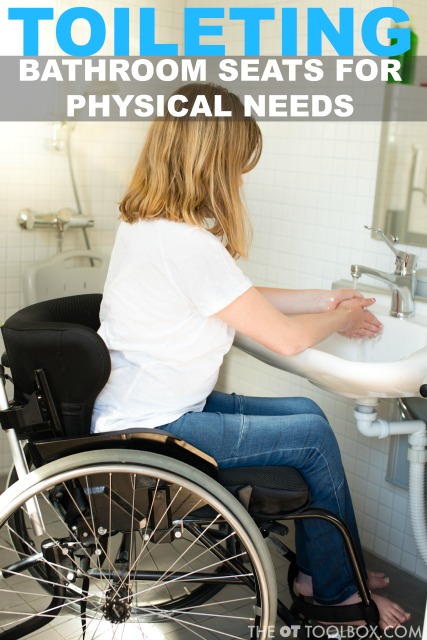
Occupational therapy professionals work with clients of all ages and abilities on toileting and hygiene. That’s why this resource on special needs toilet training seats is so important. In therapy sessions, a skilled assessment of the whole individual can indicate a need for postural modifications to support motor skill needs. When it comes to potty training and toileting in general, there is a LOT of information out there. And, if you ask around for suggestions for the best potty training seats, you will probably get a variety of answers.
Some of these seats will help with independent perineal care, too because of the positioning and stability added for balance. Potty training supports like handrails, grab bars, and guards can help with the hygiene aspect of toileting.
Special Needs Toilet Training Seats
It can be overwhelming to weed through all of the potty seats out there on the market and in the local box store toddler aisle. The difficulty compounds when you consider potty training with special needs children.
Today, I wanted to pull together a list of kids toilet seats out there on the market that are perfect for special needs kids, as well as typically developing kids. Why? Because so often, a few simple changes with positioning, balance, and stability can be the tool to help kids feel more comfortable, confident during the toileting process.
Adding a stable support at the feet, back, or bottom can help a child to relax so they can toilet.
These potty training chairs help address the underlying needs that kids might struggle with when it comes to potty training. These potty training seats and supports can be the tools needed to address a variety of underlying needs when it comes to getting started with potty training.
Here’s the thing: it can be difficult to make suggestions or come up with a comprehensive list that covers ALL of the special needs out there. (That’s where your occupational therapy evaluation or equipment analysis will come into play!)
BUT, I can definitely address some of the more common potty training seats out on the market and address the underlying areas that they can address and hopefully target a best fit.
Potty Training Seats are Not One-Size Fits All!
Let’s face it. There is no one-size-fits-all approach when it comes to potty training. Because of the vast differences in in kids development, interests, motivation, physical or special needs, potty training can be a challenge to know where to start.
This list is hopefully a start for addressing some of the areas kids need for successful potty training.
Amazon affiliate links are included below.
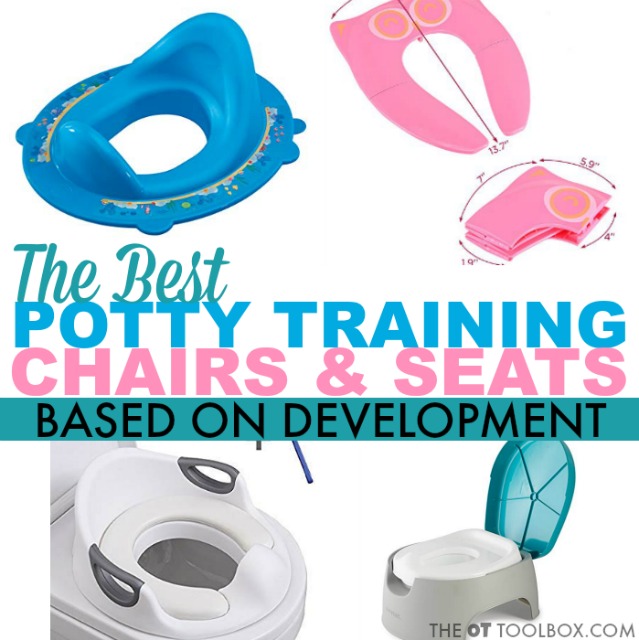
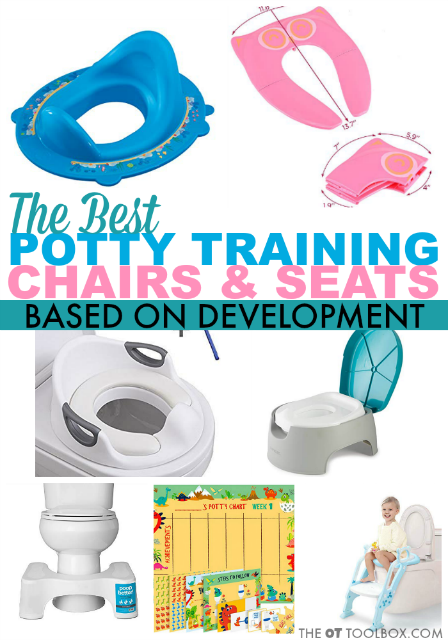
Portable Seat– (affiliate link) This type of seat is great for kids who need a smaller opening on the toilet. Kids of all needs benefit from a larger seat area when first potty training. This one is nice because it can be carried from place to place when on the go outside of the home. Just fold it up and place in it’s carrying bag. Using a portable seat can make it easy to add interests when beginning potty training. Add interests such as special toys and items to make sitting motivating.
Squatty Potty– (affiliate link) The squatty potty is a helpful way to provide a more stable base of support while sitting on the toilet seat. Kids can place their feet on the support that curves around the toilet base and improve balance while sitting. This base of support can help kids who need extra support or have balance needs.
The Step and Go stool (affiliate link) is another, more inexpensive option. Adding a supportive base can help calm nerves of unsupported sitting. Children can use a wider base of support with this type of stool.
Potty Training Chart– (affiliate link) While this isn’t a potty training seat, a training chart can be used to promote extended sitting on a potty chair, and to allow kids the ability to build up patience to sit and wait on a potty chair.
Starting out by using a potty training chart to encourage kids just to go to and sit on the potty seat is a great start for younger kids or those who need to accommodate for sensory needs.
A visual tool such as a potty training chart can be a practical way to reinforce individual skills that make up the process of toilet training. The nice thing about toilet training charts is that they can be individualized, based on the child’s needs.
Some kids with special needs or sensory needs may be afraid of walking into the bathroom. A sticker chart can be one strategy to address that aspect given various modifications or activities that can help address needs.
Step Stool with Handles– (affiliate link) Having a handle can help little ones who struggle with balance or feeling unstable when sitting on a regular sized toilet seat. This one has a step stool that provides a base of support through the feet.
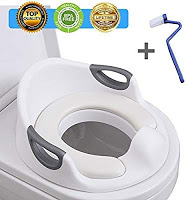
Toilet Seat with Pee Guard– (affiliate link) This seat insert has handles and slight curvature to the sides of the toilet seat ring, providing support and a sense of stability when seated on a regular size toilet. The urine guard is helpful for both boys and girls.
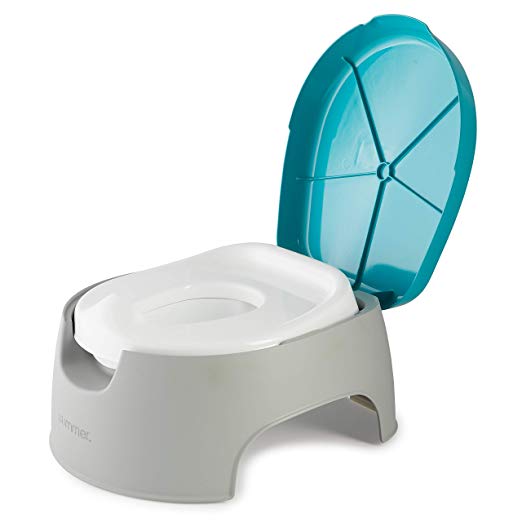
Three-in-one Potty Training Seat– (affiliate link) As a mom of four, this 3-in-one potty training seat is a favorite. It goes with kids from the toddler stage when a smaller, floor potty chair is helpful in training. The ring insert can then be used when transitioning to a regular sized toilet. Finally, the seat forms a step stool for using either on the toilet or when washing hands. This is a convenient toilet training seat for families!
A lower toilet position is closer to the ground and fits a smaller bottom. This helps with transition to a regular size toilet and allows for comfort and confidence in young children. This potty training system is great for the child who appreciates consistency.
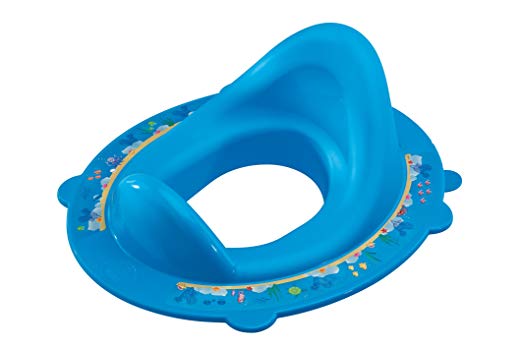
Ring Reducer– (affiliate link) There are many styles of toilet seat ring reducers out there and they serve a great purpose; to reduce the size of the opening on the toilet seat, allowing for small kids to feel more safe and secure when sitting on the toilet. This is a good transition seat to a regular sized toilet. For kids who struggle with coordination and balance, this ring reducer can be just the ticket to potty training success.
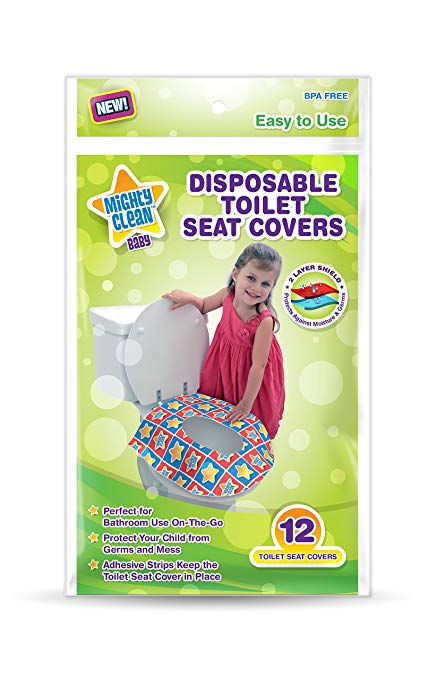
Disposable Seat Covers– (affiliate link) These seat covers are convenient for kids who tend to grab the toilet seat when sitting on a regular-sized toilet. When out and about in the community, it can be helpful for some kids to use a seat cover that is more effective than just using toilet paper. Some of our kiddos can’t tolerate sitting without holding onto the seat or just can’t follow the directions to “not hold onto the seat”.
Physical Limitations and Special Needs Toilet Training
While these potty training seat options just cover the surface of potty training, it’s important to remember to consider the underlying and developmental aspects of potty training.
The therapist’s perspective can play an important part in identifying any developmental or transitioning needs when it comes to potty training. While there are many more specific tools that can be used with special needs toilet training as well as typically developing kids, these are just some of the basics.
Remember that there truly is not a one-size-fits-all aspect for toileting. Some of our kids with more physical special needs or developmental considerations may benefit from a more extensive and supportive seating system.
That’s where the occupational therapist comes into play with identifying needs and tools that will promote independence and function.
There are many considerations that should be addressed when it comes to seating and toilet seats. First and foremost is the safe positioning of the individual on the toilet. Other considerations, depending on the special diagnosis may include:
Toileting Seat System- There are many toileting systems on the market that address physical needs. Seating systems are intended to promote positioning, safety, mobility, transfers, function, and quality of life of the individual. Look for a system that meets the budget and can efficiently accommodate various needs such as toileting, showering/bathing, hygiene, etc.
Systems can come with a variety of adjustments and supports. Consider the need or use of the following supports:
Headrest
Backrest
Armrests
Lateral back supports
Harness
Seat belt
Tray
Anterior support
Hip guides
Abductor
Urine deflector or guard
Calf supports
Lower extremity lateral supports
Ankle straps
Footrest
Tilt in space (backward/forward)
Recline
Height adjustments
Push handles (for caregiver support)
Wheeled base
Molded and Foam cushions
Pan/adaptability for use over a toilet or as a stand-alone toilet chair
Support Station for Toileting- A standing support station can be used in assisted hygiene or assisted toileting. The standing station can be a support to transfers and can be beneficial to clothing management, self-care, skin care, and undergarment changing.
The support station is a helpful tool for improving function and dignity of clients as can perform aspects of toileting, as well as participate in self-care. This is a means for reducing diaper use as well, further improving dignity.
Additionally, support stations are a tool for improved safety of caregivers. When clients stand at a standing support frame, they are truly building strength, endurance and self-care skills in a natural manner within the occupation of toileting.
Wiping after toileting and special Potty seating
When it comes to pericare, there are things to consider with the various special needs toileting systems.
Can the child maintain their balance while reaching for toilet paper?
Can the child weight bear or shift their weight from side to side or forward in order to wipe?
Can the child reach around their body to wipe?
For More information on Potty Training
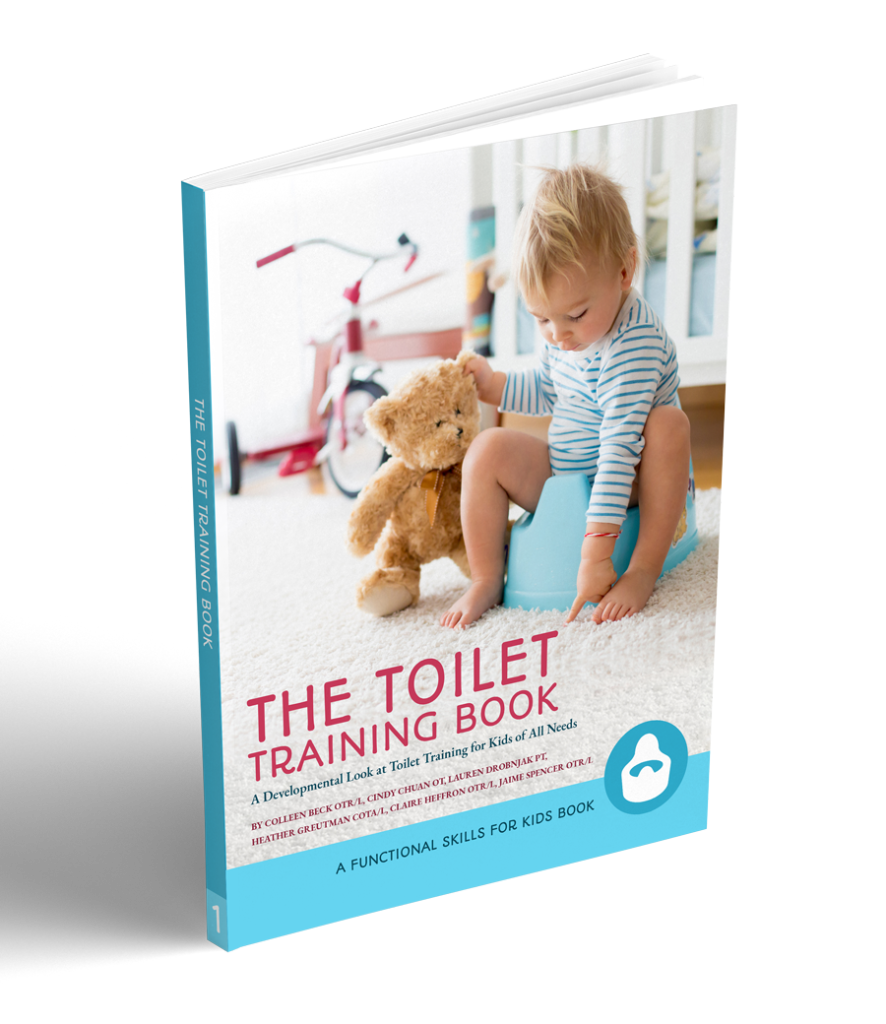
Watch for information coming soon to this space on the new Toilet Training Book! It’s about to be released and is your go-to resource on potty training based on development and individualized needs.
This book was created by occupational therapists and physical therapists who are experts in the field of child development, sensory processing, motor skills, and function. Need more information and real strategies to improve potty training success? Want insider tips and tools from the occupational therapist’s and physical therapist’s perspectives? The Toilet Training Book is here!
Potty Training Help
Tackling potty training is a challenge for all kids! What if you had the inside scoop on development in your back pocket?
What if you had the know-how of occupational therapists and physical therapists with DECADES of experience to guide you?
Written by a team of experienced pediatric occupational therapists and physical therapists with decades of experience
Packed with information on toilet training readiness and achievement of toileting success
Includes Toilet Training Guides for special populations (children with fine or gross motor needs, behavioral or cognitive challenges, physical disabilities, etc.) including Sensory Processing Disorder, Trauma-Informed Needs, Autism Spectrum Disorder, Cerebral Palsy, Spina Bifida, Spinal Cord Injuries
Provides information on interoception and the role this sensory system plays in potty training
Discusses common toileting equipment and special needs toileting tools
Includes tips and suggestions for individualized toilet training
This book is available in digital, e-book format AND in a physical, soft-cover book format.
Research has a lot to say about nature play. When it comes to outdoor play, there is a lot that can be discussed too. Occupational therapy professionals encourage a lot of open-ended play, outdoor games, and outdoor play. There is a natural sensory aspect to outdoor play, which supports self-regulation, emotional regulation, attention, and learning, all through just playing outside! Today we are talking all about what the research has to say about outdoor sensory diet activities and outdoor play.
Benefits of Nature Play
Taking sensory diet strategies outside is nothing new. But, doing so may just be a meaningful way to create the “just right” state of alertness and calming nature that, well, nature provides! But to take it a step further, did you know there are benefits of outdoor games? Did you know that the outdoors support executive functioning skills, self-regulation, and motor skill development…all through playing outside?
Use this information when explaining about what a sensory diet is and what a sensory diet looks like for kids with sensory needs.
There are quite a few benefits to sensory experiences in the outdoors:
Children have a large opportunity for sensory input through playground play. But, in recent times, children experience playgrounds that are more safe, allowing for less risky play. Encouraging specific activities such as a playground sensory diet on playground equipment can be beneficial to sensory needs.
Another item to consider is the aspect of applying sensory diet strategies within the classroom or home environments as a fix for sensory processing needs. The specific and prescribed sensory diet activities for a particular child can be very helpful in addressing specific sensory-related behaviors.
However, the use of a sensory tool such as an alternative seating system within the classroom provides only one type of vestibular and/or proprioceptive input, such as up and down vestibular input. The child who plays outdoors encounters a wide variety of sensory input across all sensory systems!
You might even call sensory tools used to address specific needs a sensory band-aide. What if we as therapists could encourage authentic sensory input in the outdoors (or indoors, as indicated) that addresses all of the sensory systems. Using meaningful play experiences not only provide all the benefits of play. They encourage healthy development through the senses.
Research on Outdoor Play
There are many benefits of outdoor play.
There have been decades of research on the benefits of play in kids. The information below depicts how outdoor play impacts sensory needs in kids. This is not an exhausted review of the literature, simply a smattering of research available on the topic.
Research shows us that some of the developmental and primary tasks that children must achieve can be effectively improved through outdoor play.
These benefits of outdoor play include:
exploring
risk-taking
fine and gross motor development
absorption of basic knowledge
social skills
self-confidence
attention
language skills
Wow! Playing outside has a bigger impact than we may have thought!
Other research has shown an increase in communication, along with more observed emotions, and increased interactions in children with autism when more time was spent outdoors.
Studies have found that dynamic and varied outdoor play offers opportunities for decision making that stimulate problem solving and creative thinking, opportunities that aren’t as easily found in the more static indoor environment.
One study found a sensory diet in outdoor play along with sensory integration therapy resulted in better functional behavior of kids with ADHD (Sahoo & Senapati).
Using sensory activities that are specific in time and quality such as those in a sensory diet should be done in an authentic and meaningful manner in a child’s life. In this way, sensory input is motivating to the child in that it goes along with interests and the environment in which the child lives.
It’s a fact that kids are spending less time playing outdoors. From after-school schedules to two working parents, to unsafe conditions, to increased digital screen time, to less outdoor recess time…kids just get less natural play in the outdoors.
Some therapists have connected the dots between less outdoor play and increased sensory struggles and attention difficulties in learning.
Knowing this, it can be powerful to have a list of outdoor sensory diet activities that can be recommended as therapy home programing and family activities that meet underlying needs.
From an occupational therapy perspective, nature play offers supports for underlying skill development. Children have the opportunity to develop motor skills, visual perceptual skills, confidence, executive functioning skills, and self-regulation that enables them to feel confident in their abilities. These areas of development support functioning and independence!
When heading outdoors, you can put on a coat, boots, or jacket and work on self-dressing skills. You can experience all of the motor rich opportunities for movement in the outdoors. Navigating the environment (whether in the woods or the city) offers visual perception, motor planning, and eye-hand coordination opportunities.
Just going outside for a walk is an exercise in skill-building!
Outdoor Sensory Play Ideas
Knowing the benefits of outdoor games and free play, let’s cover some fun ways to offer the movement, regulation, and input from the outdoors. Here are some outdoor play ideas that tick all of the boxes.
Need some outdoor sensory play ideas? Try these outdoor backyard sensory diet activities that inspire free play in the outdoors while encouraging sensory input of all kinds!
Sensory diets and specific sensory input or sensory challenges are a big part of addressing sensory needs of children who struggle with sensory processing issues. Incorporating a schedule of sensory input (sensory diet) into a lifestyle of naturally occuring and meaningful activities is so very valuable for the child with sensory needs.
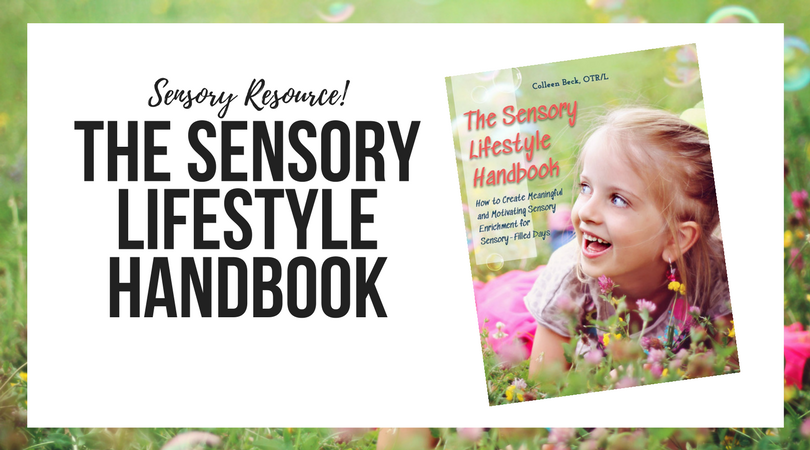
Sensory diets and specific sensory input or sensory challenges are a big part of addressing sensory needs of children who struggle with sensory processing issues. Incorporating a schedule of sensory input (sensory diet) into a lifestyle of naturally occurring and meaningful activities is so very valuable for the child with sensory needs. That’s why I’ve worked to create a book on creating an authentic and meaningful sensory lifestyle that addresses sensory needs. The book is now released as a digital e-book or softcover print book, available on Amazon. The Sensory Lifestyle Handbook walks you through sensory diet creation, set-up, and carry through. Not only that, but the book helps you take a sensory diet and weave it into a sensory lifestyle that supports the needs of a child with sensory processing challenges and the whole family. Get The Sensory Lifestyle Handbook here.
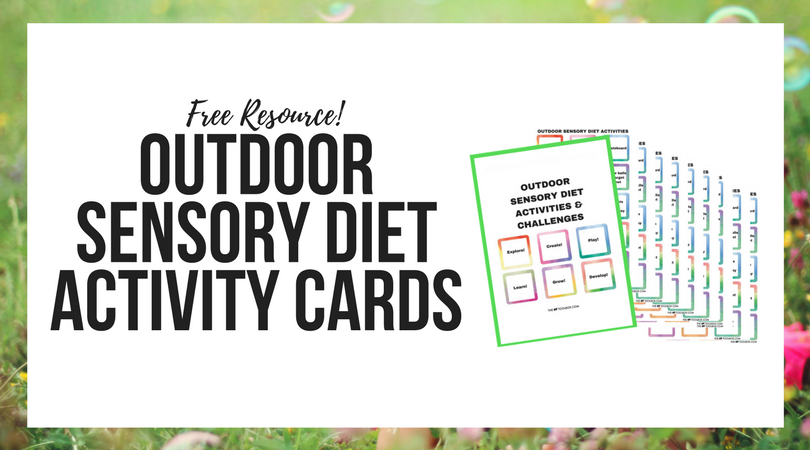
That’s where the Outdoor Sensory Diet Cards and Sensory Challenge Cards come into play. They are printable resource that encourages sensory diet strategies in the outdoors. In the printable packet, there are 90 outdoor sensory diet activities, 60 outdoor recess sensory diet activities, 30 blank sensory diet cards, and 6 sensory challenge cards. They can be used based on preference and interest of the child, encouraging motivation and carryover, all while providing much-needed sensory input.
30 blank sensory diet cards, and 6 sensory challenge cards
They can be used based on preference and interest of the child, encouraging motivation and carryover, all while providing much-needed sensory input.
Research tells us that outdoor play improves attention and provides an ideal environment for a calm and alert state, perfect for integration of sensory input.
Outdoor play provides input from all the senses, allows for movement in all planes, and provides a variety of strengthening components including eccentric, concentric, and isometric muscle contractions.
Great tool for parents, teachers, AND therapists!
Be sure to grab the Outdoor Sensory Diet Cards and use them with a child (or adult) with sensory processing needs!
Benefits of Nature Play References:
Frost, J. & Sutterby, J. (2017). Our Proud Heritage: Outdoor Play Is Essential to Whole Child Development. Retrieved from: from: https://www.naeyc.org/resources/pubs/yc/jul2017/outdoor-play-child-development
Hanscom, A (2017, October). The decline of play outdoors and the rise in sensory issues. OccupationalTherapy.com, Article 3990. Retrieved from http://OccupationalTherapy.com.
Moore, R. (2014). Nature Play & Learning Places. Creating and managing places where children engage with nature. Raleigh, NC: Natural
Learning Initiative and Reston, VA: National Wildlife Federation
Version 1.2.
Von Kampen, M. (2011). The Effect of Outdoor Environment on Attention and Self-Regulation Behaviors on a Child with Autism. Retrieved from: https://digitalcommons.unl.edu/cgi/viewcontent.cgi?referer=https://search.yahoo.com/&httpsredir=1&article=1118&context=cehsdiss
Sahoo, S. & Senapati, A. Effect of sensory diet through outdoor play on functional behavior in children with ADHD. The Indian Journal of Occupational Therapy. Vol. 46, (2 ) 49-54.
What are your favorite outdoor play ideas?
Colleen Beck, OTR/L has been an occupational therapist since 2000, working in school-based, hand therapy, outpatient peds, EI, and SNF. Colleen created The OT Toolbox to inspire therapists, teachers, and parents with easy and fun tools to help children thrive. Read her story about going from an OT making $3/hour (after paying for kids’ childcare) to a full-time OT resource creator for millions of readers. Want to collaborate? Send an email to contact@theottoolbox.com.
Here, we are covering an aspect of potty training that comes up for every parent: pericare, or perineal hygiene, and teaching kids how to wipe when toilet training. So often, a young child learns to use the toilet and other aspects of potty training, but then struggle for a long period of time with the wiping aspect. Teaching children to wipe thoroughly is a hygiene task that can be limited by many underlying areas. Here, you’ll find strategies to help wiping bottoms and interventions for perineal hygiene. Also check out ADLs for more information on daily tasks.
What is pericare?
For the uninitiated, pericare (or peri-care) is short for perineal care. Perineal care refers to the hygiene and self-care of the perineal area following toileting, cleaning, and wiping of the perineal area of the body is the “private parts” area. Pericare is a term for the hygienic tasks involved in this part of the body, such as wiping one’s bottom.
Anyone of any age may need help wiping their bottom with their perineal care, but it is especially important to teach our little ones the proper way to manage their bottoms as they become more independent.
This component of toileting is one that impacts overall independence and self-care with the toileting process. So often, we cheer and celebrate making it to the toilet on time, but the perineal hygiene aspect is equally as important.
You may be thinking, “Why do I need to teach my child how to wipe!?!”. For something that is such a natural task for many, it can feel odd to teach somehow how to do it.
However, learning how to maintain a clean bottom is important for one’s health and confidence. Wiping properly, washing gently, and wearing appropriate clothing decreases the risk of yeast infections, urinary tract infections, and odors. Plus, discussing peri-care can open the door to many other conversations about the body, health, and safety – if that’s something you are interested in exploring with your child.
A great time to educate your child about peri-cares is while potty training. It is easier to teach the correct way first than to re-learn how to do it later. If you are stuck on potty training, we feel you there! Check out this Toliet Training Book that can help you help your children of varying needs.
Don’t be discouraged if your child is already potty trained and they have yet to learn how to take care of their bottoms independently – it can take time and practice!
Development of Pericare
An important area to cover first is the development of pericare skills. It is so important to remember that we are talking about young children who are learning a whole new skill with toileting. There are many considerations: autonomy, body awareness, interoception, self-awareness, the sensory processing and interoception aspect, family perspectives…potty training can be very overwhelming for kids.
Then, to break it down even further, the hygiene aspect of toileting is another ball game!
In our book, The Toilet Training Book, we cover the development of potty training and really cover what underlying skills play into potty training and independence with toileting.
But, one important thing to remember is that a three year old child may be able to make it to the toilet in time to go, flush, and wash their hands, but the wiping aspect can developmentally, come with time.
Developmentally, perineal hygiene, or wiping completely after toileting, may be a skill achieved during a range of 4-6 years. This range is so wide due to the underlying skills, sensory considerations, motor skills, and cognitive growth needed for perineal hygiene including knowing when and where to wipe after a bowel movement or urination, using enough pressure on the toilet paper to clean completely, wiping enough times to clean completely, and maturity to complete the task.
The emergence of these skills takes time, but there are ways to support development of perineal hygiene.
GET COMFORTABLE with perineal hygiene
Everyone wants a clean bottom, let’s start there. It can be smelly and embarrassing to talk about, but it is an important step to understanding personal healthcare.
We want to give you the confidence to discuss this in any way that you and your family feel comfortable with because it is a “touchy” subject for some. The more comfortable you are with peri cares, the more comfortable the child will be.
Let’s start off the potty training wiping techniques by talking about good hygiene.
Here are some ideas to talk about perineal hygiene with kids:
Make it silly: Some people respond best to humor but watch out for demeaning jokes.
Make the conversation about pericare hygiene scientifically accurate: It becomes less embarrassing when you hardly know what is being said!
Make pericare sound similar to washing hands: We have to clean away the germs; they can make us sick!
Make discussions about perineal hygiene your own: You know your family best. Think about terminology that works for the individual. In what ways can you increase trust and comfort for all?
GENERAL GUIDELINES for teaching perineal hygiene
Here are some general tips for a healthy bottom that should be shared for children and adults alike. Please speak to your family physician if you have any questions or concerns related to your child’s unique needs.
Wear breathable (preferably cotton) underwear that is not too tight. Change daily or when soiled.
Don’t hold it in. While it is good to wait to “go” until you reach the toilet, holding in pee or poop for too long can result in a variety of issues.
If it is comfortable, sit on the toilet with elevated feet. You may have heard of the (Amazon affiliate link) Squatty Potty – placing the legs in more of a squatting position helps bowel movements pass. More importantly, children should have access to a either a smaller potty or a footstool (or a box,etc.) near the toilet so that their feet do not dangle.
Wipe from front to back to reduce bacteria entering the urethra. Talk about anatomy and why wiping front to back is effective and safe.
Wipe gently with 3-4 squares of folded toilet paper (each household can determine the amount – some kiddos use way too much!) until clean. I always recommend to look at what you are wiping away so that you learn about how much you need to wipe.
Consider use of warm or cool wipes over toilet paper.
When bathing, wash the genital area gently with mild soap and rinse with clean water. No soap should be entering the body through the anus or the vagina.
For bathing a uncircumsized child, refer to this article for great information and consult your family doctor for personalized advice.
Pericare INTERVENTION IDEAS
Children will not know unless we lead them, so here are some fun ways to teach pericare!
Areas that can be broken down to increase overall self-care include:
Address balance
Pulling up and down undergarments
Wiping front to back
Wiping thoroughly
Wiping with enough pressure
Gripping the toilet paper
Washing hands after wiping
Reaching around to the back
Each of these areas can include aspects of balance, gross motor skills, fine motor skills, strength, coordination, sensory processing, executive functioning skills, and visual motor skills. It’s important to look at each individual’s area of difficulty and then break it down into the underlying areas that are impacting success with pericare.
First look at the area of difficulty. Then, consider how underlying areas are impacting that particular area. Come up with intervention strategies that support that need and create a “just right” challenge to build independence and pericare functioning.
Let’s look at each of these areas of perineal hygiene…
Pulling up and down undergarments:
Fine motor strength and coordination fine motor activities to the rescue! There are so many fantastically fun ways to increase this skill, but here are some that are more directly associated with potty training.
Lei Obstacle Course: Grab some Hawaiian-inspired leis, hula skirts, or long necklaces and create a long pathway. As a child walks through the pathway (hopefully to another fun activity in the course), they must step inside the lei and pull it up as high as it will go. If it fits over their arms/head, they can wear it as a necklace. Pulling up the lei and wiggling their body through will strengthen the same skill as in pulling up pants. Reverse the challenge to mimic pulling pants down.
Silly Socks: Grab a variety of socks in fun colors and different sizes and see how many you can put on in one minute! Layering socks up the arms and legs (and removing them, too!) mimics the skill of pulling up and down undergarments.
Stickers: Challenge them to peel off stickers all along the waistband of their pants. Don’t forget the backside!
Pericare: Wiping Activities
Balance and reach are huge parts of perineal hygiene. Staying balanced on the potty while wiping is a big challenge for our core strength, flexibility, and range of motion. To practice this skill through play-based activities, see the ideas below!
Play-pretend: Place peanut butter on the back of a disposable or washable diaper and have your child wipe it off. Any familiar paste will do – sun butter, nutella, cookie butter…anything to wipe! When they think they are done wiping, show them the diaper to see if they actually cleaned it.
Art-based: Wipe a plastic plate with toilet paper to create an art project – the toilet paper acts as the paintbrush. They must wipe clean the whole plate! For an extra challenge, place the plate behind their backs, and the work of art in front of them.
Play activity: Using static electricity, tape, or velcro, have your child squat to “pick up” pom-poms or other sticky and lightweight items on their bottoms (think: window stickers, damp tissues, etc.). They carry them carefully to a container and remove them one by one. You can really make this game your own!
Wiping Front to Back
There are so many ways to work on perineal hygiene to cover other aspects besides the balance consideration. Consider these strategies to teach kids to wipe front to back:
Use toys, books, clothing, and other items to work on teaching front and back directional concepts.
Teach children to count to help with wiping a certain number of times.
Reaching Back to Wipe During Perineal Hygiene
Clip and unclip clothes pins on the back of clothing to work on reaching back and around..
Use a pool noodle to reach around and through the legs to work on reach, visual attention, scanning, and eye-hand coordination. You can tap the pool noodle on a target and create a game.
Practice wiping the backside in the bathtub.
Put a handkerchief or scarf in their back pocket for the child to reach for and pull out.
Put stickers on the child’s back or pants for them to reach for and grab.
Wiping with enough pressure
Work on tearing paper for hand strength and eye-hand coordination to pull off appropriate sizes of toilet paper.
Use play dough, LEGO, tong activities to develop hand strength.
Wipe dry erase marker off a dry erase board. Then, position the dry erase board on the ground between the feet to bend and wipe. Then, position it behind the back to reach and wipe.
Wipe peanut butter or washable paint from a plastic baby doll.
Help kids to wipe thoroughly by painting with toilet paper with having them try to wipe a blob of paint off a plastic plate and remind them to keep going until the plate was empty.
More perineal care and potty training tips
Looking for more information on underlying considerations that impact toileting? Need strategies, supports, and tools to facilitate independence with toileting skills? Need support strategies for potty training an older child, but not know where to begin?
Looking for ways to help individuals with toileting skills when cognitive, behavioral, motor skills impact participation in independent toileting? Trying to initiate or progress with potty training when a diagnosis of Down Syndrome, Autism, or a motor skills challenge is at hand? Check out the Toilet Training Book: A Developmental Take on Potty Training for Kids of All Abilities.
Sydney Thorson, OTR/L, is a new occupational therapist working in school-based therapy. Her background is in Human Development and Family Studies, and she is passionate about providing individualized and meaningful treatment for each child and their family. Sydney is also a children’s author and illustrator and is always working on new and exciting projects.
There are many great ways to positively affect balance skills, and using specific balance activities for kids that impact gross motor coordination and other areas of development. This article also includes various balance activities for preschoolers, toddlers, focusing on balance skills for all ages!
In this post, you will find balance activity ideas tailored to different age groups with ideas for upgrades and downgrades to meet the individual needs of a variety of children. You will find activities for toddlers, preschoolers, and kids. Some activities can be used during therapy treatment, at home with families, or in the school classroom.
Balance activities for kids
Balance skills are important skills for children to have as children must control and maintain multiple body positions in their daily life functions. They rely on balance for daily activities such as dressing, going to the toilet, navigating each environment, sitting to eat meals, and playing.
They need good balance to engage in sports and games that they play with others to be safe and minimize fatigue. Good balance skills also minimize injury as the child can more successfully utilize protective responses when needed.
In addition to these areas of consideration, there is also the functional aspect. In order to complete functional tasks throughout the day, or daily occupations, there needs to be movement, manipulation of objects, while maintaining or performing tasks with balance and coordination. So, balance activities are a win-win for the children and you as the provider!
What is Static Balance and Dynamic Balance?
There are forms of balance that include static and dynamic movements and a combination of both which are all utilized frequently in everyday life.
What exactly are static and dynamic balance?
Static balance- Simply put, static balance is when you hold your body stationary in a position or posture.
Building static balance first is where to begin, as this is what provides a good foundation of balancing skills before moving on to more complex balancing with movement.
Examples of static balance is sitting on a stoop, standing in place, holding a plate in the lunch line…
Dynamic balance- Dynamic balance is when your body is in motion. You need both to engage and maneuver through daily activities.
Once you have static stability and control you can start to use movement within it, first, closer to the base and then working further outside of the base.
An example of this might be navigating up or down bleachers, holding a stack of books and items while walking in a line at school, yoga poses…this is just the beginning of examples of dynamic balance.
Balance Activities for Toddlers
Moving through the toddler years involves much progression in the development of skills. Toddlers gain more control over the movement of their body in the world around them.
Toddler balance presents as moving through the environment safely and while carrying objects, and gaining skills in walking on uneven surfaces, gaining steady ability to move up and down stairs, changing positions, stepping over objects, sitting on a chair or couch with upright balance, putting on and taking off clothing, and many other aspects of toddler skill development.
This occurs through play and participation in daily tasks, but you can facilitate balance skills in toddlers by offering play based activities that challenge the systems mentioned above.
Pillow on the Floor – Easily challenge a toddler’s balance skills by having them step and stand on a pillow on the floor. This can be a couch or bed pillow or even a couch cushion.
Bubble Burst – While the child is sitting, blow some bubbles to have them reach outside of midline to pop a single bubble on the bubble wand or upgrade to have them reach in all directions to pop as many bubbles as possible. Want to challenge sitting balance more? Have them sit on a less stable surface such as a bench without back support (maybe their feet do not touch the floor completely), a sensory cushion on the floor, or a small peanut ball.
Freeze – Play a game of freeze by playing music and then suddenly stopping it to have the child freeze and hold the position. You can downgrade to have them do this while sitting and then upgrade to have them do this while standing in one place and then upgrade it further by having them do this while moving around the room.
Bean Bag Pathway – Place bean bags in a path along the floor and have the child step on each of the bean bags with alternating feet to challenge their balance in a safe way.
Laundry Basket Run – This is a fun way to engage toddlers in balance in a variety of positions such as standing, sitting, or kneeling. Simply place the child inside of a laundry basket and easily push them along the floor to help them work on their balancing skills in all positions. Sitting will be the easiest and standing will be the most difficult. Always be alert to their safety in the basket, especially while standing!
Cross Crawl Exercises– Use these balance tasks to work on single leg stance, motor planning, standing balance activities, and challenges to core strength. You could also stand on an unstable surface while doing the cross crawl exercises or sit to target sitting balance.
During the preschool years, children aged 3-5 gain even more motor control. They also develop cognitively and have a sense of purpose and develop in executive functioning skills at a considerable rate.
Preschool balance presents as kicking, jumping, skipping, hopping, galloping, and other motor skills. You’ll see preschoolers learn to pedal and ride bikes, manage steps with alternating feet, walk on stairs without holding onto a banister, moving through position changes, standing on one foot, holding and carrying objects, standing to get dressed and undressed, and many other aspects of preschool development with more advanced balance skill work.
Preschoolers continue to build these skills through play and various experiences, but you can offer more ways to strengthen balance skills using these balance exercises for preschoolers.
Bubble Burst – Yep, that’s right, use bubbles for balance again because what preschooler doesn’t like bubbles? Use this fascination with bubbles to your advantage and help them work on balance skills too! Simply blow some bubbles and have the child try to step on them once they land on the floor. You can upgrade by having them pop more than one bubble at a time as they attempt to stomp as many bubbles as possible. You can further upgrade by having them step down from an elevated surface and pop a single bubble or multiple bubbles.
Twister Time – Play a game of Twister to challenge balance skills in children. The simple design of this game is a balance barrage of fun! You can downgrade by simply just having them use their feet to step, hop, or jump on the colored dots. You can upgrade the game by playing as designed with the use of hands and feet.
Kneeling – Play a bubble burst game with children either half-kneeling or full kneeling to challenge their balance skills. You can start with simply trying to pop bubbles using one hand and then upgrade to having the child reach to pop bubbles with two hands. Add a pillow while kneeling to add an extra element of challenge.
Stairs and Curbs – The use of stairs and curbs are the perfect tool for practicing balance skills. Simply attempting to walk up the stairs with one foot on each step starts the balancing work. Upgrade the activity by having children perform freeze play on the stairs with one foot on a step above the other. Children can also work on not holding the handrail, with an adult positioned behind them for safety, while walking on the stairs. Have a child walk along the edge of a curb as a fun way to work on tight rope walking. Downgrade the activity to have the child simply work on stepping up and down off the curb.
Big Foot Walk – This is a fun way for preschoolers to work on balance skills while walking in big shoes. Let them choose a pair of adult shoes to don and wear as they walk across the room. It’s an old pastime activity that still has value for young children today as they challenge their balance while walking and stepping. Don’t have adult shoes they can keep on their feet? Then just use old tissue boxes in the same manner.
Animal Walks- Preschool children are gaining more control over their body and can segmentally differentiate between proximal and distal as well as bilateral sides of the body as they gain more coordinated control. This is a great time to use animal walks to support development! Even better, animal walks support the proprioceptive system by integrating heavy work, which is organizing, so the young child learns more about their body, how it moves, and where it is in space. Try these animal walk ideas with themes:
We covered the toddler and preschool range, but what about supporting older children with balance activities? During the grade school age, or in older ages, balance skills can still be addressed. In older children, you’ll see more advanced motor skills such as riding a two wheel bike, riding a scooter, playing more advanced games, managing bleachers, managing balance at the playground, carrying food trays at lunch time, and other balance tasks.
Balance Cushion Activities – This blog post has multiple ideas for the use of balance cushions and the development of balance skills. Also, an upgrade could include the child attempting to stand with one foot on each cushion to complete activities as this will challenge their balance more intensely by giving the child different wobble movements for each foot to manage.
Pool Noodle on the Floor – Simply place a pool noodle on the floor and have the child walk heel to toe across the noodle without falling off the noodle. You can downgrade by having the child walk side-stepping along the noodle until they can balance with more skill.
Tape Line on the Floor – Begin by placing a straight tape line on the floor and have the child walk heel to toe across the line without falling off. Create a challenge by placing the tape in a zig-zag line and have them walk heel to toe across this line. Upgrade the activity by having the child walk placing their left foot over the line on the right side and then their right foot over the line on the left side, essentially crossing their legs to walk on either side of the line. Upgrade further by having the child walk over stuffed animals or pillows that are placed along any tape line and challenge further by having them walk backward on any line. You can have children walk or tip toe along the tape balance beam and stop to place paper shapes or objects along the tape lines.
Below you will find a list of balance tape line themes to keep the activity fun and festive:
Christmas tree- Place tape on the floor in the shape of a triangular tree for changes in direction.
Snowflake balance beam – Stop while walking on the balance beam and bend or squat to place paper snowflakes along the line.
Valentine’s- Place tape on the floor in a heart shape. Then ask children to bend at certain spots and place paper heart cutouts along the tape lines.
You can also easily create a paper balance beam using die-cut images placed along a line for children to walk on. This is a fun and engaging way for children to work on a skill that may not be easy, but the distraction of the images can facilitate engagement.
Flower Balance Activities- This flower balance activities slide deck resource is a free digital download that encourages balance coordination, motor planning, sequencing, and movement pattern challenges.
Playground Theme Balance Activities- Use this free playground theme therapy slide deck to encourage gross motor skills, sequencing, motor planning, and balance coordination skills, with a playground theme.
Egg Races – Use a small rubber ball to balance on a wooden spoon and have a race across the room without dropping the ball. Upgrade the activity by having the child navigate a path of pillows or blankets rolled up to make an uneven terrain while balancing the ball on the spoon. You can upgrade again by having the child switch the spoon between their hands while standing still or while moving across the room.
Hopscotch – Use the old game hopscotch as a new game again by playing it in different balancing ways to work on a child’s balancing skills. For example, not only hopping as you would normally play but think about changing it up by having the child hop on each number with one foot or have them jump forward and then backward along the board.
Sticker Grab – Place stickers on top of the child’s foot and have them lift their foot to grab the sticker off and place it on paper to create a fun picture. Consider varying the paper placement so that they must reach out of their base of support. They can either stand or sit on an exercise ball when lifting their foot to grab the sticker. Change it up by alternating the feet for sticker grabbing.
Yoga Poses or Animal Moves – Essentially, yoga poses and animal moves are one of the easiest ways to have children work on balance skills as the child must imitate postures and body positions to create the pose or perform the movement. This version of (Amazon affiliate link) The Yoga Garden Game is a fun game for children to play as it is not competitive just cooperative with the goal being just to have fun with one another while learning different poses. No winners and no losers in this game, just FUN!
Try these yoga activities with fun themes that kids love:
Hula Hoop Activities- These hula hoop activities support the development of balance with standing balance challenges, throwing, crawling, and a variety of motor planning tasks.
The Floor is Lava Games- Kids love the floor is lava games! Encourage use of building motor skills, changes in positioning, coordination, etc.
Occupational Therapy and Physical Therapy Balance Equipment
One of the jun parts of OT and PT sessions is introducing fun therapy “toys” (or therapy tools) to work on and facilitate development of skills such as balance skills. Below, you’ll find therapy balance equipment that supports the development of balance in kids. Use these tools in balance activities based on play.
If you need ideas for balance equipment during therapy, below is a list of equipment that can be utilized to develop, challenge, and practice balance:
Each of these items are great tools to use in obstacle courses, relay races, and more. Consider using them in conjunction with one another for changes in balance.
Additionally, here are a few other tips to develop balance skills in children of all ages:
Other ways to support using these therapy balance equipment items is with a visual schedule for planning the therapy session.
3. Don’t forget the power of playing outdoors. The outdoors offer so many opportunities for changes in surfaces, climbing over tree limbs, playground equipment, hills and slopes. Each of these areas can be used to challenge balance. Consider these outdoor sensory activities.
While there are a variety of balance activities included in this post that are mostly for the indoors, don’t forget that you have simple things around you in the outdoors that will engage children in balancing fun without the use of fancy equipment and just the elements of nature!
Regina Parsons-Allen is a school-based certified occupational therapy assistant. She has a pediatrics practice area of emphasis from the NBCOT. She graduated from the OTA program at Caldwell Community College and Technical Institute in Hudson, North Carolina with an A.A.S degree in occupational therapy assistant. She has been practicing occupational therapy in the same school district for 20 years. She loves her children, husband, OT, working with children and teaching Sunday school. She is passionate about engaging, empowering, and enabling children to reach their maximum potential in ALL of their occupations as well assuring them that God loves them!
Today’s post is all about finger isolation: what does finger isolation mean, why this fine motor skill is important, and even finger isolation exercises and activities to support precision and dexterity in the fingers. As children develop dexterity in fine motor skills, more precision and refined movements allow for coordinated skill work. It’s through this motor skill that one can do specific tasks that use only one finger or several fingers.
Finger isolation is needed for daily tasks, and finger games are just one way to build this skill.
You may have heard of finger isolation as a component of fine motor skills that kids need for dexterity and precision. Today, we’re discussing this important motor skill, how finger isolation impacts function, and activities to build finger dexterity. So, what is this motor skill that allows us to point, hold up a single finger, or make fingerprints? Let’s discuss!
What is finger isolation?
Finger isolation is the ability to isolate and use the fingers one at a time in functional tasks. The fine motor skill of finger isolation is the development of being able to “isolate” or individually use each finger of the hand. Counting one finger at a time, tying shoes, typing on a screen or computer keyboard, finger games like “Where is Thumbkin?”, and opposing one finger to the thumb are examples of finger isolation. One way to target this is using typing programs to improve finger isolation.
When children are developing they begin to use each finger individually; as infants, children tend to use the hand as one solid unit. Finger isolation is one of the first important developmental milestones that leads to children’s ability to write well with a pencil, type on a keyboard, play a musical instrument, tie shoes ect!
If you’re wondering how to see if your child has good finger isolation, you can ask yourself:
Does your preschooler or kindergartner avoid pointing?
Do they tend to gesture in the direction of an object instead of pointing?
Do they use their whole hand to grasp objects rather than one or two fingers when that makes more sense for the size of the object?
Do they struggle to manipulate coins, turn a page of a book, tie shoes, or other task requiring refined movements?
Then adding a few finger isolation activities and games might be helpful for your child!
Development of finger isolation
Finger isolation typically develops in the baby at around 6 months of age as they begin to pick up small pieces of cereal. It progresses to pointing, and then separation of the two sides of the hand with in-hand manipulation. Finger isolation is so important in fine motor dexterity in every task that the hands perform.
There are other components of fine motor skills that contribute to the precision of isolating fingers in activities:
Separation of the sides of the hand-Separating the sides of the hand isolates the precision side of the hand from the power side of the hand allows for, and requires isolation of fingers and joints during motor tasks.
In-hand manipulation-In hand manipulation includes moving objects within the hand and refined isolation of digits and joints on the fingers contribute to this skill.
Arch development– This hand strength allows for fingers to move in isolation of one another.
Opposition- Finger and thumb opposition of the thumb to the fingers also plays a role in finger isolation. This ability to oppose the thumb to a single digit allows for more refined and precise grasps on objects.
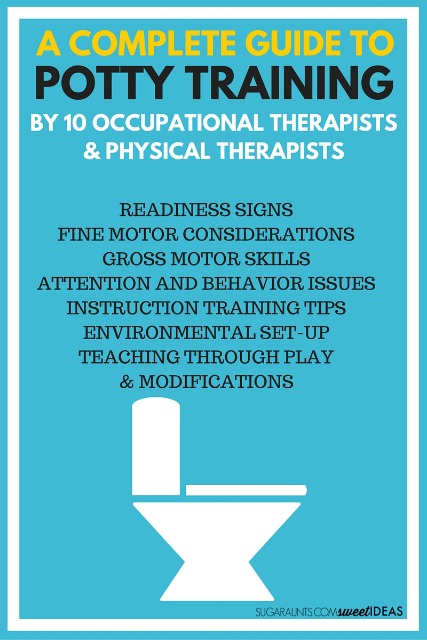
Open thumb web space- Similarly, to oppose the thumb to the fingertips, an open thumb web space is necessary.
Finger Isolation and Screens (apps and games)
From a very young age, many small children are efficient at using tablets and phone apps with finger isolation to point, swipe, and move through images on the screen. However, when kids are scrolling the screen, and using their finger in isolation on a tablet, they typically use only one finger (the index finger OR the middle finger) and do not exert strength on the screen.
They are not receiving feedback through the muscles and joints of the hand (proprioception) to build motor plans for fine motor tasks. They are not establishing a “store” of fine motor experiences.
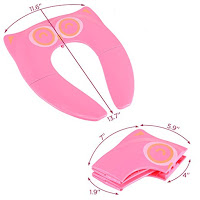
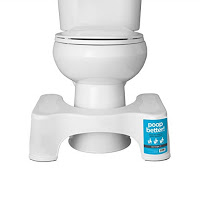
You then may see that single finger is stronger and more dominant in tasks such as pencil grasp or tying shoes. This concept is similar to the dominance of a hand or side of the body. Equally of interest is this post on deciphering the difference between dominance and ambidextrous. It’s all related, and to the occupational therapy professional, so interesting to read about the connections!
So, how can you build and develop finger isolation? There are many ways to build finger isolation skills. You’ll also find more finger isolation activities along with a craft that can help kids become more aware of this fine motor skill. Below are small motor tools to help with development. Add these finger strength exercises to your therapy plans or home programs.
One great way to develop precision in a single digit of the hand is to instruct the individual to tap each finger to their thumb (give them a demonstration so they can mirror you!),
Isolation of the individual fingers really develops with hand strength and coordination through the use of hand clapping games and finger rhyming songs. Show the individual finger and hand games such as “Where is Thumbkin?”, “Itsy Bitsy Spider”, and other rhyming games that involve hand motions.
Overall, fingerplay songs are a powerful tool to support the development of finger isolation!
Pop bubbles
Play “I spy” with items around the house and encourage your child to point
Counting on fingers one at a time
“Itsy Bitsy Spider” (this is a great beginner motor plan with easy finger isolation hand motion)
Shadow hand puppets using a flashlight
Dampen fingers to pick up small items such as glitter, confetti, other small items
Teaching common finger expressions such as “A okay”, thumbs up, finger guns etc
“Lizard fingers”: this is one of my favorites that really makes kids laugh, stick small pieces of tape on each finger and have kids pretend to be a lizard and see what they can pick up around the room! (Make sure to have small items that can actually be picked up, we’ve had a couple failures with this activity!)
Other finger isolation ideas here on The OT Toolbox:
Using a pointer finger to trace shapes in foam, slime, various sensory mediums
Make “spaghetti” strings by rolling play-doh between the index finger and thumb
Make a “finger soccer board” by folding up a small piece of paper into a triangular shape and have your child “flick” the “ball” into the goal
If there is ever an easy craft that you and the kids make, this is it. These button rings are as cute as they are effective in developing the skills needed for tasks like maintaining a pencil grasp, shoe tying, and managing clothing fasteners.
These super cute button rings are a craft that my kids loved making. They wore these rings every day for a while there. (This mom did, too!)
To make the rings, cut the pipe cleaners into small pieces. You’ll want them small enough to fit little fingers, but a little longer in order to add the buttons.
Thread the buttons onto one end of the pipe cleaner.
Twist the two ends together and tuck the end of the pipe cleaner on the outside of the ring (so it won’t rub up against the skin).
You can add extra buttons and layer different colored buttons for fun rings.
Finger isolation activity with rings
When wearing the rings, incorporate finger isolation by placing rings on different fingers.
Ask your child to hold up the finger with a specific colored button or pipe cleaner.
Try tapping fingers with the rings one at a time by calling out a colored ring and asking your child to play a “SIMON” type of memory game.
Working on fine motor skills, visual perception, visual motor skills, sensory tolerance, handwriting, or scissor skills? Our Fine Motor Kits cover all of these areas and more.
Check out the seasonal Fine Motor Kits that kids love:
Colleen Beck, OTR/L has been an occupational therapist since 2000, working in school-based, hand therapy, outpatient peds, EI, and SNF. Colleen created The OT Toolbox to inspire therapists, teachers, and parents with easy and fun tools to help children thrive. Read her story about going from an OT making $3/hour (after paying for kids’ childcare) to a full-time OT resource creator for millions of readers. Want to collaborate? Send an email to contact@theottoolbox.com.