This sensory blanket activity is a simple home sensory diet activity that offers heavy work input using only a blanket. Did you know you can use a blanket as a calming sensory tool? One way that I love to help regulate and calm down over-responsive sensory systems is through heavy work activities.
Calming Proprioception Activity with a Blanket
Using a blanket as a sensory tool is one of the easiest ways to offer heavy work , or proprioceptive input, through the whole body as a calming strategy.
There are a few reasons why using a blanket works to calm the sensory systems.
Rolling a child up in a blanket is a great way to provide deep input to a child’s whole body. This is calming and organizing.
Additionally, the warm temperature helps to calm the body.
A benefit to this sensory strategy is that every home has a blanket of some type.
Use this proprioceptive activity to offer calming input to help self-regulate emotions and sensory needs by rolling up in a blanket, either on the floor or with additional heavy work input. Check out all of our proprioception activities here.
How to use a blanket for calming sensory input:
Grab a blankets and spread it out on the floor.
Ask the child to lay down on the blanket, near one edge.
Roll your child up like a burrito. Keep rolling until the whole blanket is used. Wrap the blanket tightly.
Add additional proprioceptive input for calming and regulating by piling pillows on top of your child after they’ve been wrapped up in the blanket. Press evenly and gently, but firmly, with both hands to provide deep pressure input.
Tortilla Blanket Sensory Activity
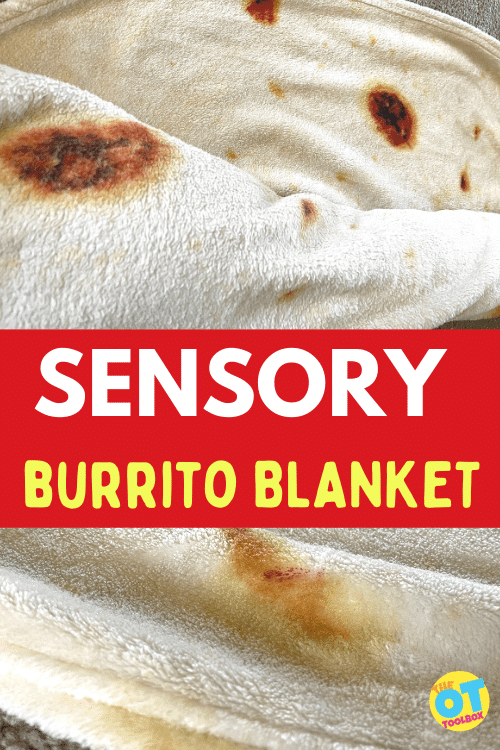
Have you seen the (Amazon affiliate link) tortilla blankets? These are a great, fuzzy blanket to use in this sensory blanket activity! Kids can be the burrito as they are wrapped up in the tortilla blanket. Plus, the warmth from this fleece blanket is extra cozy and calming!
Use the tortilla blanket to make a kid-sized burrito that adds calming sensory input!
Another sensory activity using blankets is to use the blanket roll as a balance beam or to lay on (without the child inside).
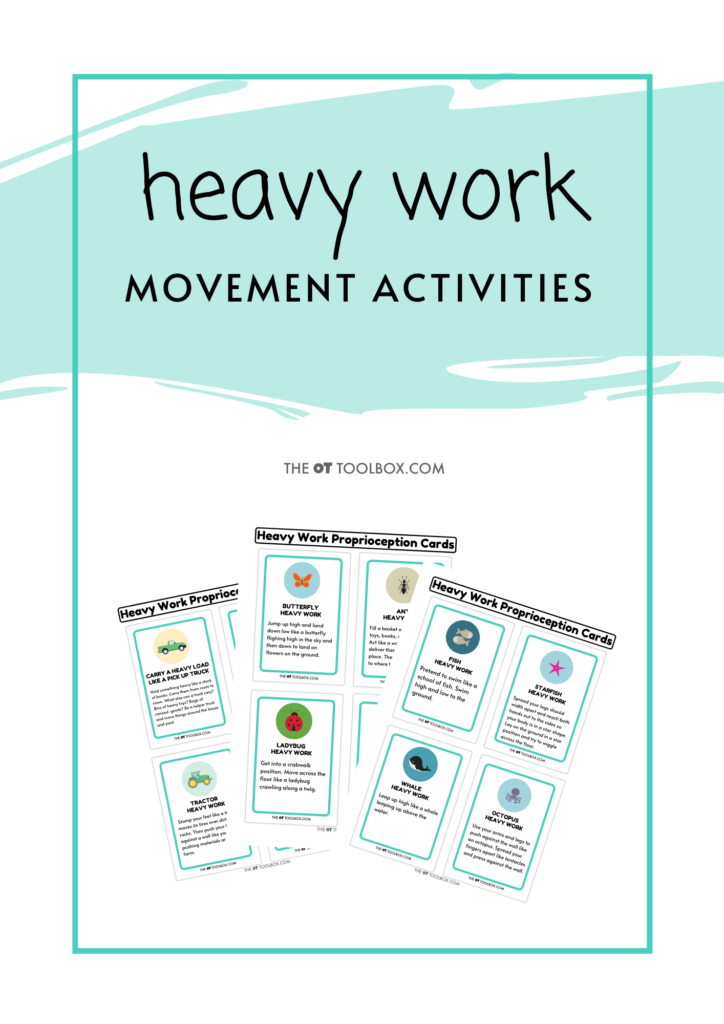
For more heavy work activities using materials already found in the home, check out these low-prep heavy work exercises!
Colleen Beck, OTR/L has been an occupational therapist since 2000, working in school-based, hand therapy, outpatient peds, EI, and SNF. Colleen created The OT Toolbox to inspire therapists, teachers, and parents with easy and fun tools to help children thrive. Read her story about going from an OT making $3/hour (after paying for kids’ childcare) to a full-time OT resource creator for millions of readers. Want to collaborate? Send an email to contact@theottoolbox.com.
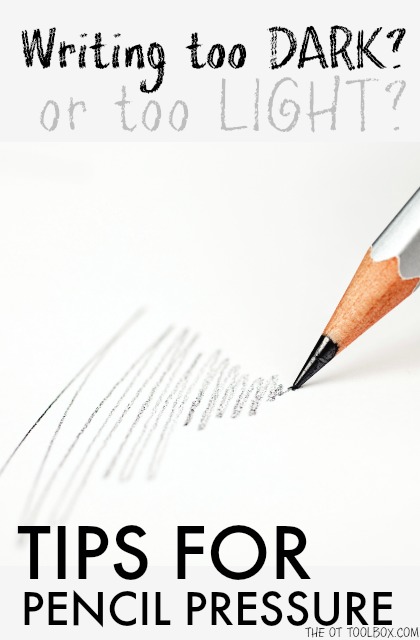
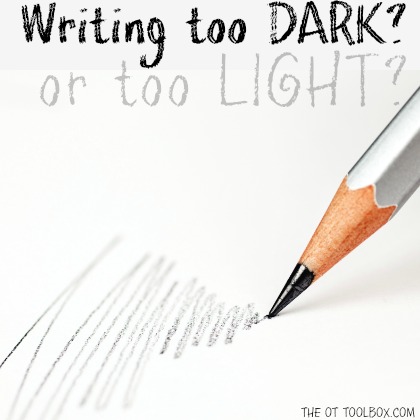
If you’ve worked with kids teaching handwriting or fixing handwriting issues, they you probably have come across a common handwriting problem area…Pencil pressure when writing. Handwriting pressure can play a huge role in legibility, whether pressing too hard when writing or writing too lightly.
Pencil Pressure in Handwriting
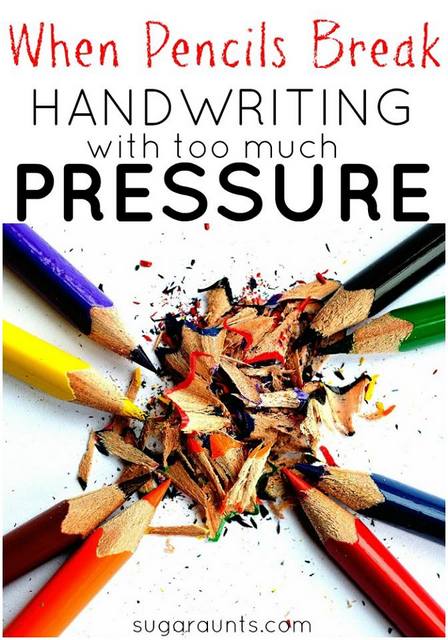
Some kids press too hard on the pencil. They may press so hard on the pencil that the pencil tears the paper when they write. When they try to erase, there are smudges that never really go away.
Other students use too little force when writing. Or, you might see pencil pressure that is so light that you can’t discern letters from one another.
Either way, pencil pressure plays a big part in handwriting legibility.
Here are tips for pressing too hard when writing…and tips for helping kids write darker. Scroll down for everything you need to know about writing with that “just write” pencil pressure…Typo intended 🙂
Pencil Pressure with Writing
Learning to write is a complex task. Choosing a hand to hold the pencil with, pencil grasp, managing the paper with the assisting hand, sitting up straight.
And then there is the physical task of marking letters: letter formation, line awareness, letter size… this is multi-level functioning for a child!
Yet another aspect to consider is the pressure one exerts on the paper when writing. Press too lightly and the words are barely able to be seen. Press too hard, and the letters are very dark, the pencil point breaks, lines are smudged, and when mistakes are erased, they don’t really erase all the way, the paper tears, and frustration ensues!
Sometimes, when it comes to pencil pressure, simply helping kids become aware that they are writing too lightly or writing with too much pressure can make a big difference. Here is one simple activity to work on pencil pressure. All you need is a sheet of foam crafting paper.
Pencil pressure is dependent on proprioception, one of the sensory systems. With October being Sensory Processing Awareness month, this is the perfect time to talk sensory and handwriting!
As an occupational therapist in the school setting, I’ve come across many school-aged children showing difficulty with pencil pressure. There are reasons for these dark pencil marks and some tips and tools for helping with this handwriting difficulty.
This post contains affiliate links.
Proprioception and Handwriting
The proprioceptive system receives input from the muscles and joints about body position, weight, pressure, stretch, movement and changes in position in space. Our bodies are able to grade and coordinate movements based on the way muscles move, stretch, and contract.
Proprioception allows us to apply more or less pressure and force in a task. Instinctively, we know that lifting a feather requires very little pressure and effort, while moving a large backpack requires more work.
We are able to coordinate our movements effectively to manage our day’s activities with the proprioceptive system. The brain also must coordinate input about gravity, movement, and balance involving the vestibular system.
When we write, the pencil is held with the index finger, middle finger, and thumb, and supported by the ring and pinkie finger as the hand moves across a page.
A functioning proprioceptive system allows us to move the small muscles of the hand to move the pencil in fluid movements and with “just right” pressure.
We are able to mark lines on the paper, erase mistakes, move the paper with our supporting arm, turn pages in a notebook fluidly, and keep the paper in one piece.
Heavy Pencil Pressure
When students press too hard on the pencil, handwriting suffers. Sometimes, children hold their pencil very tightly. Other times, they are seeking sensory feedback. You’ll see some common signs of heavy pencil pressure:
They press so hard on the paper, that lines are very dark when writing.
The pencil point breaks.
When erasing, the pencil marks don’t completely erase, and the paper is torn.
The non-dominant, assisting hand moves the paper so roughly that the paper crumbles.
When turning pages in a notebook, the pages tear or crumble.
Movements are not fluid or efficient.
Handwriting takes so much effort, that the child becomes fatigued, frustrated, and sore.
It may take so much effort to write a single word, that handwriting is slow and difficult.
All of these signs of heavy pencil pressure are red flags for pencil pressure issues. They are not functional handwriting.
Below, we’ll cover ways to reduce pencil pressure?
Writing Pressure: Too Light
The other side of the coin is pencil pressure that is too light.
Writing with too little pencil pressure is another form of non-functional handwriting. Some signs of too little pencil pressure include:
Kids may write so lightly that you can’t read the overall writing sample.
You can’t discern between certain letters.
The writing pressure is just so light that the child’s hand or sleeve smudges the pencil lines and the writing sample is totally not functional or legible.
The student starts out writing at a legible pencil pressure, but with hand fatigue, the writing gets lighter and lighter.
All of these signs of too light pencil pressure and too much force when writing can be addressed with some simple tips. Working on proprioceptive input and hand strengthening can help with too light pencil pressure. Try some of the writing tips listed below.
Pencil pressure and Messy handwriting
Messy handwriting can be contributed to many factors. Decreased hand strength, Visual motor difficulty, motor planning issues, visual memory difficulties, or impaired proprioception.
Difficulty with grading the movements required in drawing or making letters in a coordinated way may present as messy, smudged, illegible handwriting.
Writing Tips for Pencil Pressure
Bringing the writer aware of what’s occurring is one way to support pencil pressure issues. Proprioceptive activities allow the muscles to “wake up” with heavy pressure.
Moving against resistance by pushing or pulling gives the muscles and joints an opportunity to modulate pressure.
Resistive activities before and during a handwriting task can be beneficial for children who press hard on the pencil.
Pencil Pressure Activities:
Some of these pencil pressure activities are writing strategies to help kids become more aware of the amount of pressure they are using when writing.
Others are tools for helping the hands with sensory needs. Still others are tools for strengthening the hands. Try some or a mixture of the following ideas to addressing handwriting needs.
Stress balls or fidget toys can help to strengthen pinch and grip strength.
Use carbon paper or transfer paper to help kids become more aware of the amount of pressure they are exerting through the pencil when writing. Here is some easy ways to use a Dollar Store find to use carbon paper to work on handwriting. (affiliate link)
resistive bands (affiliate link)- Use these as an arm warm-up to “wake up” the muscles of the whole upper body. They are great for positioning warm ups too.
theraputty (affiliate link) with graded amount of resistance (speak to a license occupational therapist about the amount of resistance needed for your child. An individual evaluation and recommendations will be needed for your child’s specific strengths/needs). Use these theraputty exercises for ideas to get started.
hole puncher (affiliate link) exercises before a writing task
Gross grasp activities- These activities can be a big help in adjusting the grasp on the pencil, helping the hands with sensory input and strengthening the hands to help with endurance when writing.
Write with a mechanical pencil (affiliate link)- The lead will break if too much pressure is applied. Children can learn to monitor the amount of pressure used and it will provide feedback on modulation of pressure. A pencil with .7mm lead is better to start with for heavy writers. Read more about using a mechanical pencil for kids who write too dark or too light.
Some children will benefit from using a liquid gel pen for fluid handwriting marks. The gel ink will provide feedback when gobs of ink are dispensed when writing too hard.
Still others will benefit from a gel pen, marker, or using a dry erase marker on a dry erase board. This can be beneficial as a tool for teaching about pencil pressure or as an accommodation for those writing too lightly.
Pencil Weights (affiliate link) or Weighted Pencils (affiliate link)- Weighted pencils can be helpful in providing sensory feedback through the hands.
Practice writing on a dry erase board with dry erase markers to work on consistent pencil pressure- Pressing too hard will make the marker lines wider and press down on the tip of the marker. Can the learner keep a consistent line with their writing or drawing?
Use a grease pencil- These pencils are commonly used to marking wood or used in construction. The lead of the pencil is very soft and can be a great alternative for those that press too hard on pencils.
Cheap eyeliner pencil- One cheap alternative to a grease pencil is using an inexpensive eye liner pencil from the dollar store. Get the kind that you sharpen with a turn sharpener (almost like a hand held pencil sharpener). Kids can use that pencil to draw lines and match the amount of pressure they are using. This is a good activity for those that press too hard when writing, too.
Practice Ghost Writing: Encourage the child to write very lightly on paper and then erase the words without leaving any marks. The adult can try to read the words after they’ve been erased. If the words are not able to be read, the writer wins the game.
Hand exercises are a great way to “wake up” the hands before a handwriting task. Encourage the child to squeeze their hand into a fist as tight as he can. Then relax and stretch the hand and fingers. Repeat the exercise several times. Practice holding the pencil with the same type of tight and relaxed exercises Practice writing on tissue paper. A very light hand is needed to prevent tears. Discuss the amount of pressure needed for writing on the tissue paper.
This will provide the child with awareness and words for the way they are holding the pencil.
Wrap a bit of play dough or putty around the pencil as a grip. Encourage the child to hold the pencil with a grasp that does not press deeply into the dough. Encourage using a “just right” pressure.
Provide terms for they way they write. Encourage “just right” writing and not “too hard” or “too soft” marks.
Use a lead pencil to color in a small picture, using light gray, medium gray, and dark gray. Talk about how using different amounts of pressure changes the shade of gray.
Instead of writing on a notebook, pull a single sheet from the pages and place on a hard table or desk surface. The firm surface will limit the amount of pressure. You can also slip a clipboard between pages of a notebook to provide that hard surface, if sheets must remain in a notebook.
Need more tips and tools for addressing handwriting needs? Be sure to check out all of our handwriting activities here on The OT Toolbox.
More Handwriting Tips
For a comprehensive resource on handwriting, check out The Handwriting Book. This e-book was written by pediatric occupational therapists and physical therapists who focus on function and take a developmental look at handwriting.
In The Handwriting Book, you’ll find practical suggestions to meet all needs that arise with messy or sloppy handwriting. The developmental-based approach to teaching handwriting focuses on strategies to support common issues with written work.
Colleen Beck, OTR/L has been an occupational therapist since 2000, working in school-based, hand therapy, outpatient peds, EI, and SNF. Colleen created The OT Toolbox to inspire therapists, teachers, and parents with easy and fun tools to help children thrive. Read her story about going from an OT making $3/hour (after paying for kids’ childcare) to a full-time OT resource creator for millions of readers. Want to collaborate? Send an email to contact@theottoolbox.com.
Here, you’ll find olfactory sensory activities and Scented ways to play and learn this week. The sense of smell is a great way to impact learning, and scented activities are not just fun. You can add these scented play ideas in smell sensory activities for toddlers, preschoolers, and older ages. Use the sense of smell in learning!
What is The Olfactory System
The olfactory system, or the system that enables the sense of smell, has receptors in the tissue of the nose that are connected by pathways to the brain. Connections occur via two pathways, one being a direct route to neurons in the brains and the second being a path that passes near the roof of the mouth. This channel is connected to the taste of foods.
There is some evidence indicating that the sense of smell is more associated with memory than the sense of vision or the other senses. The connection of the olfactory sense to the emotional part of the brain and previous experiences, as well as hypersensitivity or hyposensitivity to smells can cause anxiety or sensory related breakdowns in children with sensory processing difficulties.
There are many different ways to approach therapeutic intervention related to the olfactory sense.
Different scents can be used in therapeutic manners. The child who is hypersensitive to scents can use unscented soaps and lotions.
Try calming scents to soothe or relax: vanilla, floral, chamomile
Try alerting scents to stimulate or alert: citrus, peppermint
Use caution with essential oils and scents in general with children. Not all scents are safe for kids.
Hyper-responsiveness of the olfactorysense may present in a child as over-responsiveness or overreaction to olfactory sensation. This may look like:
Overly sensitive to smells
Notices smells others don’t
Anxious around certain smells
Holds nose in response to certain scents
Adaptations/Accommodations to address hyper-responsiveness of the olfactory sense:
Provide the child with tools scented with preferred scents (Wooden pencils can have a scent that interferes with a child’s attention. A plastic mechanical pencil may be a better option.)
Trial various laundry detergents/soaps to find a preferred scent (Unscented detergent can still produce a noxious scent for some individuals.)
Hypo-responsiveness of the olfactory sense may present in a child as under-responsiveness or underreaction to olfactory sensation. This may look like:
Smells unusual items like paper or certain materials
Prefers strong scents
Adaptations/Accommodations to address hypo-responsiveness to the olfactory sense:
Preferred tools for use in the classroom and home
Preferred laundry detergents/soaps
Olfactory Sensory Activities
We love sensory play of all kinds and the olfactory sense is such a great way to explore through the senses. Olfactory sense (or the sense of smell) is such a powerful sense.
There is a lot to know about the sense of smell. The sense of smell brings strong memories and so pairing scented play with learning is a great way to use that strength. Looking for a few scented activities?
Check out these fun scented olfactory sensory activities children will love:
Scented sensory play ideas
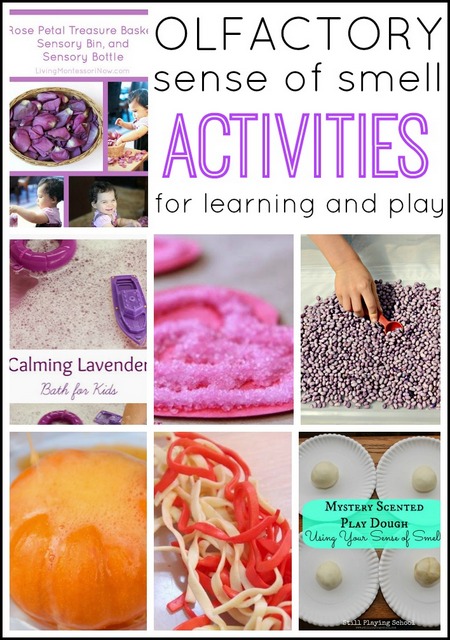
Scented Sensory Play with Pumpkins and pumpkin spice scent from Frogs and Snails and Puppy Dog Tails. Rose Sensory Bin with rose petals from Living Montessori Now Lavender Bath with scented water from Frogs and Snails and Puppy Dog Tails Scented Play Dough from Still Playing School
Some of our favorite scented ways to play and learn:
In the Sensory Lifestyle Handbook, you’ll find sensory strategies that are easily integrated into everyday life. Grab this resource to learn more about the olfactory sense and how this sensory system impacts functional tasks.
Colleen Beck, OTR/L has been an occupational therapist since 2000, working in school-based, hand therapy, outpatient peds, EI, and SNF. Colleen created The OT Toolbox to inspire therapists, teachers, and parents with easy and fun tools to help children thrive. Read her story about going from an OT making $3/hour (after paying for kids’ childcare) to a full-time OT resource creator for millions of readers. Want to collaborate? Send an email to contact@theottoolbox.com.
This Lion and Lamb Self-Regulation Activity for kids is perfect for helping kids build their ability to control emotions and behaviors in a fun, spring themed way. Use this tool to help kids adjust to difficult situations in the classroom or at home. Self-regulation is a big term. Let’s see if we can explain that term a little here and provide you with strategies to help with regulation.
Lion and Lamb Self regulation Activity
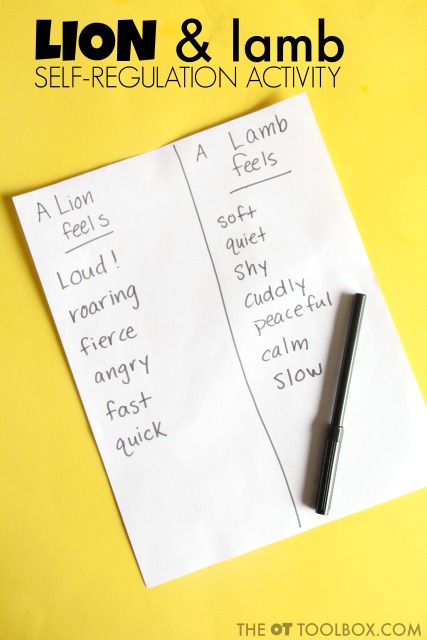
Here, we’re covering a fun self-regulation activity using the imagery of in like a lion and out like a lamb…typically depicting the volatile March weather. BUT, we can take that metaphor and relate it to the story emotions using lion terms like fast, loud, tearing, roaring, etc. and the soft and quiet emotions we relate to a lamb: soft, quiet, calm, etc.
When learners use those terms to identify their own feelings and emotions, we give them the words to describe how they feel. We also provide a visual imagery of how their body looks both from the inward and outward perspectives. This is a powerful concept for kids and one that can take the self-regulation process to the next level of automaticity.
Occupational therapy and self-regulation
In occupational therapy, self-regulation activities can play a big part in treatment interventions. Kids can really struggle with emotional control or mindfulness in a situation in a way that impacts their functioning. Understanding how sensory processing plays a part in regulation and behaviors is part of the occupational therapy self-regulation intervention plan.
Occupational therapists can help parents, teachers, and children understand what is going on behind big emotions or big behaviors. They can help them see that self regulation strategies can make a huge difference in paying attention and learning in the classroom or completing tasks that need to be done at home.
Self-regulation is a difficult skill for many children. Kids of all ages and developmental levels have a need to build on their self-regulation skills. Building self-regulation skills allows kids to deal with their emotions in appropriate and functional ways.
When a child is able to control their emotions, they can adjust to situations while managing their feelings and behaviors. Here is more in-depth information about self-regulation.
This self-regulation activity helps children understand and put words into the ways their body and mind may be reacting to certain situations.
Lion and Lamb Self-Regulation Activity
This post contains affiliate links.
Using a lion and lamb metaphor is a concrete way for kids to learn about and understand self-regulation. Many times, kids understand when their body or brain is not in control. Situations can get away from a child, when they are unable to react or respond in an appropriate manner.
Kids can use the idea of a lion and lamb to understand different ways that they might be feeling. This activity should be done in a separate time from breakdowns or tantrums. When a child is calm and open to talking about previous situations, sit down with the child or group of children and talk about how it might feel to be a lion and a lamb.
Self-Regulation Activity For Kids
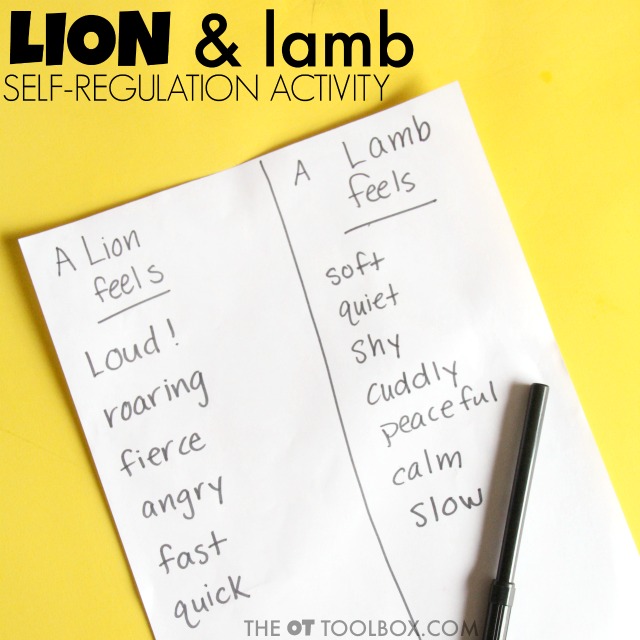
For this activity, I used just a piece of paper and divided it into two columns. This could be done on a large notebook on an easel in front of the classroom and hung as a poster in the classroom. This paper is a great price and can be used on any easel.
Use the lion and lamb imagery to work on feelings concepts and emotional learning.
Social emotional learning plays a huge role in how we act, or behave. It’s all part of that self-regulation piece that impacts learning, interaction with others, and daily functioning.
I asked my preschooler and first grader how a lion might feel and how a lamb might feel. We talked about how lions are load and fast and how a lamb is calm and quiet. As they mentioned describing terms, I just jotted them down on the columns.
Then, we looked at the whole list for each animal. At this point, you can talk with the class about how we all feel all of these ways at one time or another. Sometimes we feel soft-spoken and slow and other times we feel loud and “roar-y”!
Self-regulation is adapting to and responding to sensory, emotional, and cognitive input. The way our body and mind acts and thinks can get stuck if we don’t use our self-regulation abilities. Below, you will find a list of self-regulation strategies. They can be incorporated into occupational therapy’s self-regulation suggestions, or used to meet the child’s needs with adapting to and responding to sensory/emotional/cognitive input.
Use the lion and lamb metaphor to help kids adjust in appropriate ways. You can tell your child or students that there are times that it is appropriate to “be a lion” and there are times that it is appropriate to “be a lamb”.
in like a lion out like a lamb craftS
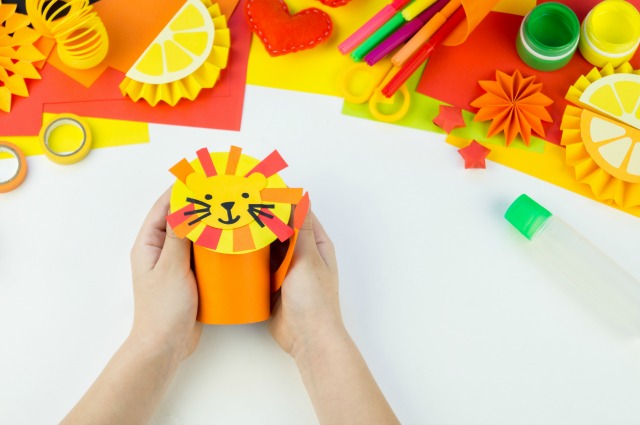
Then, take the discussion further by incorporating a lion and lamb craft.
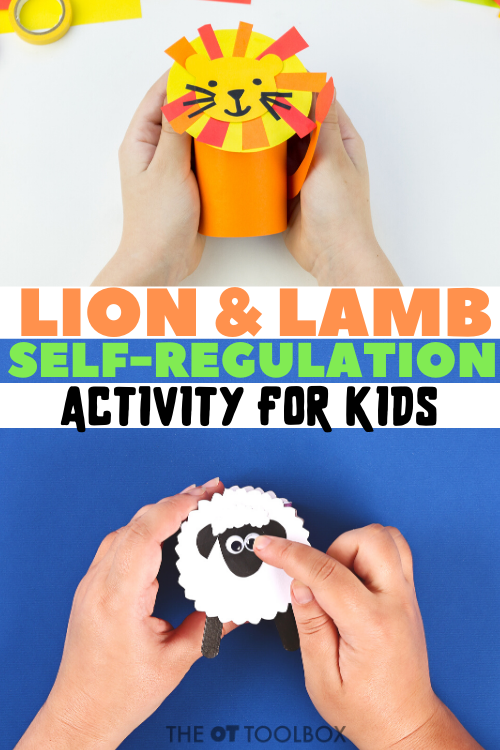
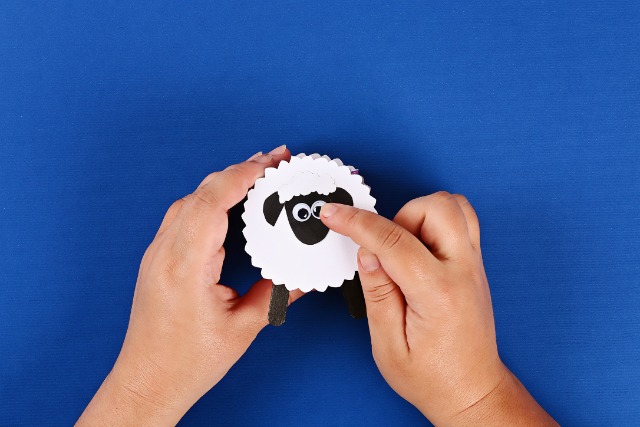
Some ideas are using toilet paper rolls to make a lion and a lamb. Kids can work on the fine motor skills to cut out paper parts and glue them onto the toilet paper roll.
For some kids, the crafting experience can be an exercise in self-control, too!
These lion and lamb themed activities would be another great way to incorporate a lion and lamb theme into discussion with your kids or classroom:
Make a pine cone lamb craft while talking about the qualities of a lamb. (Fireflies and Mudpies)
Use a lion and lamb ten frame to work sneak address math concepts with the same theme. (Fun-a-Day)
Talk about how “lion weather” might be blustery and fast, windy and stormy. It relates back to a loud lion that is rough, fierce, or angry.
Then make a lamb craft out of a toilet paper roll. Kids can cut the paper pieces from cardstock or construction paper and work on gluing them on by copying a visual model. While crafting, discuss the qualities of a lamb, and how that relates to calm or soft voices, or peaceful and soft voices.
Another idea is to use this lamb handprint craft. Simply make a handprint using white paint and draw on the features of a lamb. Children can make the lion craft in the same way by sing yellow paint and drawing on or gluing on feature of the lion.
More Self-Regulation Activities
Next, come up with techniques to adjust to situations when the child needs to switch from a lion to a lamb or vice versa. One strategy is using sensory tools to help calm down or speed up our bodies. Try these sensory activities as a list of self-regulation strategies to address many different needs and interests.
Try some of these calming sensory ideas to calm down a “lion”
Add these lion and lamb ideas to your Spring occupational therapy line-up. Here are more ways to keep your therapy planning full for the next few months:
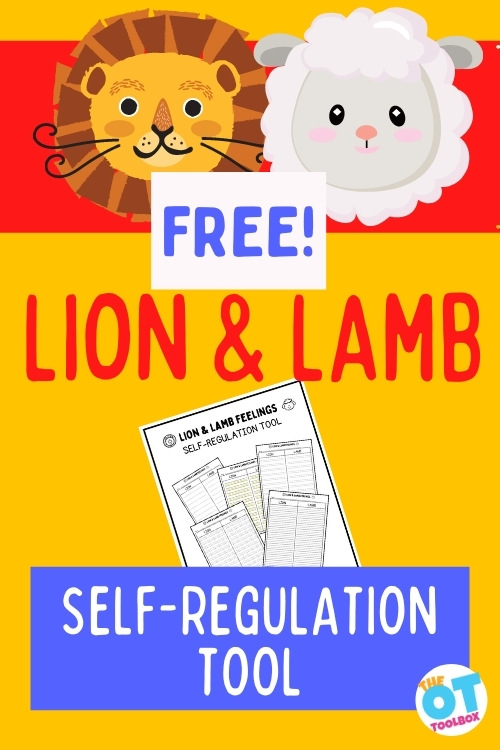
Print off this self-regulation PDF and work on identifying areas of self-regulation with a lion and lamb theme. This is great for the month of March, but can be used any time of year using the lion and lamb imagery.
Self-regulation is a difficult skill for many children mainly because of the development happening along with outside influences in the world around them. Day to day tasks can feel very “out of ones control” to children. Add in emotions, communication struggles (We all struggle to communicate our feelings and emotions at one time or another!)
Kids (and older…adults included) of all ages and developmental levels have a need to build on their self-regulation skills. Building self-regulation skills allows kids to deal with their emotions in appropriate and functional ways.
When a child is able to control their emotions, they can adjust to situations while managing their feelings and behaviors.
Using a lion and lamb metaphor is a concrete way for kids to learn about and understand self-regulation. Many times, kids understand when their body or brain is not in control. Situations can get away from a child, when they are unable to react or respond in an appropriate manner.
Kids can use the idea of a lion and lamb to understand different ways that they might be feeling. This activity should be done in a separate time from breakdowns or tantrums. When a child is calm and open to talking about previous situations, sit down with the child or group of children and talk about how it might feel to be a lion and a lamb.
How to use this self-regulation tool:
Ask the user to list out different ways a lion and a lamb might feel or behave. Write down different ways to describe a lion and a lamb.
Talk about how lions are load and fast and how a lamb is calm and quiet.
For younger users, consider writing down their responses as they dictate words that describe a lion or lamb.
Then, look at the whole list for each animal. At this point, you can talk with the client/student about how we all feel all of these ways at one time or another. Sometimes we feel soft-spoken and slow and other times we feel loud and “roar-y”!
Use the lion and lamb metaphor to help kids adjust in appropriate ways.
You can tell your child or students that there are times that it is appropriate to “be a lion” and there are times that it is appropriate to “be a lamb”.
Then cover various coping tools, self-regulation strategies, and other means to support potential self-regulation needs.
You’ll find 6 different paper types in this packet to incorporate handwriting needs into the activity.
Then, users can use the language that they have listed to address feelings or emotions. Create a strategy when they feel a certain way. Lion feelings might indicate a need for calming input or heavy work. Lamb feelings might need alerting input. This is a great tool to start talking about various needs and social emotional learning!
Want to add this resource to your therapy toolbox so you can help kids thrive? Enter your email into the form below to access this printable tool.
This resource is just one of the many tools available in The OT Toolbox Member’s Club. Each month, members get instant access to downloadable activities, handouts, worksheets, and printable tools to support development. Members can log into their dashboard and access all of our free downloads in one place. Plus, you’ll find exclusive materials and premium level materials.
Level 1 members gain instant access to all of the downloads available on the site, without enter your email each time PLUS exclusive new resources each month.
Level 2 members get access to all of our downloads, exclusive new resources each month, PLUS additional, premium content each month: therapy kits, screening tools, games, therapy packets, and much more. AND, level 2 members get ad-free content across the entire OT Toolbox website.
Colleen Beck, OTR/L has been an occupational therapist since 2000, working in school-based, hand therapy, outpatient peds, EI, and SNF. Colleen created The OT Toolbox to inspire therapists, teachers, and parents with easy and fun tools to help children thrive. Read her story about going from an OT making $3/hour (after paying for kids’ childcare) to a full-time OT resource creator for millions of readers. Want to collaborate? Send an email to contact@theottoolbox.com.
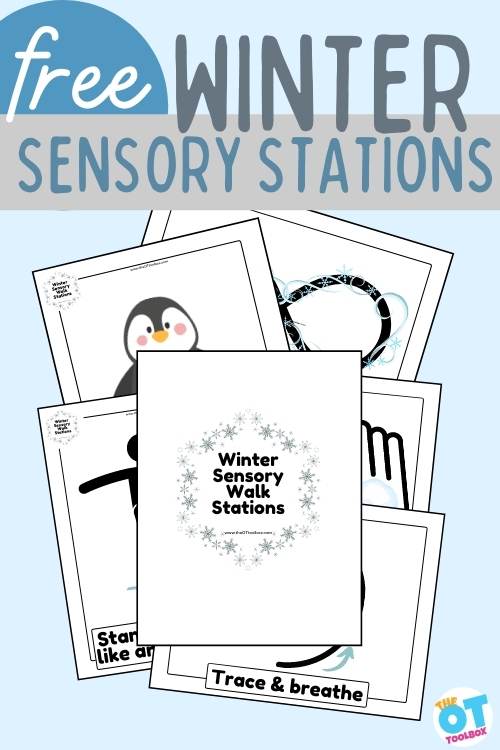
We’re back with another sensory tool to add to your toolbelt: Winter Sensory Stations to print off, hang on the wall, and help kids focus and get the sensory input they need. Add these winter themed movement activities to our other seasonal sensory station or sensory path tools:
If you’re a teacher, therapy provider, or a parent, you might know the impact that wiggly, fidgety kids have on focusing and completing daily tasks. That’s where this set of winter themed sensory station printables come in.
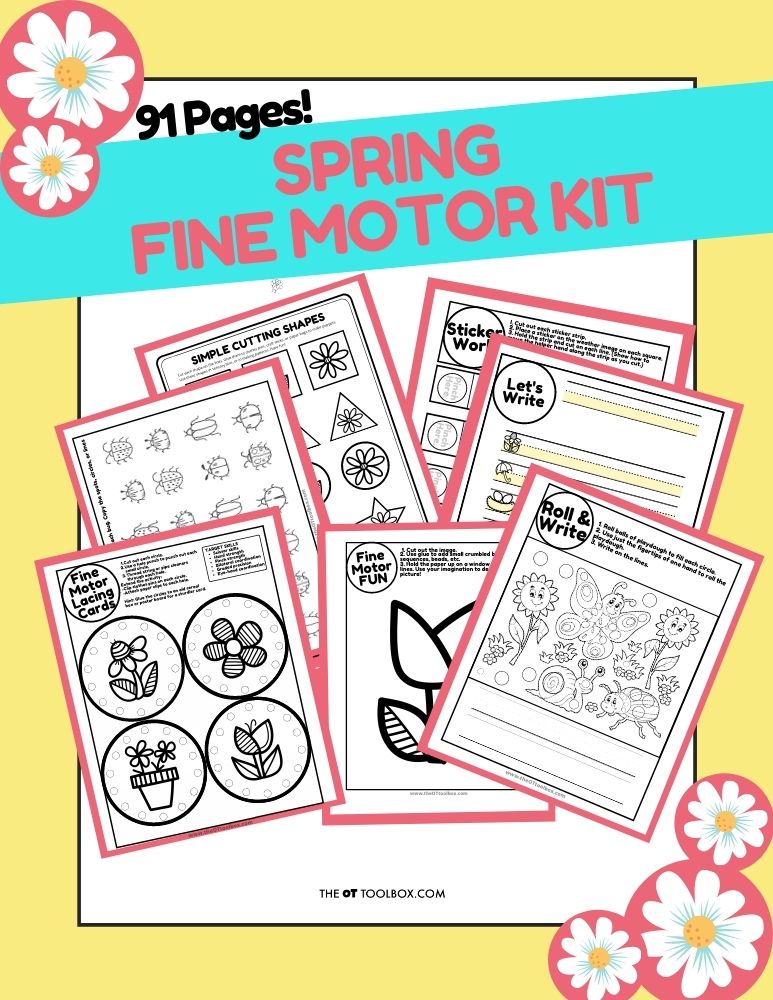
Looking for a consistent way to support fine motor skills all year? This yearlong fine motor system includes seasonal activity kits and monthly data collection tools to support planning and progress monitoring.
If fine motor planning and data collection feel overwhelming, you’re not alone. This done-for-you yearlong bundle organizes seasonal activities and monthly screening tools in one system.
These winter sensory stations are designed to incorporate a winter theme into sensory motor movement. You’ve probably seen pricy sensory walks in schools or hallways. The movement-based sensory path is a great way to get kids moving and following directions to complete gross motor movement activities.
But what if you don’t have the funds available to purchase a full sensory path kit?
Grab the kit below for free!
How to Use these Winter sensory stations
That’s where these free winter sensory station printables come into play. You can grab them below…and then print them off, slip them into a page protector or laminate them. Then, hang them in a school hallway, a therapy clinic, or a home. Kids can complete these winter sensory activities to add movement breaks or gain other sensory benefits.
Use these sensory motor stations to address a few needs:
Use as a winter brain break
Use them in between learning activities
Use them during transitions to help with focus and attention
Use them in a sensory diet to incorporate proprioceptive input or vestibular input
Use the sensory stations to develop gross motor skills like coordination, strength, and motor planning
Use the winter sensory stations when outdoor play may be limited due to cold temperatures or freezing weather
Add the sensory stations as a movement break in between other activities in the home, classroom, or therapy session.
What’s included in the Winter Sensory stations
In these winter sensory path stations, you’ll find similar movements and mindfulness activities, similar to our other sensory station activities. However, these winter themed activities have a few differences, too. These are great ways for kids to recognize tools that they can use all year long to help them attend AND address self-regulation needs.
First, you’ll find a deep breathing figure 8 with a frosty wind and snow theme. This deep breathing activity incorporates the visual sense as kids scan the figure eight. They can follow the directions on the sensory station task to breathe deeply as they follow the arrows on the figure eight. This deep breathing activity can also incorporate crossing midline and eye-hand coordination skills. Use the figure eight deep breathing task to help kids calm down or regulate emotions or behaviors.
Penguin Waddle- Next, you’ll see a penguin waddle activity. This gross motor activity incorporates proprioceptive input and allows kids to challenge motor planning and direction following. They can waddle down the hallway or in a circle. The activity is open-ended to be used in any setting or physical layout. Ask kids to complete the task as they build balance and coordination skills.
Snowball Wall Push-Ups- The next activity is a wall push-up task with a snowball theme. Kids can place their hands against the handprint images and complete wall push-ups against a wall surface. This heavy work activity provides proprioceptive input through the shoulders, core, and whole upper extremity. This is not only a great strengthening activity, but it can be calming to help regulate emotional needs or sensory needs.
Stand on one leg like an ice skater- The next activity is a balance and coordination task that challenges balance and position in space. The vestibular sense and proprioceptive sense are engaged as the child attempts to maintain balance one one leg. Ask them to do one leg and then to stand on the other leg. You can incorporate other movements too, like loving the arms or reaching and holding a position to further challenge balance, coordination, and motor planning skills.
Finally there is a snowflake themed spiral deep breathing activity. Ask the child to follow the spiral image with their finger tip or eyes and deeply breath in and out. This deep breathing exercise has many benefits that calm and engage the child.
Each of these winter sensory station activities can be calming tools to use this whole winter season.
Then, when you are finished with the winter sensory path, do a winter crossword puzzle to bring in focus to the table top with focused work. It’s a great segue from whole body to fine motor.
Free Winter Sensory Station Printables
Want to add these sensory stations to your clinic, classroom, or home this winter season? Enter your email address into the form below to access these resources. NOTE that this printable is available inside our Member’s Club. If you are member, log into your account and easily download the file there…as well as hundreds of other printable resources. If you’re not a Member’s Club member, you’ll want to check it out!
Colleen Beck, OTR/L has been an occupational therapist since 2000, working in school-based, hand therapy, outpatient peds, EI, and SNF. Colleen created The OT Toolbox to inspire therapists, teachers, and parents with easy and fun tools to help children thrive. Read her story about going from an OT making $3/hour (after paying for kids’ childcare) to a full-time OT resource creator for millions of readers. Want to collaborate? Send an email to contact@theottoolbox.com.
What if you had themed, NO-PREP activities designed to collect data and can help kids build essential fine motor skills?
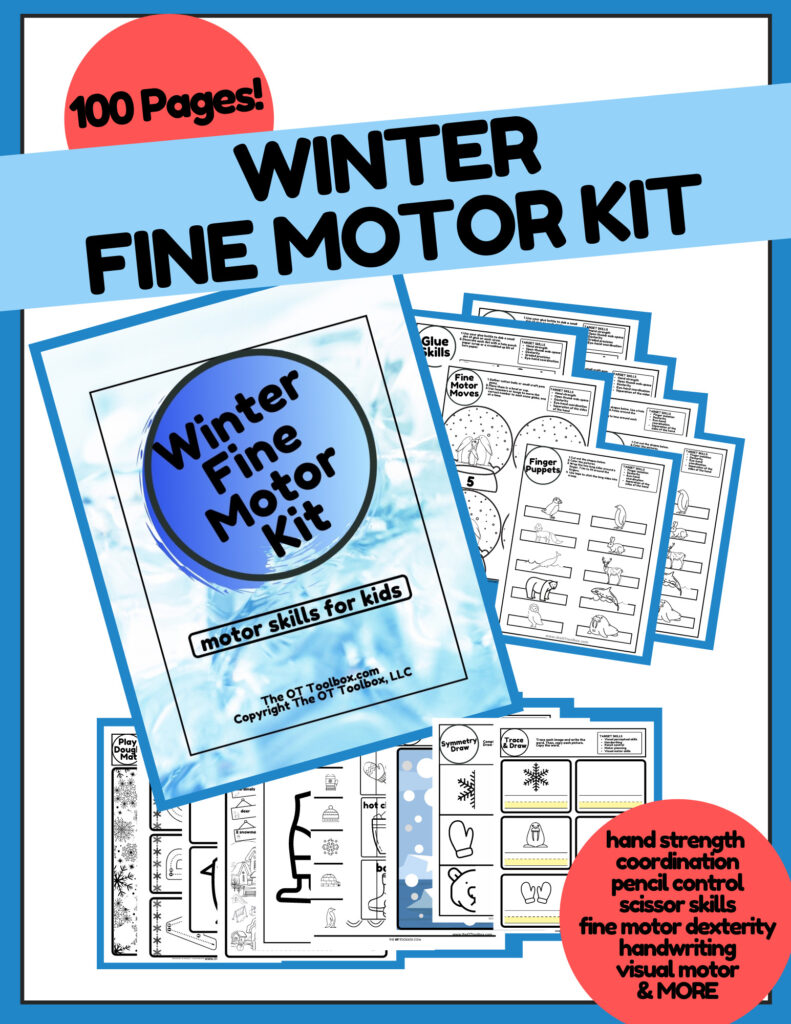
Take back your time and start the year off with a bang with these done-for-you fine motor plans to help kids form stronger hands with our Winter Fine Motor Kit. This print-and-go winter fine motor kit includes no-prep fine motor activities to help kids develop functional grasp, dexterity, strength, and endurance. Use fun, winter-themed, fine motor activities so you can help children develop strong fine motor skills in a digital world.
The Winter Fine Motor Kit includes reproducible activity pages include: pencil control strips, scissor skills strips, simple and complex cutting shapes, lacing cards, toothpick precision art, crumble hand strengthening crafts, memory cards, coloring activities, and so much more.
We love a good sensory path. With quick sensory stations, mindfulness breaks, movement, heavy work activities, and motor activities, a sensory path is an easy way to help kids that need to MOVE. We’ve shared a few sensory paths here on the website, including our Spring Sensory Stations, our Fall Sensory Stations.
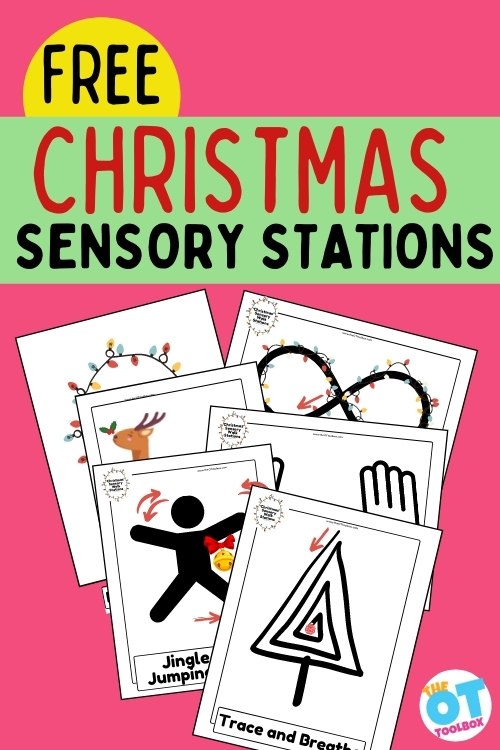
These printable sensory stations make up a quick sensory path that can be used in school hallways or the walk to the therapy clinic. Add them to your toolbox of Christmas mindfulness strategies. Now we have a Christmas Sensory Path made up of quick holiday sensory stations!
Christmas Sensory Stations
This time of year, it can be hard to get kids to focus on the tasks they need to complete in the school setting.
It can even be hard for kids to walk down the hallway!
That’s where these Christmas Sensory Station printables come in. Print them off, laminate them (or slide them into a page protector sleeve) and hang them on the wall. They make a great movement break for the home, too.
Let’s break down the sensory path activities in this printable packet:
The first Christmas sensory station included in this free resource includes a figure 8 deep breathing activity with a holiday theme. Kids can trace along the figure 8 as they take in deep breaths and then breathe them out. There are Christmas lights decorating the figure eight. Encourage kids to take deep breaths in and out as they feel their breathing rate calm.
2. The next sensory activity in this Christmas sensory path is a gross motor activity that incorporates proprioceptive input and vestibular input to leap like a reindeer. Kids can either get onto all fours to leap or they can stand on their feet like a reindeer taking off to soar in the Christmas night sky with Santa and the other reindeer! The printable is open-ended so you can ask kids to complete as many reindeer leaps as you like.
3. Next, you’ll find a wall push-up activity. On the palm images are Santa’s sleigh. The sensory station instructs kids to push Santa’s sleigh to give it a hand in taking off. Kids can complete wall push-ups by pushing against the hand visuals. This offers heavy work input through their upper body as a calming motor activity. Do as many wall push-ups as needed.
4. Then, there is a jingle bell jumping jack activity that engages the vestibular sense and gets kids active, moving their whole body, and working on coordination, motor planning, and symmetrical and asymmetrical movements gross motor movements. If kids need to “wake up” their system and become more alert, try asking them to hold real jingle bells as they do the jumping jacks.
5. Finally, the last Christmas sensory station is an eye-hand coordination/ deep breathing activity to calm the system. It includes a Christmas tree tracing activity where kids can trace along the spiral and take deep breaths in and out. This calming activity can re-set kids and help with relaxation.
All of these sensory station activities are open-ended so you can ask kids to say the ABCs or count as they complete the tasks. You can also rearrange the order of the sensory walk tasks or omit some of the activities is you like.
Print off several pages and add them in a pattern down the hallway. Or, ask kids to complete each activity a certain number of times. It’s totally up to you and the needs of your kids!
Christmas Party Sensory path
With many schools omitting parent involvement this year and limiting visitors to the classroom, you might be looking for an EASY holiday themed movement activity. Print off these Christmas sensory stations and add them to Christmas obstacle courses or a relay game for the classroom Christmas party!
You can print off the Christmas sensory stations below. Just enter your email address into the form. A note that this printable is also found inside our Member’s Club. Members: just log into your account and download directly from the dashboard. (You can grab our Winter Sensory Stations printable while you are there, too!)
Colleen Beck, OTR/L has been an occupational therapist since 2000, working in school-based, hand therapy, outpatient peds, EI, and SNF. Colleen created The OT Toolbox to inspire therapists, teachers, and parents with easy and fun tools to help children thrive. Read her story about going from an OT making $3/hour (after paying for kids’ childcare) to a full-time OT resource creator for millions of readers. Want to collaborate? Send an email to contact@theottoolbox.com.
More Christmas Activities
Looking for done-for you therapy activities this holiday season?
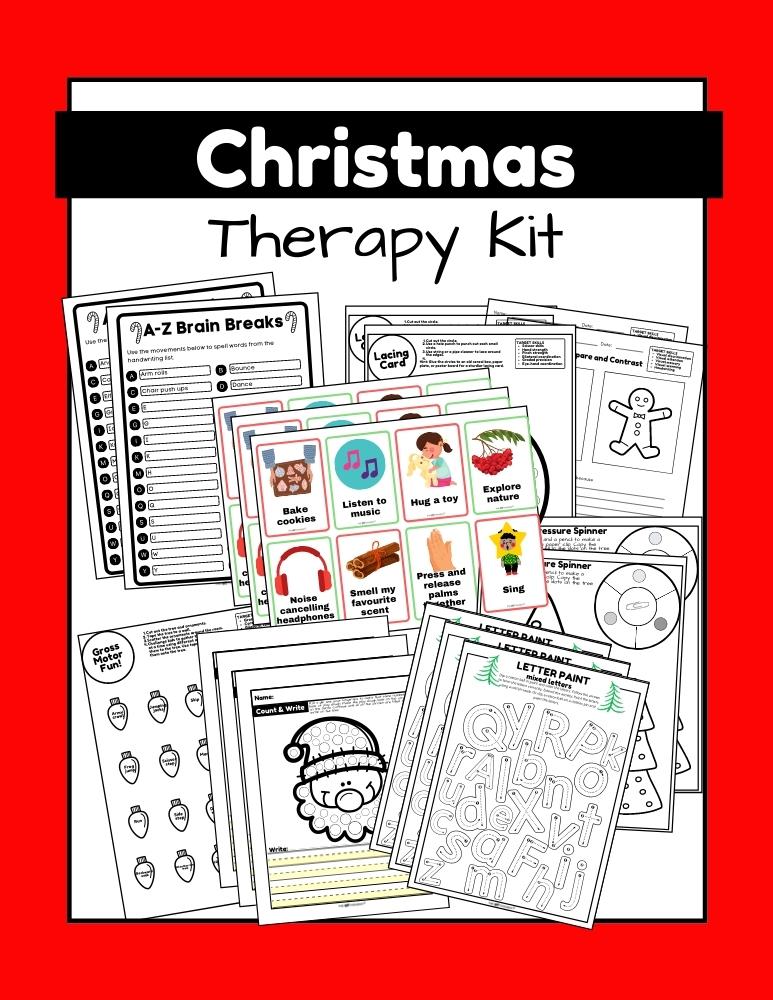
This print-and-go Christmas Therapy Kit includes no-prep, fine motor, gross motor, self-regulation, visual perceptual activities…and much more… to help kids develop functional grasp, dexterity, strength, and endurance. Use fun, Christmas-themed, motor activities so you can help children develop the skills they need.
This 100 page no-prep packet includes everything you need to guide fine motor skills in face-to-face AND virtual learning. You’ll find Christmas-themed activities for hand strength, pinch and grip, dexterity, eye-hand coordination, bilateral coordination, endurance, finger isolation, and more.
Do you know a child that is obsessed with dinosaurs? If so, these dinosaur activities are perfect for developing skills through play. Or, use the dino activities to teach dinosaurs to preschoolers, kindergarteners, and older students learning about the dinosaur age. If your kiddos are anything like mine, then dinosaurs are a year round theme that never disappoints! Finding new and engaging activities to meet that “just right” challenge, while staying on-theme, can be quite the task. We have collected a variety of free dinosaur-themed activities to add to your repertoire for all the aspiring paleontologists in your life. Use these to satisfy fine motor, gross motor, handwriting, vision, and sensory integration interventions.
Best of all, when kids are interested in learning about dinosaurs, these ideas can use these ideas to encourage multi-sensory play through learning! Add these movement and play activities to introduce a dinosaur theme in the classroom or home.
Dinosaur FINE MOTOR ACTIVITIES
For kids that love all thing dinosaurs, these dinosaur fine motor activities develop motor skill dexterity and coordination through play. Whether it’s tracing dinosaurs, creating a dinosaur craft, or handling tools in a dinosaur dig, these fine motor activities are fun!
Here’s the thing: fine motor skills are used every single day! They are integral to just about every occupation and a big part of what occupational therapists work on in their treatment sessions. Use the activities below to increase skills like handwriting, buttoning, zipping, typing, and more! Why NOT incorporate dinosaur fun into fine motor development?!
Stomping like brontosaurus, crashing like a T-Rex, and running like a velociraptor means that dinosaur gross motor skills encourage coordination, balance, endurance, and motor planning skills!
Gross motor movements are made by the “big” muscles in the body. Gross motor control allows for walking, running, bending, stooping, balance, and many other skills that we use every day. Not only are these movements great for a child’s development of strength and coordination, but they also strengthen the connection between the brain and the body – so, get those bodies moving with dinosaur fun!
Use these ideas to have Dinosaur Brain Break. This activity encourages various gross motor movements: stomping, crashing, jumping, balancing, and more.
Develop your own movements, or use the options provided, to meet therapy goals in a Dinosaur Movement Game. These free printables can be used in so many ways to develop gross motor skills.
Use dinosaur feet to stomp, sneak, crawl, or tiptoe! Draw dinosaur feet onto paper. Place them around the room to create a dinosaur footprints path where kids can look for the next prehistoric footprint. They can hop, crawl, creep, or tiptoe along the dino footprint path!
Change up your wording for these exercises to dinosaur-themed ones:
Tight-rope walking → Velociraptor Tip Toe
Boat Pose → Fallen Over T-Rex
Frog Jumps → Dinosaur Jumps
Flamingo/tree pose → Flying Pterodactyl
Bear Crawl → Creeping Stegosaurus
Dinosaur Crafts
The beauty of dinosaur crafts is that they build fine motor skills, bilateral coordination, eye-hand coordination, motor planning, executive functioning skills, visual motor skills, and more. All of these skills are developed through the process of creating. Best of all, when a child prefers dinosaurs as an interest, they have ownership and a sense of self-confidence with a dinosaur craft that they are proud of!
Try adding these ideas to your dinosaur theme:
Make a cupcake liner dinosaur craft. Fold the cupcake liner in half. Then use it as a dinosaur head or back. Cut out smaller pieces of paper to add details like legs, scales, a long neck, or a long tail.
Draw dinosaur feet. Cut them out and trace onto paper. Then, you can use those dinosaur feet to make a path for gross motor play such as a balance beam.
Make a handprint dinosaur craft. Press the hand into green paint. Press the handprint onto paper. Then add details like an eye, long legs, a long neck, and googly eyes.
Make a dinosaur paper plate craft. Cut a paper plate in half to make a dinosaur’s back. Then add legs and triangles along the back. Add a small face and tail and you’ve got a stegosaurus craft that develops scissor skills.
Dinosaur HANDWRITING Activities
For older kids, a dinosaur theme still works! There are many ways to incorporate dinosaur literacy activities, dino letter recognition, and letter formation into handwriting tasks. Some of these include dinosaur worksheets, but others do not. That’s the beauty of these ideas: you can use what you’ve got on hand to meet the individual needs of a child or classroom.
Handwriting is one of the most important skills of a child. Legible handwriting is integral to the success of a student, as so much of their work is presented through written material. Occupational therapists in the schools often assist students and teachers on this subject, including working on visual and motor skills to perfect the skill of handwriting.
To develop visual discrimination skills and letter form constancy, check out this Dinosaur Letter Tracing activity idea – so cute!
Form constancy is one skill that is necessary to understand letters and use them to write words and sentences (and to read!). Form constancy is the idea that any given letter or shape continues to be the same even when written in another environment or at an angle. For example, the letter “A” is still the letter “A” when written in a different font, on a piece of paper, or on the chalkboard.
Matching uppercase to lowercase letters is a great way to assess a child’s understanding in preparation for writing with the correct letter case. It can be hard to remember – especially for letters that aren’t obvious. These Dinosaurs can help make the hard work fun!
This on-theme printable handwriting book gives kids the opportunity to trace, copy, and independently write upper and lower case letters.
Dinosaur VISION Activities
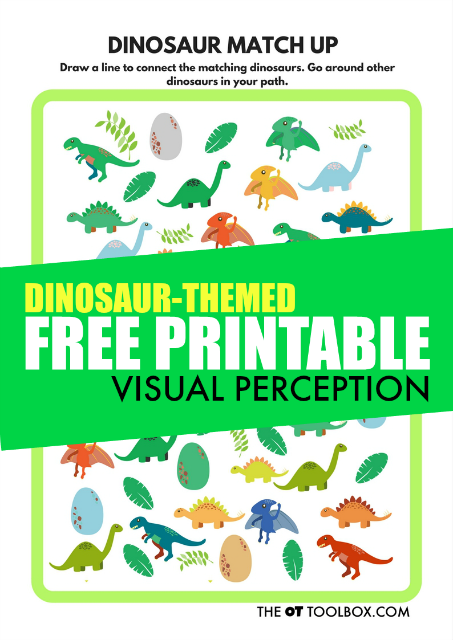
When it comes to adding dinosaur visual perceptual skills to play, the theme can go many ways. Use one of our dino worksheets, OR create a table-top vision activity using toy dinosaurs. These ideas are open-ended!
Vision is a highly complex skill – it is not just about if you need to wear glasses or not! Visual processing is the connection between the brain and the visual environment. Sometimes the way that the brain processes that visual information is not very clear, that’s where an OT can step in! Use these activities to challenge visual processing skills.
This Dinosaur Print Matching activity can assess and address visual processing concerns, but make you feel like you are an archaeologist.
Dinosaur sensory bins, messy fossil digs, dino small world play, and sculpting dinosaur eggs…these sensory play ideas build skills!
Sensory processing skills are used to define the world around us – we explore our environment through sight, feel, taste, smell, and our body position. Increasing sensory awareness can improve body awareness and understanding of our environment, which can in turn help us adjust and feel comfortable. Below are some great options to explore our senses!
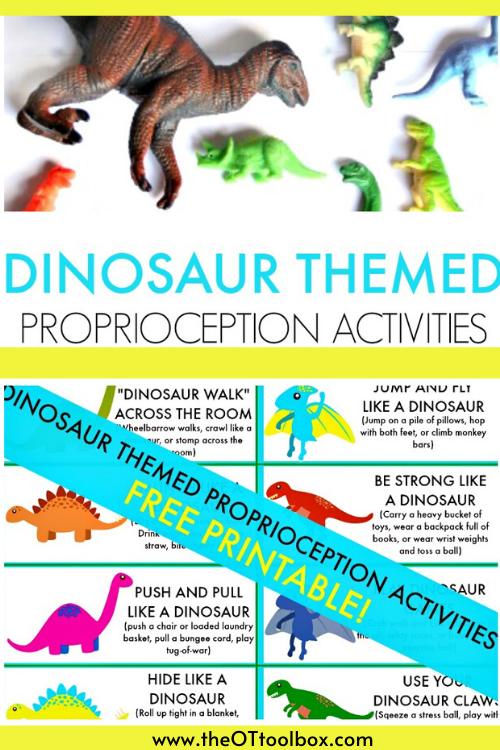
Add heavy work for body awareness, self-regulation, attention, and whole body movements with these dinosaur proprioception activities. They are great for sensory seekers and addressing interoception needs.
These Egg Carton Dinosaurs use bumpy muffin cups, smooth googly eyes, soft and sharp pipe cleaners, and of course, an egg carton (so many different textures possible here) to give a multi-textured experience while defining fine motor skills.
Make a paper mache dinosaur egg- Mix up messy, textural paper mache with paper, flower, and water and sculpt an egg around a balloon. Let it dry and then pop the balloon. Now you can decorate your dinosaur egg!
Have dinosaur figures, or mini dino toys? Use them to create a dinosaur small world for pretend play, self-confidence, self-talk, and problem solving.
Tearing paper has always been one of my go-to activities to address fine motor and sensory concerns. This easy Tissue Paper Dinosaur activity can increase texture tolerance in a way your dinosaur-lover will appreciate.
Make a dinosaur sensory bin on a train table, or in a large bin. Add materials like dry beans, corn, or shredded paper. Or add messy wet materials like slime, water beads, water, or shaving cream.
Use a fossil dig activity for dry sensory play. Kids can chisel and chip away at a chalky substance to find dinosaur bones. Then, use the pieces to trace and make their own fossils for more fine motor, sensory fun.
Can’t forget the sensorimotor activities! Dinosaur dance parties, dinosaur stomping, dinosaur copycat, the options are endless.
Dinosaur Self-Awareness Activities
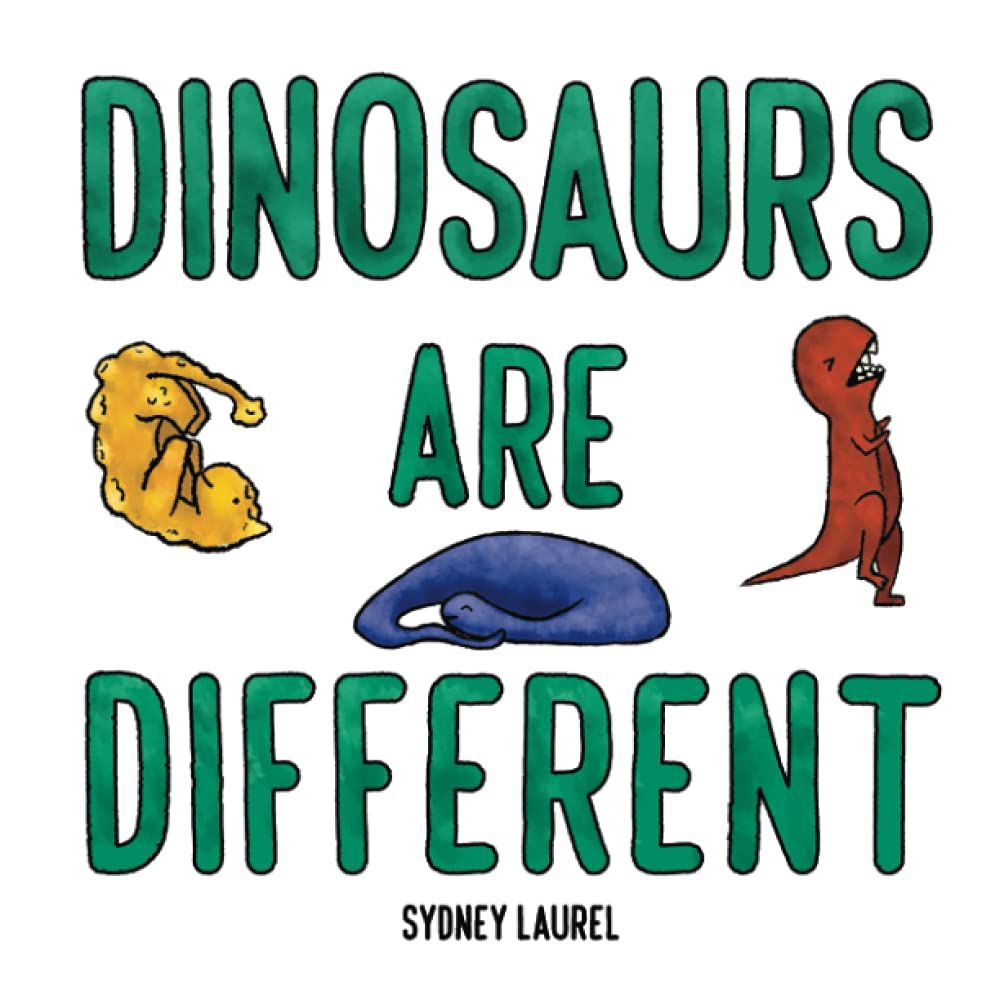
Some of the previously highlighted activities incorporate a sense of self-awareness, including the heavy work activities, and sensory play ideas. But to take self-awareness and celebrating the differences among us, is this book, Dinosaurs are Different.
The book is a silly take that celebrates all of our differences and can be a fun dinosaur tool to address skills such as self-awareness, body awareness, internal differences and external differences in all of us.
Use this book to incorporate into mindfulness with kids, grounding techniques, discussions on emotional awareness, social skill development, and responsibility exercises with kids.
Dinosaur Books
I always love to include books in our themed activities, as a way to encourage an early love of reading, but also to further develop the understanding of our topic. As you can imagine, there are TONS of dinosaur books available to further explore your dinosaur theme.
Here are some dinosaur books and related activities to get started:
How Do Dinosaurs Say Goodnight? Be sure to check out all the books in the series! They can help with skills like manners, asking for help, and cleaning their room!
Sydney Thorson, OTR/L, is a new occupational therapist working in school-based therapy. Her background is in Human Development and Family Studies, and she is passionate about providing individualized and meaningful treatment for each child and their family. Sydney is also a children’s author and illustrator and is always working on new and exciting projects.
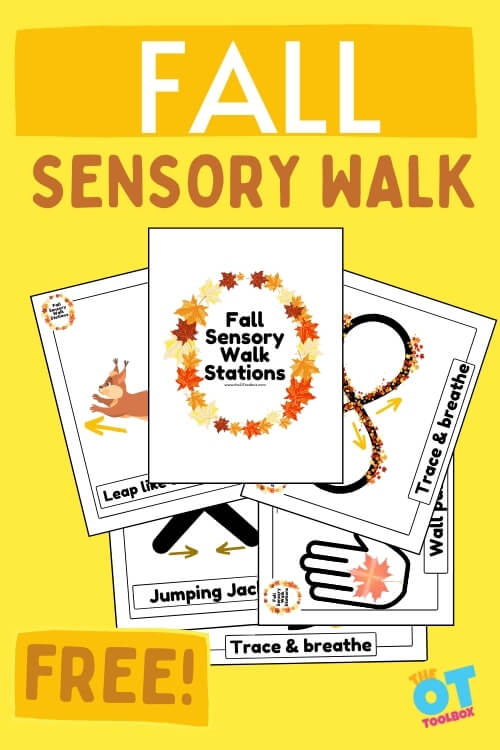
I have another fun freebie for you! These Fall sensory stations are printable sensory station posters that you can use in classrooms, school hallways, the home, or therapy clinics to offer sensory input and whole body movements with a Fall theme. Just hang these sensory station posters on the wall and add calming sensory input with a Fall theme!
If you’ve been in a school hallway in recent years, you may have seen a sensory walk. They are fun ways to offer movement for kids, especially when they need a brain break during learning. But sensory walks can be expensive to create. So, going off the theme of adding movement, coping tools, and heavy work input through the proprioceptive system, these Fall sensory system posters for a very inexpensive cost (Hint: it’s nothing! They are free!)
I love these Fall sensory stations because you can print them, laminate them, and place them in the hallway or on a wall for quick movement breaks. Add them to a Fall learning theme, Fall therapy activities, Fall fine motor work, or Fall crafts. They are great prep-work for these Fall writing prompts, too.
These sensory station posters include:
Fall Figure 8 Breath Poster- for calming deep breathing, mindfulness, and self-regulation
Fall Animal Walk (Leap like a squirrel)- for motor planning input and proprioceptive input
Fall Wall Push-Ups- for proprioceptive input through the arms, shoulder girdle
Fall Jumping Jacks- for motor planning work, vestibular input, and proprioceptive input
Fall Trace and Breathe- for visual tracking, finger isolation, deep breathing, and self-regulation
Free Sensory Station Posters
Want to add these Fall sensory station printables to your therapy toolbox? You can grab this freebie and add it to your tools!
Colleen Beck, OTR/L has been an occupational therapist since 2000, working in school-based, hand therapy, outpatient peds, EI, and SNF. Colleen created The OT Toolbox to inspire therapists, teachers, and parents with easy and fun tools to help children thrive. Read her story about going from an OT making $3/hour (after paying for kids’ childcare) to a full-time OT resource creator for millions of readers. Want to collaborate? Send an email to contact@theottoolbox.com.
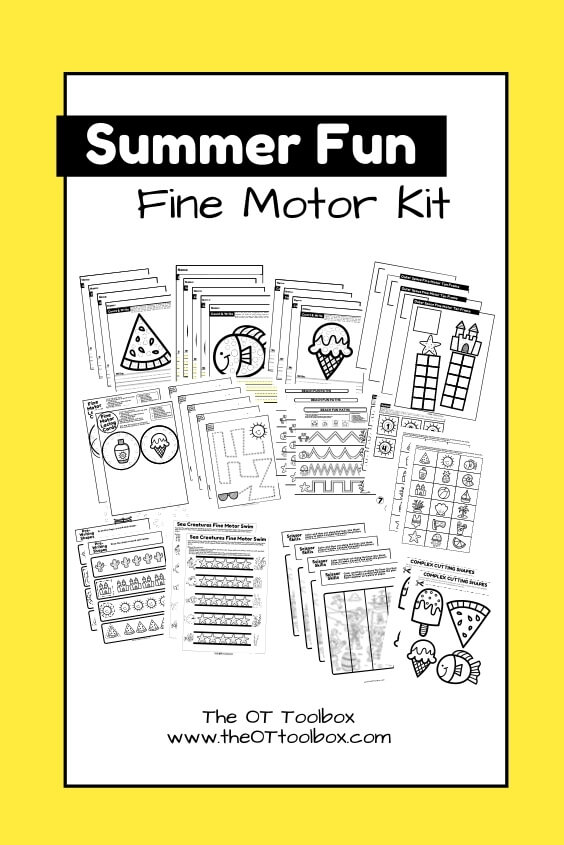
Want more ways to work on skills this Fall? Grab our Fall Fine Motor Kit (or any of the seasonal kits):
Working on fine motor skills, visual perception, visual motor skills, sensory tolerance, handwriting, or scissor skills? Our Fine Motor Kits cover all of these areas and more.
Check out the seasonal Fine Motor Kits that kids love:
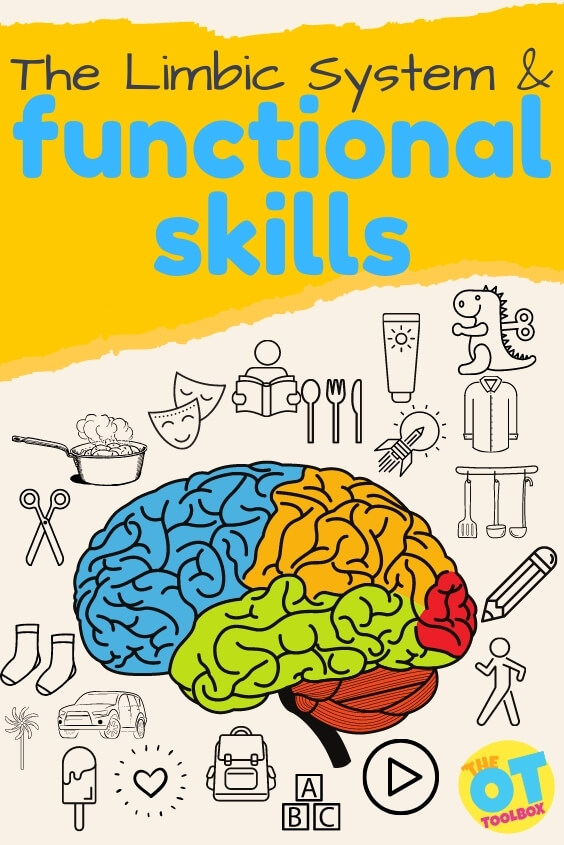
Did you know that the limbic system plays an important role in everything we do? As occupational therapists, educators, and parents, understanding the role of the limbic system and function is not only practical information…it’s essential to understand when it comes to child development and day to day functioning as children learn, play, participate in household tasks, and interact with peers.
Today I am sharing really interesting information on the brain, the limbic system, and emotional regulation. I’m hoping to make this explanation of neuroscience super easy to understand so you can take this info and run with it!
Let’s do this! Recently, we covered emotional regulation and executive functioning skills. When it comes to emotions, regulating behaviors, and the mental skills of executive functioning, you can see how all of these areas play a role in everything we do on a day to day basis. Social emotional learning is part of this. The limbic system is an important brain structure involved in each of these areas.
The limbic system is an area of the brain including several brain structures. These include the amygdala, the hippocampus, the hypothalamus, thalamus, and olfactory bulb. There are some really important hormones associated with these structures and their responses as well.
These structures and their hormones control functions such as emotions, behavior, motivation, sleep, appetite, olfaction, stress response. This is really interesting, because you may connect the dots with this list and see that social emotional skills, executive functioning, inner drives, and sensory processing (including the sense of smell and interoception) all centered in one place in the brain! (This is not to say that these are the only places in the brain that operate these functions as well.)
Generally speaking, the limbic system is the emotional brain.
It’s the space where survival behavior occurs. It’s the place in the brain that coordinated emotions, fear, aggression, basic inner drives, and episodic memories.
You know how the smell of freshly baked chocolate cookies brings back cozy memories of baking with Grandma all those years ago? Now, when you smell that ooey, gooey chocolate baked into chewy dough you might feel calm and at peace and picture yourself in your grandmother’s sunny kitchen when you were young. That’s the limbic system at work!
We all have limbic memories…maybe it’s the scent of vanilla that fosters a memory from childhood. Perhaps it’s the scent of glue that takes you back to peeling dried Elmers glue from the palm of your hand. Maybe it’s a certain scent that brings back scary or bad memories. Each one of us is unique in how those connections work in our brains!
“The emotional brain, the limbic system, has the power to open or close access to learning, memory, and the ability to make novel connections,” (Vail, 2017).
How the Limbic System and Function are connected
When it comes to participating in daily tasks, emotional response, behavioral regulation, the limbic system plays a primary role.
Here’s how this inner brain emotional powerhouse works when it comes to the limbic system and function:
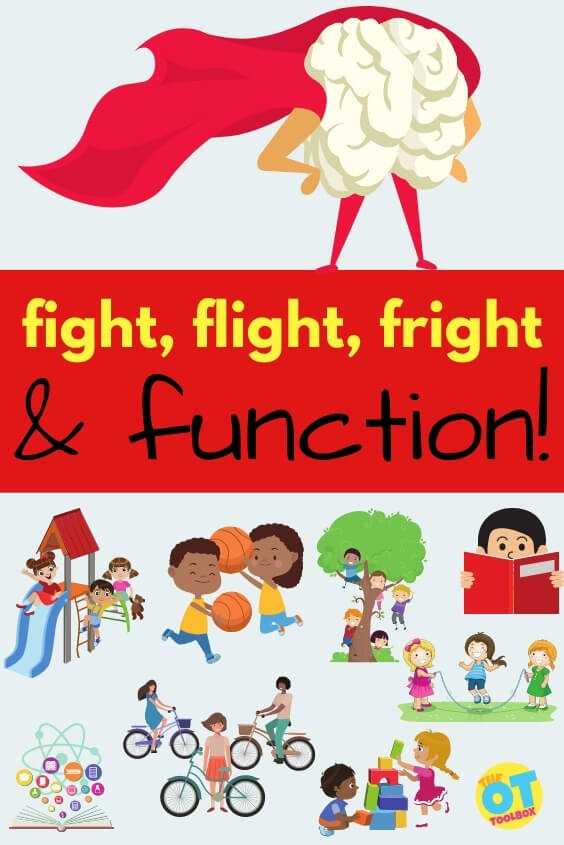
The Limbic System is a Fright, Flight, and Freeze Response Center
The limbic system and function are connected by the fight, flight, freeze system of the brain.
A stressful situation sends signals to activate the amygdala, which quickly processes that information. It activates the hypothalamus which tells the adrenal gland to send adrenaline into the blood stream. The hypothalamus also activates other hormones to alert the pituitary gland.
Several hormones work together to keep the body on high alert, while suppressing other body systems. The adrenal glands release hormones such as epinephrine that work to raise blood pressure and heart rate, increase blood flow to muscles and organs, and elevate breathing rate. All of these systems keep you on high alert.
When we are on that high alert state, it is difficult to accomplish everyday tasks.
Think about being in an over-responsive state and trying to read a book, concentrate on completing complex math problems, solving difficult scenarios, or reading a research article. All of these tasks require attention, focus, and the ability to block out other sensory and environmental input. For children, accomplishing day-to-day tasks like getting dressed, completing the morning routine, interacting with peers, or learning can be a similar scenario. For some, that fight/flight/freeze state interrupts the ability to initiate a task or follow through to accomplish a task.
Let’s look at this another way: Have you ever been startled by a deer jumping out in front of your car while driving? You probably recall that whole-body sense of alertness and maybe felt prickly sensation all over your arms and that JUMP of acute awareness. When the deer pranced away, your body probably settled and while you were still feeling that sense of alarm, your body was already settling down. That’s because after a stress response is over or dismissed, hypothalamus activates the parasympathetic nervous system and inhibits the stress response.
Similarly, when in a flight/fright/freeze state, it’s impossible to accomplish routine, mundane, or novel tasks.
The limbic system impacts emotions
The limbic system and functioning are connected by our emotional response and behavioral regulation.
As our “Emotional Center”, the limbic system impacts behavioral response and emotional regulation in everything we do. This inner area of the brain are also deeply associated with emotions. The amygdala and the hippocampus, in particular are the emotional centers. These two structures connect via the thalamus.
Together, these connections play a role in emotional activities like friendship, affection, and mood. Regulation of emotions also occurs here: particularly emotions that have a role in survival such as aggression, love, fear, or anxiety.
These brain organs also help the brain interpret the emotional content of memories. The amygdala assigns emotional meaning to memories and helps the brain form fear-based memories. The hippocampus helps form sensory memories, which are memories associated with sensory input.
The limbic system regulates those automatic responses to emotional stimuli and plays an important role in behavior. Other places in the brain, such as the frontal regions (executive functioning center) are recruited for modulation of amygdala activity. This is when self-regulation happens.
When it comes to self-regulation, many children have a difficult time learning and achieving without help. In any given moment, a child (and an adult) encounters multiple situations and circumstances that require an awareness of self and others as well as the ability to have or gain self-control.
Generally speaking, a child should achieve an optimal level of self-awareness and mindfulness to identify their inner feelings and emotions and be ready to regulate themselves when the time comes. They need to learn strategies and techniques that work for them to assist them in leaving a less optimal level in order to get back to a “ready-to-go” level of regulation so they can accomplish tasks like brushing teeth, reading a book, interacting with a friend, crossing the street…the list can go on and on!
Is this brain talk fascinating? Or are your eyes glazing over??
How to facilitate the limbic system for function
The main thing to remember is that we CAN help kids with regulation and modulation of those inner brain workings, so the can play, learn, interact with others, and complete day to day tasks.
We can teach them tools to help with the stress input and give them strategies so they are not in constant fright/flight/freeze mode.
We can offer sensory input that provides the movement that their body needs so the nervous system has what it needs.
We can give kids the words they can use so they can recognize their body’s emotions.
We can show them strategies to help regulate.
We can offer opportunities to connect with them.
We can help them build a personal toolbox of emotional regulation strategies
Fostering connections and providing the right kind of tools facilitates emotional regulation, behavioral regulation, and functioning skills.
The Sensory Strategies Toolkit is powerful in working on the emotional regulation skills of kids. Not only does it offer resources to explain and better understand behaviors, but it offers solutions that kids want to use. It’s a goldmine in building social connections between friends, family, and social relationships…but also builds those essential brain connections, too!
Colleen Beck, OTR/L has been an occupational therapist since 2000, working in school-based, hand therapy, outpatient peds, EI, and SNF. Colleen created The OT Toolbox to inspire therapists, teachers, and parents with easy and fun tools to help children thrive. Read her story about going from an OT making $3/hour (after paying for kids’ childcare) to a full-time OT resource creator for millions of readers. Want to collaborate? Send an email to contact@theottoolbox.com.