Visual Figure Ground

visual figure ground

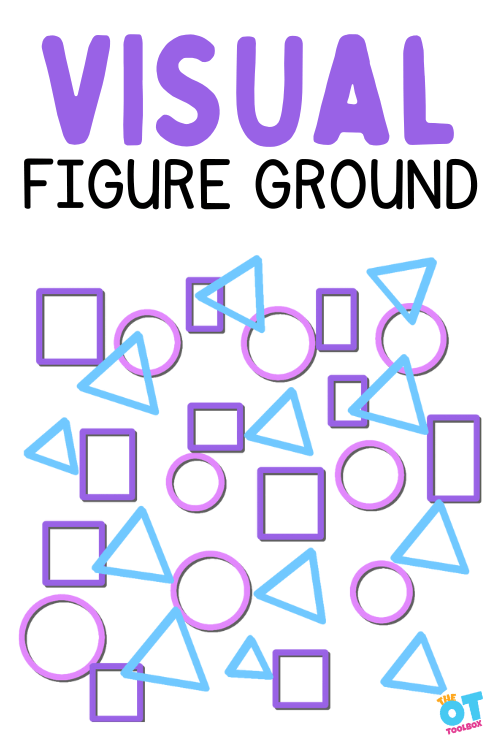
Vision and visual skills are complex with sub-categories such as visual figure ground. Luckily, occupational therapists are equipped with the ability and knowledge to assess vision at many levels. One type of visual skill that OTs assess for is called visual figure ground. In this post, we will break down what figure ground means, how visual-figure ground it fits into vision as a whole, and some red flags we look for. You’ll find some creative figure ground activities to build this skill, too!

Visual figure ground

WHAT IS VISUAL FIGURE GROUND?

Visual figure ground is the ability to discriminate between the object of focus and the other objects that are also in view, using visual skills such as attention, visual memory, and other components of visual perceptual skills. This is a hugely important skill in reading and writing, as well as learning and retaining information. 

Vision as a whole is made up of many parts. For daily activities, sighted individuals need to have visual clarity/focus (this can be adjusted with glasses), eye movement skills, and visual attention.  

In other words, figure ground is the ability to see an object and ignore the background. Without this ability, it may seem like a child needs glasses even though they may have technically perfect vision at the optometrist.

Visual figure ground has to do with visual attention, and how the eyes work with the brain to understand an image.

VISUAL FIGURE GROUND: RED FLAGS

Below a general list of red flags to look for when it comes to visual figure ground. Many of these red flags are the same for other visual perception skills, as it often requires the combination of several skills to perform a task.

This is not an exhaustive list, but some ideas to work from. 

  • Difficulty completing age-appropriate puzzles
  • Difficulty reading or searching for important information in a text
  • Unable to complete mazes, “I Spy”, word searches, etc. in a similar way to their peers
  • Prefers simple artwork/images to complex 
  • Gives up quickly when looking for an item in their desk
  • Assumes many items are “lost” when they are in view/nearby
  • Difficulty coping from the board 
  • Unable to find a toy they want from the toy box
  • Difficulty finding a yogurt cup in the full refrigerator

You may be wondering, how do I know if its a problem with visual skills or something bigger, like attention overall?

Visual Figure Ground Activities

Being that the primary occupation of children is play, so it is through play that we address underlying skills such as figure ground. You’ll love this long list of visual activities that target a variety of areas, including visual figure ground.

Playing “I Spy” or “hide-and-go-seek” with familiar objects around the house can be a great way to get their brains prepped for visual discrimination of figure ground. They will use visual attention, visual tracking, and problem solving skills to win! 

Reading books or engaging in other activities provided by ‘Busy Town’, ‘Where’s Waldo’, or, of course, the ‘I Spy’ series are other great places to start. There are towns of great vision books recommendations for you that work to develop skills through reading.

You can also involve younger children in these types of activities by having them sort colorful cereal into the color categories, dig through the laundry basket to find matching socks, or really, anything that makes sense in your home. 

Figure Ground Worksheets

Sometimes, relating the vision skills to a reading or writing task is needed, and that’s where the figure ground worksheets come into play. Worksheets can get a bad rap, but it is possible to make worksheets functional, fun, and meaningful for kids so that they develop essential skills.

We have an awesome apple activity set that was developed to target visual skills, as well as tons of free resources for you to build visual figure ground skills! 

These free printable resources target figure ground skills and cover a variety of themes.

Visual processing bundle
Visual Processing Bundle is a collection of resources on visual processing skills.

One of our most popular tools to address visual figure ground is our Visual Processing Bundle. It’s a collection of printable resources, worksheets, handouts, and activity booklets geared towards all things vision.

Sydney Thorson, OTR/L, is a new occupational therapist working in school-based therapy. Her
background is in Human Development and Family Studies, and she is passionate about
providing individualized and meaningful treatment for each child and their family. Sydney is also
a children’s author and illustrator and is always working on new and exciting projects.

Christmas Tree Activities

Christmas tree activities

Check out the Christmas Tree Activities on this blog post for creative ways to incorporate a Christmas tree theme into occupational therapy interventions. Tis the season for Christmas tree crafts and festive holiday activities that develop skills and learning. A lot of these Christmas crafts and sensory ideas only require a few items to make and they can last for many years to come. Add these Christmas occupational therapy ideas to your therapy toolbox.

Christmas tree activities for kids including fine motor Christmas tree crafts, and Christmas tree sensory activities.

Christmas Tree Activities

These activities are listed below in sections, so you can pick and choose the holiday activities that meet the needs of the child you are working with in therapy (or at home as a parent).

Kids can work on fine motor skills, visual scanning, visual tracking, in-hand manipulation skills and grasp patterns with a holiday theme. The tree activities below develop skills through Christmas tree ornaments, garland and Christmas themed sensory bins.  

Christmas Tree Crafts

These are fine motor crafts that build motor skills, coordination, planning, and hand strength with a Christmas tree theme.

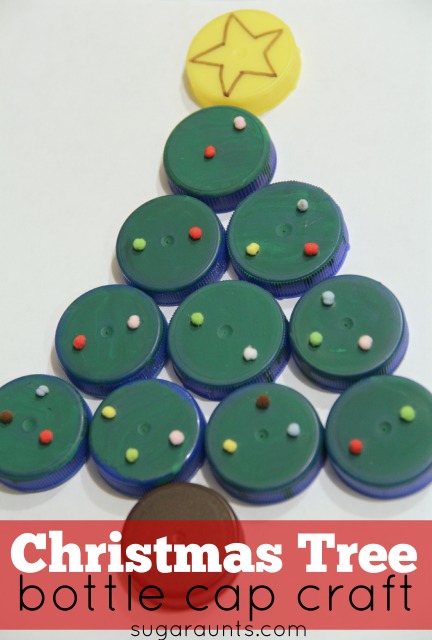
Make a bottle cap Christmas tree

Bottle Cap Christmas Tree craft-Save those bottle caps and make a Christmas tree. Help you kids paint and arrange the bottle caps into a Christmas tree. This is a great fine motor eye- hand activity for kids.

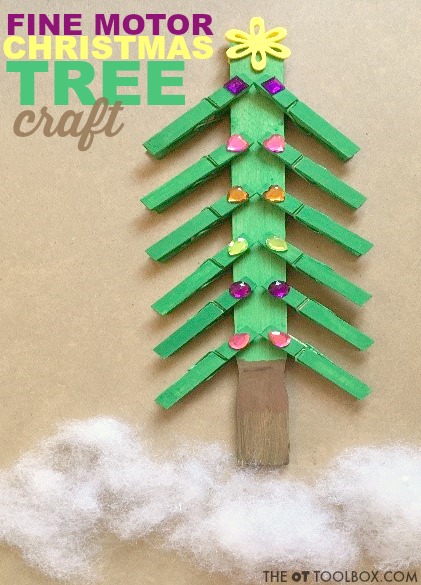
Fine motor Christmas tree craft
Clothes pin Christmas tree

Christmas Tree Craft– Have some clothespins siting in a drawer? Gather those up with some paint, stickers and paperclips to make a fun craft for the holidays.

Gift tag Christmas tree art
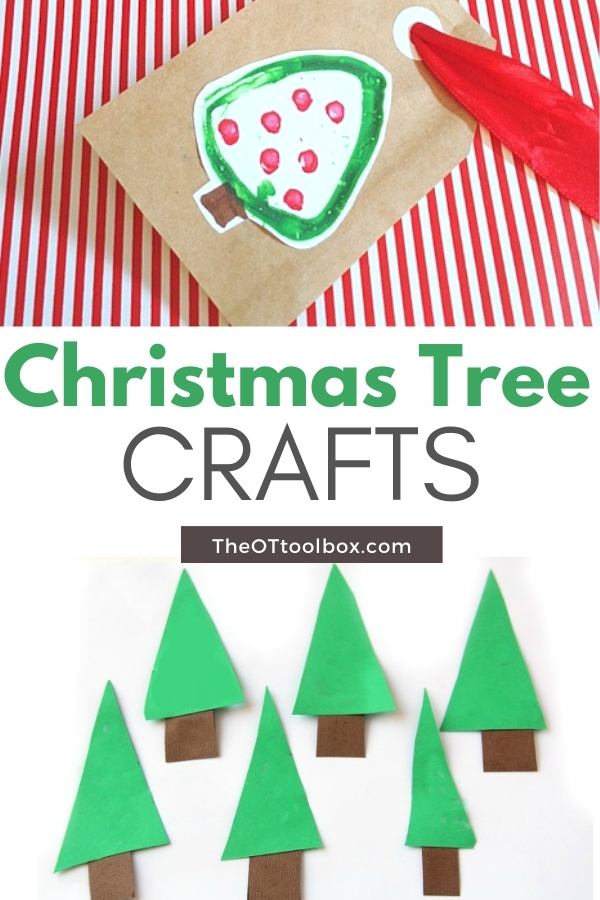
Christmas tree stamp art

Christmas Tree Stamp Art– have your child make homemade gift tags. This activity will work on fine motor skills (scissor skills and grasp patterns). 

A Very Merry Occupational Therapy Christmas –This article provide a variety of activities focused around Christmas for the whole month! Scroll down to activity eight to make a craft of stringing  cranberries and popcorn to make garland for your tree. Stringing items works on so many important skills. Bilateral coordination, visual tracking and visual scanning, fine motor skills and patterning. 

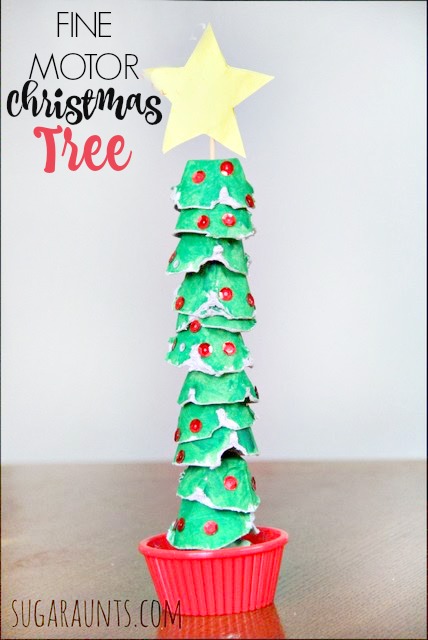
Christmas tree made from egg cartons

Fine Motor Egg Carton Christmas Tree Craft-Save your egg cartons to make this fun Christmas tree craft. Grab some green paint and decorations to help your child make a table decoration. 

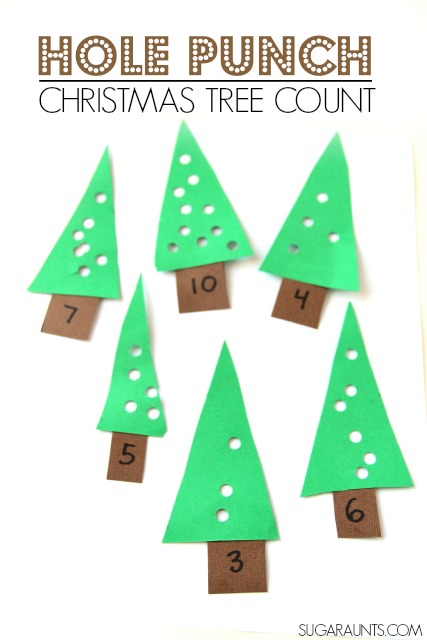
Christmas Tree Fine Motor Craft– Grab a hold punch and paper and let your kids have fun by making Christmas trees with various amounts of holes. Can be used as a great way to count as well. The squeezing of the hole punch provides proprioceptive input and strengthening to the hands. 

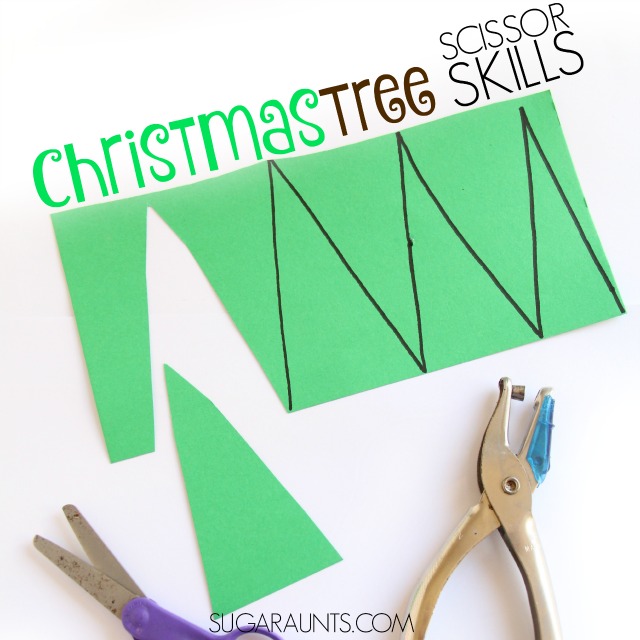
Christmas Tree Scissor Skills Craft– Use the same concept and have kids work on scissor skills with this easy cutting activity. These Christmas trees would look great on a holiday garland.

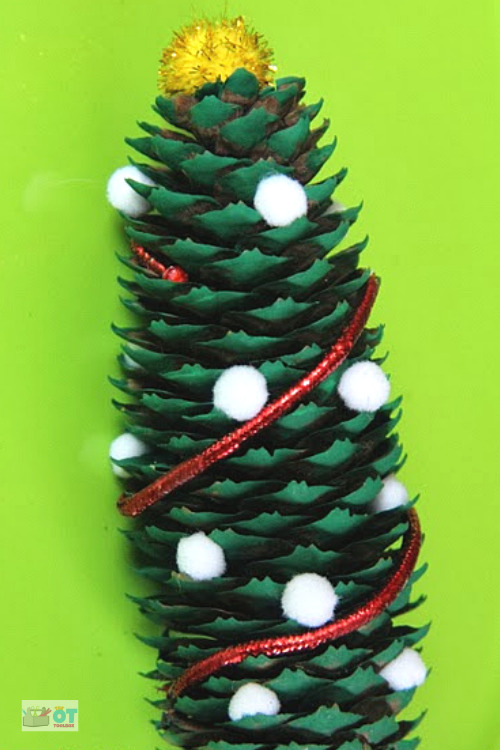
Make a pine cone Christmas tree and build fine motor skills.

Pine Cone Christmas Tree  Ornaments-Take a walk outside and gather up pinecones. Grab some paint and glitter, pom poms and make these cute ornaments with your kids. 

Christmas suncatcher craft
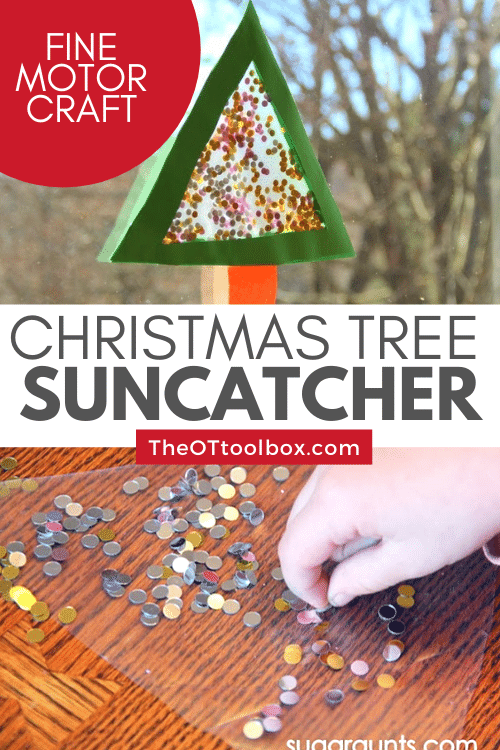
Christmas tree suncatcher

Christmas Tree Suncatcher Craft-what is better then seeing the sun in the winter? Having a beautiful sun catcher to see it through. This activity works on pincer grasp and in-hand manipulation skills. 

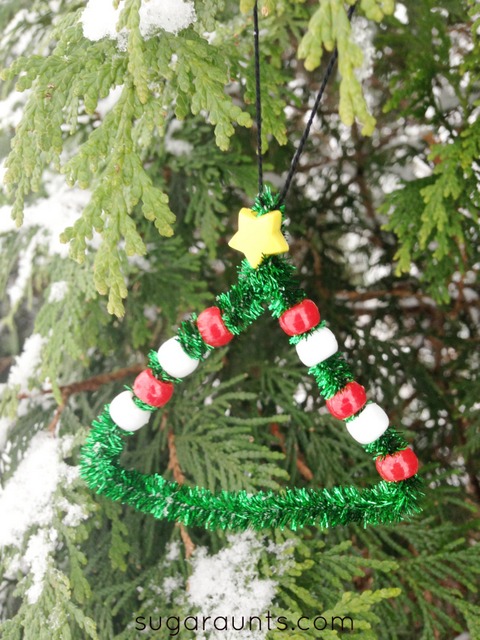
Make a pattern Christmas tree with beads

Pattern Christmas Tree Ornament– This fine motor craft is a fun one to work on pincer grasp, tripod grasp, in-hand manipulation, and more.

Christmas Tree Sensory Activities

Christmas tree sensory activity
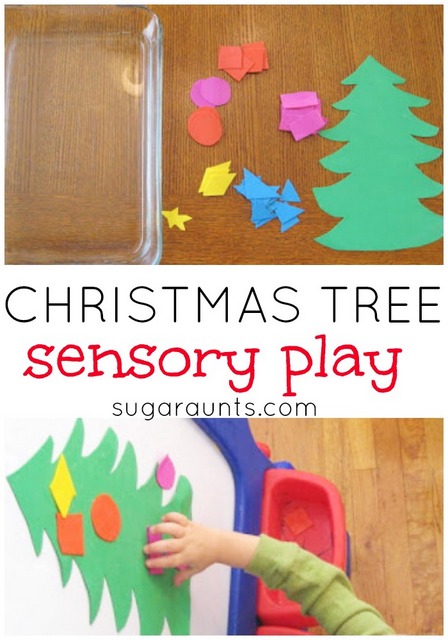
Christmas tree sensory play

Christmas Tree Sensory Play-make a fun Christmas tree with foam shapes and water. A fun sensory activity that works on cutting, patterning and sorting. 

Christmas Sensory Binkids love playing in sensory bins. We used green peas and potpourri as the items in the bin. To make it a Christmas tree them use the green peas and add round ball for ornaments.

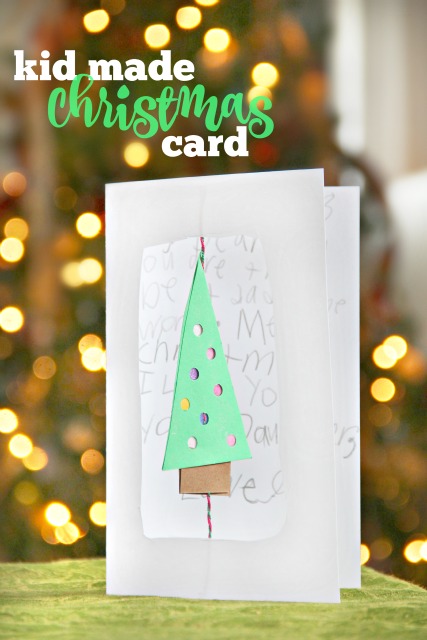
Fine motor Christmas card craft
Christmas tree card to build fine motor skills

This Christmas tree card kids can make is a fine motor skill activity that builds scissor skills, hand strength, eye-hand coordination, and more.

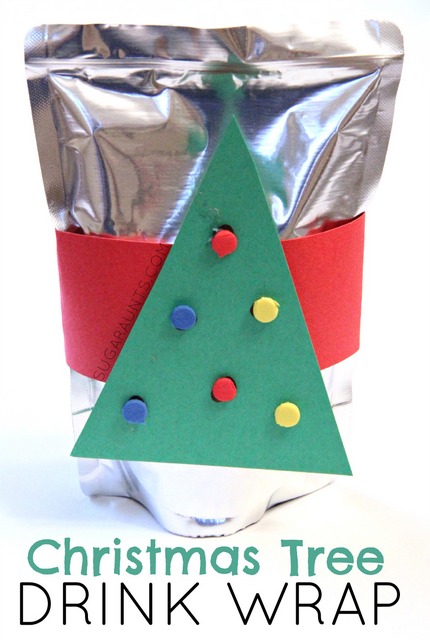
Christmas tree drink wrap

Christmas Tree Oral Motor Activity– Did you know that drinking from a juice box offers kids heavy work through the mouth as they suck on the small juice box straw? This Christmas tree craft can be used with a juice box for a bit of calming sensory input through the mouth.

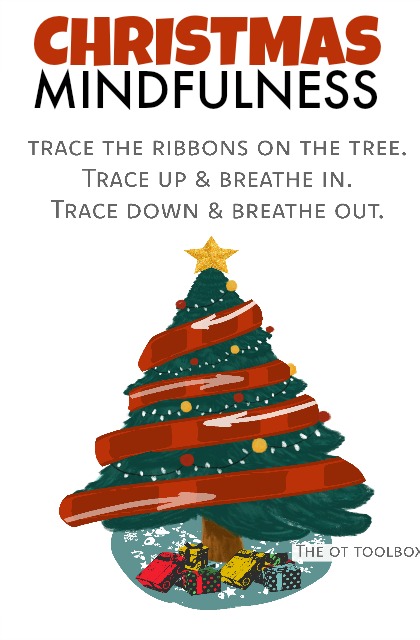
Use this Christmas mindfulness activity as a coping strategy for kids during the holidays.

Christmas Tree Mindfulness Activity– Use this Christmas tree deep breathing activity as a sensory break to address self-regulation for sensory needs or emotional needs. Print and go!

About Christina: Christina Komaniecki is a school based Occupational Therapist. I graduated from Governors State University with a master’s in occupational therapy.   I have been working in the pediatric setting for almost 6 years and have worked in early intervention, outpatient pediatrics, inpatient pediatrics, day rehab, private clinic and schools. My passion is working with children and I love to see them learn new things and grow. I love my two little girls, family, yoga and going on long walks.


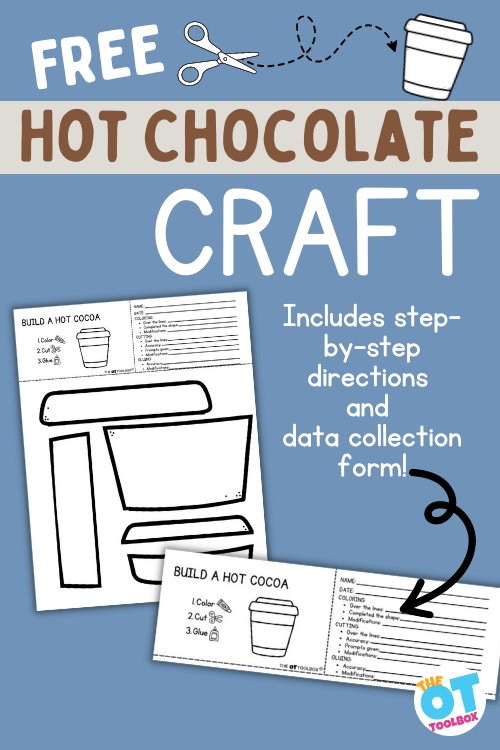
Hot Chocolate Craft

Hot chocolate craft

One of the best ways to be an efficient therapist is to find activities that combine multiple skills at once and this printable hot chocolate craft does just that! Building crafts in occupational therapy is a tool that combines critical skills of coloring, cutting, and gluing that ends with a (sometimes) recognizable product. While it is “easy enough” to hand draw circles and squares for students to practice coloring and cutting skills, why not challenge learners to go one step further? This post not only introduces a great new printable, but offers ways to use and adapt it.

Hot chocolate craft

BUILD A HOT Chocolate CRAFT

The older I get, the more I hate winter, especially cold weather.  Introducing hot cocoa into my diet this time of year helps make this season more bearable.  For those of you who do not love coffee, with all of its variations and super special flavors, cocoa is a great winter substitute to hit the spot. 

I am not sure if children share the same fondness for this wonderful drink, but they certainly love the marshmallows, sprinkles, and whip cream that decorate the top!

Motivating learners to work hard is difficult. It takes an engaging assignment that is meaningful to them to produce a willing crowd. 

That’s where this winter craft comes in!

This build a hot chocolate craft has a cup that is reminiscent of a very popular drink store. 

Won’t it be fun to see how your learners decorate this cup, given what they know about popular culture?  My cup might not have a lid, but be overflowing with marshmallows and chocolate chips!

Color Cut and Glue Crafts in Therapy

You can use this printable hot chocolate craft template and modify the activity to meet a variety of needs in therapy sessions.

Modify the Hot chocolate craft download:

  • Lowest level learners may need the pieces cut for them ahead of time, so they can practice color and paste. Alternatively hand this out and see what is created!
  • Middle level learners can cut, color, and paste the craft, working on basic level skills and following directions
  • Higher level learners can decorate their cup, add details, or try and copy a coffee shop logo onto their cup.  
  • Add a writing or story telling prompt to go with this.  Something as simple as, “what do you think this is” or “what would be the best drink to put in your cup”
  • Make this part of a larger lesson plan including gross motor, sensory, social, executive function, or other fine motor skills
  • Gross motor – run across the room collecting pieces to add to the build a hot cocoa craft.  Gather pompoms by squatting and bending to retrieve them.
  • Sensory – touching all of the elements of hot cocoa. Describing it in detail. Talk about how it feels, smells, and tastes, or what emotions it might evoke.
  • Executive function – hand the papers out with very limited instruction. Record how well your learners can follow instructions and make the picture look exactly like the example
  • Social skills – sharing resources promotes social function. Talking about a themed lesson plan builds social skills
  • Branch out – add a cooking activity, field trip, movie, or a book to make this build a hot cocoa craft multi-level. This snowman activity pack is full of fun activities
  • Check out these Winter Snow Day activities for more fun
  • Vary the paper. Cardstock might be more challenging to cut through, but it is sturdier to work with
  • Use different writing tools for different effects and skills.  Watercolor, paint, dot markers, chalk, glitter glue, crayons, and markers are some of the options
  • More or less prompting may be needed to grade the activity to make it easier or harder
  • Use a bottle of squeeze glue for sensory input from touching the wet glue, as well as fine motor strengthening from squeezing the bottle
  • Learners can explore other games they could make using this activity 
  • Write a report about hot cocoa, different variations, the history of hot cocoa, jor different celebrations or activities that go with this hot beverage
  • Have students write on a slant board, lying prone on the floor with the page in front to build shoulder stability, or supine with the page taped under the table
  • Add glitter!  Glitter makes everything wonderful

Make clinical observations using the hot chocolate craft

When you use this printable color, cut, and glue craft in therapy sessions, you can make several clinical observations using this single printable.

Collect Data- This printable has a top portion with areas for data collection. The printable includes space to document the amount of support, modifications, verbal cues, and accuracy for coloring, cutting, and glueing aspects of the craft building process.

Set up the craft at the level needed for the individual user. Then, make observations for collecting data on goal areas:

  • There could be 1,000 observations to be made during any one activity.  The key is to know what you are looking for and measuring.  Coloring skills, executive function, fine motor strength, following directions, attention/focus, self regulation, scissor skills, grip strength, and bilateral coordination, are just a few
  • Watch your students closely as they do their task.  Sometimes teachers and other providers sit back while learners complete their activities.  This reveals an end product, but gives no clues how they got there.  What skills were lacking to make this look nothing like the model? 
  • The “how” is very important as skills get progressively harder. Some learners can get by with poor grasping, strength, or coordination skills while learning to snip with scissors or scribble with a crayon, however, intricate coloring and cutting requires a more mature grasping pattern, executive function, and overall attention to details
  • Observe which skills are holding the learner back, which need more direct practice, and what compensatory strategies you see struggling learners use
  • Need more scissor skills practice?  Check out this color, cut, paste workbook!
  • Here is an Animal Cut and Paste pack.

More Winter cut and paste crafts you might like include:

  1. Build a Snowman printable
  2. Paper Icicle Craft  
  3. Snow Globe Letter Match 

Free Hot Chocolate Craft Printable

All this talk about cocoa has me craving some.  I’ll take mine extra hot, dark chocolate with whipped cream.  Throw in a piece of cake, a chilly day, and a great book, and you have the makings of a wonderful afternoon.  

Don’t forget to put your email in the box to receive your free worksheet!

  • Level 2 members can access all winter themed activities in one place in our Winter Therapy Theme.
  • Level 1 members can access this resource in our Scissor Skills area along with other free downloads on this site.

Hot Chocolate Craft Printable

    We respect your privacy. Unsubscribe at anytime.

    Victoria Wood, OTR/L is a contributor to The OT Toolbox and has been providing Occupational Therapy treatment in pediatrics for more than 25 years. She has practiced in hospital settings (inpatient, outpatient, NICU, PICU), school systems, and outpatient clinics in several states. She has treated hundreds of children with various sensory processing dysfunction in the areas of behavior, gross/fine motor skills, social skills and self-care. Ms. Wood has also been a featured speaker at seminars, webinars, and school staff development training. She is the author of Seeing your Home and Community with Sensory Eyes.

    Occupational Therapy Obstacle Course

    Occupational therapy obstacle courses

    Occupational therapy practitioners often times use obstacle courses in therapy sessions to target specific skills through the child’s primary occupation: play. It is through an occupational therapy obstacle course that one can work on sensory input, balance, coordination skills, heavy work input, visual motor skills, bilateral coordination, visual motor skills, direction following, and so much more. Let’s break down OT obstacle courses for functional performance.

    Obstacle courses, and the components of gross motor obstacles are a great tool to have in your “therapy bag” of tricks!

    Occupational therapy obstacle course ideas

    Occupational therapy obstacle courses

    Life is full of obstacles. Navigating life’s obstacles builds strength, character, resilience, and focus. Occupational therapy obstacle courses can do the same!

    There are so many ways to target occupational therapy goals using an obstacle course. For example, you can use the various types of crawling to incorporate different heavy work input, targeting strength, stability, and motor planning skills. these are great ways to support lower extremity strength and core strength!

    Obstacle courses are naturally a sensory obstacle course, through the actions and activities involved, however specific themes and underlying targets can be incorporated as well.

    Occupational therapists and occupational therapy assistants use obstacle courses, to address a variety of needs. 

    In this blog post you will discover the benefits of obstacle courses, how they help development using obstacle course, and ideas to build amazing obstacle course activities.

    Benefits of obstacle courses

    What are the benefits of occupational therapy obstacle courses?

    At first glance, obstacle courses build muscle strength, coordination, and motor planning.  This is just the tip of the iceberg. While occupational therapy obstacle courses are great for building strength and coordination, they do so much more. 

    • Executive function – following directions, attention, focus, sequencing, planning, initiation, and  task completion
    • Social function (if working with peers) – working together in a group, problem solving, turn taking, waiting, sharing, and negotiation
    • Behavioral skills – compliance, behavior, and work tolerance
    • Sequencing – remembering all of the tasks in the correct order
    • Motor planning – Target motor planning by working through new obstacles and movement patterns builds new skills and motor pathways
    • Kinesthetic learning – learning by doing, rather than talking about an action
    • Strength – core strength, shoulder and wrist stability, head control, balance, and hand strength are built through obstacle courses. These skills lead to improved sitting balance and fine motor skills
    • Bilateral coordinationBilateral coordination refers to coordinating both sides of the body to do the same action such as holding onto a rope, or alternating actions such as climbing a ladder
    • Proprioception – information comes into the body through the muscles and joints. This information helps with arousal level, coordination, and attention
    • Sensory information – tactile, visual, olfactory, vestibular, and auditory receptors are activated during obstacle courses

    How do occupational therapy obstacle courses help development?

    All of the skills above are core skills needed for further development. Fine motor skills are built from core strength. Attention and focus are built and regulated from sensory input. Following directions builds working memory. Executive function and social skills are necessary for academic and professional development. 

    How to develop an obstacle course in occupational therapy

    One thing that comes up often is that one will see an OT clinic full of fun toys and think, “OK, in occupational therapy, we play.” This is true! However there is purpose behind each skilled selection of the toys and therapy equipment, and this is particularly true in an OT obstacle course.

    ere are the important steps in setting up an OT obstacle course:

    1. Determine the goals to be addressed.  What is the priority for your learner?  
    2. Build your course around the goals, with emphasis on the highest priority goal
    3. Add motivators – learners work harder given motivation
    4. Create a beginning and ending point – everyone needs to know how far they need to go
    5. Check out Pinterest for obstacle course ideas
    6. Select your obstacle course ideas
    7. As always, Amazon (affiliate link) is full of resources for items to incorporate in your obstacle course

    Obstacle Course Ideas

    Depending on the goals in which are being targeted, you can select from many different obstacle course equipment and activities:

    By using any combination of the occupational therapy goal areas above, you can create a “course of action” to move through a therapy session while accomplishing goals. Combine these target areas with a client’s interest such as super heroes, animals, sports, events, or therapy themes, and you’ve got a client-centered therapy activity that is not only meaningful but also motivating

    Examples of occupational therapy obstacle courses

    Build your course around your prioritized goal(s) to target specific areas:

    • Following directions – set up several obstacles in succession with different variables to follow and remember.  Over, under, times 10, backward, clap your hands, touch your toes.
    • Executive function – have your learner develop and organize the obstacle course for themself or another partner. They can write it down, draw pictures, or use verbal skills to describe the course
    • Self regulation – incorporate heavy work into the course. This could include wearing ankle weights, pushing a ten pound ball, wearing a heavy backpack, and several repetitions of the course
    • Frustration tolerance – make the course very challenging. Add several elements that will challenge your learner, then change the sequence to continue to add more of a challenge
    • Social function – have one learner teach another, pair two learners of different levels to work on waiting, taking turns, and tolerance.  Two similar peers can build competition, or dealing with emotions
    • Coordination – vary the difficulty of the course to build different levels of coordination. Time your learner to measure improvement in coordination without falling
    • Visual motor skills – each time your learner finishes a round of the obstacle course, they have to write a letter, draw a picture, cut out a design, or put pieces into a puzzle

    sensory obstacle courses

    Obstacle courses naturally offer sensory input. By moving through and around obstacles, a child can participate in organizing and regulating sensory processing tasks in a very real and functional manner. It’s through play that this happens.

    Sensory obstacle courses are in fact, every obstacle course! In a typical obstacle activity, sensory input includes:

    • Proprioceptive inputHeavy work input occurs through movement activities but also by using obstacle course equipment such as ladders, ball pits, tumble pits, foam equipment, crawling, animal walks, etc. Each activity offers different motor planning opportunities and different types of body awareness input.
    • Vestibular input crawling, scooting, sliding, jumping, rolling, tumbling, climbing, etc.
    • Visual input Visual processing skills are part of navigating in, through, around, under, over obstacles on a course.
    • Tactile input Moving through a course offers tactile input through movement and manipulation of objects and equipment.
    • Auditory While not always a necessary aspect of sensory obstacle courses, auditory processing can be targeted in obstacle course objectives.

    You’ll notice that the first three areas listed are the “big three” sensory systems that calm and regulate the body and play a major role in sensory processing. Because of this, an obstacle course is a great therapy tool and often used in sensory interventions. Sensory obstacle courses can be used as part of a sensory diet.

    The Tactile Sensory System is one of the earliest developed senses of the body.  The skin is the largest and the most prevalent organ. The skin performs unique duties for the body.  Most importantly, the skin protects and alerts us to danger and discriminates sensation with regard to location and identification.

    These two levels of sensation work together yet are distinctively important.  Discrimination of touch allows us to sense where a sensation is felt on the body.  With discrimination, we are able to discern a fly that lands on our arm. 

    The second level of the tactile system alerts us to danger.  It allows us to jump in response to the “fight or flight” response when we perceive a spider crawling on our arm. The information received from the tactile system also includes light touch, pain, temperature, and pressure.

    When either of these levels of sensation are disrupted, tactile dysfunction can result.  This presents in many ways, including hypersensitivity to tags in clothing, a dislike of messy play, difficulty with fine motor tasks, a fear of being touched by someone without seeing that touch, a high tolerance of pain, or a need to touch everything and everyone.

    When the tactile system is immature or impaired, the brain can become overly stimulated with resulting poor organization and regulation of input.  Children can then experience difficulty with behavior and concentration as a result.

    Treatment for the child with an impaired tactile sensory system focuses on providing a variety of deep- and light-touch experiences (Koomar & Bundy, 1991).  Additionally, resistance activities, much like those indicated for decreased discrimination of vestibular and proprioceptive information, may be used in the therapeutic sensory diet.

    The Proprioception Sensory System is the recognition and response to the body’s position in space with an internal feedback system using the position in space of the joints, tendons, and muscles.  This sensory system allows the body to automatically react to changes in force and pressure given body movements and object manipulation.  The body receives more feedback from active muscles rather than passive muscle use.  Related to the proprioception system is praxis or motor planning.  Individuals are able to plan and execute motor tasks given feedback from the proprioceptive system. Praxis allows us to utilize sensory input from the senses and to coordinate hat information to move appropriately.

    Treatment for the child with an impaired proprioceptive sensory system focuses on providing intense proprioceptive information and improving postural responses.

    The Vestibular Sensory System is the sense of movement and balance, and uses the receptors in the inner ear and allows the body to orient to position in space.  The vestibular system is closely related to eye movements and coordination. 

    Vestibular sensory input is a powerful tool in helping children with sensory needs.  Adding a few vestibular activities to the day allows for long-lasting effects.  Every individual requires vestibular sensory input in natural development.  In fact, as infants we are exposed to vestibular input that promotes a natural and healthy development and integration of all systems. 

    The sensory vestibular activities listed in this book are playful ways to promote performance and tolerance to movement activities.  They are also challenges against gravity to help kids with difficulties in equilibrium, balance, self-regulation, and adjusting to typical sensory input. 

    The vestibular system operates through receptors in the inner ear and in conjunction with position in space, input from the eyes, and feedback from muscle and joint receptors, is able to contribute to posture and appropriate response of the visual system to maintain a field of vision. 

    This allows an individual to detect movement and changes in the position of the head and body.  Dysfunction in the vestibular system may result in hypersensitivity to movements or hyposensitivity to movements. 

    Attention and focus are built and regulated from sensory input.

    Printable sensory stations in obstacle courses

    Sensory paths and sensory stations can support the areas listed above by simply printing off materials to use in a simple or complex sensory obstacle course.

    An obstacle course can be anything.  It can start as simple as furniture, couch cushions, and a puzzle, or become as elaborate as American Ninja Warrior. First, determine your “why”, then come up with the “what and how”. 

    Victoria Wood, OTR/L is a contributor to The OT Toolbox and has been providing Occupational Therapy treatment in pediatrics for more than 25 years. She has practiced in hospital settings (inpatient, outpatient, NICU, PICU), school systems, and outpatient clinics in several states. She has treated hundreds of children with various sensory processing dysfunction in the areas of behavior, gross/fine motor skills, social skills and self-care. Ms. Wood has also been a featured speaker at seminars, webinars, and school staff development training. She is the author of Seeing your Home and Community with Sensory Eyes.

    New Year Activities for Preschool

    New Year activities for preschool

    At the end of the year, having a few new year activities for preschool (or any age) isn’t always on your mind, but it can be fun to come up with a creative New Years theme for therapy lesson planning while building skills. These New Year Activities are great for preschool but they can also be adapted to meet any age level. For example, our New Year’s Eve Countdown Chain works on handwriting skills for older children and provides a take home end product for the countdown into the New Year. You can adapt it to use with any age!

    New year activities for preschool

    Preschool activities for preschool

    Can you believe that a new year is already here?  Ring in the New Year with these fun activities that will build some important skills while also celebrating the positivity that comes with the New Year holiday! 

    Use these activities as part of your therapy plans in the school or the clinic as they are great for either setting. 

    There are fun ideas for kids to work on gross motor, fine motor, visual motor, and sensory skills as you get them grasping, pinching, squeezing, blowing, creating, drawing, writing, moving, and, well celebrating. Check out these fine motor activities for preschoolers to extend your thinking to more ideas.

    That’s right! All of these actions are included with the completion of these fun and festive New Year’s activities. Not only will kids be engaged, but they will be motivated to do some of the most challenging of tasks. 

    Also included are a few resources that YOU, as a practitioner, will enjoy using as YOU ring in the New Year. They will help your reflect, mark your achievements, and plan for a new year of progress and growth.  So, come with me and let’s get to ringing in the New Year!

    Sensory New Year Activities

    First, are some fun sensory activities that children will find engaging and provide some tactile, visual, oral, and auditory input. Take your pick:  

    New Year Celebration Play Dough gives you the recipe to create some sparkly, squishy play dough that makes for a wonderful contribution to an invitation tray that helps a child work on fine motor strengthening and provides tactile input as children will not be able to wait to get their hands in it!

    New Year’s Slime gives you a recipe for a slippery way to celebrate the New Year while providing an ultimate tactile activity that provides a plop of science too! Fascinating to make and fascinating to squeeze and squish.  Use these slime recipes and add gold glitter, confetti, or other fun add-ins.

    Confetti Writing Tray provides a fun idea for a simple-to-make writing or drawing tray that only needs kosher salt and glitter confetti which are mixed together and spread into a baking sheet. Children can help create it while working on eye-hand coordination to pour and scoop or the motor skills involved in shaking, and stirring while creating the mixture.  Once it is made, it provides a fun sensory tool for children to work on letter, number, and shape formation.  Easy and festive!

    New Year’s Sensory Bottles shares how to make a New Year-themed sensory bottle that can be used as a calming tool or simply for visual discovery. It includes numbers for the New Year and sparkly items galore! 

    New Year’s Sensory Bin has a festive New Year-theme by using shredded paper, tinsel, candle numbers for the year, party hats, colorful sequins, glitter pipe cleaners and pom-poms, confetti pieces, silver wands, and party blowers. This bin will provide a fun way to work on sensory skills in a variety of ways. 

    New Year’s Eve Bubble Wands provides a craft opportunity with the end product serving as bubble fun for younger kiddos who find a firework celebration a little too noisy and scary. Bubbles get blown into the air and kids enjoy the visual effects and the ability to pop, pop, pop bubbles to make them explode like fireworks. 

    New Year’s Pom-Pom Race is a fun game for kids to play with the use of two simple items: pom-pom balls and a party blower!  Kids blow their party blower to push the pom-pom ball from the start to the finish line.  This a fun game with breath control and deep breathing too!

    New Year’s Eve Noisemaker is a jingle bell craft stick children can make and then literally use it to ring in the New Year! This one can be loud so those kiddos with auditory defensiveness may not find this a pleasurable activity to make or to use.  

    New Year Crafts

    Next, are some fun New Year arts and crafts activities that can help if you need festive ideas for building those fine motor skills such as strength, coordination, grasp, hand dominance, tool use, and a few other skills like bilateral coordination and sequencing. These are fun New Year activities preschoolers will love, but you cna make them more difficult to meet the needs of older children with a few simple modifications.

    Take a look at how you ring in the New Year while being crafty:

    DIY New Year’s Eve Glasses uses pipe cleaners and an old pair of sunglasses with the lenses popped out to work on coordination and manipulation in order to wrap pipe cleaners around the frames and create flower or fireworks designs around the lenses.  

    Sparkly Fireworks Pipe Cleaner Ring uses glitter pipe cleaners to create a fireworks ring children will love to wear and will probably want to create many so be sure to buy multiple colors! This craft activity builds manipulation and coordination as well as direction following with the activity being most appropriate for older children.

    Craft Stick Party Hat Craft is the perfect way to celebrate the New Year while crafting a party hat ornament. Works on overall hand skills and tool use by painting, cutting, and pasting! 

    Fireworks Craft is a colorful way for children to use bilateral coordination and manipulation as they create festive fireworks by bending and twisting pipe cleaners into spirals and zigzag patterns.

    New Year’s Countdown Clock is a fun way to address time management of sorts by building a clock face and creating the countdown clock. With the turning of the clock hands, children can work on identifying time of day and countdown to the New Year. A great way to address manipulation as a child works on twisting pipe cleaners in a spiral to decorate the edge of the clock. 

    New Year’s Eve Scene is for older kiddos who will work on drawing skills while drawing a New Year skyline with buildings and fireworks.  There is also opportunity to discuss what the New Year means to them.

    New Year’s Eve Joke Teller is a folded paper craft for older kids which, when finished, will provide kids with finger movement fun as they play it! 

    New Year Fine Motor Activities

    With this list of activities, you simply use the numbers of the New Year to work on hand and finger strengthening, pincer grasp, dominance, manipulation, and bilateral coordination. 

    Take a look at this exciting list that uses:

    New Year Activities for Visual Motor Skills

    Next, are some visual motor and visual perceptual skill work that help children to work on handwriting, eye-hand coordination, coloring, visual scanning, visual discrimination, and memory skills.

    New Year’s Eve Countdown Game with the object of the game being to cross out all the numbers 1-10 to get the lowest number possible. Dice rolling is a great way to work on cupping of the hands to achieve an arch in order to shake the dice around in the hands. Most kids flatten their hands together or throw the dice from the fingers so work on those arches and bilateral hand cupping. Grab this freebie! 

    New Year’s Counting Memory Game with the object of the game being not only to work on counting, but to recall where they saw the same number of items in order to make a match. Use buttons, coins, whatever you have! Memory skills are challenged with this game.

    New Year’s Where’s My Match Memory Game is like a typical memory game with a little extra twist where the players only look for certain matches working on a higher level of visual memory. 

    New Year’s I Spy Games works on visual scanning and visual discrimination skills to identify and count the number of each game board picture. A free set with multiple boards for play!

    New Year’s Eve Word Scramble works on handwriting skills and is better for use by older children and for those that have good spelling skills.  Handwriting is not a preference for most older kiddos so making it fun is essential.

    New Year Games

    Next, are some super fun gross motor activities that could be used for addressing transitions for children while also addressing gross motor skills and motor planning. They are fun and a festive!

    New Year Gross Motor Dice can easily be used as a break for the brain with a New Year theme! You can use them while at home, during a transition, in the classroom, or while online. These gross motor moves can help anyone ring in the New Year. 

    New Year Exercise and Yoga Game Boards are themed for the New Year and provide a fun game board approach to having kids work on gross motor exercises and yoga poses to keep kids fit and healthy as they start the New Year. The best part? You can play them all year long!!

    Lastly, do you need a little focus and direction in your life as a practitioner? Are seeking an organized approach to your next year in practice? Then these are the two resources you need for the upcoming New Year as they help with reflection, direction, and organization.

    Take the time to reflect on the past year and determine your path and focus for the New Year, you’ll be happy you did! 

    Regina Allen

    Regina Parsons-Allen is a school-based certified occupational therapy assistant. She has a pediatrics practice area of emphasis from the NBCOT. She graduated from the OTA program at Caldwell Community College and Technical Institute in Hudson, North Carolina with an A.A.S degree in occupational therapy assistant. She has been practicing occupational therapy in the same school district for 20 years. She loves her children, husband, OT, working with children and teaching Sunday school. She is passionate about engaging, empowering, and enabling children to reach their maximum potential in ALL of their occupations as well assuring them that God loves them!
    Visual Discrimination

    Visual discrimination

    Visual discrimination is just one of the seven types of visual perception impacting visual efficiency.  While the word “discriminate” has many different meanings, visual discrimination refers to the ability to tell the difference between things. Someone who has “discriminating taste” can tell the difference between Heinz and off brand ketchup, for example.

    This blog post is part of a series highlighting Visual Perception

    Visual discrimination

    What is visual discrimination

    Visual discrimination can be defined as the ability to is determine and classify objects, symbols, shapes, etc. by differences in color, form, size, texture, or orientation, or shape by the eyes receiving visual input and analyzing that information.

    Visual discrimination occurs by the eyes and brain detecting differences in objects, utilizing working memory and stored memory to determine distinct differences or matched features.

    This visual skill is necessary for reading, writing, math skills, play, activities of daily living, and essentially all aspects of utilizing visual input.

    Visual discrimination is a skill that kids need for so many skills.  From identifying and matching socks when getting dressed and doing laundry to recognizing subtle differences in multiple choice problems, visual discrimination is a visual perceptual skill that allows kids to excel in reading, writing, and math activities or struggle!

    When explaining visual discrimination, it is important to understand it’s role in visual perception as part of the overall visual processing system. One aspect of visual processing is the component of visual motor skills. Included in visual motor skills are three main areas:

    Visual motor skills are made up of several areas:

    1. Visual Processing Skills- how the eyes move and collect information. Visual processing skills includes visual tracking, convergence, saccades, visual fixation, and visual attention. A component of visual processing includes visual efficiency.

    2. Visual Perceptual Skills- ability to make sense of what we see. Visual perceptual skills are essential for everything from navigating our world to reading, writing, and manipulating items. Visual perception includes visual memory, visual closure, form constancy, visual spatial relations, visual discrimination, visual attention, visual sequential memory, and visual figure ground.  

    3. Eye-Hand Coordination- Using the visual input effectively and efficiently with the hands allows us to manipulate and manage objects and items. This area enables us to use visual information in a motor action. Eye-hand coordination requires fine motor dexterity, strength, shoulder stability, core stability, etc.

    Why is Visual Discrimination Important?

    Visual discrimination is critical for reading fluency, writing, and other academic areas.  It is also important in everyday activities.

    • Finding matching pairs of socks in the drawer. Picking out the navy versus black socks
    • Determining when a letter is reversed in handwriting or on paper. Read here about letter reversals and the role visual discrimination plays in reversing letters.
    • Picking out the sugar versus the flour when cooking
    • Using shampoo before conditioner when they are in similar bottles
    • Reading a map to follow the direction of roads
    • Selecting the correct items in the grocery store
    • Picking out two identical buttons to sew on a shirt from a pile of 30 similar ones
    • Scanning a pile of receipts to find the correct one
    • Looking for a phone number, while scanning a page or ad

    How is Visual Discrimination related to reading or dyslexia?

    In order to read fluently, the brain clumps letters together to form familiar words. There are tests that show the beginning two letters to a word with the rest jumbled. 

    The brain is able to use the context clues to read the jumbled texts.  The brain is also able to read upside down, backward, and in different fonts.  Perception happens beyond the eyes. 

    The eyes are just the window, or lens.  The brain is responsible for perceiving or making sense of what the lens has seen.  

    Reading fluently requires quickly being able to tell the difference between fonts, discriminating between similar letters (b, d, p, q), clumping words together, determining where one word begins and ends, recognizing familiar words, and other decoding skills.  

    People with dyslexia are not readily able to perceive the difference between these similar letters or words. They are able to “see” correctly, but their brain often reverses or mixes the letters and words, making it much more labor intensive to decode.  The good news is, the brain can be trained to make sense of what it sees.

    Red Flags for Visual Discrimination Difficulties

    Once you have determined visual acuity is 20/20, or has been corrected to working vision, watch for these common signs of visual discrimination issues:

    • Confusing letters and numbers
    • Writing with reversals
    • Difficulty correctly reading aloud
    • Does not enjoy activities such as reading or puzzles
    • Unable to pick out relevant information during open book quizzes, or scanning a page to find an item
    • Difficulty finding objects in drawers or cupboards
    • Slow or unable to find matching objects with subtle differences
    • Delayed or labored acquisition of math and reading skills
    • Poor handwriting – difficulty with letter sizing, spacing, line placement, letter formation
    • Math difficulties – number reversals, losing place when visually counting, difficulty lining up match figures

    Fun Fact!

    According to theories, males DO have more difficulty with visual perception than their female counterparts.  Males are genetically programmed to hunt, gather, and protect. 

    They were not hardwired to cook, clean, shop, match items together, etc.  Males have not evolved quick enough to meet the ever changing challenges they face on a daily basis! 

    According to the University of Washington, males can see motion and colors differently than females. This lends to the hunting/protecting theory, however is also linked to autism spectrum disorders in males. 

    You can give the males in your life some slack when they just “can’t find” the salad dressing in the fridge next time!

    Visual Discrimination Tests

    When doing visual perceptual testing, it is important to isolate visual perception from motor skills.  Having students touch the answers rather than writing them, or calling out letters, is a better measure of visual perception. 

    The following is a partial list of popular assessments.  The VMI subtest is more of a screener than a true visual perception test.  

    Visual discrimination activities

    Visual Discrimination Activities

    Visual discrimination activities happen everyday through functional tasks. To work on these specific underlying visual processing skills, it is possible to target visual discrimination development through play, games, and activities.

    Additionally, there are numerous worksheets, games, activities, and resources available on visual discrimination. 

    The good news is, visual perceptual skills can be improved through practice and brain training, and can be incorporated into the client or student’s specific interests and goals. 

    • Sorting – similar buttons, shades of colors, types of toys, box of 100 crayons by color, similar socks, silverware by type or pattern, coins, laundry, etc.
    • Visual discrimination games such as (Amazon affiliate link) Spot it – these games are wildly popular. The OT Toolbox has some Spot It games too
    • The OT Toolbox has their own visual perceptual games as well
    • Puzzles – teach context clues, sorting pieces, noticing differences
    • Word searches
    • Printable worksheets such as I Spy, letter discrimination, etc.
    • Matching activities like this space matching activity
    • Workbooks – (affiliate link) Amazon has some reliable resources
    • Toys/games – if toys and games are more your speed, check out this list of visual perception toys

    Visual Discrimination Play Ideas

    The visual discrimination activities below support development and refinement of the skills needed to process differences in forms or objects.

    • Visual Processing Bundle– includes printable visual discrimination activities and information to better understand visual processing skills.
    • Free Visual Perception packet– Print these visual discrimination worksheets and use with crayons, pencils, and hands on materials such as wikki sticks or string.
    • Sunshine Visual Perception activity- This Google slide deck is a digital therapy activity that supports development of visual discrimination skills.
    • Color matching Elmer Activity– Use the children’s book, Elmer, to discriminate between details in a book.
    • Finger dexterity exercise– This visual processing activity supports visual discrimination skills by using eye-hand coordination along with utilizing visual information.
    • Practice “b” and “d” with sensory writing– Discrimination between letters is an aspect of visual processing that relates to functional performance in reading and learning.
    • Color shape discrimination Sort– Sorting shapes by color or form is a preliminary task that can be accomplished by young babies and is a building block for more refined skills.
    • Coin discrimination– Visual discrimination skills are needed to sort and use coins when paying for items or counting change.
    • Real toy I Spy game– I Spy games are powerful visual discrimination skills. This activity uses real toys and can be replicated at home or in therapy sessions using household objects.
    • Letters on the garage door– This gross motor visual discriminaiton task can be played outside or inside.

    visual discrimination or visual acuity

    The most important testing tool you can use is to rule out “visual acuity” problems before visual perception.  Vision plays a major role in learning and visual discrimination is just one aspect of vision and learning.

    A pair of glasses is a much easier and straight forward fix than years of visual perceptual training. 

    Visit a qualified ophthalmologist to check for any vision difficulties.  Once these are ruled out, use one of the great testing materials listed above to determine any visual perception deficits. 

    Victoria Wood, OTR/L is a contributor to The OT Toolbox and has been providing Occupational Therapy treatment in pediatrics for more than 25 years. She has practiced in hospital settings (inpatient, outpatient, NICU, PICU), school systems, and outpatient clinics in several states. She has treated hundreds of children with various sensory processing dysfunction in the areas of behavior, gross/fine motor skills, social skills and self-care. Ms. Wood has also been a featured speaker at seminars, webinars, and school staff development training. She is the author of Seeing your Home and Community with Sensory Eyes.

    Christmas Activities Calendar

    Christmas activities calendar

    If you are looking for a few Christmas activities (or a holiday calendar to send home for the Christmas break), then this December occupational therapy calendar is for you! We pulled a few of our favorite Christmas occupational therapy activities and put them onto a printable holiday activities calendar so you can print and go!

    You’ll also want to check out our 25 days of Christmas ideas because you can grab 25 printable OT ornaments…perfect for decorating the tree in a therapy clinic!

    Christmas activities calendar

    Christmas activities calendar

    The Christmas season is a hectic and chaotic time.  With holiday parties, altered schedules, and never-ending to-do lists, Christmas can be overwhelming for adults and kids.  Children see and hear everything and the Christmas time stress is no exception. These Christmas occupational therapy activities can be used in the clinic, home, or in a home program during the holidays. Scroll on for some fun OT holiday activities the whole family will enjoy while targeting various needs!

    Christmas Occupational Therapy Activities

    Adding to the therapy plans, a few occupational therapy Christmas activities is as easy as adding a holiday themed therapy activity or a planning to use a Christmas item such as a stocking, wreath, or candy canes into therapy games.

    Children with sensory or developmental needs and typically developing kids feel the sense of chaos this time of year. The overload of sensory input can be exhausting to children with difficulty in processing input from their environment.  I mean, it’s overwhelming for me, too! 


    With all of the excitement of the season, it can be hard to keep to sensory integration strategies to help with coping in over stimulating situations. Sensory kiddos can also show over or under-responsiveness to new situations, too.  Imagine walking into a crowded holiday party with music, lights, a dancing crowd, scents of different and weird foods, and lots of overlapping voices.  


    A child can easily become over excited or over protective as they attempt to protect themselves from this noisy, smell party!

    OT Christmas activities

    Christmas OT Activities for kids

    Kids who are working on specific skill areas like fine motor or gross motor development can easily become distracted in the excitement of the season and allow practice areas and goals to slide just a bit.  I mean, there are a lot of fun things a kid can be doing…why would they want to work on their letter formation and handwriting??! Adding a few Christmas OT activities for kids to work on various needs can make the therapy “work” more fun and meaningful.


    So, with the upcoming season of busy craziness, I wanted to put together this Occupational Therapy Christmas Calendar.

    Celebrate the Christmas season with Occupational Therapy goal areas and calming strategies during this hectic season, allowing families to connect and focus on the true meaning of the season while working on developmental areas.

    It’s a way for kids and families to connect and cope during this busy season through holiday festivities, while simultaneously working on many Occupational Therapy goal areas.  Work on fine motor skills while building that gingerbread house.  Calm down with proprioceptive input while snuggled up in a blanket with the family and a good Christmas book.  These are Christmas-y ideas that will keep your whole family connected this year.

    This post contains affiliate links.

    Occupational Therapy Christmas Activities

    Celebrate the Christmas season with Occupational Therapy goal areas and calming strategies during this hectic season, allowing families to connect and focus on the true meaning of the season while working on developmental areas.


    Add these ideas to your Advent calendar for a Very Occupational Therapy Christmas!


    NOTE:  Many skill areas are addressed with each activity.  You might be working on specific areas like calming activities, or handwriting.  Try to adapt the activities below to fit your child’s needs.


    The list below can be done in any order.  This is meant to be an easy way to fit Occupational Therapy practice areas into everyday Christmas fun.  

    If a day is a little too hectic to fit in an activity, switch it around and do a different activity.  The most important message is to connect with your family and meet the needs of each member in fun and festive ways this Christmas!

    Christmas OT activities

    Christmas Calendar Ideas

    Note that some of the calendar days are slightly different than on the printable Christmas activity calendar below. From playing in the snow to creating your own Christmas memory game…the options are limitless when it comes to making memories and building skills!

    Day 1 Make gingerbread salt dough to address fine motor, proprioceptive, and olfactory areas.  Cut out gingerbread men and make a garland…or just play with the dough! You can keep it in a covered dish or plastic bag to play again and again.


    Day 2 Wrap up tight in a blanket and read Christmas stories for proprioceptive input.  A warm blanket is calming.  Wrap your child up like a burrito or full body proprioception.


    Day 3 Write a letter to Santa.  Provide creative handwriting modifications for fun.


    Day 4 Play outside and collect nature items.  Use them to make collage art or create a table-top sensory table.


    Day 5 Carry boxes of donations for heavy work input. This time of year, many families donate to others.  Kids can carry boxes and bags for proprioceptive input while doing a good deed.


    Day 6 Make snowballs and throw at targets.  If you don’t have snow where you live, make fake snow for sensory fun.  Be sure to take this activity outside! Throwing at a target is a great hand-eye coordination activity. Packing together snowballs requires bilateral hand coordination and proprioceptive information to determine how much pressure is needed. Don’t let that snowball smash in your hands by packing it together too hard!


    Day 7 Have a family dance party to Christmas music. Be sure to swing, twirl, jump, and spin or loads of vestibular input.


    Day 8 Work on fine motor skills and string cranberries and popcorn on thread with a needle. Managing a needle and thread is a fine motor skill similar to tool use.  Threading popcorn and cranberries works on tripod grasp, bilateral hand coordination, hand-eye coordination, visual scanning, visual tracking, patterning, and more.


    Day 9 Carry shopping bags in both hands for bilateral coordination and proprioceptive input.  Not going shopping?  Fill shopping bags at home with cans from the cupboard.  Create an obstacle course to work on motor planning.


    Day 10 Cut paper snow flakes to work on scissor skills.  Try cutting coffee filters, newspapers, cardstock, foam craft sheets. and tissue paper for lots of textures and line accuracy practice.


    Day 11 Build a gingerbread house and work on fine motor skills. Encourage tip to tip pincer grasp by providing very small candies.  To amp it up a bit, add a pair of tweezers and have your child pinch with a tripod grasp.  Provide an icing bag to work on gross grasp, too.


    Day 12 Play Christmas Charades for gross motor and vestibular input.  Encourage movement actions like Santa filling his bag, building a snowman, wrapping presents, and shopping.


    Day 13 Encourage proprioceptive input by showing your kids how to build a Santa’s workshop with couch cushions and pillows.  Lifting heavy cushions is a great heavy work activity.  Once done, kids can calm down in their couch cushion workshop under blankets and pillows.  Add a few toys and pretend hammers from a toy tool set for pretend play and problem solving in this Santa’s workshop activity.


    Day 14 Make scented potpourri with scents of the season.  Kids can work on scissor skills and fine motor skills by cutting evergreen stems, orange peels, and pulling bits of bark from evergreens.  The scents of this potpourri will fill the home and a fun way to explore the olfactory sense.


    Day 15 Make a Christmas Tree Craft and work on fine motor skills, bilateral hand coordination, and strength. Kids will feel a sense of accomplishment when they see their tree decorating the house all season long.


    Day 16 Provide a visual sensory activity by stringing a strand of Christmas lights in a surprising place like on the ceiling, along the tops of doorways, or under a dining room table.  Twinkly lights can be used in a calm-down area. Kids can help to string the lights and use bilateral hand coordination, executive functioning and motor planning to figure out where to place lights, hold up the strand, peel and tear tape, and stick it to the lights. 


    Day 17 Work on visual scanning and other visual perceptual skills like figure ground by playing a Christmas version of “I Spy”.  Use the decorated Christmas tree as a decoration station: Ask your child to locate a specific colored ornament as they visually scan the tree.  For more fun, play the game while lying on the floor and looking up at the tree. 


    Day 18 Make and drink hot cocoa.  The warm drink provides a temperature sensation that is different and new.  Add ice cubes and candy canes for more textural taste sensations. Following multiple step directions in a cooking with kids activity works on so many problem solving, math, and sensory skill areas.


    Day 19 Use Christmas lights to create a DIY light table.  Use it for handwriting practice including line awareness, spatial awareness, letter formation, tracing, and drawing.  This is a visual activity that kids will love.


    Day 20 Cook up goodies (or wrap pre-packaged treat!) and plan a good deed for neighbors.  Load up a wagon or sled and deliver the treats around the neighborhood.  Pulling a wagon or sled is a proprioceptive activity that can be calming and grounding.


    Day 21 Improve hand strength with this fine motor Christmas Tree craft using a hole punch for proprioceptive input to the hands.  Decorate the house with the trees, or create a banner for the mantle.


    Day 22 Work on gross motor skills by playing “Santa Says”.  Just like the game Simon Says, kids can copy and listen to directions and motor plan, actions.  Be sure to incorporate bilateral coordination and crossing midline for a brain break activity.  Use these Simon Says commands to get you started.


    Day 23 Explore the sense of touch and scent with this Candy Cane Moon Dough sensory bin.  Work on fine motor skills and tool use by scooping and filling cups and cookie cutters.


    Day 24 Wrapping presents is a powerhouse of developmental activities:  Measure paper to fit packages, Cut paper with scissors in a strait line, Fold paper, Tear and Cut tape, Stick tape along edges of paper.  Practice motor planning, problem solving, and executive functioning by crossing an item from your to-do list and wrapping a present or tow with your child.


    Day 25 Celebrate Christmas Day with big Christmas bear hugs with family and friends. Hugs are great for proprioceptive input to the body. 


    Enjoy the season with your family and make each and every moment count

    Printable Christmas Activity Calendar

    Want to print off a calendar of occupational therapy ideas to support parents? It’s a great way to send kids off to the holiday break with therapy ideas that support skill-building AND celebrate the season. You can grab a copy of this printable calendar by entering your email address into the form below.

    The OT Toolbox Member’s Club members will also find this printable calendar inside the Member’s Club in the Therapist Tools section (Level 1 members) and in the Christmas Therapy Theme (Level 2 members).

    FREE Christmas Activities Calendar

      We respect your privacy. Unsubscribe at anytime.

      OT Christmas ACTIVITIES

      Extend the OT Christmas activities further by asking kids to write out the therapy schedule on Christmas modified paper to work on handwriting. This is a great holiday activity for the clinic while working on a variety of occupational therapy goals. Clients can then cross off items as they are completed. Grab a copy of this modified Christmas handwriting paper here and work on handwriting with bold lined paper, highlighted lined paper, and color coded paper…all with a Christmas theme!

      Colleen Beck, OTR/L has been an occupational therapist since 2000, working in school-based, hand therapy, outpatient peds, EI, and SNF. Colleen created The OT Toolbox to inspire therapists, teachers, and parents with easy and fun tools to help children thrive. Read her story about going from an OT making $3/hour (after paying for kids’ childcare) to a full-time OT resource creator for millions of readers. Want to collaborate? Send an email to contact@theottoolbox.com.

      Christmas Occupational Therapy Activities

      Christmas occupational therapy activities

      This time of year, it’s all about the Christmas trees, holiday spirit, and festivities, so these Christmas occupational therapy activities are sure to brighten therapy caseloads! Many years ago, we created a free December calendar with OT activities for Christmas, and you’ll want to grab that resource, too. But if you need extra therapy ideas to plan our a whole month of OT sessions, you’ll find tons of ideas here. Below, you’ll find activities and ideas to use in occupational therapy planning during the Christmas season while building skills in fine motor, visual motor, gross motor, and more.

      Christmas occupational therapy activities

      Christmas occupational therapy activities

      I don’t know about you, but I’m getting into the Christmas spirit. Whether you are trying to think up some fun Christmas occupational therapy activities to add to the mix this month, or are looking for Christmas activities that kids and the whole family will love, it’s a fun time of year for adding creative Christmas ideas! 


      That’s why I wanted to put together some therapist-approved Christmas activities for kids. These are ideas that add a motor component to learning and play. Stay tuned, because this week is all about Christmas activities for kids here on The OT Toolbox! 

      First, let’s share some of our favorite free Christmas occupational therapy activities.

      The team behind The OT Toolbox has been BUSY. There are new free resources you can grab:


      These are all fun ways to support specific skills through play.

      These Christmas OT activities would be a great way to get ideas for home programs or holiday break activities, too! 


      These Christmas activities for kids are perfect for using in occupational therapy activities, in home programs, in the OT clinic, or in the classroom. All of the occupational therapy Christmas activities are designed to promote motor development including fine motor, gross motor, visual motor, and sensory, all with a Christmas theme!

      Christmas Activities for Kids

      Each of the Christmas activities below target specific skills such as sensory, fine motor, visual motor, etc. OR, they target age groups like toddler Christmas activities or preschool Christmas activities.

      All of the activities and ideas you’ll find here are perfect for the occupational therapist looking for Christmas themed fine motor activities, sensory challenges, visual motor activities, gross motor ideas, brain breaks, and more!

      I’ll link to all of the posts this week here but be sure to stop back each day to see the activities and ideas that you can use in therapy treatment sessions, in the classroom, and in the home. 

      Start with a Christmas sensory bin to target fine motor, visual motor, tactile, and even olfactory input.

      Christmas Activities for Toddlers– These toddler Christmas activities support development for younger children and support OT goals or the areas of development in toddlers.

      Christmas Craft Ideas for Kids– Use these holiday crafts to build fine motor skills, eye-hand coordination, sensory moor skills, visual motor skills. Crafts are a powerful therapy tool and these Christmas OT crafts work on hand strength, scissor skills, and so much more.

      Christmas Activities for Preschoolers– These Christmas OT activities for preschoolers develop skills in kids ages 3-5. These moor skill activities can be used in preschool occupational therapy programming or in occupational therapy early intervention.

      Christmas Party Games for Kids– These holiday activities are great for occupational therapy sessions, but they are prefect for planning Christmas parties in the classroom, from the perspective of an occupational therapist mom! Use these fun holiday ideas at home, for family time too.

      Christmas Sensory Activities– These Christmas sensory bins, Christmas sensory bottles, writing trays, and sensory dough activities support tactile sensory play during the holiday season. Use these sensory activities at home, in the therapy clinic, or at school to support skill building this time of year.

      You’ll also love:

      Christmas Fine Motor activities
      Christmas fine motor activities to build hand strength.

      Christmas Fine Motor Activities– These fine motor activities support eye-hand coordination, hand strength, motor planning skills, separation of the sides of the hand, finger isolation, and much more!

      Christmas calendar


      Be sure to grab our Christmas Occupational Therapy Calendar that is full of therapist-approved Christmas activities for kids this season.


      NOTE-All of the activities and ideas indicated in this article as well as those listed are to be used as ideas to meet the individual needs of each child. All activities should be used according to the child’s individual evaluation and interventions.

      More Christmas Activities

      Working on handwriting with kids this Christmas season? Grab your copy of the Christmas Modified Handwriting Packet. It’s got three types of adapted paper that kids can use to write letters to Santa, Thank You notes, holiday bucket lists and much more…all while working on handwriting skills in a motivating and fun way! Read more about the adapted Christmas Paper here

      The Modified Christmas paper is available inside the Member’s Club, in our Christmas Therapy Theme. Members can log in and grab all of those paper formats there.


      Use these Christmas activities for kids in occupational therapy while working on skills like fine motor skills, gross motor skills, visual motor skills, sensory concerns and other occupational therapy goal areas!


      Colleen Beck, OTR/L has been an occupational therapist since 2000, working in school-based, hand therapy, outpatient peds, EI, and SNF. Colleen created The OT Toolbox to inspire therapists, teachers, and parents with easy and fun tools to help children thrive. Read her story about going from an OT making $3/hour (after paying for kids’ childcare) to a full-time OT resource creator for millions of readers. Want to collaborate? Send an email to contact@theottoolbox.com.

      Developmental Tools for Teaching Letter Recognition

      Letter puzzle pieces and a magnifying glass focusing on letter E. Text reads "letter identification"

      This blog discusses activities for teaching letter recognition. At its most basic, letter recognition refers to letter identification. It is one of the main skills children need to know before they can name, write, or sound out the letters. The following fun letter recognition games for preschoolers are based on development and skill progression.

      Be sure to read through our blog post on name practice for kindergarten for resources and tools to support letter use and recognition in children ages 5-6 or for kids at the level where they are recognizing letters in their name. These ideas are great for beginning reading for kindergarten.

      Use our new color by letter worksheet to further develop this letter recognition skill.

      Teaching letter recognition

      What you need to know about Teaching Letter recognition

      Letter recognition, or the ability to recognize and identify letters begins at a very young age. But did you know that teaching letter recognition skills starts way before kindergarten and and even before entering the classroom?

      Kindergarten students are many times exposed to writing and copying letters on trace worksheets, and writing pages. But before a young child can do these skills that are part of the curriculum, knowing what skills lead up to these skills is helpful.

      Even before a young preschooler is able to identify and name letters in printed context such as books or letter play activities, they are learning this skill through the immersion of seeing letters in everyday life.

      Letter identification and the ability to recognize letters in printed form might occur through exposure on television, printed media, following along while a book is being read, or while engaging with technology. 

      There is a progression in the important literacy skill of recognizing printed letters:

      • Letter recognition in isolation – example, pointing out all of the upper case letter As on a letter picture book
      • Letter recognition in every day life – example pointing out the letter S on a stop sign
      • Letter identification – identifying and stating letter’s names
      • Letter identification in text -reading and sounding out a letter’s sound in reading or sounding out written text
      • Matching upper case and lowercase letters– matching the upper case letters to lowercase, and vice versa

      Each step of teaching letter recognition skills is founded in experience and practice. This includes communication with others, exposure, and reading with caregivers. 

      Not every child learns the same way. Starting as young as preschool, caregivers can support children by using their interests and strengths to teach them new skills.

      Children don’t need to read or write until well beyond toddlerhood, but preschoolers enjoy looking at books, finding letters on walks, and learning letters through movement. 

      The best way to teach letter recognition
      The best way to teach letter recognition is by first covering the prerequisite skills.

      Prerequisites to Letter Teaching Letter Recognition

      Several areas are needed to develop letter recognition skills:

      • Object permanence
      • Form constancy
      • Visual discrimination
      • Visual figure ground
      • Working memory
      • Visual memory
      • Visual scanning skills
      • Cognitive skills
      • Physical development

      You can see that these components are founded in visual motor skills, perceptual skills, and working memory.

      Before any of this can happen (and through the process), young children should be exposed to rhymes, songs, and singing the alphabet song. (Add alphabet exercises for movement fun!) Letter formation rhymes can support literacy as well. This is actually the first step in the road to literacy!

      Teaching letter recognition requires Visual discrimination Skills

      Letter recognition/identification is when a person is able to look at a letter and recall it from previous experience. Recognition of letters occurs both in uppercase and lowercase form. Additionally, there is a cursive letter recognition aspect as well. This blog post covers cursive letter recognition skills.

      This site states that even before letter identification, there are a few other skills that should be taught, including visual discrimination, so the child is able to find differences among lines and shapes. 

      Visual discrimination can be taught in isolation through books or letter formation worksheets, or in games and activities such as Memory games, matching and sorting activities, or playing “what’s the same” and “what’s different” through hidden picture activities and puzzles.  We cover this visual perceptual skill in our blog post, Wacky Wednesday book activity.

      Visual Memory Another great play-based activity to develop the visual perceptual memory skills needed for letter recognition, are games that challenge kids to notice differences. Present the child with a tray of everyday items, and ask them to memorize the items on the tray. Ask them to look away or cover their eyes. Take away one or more items, and have them recall the missing items. 

      Letter activities- Other ways to encourage letter play is through printed alphabet worksheets, puzzles, letter magnets, or other alphabet manipulatives such as letter beads. You can ask the child to sort letters based on shape, such as those that include straight lines, versus curved line, or diagonal letters. You can also sort letters by letters based on size: tall letters, short letters, and letters with a tail that hangs below the lines.

      One way to encourage functional handwriting is through addressing letter size. This tall and short worksheet has a fine motor and visual motor component that can be incorporated into whole-body movement activities to teach these concepts that carryover into letter sizing and use in handwriting.

      Prerequisites to teaching letter recognition begins in infancy

      These prerequisite skills that support letter recognition, such as visual discrimination and memory, develop as early as infancy, when young children identify 3D objects that are familiar to them like their bottle, favorite toy, or their parents. It is important infants experience tummy time in order to develop visual motor skills, and strong oculomotor skills, as a result of time spent on the belly while looking at objects.

      As children grow, their visual discrimination becomes more refined and they are able to identify pictures and written words.

      Toddlers are able to point to a picture of a puppy in a book they are reading, or identify who is hiding under the blanket.

      Object permanence and working memory

      When a child sees an object and knows what it is called, this is referred to as object permanence. This requires working memory skill development to use what is seen, remember it, and store it for later retrieval.

      While visual discrimination is the ability to detect differences and similarities in size, shape, color and pattern, cognitive ability is necessary to recognize these differences based on previous exposure, along with memory to have stored that information away in their mind’s eye to recall when needed.

      This skill is typically associated with letter formation and handwriting skills. Identifying and discriminating between differences in letters allow kids to copy and write letters from memory. However, noticing and identifying the differences in the curves, diagonal lines, and lines that make up a letter are essential build up to that skill.

      Hearing and saying the letter sounds associated with letters are part of the process, too. Phonemic awareness is developed initially through play, but this skill continues to develop and progress as reading and literacy skills are refined in kindergarten, first grade, second grade, and beyond.

      Teaching letter recognition begins with the ability to recognize details in visual images

      In more depth, students should identify likeness and differences of shapes or forms, colors, as well as the position of various objects and people. Developing discrimination skills will help children learn the alphabet and then both read and print letters a lot better. 

      There are numerous types of visual discrimination that children should begin to understand and develop. These include: 

      • 3D Objects
      • Shapes
      • Drawings & Pictures
      • Colors
      • Letters and Words
      • Sequences

      Letter recognition games

      The letter recognition activities and games and listed below are fun ways to instruct children in the essential skills needed for reading and literacy. It’s literally the building block to reading.

      • Name Recognition- Start with recognizing the letters of their name. Point out letters in the child’s name and ask them to point to letters in a book or on a sign. Children can first begin with recognizing upper case letters of their name, then moving onto the lowercase letters. Working first with uppercase letters is best, because capital letters are easier to discriminate between. Lowercase letters have many similar letters, b,d,p,g,q, and j. 
      • Bean Bag Letter Toss – Affix upper and lowercase letter stickers to one side of each bean bag. Put a basket or bucket across from your child. As your child throws the bean bags into the bucket, ask them to name the letters and their sounds of the letters. Students can run around looking for matching letters scattered around the room.
      • Alphabet Play dough- Write down large letters on a piece of paper and place that paper into a sheet protector. Encourage your child to form the letters on the sheet protector with play dough of their choosing.
      • I Spy Letter Walk –Take a walk with your child and look for letters in their environment such as on license plates, street signs and building. Play, I Spy, searching for different letters, or letters in sequential order. The printable tools in the Letter Fine Motor Kit are a great resource for this activity.
      • Jumping to letters – Create a letter pathway with sidewalk chalk on a playground or sidewalk. Children can walk, run, jump, or crawl across the letters, naming them as they move forward! Change it up by asking them to walk backwards along the path. This is a fun motor planning activity.
      • Chasing the Alphabet – (Amazon affiliate link:) Sammy Chases the Alphabet is a book I wrote about Sammy the Golden Dog playing fetch with balls around his farm. Each ball has a letter on it. After you read the book, bring the story to life by adding letter stickers to ball pit balls. Toss the balls around a room or outside, and encourage your child to find them all, naming the letters on each ball they find.
      • Food Alphabet Worksheets – Pair real food items with these food worksheets. These worksheets include the letter, a food that starts with the letter, and all of the letters that make the word. As children sound out each letter, ask them to point to the letter that makes that sound.

      more letter recognition Activities

      Alphabet activities like the ones below support recognition skills through repetition. Alphabet recognition occurs through songs, play, and hands-on activities.

      • The Soundabet Song – Letter identification doesn’t just include what letters look like, it also includes what letters sound like. Can your child point to the letter name as well as the sound it makes? This Soundabet Song is a great way to teach kids how to pair the sounds of the letters to what the letters look like. 
      • Letter Push – This ABC play dough activity uses plastic letters and play dough! Add in some fine motor skills to alphabet identification, by having children push plastic letters into play dough while they name the letter. This can be done as a circle time game, where each child take a turn pushing in a letter, or a small group time where every child has the opportunity to push the play dough letters. 
      • Alphabet Sensory Bins – Nothing keeps my preschoolers entertained more then a large sensory bin! Adding alphabet letters or letter markers to the sensory bins for children to find and match, is one of the most exciting letter identification games. Check out these sensory bin base ideas to use in different letter recognition sensory  bins.
      • This alphabet sensory writing tray requires users to recognize letters by uncovering them from a sensory medium. This is a great activity for recognizing letter parts such as diagonals or the curved part of a letter as the letter is uncovered.
      • Metal alphabet tray play – My favorite is to add a metal pan to the sensory table, and ask kids to stick the magnet letters they find in the sensory materials onto the metal pan!
      • Alphabet Discover Bottle – This sensory discovery bottle can be used before naptime, bedtime, in a calm down corner, or as a learning activity. As children shake the bottle, they can name the letters that appear! 
      • Match letters- Match uppercase letters to lower case letters, match different fonts of letters, and match letters in different environments (books, signs, on television, in print, etc.)
      • Gross motor activities- Use a letter floor mat to jump on a specific letter. Ask the child to find a letter magnet and place it on the letter mat.
      • Letter recognition scavenger hunts- Use ideas like these letter clothes pins scavenger hunt for ideas.
      • Write letters in shaving cream or in sand
      • Sort letters by word families when teaching letter groups
      • Play beginning sound games- I spy with my little eye, a word that starts with /b/
      • Use dot markers to dot letters
      • Spot letters on a white board and trace with a dry erase marker
      • make letters from pipe cleaners
      • Sensory play activities
      • Trace letters on sandpaper

      A note teaching letter recognition skills:

      Learning through play doesn’t have to be stressful. Every child learns differently, and that includes recognizing letters of the alphabet. Once a child has developed the visual discrimination, expressive language and receptive language skills needed to participate in letter identification activities, notice what motivates them to learn.

      Do they like to move, cut, color, dance, or sing? Pick a letter activity that you know your child will love, and they will keep coming back for more. This will result in increasing their attention span and learning new letters daily. Follow your child’s interests and you will surely have a wonderful time!

      letter identification

      Today’s post addresses Letter Identification. What happens if your student copies letters, but is unable to recognize them? Can a student who can not identify letters learn to read? Letter identification is at the core of reading and writing, which are important life skills.

      letter identification before copying and tracing

      Many therapists and teachers work on copying and tracing long before their students can recognize the letters. Have you thought about what happens if your student copies and traces letters, but is unable to identify them?

      Tracing is not going to teach number/letter formation if the learner does not know what those figures are. To a learner who does not know these symbols, they will be tracing lines and circles, not learning numbers or letters.

      This holds true for copying letters and numbers. For example, the “H” becomes just sticks, while the “b” is a ball and a stick rather than recognized symbols.

      Theoretically if a person writes or traces the letter “A” enough times, the body will start to recognize this pattern (through motor planning and kinesthetic awareness), and commit it to memory. 

      This only works if the learner understands what is being traced or copied, and can add meaning to it.

      can a student who is unable to identify letters learn to read?

      Sadly students who are unable to recognize letters can learn to read, but not efficiently or effectively. Learners who are unable to identify letters will memorize the way words look as a clump, rather than using letter identification and phonemic awareness. This holds true for math. Students can learn ways to get around multiplication and division without memorizing these facts.

      Because students can “get by” this is why it is critical to insure students have the necessary building blocks for learning before moving on. Pushing students through to the next grade without having the necessary skills, is an ongoing problem. How many high school students have you seen that are unable to do simple math in their head, or spell simple words? Too many.

      IdentificATION OF lETTERS FOR READING

      Let’s circle back to letter identification now that you have a better understanding of the need for letter identification before teaching reading, copying, writing, or tracing.

      One of the pre-reading skills kids need to be a successful reader is letter knowledge.

      Letter Knowledge begins with Letter Identification which is also known as Alphabet Recognition.

      Students have different learning styles, therefore they need to be exposed to new information in various ways.

      Learners can understand information by:

      Offering several different teaching styles is the key to meeting the needs of all different types of students. Sometimes this takes many trials to find the one that sticks.

      I had a reluctant learner who was unable to recall or identify his letters despite repetition, flash cards, games, puzzles, worksheets, or any other activity I presented. In the past I had used my students specific interests to spark their learning. Many lines were made making Thomas the Train tracks across the paper.

      This student loved Star Wars. He could name every character. Lucky for me, there are many Star Wars characters! I paired a letter with each character. We used A for Anakin, S for Stormtroopers, C for Chewbacca, and so on. At first we worked on pairing them verbally/auditorily. Then I made flash cards with pictures of each character near their name and picture. Because this was motivating for him, my student quickly learned letter identification!

      activities to teach letter idenfication

      Before children are able to learn to read or identify letters, you can work with them to understand what they are. This can be done by reading stories, singing songs, telling nursery rhymes, and talking to them. Once they begin to notice that stories or other items have symbols, you can point to the words as you read them. Here are some simple letter identification activities:

      • Point out print wherever you see them. On signs, license plates, television, books, packages, clothing, or anywhere you might find written print.
      • Look for specific letters in books or magazines. Ask the child to name the letter and the sound.
      • Make arts and crafts with specific letters. Write it in sand, shaving cream, or a foggy mirror. Letter of the week crafts are fun, too. We have printable letter crafts inside The OT Toolbox Membership.
      • Practice writing letters with different toys or activities. Magnetic letters, books, magazines, puzzles, flash cards, and games like Scrabble, are handy options to have letters readily available for letter identification.
      • Form letters out of pretzel dough, play dough, popsicle sticks, pasta, or cookie cutters for sensory letter formation.
      • Play a Letter Scavenger Hunt and have students look for certain letters you have hidden around the room or house. A scavenger hunt is another great use for magnetic letters. Enhance this activity by adding finding items that start with that letter.
      • Use a keyboard to identify letters. Keyboarding skill is a great life skill tool to have. Finding and identifying letters is a great way to practice and learn the letters in a functional way.

      ot toolbox resources for letter recognition

      • Developmental tools for teaching letter recognition – This blog discusses activities for teaching letter recognition
      • Here is a recent post on Learning Letters with Bottle Caps
      • The OT Toolbox Archives contain dozens of posts related to letter recognition.
      • Alphabet Movement Cards – Alphabet Movement Cards combine love of letters, along with aerobic activity to work on muscle strength, tone, focus, attention, or add a much needed sensory break between tabletop tasks. 
      • Letter Formation Themed Activities – This page includes all of our Letter Formation theme activities. You’ll find letter formation themed fine motor activities, letter printables, and A-Z therapy tools of all kinds! Plan out a week (or weeks) of activities for your whole therapy caseload. Just print and go!

      Letters are everywhere!

      When you start to think about letters, you realize they are everywhere! Use what is readily available to immerse your learners in knowledge. You might have to get creative once in a while, like my Star Wars guy, but that is what makes this job so fun!

      Jeana Kinne is a veteran preschool teacher and director. She has over 20 years of experience in the Early Childhood Education field. Her Bachelors Degree is in Child Development and her Masters Degree is in Early Childhood Education. She has spent over 10 years as a coach, working with Parents and Preschool Teachers, and another 10 years working with infants and toddlers with special needs. She is also the author of the “Sammy the Golden Dog” series, teaching children important skills through play.

      The Letter Fine Motor Kit is a 100 page printable packet includes everything you need for hands-on letter learning and multisensory handwriting!

      This resource is great for pediatric occupational therapists working on handwriting skills, fine motor skills, visual motor skills, and more. Use the activities to promote a variety of functional tasks.

      Teachers will find this printable packet easily integrated into literacy centers, classroom activities, and multisensory learning.

      Parents will find this resource a tool for learning at home, supporting skill development, and perfect for therapy at home!

      MULTISENSORY HANDWRITING

      Grab the Letter Fine Motor Kit and use all of the senses, including heavy work, or proprioceptive input, through the hands ask kids build and manipulate materials to develop handwriting and letter formation skills.